Publishing Next Step is as Publishing Next Step Does

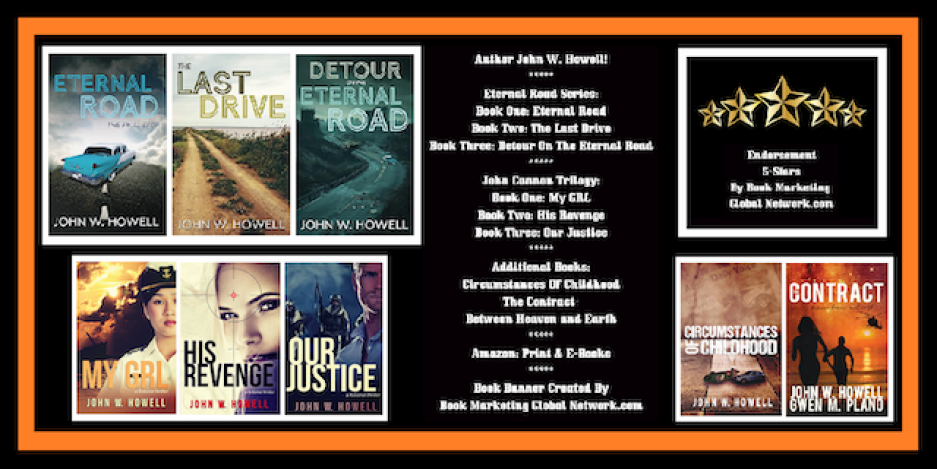
Wednesday is a good day. I am working to mail off the Galley pages for my novel My GRL to the publisher. I got them last Thursday with a request to get them back by today. As for most requests made of me by the publisher, I need to make the deadline. I still don’t have a release date as yet. The next step should be cover design and I think then we will be ready to go.

I don’t know about you, but when I opened the galley file and came upon the title page I almost lost it. I can hardly believe that after first thinking of the story many moons ago it is almost time to see that story in print. I know you vets are really used to this kind of thing, but as a newbie I can’t tell you how thrilled I am to be near the point of publication. Once published the real work will begin, but I am ready for that next step.

Here is a screen shot of the title page. It is no coincidence that a star burst appears near the Martin Sisters Publishing name. They are divine.

005

I started the book in April of 2012 and finished the first draft in August of that year. After a bunch of edits, I finally got the courage to start the query process. I began with agent queries and picked up a suitcase full of rejections. While I was trying to attract an agent, it came to me to try a different tactic. I subscribe to Writer’s Market so I punched in a search with the parameters set at publishers who accept un-agented work and are not vanity presses. http://www.martinsisterspublishing.com contacted me after I sent them a query and wanted to execute a contract. You can imagine how long I pondered the prospect. I signed the day it came in and have never looked back.

So now I wait for whatever is next and am still editing my second novel. It is sequel to the first and a story of the character John J. Cannon attempting to survive threats against his life and the security of the US. The second has more bullets and mayhem and prepares us all for the third book in the series.

Well enough of me and my book I hope y’all have an easy hump day.

Top Ten No No’s is as Top Ten No No’s Does


Here is the Fifteenth installment of Ten Top Lists of What Not to Do by Marie Ann Bailey of 1WriteWay at http://1writeway.com and John W. Howell of Fiction Favorites at http://johnwhowell.com. These lists are simu-published on our blogs each Monday. We hope you enjoy.


random house

Top Ten Things Not To Do When Trying to Get Published

10.  When trying to get published, do not send a query letter to a publisher with the opening phrase “You probably have never heard of me, but that will change.” The publisher will no doubt get a big laugh and your query will get a direct pitch into the trashcan with the words, “Want to bet,” on the publishers lips.

9.  When trying to get published, do not use cute gimmicks in your query letter to get the publisher’s attention. They will not appreciate whatever it is that you send along with the letter and could just charge you for the clean-up later. This includes: glitter hearts, artificial snow, two tickets to the Bruins hockey game, a six-pack of beer, sand from your beach story, or anything else not on paper.

8.  When trying to get published, do not think a personal phone call to the publisher will make a difference. You will only risk sounding like an idiot even though you have thoroughly rehearsed your pitch. If you should by chance get someone to talk, being able to find your query letter to give you the feedback you demand may get you put on hold permanently.

7.  When trying to get published, do not, under any circumstances, show up at the publisher’s place of business in person. The publisher will be extremely embarrassed since they will have no idea what to do with you. Your query just might get placed in your back pocket as you are shown the exit into the alley.

6.  When trying to get published, do not tell the publisher in your query letter that this is a once in a lifetime opportunity for them. The only thing that may be a once in a lifetime opportunity is the one second it takes for the publisher to pitch your query into the wastebasket with the words, “I’ll take that chance,” on the publisher’s lips.

5.  When trying to get published, do not try to build rapport with the publisher with words like, “If I were in your shoes I would be looking for a talented writer and by golly I just happen to know one.” The publisher will have a nice laugh at your expense and will probably use your query in the next seminar on How Not to Query. Of course he will be paid an enormous fee and you will get…well…nothing.

4.  When trying to get published, do not send a query letter before you have your fiction manuscript finished. Unless you are Stephen King, there is not a publisher in business today who will jump at the chance to publish your story if it is in the concept stage. Describing in detail what might be will probably get you a response of what actually is happening, a flat “no.”

3.  When trying to get published, do not assume you have only writing in mind. The publisher will want you to carry most of the marketing work on your shoulders. Your query letter should stay away from self-descriptive words and phrases like: artist, literary principles, clean hands, introvert, higher calling, too good for others, filthy capitalism, save trees activist, reclusive researcher, and only want to write.

2.  When trying to get published, do not admit you are only in this for the money even if you are. There may be a time when the publisher contacts you as a result of your query. This is not the time to start pressing the publisher for a compact timetable because you need the money. Like banks do not lend money to people who need it, publishers know there is little money for authors and will pass on you for another more motivated by non-monetary reasons.

1.  When trying to get published, do not give up. There are a million potential reasons to keep sending queries and who knows, your manuscript just might be the next million copy seller.

Editing is as Editing Does

edit

Here we are to Wednesday and like I have been doing for a week I am still editing my second book. There is still no word on launch date on the first from the publisher. I continue to press to finish the next novel and hopefully I will be ready to market the first without having to worry about what is going to follow.

Like most of us know, the editing process is filled with pain, amazement and sometimes downright embarrassment. When I come across a pleasing line I am always amazed that I actually wrote it. The embarrassment comes in when a line has obvious faults or blazing amateur signals. It is a blessing that the mistake was caught but then the pain of doubt creeps in. “How many others did I miss?” is the question of the moment.

Here is a conversation I had with myself on Monday.

“WTF John. You know that dialog tag doesn’t work.”

“What do you mean? You think putting “he asks with a puzzled look on his face,” after a question is wrong?”

“Wrong has nothing to do with it. You look like a third grader. The question mark is enough. The rest can go into a sentence.”

“Good point. It does look silly.”

“Also that so-called prose written about your character discussions should be dialog.”

“You mean relating what two people said to each other should be in the form of dialog and not a description even though my descriptions are glorious.”

“Duh. Your readers will fall asleep on that crap. If not they will skip the part and lose some pretty impactful interaction by your characters.”

“You are right. I have a number of these and it can get a little boring.”

“Dump the deep character descriptions as well. Let your readers get an image of the characters in their mind by relating to what they do not how they look.”

“You are starting to question all my meticulous character development?”

“No I am telling you to develop them in action not literary pap. What is up with that mirror description anyway?”

So it went on and on. I wonder sometimes why I do all the bad things that I know are out-of-place, clumsy and often confusing. I put it down to an evil hack trying to get out and take over. That could be another discussion for another blog, but for now I’ll just keep editing while I tear my face off.

Happy Wednesday all.

Top Ten No No’s is as Top Ten No No’s Does

Here is the Twelfth installment of Ten Top Lists of What Not To Do by Marie Ann Bailey of 1WriteWay at http://1writeway.com and John W. Howell of Fiction Favorites at http://johnwhowell.com. These lists are simu-published on our blogs each Monday. We hope you enjoy.

Little league

Top Ten Things Not To Do at a Little League Game

10.  When at a little league game, do not assume that your brief foray into sports during high school makes you an expert in the game your child is in.  Chances are the coaches are the real experts and the advice you try to give them will, if you are lucky, fall on deaf ears; if not lucky you might be told to butt out.

9.  When at a little league game, do not presume to call out penalties as if you were the referee unless you are prepared for the crowd of child worshiping parents from the other team to call you out and off the field.

8.  When at a little league game, do not assume the game is just a pint-size version of an adult game where gambling is commonplace.  Chances are the other parents will not take kindly to you placing bets on their kids’ losing, and you could be tossed out of the game minus your ante.

7.  When at a little league game, do not show up wearing your uniform from high school, especially if you’ve been out of high school for many, many years.  Chances are you’ll rip open your pants the first time you sit down on a bench, your kids will fumble the play from sheer embarrassment, and your spouse will impose a new diet on you starting that night.

6.  When at a little league game, do now show up toting your own keg of beer.  Chances are the BYOB you saw in the flyer advertising the game meant “Bring Your Own Ball,” not “Bring Your Own Beer.”

5.  When at a little league game, do not prowl the sidelines and try to make eye contact with your kid.  Chances are your kid will be too busy trying to play the game and not see to warn you that the ball just tossed is headed straight for your stomach.

4.  When at a little league game, do not spend the whole time pretending to be videotaping the game on your smart phone when in fact you are checking your email, the latest stock reports and weather updates.  Chances are the parents nearest you will see what you are up to and might use your phone for a spontaneous game of catch.

3.  When at a little league game, do not offer to take all the kids out for ice cream unless you own a Greyhound bus, the ice cream stand, or your name is Warren Buffet.

2.  When at a little league game, do not attempt to join the cheerleaders at any point during the game.  Chances are, if you attempt to do splits in the air, you’ll wind up dislocating your hips, an ambulance will have to be called, the game will be over, and your kids will never speak to you again.

1.  When at a little league game, do not shower insults on kids from the opposing team.  Chances are their parents will hear you, their parents will be bigger than you, and when they come to beat you up, no one will protect you because yelling at kids is just wrong.

Submission is as Submission Does

Since I am in the sweaty process of submitting my work to find an agent and/or publisher, I have come across many different kinds of submission policies.  Some policies are very simple; send a query letter and we’ll get back in five minutes to tell you that we can’t do you for XYZ reasons.(You can pick one).  Some of the policies are very complex; like the Oxford Press Guidelines for Author Submissions, which requires the hiring of a consultant to complete.  The simple ones are somewhat merciful, in that, there is not much effort wasted when the results come back unfavorable. Not true with the complex.  It takes hours to prepare a submission and then usually a six-week waiting period. (Which generally is more like six months) The whole effort then becomes a killer exercise when the rejection arrives. (Notice I say when) Sometimes there is no response since the agent or publisher only responds to those whose work they want to review more closely. Nicely most of these undercover agents publish this fact on their web site, so for warned is for armed.

Just for fun

For fun I thought I would take the Oxford Press Guidelines (Warning:Very Complex) and pretend I am an agent trying to get the Bible published for the first time.  I want to use Oxford as my publisher. The disclaimer here is; this is only fiction and is not intended to be taken seriously.  Further disclaimer; I am not on any better speaking terms with this story’s client than anyone else on the planet, therefore I cannot help you with anything.  Okay with those disclaimers, here goes:

Guidelines for Author Submissions by Oxford Press USA

The Book

Brief Description – In one or two paragraphs, describe the work, including its rationale, approach, and pedagogy. ?This book is… It does… Its distinguishing features are…?

My Answer: Um…God lays down the law to all of mankind and do it with stories that mankind can understand, so by its nature it is pretty simple.

  • Outline – A detailed outline of the book should be prepared, including the chapters being submitted for review. This gives us an idea of how the material fits together, and how the remaining chapters will be developed. It should include chapter headings and sub-headings, with explanations as necessary.

My Answer:  It goes from the beginning to now with a couple of notes on how the world ends

  • Outstanding Features List – Briefly what you consider to be the outstanding, distinctive, or unique features of the work.

My Answer:  My client tells me that it is his word

  • Apparatus
  1. Will the book include photographs, line drawings, cases, questions, problems, glossaries, bibliography, references, appendices, etc.?

My answer: My client says,” Nope”

  1. If the book is a text, do you plan to provide supplementary material to accompany it? (Teacher’s manual, study guide, solutions, answers, workbooks, anthology, or other material.)

My Answer: My client says, “I’ll leave the material up to the readers to develop.”

  • Competition
  1. Consider the existing books in this field and discuss specifically their strengths and weaknesses. Spell out how your book will be similar to, as well as different from, competing works.  

My Answer:  My client says, “nothing compares.”

  1. Consider what aspects of topical coverage are similar to or different from the competition. What topics have been left out of competing books and what topics have been left out of yours?

My Answer:  My client almost left out Adam and Eve which have become pretty interesting characters.

  1. Please discuss each competing book in a separate paragraph. (If possible, please provide us with the publisher and date of publication as well.) This information will provide the reviewers and the publisher a frame of reference for evaluating your material. Remember, you are writing for reviewers and not for publication, so be as frank as possible regarding your competition. Give credit where credit is due, and show how you can do it better.

My Answer: My client says, “Judge not, lest ye be judged.”

Market Considerations

The Primary Market

  1. What is the major market for the book? (Scholarly/professional, text, reference, trade?)

My Answer: Sinners

  1. If this is a text, for what course is the book intended? Is the book a core text or a supplement? What type of student takes this course? What is the level? (Major or non-major; freshman, senior, graduate?) Do you offer this course yourself? If so, how many times have you given it? Is your text class-tested?

My Answer: Core and there will be a bunch of folks teaching eventually

  1. If the market is scholarly/professional, reference, or trade, how may it best be reached? (Direct mail, relevant journals, professional associations, libraries, book or music stores?) For what type of reader is your book intended?

My Answer:  Reach by Fire and brimstone meetings.  The reader is anyone who needs to be saved.

Status of the Work

  1. Do you have a timetable for completing the book?   My Answer: DONE
    1. What portion or percentage of the material is now complete?
    2. When do you expect to have a complete manuscript?
  2. What do you estimate to be the size of the completed book? My Answer: HUGE
    1. Doublespaced typewritten pages normally reduce about one-third when set in type; e.g., 300 typewritten pages make about 200 printed pages. There are about 450 words on a printed page.
    2. Approximately how many photographs do you plan to include?
    3. Approximately how many line drawings (charts, graphs, diagrams, etc. ) will you need?
    4. Do you plan to include material requiring permission (text, music, lyrics, illustrations)? To what extent? Have you started the permissions request process?
  3. Do you plan to class-test the material in your own or other sections of the course? (Any material distributed to students should be protected by copyright notice on the material.)

My Answer:  Nope let er rip

Sample Chapters

Select one or two chapters of the manuscript that are an integral part of the book. They should be those you consider the best-written ones, and do not have to be in sequence. For example, you might submit chapters 3, 7, and 14 of a 20-chapter book, so long as these chapters represent the content and reflect your writing style and pedagogy in the best possible light. It is also advisable to submit any chapter that is particularly innovative or unique. Sample chapters should contain rough sketches, charts, hand-written musical examples or xerox reproductions, and description of photographs to be included. The material need not be in final form, although it should be carefully prepared and represent your best work. In your preparation, emphasis should be on readability. Please do not bind your manuscript, as we will have to unbind it in order to make photocopies for reviewers. Also be sure all pages are numbered either consecutively or double-numbered by chapter.

My Answer:  I would go with Genesis through Ruth which is attached.  When you see the words “Thee and thou,”  that means you.

Reviews

If we are interested in your project, we will commission outside reviewers to read and evaluate your proposal. We will, of course, obtain the best available reviewers to consider your work. If you wish to suggest the names of experts in your field whom you believe to be ideally suited to evaluate your proposal, you may provide their names, titles, and email addresses. While we are unlikely to approach these scholars to act as reviewers themselves, we may ask them for their suggestions for peer readers. Naturally, we do not reveal the names of reviewers without their permission.

My Answer:  The Devil hates it.  The Angles love it. ( I don’t mean LA)

Author Background

Please include a current CV or brief biography of your writing, teaching, and/or educational background and experience. Be sure to list any books that you have previously published, and any other information about yourself on why you are qualified to write this book.

My Answer:  In the beginning my client made the Heaven and Earth

Response Time

Please allow at least 6-10 weeks for the manuscript proposal evaluation and review process. We will contact you as soon as we have had a chance to thoroughly examine your manuscript proposal. Thank you for your interest in Oxford University Press. We look forward to reading your materials.

My Answer:  Talk to you then.  My client is available everywhere.

Sorry for the length of this post. Hope you enjoyed.  Have a nice weekend