Today’s good news story comes from the Good News Network
Build a Zigzag Pattern onto Walls to Keep Buildings Cool During Heat Waves
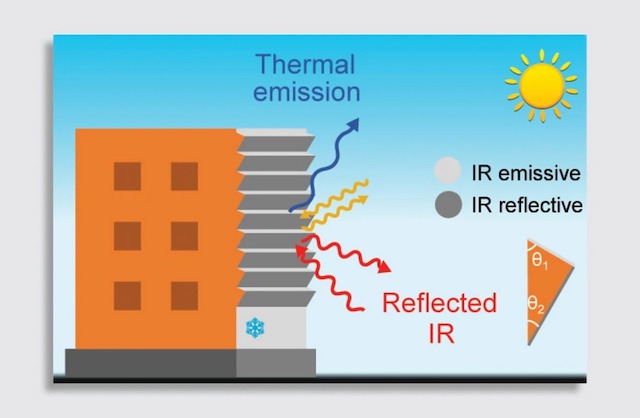
Structural engineers have discovered that the angles keep the building cooler if you build an apartment building with angled, shark-fin-shaped protrusions on the side where the Sun’s heat is the strongest.
It’s one of various simple new building and design elements proposed for a world where July and August routinely feature stories of droughts, heat waves, and temperature records.
From the dawn of time, humans have been forced to live in hot environments. From the dawn of construction, humans have figured out how to build buildings that take advantage of thermodynamics to cool them naturally. Many of these delightful architectural features are visible in buildings from antiquity, such as the Roman amphitheaters, the Taj Mahal, and the wind towers of Yazd.
Much of that planning was ignored with the advent of the modern age, and homes, whether those of the lower-middle class or the upper-middle class, took on the same character of modular boxes exposed to the mercy of any element that batters them.
In a study at Purdue and Colombia universities, researchers sought to find a simple way to retrofit boxy buildings with features that could help keep them cooler amid rising global temperatures.
One issue their research encountered is that heat hits most urban buildings from two angles—from the Sun and the ground, where cement and asphalt absorb heat and radiate it upwards all day.
“These two directions require different properties for cool walls,” says Qilong Cheng, a postdoctoral researcher at Purdue University who worked on the study as a graduate student at Columbia University. “So we have this two-surface zigzag design, with one surface facing the sky and the other facing the ground.”
The angles, which resemble the sawtooth roofs of factory rooms, can reduce average indoor temperatures by 5.5° Fahrenheit.
One material reduces or deflects radiation coming up from the ground, while heat from the Sun is reflected with ultra-white paint.
Cheng and his colleagues are now looking to patent the design and turn it into a product, perhaps made of corrugated iron, which they used in their study and found could reduce HVAC energy usage by 14%.
The good news in this story is, once again, someone questioned how things were done and came up with a better way. Today’s JohnKu talks about questions. I hope you have a lovely weekend.
Status Quo by John W. Howell
Defending the way,
Most things have always been done . . .
Ensures obsolete.




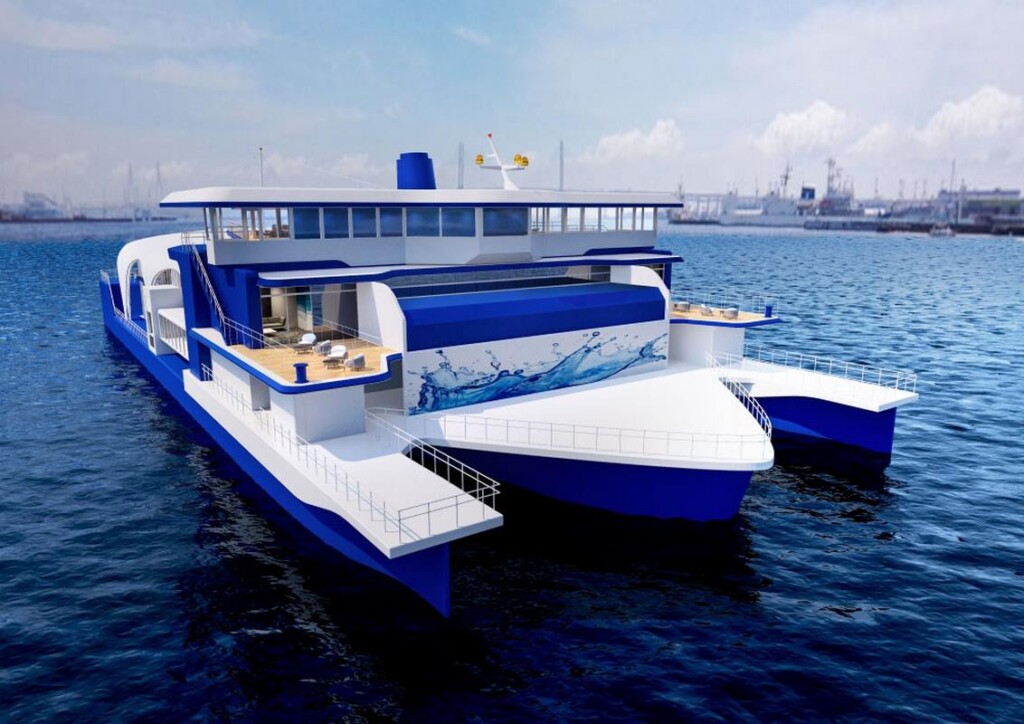
 A rendering of the solar project – credit City of Valencia