Today’s good news story is from the Good News Network; here is the story in its entirety. (some typos have been corrected)
Once Devastated Pacific Reefs See Amazing Rebirth, Recovering With ‘Shocking Speed’
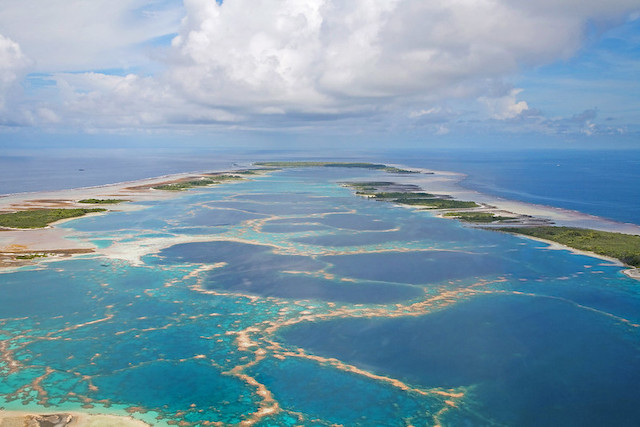
As remote as they were beautiful, the coral reefs around the 5 volcano tips making up the Southern Line Islands dazzled National Geographic explorers in 2009 during a visit.
Remarking that they re-painted the image of what a pristine coral reef looks like—bursting with color and life—the team of the Pristine Seas Expedition had been crushed when a record-warming El Niño event in 2015 caused mass coral die-offs.
Then a return in 2021 revealed a remarkable scene—bright, healthy corals teeming with life as far down as 100 feet off the island slopes. After record numbers of coral deaths, a team member estimated their populations averaged around 43 million to 53 million coral colonies per square mile.
The Southern Line Islands belong to the Pacific island nation of Kiribati. Enric Sala, a marine biologist and member of Pristine Seas, detailed that it took longer to reach them by plane and boat than it took the astronauts of the Apollo missions to land on the Moon.
During the 2017 trip to Vostock, Flint, and Millennium islands, the vast swaths of cauliflower corals, pocillopora were all gone, while the species Acropora was also hard hit. Some other species were less damaged, however, giving the Sala, who was preoccupied at the time and didn’t get to join the 2017 trip, hope they could recover.
In fact, the expedition found promising signs the reef could do just that since rather than being covered with seaweed, the dead corals were covered in “crustose coralline algae,” a marine plant that coral larvae can latch onto to build new reefs in the same way that a brick latches onto mortar.
Sure enough, this foundation led to near-total regeneration of the reefs around the Southern Line Islands.
“The reef was covered by light-blue corals that looked like giant roses—a garden of Montipora aequituberculata stretching as far as I could see,” says Sala.
Since the Southern Line Islands are so remote, no one was keeping an eye on how the corals were able to regrow so significantly, but Sala has an idea. Since most of the montipora were the same size, it’s possible that one or two massive coral spawning events, where they reproduce and launch their eggs out into the sea before the larvae rain back down on the reef, are enough to repopulate large areas of dead corals.
Its resilience earned it the moniker of a “super reef” among the crew.
“The corals that were resistant to the phenomenal 2015-16 El Niño provided the reefs’ resilience,” wrote Sala. “The Southern Line Islands lie in one of the hottest hot spots of warming in the Pacific Ocean, so the corals apparently have adapted to heat.”
As for the flush of the mortar-like crustose coralline algae over the dead corals as opposed to seaweed, Sala chalks it up to the great numbers of grazing fish like zebrafish, parrotfish, surgeonfish, and others that would simply devour any seaweed before it could overgrow the coral.
Kiribati’s government has ensured that these seas, which have never seen large-scale commercial fishing, will never see it, and now make up the Southern Line Islands Marine Protected Area (SLIMPA)
The good news here is that natural healing of the coral has taken place. Today’s JohnKu talks about the power of nature. I hope you have a great weekend.
Nature by John W. Howell ©2022
Still under attack,
Yet finding a way to thrive . . .
Mother is her name.















:max_bytes(150000):strip_icc():focal(614x524:616x526)/flip-the-dog-093022-1-f5b0b7b6447b432cb32ec86dad59e0fb.jpg)
:max_bytes(150000):strip_icc():focal(656x0:658x2)/flip-the-dog-093022-2-2634d49473d748138da3e8b7f384c3ff.jpg)
:max_bytes(150000):strip_icc():focal(949x524:951x526)/flip-the-dog-093022-3-cce4d580e7e84756984b2769eeada2ab.jpg)