Today we are visiting Lakeway and seeing what we can see. We are catered by Serenade American Brasserie restaurant, and our entertainment is James Taylor. The producer took all the photos except a few. Hers are the most beautiful
Menu
CONCHIGILE ALLA VODKA – Alla vodka, stracciatella, red pepper, chili, basil
SALMON – Olive oil potatoes, heirloom relish, fried caper
HALIBUT – Brown butter endive, coconut corn puree, lacinato kale
CHICKEN ROTI – Citrus brine, seasonal vegetable, jus de poulet
DUCK BREAST – Braised lentil, spinach emulsion, crackling, citrus, sauce de canard
PORK CHOP – Apple cabbage, spring onion gremolata, mustard jus
STEAK FRITES – Frites, pink peppercorn, pickled onion
BRASSERIE BURGER – Fontina, caramelized onion, pancetta, dijonnaise, frites
Let’s go
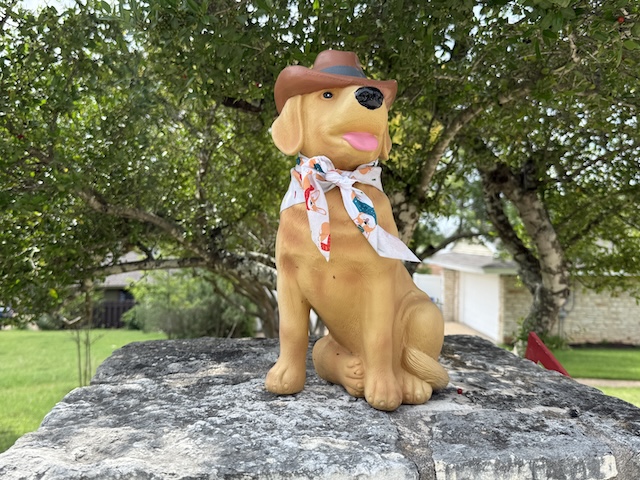
Our first sight is a mailbox topper. Say howdy, Dog.
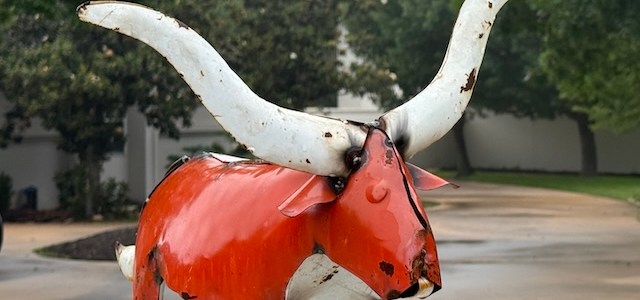
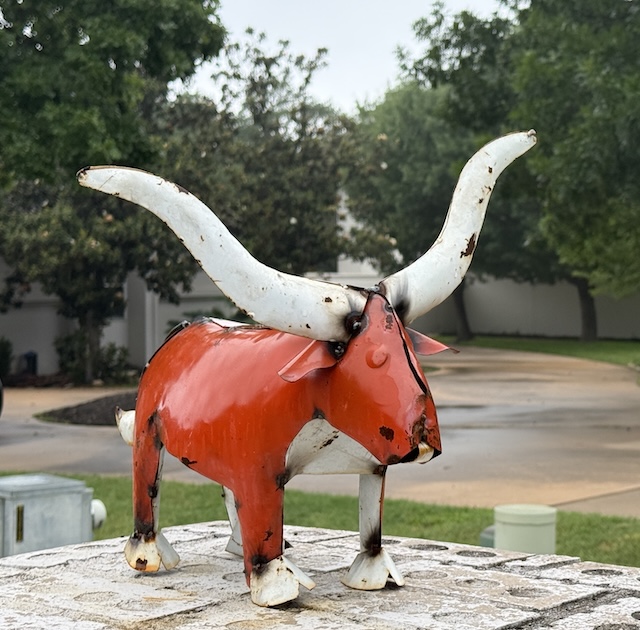
Texas Longhorn fan.
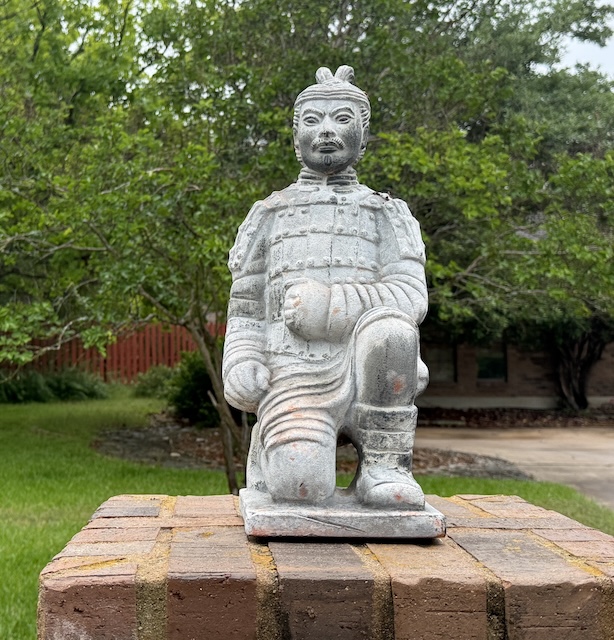
A Chinese warrior.
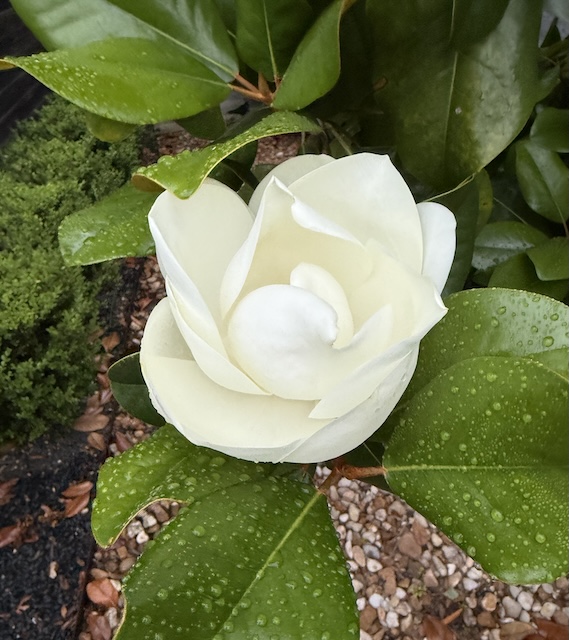
A magnolia bloom on my 80th birthday tree.
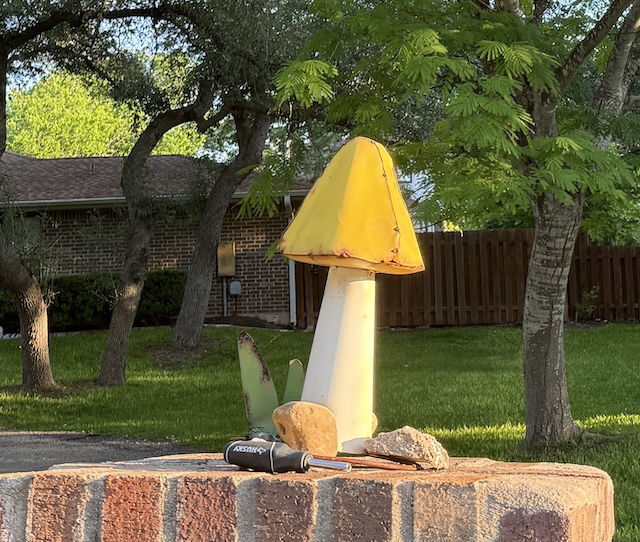
A mushroom with a screwdriver companion.
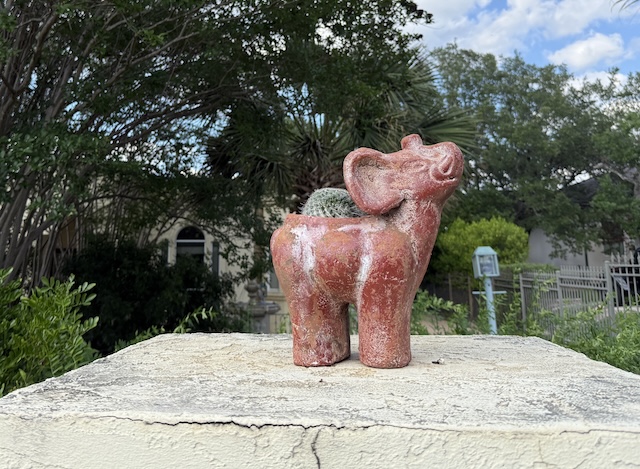
A ceramic elephant.
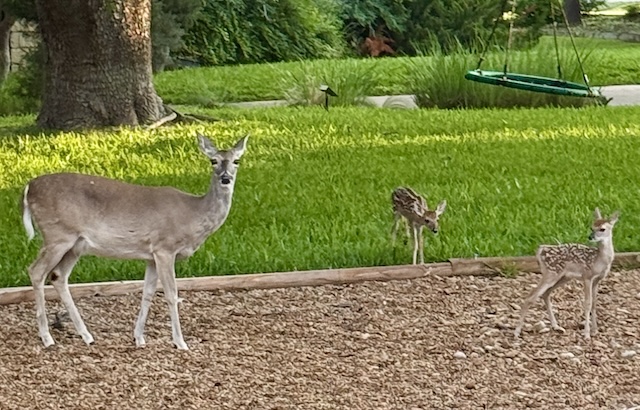
Mama deer with two fawns.
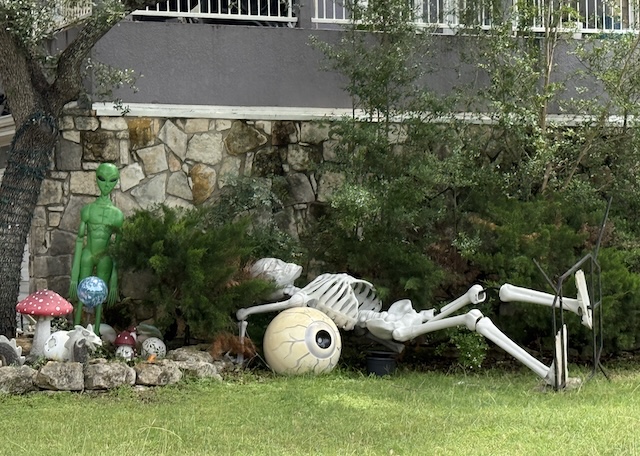
Passed out, skelly.
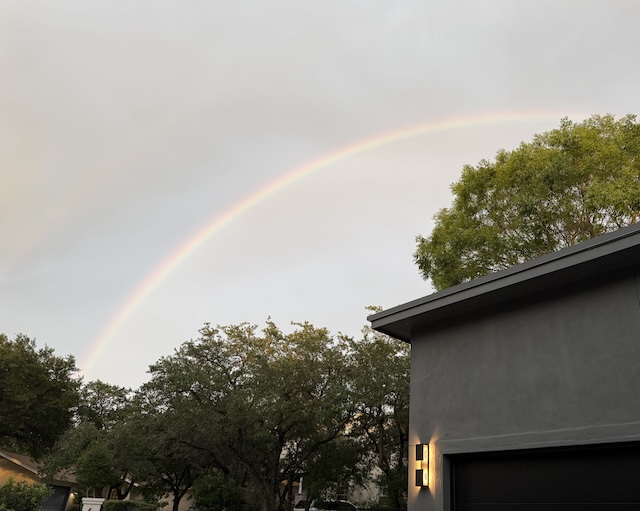
Rainbow over our garage.
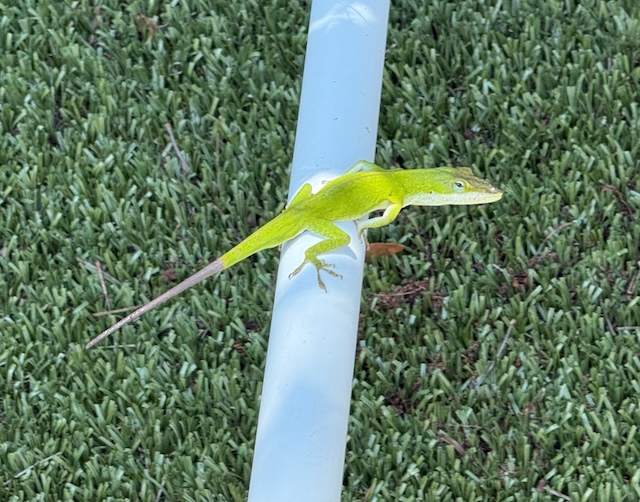
These photos were taken by me. Lizzie on a pole.
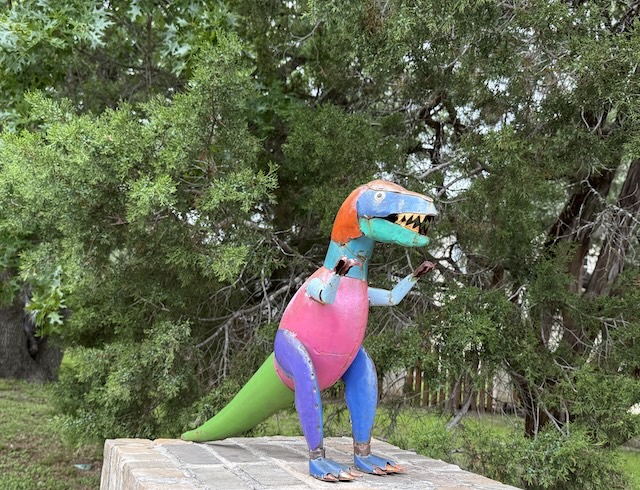
T. rex guarding the mail.
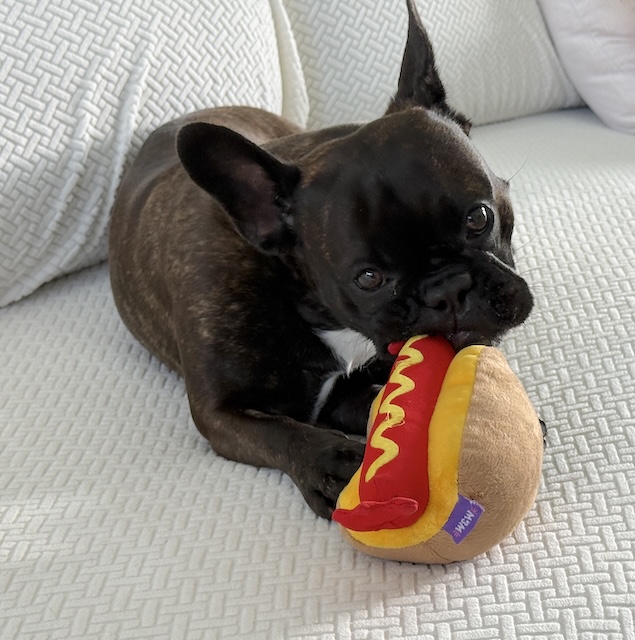
Tempeste with a hot dog.
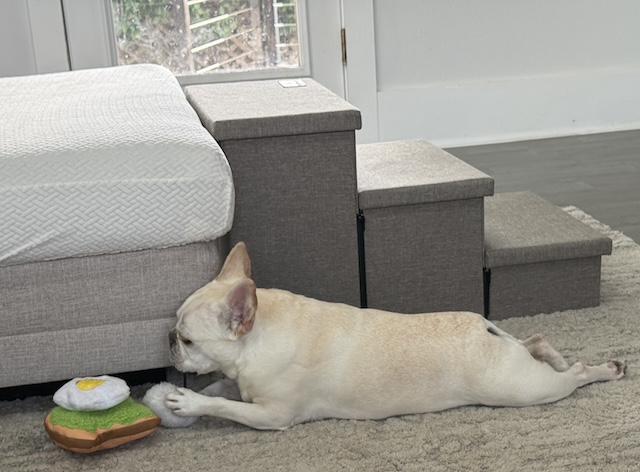
Twiggy is enjoying avocado toast.
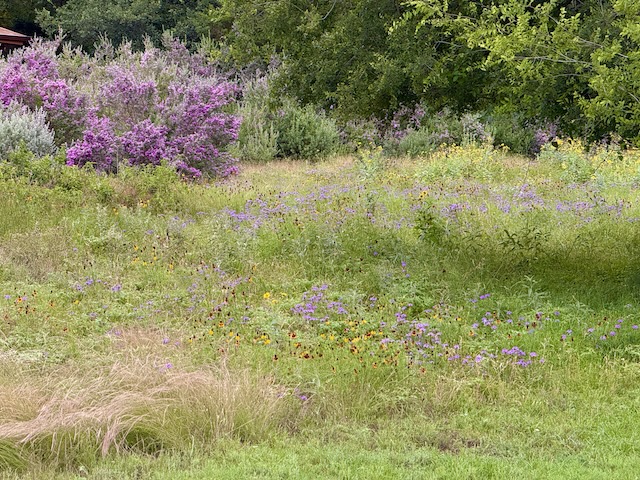
The purple sage in bloom forecasts rain, and the wildflowers are blooming.
That is the tour, and it is time for some food and music. I hope you have an enjoyable week.
Before we begin our silliness today, I want to remind us of all those who stormed the beaches of Normandy, France, on June 6, 1944. For some, it was their last day, and we owe them a great deal for their sacrifice. There are very few alive now who participated in that D-Day exercise for liberty, but most lived full lives that their comrades would not enjoy.
Almost by coincidence, the coffee machine did not immediately spring to life but seemed to be contemplating that fateful day. Finally, as with most solemn occasions, the moment of contemplation ended, and the brain-healing elixir began to flow into my mug.
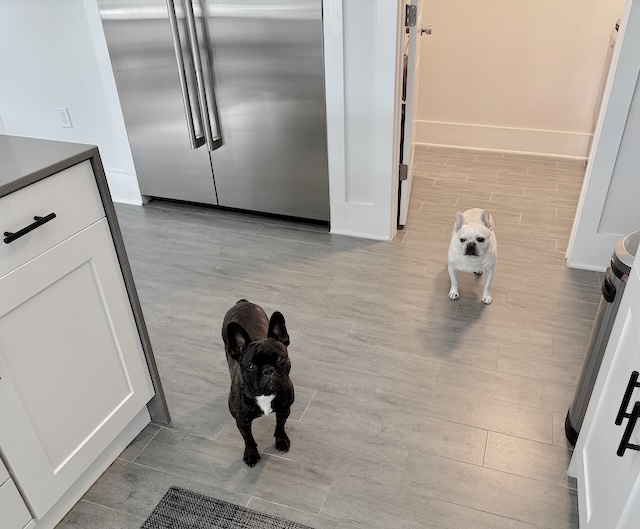
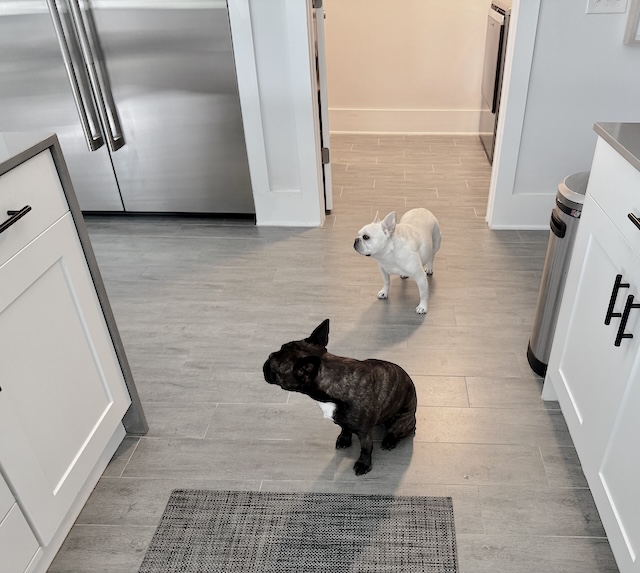
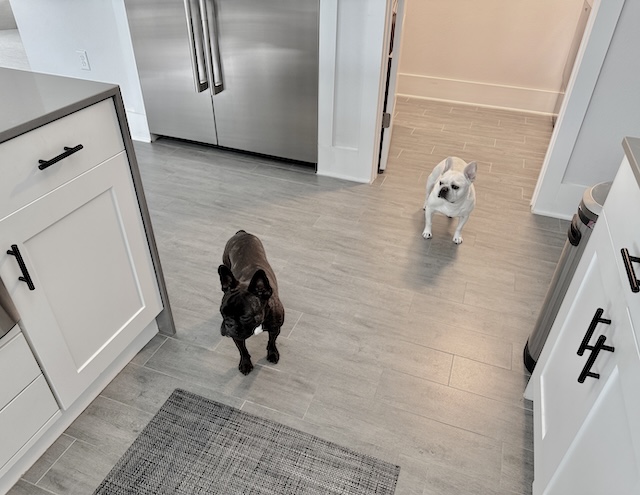
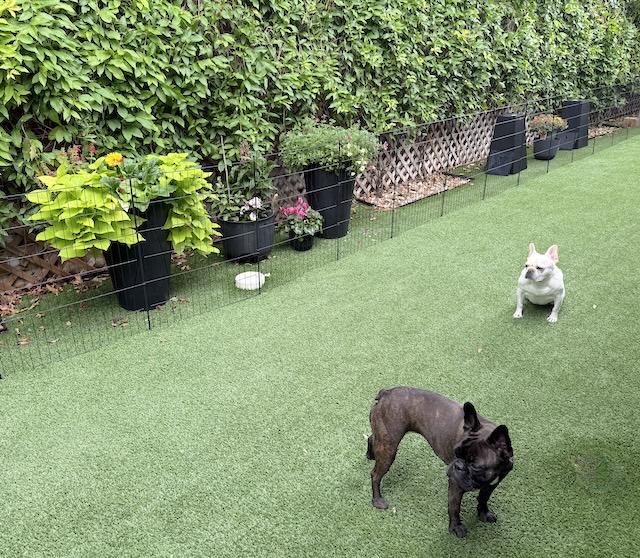
The first sip calmed the painful feeling of caffeine withdrawal and the meltdown warning of the klazon horn in my head. The second sip brought the familiar but still annoying joining of the Westminster doorbell chime with the St. Louis-bound barking of Twiggy and Tempeste, often referred to as the Hounds of Baskerville. The two dogs chased a bone into the soundproof room, and a door slam brought the grateful feeling that silence is golden.
A look at the security system monitor shows Winnie-the-Pooh with an envelope on the porch. No need to even discuss leaving it. With a sigh, the security shut-down process began.
The B-2 bomber squadron and the F-35 escort must be called off. One call does it. The tank corps and gunboats are told to stand by. The Apache helicopters are rerouted. The electric shock fence is turned off. The drawbridge over the quicksand is lowered. The robot attack dogs returned to their charging station. The laser-guided machine guns on the roof are set to caution. The nest filled with rattlesnakes was put away. The bucket filled with 1000 marbles is locked down. The tear gas canisters shut off. The electrified welcome mat set to off. The fall-away sidewalk into the pit filled with spikes is locked. The hornet’s nest closed. The water cannons are set to safety. Bear traps are set to off. Peregrine Falcons perched on the roof above the front door are fed. The vat of boiling oil set to warm. The front door is opened.
Stepping onto the porch, Winnie hands me the envelope and a clipboard. I keep the envelope and hand back the signed clipboard. Winnie has his paw out, making the classic tip sign. “As Vince Lombardi once said, It’s not whether you get knocked down, it’s whether you get up, was my tip for Winnie.
Back in the house, the message in the envelope is from Linda Hill. It reads:
Your Friday prompt for Stream of Consciousness Saturday is “coincidence.” Use it any way you’d like. Have fun!
The anniversary of D-Day, coinciding with today, is a coincidence.”
“Well, if you call every seven years a coincidence, yes.”
“You know what I mean.”
“I do. Saturday here is usually a day filled with ridiculous satire, and for it to be a solemn anniversary does sound like a coincidence.”
“Maybe we should have skipped our pub trip.”
“I think if you could ask those who gave their lives, they would want us to live normally, which would, in a small way, make their sacrifice worthwhile.”
“I can see that.”
“So where is the Uber?”
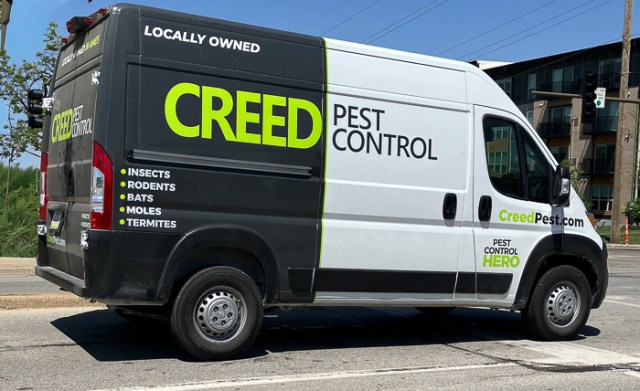
“Right over there.”
Photo by Dan Antion
“Oh, this is great.”
“What do you mean?”
“A van filled with poison and maybe live bees.”
“Don’t be silly. The guy rides around in that van all day, and he is fine.”
What’s the catch?”
“Oh, that.”
“Yes, that.”
“We have to help the guy tent a house for termites.”
“Tent a house?”
“Yeah, he twisted his ankle and can’t get on the roof.”
“So we have to go up on a roof?”
“Just to put the tent in place.”
“How big is this house?”
“Three stories.”
“Can we pass?”
“I already told him we would do it.”
“Of course you did.”
“Here is your breathing device, hazmat suit, and gloves.”
“Why do we need all this stuff?”
“Oh, I forgot to mention. We have to go inside to make sure there are no leaks after the gas has begun.”
“I’m a hard, no.”
“I thought so. Okay, I’ll call for a regular Uber.”
Today’s good news story comes from ABC Far North and was sent to me by Noelle Granger. Thank you, Noelle
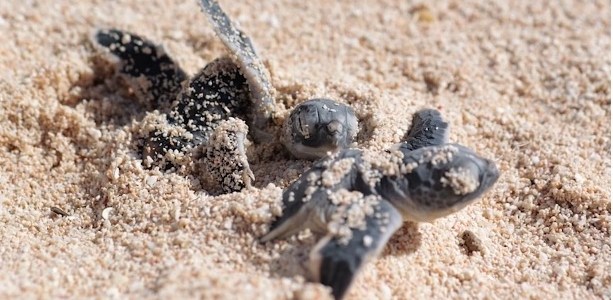
Thousands of baby green sea turtles head to sea after successful egg relocation
By Rosanne Maloney, ABC Far North, Topic: Conservation
The project to move eggs from one island has allowed for more males to develop. (Supplied: Queensland Parks and Wildlife)
In short:
It’s believed that 82 percent of the green sea turtle eggs relocated from the northern Great Barrier Reef and relocated between two islands have hatched.
The species has faced increasing threats nesting on Raine Island, its main rookery.
What’s next?
Researchers say future testing will be needed to determine if the successful hatchlings are also of the same fitness.
More than 9,100 northern Great Barrier Reef green sea turtle hatchlings have begun their journey to sea after a project relocating eggs between two islands achieved promising results.
It is the second time eggs have been moved from Raine Island to Sir Charles Hardy Island, about 600 kilometers north of Cairns in the north-east Coral Sea, in an attempt to boost hatchling numbers and produce more males.
Queensland Parks and Wildlife Service senior project officer Katherine Robertson said the latest results were encouraging.
“Of those eggs, 82 percent of them hatched, and the hatchlings made it to the water,” she said. “A fantastic outcome.”
Researchers collect eggs straight away as they are laid by female turtles. (Supplied: DETSI)
Raine Island, a tiny coral cay, is the world’s largest nesting site for 90 percent of the endangered species, and can attract up to 100,000 nesting females in a year.
However, rising sea levels, warming temperatures, and climate change have created major threats at the rookery.
The turtle eggs are being destroyed by higher sea levels, and rising tides are creating steep slopes that hatchlings struggle to climb, sometimes causing them to flip and die.
Researchers collecting green sea turtle eggs on Raine Island. (Supplied: DETSI)
Sand temperature also affects hatchling sex, with warmer sand resulting in fewer males.
“This population is almost entirely female,” Ms Robertson said. “So there’s not going to be enough males coming through to actually sustain this population into the future.”
During the first relocation trial in 2024, teams moved 3,000 eggs from 38 nests, with 70 percent of them successfully hatching.
This summer, researchers dramatically expanded the program, moving almost 9,000 eggs from more than 100 nests.
The eggs are placed in dug out nests under a shade on Sir Charles Hardy Island. (Supplied: Queensland Parks and Wildlife)
The eggs were carefully collected by researchers on Raine Island before being placed into oxygen-free, vacuum-sealed bags, temporarily pausing their development.
Teams then took the eggs about 80 kilometers by boat to Sir Charles Hardy Island, where they were reburied beneath a custom shade structure.
It lowered sand temperatures by about 1.5 degrees Celsius, helping create conditions to produce some male hatchlings.
Scientists vacuum seal eggs with nitrogen to remove oxygen and temporarily pause development. (Supplied: Queensland Parks and Wildlife)
The work is part of the Raine Island Recovery Project, which has run for more than a decade to improve the future of the green turtle population.
Protecting culture and environment
Sir Charles Hardy is in Wuthathi country, while Raine Island spans both Wuthathi and Meriam countries.
Meriam Nation elder Falen Pasi, who is the chair of Mer Gedkem Le Corporation, said the project was helping protect a species deeply connected to culture and identity that held a special significance across Torres Strait communities.
Falen Pasi says turtles are culturally significant to his people. (ABC Far North: Rosanne Maloney)
“Turtles for Indigenous people are very significant and spiritual,” he said.
“Where I come from, it’s our totem.”
Mr. Pasi said the project showed the value of combining traditional knowledge with scientific research, as traditional owners had long noticed a decline in male hatchlings. “When things happen like this, it hurts me and my people,”
Some 90 percent of the endangered species nests on Raine Island. (Supplied: Queensland Parks and Wildlife)
Wuthathi Tribal Elder chair Johnson Chippendale said traditional owners spent years working with scientists to find solutions. Mr. Chippendale said protecting turtles meant protecting future generations. “It’s really about saving the species,” he said.
About 2,000 adult turtles have died during one nesting season on Raine Island, many after falling. (Supplied: Queensland government)
Looking beyond hatching success
James Cook University researcher Caitlin Smith said the success rate of the hatchings was in line with other healthy nesting beaches. “Hatching success from those relocated clutches is phenomenal,” she said.
Caitlin Smith has been working on a similar egg relocation project for loggerhead turtles. (Supplied: Caitlin Smith)
Dr. Smith is also leading separate but similar research for loggerhead turtles at a key rookery near Bundaberg.
Her project is now examining whether successfully relocated hatchlings are as physically fit as turtles produced in nests left untouched.
Dr. Smith said research in Indonesia found that while nest relocation was crucial for protecting sea turtle eggs, it could reduce the fitness of new turtles.
Caitlin Smith, left, tests the fitness of relocated hatchlings using a course she calls the “turtle Olympics”. (Supplied: Caitlin Smith)
Her team has created what they call a “turtle Olympics”, measuring size, swimming ability, and crawling speed alongside other factors to better understand their chances of surviving long-term.
Results are not yet available, but she said producing more hatchlings was only one piece of the puzzle.
“We also need to be thinking about the quality of the hatchlings as well,” she said. “If we’re producing a lot of hatchlings, we need to know they’re the best possible hatchlings for the population.”
The good news in today’s story is that volunteers are helping these turtles overcome natural barriers to continued viability. Today’s JohnKu discusses helping nature. I hope you have a delightful weekend.
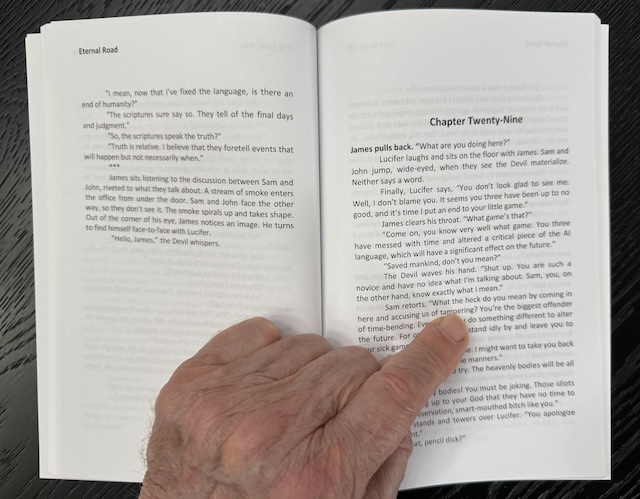
Today, I opened Eternal Road – The final stop to page 267 and with eyes closed pointed. My finger fell closest to the word “tampered.” This is our prompt today
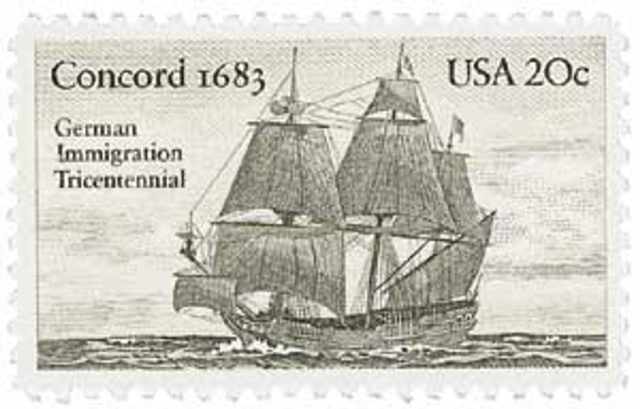
In 1683, thirteen families from Krefeld, Germany, arrived in Philadelphia to begin Germantown, one of America’s oldest settlements. The Top Ten Things Not to Do provides advice (maybe a little late) if you found yourself part of that event. This post ran in October of 2018.
Top Ten Things Not to Do if You Helped Found Germantown, Pennsylvania in 1683.
10 If you are part of the Germantown expedition, do not wear your “I’d Rather be in Philadelphia,” T-shirt. If you do, at best, your neighbors may wonder where your loyalties lie. At worst, you just might be left behind in Philadelphia to fend for yourself. (You are years away from the invention of the Philly Cheese Steak, Farvardin, so life there may be hard.)
9 If you are part of the Germantown expedition, do not try to tell Sehr Klein (Tiny) the GWF (German Wrestling Federation) where he can camp. If you do, at best, he won’t understand your American German. At worst, you caught him just as he was released from a program of forced restraint and now wants to be free. (Looks like Sehr Klein has designs on demonstrating his Step Over Toe Hold on you, Fay. You do know how to wrestle, don’t you?)
8 If you are part of the Germantown expedition, do not admit you don’t like beer and would rather have a white wine. If you do, at best, the rest will be grateful that there is more for them. At worst, the powers that be may conclude that you are French. (Now you have to worry about being invaded, Felican. Don’t worry, just surrender and all will be well.)
7 If you are part of the Germantown expedition, do not think clever nicknames will be appreciated by your explorers. If you do, at best, no one will answer when you use them. At worst, folks will get the idea you are possessed. ( If you hold your breath long enough, you may survive the witch’s dunk tank, Felton. You now regret calling the leader “Fritz,” don’t you?)
6 If you are part of the Germantown expedition, do not refuse to live in a cave-like dwelling. If you do, at best, you’ll find a tent. At worst, you will not have a place when the winter snows settle in. (The cave homes were temporary, Feri. I think you ought to change your mind before those blue feet fall off.)
5 If you are part of the Germantown expedition, do not suggest a night on the town in Philadelphia. If you do, at best, it is a six-mile walk, and you’ll have to go alone. At worst, you’ll get some friends to join you, and they will make you the designated transport person. (Nothing like trying to carry a couple of passed-out revelers, huh, Finnan? Too bad horses won’t be brought to Germantown for another three years.)
4 If you are part of the Germantown expedition, do not suggest solving the food shortage with a delivery from Domino’s. If you do, at best, your cohorts will think you’re crazy. At worst, you will be tasked with going out foraging for nuts, berries, and squirrels. ( Looks like your nut allergy is going to sideline your efforts, Fidello. Good luck explaining what a nut allergy is to these fifteenth-century roughnecks)
3 If you are part of the Germantown expedition, do not complain when you get a blister on your hand from chopping down trees. If you do, at best, you will become the laughing stock of the settlement. At worst, you will be assigned a new job that is even harder. (How do you like playing the Ox on the front of that plow, Fionan? That whip sure clears the sinus, huh?)
2 If you are part of the Germantown expedition, do not try to form a football team to play Philadelphia. If you do, at best, you might get one or two players. At worst, you’ll field a whole team and have to face the Phillies. (Did you think this through, Finnolaugh? Those guys are huge and don’t have to walk six miles to play.)
1 If you are part of the Germantown expedition, do not try to sell brightly colored cloth and jewelry. If you do, at best, you have no buyers. At worst, since the community is made up of Mennonites, you might be the recipient of a religious intervention. (Nothing more elegant than having a group of bearded elders trying to exorcize the devil, huh, Flainn? Wow, that red-hot poker looks wicked.)
Today, we are going back to view the remaining Texas flora. If you missed last week, you can go HERE. We are catered by Roaring Fork of Austin, and our entertainment is The Proclaimers.
Menu
BIG ASS BURGER – poblano / cheddar / bacon / lettuce / tomato / onions / pickles / chipotle mayo
served with French fries
SHRIMP AND GRITS – cheddar grits, sweet corn butter, chorizo, fried egg
RAINBOW TROUT – green beans, fried capers, toasted almonds, brown butter, grilled lemon
CEDAR PLANK SALMON – teriyaki glaze, chilled green bean salad, soy butter
ROTISSERIE CHICKEN – cornbread sausage stuffing, green beans, lemon garlic jus
ROASTED DUCK – sugar chile cured, brussels sprouts, sweet onion jam, cherry mustard sauce
DUROC PORK CHOP – maple mustard glaze, sweet potato mash, apple chutney
BACON WRAPPED PORK TENDERLOIN – poblano grits, charred corn, cotija, chipotle balsamic reduction
AHI TUNA – seared rare, chimichurri, marinated tomatoes and avocado salad, citrus vinaigrette
Let’s get going.
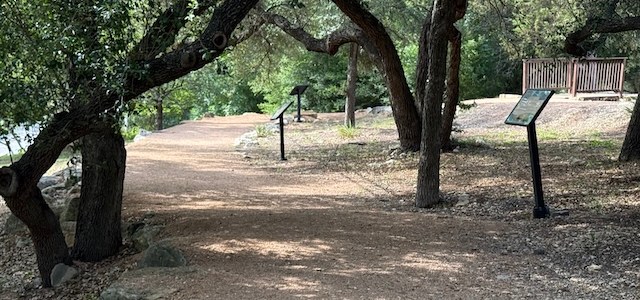
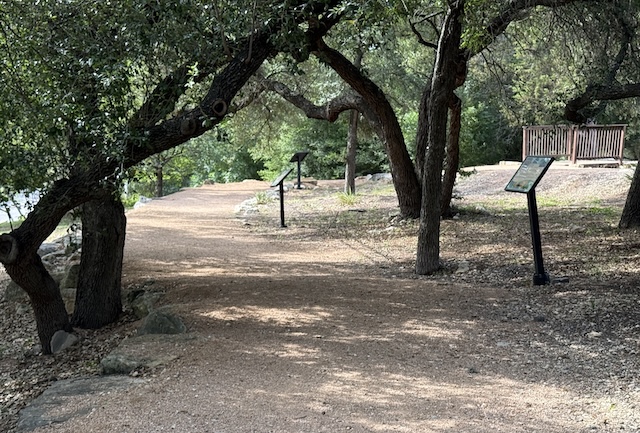
Here is a photo of how the walk looks. These boards describe the flora found in Texas and not necessarily on the walk.
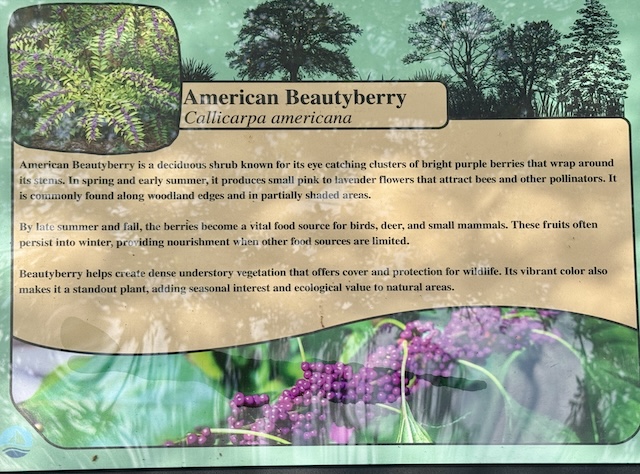
American Beautyberry.
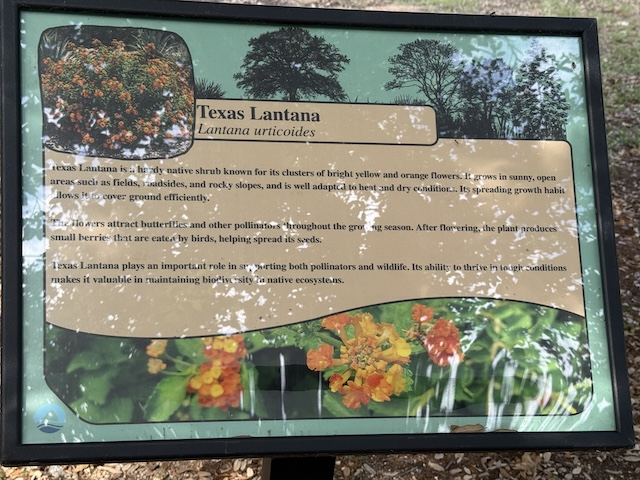
Texas Lantana.
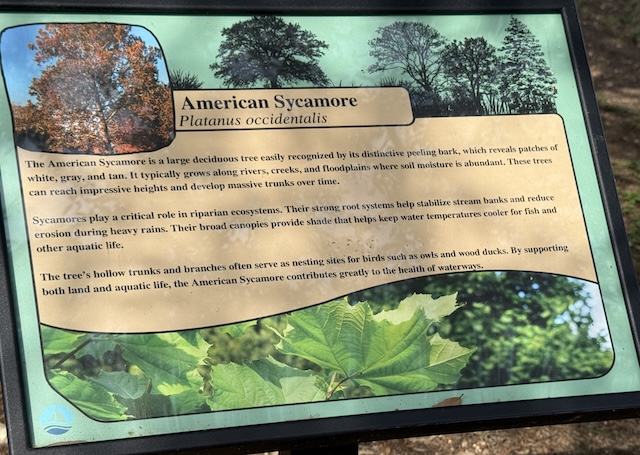
American Sycamore.
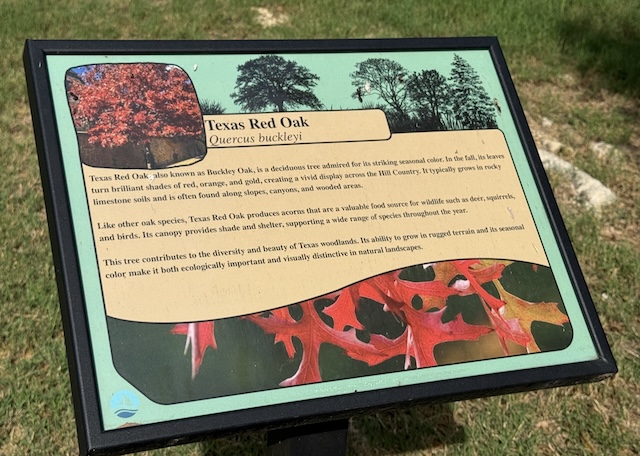
Texas Red Oak.
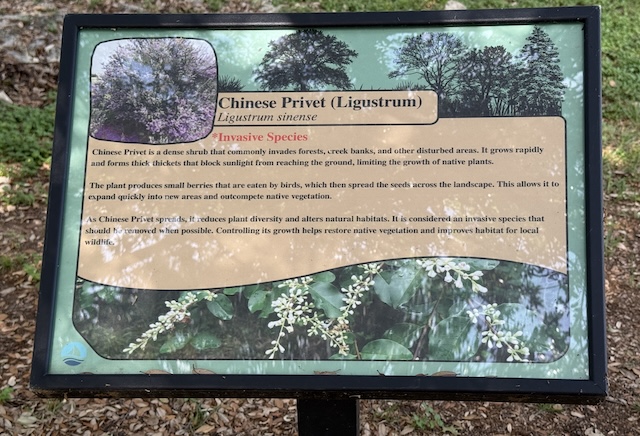
Chinese Privet.
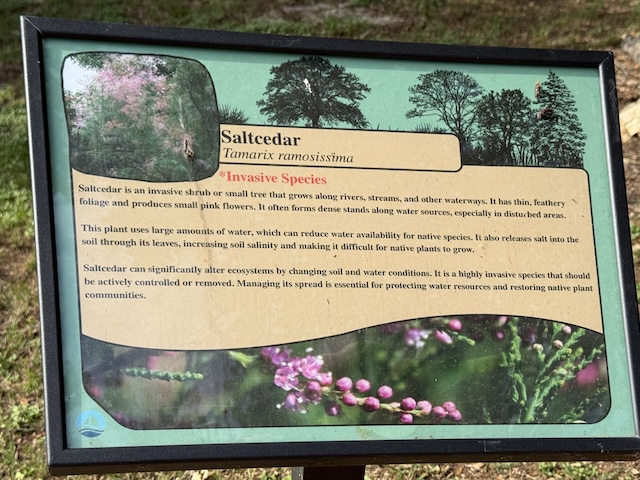
Salt Cedar.
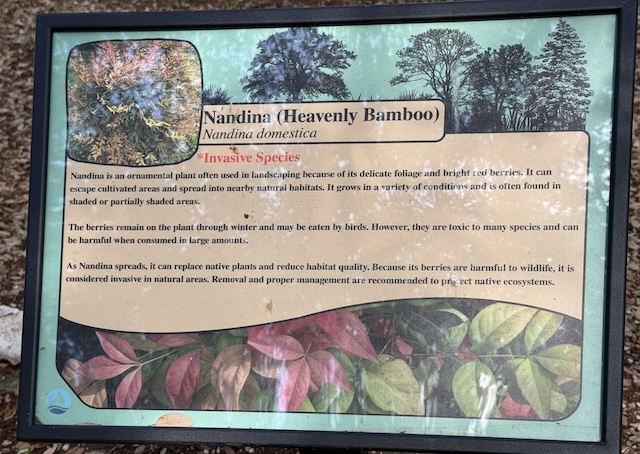
Heavenly Bamboo.
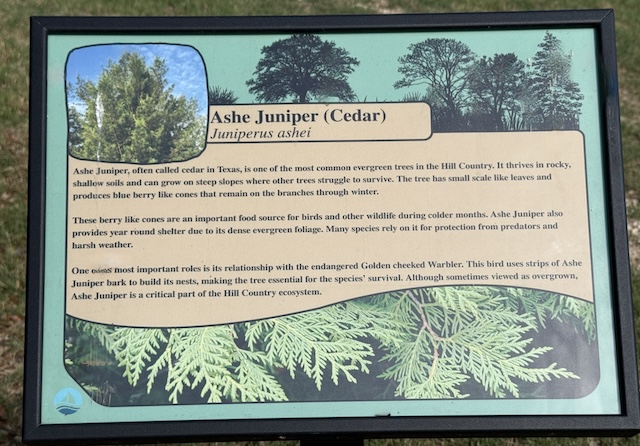
Ash Juniper is commonly called a cedar.
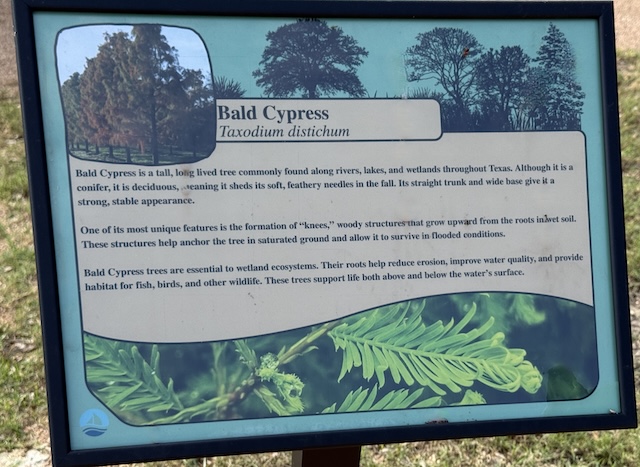
Bald Cypress.
It is time now to relax with the food and music. I hope you have a super week.
Saturday is always a good day. It seems the coffee machine goes out of its way to impress the end user. Just this morning it said good morning without being prompted. It then produced this fine mug of coffee Just in time for the first sip to quell the percussion part of the Anvil Chorus playing in my head. The second sip brings the familiar steel stamping plant cacophony of the combination of the doorbell Westminster chime and the warnings from the watchdogs from hell as they attempt to bark the intruder to St. Louis. A toss of a delicious marrow bone into the soundproof room followed by the slamming of the door brings back peace in the valley.
A check of the monitor confirms a visitor looking very much like Henry the chicken with an envelope. Since there is a signature needed, with a sigh the security shutdown begins.
The B-2 bomber squadron and the F-35 escort must be called off. One call does it. The tank corps and gunboats are told to stand by. The Apache helicopters are rerouted. The electric shock fence is turned off. The drawbridge over the quicksand is lowered. The robot attack dogs returned to their charging station. The laser-guided machine guns on the roof are set to caution. The nest filled with rattlesnakes put away. The bucket filled with 1000 marbles is locked down. The tear gas canisters shut off. The electrified welcome mat set to off. The fall-away sidewalk into the pit filled with spikes is locked. The hornet’s nest closed. The water cannons are set to safety. Bear traps are set to off. Peregrine Falcons perched on the roof above front door fed. The vat of boiling oil set to warm. The front door is opened.
An envelope and clipboard are passed to me by Henry. “Where’s Foghorn Leghorn?” is a question met with a puzzled look. maybe it’s the wrong Henry. Passing the signed clip board back, Henry has his wing extended in the classic signal for a tip. “Never do anything you wouldn’t want to explain to the paramedics,” is my tip to Henry just before closing the front door.
The envelope is form Linda Hill and the message inside reads: Your Friday prompt for Stream of Consciousness Saturday is “impress” Use it as a verb, use it as a noun, use it any way you’d like. Enjoy!
“You are not out to impress deliver people are you?”
“It’s not that.”
“What is it?”
“Our society is becoming tip crazy is all.”
“What do you mean.”
“There are tip requests everywhere. The last time I took an flight I bought a water at a self service kiosk. On the screen there was a place for a tip.”
“Might be a way to help offset low pay for the workers.”
“Then the workers ought to speak up. I’ll bet none of it gets to the workers.”
“Hard to know.”
“Restaurants are now adding 20% service charges to the bill and get this. They say it is not a tip for service. The tip is supposed to be added on.”
“Ive never seen that, but sound pretty strange. What’s it for”
“That’s what I thought. I don’t know. Maybe for someone to carry your order out to the table 99% spit free.”
“Yuk. You leave a tip?”
“What do you think?”
“Scrooge.”
“I did see a tip line on my carry out pizza order receipt. I thought they were kidding.”
“I’ll bet it wasn’t spit free then.”
“Don’t remind me. I can quarantine our Uber ride is tip free.”
“Why’s that? Do we have to carry the car?”
“No look over there.”
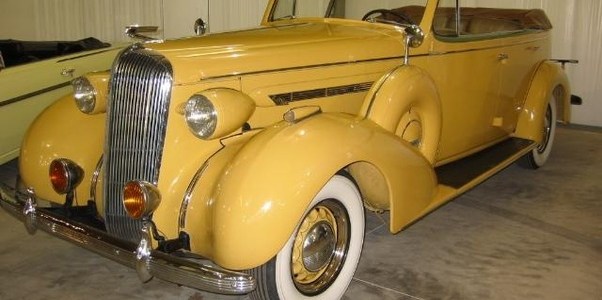
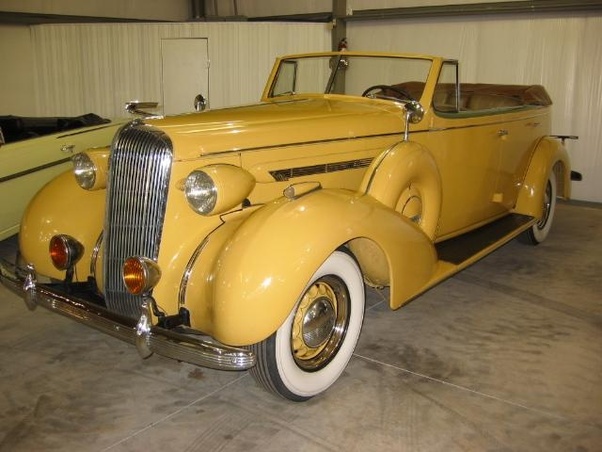
Photo by Tom Okragly
“Wow, a 1937 Cadillac. I’ll bet the catch is big.”
“Not at all.”
“Okay what is it.”
“On the way to the pub we have hold up signs.”
“What kind of signs?”
“Advertising signs.”
“What kind of advertising signs.”
“The grand opening kind of advertising.”
“Grand opening of what?”
“A supermarket.”
“That sounds okay.”
“One more thing.”
“Uh oh. Here it comes.”
“Not a big deal. We have to hand out zuccini.”
“Zuccini?”
“Yeah its a promotion. The store’s name is on the zuccini. Once the zuccini is gone we can head for the pub.”
A huge area of the Everglades that was drained in an attempt to convert it to suburbia has been restored to a somewhat native ecosystem after 2 decades of reverse-landscape engineering.
Picayune Strand is a large, almost perfect rectangle of South Florida wetland, located northwest of Everglades National Park and northeast of Thousand Islands Nat. Wildlife Refuge, and west of the Florida Panther Nat. Wildlife Refuge.
It was part of an enormous land package bought by the real estate company Gulf American in the 1950s in an attempt to create America’s largest suburban housing development, called Golden Gate Estates.
But their effort to tame the swamp failed, even though substantial landscape alterations were made to try to dry out the area. Picayune Strand is 2 feet lower in elevation than the Golden Gate Estate land to the north, and this little difference made it virtually impossible to prevent flooding. The company went bankrupt.
One of the first projects identified and pursued by conservationists under the Everglades Restoration Plan of 2000, Picayune Strand has changed significantly over the years. Since 1985, conservationists have been buying up all the private, often unbuilt-on land that Gulf American had managed to sell. It was tedious lawyer’s work, but by 2004, it was all consolidated into a conservation package.
Gulf American built 4 large canals to channel water off the land they wanted to develop, while the earth and stone they churned up were used to crisscross the area with causeways, atop which roads ran. These were the first targets for groups like the Everglades Foundation, the Conservancy of Southwest Florida, and the US Army Corps of Engineers.
The hydrology of the Everglades is defined by water flowing across the once-7 million square miles all in the same direction at roughly the same snail’s pace, a phenomenon described as “sheet flow” through a “river of grass.” Huge areas remained flooded all year, and plugging the canals was the first step towards restoring the natural hydrology.
To restore this, the roads were torn up, and the materials were chucked back into the canals from whence they came.
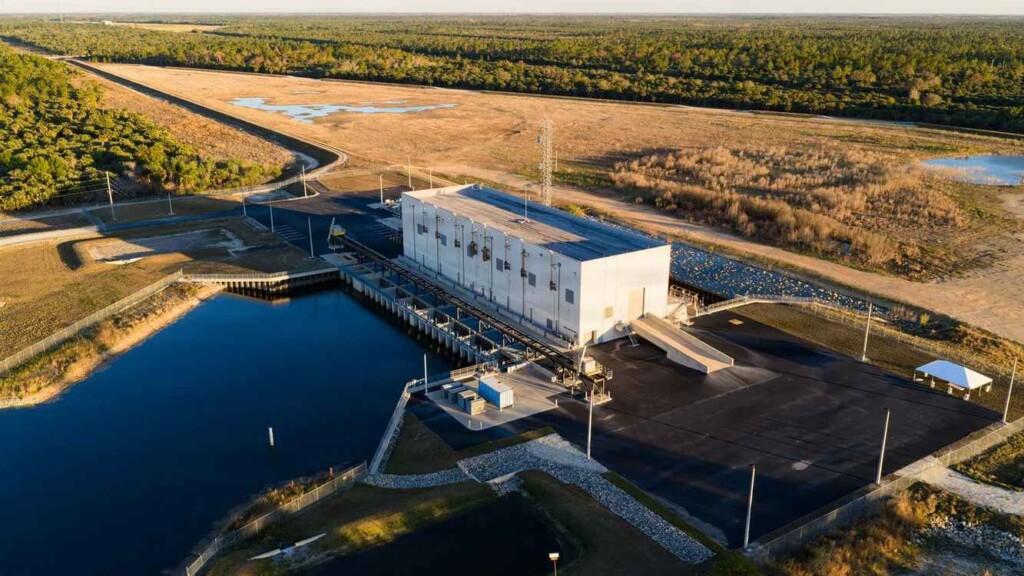
One of the 3 pump stations – credit, Brigida Sanchez US Army Corps of Engineers
From macro to micro
“Picayune is as good a place in South Florida as there is, in terms of getting it back to what it was before,” Michael Duever, an ecologist who has been monitoring the Picayune project, told Yale News. “We’re feeling that we’re in the range of 90 plus-or-minus percent of restoration.”
There had to be some compromises, as people still live in Picayune Strand. Part of that 10% is missing; Duever refers to it as 3 pumping stations that pull rainwater out of the closed canals on the northern boundary of the Picayune project and dump it into large basins that will leak it out in many directions. The water level at times is higher than natural, however, and at other times drier.
Vegetation is coming back in a big way—not always ideally, but upland plants cannot now spread further south because of the continual water bodies. More native species that have missed the continual wetness are also returning—like a native, wild sunflower.
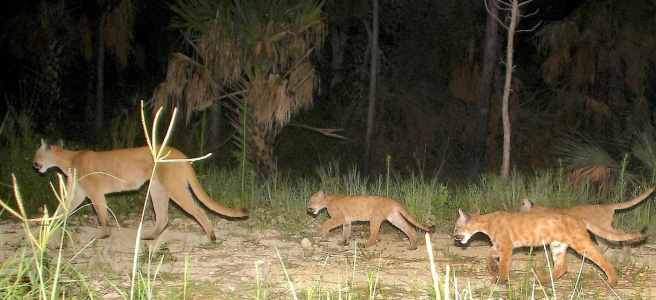
The restored Picayune is expected to help several endangered species, including the red-cockaded woodpecker and the Florida panther, while studies have already shown that increased insect abundance is benefiting the bonneted bat, the largest of its kind in Florida, with a wingspan greater than a foot.
“I kind of view Picayune Strand as a microcosm of the entire [Everglades] plan,” Stephen Davis, chief science officer at the Everglades Foundation, told Richard Mertens at Yale.
The good news in this story is that once a mistake is realized, many hands helped make it right again. Today’s JohnKu talks about rectifying mistakes. I hope you have a terrific weekend.







 “Hey readers