Resa McConaghy had a decades-long career designing costumes in over 50 movies for stars like Kim Cattrall and Helen Mirren. When the film industry ground to a halt during Covid, she started upcycling old fabric into elaborate couture. Today, she honored me by designing Cloud Wear for Sam Tourneau, a protagonist in Detour on the Eternal Road.
I am very grateful for Resa’s talent; she felt she could serve Sam by giving her a lovely wardrobe to wear in the afterlife. Here is the link to La post. While there, take time to look around at the beautiful photos and gowns Resa has created.
More about Resa in her words.
Resa McConaghyResa McConaghy
“My name is Resa McConaghy. I’m a semi-retired Costume Designer for film and television.
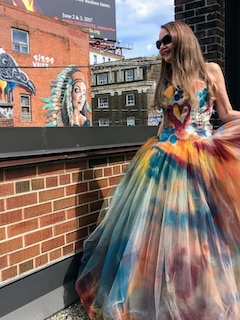
Strawberry Kisses
My first Art Gown “Strawberry Kisses” was to create some beauty in my life after mom died. It was a hit with people, so I continued to make and post more “Art Gowns”.
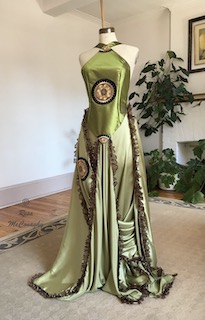
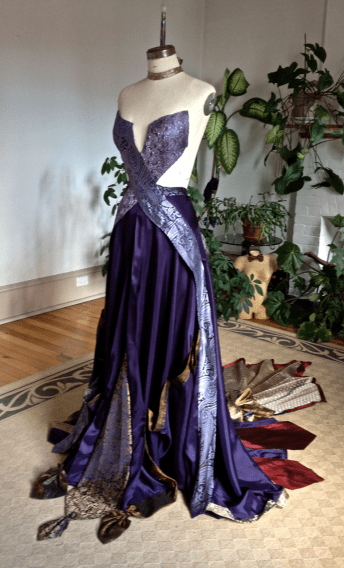
At some point, I began upcycling, repurposing, and, in general, making the gowns out of any fabric or notions that were not new goods. I was using up anything headed for landfills. All the gowns are hand-sown so that machines do not use energy.
The Art Gowns are available to borrow or rent (situation dependant) for Gala’s, photo shoots and film production.
A few more beautiful gowns from Resa’s collection.
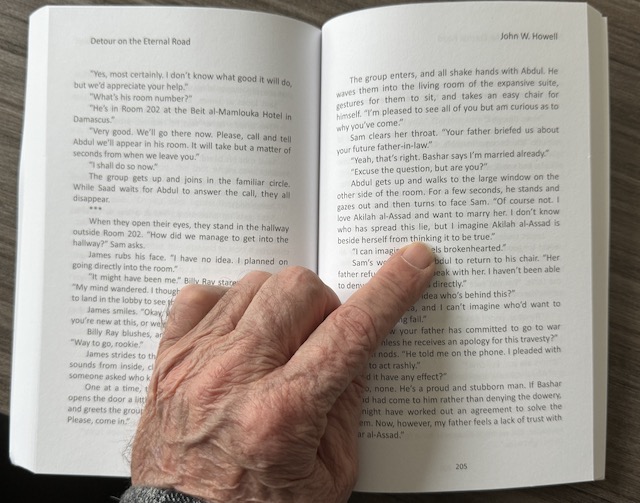
Today, I randomly opened my latest Detour on the Eternal Road (Now available on Amazon) to page 205. With my eyes closed, I pointed to the page, and the word closest to my finger was “Thinking.”
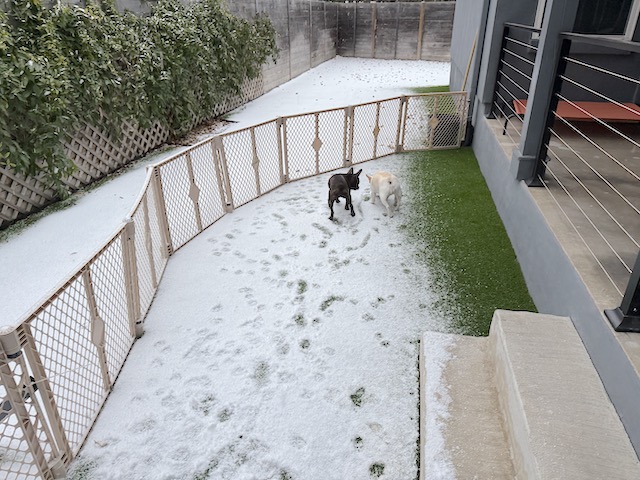
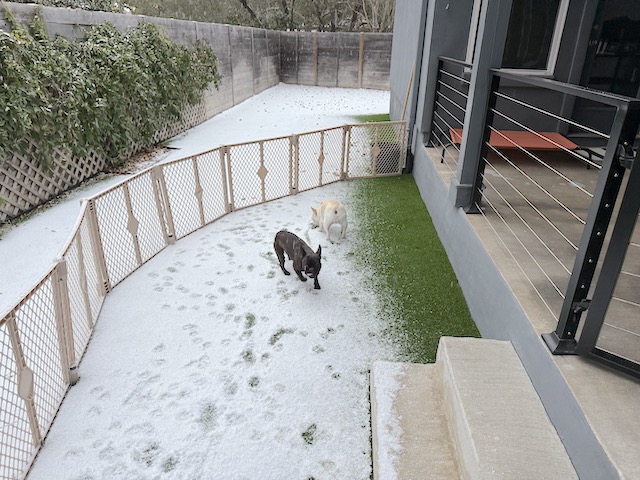
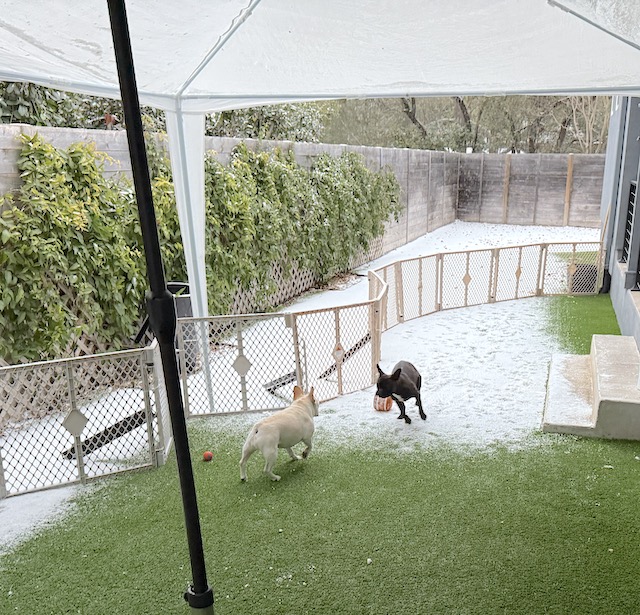
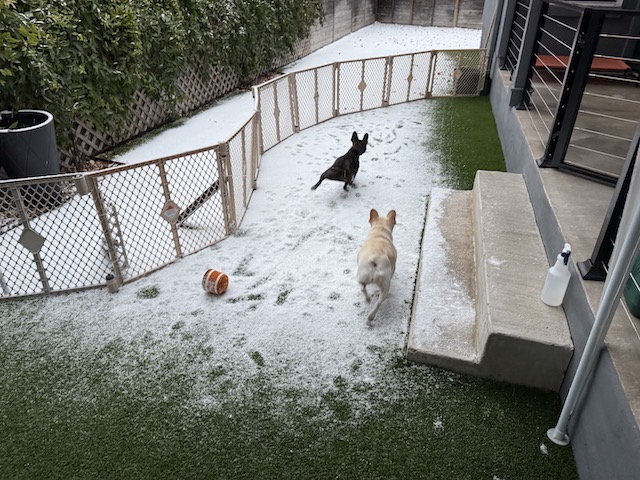
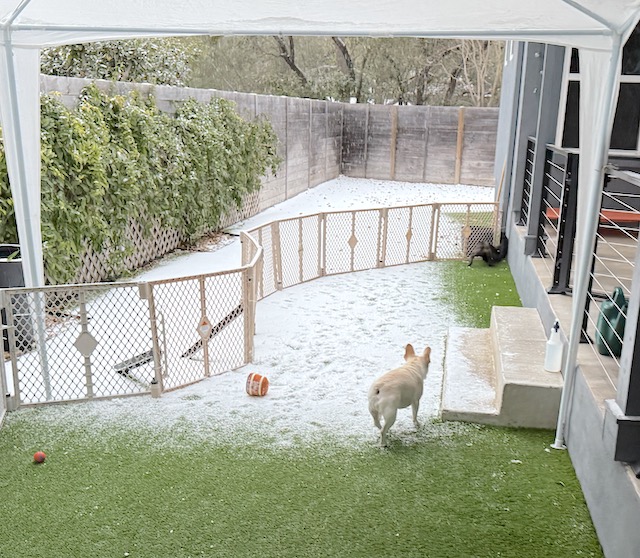
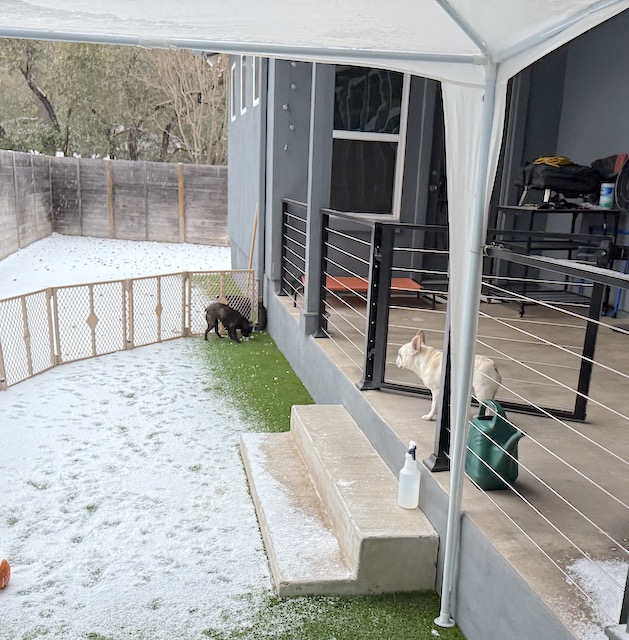
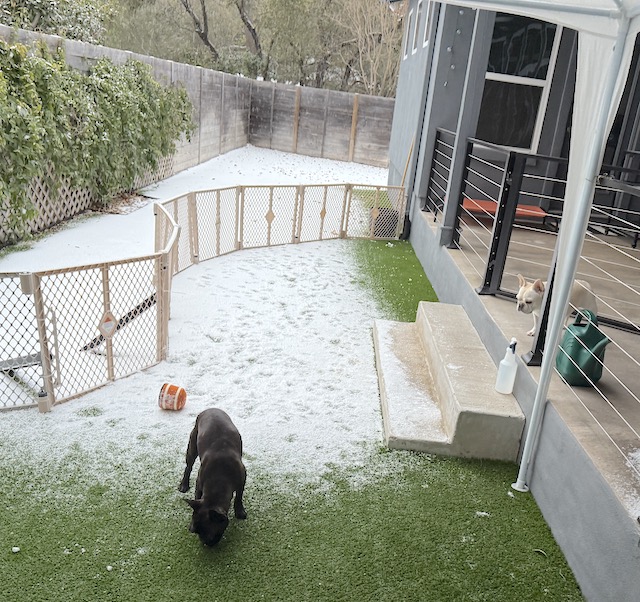
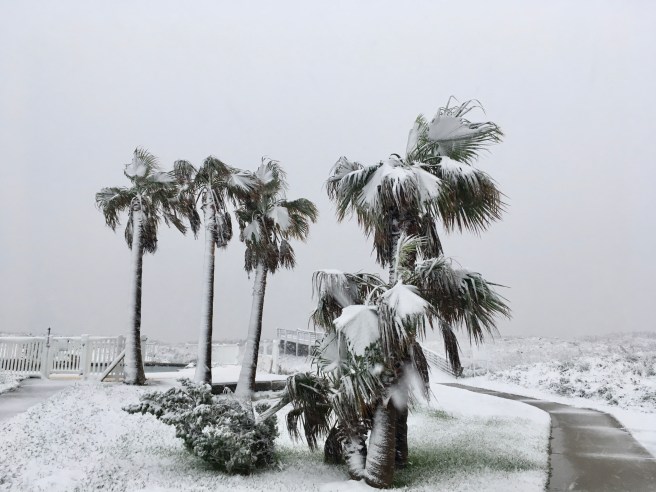
This idea was initially posted in December 2017. At the time, it was because it snowed in South Texas for the first time in many years. With the latest Arctic cold front moving lower in the US, there are forecasts of snow in the South once again. So here is a revised list of what not to do in the snow in the South.
Top Ten Things Not to Do in the Snow in the South
10 If you live in the South and it snows, do not think you can drive to the store. If you do, at best, you may find yourself in a ditch. At worst, your erratic driving may cause a pile-up on the beach road, which won’t clear till spring. (Twenty miles an hour was a bit too fast for conditions, huh, Cyrek?)
9. If you live in the South and it snows, do not throw snowballs at strangers. If you do, at best, you’ll hit one, and they will laugh. At worst, you will hit Tiny, the WWF champ, right after he left his respect support group meeting. (It looks like Tiny took the snowball in the face as a sign of disrespect. I think you should begin running now, Cyril.)
8 If you live in the South and it snows, do not think you can wear flip-flops as usual. If you do, at best, your feet will turn blue. At worst, you will find your condition being discussed by a group of interns at the local ER. (Do the words frostbite and amputation bother you, Cyrano?)
7 If you live in the South and it snows, do not think the rest of the world wants to hear about it. If you do, at best, you’ll get a lot of disconnects. At worst, you’ll describe the beauty and unusual snow to your cousin in Fargo, North Dakota, who hasn’t been out of the house for six weeks due to the snow. (Wonder why he’s calling you all those names? It’s cabin fever, Cyan.)
6 If you live in the South and it snows, do not think you have to rush to the store to clean the shelves of bread, milk, water, and bathroom tissue. If you do, at best, you’ll get the moniker of the village idiot. At worst, you will be just checking out when you notice the snow has all melted, making your hour trip to the store and your massive horde unnecessary. (Did you check the weather report, Crespin? Why are those people pointing and laughing?)
5 If you live in the South and it snows, do not demand your 7:00 am tee time. If you do, at best, the pro will not let you play. At worst, you’ll set the course record for the most lost balls and the highest score. (White on white is a difficult thing to see. Right, Courtney. When you do see them, frozen shots don’t go that far, do they?)
4 If you are in the South and it snows, do not continue with your plans for a beach party. If you do, at best, everyone will stay home. At worst, those that do come will end up not at the beach but in your house. (Ever try to roast hot dogs and do smores in the fireplace, Corwin?)
3 If you are in the South and it snows, do not think you can drive without cleaning your windshield and rear window glass. If you do, at best, the snow might blow off. At worst, you won’t be able to see well and might hit someone. (The policeman you ran into is lecturing you loudly about how dangerous it is to drive without being able to see while he is writing the ticket. He is about finished, Conell.)
2 If you are in the South and it snows, do not think you have to plan a dinner like you live in the Antarctic. If you do, at best, the snow will leave before you start cooking. At worst, you’ll serve the Hoosh, Pemmican, Sledging biscuits, Marmite, and hot coffee meal as the temperature reaches seventy degrees. (I never saw folks sweat so much while they ate, did you, Cnute?)
1. If you are in the South and it snows, Do not think you can wait to make a snowman. If you do, at best, there will be a little snow left to work. At worst, you and the kids will be all bundled up, only to find nothing but water. (It’s Hard to make a water person, isn’t it, Clifton?)
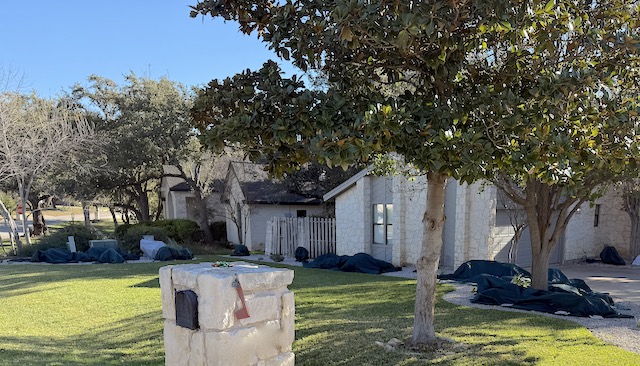
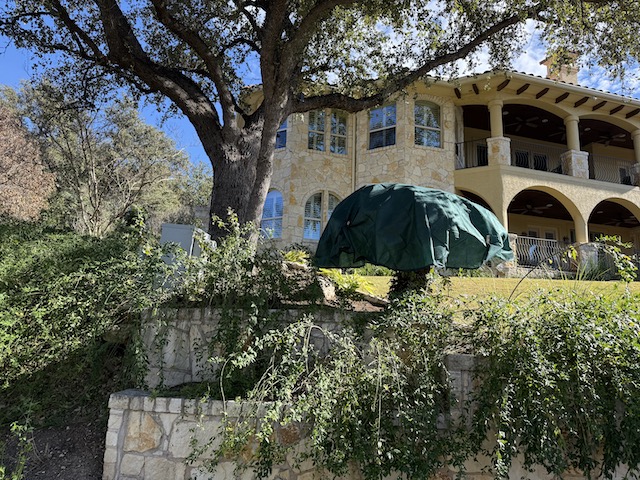
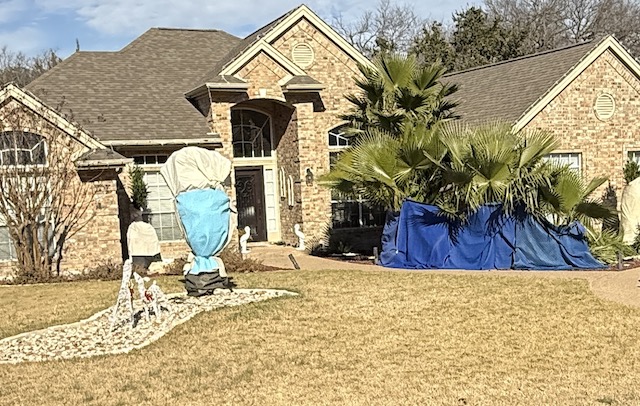
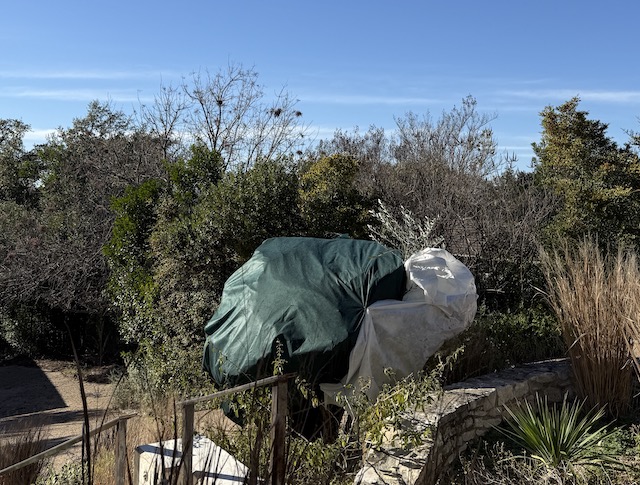
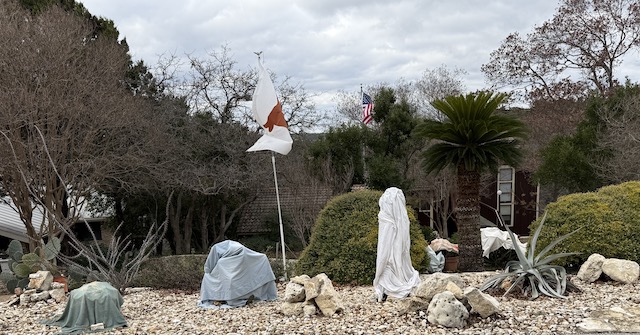
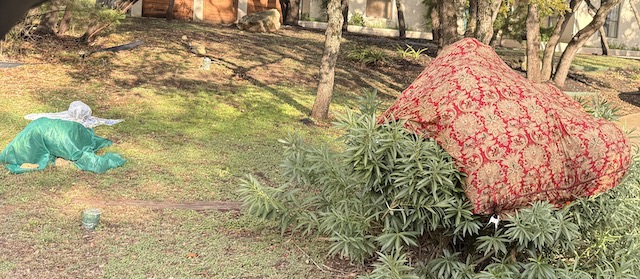
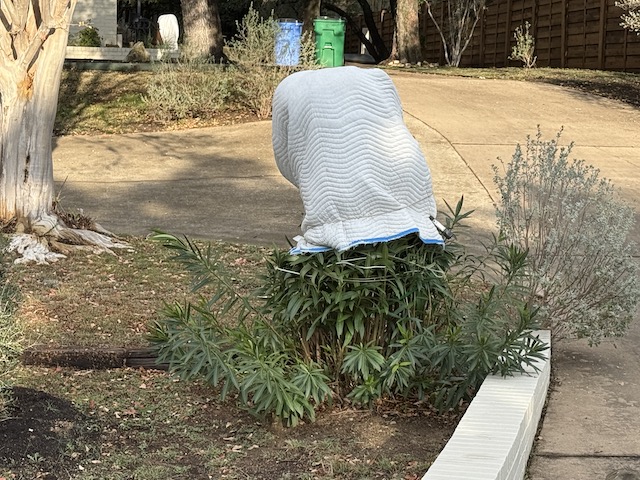
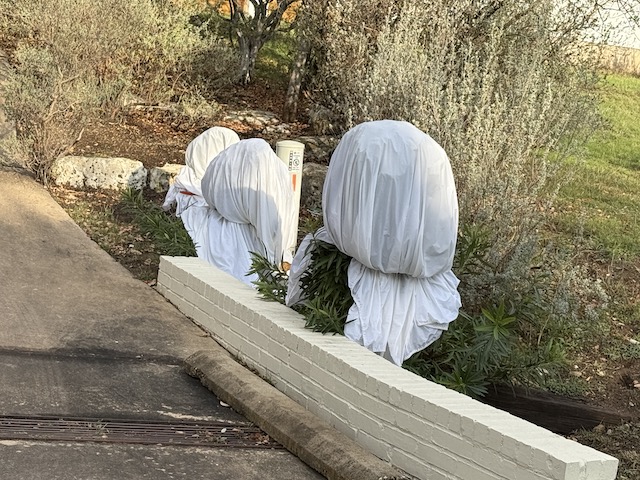
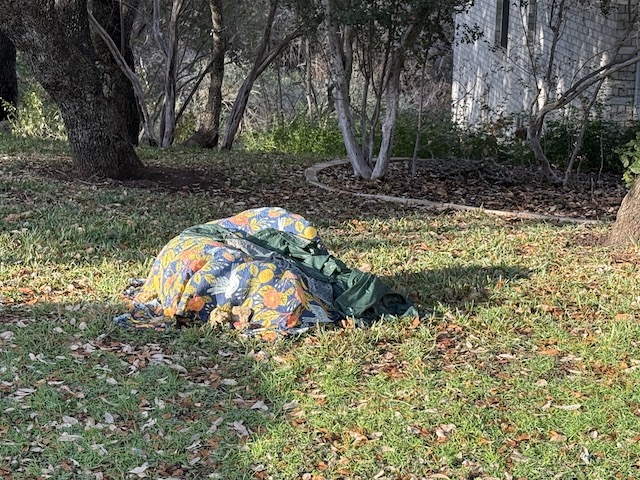
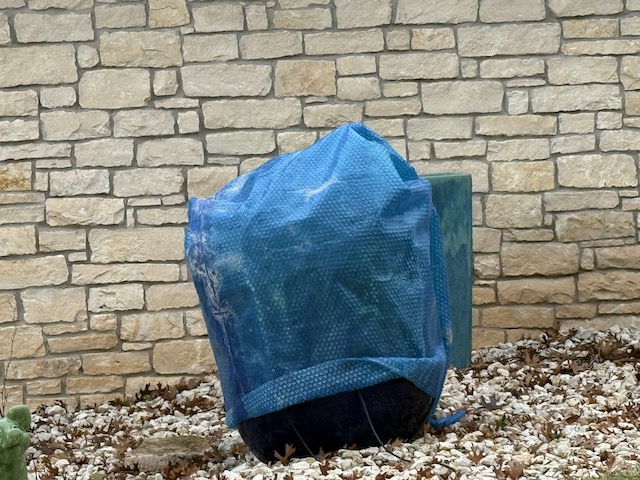
We expect the Arctic cold to hit this week, so I thought it would be a good idea to cruise the neighborhood to see if folks are prepared. Our temps will drop at night to below freezing, so plants will need covers. We are catered by 24 Diner of Austin. Our entertainment is Simon and Garfunkel.
Waking up to WordPress’s elimination of the Classic editor made a cup of coffee more vital than ever. The machine didn’t disappoint, and the first cup was thrown back like a shot of cheap whiskey. The second cup brought to mind a workaround.
I found that clicking on the notification bell before opening a blank post still gave me the choice of which editor to use. Being sure this situation won’t last long, it is to be enjoyed while still here. This post was done in the Classic editor.
Now that the editor problem is solved, for the time being, the coffee gave me a brain teaser. “Peter Puck and Paul Peck used a pick on a mountain pock and found only a used hockey puck.”
My text notification goes off, and it is Linda Hill. It reads:
Your prompt for #JusJoJan the 18th and Stream of Consciousness Saturday is: “pack/peck/pick/pock/puck.” Use one or use ’em all for bonus points—it’s up to you! Enjoy!
Today’s good news comes from The News Tribune in Tacoma, Washington.
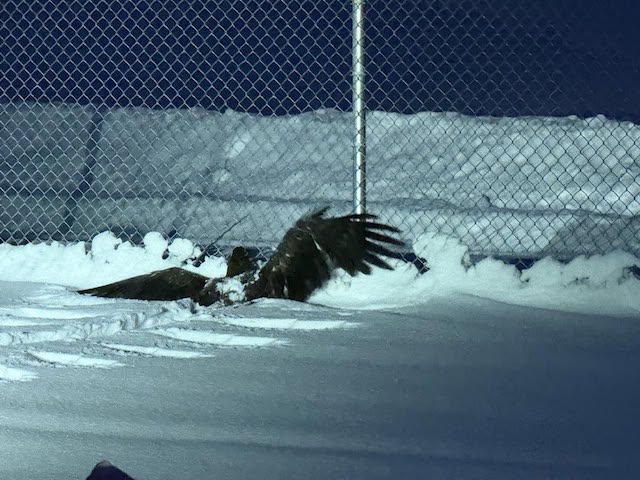
A bald eagle was found ‘frozen’ and unable to fly. See the rescue with the ‘best ending ever.’
Story by Sara Schilling
First responders in Alaska had an unusual overnight guest: a juvenile bald eagle needing help.
A good Samaritan came across the “quite frozen” eagle that couldn’t fly on the evening of Jan. 11 and waved over a Fairbanks International Airport police officer, the Fairbanks Airport Police and Fire Department wrote in a Facebook post.
According to the post, after checking with the Alaska Raptor Center, first responders put the eagle in a patrol car to keep it out of the cold.
A quote from the Facebook post “Dispatch, we’ve got one detained…
While we normally wouldn’t release the name of those we take into protected custody, we figured this time it would be ok!
One of our officers was flagged down this evening by a Good Samaritan who found a juvenile bald eagle who was quite frozen and unable to fly. After consulting with representatives of the Alaska Raptor Center, the decision was made to secure the little guy or gal in the backseat of the patrol car till it could thaw out and get dry. It’s now resting peacefully in a dark, quiet corner of the station until tomorrow when representatives from Alaska Fish & Game and the US Fish & Wildlife Service help us release it back to the wild as long as it’s not showing signs of illness or injury. (Hint…keep an eye our page tomorrow) “
The eagle spent the night munching on fatty steak and salmon and “resting peacefully in a dark, quiet corner of the station,” officials said.
Officials said the eagle was assessed with help from the U.S. Fish and Wildlife Service, the U.S. Department of Agriculture Wildlife Services, and the Alaska Department of Fish and Game, and it was determined to be in great shape.
The Fairbanks Airport Police and Fire Department said in a follow-up Facebook post on Jan. 12 that the bird was released back into the wild, declaring it “the best ending ever.”
People can be heard celebrating in the background.
“Oh yeah, he soars,” someone said as the eagle fled.
Another person said, “He’s super strong. That’s wonderful.”
In the follow-up Facebook post, officials thanked “everyone who showed concern, especially the Good Samaritan who called in the frozen bird and helped (rescue) it. We wish every day could be as exciting as this one was!”
The good news in this story is that someone cared enough to report a bird in distress, and as a result, it was saved. Today’s JohnKu talks about involvement. I hope you have a great weekend.
Jacqui Murry writes wonderful books about life before modern history. I am so pleased to be a stop on her blog tour. She is here to discuss two of her books and give us some information on the life of Neanderthals. So, Jacqui, the blog is yours.
Thank you, John. It is a pleasure to be here. When you originally agreed to host a stop, you expressed interest in what Neanderthals ate. So, let’s go to that subject first.
What Did Neanderthals Eat
–John Howell
Neanderthals lived in a vast swath of Eurasia, from the Atlantic shore to the Altai Mountains in Siberia. They migrated often in response to the movement of herds, the fruiting of trees, and the weather. Evidence left behind in their home-of-choice, caves, shows they stayed there for only a few weeks to a month before moving on.
Why was their lifestyle nomadic? And once we understand the ‘why,’ what is the proof?
History of nomads today
Neanderthals were hunter-gatherers who lived in an area until they ran through its resources and then moved on to a new area. They never stripped it, understanding that enough must remain for regrowth so they could come back and re-harvest. They adapted their diet to the resources that were most readily available and easily accessible.
Feeding a tribe of ten-twenty individuals (a common Neanderthal tribe size) for seven days requires the equivalent of three reindeer. Though common lore shows them as meat eaters, they ate a surprisingly varied diet depending upon whether they lived in forested landscapes, grasslands, mountainous regions, or a seaside (where they ate fish, mollusks, seals, and even dolphins). In Southern Europe–like Germany, where they were first discovered–they ate lots of crabs, clams, fish, and seabirds.
What did they eat?
Specifics of what they ate comes from analyzing their teeth, bones, scat, and fragments in their living spaces. Here’s a partial list: meat, birds, groundhogs, rats, mushrooms, plants, nuts, fruit, nuts, tubers, grasses, cattails, insects, moss, seafood, and other foods that varied depending on location.
When they ate meat, killing and processing were systematic, not a free-for-all. They were savvy enough to know and value the richest parts of the animal–internal organs, eyes, tongue–but used all parts. For example, fat for its purposes, tendons for cordage, and gut sacks for bags. They liked sweet flavors, so were happy to find honey to add to their diet.
At this point in human evolution, food was eaten raw and cooked. Often, the food Neanderthals ate required careful preparation and benefited from the addition of spices and herbs. Many leftovers and scraps were combined into stews. Their expertise in cooking foods was so advanced that we now consider it a strong indicator of their intelligence, akin to modern man.
How did they eat?
Eating large pieces of meat was done by holding a chunk between their teeth and cutting some off with a cutter, then passing the large piece on to the next person around the fire. Leaves were used as plates and then eaten. Bark was also used and then repurposed as tinder for fires. They didn’t use utensils. Neanderthals threw away nothing they could use.
At one point, scientists thought the reason Neanderthals became extinct was because large game disappeared. When we came to understand that Neanderthals were omnivores like you and I, this theory fell out of favor.
There’s a lot of interesting information on how Neanderthals cooked their meals, but I’ll save that for the article on that subject.
Blurbs
Savage Land is the third prehistoric man trilogy in the series, Man. Vs. Nature.Written in the spirit of Jean Auel, Savage Land explores how two bands of humans survived one of the worst natural disasters in Earth’s history, when volcanic eruptions darkened the sky, massive tsunamis crossed the ocean in crushing waves, and raging fires burned the land. Each tribe starring in the story considered themselves apex predators. Neither was. That crown belonged to Nature and she was intent on washing the blight of man from her face.
In Endangered Species, Book One of the trilogy, Yu’ung’s Neanderthal tribe must join with Fierce’s Tall Ones—a Homo sapiens tribe–on a cross-continent journey that starts in the Siberian Mountains. The goal: a new homeland far from the devastation caused by the worst volcanic eruption ever experienced by Man. How they collaborate despite their instinctive distrust could end the journey before it starts or forge new relationships that will serve both well in the future.
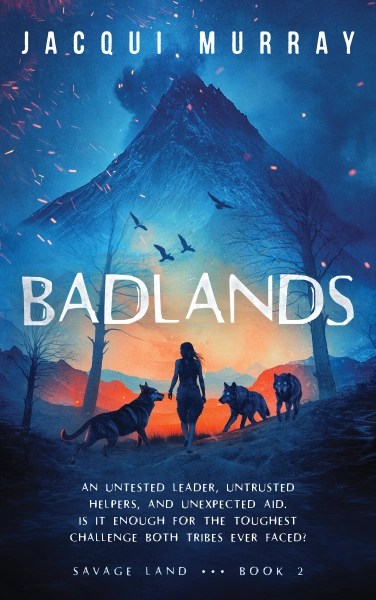
In Badlands, Book Two, the tribes must split up, each independently crossing what Nature has turned into a wasteland. They struggle against starvation, thirst, and desperate enemies more feral than human. If they quit or worse, lose, they will never reunite with their groups or escape the most deadly natural disaster ever faced by our kind.
Join me in this three-book fictional exploration of Neanderthals. Be ready for a world nothing like what you thought it would be, filled with clever minds, brilliant acts, and innovative solutions to potentially life-ending problems, all based on real events. At the end of this trilogy, you’ll be proud to call Neanderthals family.
Jacqui Murray is the author of the popular prehistoric fiction saga, Man vs. Nature which explores seminal events in man’s evolution one trilogy at a time. She is also author of the Rowe-Delamagente thrillers and Building a Midshipman, the story of her daughter’s journey from high school to United States Naval Academy. Her non-fiction includes 100+ books on tech into education, reviews as an Amazon Vine Voice and a freelance journalist on tech ed topics.
Chapter 1 of Endangered Species, 75,000 years ago, What we call Germany today.
Jun was lost. Again. He gripped his thick-shafted spear in one hand, throwing stones in the other, and brushed aside the prickle of fear that flooded his body.
It wasn’t being alone that worried him. This was his first time hunting with the clan. He’d wanted to do well.
Initially, Jun had kept pace with the hunters, his strides long and easy, eyes firmly locked on the back of the male in front of him, but—as too often happened—he became distracted by a bird’s call and wandered off to find it, maybe talk to it. Someone shouted his name, far away and so muted, he barely heard it. He didn’t respond, of course. Upright voices would frighten the bird if it hadn’t already fled. He hunkered into the underbrush, reduced his breathing, and squatted there long … longer … but the bird fell silent.
I’ll look for it next time I’m out here.
He stood. Feet spread, ears perked, he twisted around, and to his horror, didn’t recognize where he was. Nor did he hear the sounds of his fellow hunters moving along Deer’s trail.
I wandered farther than I intended, and hurried away, through the leaves and dirt, hoping to find Deer’s trace or his clan’s prints, but found neither so he shouted. The sound echoed harshly through the trees.
No response.
They can’t be far. By now, they must know I’m not with them.
He hugged his arms around his chest, suddenly cold, and tilted his head up. Sun had moved, a lot. Instead of worrying him, it comforted him.
I’ll stay here until they return.
He crouched, picked at the forest’s hearty overgrowth, ate a few worms, and waited. No one came. He called several times, but all he heard were insects, a snake slithering, and squirrels chattering.
I’ll go where Deer is.
He knew where the herd headed because he’d followed it several times to where it ate the fresh young grasses, safe, it thought, from prying eyes. He trotted down what he hoped would end up their trail, searching for trace, listening for the rustle of hide-covered bodies passing through dense brush carrying carcasses. Finally, later than expected, he found Deer’s path, but they didn’t stop in their usual place. They must have known they were being stalked—the hunters were noisy—and trotted into a scree pile as though knowing that would conceal prints, which it did. Jun could either keep wandering until he re-located the clan’s path or make his way back to the camp.
He checked Sun, but it was now hidden by clouds.
He crouched, comfortable in his waiting. No one would be surprised. He often returned late with tales of an excursion rather than armloads of meat to feed the clan. The group would have ejected him, forcing him to make his way alone, but his mother was the clan healer and wouldn’t allow it. She was training him to take over when her stiff joints and failing eyesight meant she could no longer fulfill her duties. He had no interest in illnesses, but understood he must fulfill some duty or lose the tribe’s protection. As a result, he assisted her if he couldn’t avoid it and learned enough about herbs and mulches and poultices to be tolerated.
None of which helped him now.
I can’t wait, and scrambled up a hillock, found a landmark he knew, and headed toward it along a debris-laden forest floor, head up, eyes shut to concentrate on a panoply of delightful odors. He heard the hiss but as background noise to his meandering daydreams. By the time it stiffened his hackles and his eyes popped open, it was too late.
Snake!
Jun stabbed with his spear, to frighten not kill, but missed. Snake didn’t. A blur of movement and pain seared through Jun’s body. He collapsed with a thud and Snake slithered away. Jun attempted to stand and crumpled.
I’ll crawl along the path. The hunters will see me on their way back. Sweat broke out across his forehead. As will predators.
He scuttled into the dirt-clotted root ball of a towering tree, sharing the cozy space with worms, slugs, and spiders.
I’ll call out if I hear someone.
He tamped down the pain and dug through his shoulder sack. No surprise, he forgot to restock his treatments. He tried to blink the dust from his eyes and then rubbed, using the cleanest part of a grubby finger. He mulled over what to do as his ankle swelled bigger than his calf and heat flushed through his body. Everything around him spun and his eyes drooped. The more he strained to think, the more his head throbbed. He tucked his legs against his chest and imagined Snake’s poison infecting his insides.
How do I stop it before it stops me?
He solved it by passing out.
The scrape of a foot awoke Jun. Every part of his body hurt, but he managed to crack one eye. An Upright female not his kind strode toward him, a spear in one hand and a blistering frown on her face. He should say something, but his mouth was too dry.
She acts like she knows me.
He tried to rise, but no part of his body cooperated so he stared at her, worried and somewhat disturbed by the dark fury she directed at him.
Why is she so angry? I’ve done nothing to her.
Seeing his swollen red ankle did nothing to soften her attitude. Disgust washed over her in waves and her fists clenched a rough-hewn lance so tightly, the whites of her knuckles gleamed.
There is something familiar about her….
She had the small skull, long limbs, and narrow torso of a Primitive, lacking the musculature common to Jun’s kind. And it hit him.
“Xhosa?”
She growled in response, a sound so like hatred, he would have pulled back if the tree trunk didn’t stop him.
The female Xhosa visited his dreams often and they got along well. They discussed topics no one shared his interest in—where the herds went during their migrations, why Spider’s thin silken strands were so strong, why Sun left if Moon arrived. Did one orb fear the other or had they arranged to share the sky in this way? These types of curious queries annoyed everyone in his tribe, but excited Xhosa.
“Why are you here? I only see you in dreams.” He squiggled, attempted to stand, and collapsed. “Am I dreaming?”
“No, Shanadar. You have forced me to come in person. Night is approaching. It is not safe to be out here alone. Return to your homebase. I have plans for you and being eaten by Cat isn’t one of them.”
Her lips didn’t move nor were her words the clan’s, but he understood what she said. He wanted to ask why she cared if the night stalkers ate him, but what he said was something else entirely.
“Snake poisoned me.”
Shock flashed through her eyes and she scowled. “I see. You won’t be leaving on schedule.”
His head spun, started to ask what schedule, but stopped himself. Whatever the answer no longer mattered.
“Xhosa. Snake killed me. Well, there are treatments for Snake’s venom, but I didn’t bring them. Mother has them, but I can’t get to her fast enough. And the hunters—I don’t know what happened to them. They should have come by now….”
His voice trailed off. Talking exhausted him. Still, he owed her one more explanation. “Whatever your plan, it can no longer include me.”
She dismissed him with a flip of her fingers. “You’re not going to die, Shanadar. Come. My kith can take care of you.”
“Shanadar,” he mumbled. “She keeps calling me Shanadar.” She didn’t explain why and he didn’t ask. Or mind.
But he did ask about kith as Xhosa yanked him to his feet—foot, the injured one dangling uselessly above the ground—encircled her arm around his waist and draped his around her shoulder before replying.
“You call your group a clan. Ours is kith. The Tall Ones are a band, the Canis Pack.”
Tall Ones? He tried to make sense of her answer, but the words got lost in his muddy thoughts.
I’ll ask later.
They slid through the forest, well beyond his clan’s area and Deer’s favorite eating spots, past a tree tall enough to touch Sun. He’d never seen it before. Did it just grow? Soon, they reached a gathering of Primitives the size of Jun’s clan crouched by an overhang. All had low foreheads, prominent brow ridges, and body shapes like a shorter version of the tall slender strangers who occasionally passed through the clan’s territory—
That’s who she called Tall Ones!
The kith members wore long wraps or capes like Xhosa’s, unsewn, as though they simply cut a hole in a pelt big enough for their head to push through. No capes or wraps, and foot coverings were fur or bark strapped to feet.
But the dark, deep eyes, fixed on the new arrival, shone with intelligence. They blinked a greeting before resuming their work.
“They expected us?”
“No. They have adjusted to strangers trailing in here with me.”
Jun’s eyes popped open. “Other Uprights?”
She chuckled, the first smile he’d seen from her since she showed up. “Usually pawed and tailed.”
He had no idea what to ask about that and didn’t bother trying. Ignoring the growing ache in his leg took all his energy. She has much to explain, but it will wait until I recover.
Xhosa pushed him gently toward a boulder. “Crouch there.”
He collapsed. His good leg was numb. Even if she hadn’t told him to rest, he couldn’t have gone farther. The relief to his pounding ankle was overwhelming. He stilled his entire body, his breathing shallow as another Primitive approached, holding supplies eerily similar to those Jun’s mother carried. Then, before he could blink, she cut across Snake’s puncture and squeezed. He started to scream, but stopped because he felt nothing. The poison dried up and Xhosa scrubbed the puncture. Once she deemed it clean, she applied moss to suck out new impurities, as his mother would. All Xhosa’s ministrations were like his mother’s except Xhosa’s didn’t hurt. Mother’s always did.
Xhosa rotated back on her heels with a grunt of either satisfaction or hopelessness. Jun was too hot, tired, and sick to care.
She stood. “I will deposit you where I found you. You will awake groggy, feeling unwell, but you will be fine.”
Today, I randomly opened a proof copy of soon to be published Detour on the Eternal Road to page 150. With my eyes closed, I pointed to the page. The word “stories” was closest to my finger and is the prompt.
“That’s impossible. You’ve seen so much and have been all over the world. There has got to be one you haven’t told.”
“Well, let me think.”
“Oh, goodie.”
“Have I told you about the time I avoided capture by an enemy?”
“I don’t think so. Start it, and I’ll interrupt if you have.”
“Okay. Once upon a time—”
“Hold it. Heard that one.”
“I was just setting the scene.”
“Okay. Go ahead.”
“Who is the storyteller here anyway?”
“I’m sorry, go ahead.”
“I was minding my business and going into the pantry for a snack.”
“Lots of good stuff in there.”
“Excuse me.”
“What?”
“You want to tell the story.”
“No, but it does take you a while to get to the point.”
“Okay, then the point was there was this large chunk of cheese sitting on a wooden platform with some kind of spring-loaded metal apparatus held by a rod connected to where the cheese sat.”
“So it was a mouse trap.”
“How do you know?”
“Duh. There’s the internet, Dad.”
“So there I was, getting hungry and not knowing what to do.”
“So you grabbed something and threw it on the cheese, which sprung the trap, and you had a delightful meal.”
“So much for the story. I guess you heard it before.”
“Not really, it’s just what I would have done.”
“At least you know what to do if you are in the same circumstance.”










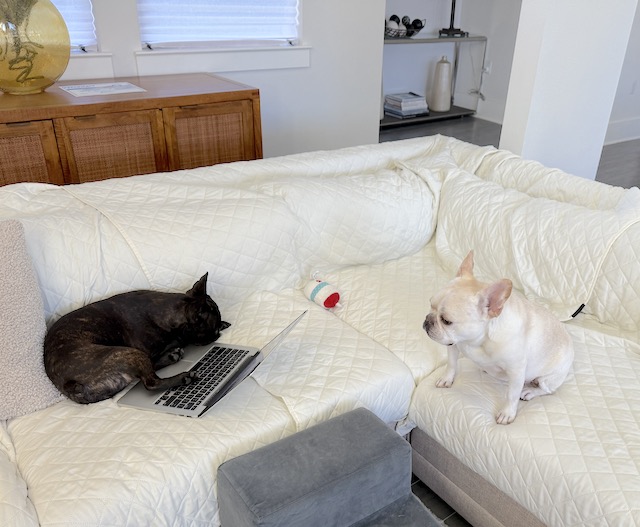
 “
“





 Jacqui Murry writes wonderful books about life before modern history. I am so pleased to be a stop on her blog tour. She is here to discuss two of her books and give us some information on the life of Neanderthals. So, Jacqui, the blog is yours.