Today’s good news story is taken from the Good News Network about the sighting of a bird not typically seen in the US. Here’s the story in its entirety. Thanks to the Good News Network.
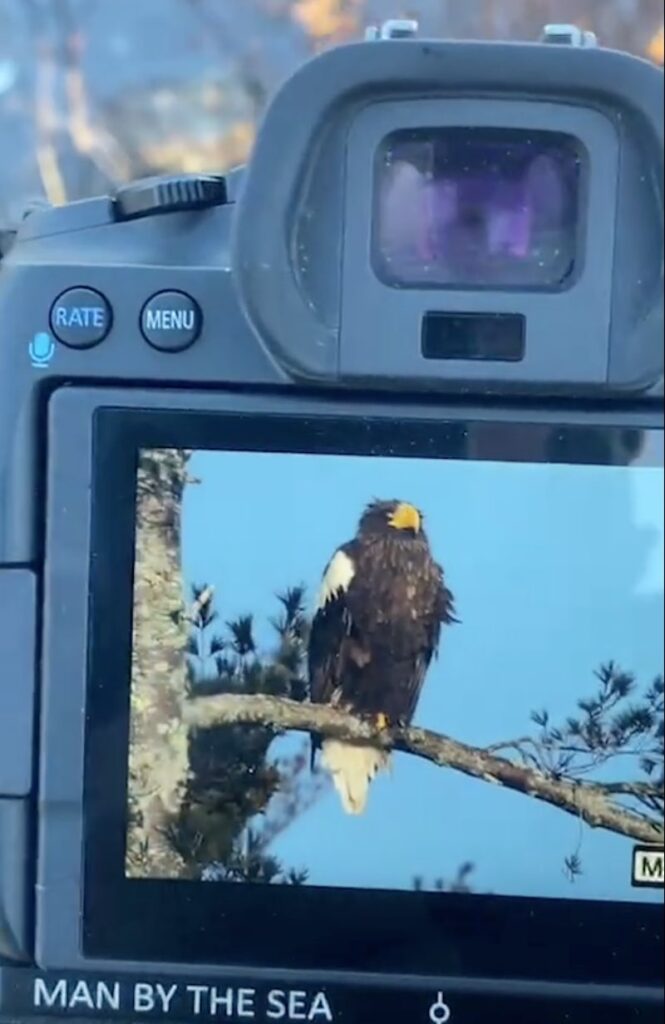
The Steller’s sea eagle. It’s ripped, royal, and rare. To see the world’s heaviest eagle, with its eight-foot wingspan, an American would typically have to visit Korea, Japan, or eastern Russia. Never had one of the sea eagles ever been spotted in the lower 48 states—until now.
Five days before Christmas, one of the majestic birds flew into Boothbay Harbor, Maine, and it’s pulling birdwatchers from all over the east coast to see it.
Members of the Massachusetts Audubon Society first spotted the raptor known for its huge golden bill.
NPR reports that the unique tail feather arrangement suggests this is the same bird that was spotted in summer in Canada and Alaska. Straying outside of its native range, it’s known as a “vagrant.”
As of January 16th, the wayward bird was still in Maine, having first been documented as a vagrant in Alaska’s Denali National Park, 4,700 miles away, in August.
The chance to see this eagle would normally involve a plane ride anywhere from 6-12 hours and a passport, so the bird’s appearance in the US is pulling amateur ornithologists from their nests in places like New Jersey for a spontaneous road trip known as “chasing.”
When a rare species, especially a rare vagrant, is spotted, intrepid birders chase reported sightings around the region using apps like eBird, or through various Facebook groups.
John Putrillo recently photographed this celebrity bird of prey. His Instagram, Manbythesea, is now filled with beautiful images showcasing its dark brown feathers and a bill that’s built to tear fish like salmon into bitesize pieces.
The eagle has given Putrillo a new passion: “I want to learn about all bird species now,” he says. “I want to find every bird I can from the smallest to the largest.”
The good news here is at least some of the bird watchers in this country have a chance to see this magnificent bird. Today’s JohnKu talks about the miracles of nature. I hope you have a great weekend.
Nature by John W. Howell
A vagrant or not,
The Steller’s Sea Eagle is . . .
Nature’s miracle.
I am at Story Empire today in case you want to come over. I’m talking about things you can do if the desire to write is missing. HERE is the link.