FridayJohnKu – AKA – TGIF – Good

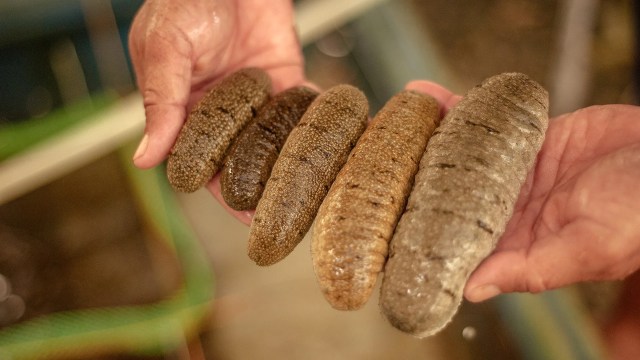
Photo by Maria Louella Tinio


Today’s good news comes from the BBC and was sent to me by Noelle Granger. The following is a condensed version of the article.  You can see the full article HERE.

‘We’ve raised thousands’: The pickle-shaped ‘janitors’ cleaning Filipino reefs

Sea cucumbers, or ‘janitors of the sea’, scour and clean the seafloor, allowing other animals to thrive. In the Philippines, a group of women stand guard to help them multiply.

Aweng Caasi, a 61-year-old widow, often sits for hours in a wooden hut towering over waist-deep waters in Bolinao, a small town some 300km (190 miles) north of the Philippines’ capital of Manila.

The hut serves as a guard post for fisherfolk protecting a sea ranch filled with sea cucumbers. These unique-looking bulbous brownish-green animals have taken them years to raise.

Caasi’s late husband, Ka Artem, was the leader of the fisherfolk group in the village of Barangay Victory in Bolinao that worked with scientists to build the ranch almost two decades ago. They hoped to replenish the supplies of these pickle-like creatures, which once swarmed these waters. Today, Caasi carries on this legacy.

When Caasi was still in her teens, the Philippines was the top producer of wild sea cucumbers – between 1985 and 1993, it exported some 3,000 to 4,000 tonnes. But overexploitation and overfishing led to a sharp decline in stocks. In the 1980s, fisherfolk in Bolinao and its neighbouring island town, Anda, were collecting up to 100kg (220lb) of sea cucumbers per person per day. The daily per-person catch plummeted to just 25kg (55lb) a decade later, and by 2002, to a measly 2.55kg (5.6lb).

The waters around Caasi’s home, once crowded with the cucumbers, had become barren.

Apart from their economic value, sea cucumbers provide benefits for the environment. Commonly referred to as the janitors of the sea, they clean sediments in the seafloor by eating bacteria and decaying organic matter, and recycle nutrients that benefit ecosystems. Their presence has even recently been found to suppress diseases among corals. Bolinao and its neighbouring towns are known for their rich marine life, which includes a 200 sq km (77 sq mile) coral reef area that provides benefits to residents through shoreline protection, fisheries, aquaculture, and tourism.

Annette Meñez, a marine invertebrate ecologist at the University of the Philippines Marine Science Institute (UPMSI), reached out to the Bolinao fishing communities in the early 2000s to ask if they would like to try co-designing a system to restore the town’s sea cucumbers. Meñez has been researching marine invertebrates with UPMSI since the 1980s, including how to help Bolinao’s fishing communities replenish their stocks of sea urchins and giant clams. She also now co-chairs the sea cucumber specialist group of the International Union for Conservation for Nature’s Species Survival Commission.

The university ventured into sea cucumber conservation when it observed the cucumber population shrinking. Meñez says the fishers back then would harvest small sea cucumbers before they were mature enough to reproduce.

In July 2009, less than two years after the first juveniles were sent out in December 2007, the Bolinao farms recorded significant boosts in sea cucumber stocks. Over 19 months, the population had jumped from around 400 to more than 5,500 individual sea cucumbers. The number of reproductively mature adults also climbed from 37 per hectare seven months after the release, to 249 after 19 months, due to mass spawning. As of the latest record in 2024, the ranch has a density of 4,415 sea cucumbers or 883 individuals per hectare, according to UPMSI.

As well as observing an increase in sea cucumbers, the farmers saw a rise in the presence of other animals. Gemma Candelario and Marivic Carolino, who raise mangroves in a neighbouring village, started monitoring and guarding cucumbers in their area in 2022. Within two years, they say, they noticed more species of sea cucumbers and fish arriving.

“The sea cucumbers would eat waste [cleaning the ecosystem] so that’s why more fish would appear,” says Candelario. “Some fish would lay eggs in our mangroves, and other animals would appear, such as crabs and shrimp… So this is a big help for us fisherfolk.”

The researchers from all the sea cucumber farms emphasise that the social impact on the communities was their most valuable milestone. “For me, resilience is not just resilience of ecosystems,” says Meñez. “It has to be the resilience of the coastal communities and the ecosystems they depend on.”

The good news in this story is that the Sea cucumbers are making a comeback with the help of concerned humans. Today’s JohnKu discusses humans’ role in helping the environment. I hope you have a great weekend.

Help by John W. Howell © 2025

When nature struggles,

Humans need to get involved . . .

And help Mother work.

Friday JohnKu – AKA – TGIF – Fri-Yay/Good News

© energy dependence


Today’s story comes from INFO Culture and was sent to me by Noelle Granger.

Goodbye to energy dependence – Alaska discovers more than 1,200 TWh hidden under the ice, and the find could change the world

A Frozen River in Alaska Could Hold the Key to America’s Next Energy Breakthrough

Move Over Solar and Wind—There’s a New Renewable Power Source Flowing Under the Ice

For years, the United States has been chasing the dream of energy independence. From offshore drilling to wind farms and desert solar arrays, every strategy has aimed to reduce reliance on fossil fuels and foreign oil. But what if the future of clean, constant energy isn’t in the sky—or under the earth—but under frozen rivers in Alaska?

Yes, you read that right. Beneath the ice-covered surface of rivers like the Yukon, water flows year-round. And with it, an invisible, powerful current of renewable hydrokinetic energy—an untapped resource that could reshape how remote communities, and possibly the nation, power their lives.

What Is Hydrokinetic Energy—and Why Should You Care?

Unlike dams that flood valleys or wind farms that depend on gusty weather, hydrokinetic energy captures the natural flow of water without disrupting the environment. Special turbines are placed underwater, spinning silently as rivers flow past them—even when those rivers are sealed under ice for months at a time.

The star of this story? A new technology called the Reactive Reversible Blade Turbine (RRBT), which can generate electricity in slow-moving, ice-covered rivers. Developed with support from the University of Alaska Fairbanks (UAF) and backed by a $1.5 million U.S. Department of Energy grant, these turbines are being tested in Alaska’s Tanana River right now.

Why Frozen Rivers Are the Perfect Power Plants

Rivers like the Yukon continue to flow beneath thick layers of ice, even during brutal Alaskan winters. That means they offer something solar and wind can’t: constant, year-round power. In regions where the sun disappears for weeks and the wind dies down, this uninterrupted energy flow is a game-changer.

And it’s not just theoretical. According to UAF research, U.S. rivers could generate more than 1,100 terawatt-hours (TWh) of renewable electricity each year—roughly a third of America’s total electricity consumption. That’s:

  • Enough to power 100 million homes annually
  • Nearly double the output of all U.S. solar panels combined
  • A potential lifeline for off-grid and Indigenous communities still dependent on costly, imported diesel fuel

No Pollution. No Pipelines. No Grid Required.

Hydrokinetic power is especially suited for remote locations. Many Alaskan villages can’t access traditional energy infrastructure. Instead, they rely on diesel generators that are expensive to fuel and maintain. These new turbines offer a cleaner, quieter alternative that can be installed and managed locally, creating new jobs and slashing energy costs.

And unlike other solutions, this one doesn’t need a grid connection. That’s a big deal for communities that are miles from the nearest power line.

Who’s Behind the Innovation?

This isn’t a tech unicorn or billion-dollar startup. The work is being led by public institutions and research labs, including:

  • University of Alaska Fairbanks (UAF)
  • Alaska Center for Energy and Power (ACEP)
  • Creek Tides Energy and Power, a turbine design firm
  • Southwest Research Institute
  • Pacific Marine Energy Center, part of the Department of Energy

Other parts of the world are already harnessing hydrokinetic power. Scotland’s MeyGen tidal array is supplying homes with clean electricity. In Canada and parts of New York, underwater turbines are quietly producing energy without a sound.

But Alaska, with its sprawling river systems and challenging winters, may be the ultimate proving ground.

The Quiet Energy Revolution Has Already Begun

The energy future we’ve been waiting for may not come from deep mines or solar megaprojects. It might be flowing just beneath our feet—silent, steady, and under a sheet of ice.

And unlike solar panels or wind turbines, this power doesn’t shut down when the sky clouds over or the wind dies. It just keeps moving. Because rivers don’t stop.

Why This Matters—Right Now

As America confronts rising energy costs, climate change, and unreliable power grids, we need solutions that are not only clean but also constant. Hydrokinetic river energy checks both boxes. It’s renewable, reliable, and ready to scale.

So maybe it’s time we stop chasing what’s buried deep underground and start listening to the quiet current beneath the ice.

Alaska’s rivers might just carry the future of American energy.

The good news in this article is that folks are working on another alternative to fossil fuels that don’t have the downside carbon costs of other alternative methods. Today’s JohnKu talks about alternatives. I hope you have a beautiful weekend.

Choices by John W Howell © 2025

More smart minds at work,

Great thinking outside the box . . .

For our greater good.

Friday JohnKu – AKA – TGIF – Fri-Yay/Good News

The plane wreckage near the eastern side of Tustemena Lake – credit Dale Eicher


Today’s good news comes from the Good News Network

Rescuers Relieved to Find Pilot, 2 Children Survived Crash Landing on Frozen Alaskan Lake

Fearing the worst after a prop plane was reported overdue for landing in Alaska last Sunday, search and rescue volunteers were relieved when news rang out that all three passengers survived.

The pilot and two children, who were in elementary and middle school, survived a crash landing on the frozen surface of Tustumena Lake and walked until they were seen.

The story first broke Sunday night/Monday morning that a Piper PA-12 Super Cruiser, which departed Sunday from Soldotna Airport near Kenai on a sightseeing trip, didn’t land when it should have.

John Morris, the father of the missing pilot, told CNN affiliate Alaska’s News Source that his son’s cell phone sent its final ping at about 5:00 p.m. Sunday evening over Tustumena.

Alaska’s News Source reports that a National Guard and state trooper search and rescue operation was augmented by volunteers from the community. One family friend posted a notice for help on Facebook that was re-shared 420 times.

Eventually, a Good Samaritan who saw the plane wreckage and three people walking on the frozen lake helped rescuers find them.

The three survivors were taken to a Kenai Peninsula area hospital and treated for “non-life-threatening injuries.”

Dale Eicher was one of the locals who heard the call for help. With a background in assisting search and rescues, he went up in his own plane to look for survivors but had barely arrived in the last known position before he heard over the radio that three people had been reported found.

“I called the troopers immediately because I was still in cell service, and I knew it was a really good chance that the guy who had found him was not in cell service,” Eicher said. ” I was really shocked. I didn’t expect that we would find them. I didn’t expect we would find them alive for sure…it doesn’t always turn out this well.”

The good news here is the community went all out to find the survivors of a plane crash even though it seemed unlikely anyone could survive. Today’s JohnKu talks about hope. I wish you all a super weekend.

Optimism by John W. Howell ©2025

Against all the odds,

Hope always carries its weight . . .

To make miracles.

Friday JohnKu – AKA – TGIF – Fri-Yay/Good News

First authors Diksha Sharma, left, and Vignesh Menon lead experiments on seawater collected from the Gulf of Maine – Credit: Annie Kandel, released

Today’s Good News story comes from the Good News Network

Trillions of Microscopic Sea Plankton Recruited to Solve the Carbon Problem

American scientists have proposed a new method for recruiting trillions of microscopic sea creatures and their insatiable appetites to fight climate change.

The technique harnesses the animals’ daily habits to accelerate the ocean’s natural cycle for removing carbon from the atmosphere, known as the biological pump, according to the paper in Nature Scientific Reports.

The study, published by researchers at Dartmouth College, reported that spraying clay dust on the ocean’s surface converts carbon into food the animals eat, digest, and send deep into the sea as carbon-filled feces.

They explain that the process would begin with spraying the clay dust at the end of algae blooms. These blooms can grow to cover hundreds of square miles and remove about 150 billion tons of carbon dioxide from the atmosphere each year, converting it into organic carbon particulates. But once the bloom dies, marine bacteria devour the particulates, releasing most of the captured carbon into the atmosphere.

The researchers found that the clay dust attaches to carbon particulates before re-entering the atmosphere. It redirects them into the marine food chain as tiny sticky pellets the ravenous zooplankton consume and later excrete at lower depths.

“Normally, only a small fraction of the carbon captured at the surface makes it into the deep ocean for long-term storage,” says Mukul Sharma, the study’s corresponding author and a professor of earth sciences. Sharma presented the findings on December 10th at the American Geophysical Union annual conference in Washington, D.C.

“The novelty of our method is using clay to make the biological pump more efficient—the zooplankton generate clay-laden poops that sink faster,” says Sharma, who received a Guggenheim Award in 2020 to pursue the project.

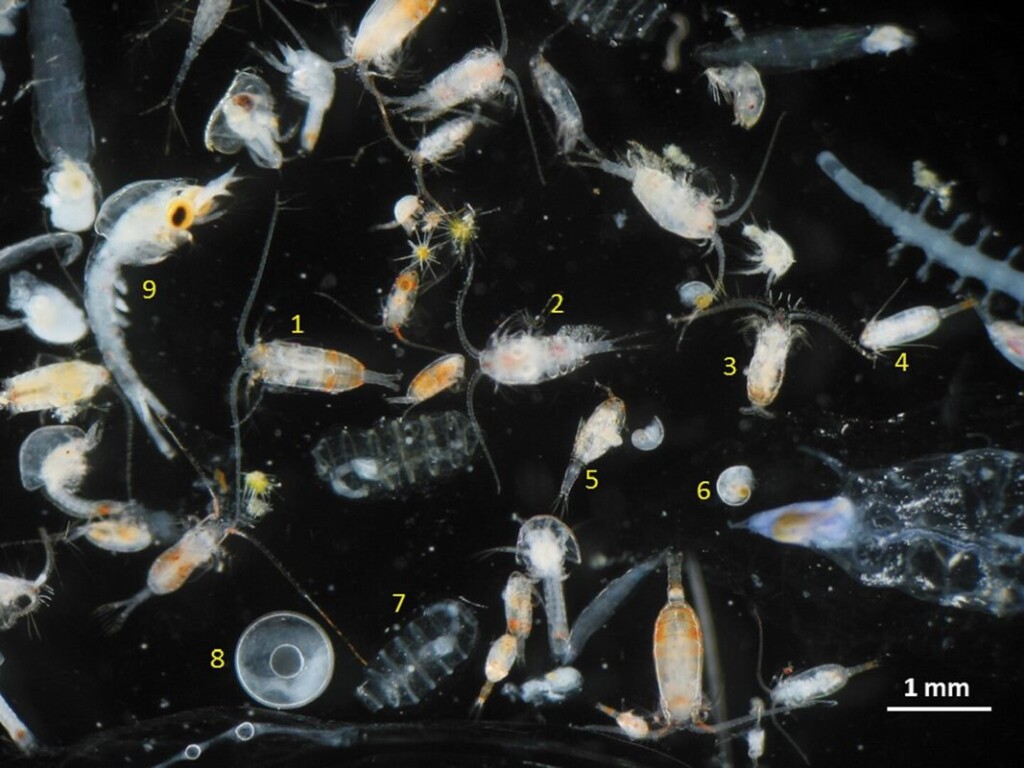
A mixed zooplankton sample including common species – Credit Adriana Zingone, Domenico D’Alelio, Maria Grazia Mazzocchi, Marina Montresor, Diana Sarno, LTER-MC team CC 4.0. BY-SA (John’s note – I don’t have the number key for the photo)

“This particulate material is what these little guys are designed to eat. Our experiments showed they cannot tell if it’s clay and phytoplankton or only phytoplankton—they just eat it,” he says. “And when they poop it out, they are hundreds of meters below the surface, and all that carbon is, too.”

The team conducted laboratory experiments on water collected from the Gulf of Maine during a 2023 algae bloom. They found that when clay attaches to the organic carbon released when a bloom dies, marine bacteria produce a kind of glue that causes the clay and organic carbon to form little balls called flocs.

The researchers report that the flocs become part of the daily smorgasbord of particulates that zooplankton gorge on. Once digested, the flocs embedded in the animals’ feces sink, potentially burying the carbon at depths where it can be stored for millennia. The uneaten clay-carbon balls also sink, increasing in size as more organic carbon, as well as dead and dying phytoplankton, stick to them on the way down.

In the team’s experiments, clay dust captured as much as 50% of the carbon released by dead phytoplankton before it could become airborne. They also found that adding clay increased the concentration of sticky organic particles—which would collect more carbon as they sink—by 10 times. At the same time, the populations of bacteria that instigate the release of carbon back into the atmosphere fell sharply in seawater treated with clay, the researchers report.

Sharma says that in the ocean, the flocs become an essential part of the biological pump called marine snow. Marine snow is the constant shower of corpses, minerals, and other organic matter that falls from the surface, bringing food and nutrients to the deeper ocean.

“We’re creating marine snow that can bury carbon at a much greater speed by specifically attaching to a mixture of clay minerals,” Sharma says.

Zooplankton accelerate that process with their voracious appetites and incredible daily sojourn, known as the diel vertical migration. Under cover of darkness, the animals—each measuring about three hundredths of an inch—rise hundreds, and even thousands, of feet from the deep in one immense motion to feed in the nutrient-rich water near the surface.

When the day breaks, the animals return to deeper water, depositing the flocs as feces. This expedited process, active transport, is another key aspect of the ocean’s biological pump that shaves days off when it takes carbon to reach lower depths by sinking.

Sharma plans to field-test the method by spraying clay on phytoplankton blooms off the coast of Southern California using a crop-dusting airplane. He hopes that sensors placed at various depths offshore will capture how different species of zooplankton consume the clay-carbon flocs so that the research team can better gauge the optimal timing and locations to deploy this method—and exactly how much carbon it’s confining to the deep.

“Finding the right oceanographic setting to do this work is significant. You cannot go around willy-nilly dumping clay everywhere,” Sharma told Dartmouth Press. “We need to understand the efficiency first at different depths to understand the best places to initiate this process before we put it to work. We are not there yet—we are at the beginning.”

The Good News in today’s story is that scientists continue to work to make our oceans healthier. Today’s JohnKu talks about the oceans. I hope you have a super weekend.

Oceans by John W. Howell © 2024

They cover the Earth,

And have been abused for years . . .

Reversal takes work.

Friday – JohnKu – AKA- TGIF – Fri-Yay/Good News


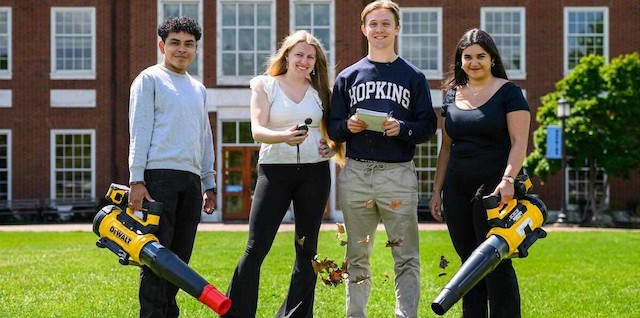
Michael Chacon, Madison Morrison, Andrew Palacio, and Leen Alfaoury – credit WILL KIRK JOHNS HOPKINS UNIVERSITY

Today’s good news comes from the Good News Network.

Students Invent Leaf Blower Silencer Attachment–Corporation Expects to Be Selling Them Soon

Engineering students at Johns Hopkins have created a silencer module for the campus leaf blowers, reducing the devices’ overall noise pollution by 37%. At the same time, they succeeded in almost completely eliminating the high-pitched whining that annoyed them the most.

The design is patent-pending, and Stanley Black & Decker, who sponsored the students, expects to sell them in two years.

It’s not uncommon for leaf blowers to be banned by homeowners associations or following apartment tenant protests—their endless, up-and-down caterwauling of various frequencies is the delight of no one, and worse, landscapers often use them in the early morning to avoid the heat of the day.

“The sound that comes out of this leaf blower is very complicated, and it contains a lot of different frequencies,” said team member Andrew Palacio. “A lot of different notes on a piano would be a good analogy.”

The Johns Hopkins campus currently uses battery-powered leaf blowers, which are already quieter than gasoline-powered ones. Since last September, Palacio and his team members Michael Chacon, Leen Alfaoury, and Madison Morrison have examined the devices in depth—how many sounds are there and what is causing them.

Overall, they have workshopped more than 40 versions of leaf blower silencers. Many of them worked but diminished the power of the air coming out. They eventually came up with an easy-to-secure suppressor that functions much like the ones fitted to firearms.

“Our product takes in a full blow of air and separates it,” Alfaoury told Johns Hopkins. “Some of that air comes out as it is, and part comes out shifted. The combination of these two air sections makes the blower less noisy.”

“It ultimately dampens the sound as it leaves, but it keeps all that force, which is the beauty of it,” adds Chacon.

It’s one thing to come up with trumps in a class project, but this invention isn’t designed to win them any science fairs, but rather for going on Home Depot or Lowe’s shelves.

“It’s not just some cool theoretical thing that will sit on a shelf and never be heard from again—this is ready to be mass manufactured,” said Nate Greene, senior product manager at Stanley Black & Decker, who graduated from Johns Hopkins in 2017 with an engineering degree. “This is a scarce and dramatic level of success.”

WATCH the story below from JH University Press…

The good news in this story is that a problem that is not Earth-shattering has been solved through hard work. Although leaf blower noise is a first world annoyance it is good to see it has been overcome. Today’s JohnKu talks about solving problems.

Solutions by John W. Howell © 2014

Its not world hunger,

But a problem worth solving . . .

Shows genius at work.

Friday JohnKu – AKA – TGIF – Fri-Yay Good News

Harley and Vinny the morkie dogs – @harleymacthemorkie

Today’s good news story comes from the Good News Network.

Watch Tiny Dog Sprint After Coyote While His Puppy Pal is Being Attacked in the Backyard


In California, a little dog was saved from a prowling coyote when his friend, 10 lbs. Maltese, “hero in a fur suit,” summoned all his wolfish instincts to chase the predator out of his yard.

It happened in a flash, just 10 seconds, as Erin Macaluso recounted on Facebook.

Coming back from a nighttime walk, she and her husband forgot to put the cover on the doggie door.

“We are super vigilant dog owners,” she wrote. “Unfortunately, on this one night, we had just taken the dogs out to go potty and forgot to put the cover on the doggie door.”

A coyote slipped through the bars of the metal fence, and, hearing his intrusion, Macaluso’s two dogs quietly went outside to investigate the noise.

They were a 12-pound Morkie, which is a mix between a Maltese and a Yorkshire terrier named Harley, and Vinny, an 11-year-old Maltese with just three teeth.

Californians lose hundreds of pets every year to coyote attacks. With few larger predators to keep their numbers in check, they regularly roam directly into urban and suburban areas to snatch cats and dogs.

In a video posted on Facebook, security camera footage shows a little dog immediately being chased around the yard by a coyote while another beast lurks beyond the fence. Then, a white knight bolts from the house towards the coyote and scares it away.

“Our little HERO Vinny is 10 lbs, 11 yrs old, and only has 3 teeth! But he’s always been scrappy,” wrote Macaluso in celebration of her tiny dog. In the post, she encourages pet owners to never let their guard down. She claims to have lived in the town of Mission Viejo, California, for 30 years without ever seeing a coyote in the yard.

If that’s true, the one time she left the doggie door unlocked, the coyotes were ready to pounce.

Harley, the dog suffered major injuries but will make a full recovery, the vets said.

Click on the link to see the video

https://www.facebook.com/plugins/video.php?href=https%3A%2F%2Fwww.facebook.com%2Ferin.macaluso%2Fvideos%2F267433555656055%2F&show_text=0&width=560

The good news here is a foreceful attitude in times of trouble can go a long way even if you are the smallest. Today’s JohnKu talks about action. I hope you have a wonderful weekend.

Size by John W. Howell © 2023

The age old adage,

Bigger falls harder is true . . .

A quick smaller rules.

Friday JohnKu – AKA – TGIF – Fri-Yay Good News


KDKA photo

Today’s good news story comes from station KDKA, the CBS affiliate in Pittsburgh, PA.

‘Guardian angel’: Mt. Lebanon mail carrier saves disabled veteran who fell into road


MT. LEBANON, Pa. (KDKA) — A local disabled veteran is calling his postal carrier a hero. He says the mailman pulled him to safety from the middle of the street.

“He is my guardian angel,” said Jim Brophy.

Brophy was installing lights outside his home on Mayfair Drive in Mt. Lebanon Monday morning when he fell down several concrete steps in front of his home, landing in the middle of the street.

The disabled Vietnam veteran said he couldn’t move and couldn’t even call for help because his cell phone flew out of his hands when he fell.

His mail carrier Eric was on his regular route when he happened upon Brophy lying in the street.

Brophy said Eric immediately parked his mail truck broadside to stop traffic flow and ran to his side. After asking a series of questions to ensure it was safe to move Brophy, Eric helped the Vietnam veteran to the sidewalk and then went to his door to get his wife.

“He said he’d do it for anyone. ‘I would do it for anyone, sir.’ That’s what he said, and then he thanked me for my service,” Brophy said.

After pulling Brophy to safety, Eric continued on his daily route, not knowing the impact he had on the man who calls him his “guardian angel.” Brophy said he couldn’t let that happen, so he waited for him this morning.

“I saw him walk up the street. I ran across the street, I said, ‘Hey, I don’t even know your name.’ He gave me his name and his route number. And I said, ‘I just want to thank you, man, you’re like my guardian angel, and I appreciate it, and we’re friends for life,’ and we hugged.”

The good news here is one man moved quickly to help another without thinking.
Today’s JohnKu talks about what it takes to be a hero. I hope you have a super weekend and a thoughtful Memorial Day.
Hero by John W. Howell © 2023
Action without thought,
No self-consideration. . .
Marks the hero’s act.

Friday JohnKu – AKA – TGIF – Fri-Yay Good News


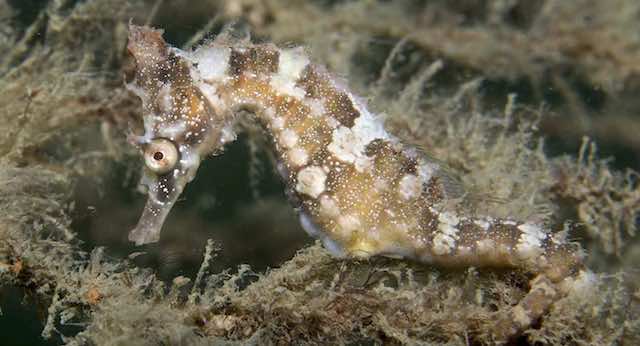
White’s seahorse released in Australia – Supplied by Dr. David Harasti

Today’s good news story comes from my favorite source, the Good News Network. Here is the story.

‘Best One We’ve Ever Done’–Scientists Release Hundreds of Endangered Seahorses Back Into the Wild


Marine biologists restoring populations of seahorses off Australia’s east coast are ecstatic at the best efforts they’ve seen so far.

Hundreds of White’s seahorses, the only seahorse or seadragon species on Australia’s national endangered species list, were released into the waters north of Newcastle into specially-made “hotels.”

The project was conducted through a private-public effort consisting of the Sydney Aquarium and the Department of Primary Industries, (DPI) an agency that oversees hunting, agriculture, fishing, and forestry.

A generation ago, divers might see two dozen White’s seahorses at a time off Sydney Harbor at a refuge called Port Stephens, but coastal development and boat moorings have disrupted the habitat of these beautiful and strange creatures.

Sydney Aquarium has a very successful breeding program for the animal that uses individuals from Port Stephens as broodstock. The fathers raise the eggs of the next generation in a belly pouch—a feature unique in the entire animal kingdom—and are collected in large bags of seawater after they hatch.

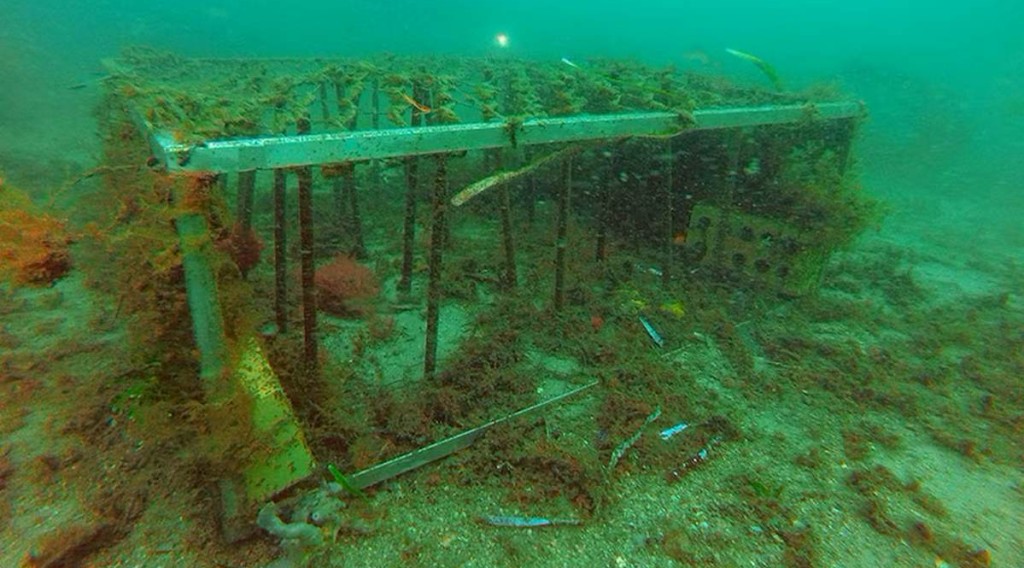
They are then taken to the refuges and lowered down into their hotels. The hotels are essentially cages meant for much larger animals. They create plenty of nooks and crannies that serve as habitats for them and their prey species, like crustaceans.

Recently, aboard a DPI boat off Nelson Bay, Dr. David Harasti, a scientist with the department, released 350 baby seahorses at one time.

The seahorse “hotels” – Dr. David Harasti

“That was the best one we’ve ever done—350 baby seahorses sitting around in their new home,” he told ABC au, who filmed him doing the release.

“It’s great to see, and I can’t wait to go back in a couple of weeks and see how they’re doing.”

Harasti is also planning to check up on his charges this coming October.

The good news here is that with work, endangered species can be saved. Today’s JohnKu talks about what saving endangered species means to us. I hope you have a wonderful weekend.

Endangered by John W. Howell © 2023

Vanishing Species,

Are the early warning signs . . .

For the rest of us.

Friday JohnKu – AKA – TGIF – Fri-Yay Good News

Credit Courtesy Finbarr FallonBjarke Ingels Group

Happy Cinco de Mayo. Today’s good news story comes from the Good News Network.

Skyscraper Bursting with 80,000 Plants Opens in Singapore


If you’re planning a trip to the other side of the world’s richest city-state, Singapore’s “biophilic” CapitaSpring tower is now fully bursting with a publically accessible urban forest.

In Singapore’s business district, you have to go 17 to 20 stories above street level to find vast open greenery. On CapitaSpring’s “Green Oasis” floor, accessible to the public, a spiral path winds through gardens and small replicants of tropical forests, like the kind that stood there before Singapore came to be.

On the roof, three rooftop market gardens supply fruits, vegetables, herbs, and flowers to three on-site restaurants, and trees grow in nooks in the building’s facade as often as windows.

Ground broke in 2018 under the supervision of two of Europe’s most significant architecture firms—Carlo Ratti Associati and the Bjarke-Ingels Group.

“Due to the unique character of Singapore’s urbanism—both extremely dense and green—we decided to make the design a vertical exploration of tropical urbanism,” founder Bjarke Ingels said in a statement, adding that the tower is “like a vision of a future in which city and countryside, culture and nature can coexist.”

The 51-story building houses over 80,000 trees and plants across 90,000 square feet of landscaped area.

Credit Courtesy Finbarr FallonBjarke Ingels Group

It reflects the belief of the nation’s founder, Lee Kuan Yew, who referred to the city-state as a “garden city.” Despite 6 million people filling an area smaller than Greater London, plants are easy to come by and are, in fact, a legal requirement in building regs.

The good news here is that if an effort is made in Singapore to ensure a dense Uban area has a proliferation of plants, such an effort can happen anywhere. Today’s JohnKu talks about creativity in urban planning. I hope you have a wonderful weekend.

Our Cities by John W. Howell © 2023

Alabaster lights,

Gleem on the city walkways . . .

Could accent the green.

Friday JohnKu – AKA – TGIF – Fri-Yay Good News

Today’s good news story comes from the Good News Network.

Meaghan Martin photo

Ex-Racehorse Destined for Kill Pen Rescued by Woman Who Helped Raise Her–WATCH

Meaghan Martin has seen a lot of long faces in her years as a horse trainer, and it was this history that allowed her to turn a potentially-sad story into a happy ending.

She was just a teenager when she met the young mare Saxy, a horse that was to be trained for racing. But having never made a name for herself and collecting only a few thousand dollars in winnings, Saxy was sold on as a workhorse.

Retired equine athletes in America are often sold to the Amish communities, who use them to pull plows and buggies, and it was during this activity that Saxy was involved in a collision that left her marked for slaughter.

Around this time, Martin was all grown up and worked full-time at Red Lion Farm, in Gray, Maine. She was scrolling through Facebook and saw a mare with a brand on her neck that immediately jumped out at her.

“That number is actually what saved her,” Martin told the local NBC affiliate. “I recognized that brand and said, ‘Oh, that’s one of the babies that I worked with.’”

Her friend and owner of Red Lion, Kendra Gorham, felt as Martin did that Saxy had to come home, that they couldn’t let her fall to such a tragic end. Agreeing to split the cost and raise money and supplies whenever possible, the two ladies set off to Pennsylvania to bring Saxy home.

Within 48 hours of reaching out to their community, they had enough money and supplies to ensure Saxy had a real chance of recovering from her accident.

“People donated blankets, people donated brushes, people donated boots for her feet before we had shoes on her to keep her more comfortable,” Martin said. “People were so incredibly generous with their energy, with their money, with their things.”

News Center Maine details the moment when seeing her old trainer for the first time in years, Saxy wrapped her head around Martin after she entered her paddock, bringing immediate tears.

Once back home, it was clear that the mare would need slow and careful rehabilitation. Without shoes and with thin hooves, walking was difficult. Furthermore, she had spent her life with strict orders to run fast or pull things. Gentle but precise maneuvering was never something she had to do and must now learn.

Saxy now works for Martin as one of her horses for an equine-assisted psychotherapy program for humans suffering from trauma and PTSD. Here’s a video of the story

The good news here is life is precious and worth saving. Today’s JohnKu has more to say on this subject. I hope you have a beautiful weekend.

Life by John W. Howell © 2023

It takes but a spark,

A desire to keep going . . .

And a helping hand.