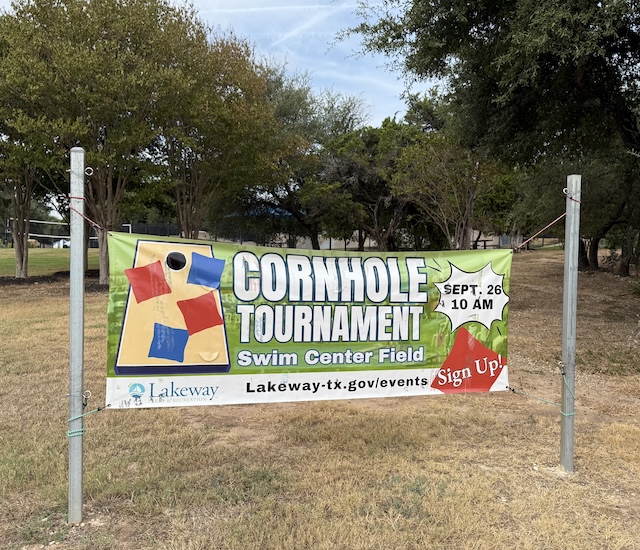
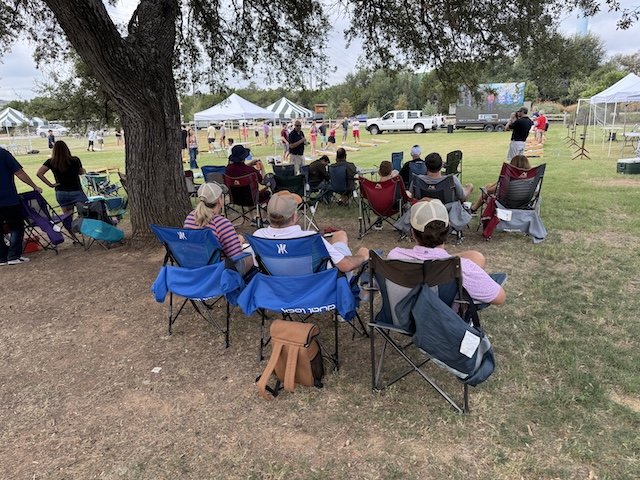
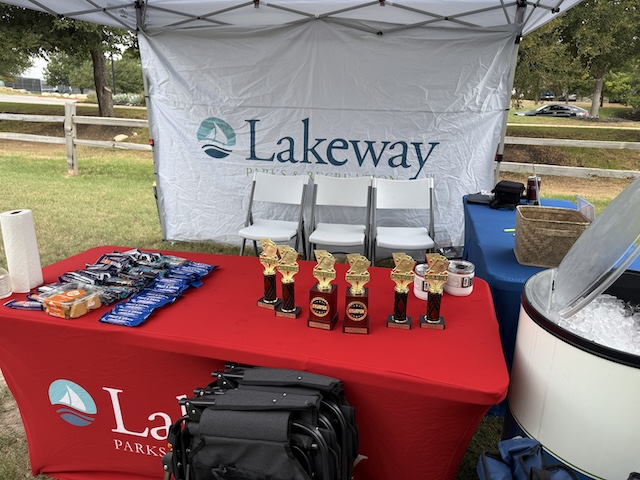
City Council Member Ket O’Brian (C) taking a selfie with Ricky Gavit (L), Assistant Director of Parks and Recreation, and a Parks and Recreation staff member (R)
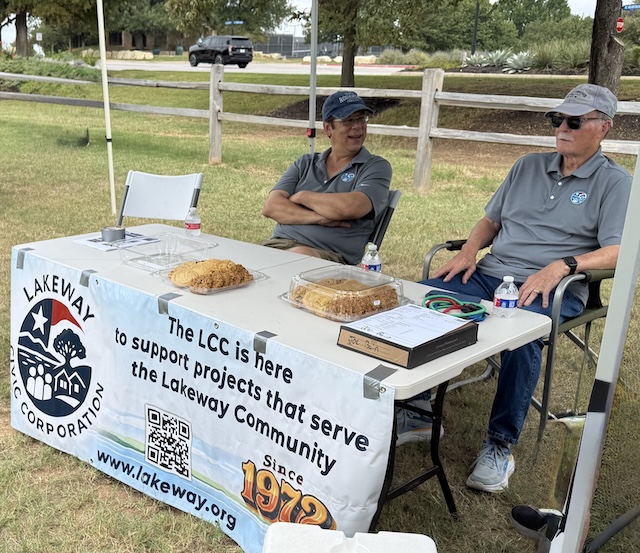
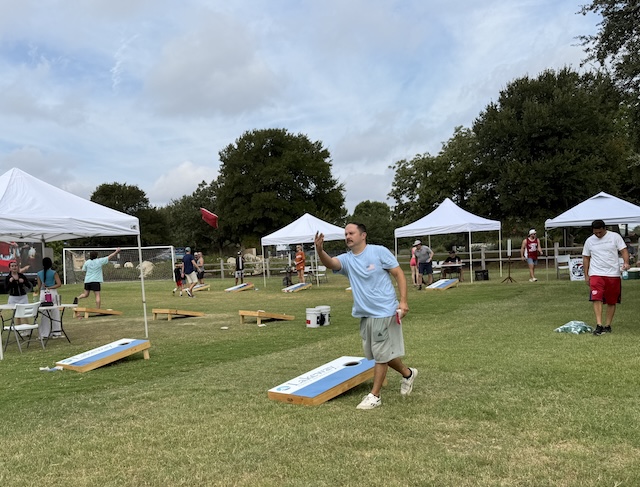
The sponsors of the event – Lakeway Civic Corporation
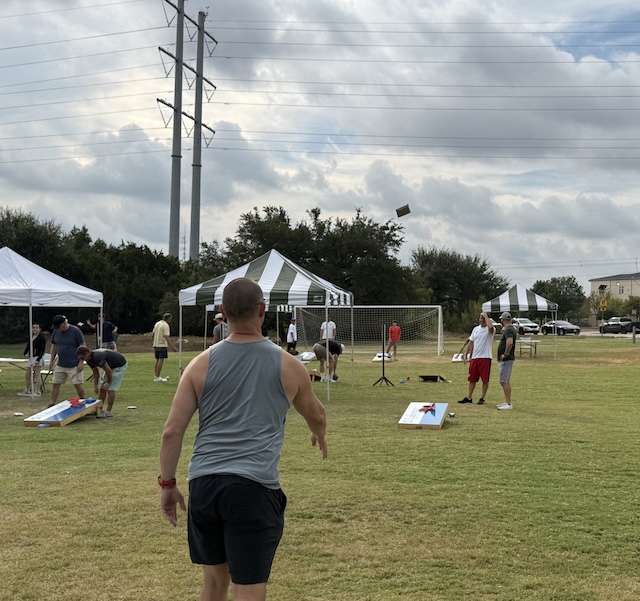
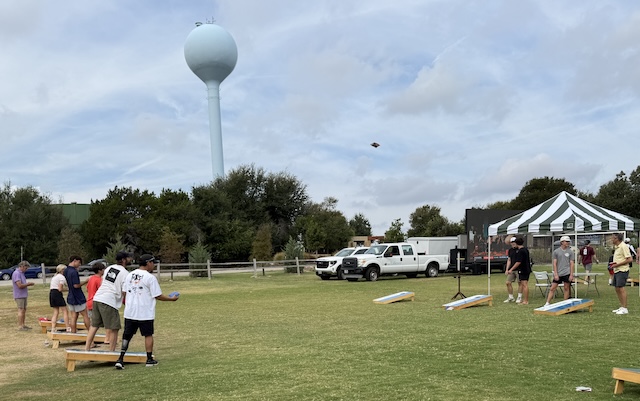
Beanbag in the air.
Jumbotron for a move after.
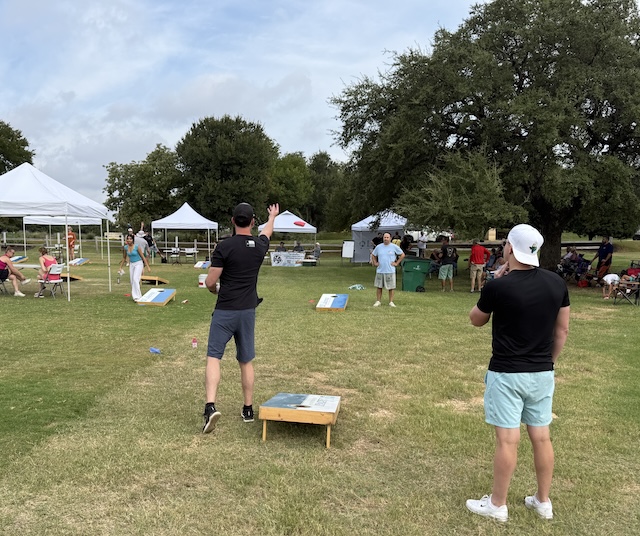
Looks like a good shot.
Another competitor lets it fly.
Back at cha.
Field of dreams
Time now for some food and music. I hope you have a great week.
Sometimes understanding the inner workings of the coffee machine is difficult, given its expressionless exterior. The machine certainly has inner quirks that show up as a lack of performance. For example, this morning everything looked normal as the machine was powered up. Then this message appeared briefly on the touchscreen.
The normal screen appears, but the mystery of the machine’s message is still with me. Two touches of the coffee icon produced a normal hot, steaming 8oz cup of soothing syrup, whose aroma began calming the Notre Dame Marching Band sound in my head from not enough caffeine. The first sip went further, and all that is left is a slight sound of that tiny triangle, which is seldom heard. The second sip is accompanied, as we all know, by the cacophony of the combination of the Doorbell Westminster chimes and the rock-crumbling bark of Twiggy and Tempeste warning the idiot who can’t read the “Do not ring the doorbell sign that death is imminent. A quick toss of a couple of Bennie Bomes into the soundproof room, followed by a door slam. The quiet reverberates like Disturb’s Sound of Silence
A look at the security monitor confirms that the doorbell ringers are Laurel and Hardy. With a sigh, the security shutdown process is begun.
The B-2 bomber squadron and the F-35 escort must be called off. One call does it. The tank corps and gunboats are told to stand by. The Apache helicopters are rerouted. The electric shock fence is turned off. The drawbridge over the quicksand is lowered. The robot attack dogs returned to their charging station. The laser-guided machine guns on the roof are set to caution. The nest filled with rattlesnakes put away. The bucket filled with 1000 marbles is locked down. The tear gas canisters shut off. The electrified welcome mat set to off. The fall-away sidewalk into the pit filled with spikes is locked. The hornet’s nest closed. The water cannons are set to safety. Bear traps are set to off. Peregrine Falcons perched on the roof above front door fed. The vat of boiling oil set to warm. Monty Python’s Harmless Little Rabbit’s cage is closed. The front door is opened.
Hardy steps forward to hand me the clipboard and envelope. Laurel taps him on the shoulder. He responds by asking Laurel to give him a minute. Laurel continues to tap. “What is it?” Hardy demands. “You are standing on my foot.” The clipboard goes back with a fiver attached, and once inside, the envelope is opened to reveal a message from Linda Hill
Your Friday prompt for Stream of Consciousness Saturday is “inner/outer.” Use one, use both, use ’em any way you’d like. Bonus points if you use both. Enjoy!
To see what others have done with the prompt, visit Linda’s post. Here is the link:
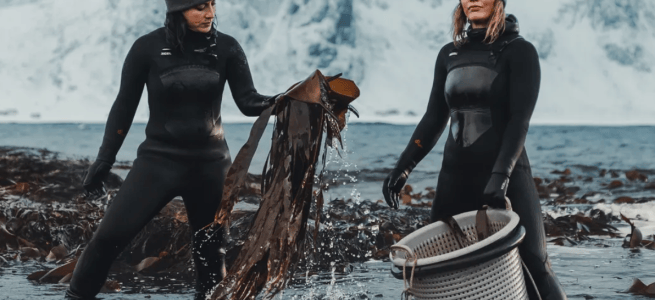
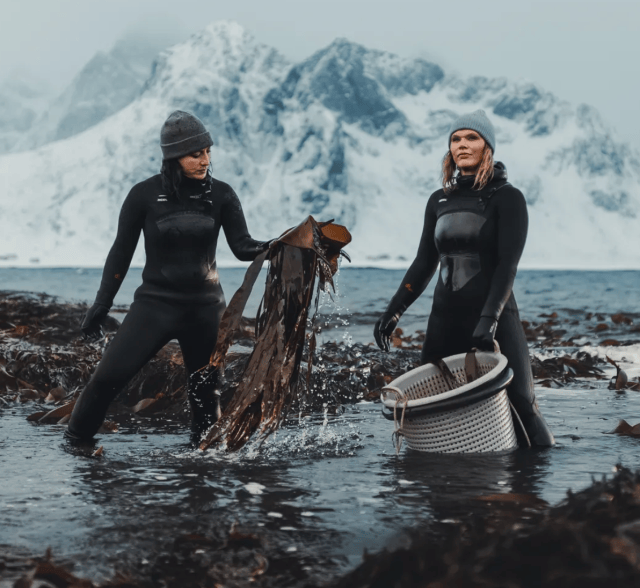
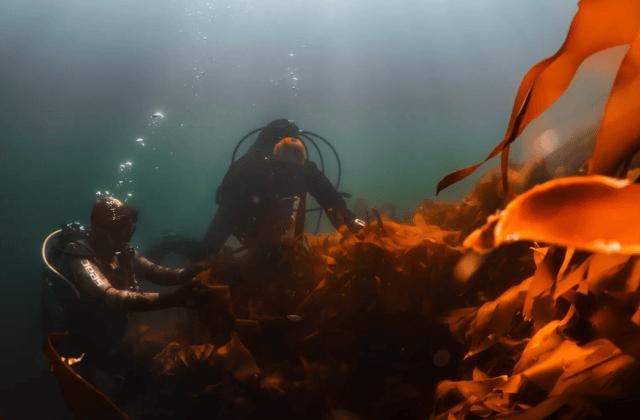
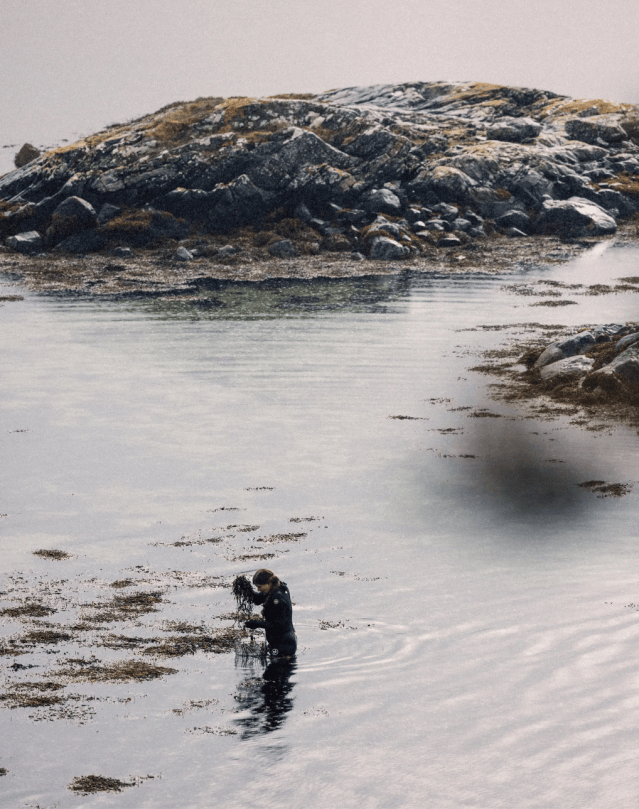
It’s still dark as I pick my way down a rocky path toward the sea. The air is as cold as you’d expect from a Norwegian winter, but the wind is still—a small mercy as I peel off my robe and slide into my wetsuit. I’m preparing to dive, not for fish, but for seaweed, a natural resource that is plentiful in this part of the world.
For centuries, the story of these wind-whipped northern shores has been told through the lens of the male-dominated fishing industry. But today, a seaweed-based movement led primarily by women is rapidly reshaping what it means to eat, farm and live sustainably.
Photo: Courtesy of Lilløy Lindenberg
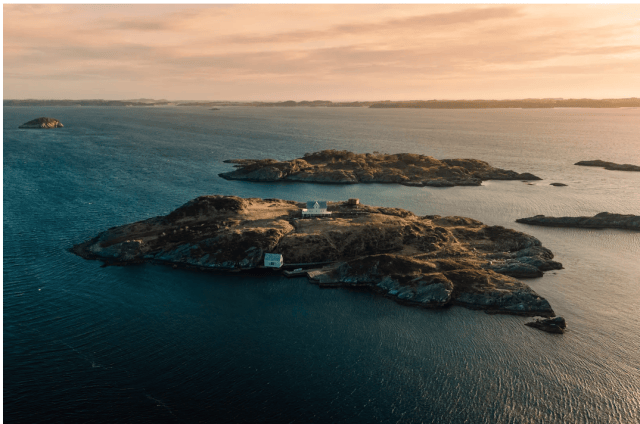
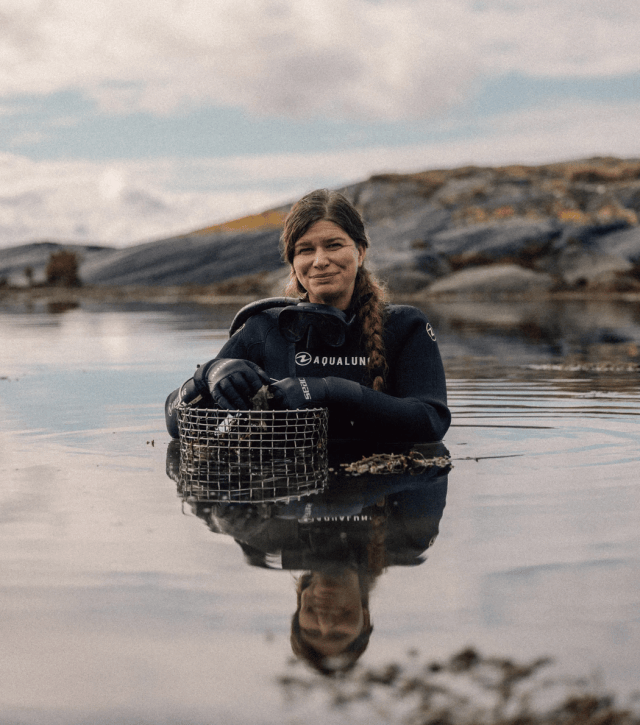
“It’s like a tropical rainforest of seaweed that grows around just this tiny island,” explains Antje de Vries, emerging from the water with a handful of ribbon-like sugar kelp. Antje—a chef and ecotrophologist—runs the plant-based kitchen at Lilløy Lindenberg, a private island retreat off the coast of Bergen where I’ve been spending the weekend. I zip up my wetsuit and join her, gliding past colorful starfish and sea urchins in search of those tendrilling fronds. Two nights earlier, I’d joined Antje for ‘Kelp Club’, a roaming, nine-course supper where each dish has been made or infused with hand-harvested seaweed from this very fjord. “Fermenting, dehydrating, caramelizing, searing,” she raves, “what you can do with it is endless.”
Antje de Vries in the sea near Lilløy Lindenberg. Photo: Courtesy of Lilløy Lindenberg
Her enthusiasm is far from an isolated culinary quirk. As the UN warns, we must cultivate the oceans to prevent food insecurity by 2050; these northern coasts are fast becoming a testing ground for a new ecological framework. Seaweed has unique potential to scale sustainable, nutrient-dense food supplies, requiring no arable land, fresh water, or synthetic fertilizers. It produces up to sixty percent of the world’s oxygen, absorbs dissolved nitrogen and captures carbon at rates that rival rainforests.
Little wonder, then, that the global seaweed market has more than tripled over the last two decades. And that’s to say nothing of the plant’s mind-boggling health benefits. Packed with iodine, essential minerals, and gut-stabilizing compounds, research shows that ocean-grown plants act as natural antibacterial agents and help regulate blood sugar—a primary reason why seaweed-rich diets in coastal Asian nations are consistently linked to longevity and lower rates of chronic disease.
Photo: Bruno Veiga / Courtesy of Lilløy Lindenberg
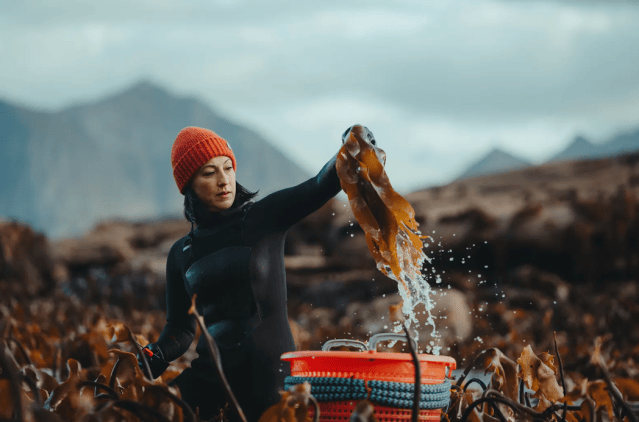
But long before global institutions began hailing seaweed as a future food, Angelita Eriksen knew it only as a nuisance; a weed that tangled her father’s boat propellers in the Arctic waters of the Lofoten Islands. It wasn’t until she returned home after many years abroad that her perspective started to shift. “I was blown away by its nutritional benefits, the taste, and its environmental impact. I called everyone that had ever mentioned it.” In doing so, she reached out to Tamara Singer, who was familiar with seaweed by way of her Japanese heritage. Together, they founded Lofoten Seaweed, a business that creates seaweed-based products from salts and sprinkles to seaweed-enhanced beauty products.
Tamara Singer of Lofoten Seaweed. Photo: Morten Munthee / Courtesy of Lofoten Seaweed
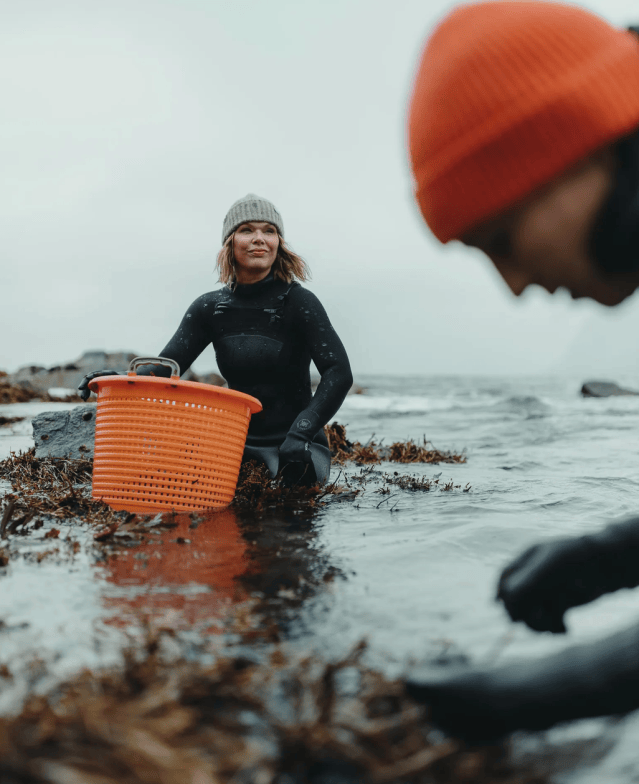
Initially, local fishermen laughed at the sight of two women gathering weeds in their baskets. “It’s a tough, male-dominated environment,” says Angelita. “Many people didn’t understand what we were doing.” But as the company grew—eventually earning a spot on the menu at Copenhagen’s famed Noma and representing Norway at the prestigious Bocuse d’Or in Lyon—that skepticism turned to respect. Though seemingly novel, their work belongs to a much older, global tradition of women working with seaweed. For 3,000 years, Japan’s legendary Ama ‘sea women’ have freedived to harvest kelp. Centuries later, in Victorian England, women—banned from scientific institutions—took up beachcombing, where their work formed the backbone of modern seaweed classification. Today, across coastal Zanzibar and Tanzania, the seaweed sector is roughly 80% female-led and has transformed local communities by placing financial independence and civic leadership directly in women’s hands.
Angelita Eriksen of Lofoten Seaweed. Photo: Morten Munthee / Courtesy of Lofoten Seaweed
“Here in Lofoten it goes way back to the Viking ages,” Angelita explains, “when women would stay back to run the farms while the men were gone. Seaweed harvesting was something they could do while staying at home with their children. It’s a tradition we have forgotten in modern society, but sometimes the older generations approach us and say, ‘You know, I also picked seaweed as a child.’” This return to ancient ways of working signals a wider cultural shift, as policymakers begin transitioning from dominance over nature to stewardship. “From a female perspective, it makes sense to work with the ocean in a more sustainable, harmonic way,” explains Tamara. “It’s kinder, not so brutal. Success for us means helping to make things better—people’s health, the environment.” Unlike fishing, which begins and ends with the catch, seaweed cultivation demands continuous care. You cannot over-harvest a reef without destroying your own livelihood; to gather from the ocean, you have to nurture it.
Photos: Morten Munthee / Courtesy of Lofoten Seaweed
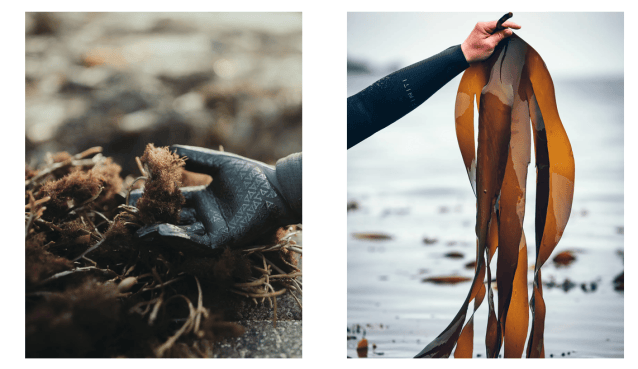
“That feels like a uniquely female strength,” Antje reflects. And this more nourishing way of relating to the natural world extends to how these women physically encounter the ocean, too. While male commercial divers often layer up in thick, insulated drysuits, Norway’s female harvesters almost always wear wetsuits. It’s an intentional choice to forgo total protection in favor of tactile intimacy. “We’re feeling the water,” Antje says, her gloves deliberately worn thin at the fingertips. “I think that’s really important, that synchronization with nature. Feeling the elements is something we’re all missing.”
Last year, the EU endorsed algae as a key resource for the Continent’s green and blue transition. So far, Norway is leading the charge, piloting large offshore farms along its coastlines while investing in R&D initiatives like Arctic Seaweed and Seaweed Solutions. Advocates like Antje and founders like Angelita and Tamara are ensuring that gender parity is woven into the movement’s DNA from day one. But even as these projects begin to scale, their purpose remains the same: a conscious move away from extractive practices and toward a more restorative approach to our oceans. “It’s the birthplace of all on Earth, right?” Antje offers with a smile. For these women, seaweed isn’t just a superfood, but a way to reshape our relationship with the wild. And in tending to the ocean, we may just find our way back.
The good news in this story is the efforts to take a restorative approach to ocean commerce.
Today’s JohnKu talks about sustainable farming. I hope you have a super week.
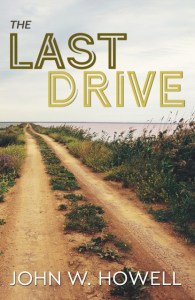
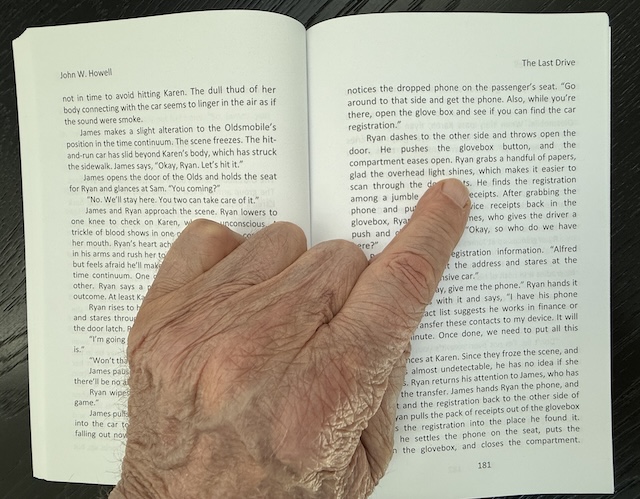
Today I randomly opened The Last Drive to page 181. With my eyes closed, I pointed to the page. The word closest to my finger is “Shines.” That is our prompt today.
This post was published on September 9th, 2019. Since we still take elevators, I think it might be useful
Top Ten Things Not to Do in an Elevator
10 If you are in an elevator after inspecting the inspection document, do not mention that the inspection date is overdue. If you do, at best, you have already reached the ground floor. At worst, you are on an express that has 50 levels to go. (Well, you lucked out, Jack. No one on the elevator has a bucket of tar and a feather pillow.)
9 If you are in an elevator, do not stand too close to Tiny the WWF champ. If you do, at best, Tiny is busy worrying about the creaking cable. At worst, Tiny, who just left his OCD workshop, has decided his personal space needs to be enlarged. (Yes, Jeremy Tiny is suggesting that you get off at the next stop. I would take the hint which is far better than a full helicopter spin toss-off.)
8 If you are in an elevator, do not think of the big gulp soda you just had before getting on. If you do, at best, you only have a few floors. At worst, the downward motion of the elevator will give you a challenge. (It is not up to me to say, Joel but finishing your tour of the Empire State building with a 32 oz soda might not have been a genius move. Have faith only 100 floors to go. Yeah, that swishing sound does remind me of running water. How about you?)
7 If you are in an elevator, do not open that container of take out garlic chicken. If you do, at best, everyone in the elevator has had garlic for lunch. At worst, your lunch will be a feature on the evening news. (The report about the hazmat emergency in your building was a source of embarrassment huh, Jesse? That photo of you being booked as a chemical warfare terrorist was especially unflattering. I don’t think orange is your color.)
6 If you are in an elevator, do not think you can make room for those giant packages from Ikea. If you do, at best, everyone will get off. At worst, the four people who were bumped and bruised all have excellent lawyers. ( Might be more comfortable to settle out of court, Jeffrey. Those four plaintiffs have formed a class action suit against you. The one with the black eye seems the most unforgiving of all. The others not so much.)
5 If you are in an elevator, remind everyone that your pet lion is friendly. If you do, at best, one or two may pet it. At worst, the first roar may cause a mass evacuation. ( And even a few might get off, Judah. Please give everyone else your card and the name of your cleaner.)
4 If you are in an elevator, do not hum a song. If you do, at best, everyone has earbuds and won’t hear you. At worst, the occupants will consider you psychotic. (You must wonder why you only made it to the first stop, Jasper. The vigilantes declared you unfit for a further ride. Don’t worry, another will be along shortly. This time stay quiet.)
3 If you are in an elevator, do not look at anyone. If you do, at best, they will be looking at their shoes and miss the connection. At worst, you’ll make eye contact with that big guy in the back. (Now you’ve done it, Jonah. That big guy needs to ask someone if they can spare $5.00 for a train ride back to Connecticut. All you have is a ten? Maybe he will make change.)
2 If you are in an elevator, do not continue your cell phone call. If you do, at best, everyone will be interested in how you know Taylor Swift. At worst, the most annoyed may just take your phone from you. (I think if you ask nicely, they’ll give it back, Josh. Ooops my bad. Looks like you might need a new one.)
1 If you are in an elevator, do not practice emergency procedures in case the cables break. If you do, at best, you’ll be tossed after thirty seconds. At worst, the rest of the occupants will start jumping up and down to try and time hitting bottom in the up position. (As luck would have it, Jaden the cable does break under the weight of twenty folks jumping up and down. Don’t worry, there is an automatic brake system. Well, there should be an automatic brake.)
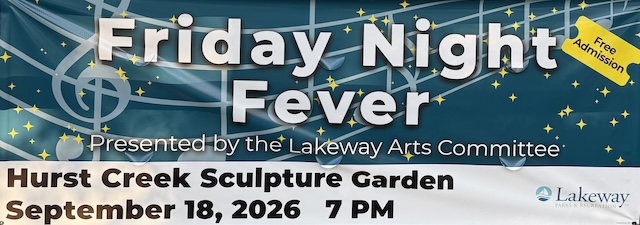
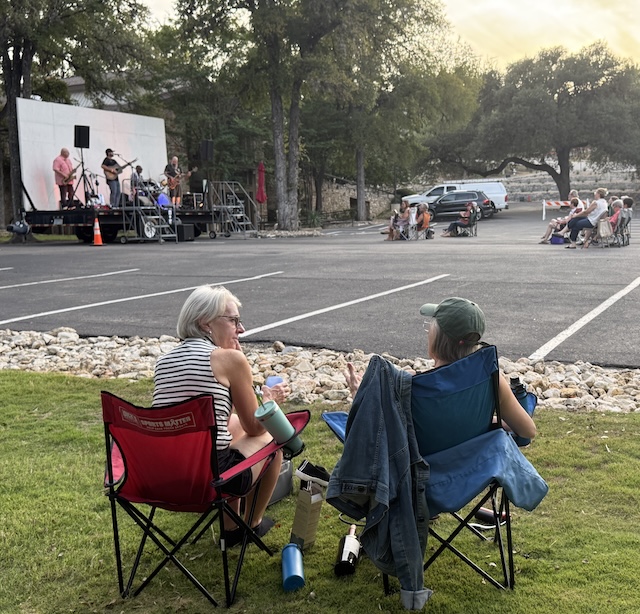
“Today we are going back to Friday night. The Lakeway Arts Committee organized a Friday Night Fever Street Dance. Here is what they said:
Bring your blankets, lawn chairs, snacks, drinks and dancing shoes for an evening of live music under the stars! This FREE, family-friendly concert is the perfect way to enjoy a night out with friends and neighbors.
Buffaloe and the Heard is a high-energy band that blends original music with crowd-favorite covers spanning a wide variety of genres. Their performances feature approximately 80% covers and 20% original songs, with a signature sound often described as ‘Dave Matthews meets Tom Petty meets James Brown.'”
We are going to time trip. ATX Cocina of Austin is catering. Our entertainment is (of course) Martha and the Vendellas.
Menu
arroz verde – poblano scented rice tamal, duck confit,sprout salad, serrano vin, chicharron pollo al achiote – achiote-marinated half bird, salsa macha verde, red pepper chile atole, seasonal ensalada pescado divorciado – salsa diabla, mojo de ajo, citrus herb ensalada salmon epazote – epazote double cream, sikil pak, herb salad crab relleno – smoked honey cornbread stuffed Anaheim, jumbo lump blue crab,
charred tomatillo sugo, tamarind pork chop – burnt pineapple-habanero butter, xni-pek, guajillo barbeque sauce barbacoa prensado – beef cheek, roasted peanut salsa, epazote, seared mushrooms, puffed amaranth carne asada – citrus marinated wagyu skirt, salsa bandera con nopal nixramalizado,
salsa verde tatemada filete de lomo – black angus tenderloin, blistered shishitos, pipian verde, cebollas, salsa seca 16oz prime ribeye – mole frijol, toreados
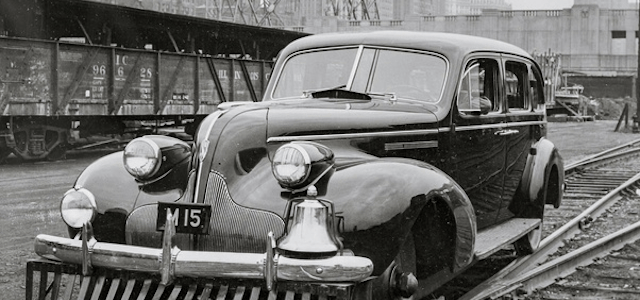
Let’s get on the bus.
There’s the sign. We are in the right place.
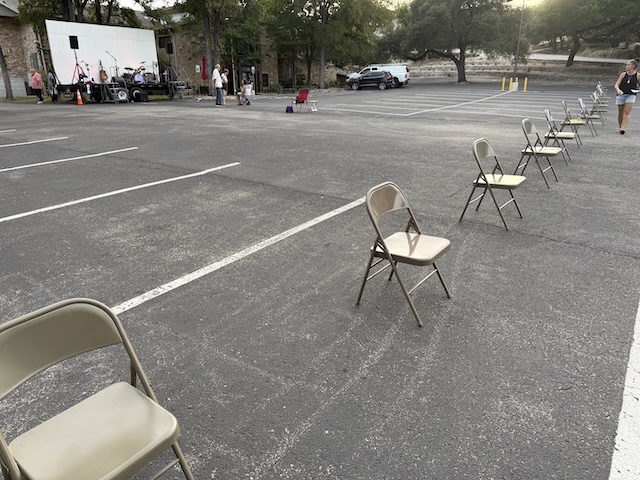
The space for dancing in the street has been marked off.
A welcome to attendees.
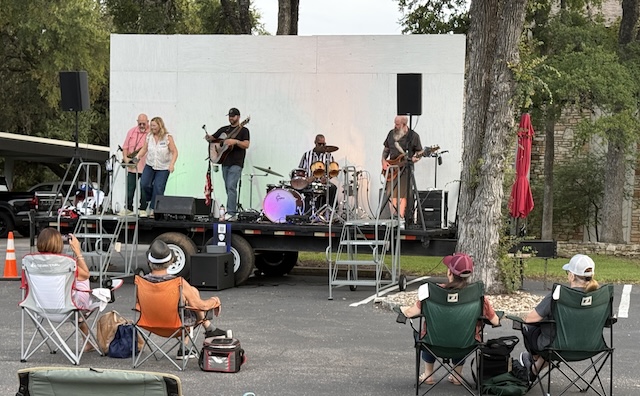
Buffolo and the Heard begin the concert.
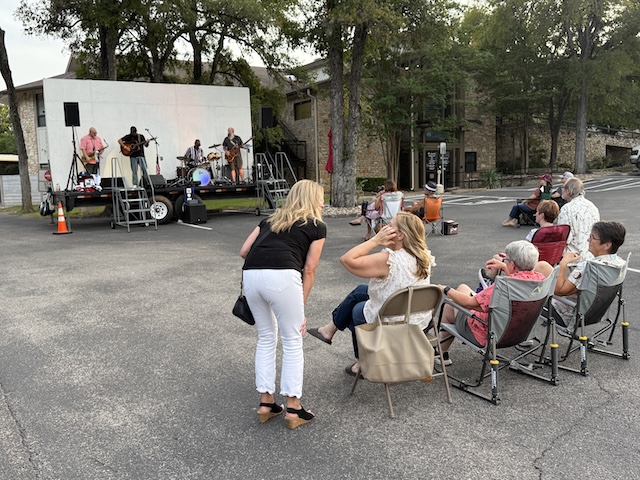
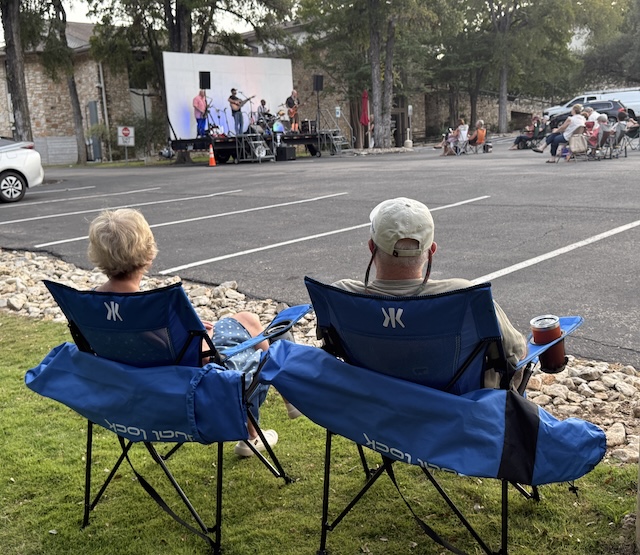
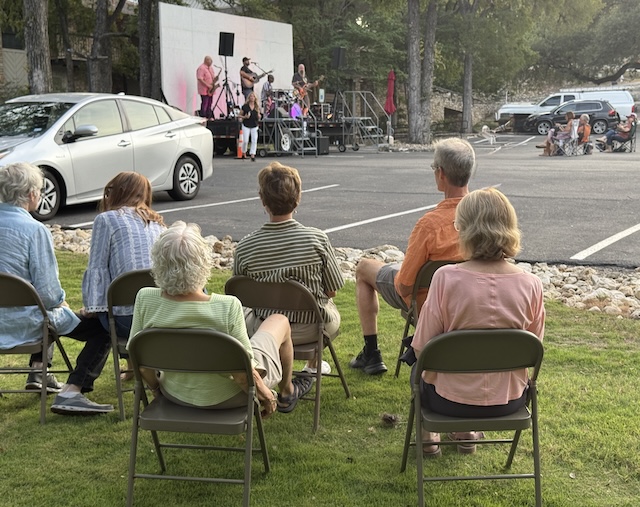
Chairs and relaxation.
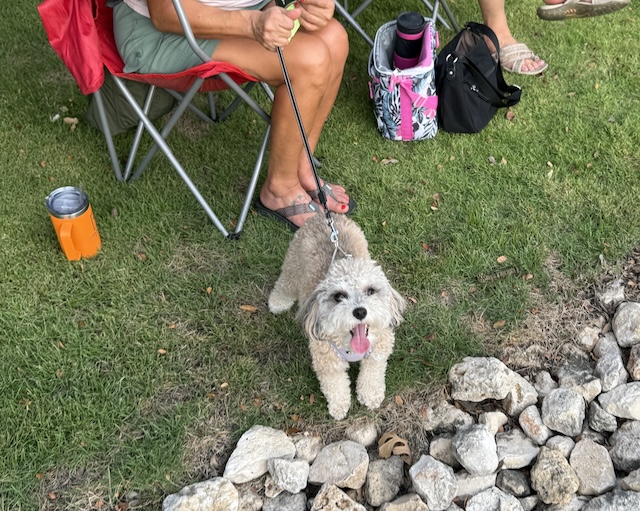
A sweet little dog attended.
Some folks like the grass.
Time to relax and chat. (Hope that wine isn’t open)
Forgot chairs – No problem. The Arts Committee has you covered.
The band plays on.
We need to relax, eat, and enjoy the entertainment we brought along. I hope you have a great week
The cofee (whoops. A typo) machine stands like a beacon in the post-apocalyptic world of my head during caffeine withdrawal. The steady flow of soothing elixir brings appetizer-like aromas that promise relief. The first sip stops the zombie moans in my brain. The second is accompanied by the combination of the Westminster Chimes of the doorbell and the eardrum-puncturing baying of Igor’s hounds in Twiggy and Tempeste’s reaction to the chimes. A quick toss of two knuckle bones into the soundproof room, followed by the slamming of the door, brings a Deep Purple Hush back to the room.
A glance at the monitor shows Chip and Dale, the chipmunks, each holding either a clipboard or a letter. Since talking to them is futile, the security shutdown process begins.
The B-2 bomber squadron and the F-35 escort must be called off. One call does it. The tank corps and gunboats are told to stand by. The Apache helicopters are rerouted. The electric shock fence is turned off. The drawbridge over the quicksand is lowered. The robot attack dogs returned to their charging station. The laser-guided machine guns on the roof are set to caution. The nest filled with rattlesnakes put away. The bucket filled with 1000 marbles is locked down. The tear gas canisters shut off. The electrified welcome mat set to off. The fall-away sidewalk into the pit filled with spikes is locked. The hornet’s nest closed. The water cannons are set to safety. Bear traps are set to off. Peregrine Falcons perched on the roof above front door fed. The vat of boiling oil set to warm. Monty Python’s Harmless Little Rabbit’s cage is closed. The front door is opened.
Chip hands me the letter and Dale the clipboard. When signed, the clipboard goes back to Dale with a fiver under the clip. Thinking that they might have a problem with the money, a bag of unshelled peanuts follows the clipboard.
Once inside, the letter is opened, and it is from Linda Hill. It reads: Your Friday prompt for Stream of Consciousness Saturday is “typo.” Use it any wya way you’d like. Have fun!
Today’s good news story comes from the BBC and was sent to me by our world-at-large reporter, Noelle Granger.
Thanks, Noelle
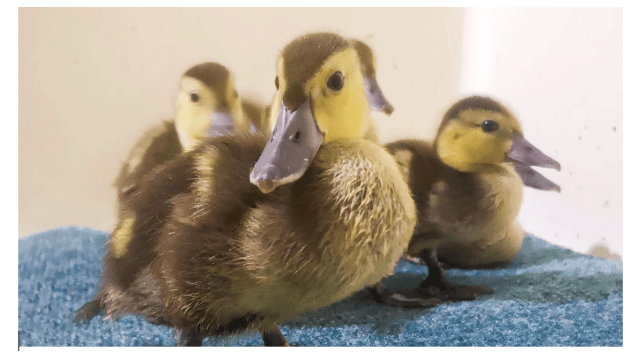
Rare duck breeding success gives hope for species
Emily Johns, Channel Islands
Durrell Wildlife Conservation Trust
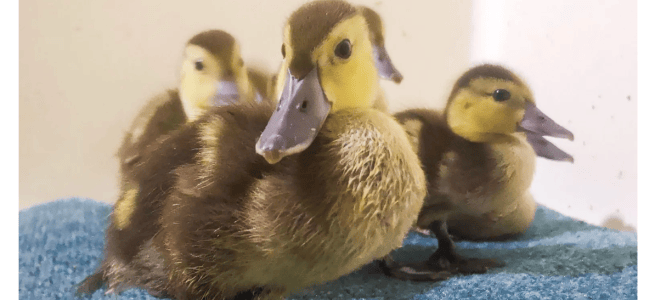
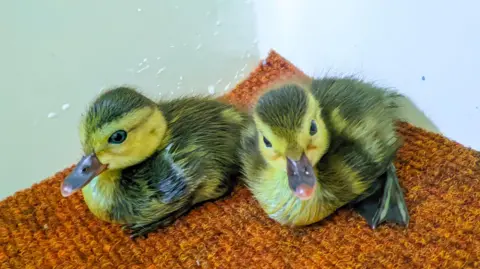
The Madagascar pochard is one of the world’s most threatened waterbirds
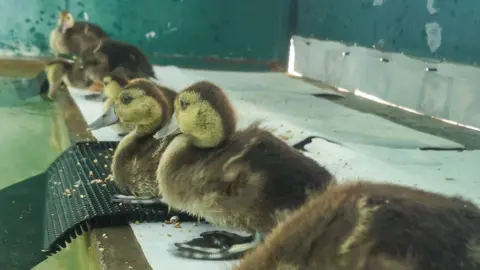
Six of the world’s rarest ducks have reached adulthood after conservationists successfully raised them from eggs collected in the wild.
The Madagascar pochards were hatched after their eggs were carried 44km (27 miles) on foot before being taken to a specialist breeding center in Madagascar. The species was once thought to be extinct before being rediscovered in 2006.
The Jersey-based Durrell Wildlife Conservation Trust carried out the work, which it said gave scientists another way to protect the species when nests were threatened.
Roland Digby, a conservation biologist at Durrell, said: “This is an important milestone for the Madagascar pochard.”
Durrell Wildlife Conservation Trust
The ducks are also called the fotsimaso locally
The trust said the breakthrough could be particularly important because the Madagascar pochard survived at just one known wild nesting site worldwide.
Digby said: “We’ve shown that, when conditions demand it, we can safely collect eggs from the wild, transport them on foot and successfully incubate and rear healthy birds.”
The six birds hatched from 15 fertile eggs collected at Lake Matsaborimena in north-west Madagascar, with Durrell staff working alongside The Peregrine Fund to collect them.
The eggs were carried in a cooler before being transported to Durrell’s specialist breeding center in Antsohihy in northern Madagascar.
Durrell Wildlife Conservation Trust
Brewer said recovering a species required “persistence, partnerships and a willingness to keep going when the work becomes difficult”
Since the species’ rediscovery, Durrell said it had led an international recovery program combining habitat restoration, captive breeding and reintroductions.
About 180 birds now exist across captive and wild populations, including 51 at the Durrell breeding center, 82 at Bemanevika and 74 at Lake Sofia.
Durrell chief executive Rebecca Brewer said: “For many people, this is a story about six ducks.
“For us, it’s about what long-term conservation can achieve.”
The good news in this story is that success is not measured in large gains, but in small steps. Today’s JohnKu talks about persistence in conservation. I hope you have a beautiful weekend.