
Today’s good news comes from The Cool Down newsletter. Thank you, Noelle Granger, for spotting it and making me aware.
Research team makes surprising discovery after planting multiple crops in the same field: ‘It’s a promising combination.’
A new study from the University of Alberta points to an exciting way farmers can grow better crops while spending less on fertilizer.
The secret? Planting certain grains and legumes side by side in the same fields.
Researchers from the university planted two perennial grains—rye and wheatgrass—alongside three legumes—alfalfa, white clover, and sainfoin. According to the results published in the Journal of Animal Science, this combination produced high-quality crops that could more effectively feed livestock.
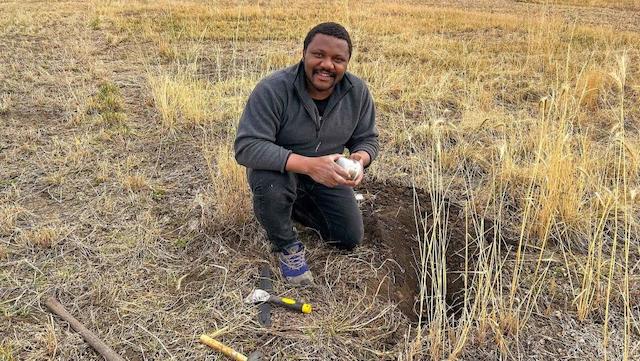
“The legumes naturally supply nitrogen to the soil, improve the organic matter, and improve the forage quality for livestock. At the same time, perennial cereal plants have deep root systems, which helps sequester more carbon and makes them more drought-resistant than annual crops, which is important in Alberta’s dry climate,” Cosmas Ugwu, who led the study, said in a post by the university.
“It’s a promising combination that can potentially help crop performance, reduce dependence on synthetic fertilizers, lower costs for farmers, and promote environmental sustainability,” Ugwu added.
This planting method offers several benefits for farmers. The combined crops are more drought-resistant and provide better nutrition for cattle, making them easier to digest.
The research team tested two planting patterns across Alberta. Both methods worked well, but planting in alternate rows yielded slightly better results, producing about 5% more crops in the first year of harvest in 2023.
This farming approach could help build a more sustainable food system. When farmers spend less on fertilizer, food prices can stay lower. Plus, reducing synthetic fertilizer use helps clean our air and water, creating healthier communities.
The research team continues to study how this planting method affects soil health and carbon storage. It’s working closely with farmers to help them adopt these practices, which could start showing up in fields across North America in the coming growing seasons.
The good news in this story is that more effort is being put into finding more natural ways of growing healthy crops. Today’s JohnKu talks about farming. I hope you have a beautiful weekend.
Crops by John W. Howell © 2024
We need to feed all,
But there seems to be some room. . .
For more natural ways.
Thanks for the story, Noelle.


