Everyone in life has likely gone through it at least once: losing a wallet can be stressful to say the least.
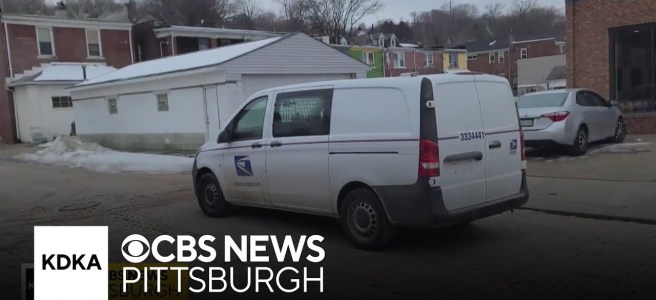
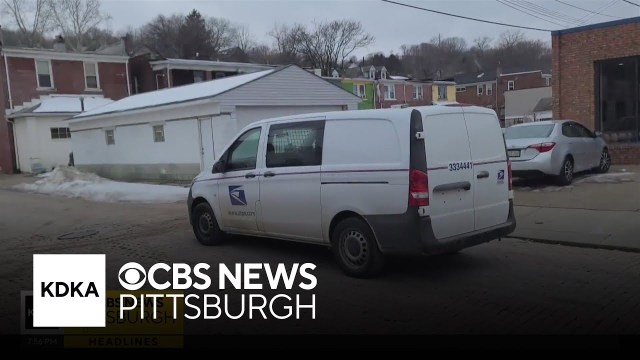
So can delivering snail mail in -11°F, but that didn’t stop a Pennsylvania postal worker from doing a good deed when presented with the opportunity.
25-year-old Bruce Armah, a new member of the mail team, found a wallet half-buried in the snow in Coraopolis, near Pittsburgh. He tucked it away in his car and continued on his route, but not because he meant to steal anything.
Finishing his shift, he looked for an ID of sorts that might include an address, and thankfully, there was. Speaking with CBS News Pittsburgh’s Barry Pintar, Armah explained why he struck out at the end of a long day in his own car to return the wallet to its rightful owner.
“It was my father’s good deeds,” Armah said, explaining that his father taught him that he should do the same in the stranger’s position. “He lost his wallet, and someone returned it to him, so I was just returning the favor.”
His father’s wisdom at heart, Armah arrived in Clinton, only to find that the wallet’s owner had moved all the way to McDonald, which, for readers not familiar with the area, is many miles away. He nonetheless made the hike—driving 52 miles in total after work to and from the owner’s house—to return that favor his father had experienced all those years ago.
“There was $100 cash in there, credit cards, ID, healthcare cards,” said the husband of the wallet’s owner, Matt Bryan. “He wanted nothing in return; he just said it was the right thing to do.”
Bryan wouldn’t let sleeping dogs lie, and quickly told his own mailman about the incident, who in turn told another postal service worker, who told another, until it caught the ear of their boss, who commended Armah for taking so much time and effort at the end of a long, taxing, cold day.
His father would be proud.
The good news in this story is that there are people out there who care to do the right thing. Today’s JohnKu celebrates those who do care. I hope you have a super weekend.
A small dog left behind at a busy Las Vegas airport earlier this month has found a new home with the police officer who helped rescue him. This closes a case that sparked widespread attention online and across local news outlets.
Abandoned Airport Dog ‘JetBlue’ Finds Forever Home
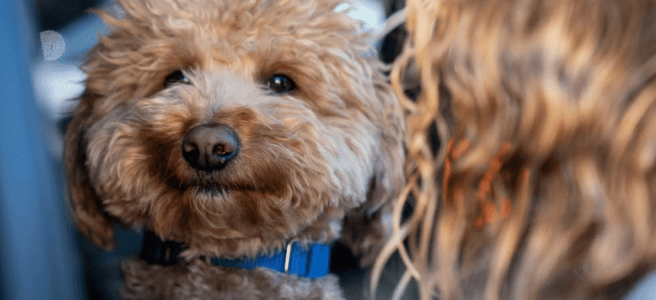
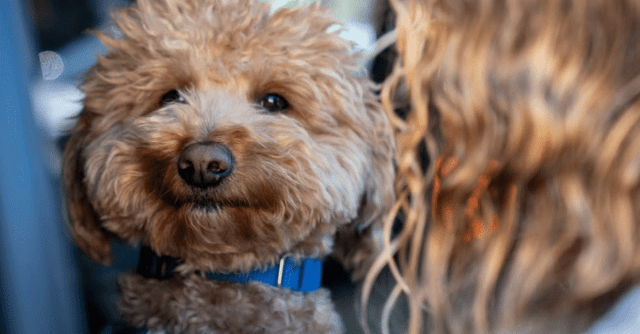
The dog, a 2-year-old goldendoodle/mini poodle mix named JetBlue, was adopted by a responding officer from the Las Vegas Metropolitan Police Department. This comes weeks after the pup was discovered alone at a ticket counter at Harry Reid International Airport.
Airport staff reported the abandoned animal to police, prompting an officer to respond to the terminal. Authorities said the dog appeared healthy but had been left without food, water, or supervision. Animal control later transferred JetBlue to a rescue organization for evaluation and temporary care.
According to local reports from KSNV, Officer Skeeter Black, the officer who handled the initial call, stayed in contact with rescuers throughout the process. After JetBlue was medically cleared and placed on adoption hold, Officer Black formally applied to adopt him. The parties involved finalized the adoption days later.
Officials described the outcome as a positive resolution to a case that initially raised concerns about animal welfare and passenger safety inside one of the nation’s busiest airports. Photos shared by police showed the dog settling comfortably into his new home.
How JetBlue Was Found Abandoned at the Airport
JetBlue’s story began when airport employees noticed a small dog tied near a ticketing area without an owner present. Surveillance footage reportedly showed a woman leaving the terminal without the animal.
Police said the dog had been left with a collar and leash, but no immediate access to water or care. Officers secured the area before removing the animal from the public space. Authorities then coordinated with animal services to ensure proper handling and medical checks.
Rescue workers later identified the dog as a designer breed mix, often sought after for its hypoallergenic coat and friendly temperament. Veterinarians confirmed JetBlue was not microchipped at the time he was found, which complicated efforts to identify the owner quickly.
The case drew attention on social media, where users shared images and updates in hopes of locating the person responsible. Local animal advocates also used the exposure to highlight the dangers of abandoning pets in public places, especially high-traffic transportation hubs.
Owner Arrested in Airport Abandonment Case
Image: @lvmpd via Instagram
Law enforcement later identified and arrested the suspected owner in connection with the incident. Police said the individual faces charges related to animal abandonment and cruelty under Nevada law.
Investigators used surveillance footage, travel records, and witness statements to track the suspect. Officials allege the person attempted to board a flight without the dog and left the animal behind when airline policies prevented travel with the pet.
Animal welfare organizations noted that abandonment cases often increase around travel periods, when pet owners encounter unexpected airline restrictions or fees. Authorities urged travelers to plan ahead and confirm pet transport rules before arriving at airports.
The good news in this story is that the dog found a loving forever home. Today’s JohnKu talks about big-hearted people. I hope you have a wonderful weekend.
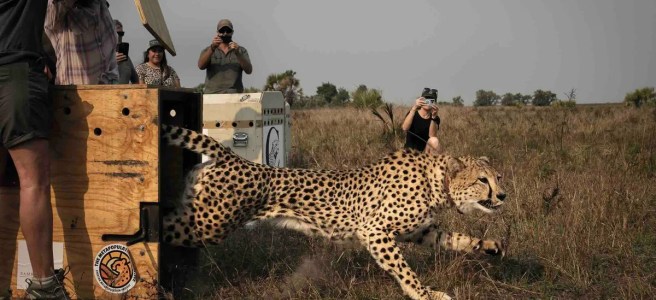
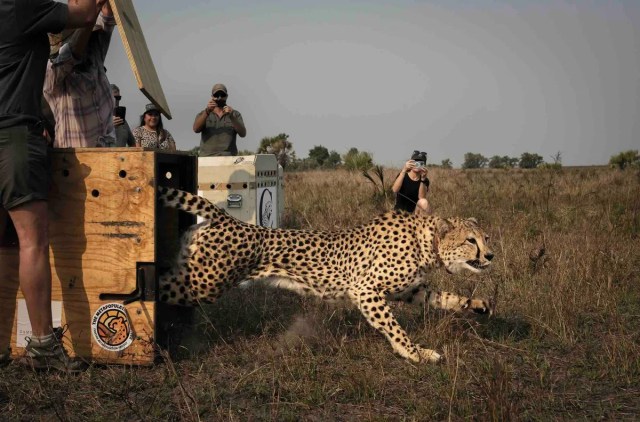
In the Zambezi Delta, the first cheetah releases were made in 2021. Credit: Jim Tan
Today’s good news story comes from the BBC Wildlife Magazine. I want to thank Noelle Granger for sending it to me.
“It’s a kind of Tinder for big cats.” Cheetahs were dying out in Africa, so conservationists tried something new
By Graeme Green
The cheetah is back – thanks to a smart release project that now sees populations flourishing in South Africa and beyond
When four sub-adult cheetahs arrived at Kuzuko Private Game Reserve, South Africa, in 2023, there were high hopes that the female among them would breed. There was just one snag: it turned out that all four were, in fact, male.
A gender mix-up was the least of the quartet’s concerns, as their mother had been killed at Karongwe Private Game Reserve.
“To increase their chances of survival, they came to live in our boma facilities,” explains Jim Tan, CEO of Kuzuko, referring to the traditional fenced animal enclosure.
“We looked after them into adulthood. Two went off to Lolelunga Private Reserve, Zambia, in 2024; the other two were set to go to Mozambique, but were jumped by lions – sadly, one was killed.”
Kuzuko is one of more than 70 reserves across South Africa currently involved in the metapopulation management of cheetahs. It’s a modern, more holistic approach to cheetah conservation that has taken shape over the past 15 years and has been a remarkable success story.
As the fastest land animal on the planet – the cheetah can accelerate to 110kph in just three seconds when hunting – this is one of Africa’s most iconic species. It is a beautiful feline, instantly recognisable by its lean appearance, delicate ‘teardrop’ facial markings, and long legs built for running.
Conserving cheetahs
Once widespread across Africa and Asia, the cheetah is now largely confined to southern Africa, with a tiny remnant population of Asiatic cheetahs surviving in Iran. Globally, just 6,500 to 7,100 individuals remain in the wild.
Listed as Vulnerable by the IUCN since 1986, the species has suffered a dramatic decline over the past century and today roams less than 10 per cent of its historic range. For decades, efforts have been underway to restore South Africa’s cheetah populations, but the initial focus was on growth across all populations.
“This is not what the metapopulation approach is about,” says Sam Ferreira, large mammal ecologist at South African National Parks.
A metapopulation is a network of small, separate populations that, together, act as one larger population. In the wild, cheetahs would naturally disperse and connect these groups, sharing genes and boosting resilience.
But with fences and other human infrastructure now blocking that movement, conservationists have stepped in, mimicking those processes using translocations. It’s a kind of Tinder for big cats.
Fencing became an increasingly common feature of South Africa’s landscape after the country’s political transformation in 1994, when wildlife tourism surged and private reserves multiplied.
While these barriers helped to reduce human-wildlife conflict and poaching, they also impeded the natural movement of cheetahs, which depend on vast, open spaces. A growing human population has also impacted the landscape.
“Protected areas have become more fragmented,” says Olivia Sievert, cheetah range expansion co-ordinator for the Endangered Wildlife Trust (EWT).
“As a result, you don’t have the natural dispersal that allows gene flow between populations, so there’s more inbreeding. This impacts cheetah health, including reproductive health. Litters can be smaller, and the animals can be more susceptible to disease. It becomes dangerous.”
“Metapopulation management is also about source-sink dynamics,” adds Sievert.
“If you have a population that’s acting as a ‘sink’ for a species, because of disease or predation, the natural metapopulation dynamics of dispersal allow a ‘source’ that has good breeding to rescue it. Fences and other human impacts mean you lose these dynamics. That’s why we do this work.”
Conservationists prepare to transport a tranquillised cheetah to its new home – Jim Tan.
The Cheetah Metapopulation Project
In 2011, the EWT launched the Cheetah Metapopulation Project (CMP), driven by conservationist Vincent van der Merwe. Today, two other organisations in South Africa are successfully working on cheetah metapopulation management and range expansion: Ashia Cheetah Conservation, founded in 2016, and The Metapopulation Initiative (TMI), founded in 2022 by van der Merwe, after he left EWT.
“Cheetahs play a big role,” says Sievert. “When we introduce them to a new area, the number of scavenging birds increases, especially vultures. Cheetahs leave a lot of food in the landscape, thereby promoting the scavenging community, which is critical for controlling disease. It all has a knock-on effect.”
The cheetah is also a charismatic species, attracting tourists. As well as coordinating translocations from one location and population to another, both within and outside South Africa, metapopulation management involves extensive monitoring of population dynamics and the maintenance of a national studbook and DNA database.
“The biggest challenge is habitat and finding suitable homes for surplus cheetahs,” says Kulani Nyakane, cheetah metapopulation manager for TMI.
“In South Africa, we’ve done well, and we’re running out of space. We want to ensure we relocate the cheetahs to an ecosystem, such as in Zambia.”
It’s not only wild cheetahs that are moved. Zoo-born and captive-bred animals are also translocated, increasing genetic diversity within the wider metapopulation.
The Aspinall Foundation helped to send Edie (a female born at the Wild Cat Conservation Centre in Sydney, Australia) and Nairo (a male born at Howletts Wild Animal Park in Kent, UK) to live wild in South Africa.
Nairo, now based in Mount Camdeboo Reserve, has sired more than 15 descendants, dispersing his genes into the wider metapopulation.
Kuzuko has supported metapopulation projects over the years with the EWT and other organisations. “For captive-born cheetahs, we are a halfway house,” Tan explains.
“We’ve got small, medium, and large bomas, so we can monitor them at every stage. They might not adapt immediately, so we intervene if necessary. If they’re struggling to hunt, we can see if they need assistance. If they’ve never been exposed to a lion, we can see their reaction.”
Since 2010, 32 cheetahs have moved from Kuzuko to other locations, including 10 born on the reserve. Seven captive-born females and nine males have been ‘wilded’ at Kuzuko since 2018, and all the females have gone on to breed.
“Without this metapopulation management work, we could lose a very special species,” says Tan. Translocating any animal is fraught with risk. With cheetahs, it’s possible they won’t adapt to their new environment, struggling to navigate unfamiliar vegetation, find water, and avoid predators.
“We’re operating in tourist areas that are often overstocked with lions and leopards, which hurts cheetahs, because lions prey on cheetahs,” adds Nyakane. The move itself is stressful. “Cheetahs are sensitive,” says Nyakane.
“If you capture them, their stress levels can result in mortality. Being shot with a dart gun is stressful, and they’re not used to being handled by humans or put in crates. If they get too cold or too hot, they could die.”
Giraffes keep a wary eye on a cheetah, but the cat preys on much smaller animals, from warthog to impala – Buena Vista Images/Getty Images.
A success story?
Despite the challenges, the initiative has seen great success. In 2011, when EWT’s metapopulation work first began in South Africa, an estimated 217 cheetahs lived across the 41 CMP reserves.
By the end of 2023, there were 455 known cheetahs, including 264 breeding adults, across 67 reserves. And numbers continue to increase.
“Cheetahs are now doing very well in South Africa,” says Sam Ferreira. “We can produce cheetahs to support other parts of Africa if we need to.”
The success now extends beyond South Africa’s borders. In 2017, the EWT led the first international reintroduction under the CMP initiative (now the Cheetah Range Expansion Project), sending four cheetahs to Malawi’s Liwonde National Park, where the species had been absent for nearly two decades.
This led to reintroductions in Malawi’s Majete Wildlife Reserve, Zambia’s Bangweulu Wetlands, Mozambique’s Maputo National Park, Kariengani Game Reserve, and Zambezi Delta.
Between the three main cheetah organisations, hundreds of translocations have now been successfully completed, including to eight locations outside South Africa where the animals were previously extinct. TMI also worked on Project Cheetah, the high-profile reintroduction of the species to India.
Last year, a new national Biodiversity Strategy and Action Plan came into effect in South Africa, which included cheetah management. The Cheetah Advisory Group, coordinated by Sievert, is hoping to make the metapopulation effort more cohesive.
“We need a coordinated effort and information-sharing,” Sievert says. “New organisations are coming in and learning the same lessons we learned 10 years ago. Why have that gap? Why not work together and make sure we’re all moving forward for cheetahs?”
EWT plans to work with partners in Zambia and Mozambique on cheetah relocations, restoring cheetahs to larger ecosystems to allow for more self-sustaining populations.
Ashia is currently focusing on the Free-Roaming Cheetah Census, a three-year project to study wild cheetahs that live outside protected areas in South Africa. For TMI, it’s currently a transition period after Vincent van der Merwe took his own life in March 2025.
“Vincent dedicated his life to cheetah conservation,” says Nyakane. “He was always looking at ways things could be improved. He had some failures, but many successes for cheetahs in South Africa fall under his name.”
Van der Merwe worked on TMI’s Project Cheetah, which in 2022 translocated 20 cats from South Africa and Namibia to Kuno National Park in India.
It was the first large carnivore translocation between continents. It marked the cheetah’s first presence in India in more than 70 years (India had previously been home to Asiatic, not African, cheetahs).
The project has been criticised for its fatalities, and for the cost – a reported £9.98 million over five years.
“With Project Cheetah, losses were expected, though you try to ensure the animals survive,” says Nyakane. “It was a new ecosystem for them, and they needed to adapt. But rather than focus on losses, we should focus on recovery. Of the 20 individuals introduced to India, eight died, but the population has now increased to 29.”
Two males from Kuno were translocated to a second location in India – Gandhi Sagar Wildlife Sanctuary – to boost numbers there, and were joined by a female in September 2025. Eight cheetahs from Botswana are due to be transported to India.
TMI is working in an advisory role to protect the Critically Endangered Asiatic cheetah in Iran, where fewer than 20 individuals are thought to remain in the wild.
Van der Merwe had started collaborating in an independent capacity with the government of Saudi Arabia on its cheetah reintroduction programme, which saw the birth of four cubs in 2024.
The successful cheetah metapopulation strategy could be applied to other species. Similar work is underway with South Africa’s lions; EWT has launched the Wild Dog Range Expansion Project, and there’s potential for giraffes, elephants, rhinos, buffalo, and hyenas.
“We’re open in terms of how we can apply this strategy,” says Nyakane. “When you see a species back and breeding in its rightful ecosystem, it’s the happiest you can feel. We need to restore what we’ve lost.”
Graeme Green is a British photographer and journalist with a passion for wildlife and conservation.
The good news in today’s story is that, although conserving Cheetahs takes a long time, efforts are successful. Today’s JohnKu talks about patience. I hope you have a wonderful weekend.
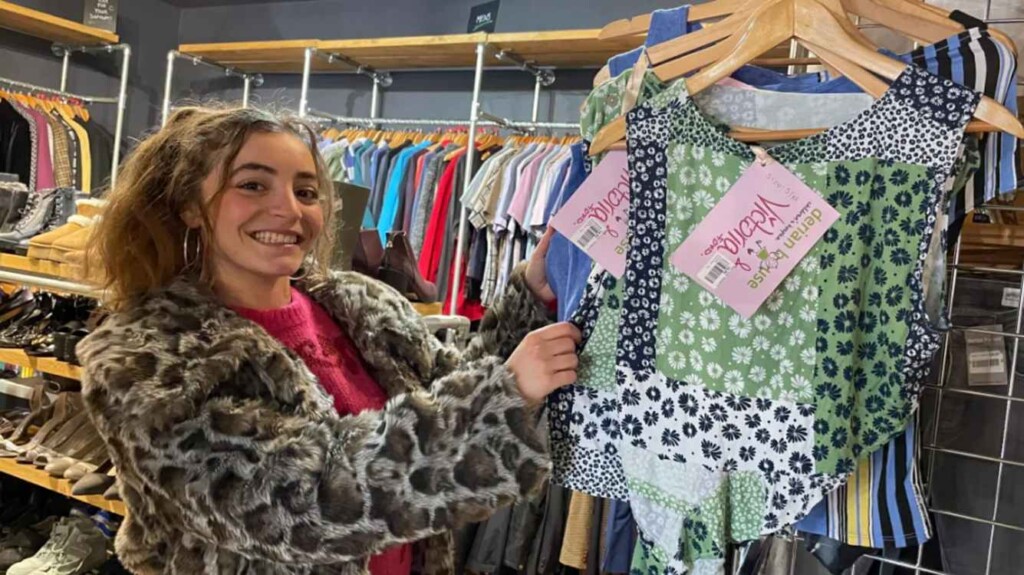
An English thrift shop that found itself buried under mountains of old donated clothes has gotten a helping hand from a talented designer.
Recent fashion and design graduate Victoria Ford approached the shop and offered to transform some of its unwanted rags into bespoke pieces for sale at premium prices.
The thrift shop proceeds benefit Derian House Children’s Hospice in Chorley. Still, rather than generating revenue to pay for the hospital’s expenses, the shop had mostly become a dropping off point for unwanted clothes, which piled up in “eyewatering amounts”. It sat unsorted in huge sacks in the shop’s warehouse.
Most would have probably ended up in a landfill if it weren’t for Ford’s belief in second-chance fashion and an eye for quality.
“Rather than letting things go to waste, I wanted to help Derian House give their unsalable clothing a new life, and to turn them into something others can enjoy,” Ford told the BBC.
Mick Croskery from the Derian House shop said Victoria’s collection was attracting a new crowd to the shop.
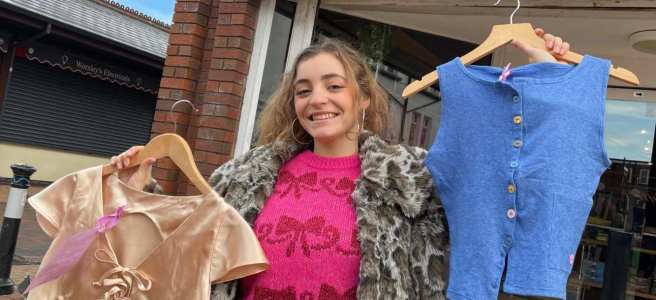
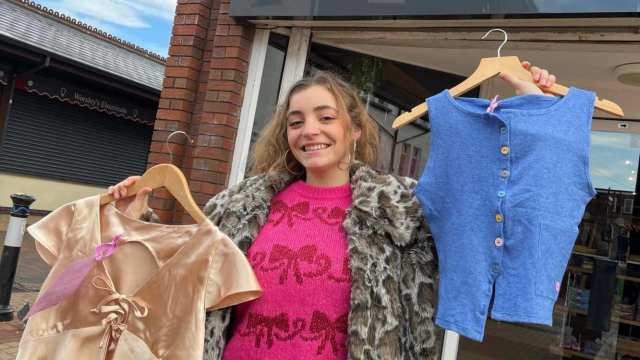
Victoria’s collection – credit Derien House Childrens Hospice
Running on “super tight margins” and “inundated with rags” too worn down, or with holes, stains, or burns, to sell on, Croskery said, “it is that kind of stuff that Victoria has repurposed for us that we couldn’t sell.”
They used to pay 70 cents per bag of donated clothes, but the shop was receiving so many “rags” that they eventually lowered the price to 15 cents.
Ford has had to get creative to make use of the excess, but she’s been doing just that since she was 10, she said, finding items in similar thrift shops and transforming them with her sewing machine as a child. She’s redesigned dozens of items and even made a handbag out of an inflatable mattress.
Derian House Children’s Hospice cares for more than 400 babies and toddlers, children, young people, and their families, and costs more than £6 million ($7.8 million) to run annually.
The good news in this story is that usable clothing is being made from what would otherwise be landfill rags, all while helping with child Hospice care. Today’s JohnKu talks about utilization. I hope you have a wonderful weekend.
In January, India recorded a mini-outbreak of the Nipah virus, an often lethal disease spread by contact between humans and animals.
There was little that could be done for the victims, as no specialized treatment for Nipah virus exists other than normal supportive care procedures such as the treatment of the resulting symptoms, rest, and hydration.
Some well-studied antiviral medications like ribavirin, remdesivir, acyclovir, favipiravir, have seen use on a speculative basis during certain outbreaks, but real efficacy is unclear.
Now though, the University of Tokyo’s Research Center for Advanced Science and Technology has developed a potential Nipah virus vaccine by inserting some of the virus’ genetic material into the modified measles vaccine. Early trials in hamsters have shown it to be safe and effective.
Nipah virus fatality rates are 40% to 75%. It’s typically spread by contact between humans and bats, often through people consuming tree fruit contaminated with bat saliva. Once thusly contracted, it can spread quickly through humans via any form of fluid exchange.
The virus is present in the tropics and often in rural areas where access to medical care may be limited.
Tokyo University’s vaccine candidate is now on its way to Belgium for a Phase 1 testing in humans, where with the help of a nonprofit called the European Vaccine Initiative, it will be examined for safety across 60 test candidates.
The trials are set to begin in April.
The good news in this story is that this emerging virus of which little is known has a high priority in finding a preventative. Today’s JohnKu talks about being proactive. I hope you have a super weekend.
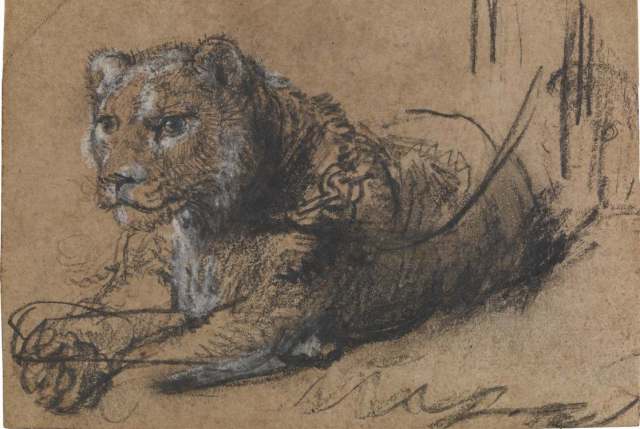
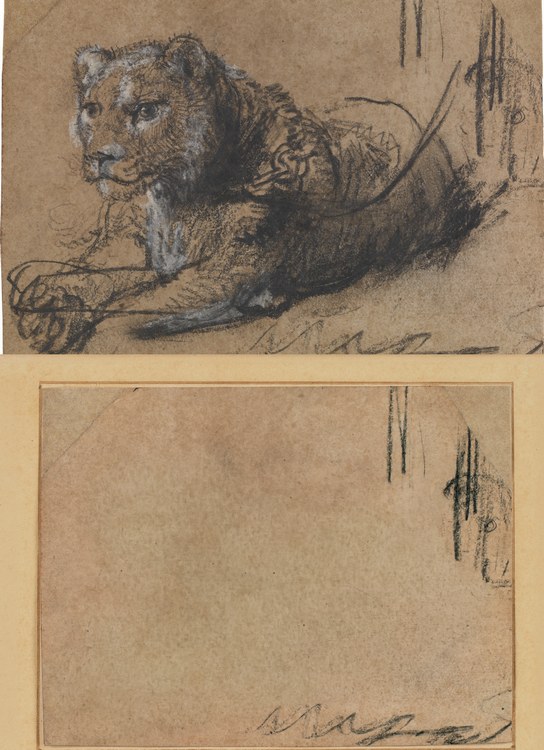
Yesterday, Sotheby’s oversaw the record $18 million sale of a drawing by Rembrandt: one of 6 drafts he made of lions, and the only one to have resided in private hands.
Those hands belong to Dr. Thomas S. Kaplan and his wife, who, along with standing foremost among the world’s private Rembrandt collectors, ride in the vanguard of global wildlife conservation on behalf of the very cat the drawing so vividly depicts.
Founder of both the Leiden Collection of Dutch and Flemish master works and Panthera, the world’s leading conservation organization dedicated exclusively to wild cats big and small, Dr. Kaplan has been able to synergistically marry these two passions, leveraging one to fund the other, as all proceeds from the record-setting, $17.9 million sale will help ensure the lion survives long beyond both Rembrandt’s time, and our own.
Called Young Lions Resting, Rembrandt depicts with superb draftsmanship the languid, fearless pose of the lion through loose, confident strokes, particularly in the modeling of the lion’s paws, and a controlled shading that brings its gaze to life.
Dr. Kaplan, who’s spoken to GNN before about his work at Panthera, explained how it was the most he and his wife had ever paid for an object after they embarked upon their anonymous journey of collecting Rembrandt and other Dutch/Flemish masters pieces in 2003.
“We recognized immediately the synergy, as my wife told me when I asked her opinion of it when I took her to see it before buying it: she responded, ‘it’s a Rembrandt, it’s a lion, and it’s beautiful; if it’s not for you, then who’s it for?” Kaplan told GNN.
Only 6 drawings of lions by Rembrandt are currently known. Young Lion Resting is the first drawing by the master to come to the market in a century, and the $17.9 million sale price sets a new record for a drawing by Rembrandt by almost $15 million.
Kaplan founded Panthera along with renowned and late conservationist Dr. Alan Rabinowitz just one year after he bought the painting in 2005. Highlighting the plight of the lion across its entire native range, the sale of Young Lion Resting at Sotheby’s was paired with a faithful reproduction entitled Young Lion Vanished, wherein the animal Rembrandt so skillfully brought to life on the paper is replaced by a void—a reality on our Earth across 95% of the lion’s former range.
“Is it savable? Yes, it is, and with much larger landscapes than with the tiger in India. But, in 26 out of the 48 countries through which it roamed, it’s now extinct,” says Dr. Kaplan, whose involvement in Panthera goes far beyond his role as its billionaire philanthropist founder, and stretches well into the scientific.
Young Lion Resting (top) Young Lion Vanished (bottom) – credit, supplied by Panthera
While Panthera has achieved incredible results protecting leopards and jaguars, Dr. Kaplan says that, regarding lions, its programs are still about “playing defense.”
“The lion is not there, but it could be. I don’t believe it will ever be extinct in the wild, but it might come to exist only in fortresses, and we want to see more connectivity.”
Young Lion Resting was co-owned with the chair of Panthera’s board of directors, Jon Ayer, who has spoken with GNN multiple times, and who provided a statement to mark the sale.
“The pulse of life that Rembrandt captured in this lion’s gaze continues to beat today through our conservation field programs,” said Ayers. “This sale provides Panthera with critical resources to combat poaching and habitat loss globally, ensuring that the majesty Rembrandt admired in the 17th century survives well into the 21st and beyond.”
Those resources come as the organization he chairs, and Kaplan founded, will celebrate its 20th anniversary this year. The auction proceeds will support science-directed initiatives fostering human-wild cat coexistence and critical landscape protection in some 40 countries across four continents.
“We probably spend 80% of our time working with people to ensure that we’ve protected them from the human-animal conflict that usually precedes the slaughter of the animals. If people don’t have to kill lions, usually they don’t, but if all of your material wellbeing is wrapped up in a cow or a goat, you’re not going to take that loss stoically,” Dr. Kaplan remarked empathetically.
“You’re going to make sure that doesn’t happen again. On the other hand, if you create good fences, generally speaking, people do not want to kill the cat.”
Kaplan told GNN that among those whose job it is to know within the federal government, there is a belief that if Panthera can’t save a wildcat, no one can. If that’s true, then this record Rembrandt auction suggests the lion is in a safe pair of paws.
The good news in this story is that a billionaire is using his wealth to benefit creatures on Earth. Today’s JohnKu Talks about billionaires. I hope you have a lovely weekend.
After low winter temperatures battered multiple regions of the country with snow, heroes in Washington, DC, stood up to be accounted for.
With major thoroughfares taking priority for District plows and employees, the ‘DC Snow Heroes’ hit the blocks, shovels in hand, to clear sidewalks for the elderly, the young, the disabled, or even just the overwhelmed.
Organized by the mayor’s office, Serve DC is a volunteer program that includes a special segment whose mission it is to shovel snow and clear ice—both of which had accumulated in the District at the start of this week.
“As a community, we have to stick together, we have to do what we can do for one another, and it’s a lot of people that [are] unable to do things, so that’s where we come in,” David Ford, one of the Snow Heroes, told DC News Now.
“Service is the gateway to all success,” remarked another volunteer when asked why he volunteers his time shoveling snow.
The storm had dumped mounds of dry snow 10 inches high on Sunday, which promptly refroze over the evening, making it treacherous to walk on.
Volunteers cleared both the snow and the ice in front of homes like that of Shirley Thomas, a DC resident who needs a crutch to get around.
“It’s not too many people in the world like that,” she said watching the Snow Heroes do their heroics.
Organized by the mayor’s office of Muriel Bowser, anyone living in the area looking to be a hero, as David Bowie said, just for one day, can go to the Serve DC website.
“It is outstanding… This is really neighbors helping your neighbors, showing the kind of community and love that the mayor thrives off that we are building, and making sure that we sustain a district,” said Lamont Carey, Director of Community Affairs for the Mayor’s Office.
The good news in this story is that people are helping people. The JohnKu discusses Service. I hope you have a super weekend.
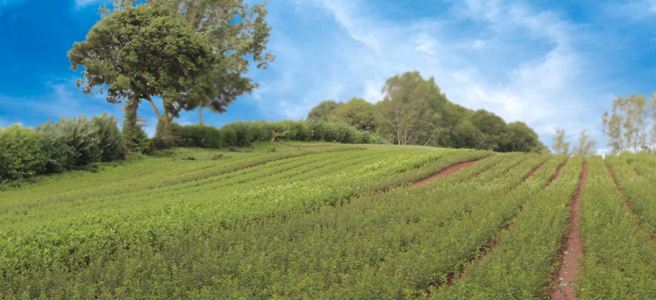
St. Edward’s University in Austin, Texas and H-E-B grocery chain have collaborated to create the first Tiny Forest in Austin and Central Texas to help improve canopy cover in communities throughout Austin.
St. Edward’s University and H-E-B have partnered to grow Austin and Central Texas’s first Tiny Forest using the Miyawaki Method. (Courtesy St. Edward’s University)
How it works
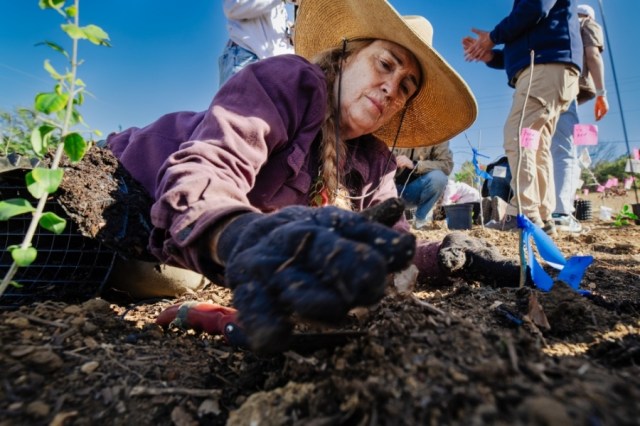
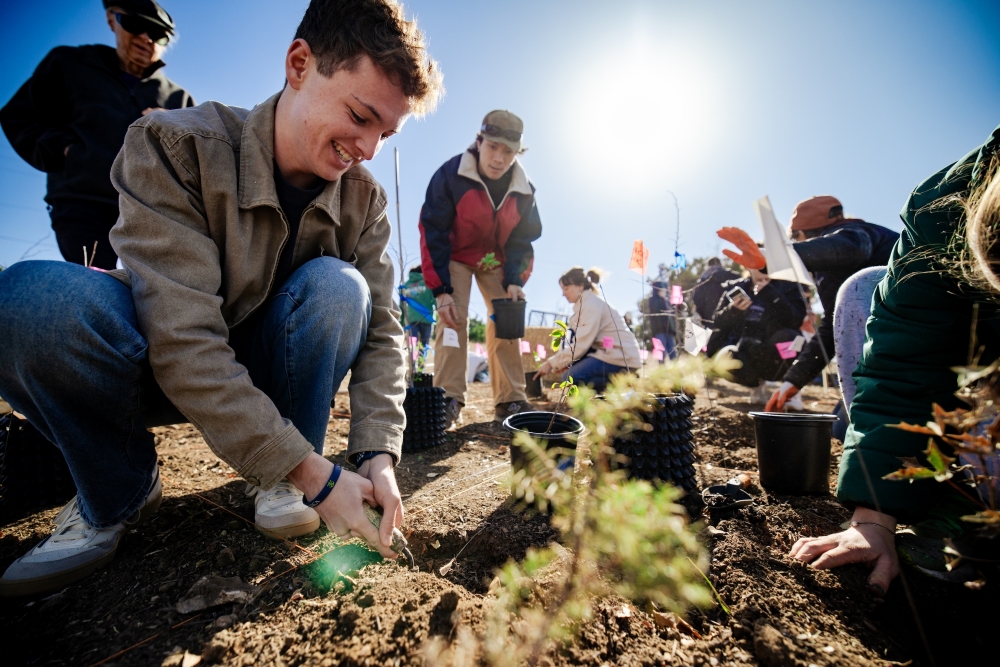
On Jan. 17, H-E-B team members, community volunteers, university students, faculty, and staff joined together to plant 54 square meters with 164 trees and shrubs.
The project uses the Miyawaki Method, an approach that enables trees to grow 10 times faster and seclude 10 times more carbon than traditional tree planting methods.
Arborist and sustainability coordinator Roy Johnson explained how the method differs from conventional tree planting.
One of the most noticeable differences in a Miyawaki forest is that the seedlings are planted at very high densities. This replicates the regeneration process that occurs in a natural forest when a clearing in the canopy opens up due to a larger tree falling. The saplings grow very fast to compete for the light, and then natural selection will favour the fastest-growing individuals and act to thin out the trees. The result is a densely packed pioneer forest that grows in 20 to 30 years instead of taking 150 to 200 years. This has obvious benefits for projects that are working to maximize a forest’s carbon sequestration potential or recreate habitat for biodiversity and wildlife.
“We can use this method to provide all of the benefits of conventional tree plantings, such as air and ground water filtration, erosion control, and cooling the air through evapotranspiration,” Johnson said. “However, using this specific and detailed method, trees can be expected to grow much faster than conventional plantings.”
Through this method, the trees planted at the event are expected to reach full maturity within the community’s lifetime, as stated in a news release.
Natural resources intern Veronica Chavez said the project will reduce the negative effects of urbanization on the local community.
“Even on just a local level, a tiny forest can improve air quality, help with stormwater management, and provide a cooling effect for the surrounding areas,” Chavez said. “It also becomes a habitat for local wildlife and pollinators, encouraging increased biodiversity in the area.”
On Jan. 17, community members, students, faculty and H-E-B partners joined together to plant 164 trees and shrubs for the Tiny Forest. (Courtesy St. Edward’s University)
The background
According to the news release, the Miyawaki Method crafted by botanist Akira Miyawaki was inspired by his time witnessing large-scale deforestation from World War II and overdevelopment in Japan.
The project is a proof-of-concept model that can be shared with overdeveloped communities in need of the benefits of trees, such as areas within the eastern crescent of Austin, which typically receive low tree equity scores.
The event marks the second year of the university’s collaboration with H-E-B through its Trees for Texans program, which aims to support healthier environments for schools, parks, and communities throughout Texas.
Get involved
Community members can directly help the Tiny Forest project by participating in a fringe mantel planting in the fall or reaching out to sustainability@stedwards.edu for information about how to plant a tiny forest in their community. Interested individuals can also stay updated with the forest by checking out its Instagram @Seu_food_forest.
Quote of note
“These tiny forests won’t check every box needed for climate change mitigation and environmental justice, but they have the ability to be a massive boost to both,” Johnson said. “It seemed like we should jump on the opportunity to start introducing this concept to Austin sooner rather than later. We are very excited about the potential and very pleased that the ball has started rolling.”
The good news in this story is that humans have found out how to quickly reforest the land for the betterment of all living things. Today’s JohnKu talks about discovery from chaos. I hope you have a super weekend.
Today’s good news story comes from The Cool Down newsletter. Thank you to Noelle Granger for sending it to me.
Experts thrilled by recovery of beloved US creatures: ‘It was really successful’
By Drew Jones
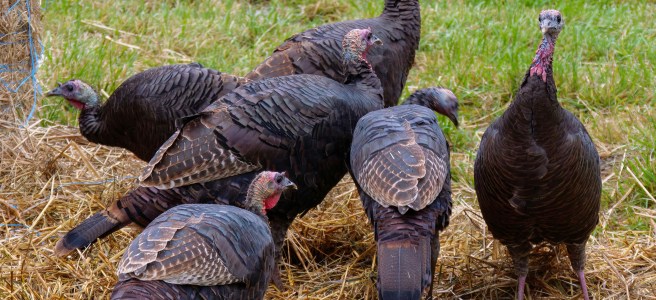
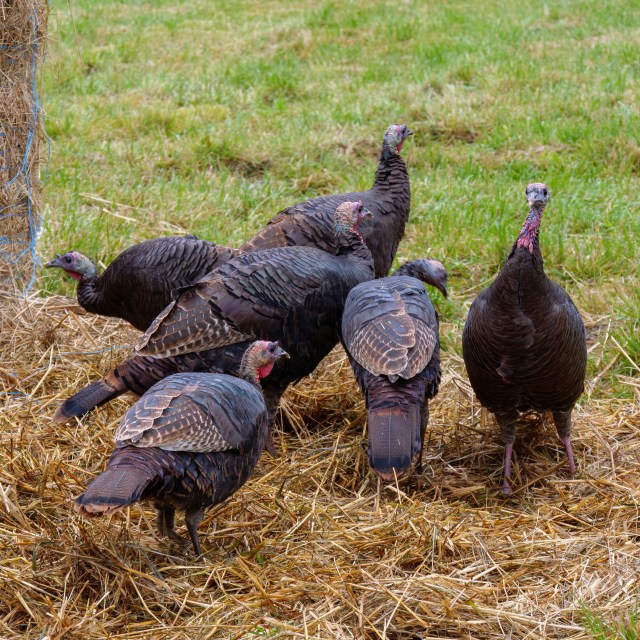
Wild turkeys are thriving across Illinois in what one wildlife expert has dubbed “one of the greatest wildlife management success stories in modern times.”
Once entirely extirpated from the state in the early 20th century due to overhunting and habitat loss, wild turkeys have returned to nearly every corner of the Prairie State through sustained restoration efforts that began in the 1950s.
Wild turkeys, native to North America and historically abundant across the Midwest, were completely killed off in Illinois, according to the Chicago Tribune. But decades of careful work by the Illinois Department of Natural Resources and partners changed that.
“People had the idea that these natural resources would last forever,” Luke Garver, wild turkey project manager for the IDNR, told the publication.
Conservationists employed rocket-propelled nets to help capture birds and move them to different areas. They even used a multi-state collaboration approach to move birds from neighboring states and even “trade” wild turkeys for river otters in states that were looking to restore that population.
Over time, populations expanded naturally as habitat conditions improved and birds reproduced across the state’s forests.
“It was really successful,” Garver said. “It’s pretty remarkable how well these birds do when they’re given good habitat.
This comeback highlights why animal conservation and biodiversity are so important. Every species plays a role in the complex web of life that supports healthy ecosystems.
Turkeys help disperse seeds, control insect populations, and serve as prey and predators in food webs. Their interactions with plants and insects also help sustain soil health and nutrient cycles that benefit countless other organisms.
Biodiversity isn’t just good for nature, it’s crucial for humans too. Healthy ecosystems provide services we all rely on: clean water, fertile soil for crops, carbon storage that moderates climate change, and even our food supply. When species like wild turkeys rebound, it signals that these systems are functioning well.
Similar efforts are happening elsewhere. In California, for example, conservationists are trying to restore bighorn sheep populations.
The turkey’s triumphant return in Illinois is a powerful reminder that intentional conservation can restore nature’s balance. Preserving biodiversity ultimately supports both wildlife and human communities alike.
The good news in this story is that with effort, even potential extinction can be overcome. Today’s JohnKu talks about the impossible. I hope you have a super weekend.
Today’s good news story comes from CBS. It was sent by Resa McConaghy. Thanks, Resa, for sharing
Elusive, endangered wild cat seen in Thailand for the first time in 30 years
An elusive wild cat long feared extinct in Thailand has been rediscovered three decades after the last recorded sighting, conservation authorities and an NGO said Friday.
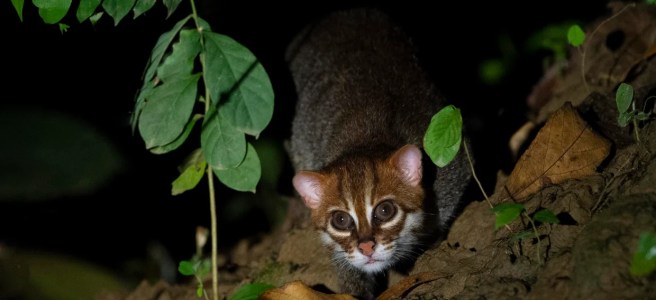
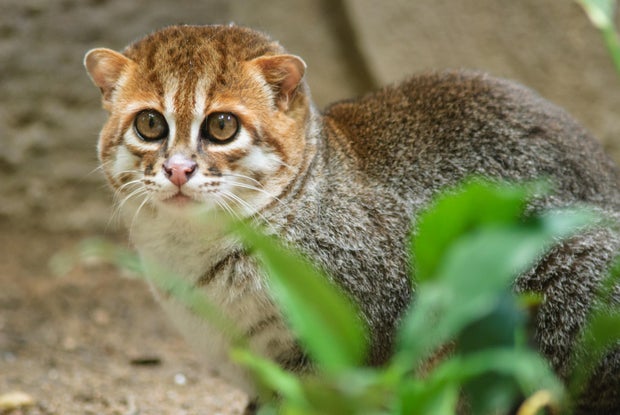
Flat-headed cats are among the world’s most threatened wild felines, with the International Union for Conservation of Nature estimating that just 2,500 adults exist in the wild. The rare animals are about the size of a domestic cat and have distinctive, round, close-set eyes.
Flat-headed cats are found only in Southeast Asia and typically live in dense wetland ecosystems like peat swamps and freshwater mangroves. Such areas are under threat: Thailand’s peat swamp forests have been heavily fragmented, mainly due to land conversion and agricultural expansion, said veterinarian and researcher Kaset Sutasha of Kasetsart University. The last confirmed sighting of a flat-headed cat in Thailand was in 1995.
Last year, the wild cat conservation organization Panthera and Thailand’s Department of National Parks, Wildlife and Plant Conservation began an ecological survey using camera traps in the country’s Princess Sirindhorn Wildlife Sanctuary.
A flat-headed cat. Warmlight / Getty Images
Flat-headed cats were detected 29 times during the survey, according to Panthera and Thai officials. It was not immediately clear how many individuals the detections represent, as the species lacks distinctive markings, so counting is tricky. Pattanarangsan said the survey’s findings suggest a relatively high concentration of the species.
The footage included a female flat-headed cat with her cub — a rare and encouraging sign for a species that typically produces only one offspring at a time. The species has also struggled to reproduce across isolated areas, contributing to its endangerment.
Kaset, who was not involved in the survey but has researched wild cats for years, said the “rediscovery is exciting” but is only a “starting point” for future conservation efforts.
“What comes after this is more important — how to enable them to live alongside us sustainably, without being threatened,” Kaset said.
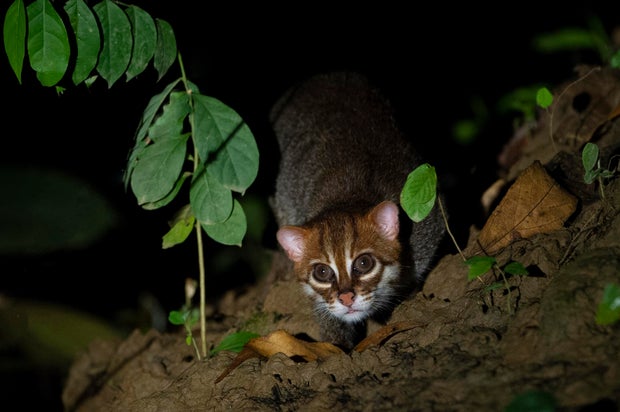
A flat-headed cat seen hunting along the Kinabatangan river, Sabah, Malaysia. Getty Images/iStockphoto
In addition to Thailand, flat-headed cats can be found in Malaysia, Sumatra, and Borneo, according to the Felidae Conservation Fund. They have a diet dominated by fish, frogs, and shrimp, and are nocturnal, elusive animals.
“Much about the species remains a mystery because of their rarity and the difficulty of accessing their habitats,” Panthera conservation program manager Rattapan Pattanarangsan said.
The good news in this story is that once again Nature works to recover from human interference. Today’s JohnKu talks about recovery. I hope you have a lovely weekend.
BREAK ANNOUNCEMENT – I will be off Saturday and Sunday so there will be no shenanigans with the coffee machine or views of the neighborhood. I’ll be back Monday.