Friday JohnKu – AKA -TGIF – Fri-Yay/Good News


This week’s good news story comes from Yahoo News ‘The Cool Down. Many thanks to Noelle Granger for sending this story to me.

Creature hunted nearly to extinction makes stunning comeback: ‘It’s thriving’

Hannah Slusher

In a remarkable win for both people and the planet, the Eurasian beaver — once hunted to near extinction in France — is making a triumphant comeback.

A single beaver family that arrived in the tiny hamlet of Montlahuc in 2020 has transformed a dry, sun-scorched pasture into a thriving wetland, showing how one small species can help fight the negative impacts of a warming world and revive local communities.

Montlahuc, a village of just 40 residents in the Drôme region, had suffered years of worsening drought that left meadows parched and local farmers struggling. But within three years of the beavers’ arrival, a once-barren field now holds more than 2,000 square meters of standing water.

Birds, insects, and lush green vegetation have returned, inspiring residents to rethink how they manage their land.

“We used to graze this land only once a year,” local farmer Marc-Antoine Forconi told Futura. “Now, it’s thriving.”

Beavers are often called “nature’s engineers” for good reason. Using their powerful teeth and instinctive building skills, they construct dams and channels that slow water flow and store moisture in the soil. This natural water management supports healthier ecosystems, creates habitats for other wildlife, and provides a low-cost, low-maintenance way to help landscapes withstand drought.

Inspired by their furry neighbors, Montlahuc farmers have even built their own small dams to retain water — though, as Forconi joked, “The beavers outperformed us.”

Once reduced to only about 100 individuals in the early 20th century, Eurasian beavers are now protected and number between 20,000 and 25,000 in France, according to Futura. The species’ return highlights how protecting wildlife can lead to unexpected climate solutions, echoing other success stories, such as the resurgence of gray wolves in Yellowstone or the rewilding of bison in Europe.

This quiet resurgence is more than a feel-good story. It’s a reminder that working with nature, rather than against it, can create healthier landscapes and a more resilient future for communities everywhere.

The good news in this story is that nature has once again demonstrated that good practices and effective land management can help reverse environmental damage. Today’s JohnKu talks about taking that lesson to heart. I hope you have a delightful weekend.

Lesson by John W. Howell © 2025

Nature keeps saying,

Take care of the land and it . . .

Will take care of you.
Friday JohnKu – AKA – TGIF – Fri-Yay/Good news

Today’s good news story comes from the Associated Press. This story was brought to my attention by The Producer.

Purrfect ending: Missing Virginia store cat found after hitching a ride to another state

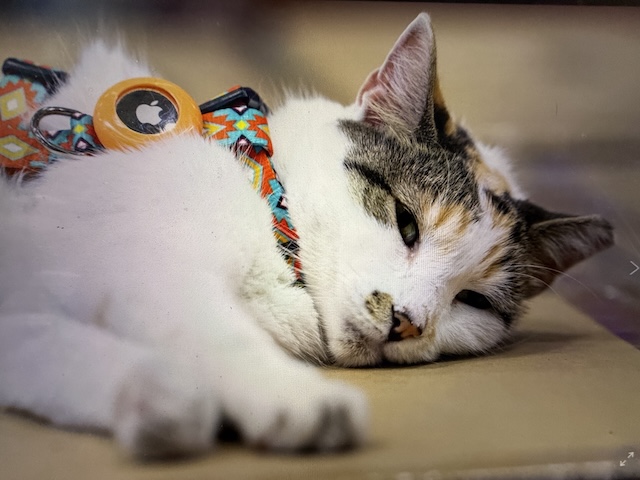
Francine, the calico cat, is back home at a Lowe’s store in Virginia after going missing for a few weeks, hitching a ride on a truck that turned up at a sister facility in another state.

Two employees from a Lowe’s in Richmond made the 90-minute drive early Monday to pick up Francine, who disappeared in September and was recently discovered at the company’s distribution center in Garysburg, North Carolina.

She was back on the job Tuesday, playing with customers, posing for photos, and soaking in affection.

In this photo provided by Lowe's, employees welcome back Francine, the store cat, after she disappeared unexpectedly in September, at the Richmond, Va., Lowe's, Tuesday, Oct. 7, 2025. (Kevin Ridley/Lowe's via AP)

In this photo provided by Lowe’s, employees welcome back Francine, the store cat, after she disappeared unexpectedly in September, at the Richmond, Va., Lowe’s, Tuesday, Oct. 7, 2025. (Kevin Ridley/Lowe’s via AP)

Francine spends much of her time either at the customer service desk or in the store’s seasonal area. But things went awry in September as the store brought in items for the upcoming Christmas season. Store general manager Mike Sida said that disruption may have prompted Francine to seek comfort elsewhere.

After store employees hadn’t seen Francine for a few days, they reviewed past surveillance video. There were glimpses of her in the appliance section and then the receiving department, where she darted into a truck. An overnight manager is then seen shutting the truck’s door, and off it went to Garysburg, about 85 miles (137 kilometers) to the south.

“And then, of course, when she got down to the distribution center, she shot off the truck,” Sida said. “That’s when we found out where she was, and she was missing.”

An animal control office set up humane traps at the distribution center, where photos of Francine were posted throughout. The center had dozens of monitoring cameras, and Lowe’s brought in thermal drones to survey the area. An Instagram account unaffiliated with Lowe’s dedicated to finding Francine grew to more than 34,000 followers.

On Saturday, Francine was spotted on camera near the distribution center. After more humane traps were installed, a volunteer checked each trap throughout the night. Finally, one of the traps triggered, and Francine’s meows could be heard.

In this photo provided by Lowe's, a customer welcome back Francine, the store cat, on Tuesday, Oct. 7, 2025, after she disappeared unexpectedly in September, at the Richmond, Va., Lowe's. (Kevin Ridley/Lowe's via AP)

In this photo provided by Lowe’s, a customer welcomes back Francine, the store cat, on Tuesday, Oct. 7, 2025, after she disappeared unexpectedly in September, at the Richmond, Va., Lowe’s. (Kevin Ridley/Lowe’s via AP)

Francine was a stray when she started living at the Lowe’s store more than eight years ago. Cats are commonly seen around feed stores and garden centers, which contain large amounts of grain and seed that can be attractive to mice and rats. In New York City, cats are beloved fixtures of the city’s bodegas and delis.

At the Lowe’s store, Francine “just showed up,” Sida said. “We had a bit of a mice problem. So, of course, I’m like, wow. I like this cat a lot because it’s helping me.”

Lowe’s doesn’t have an official policy about cats in stores. Asked why Francine wasn’t taken to someone’s residence after showing up, Sida said she is loved by employees and the community.

“Francine picked us. We didn’t pick her,” Sida said. “Later, we would embrace her as our store cat. But at the end of the day, she came to us. Where she’s at is where she wants to be. She does whatever she wants.”

Unlike Lowe’s employees, Francine does not wear a vest. She had been previously outfitted with several collars but escaped them all. Now they plan on fitting her with a harness that includes identifying information.

A local brewery will host a “Francine Fest” community event on Wednesday to celebrate the homecoming, while the store is planning its own team party.

The good news in this story serves as a poignant reminder of the attachment we have to those who love us unconditionally. Francine demonstrates that love every day. Today’s JohnKu talks about unconditional love. I hope you have a lovely weekend.

Love by John W. Howell © 2025

Humans give and take,

Our pets consistently give . . .

Unconditional.

Friday JohnKu – AKA – TGIF – Fri-Yay/GoodNews

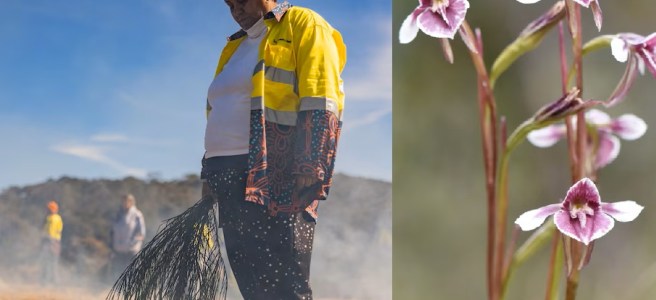
– supplied by Australia’s Department of Climate Change, Energy, the Environment and Water


Today’s Good news comes from the Good News Network.

Aboriginal Elders Lead Prescribed Burn–and Rare Orchids Appear by Thousands

By Andy Corbley –

Recapturing ancestral responsibility and restoring endangered orchids are the themes coming out of Australia’s scorched grasslands.

Burned by the cataclysmic bushfires of 2019, a national park called the Barrington Tops exploded in rare veined doubletail orchids, and now the traditional owners of the lands perform prescribed burns to aid these flowers in flourishing under duress from invasive species.

“During the… wildfires, fire jumped up here on the plateau,” Luke Foster, from the country’s Department of Climate Change, Energy, the Environment and Water (DCCEEW), told ABC News AU. “And in the burn footprint the following season, we had 4,000 [orchids] pop up right where the fire went through.”

Prior to 2023, it had been more than 50 years since the plain experienced a cultural burning, when slower, cooler fires are allowed to spread across the landscape according to elders’ deep knowledge of the terrain.

Birrbay, Warrimay, Wanarruwa, Gaewegal, and Guringay peoples all consider the Barrington Tops, called the Biyan Biyan Plain in their language, to be their traditional lands, and elders of these groups speak of a time when it was used as a place for gathering.

Warrimay elder Michelle Perry has been collaborating at the request of the DCCEEW to help lead the burning in aid of the veined doubletail orchid. According to Perry, Aboriginal groups have been conducting these burnings for millennia to prevent larger, more destructive wildfires from breaking out.

“There was a sense that they [our ancestors] were giving approval… it was just a sense of, ‘Yeah, they’re caring, watching.’ It has been one of the best things that’s happened for me and my family,” she told ABC.

So far the collaboration between the DCCEEW and some 150 different traditional owners has lit controlled fire to the Barrington Tops three times, and research is ongoing to study its effects on the orchids.

Ms. Perry relishes each chance to forge a greater connection to the land, and focuses on sharing and instilling that sense of connection into the younger generations of Warrimay and others.

The good news in this story is nature has a way to replenish treasured flora. Today’s JohnKu talks about how nature works. I hope you have a wonderful weekend.

Orchids by John W. Howell © 2025

Endangered orchids,

Rise from the flames to glory . . .

Nature sleeps till called.

Friday JohnKu – AKA -TGIF – Fri-Yay/Good News


Today’s good news comes from Fox News. This report was brought to my attention by reader Tom Okragly.

What if stopping life-threatening bleeding could be as simple as injecting a gel? That’s the promise of TRAUMAGEL, a groundbreaking, plant-based bleeding control gel now being used by first responders across the country, including a metro Atlanta fire department that recently used it to save one of their own.

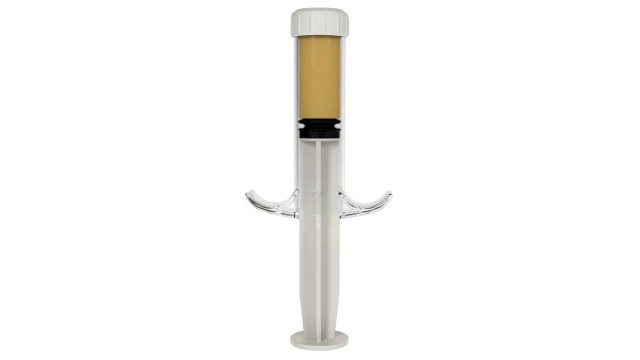
Developed by Cresilon CEO and co-founder Joe Landolina, TRAUMAGEL works in seconds to control bleeding from gunshot wounds and other traumatic injuries. It’s supplied in a compact 30-ml syringe and can be quickly applied in the field before a patient bleeds out, a risk responsible for more than 35% of all prehospital deaths.

A TRAUMAGEL GEL syringe sits in front of its package. (Cresilon)

A medical breakthrough born in a winery lab

The story behind TRAUMAGEL starts with a teenager in a winery lab. Joe Landolina, now CEO of Cresilon, developed the technology when he was just 17.

“My grandfather was a retired chemist who owned a vineyard in upstate New York,” Landolina explains. “I would work alongside him in his winery laboratory every single day after school from a very young age. During that time, I developed a strong love for chemistry, especially plant-based chemistries from ingredients found in nature around me.”

That love turned into research. “At the age of 17, I was experimenting with polymers extracted from the cell walls of algae and discovered a matrix that would instantly bond to living tissue,” he said.

He took the idea to New York University’s business plan competition, and Cresilon was born. The company now operates out of a 55,000-square-foot biomanufacturing facility in Brooklyn with nearly 100 employees.

TRAUMAGEL works in seconds to control bleeding from severe injuries. (Cresilon)

Real-world impact: Faster bleeding control in the field

TRAUMAGEL is already changing how medics respond in high-pressure trauma situations.

“TRAUMAGEL has impacted how we respond to traumatic injuries in any situation,” says Lt. David Kleiman of Cobb County Fire & Emergency Services. “In the past, with junctional injuries, like the neck, armpit, or groin, we were using traditional methods like digital pressure or wound packing. That required multiple crews and took time.

“With TRAUMAGEL, we can administer a hemostatic agent that controls bleeding in seconds,” he continues. “Crews can move on to quicker assessments and treatments and get the patient to definitive care faster.”

How it saved a firefighter’s life

In one recent case, a Cobb County firefighter was injured during a response at an abandoned house. He tripped on a hill, cut his hand on broken glass, and attempted to stop the bleeding himself. But it didn’t work.

“He eventually realized he couldn’t control the bleeding and made his way back to the engine,” Kleiman recalls. “The crew noted that he was pale and sweaty and that his turnout gear was saturated in blood. Traditional methods failed, so they administered TRAUMAGEL. It instantly stopped the bleeding.”

The firefighter was then treated for blood loss and fully recovered after surgery.

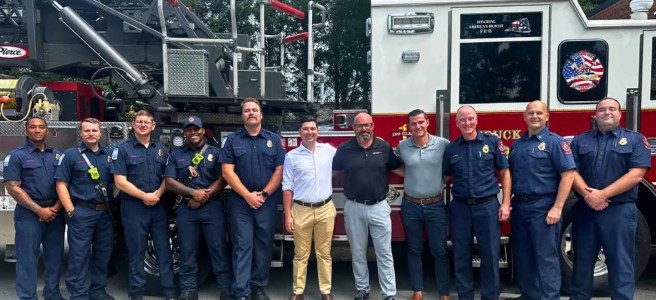
Cresilon CEO and co-founder Joe Landolina (center) and his team stand with Cobb County Fire & Emergency Services. (Cresilon)

From fire departments to the Department of Defense

Cresilon’s bleeding control gel is being tested in even more demanding environments.

“In addition to getting TRAUMAGEL into the hands of all first responders across the country,” Landolina says, “our proprietary technology is being studied for broader applications by the U.S. Defense Department’s Walter Reed Army Institute of Research.”

That study is focused on penetrating traumatic brain injuries (TBI). “Preliminary findings demonstrated promising results in the ability of our technology to control bleeding and provide neuroprotection following a TBI,” he says. The team plans to pursue further research based on those results.

What this means for you

Severe bleeding is the number one cause of preventable death from trauma. With TRAUMAGEL, emergency teams can control that bleeding quickly, even before a patient reaches the hospital. This tool isn’t just for battlefield medicine or professional EMS. In the future, you could see it in hospitals, dental offices, and even home first-aid kits. TRAUMAGEL may become a new standard in emergency bleeding control, and that means faster care, better outcomes, and more lives saved.

Copyright 2025 CyberGuy.com. All rights reserved.  
The good news in this story is the fact that advances are being made in wound treatment by someone thinking outside the box. Today’s JohnKu talks about this kind of thinking. I hope you have a restful weekend.
Thinking by John W. Howell © 2025
When the mind is open,
New options for solutions . . .
Become tools to use.

Friday JohnKu – AKA – TGIF – Fri-Yay/ Good News

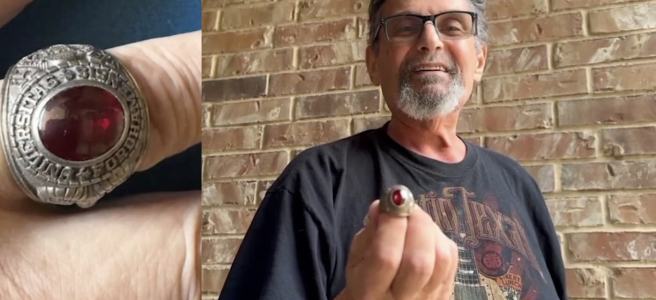
Photo via Alfred DiStefano

Today’s good news story comes from the Good News Network.

Man Reunited with Class Ring 56 Years After Losing it in the Long Island Sound: ‘It’s a Miracle’

A man recently received word through social media that a Long Islander and his metal detector had found his missing class ring, lost on a day at the beach 56 years ago.

Then, Alfred DiStefano remembers vaguely standing on a dock or a pier on Cedar Beach, Long Island Sound, when the ring slipped off and fell into the water.

Receiving it through the mail, the now Dr. Alfred DiStefano was able to look at the highly personalized white gold band and ruby for the first time since gasoline cost $0.35 a gallon.

The story begins when hobbyist David Orlowski was on the beach at low tide with his metal detector. Routinely scanning the beaches of Long Island for years, he’s found many rings in his time.

“They go in the water, shrinks your hands, and off your ring goes,” Orlowski told ABC 7.

Digging down more than a foot at the prompt of a loud ‘ping’ from his detector, Orlowski found the ring, which not only bore the name of the school, Fordham University, but also an inscription of a name on the inside of the band.

Orlowski did a few minutes of searching, given that he had so many clues as to the ring’s owner, and managed to find the Fordham class of 1969 reunion Facebook group. There, moderator Karen Manning was so impressed with Orlowski’s honesty that she was determined to find the person to whom the jewel belonged.

“He could have just sold it and made some money on it, but it restored my faith in humanity,” Manning said.

For his part, and true to his honest nature that Manning detected, Orlowski admitted it was his wife who urged him to seek out the ring’s owner.

“She says, ‘Well, if you lost your ring, wouldn’t you want it returned?’ And so, right. The question, answered,” Orlowski told 7’s Sonia Rincon.

Dr. DiStefano considers it a miracle and sent a lovely thank-you present to Orlowski via the return address.

WATCH the story below…

The good news in this story is the honesty of the finder and the eventual return of the ring. Today’s JohnKu talks about honesty. I hope you have a lovely weekend.

Honesty by John W. Howell © 2025

There is a saying,
What you do when unobserved . . .
Is true honesty

Friday JohnKu – AKA – TGIF – Fri-Yay/Good News

VILNIUS, Lithuania (AP) — Cute and adorable Welsh corgis, widely known for their association with the British royal family, are in fact a breed of passionate racers.

That’s at least according to the 120 teams from around Europe taking part in the Corgi Race Vilnius, in Lithuania’s capital, which drew an international bunch of furballs and their owners from countries including Poland, Latvia, Germany, Austria, and Italy.

Thousands of Lithuanians gathered in the capital’s largest park on Saturday and Sunday to watch the events — a solo sprint, a contest for the “mightiest voice,” costume challenges, and group racing.

The event is set to culminate on Sunday with the so-called World Corgi Meetup, where dogs in Lithuania will be connected via a live broadcast with their peers in the United States, Ireland, and Poland.

“This is so much fun and great emotion for the entire family, something bright that many people are craving for these days,” said retired teacher Janina Stoniene, who attended the race with her three grandchildren. The children said they admired the costume challenge as dogs were dressed in eye-catching outfits like Batman, a princess, or an airplane.

A corgi named Amigo, sporting a factory-themed costume complete with two tiny chimneys and “Fur Factory” lettering, was named the proud winner of that contest.

Another called Mango, whose owners are from Lithuania, was the champion of the solo race.

“So this is a mango, like a fruit mango, and we are participating (for the) second time in Corgi Race 2025,” said Ignas Klimaika, a proud corgi lover from Vilnius. “Last year, we didn’t manage to end the race perfectly. We had a really good training. We had trained every day, but this year we decided we just go without training, just to participate, just to enjoy all the lots of corgis,” he said. A corgi dog participates in a fashion show during a international event Corgi Race Vilnius 2025 in Vilnius, Lithuania, Saturday, Aug. 23, 2025. (AP Photo/Mindaugas Kulbis)

A corgi dog participates in a fashion show during the international event Corgi Race Vilnius 2025 in Vilnius, Lithuania, on Saturday, August 23, 2025. (AP Photo/Mindaugas Kulbis)

Corgis race during a international event Corgi Race Vilnius 2025 in Vilnius, Lithuania, Saturday, Aug. 23, 2025. (AP Photo/Mindaugas Kulbis)

Corgis race during an international event, Corgi Race Vilnius 2025 in Vilnius, Lithuania, Saturday, Aug. 23, 2025. (AP Photo/Mindaugas Kulbis)
A corgi dog participates in a fashion show during a international event Corgi Race Vilnius 2025 in Vilnius, Lithuania, Saturday, Aug. 23, 2025. (AP Photo/Mindaugas Kulbis)

A corgi dog participates in a fashion show during an international event, Corgi Race Vilnius 2025, in Vilnius, Lithuania, Saturday, Aug. 23, 2025. (AP Photo/Mindaugas Kulbis)

But this year, Mango won the racing competition, while his owners screamed and waved to try to inspire him to triumph.

“He knows what he did and he’s really proud of himself,” said Ignas, who is already planning for 2026.

Here is a link to a video of the event
https://apnews.com/video/lithuanian-capital-becomes-centre-of-the-corgi-universe-with-host-of-corgi-contests-9964ad598f17454890307ecc6aefc3af

The good news here is that folks from around the world have a common interest. Today’s JohnKu discusses the commonalities in the human race.

Sharing by John W. Howell © 2025

We all have interests,

It warms the heart when they’re shared . . .

Aids understanding.


Friday JohnKu – AKA – TGIF – Fri-Yay/Good News

Today’s Good News story comes from Yahoo News. Thanks to Noelle Granger for sending it to me.

Companies announce game-changing plan to harvest drinking water from the ocean floor — here’s how it works

by Yei Ling Ma

Three companies are leveraging modern technology to reshape the future of commercial desalination, making the process cleaner, smarter, and more cost-effective, the Wall Street Journal reported.

Safe drinking water helps prevent the transmission of preventable diseases like “cholera, diarrhoea, dysentery, hepatitis A, typhoid, and polio,” per the World Health Organization.  Yet, more than four billion people in 135 low- and middle-income countries worldwide lack that, according to a 2024 study published in the journal Science.

Access to fresh drinking water is shrinking as global water usage increases, driven by industries like agriculture and new technology like artificial intelligence.

Desalination appears to be the most logical solution since 97% of the Earth’s water is found in the ocean.

However, traditional commercial desalination methods like thermal desalination and reverse osmosis are highly energy-intensive and expensive.

Seawater reverse osmosis requires significant energy to pressurize water that passes through a semi-permeable membrane. This membrane filters out salt and impurities, allowing only water molecules to pass through. This process creates a concentrated brine byproduct that can harm aquatic life when deposited back into the ocean.

Thermal desalination leverages heat energy to remove salt from the water. The process involves heating the water to produce steam, which naturally separates from the salt and minerals, and turns back into fresh water when the steam has cooled. Thermal desalination also requires a lot of energy to heat water at scale.

Dirty fossil fuels power these methods, and they remain expensive compared to alternative methods of harvesting freshwater.

Flocean, Waterise, and OceanWell are three water desalination companies that are thinking outside the box.

Instead of wasting energy to pressurize the water to pass through filter membranes, could the desalination process harness the ocean’s natural water pressure to do the same thing?

By using deep-sea technology, including deep-sea robots and undersea power cables, and submerging the filter membrane to a depth of at least 400 meters, or 1312 feet, the water pressure at that depth will naturally flow through the desalination membrane. According to The Wall Street Journal, this deep-water desalination process can save up to 40% on energy usage.

In addition to the benefits of working at that depth, the harmful brine byproduct the process creates can be dispersed quickly back into the ocean, minimizing harm to aquatic life.

Flocean and Waterise have established their pilot desalination plants off the coast of Norway, and OceanWell has built its plant at a reservoir in California’s Las Virgenes Municipal Water District, per the Wall Street Journal.

These companies are seeking government contracts that will help further develop and make more accessible this cleaner, desalination process.

Currently, Flocean is supplying ultra-pure water to a local Norwegian company to make premium-craft cocktail ice. The company also has a contract with Mongstad, an oil refinery facility, to produce approximately 264,000 gallons of desalinated water per day, expected to be launched by the second half of 2026.

Waterise has entered a contract with Jordan Phosphates Mines, a mining company based in Jordan, agreeing to supply 6.6 million gallons of desalinated water per day from the Gulf of Aqaba, south of Jordan.

Most commenters seemed intrigued and hopeful about this new desalination process. However, others questioned the logistics behind the process.

“But they still need to pump that fresh water from the depths to wherever it’s going on land so it’s hard to see where significant energy savings comes from,” one commenter pointed out.

The good news in this story is that companies are exploring various alternatives to traditional desalination techniques. Today’s JohnKu discusses various approaches to problem-solving. I hope you have a peaceful weekend.

Outside the Box by John W. Howell © 2025

Conformity can,

Hamper the quest for knowledge. . .

Knowledge solves problems.

Friday JohnKu – AKA – TGIF – Fri-Yay/Good News


Today’s heartwarming animal rescue story comes from The Good News Network.

Wisconsin Bear with Snack Jug Stuck on Head Freed, Relocated and Released

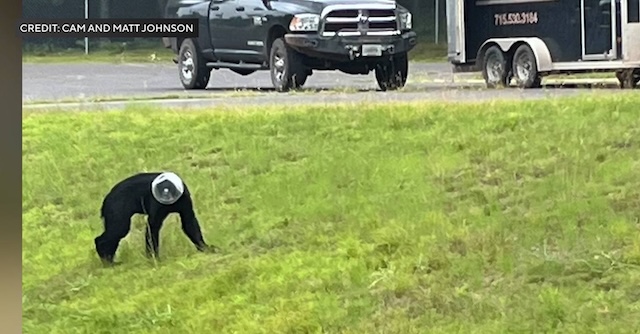
Wisconsin residents called in by the dozen: “There’s a bear in my yard,” they said.

However, wildlife authorities were taken aback by the next detail: “It has a jar on its head!”

The Winnie the Pooh wannabe was a 2-year-old female black bear who had obviously followed her nose about 18 inches too far. Feasting on cheese balls, pretzels, or something else that’s sold in those massive plastic snack jugs, the animal couldn’t extract its head after it had finished.

“My immediate neighbor was like, ‘hey, just heads up, here is what’s heading towards your house,’” said Jayme Morey, coordinator for the Chequamegon Humane Association in Ashland, Wisconsin.

Used to spreading the word about missing dogs and cats, this emergency was rather different. The Wisconsin Department of Natural Resources had been tracking the bear for a week, as Morey’s call wasn’t the only one they had received.

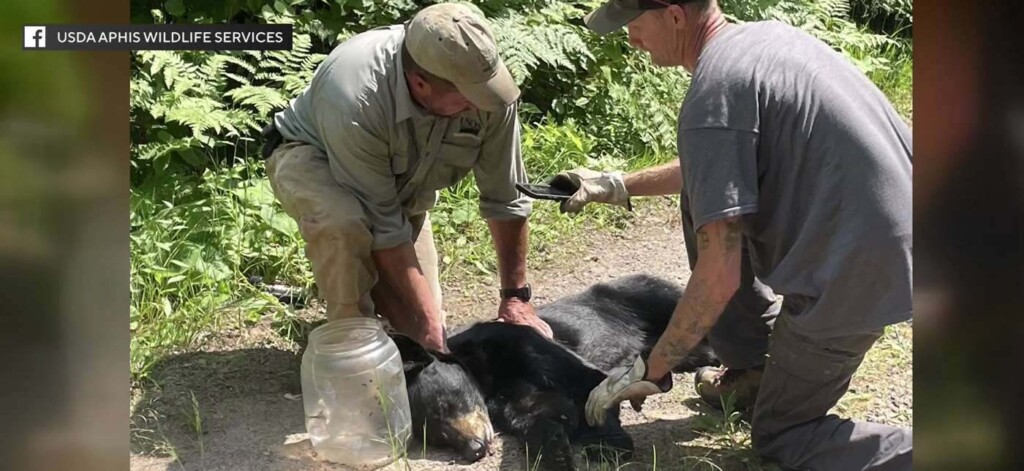
They were finally able to find it, tranquilize it, and remove the jug from its head. Clearly skinny, the bear had been trapped for at least 11 days based on the record of sightings by locals. It could still get water by dunking its head and slurping up what entered through the sides of the jug.

“We’ve seen this come up from time to time, often with a bear, occasionally a deer,” Randy Johnson, a large carnivore specialist with the Wisconsin DNR, told CBS News. “The good news is this is the time of year when food is the most abundant in the woods, and she’s got two months to kind of get back into healthy shape going into winter.”

credit – USDA Aphis Wildlife Service via Facebook

Indeed, the bear was just 70 pounds when rescued—about the same as some of the largest dog breeds. A bear of that age at that time of year should weigh over 150, Johnson said.

He said she had a good shot of surviving, and after her release, she jogged to a berry patch and started chowing down.

The good news in this story is that concerned citizens spoke up about the bear’s plight. Today’s JohnKu talks about staying vigilant. I hope you have a super weekend.

Report It by John W. Howell © 2025

If something looks odd,

Don’t think it will go away . . .

Call an official.


Friday JohnKu – AKA – TGIF – Fri-Yay/Good News

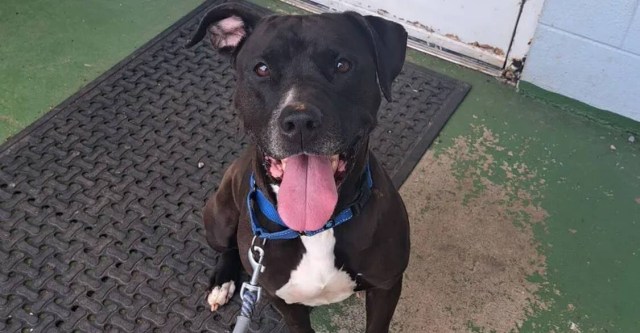
Sienna the rescue dog – credit, Credit: Friends of Campbell County Animal Control, retrieved from Facebook


Today’s good news story comes from the Good News Network

Update: Shelter Dog Who Recognized Man’s Oncoming Seizure Finds Forever Home

A shelter dog who detected a man’s oncoming seizure, having never been trained to do so, has found a forever home after applications flooded in.

Sweet Sienna, the pit bull-lab mix made headlines around the country in June for her medical instincts, on display all-unexpectedly at an adoption event in Rustburg, Virginia.

On that fateful day, Sienna broke away from the crowd of dogs, appreciative attendees, and familiar caretakers, walking right up to a man at a slight distance from the center of the event.

She sat down, looked him in the eye, put her paw on his leg, and refused to leave his side.

“She sat quietly at his feet, refused to budge, and softly placed her paw on his leg,” Sienna’s shelter, called Friends of Campbell County Animal Control of Virginia, said in a Facebook post at the time. “It wasn’t a trick. It wasn’t prompted. It was pure intuition.”

She then started pawing at his leg. Despite never receiving training on how to detect medical emergencies, Sienna knew something was wrong.

The man, Josh Davis, had forgotten to take his epilepsy medication that morning, and it seemed Sienna knew before anyone else did.

“It looked like something you’d see in the movies,” Kristen Davis, Josh’s husband, told ABC News. “She kept putting her paw up on his leg, and like, ‘Hey, are you paying attention to me? I’m trying to talk to you.’ We were all kind of standing around, like, ‘Did that just happen?’”

After the shelter announced what happened on Facebook, the story was featured on news networks nationwide, and applications for adoption came in by the dozens.

However good Sienna’s intuitions were about Davis, they were at most as good as Sharon Sweeney’s intuition about Sienna. The Virginia resident had an outstanding adoption request before Sienna became Dog of the Day, and she took the 60-pound pooch home this week.

Jackie Poppe, a volunteer at Friends of Campbell County, was walking Sienna around on the day of her heroics, and she says it’s a reminder of the unique powers that shelter dogs have.

“Don’t overlook the stray dog that’s in your local shelter,” said Poppe. “All of them have amazing traits about them.”

The good news in this story is that this beautiful dog found a forever home through an act of grace. Today’s JohnKu talks about doing for others. I hope you have a beautiful weekend.

Golden Rule by John W. Howell © 2025

A shelter dog inspires,

All of us reading this story . . .

Gold is helping others.

FridayJohnKu – AKA – TGIF – Good

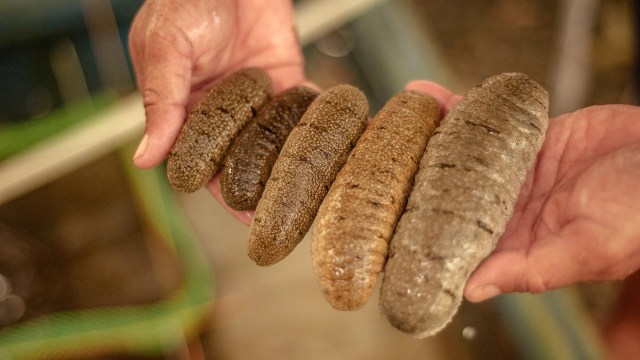
Photo by Maria Louella Tinio


Today’s good news comes from the BBC and was sent to me by Noelle Granger. The following is a condensed version of the article.  You can see the full article HERE.

‘We’ve raised thousands’: The pickle-shaped ‘janitors’ cleaning Filipino reefs

Sea cucumbers, or ‘janitors of the sea’, scour and clean the seafloor, allowing other animals to thrive. In the Philippines, a group of women stand guard to help them multiply.

Aweng Caasi, a 61-year-old widow, often sits for hours in a wooden hut towering over waist-deep waters in Bolinao, a small town some 300km (190 miles) north of the Philippines’ capital of Manila.

The hut serves as a guard post for fisherfolk protecting a sea ranch filled with sea cucumbers. These unique-looking bulbous brownish-green animals have taken them years to raise.

Caasi’s late husband, Ka Artem, was the leader of the fisherfolk group in the village of Barangay Victory in Bolinao that worked with scientists to build the ranch almost two decades ago. They hoped to replenish the supplies of these pickle-like creatures, which once swarmed these waters. Today, Caasi carries on this legacy.

When Caasi was still in her teens, the Philippines was the top producer of wild sea cucumbers – between 1985 and 1993, it exported some 3,000 to 4,000 tonnes. But overexploitation and overfishing led to a sharp decline in stocks. In the 1980s, fisherfolk in Bolinao and its neighbouring island town, Anda, were collecting up to 100kg (220lb) of sea cucumbers per person per day. The daily per-person catch plummeted to just 25kg (55lb) a decade later, and by 2002, to a measly 2.55kg (5.6lb).

The waters around Caasi’s home, once crowded with the cucumbers, had become barren.

Apart from their economic value, sea cucumbers provide benefits for the environment. Commonly referred to as the janitors of the sea, they clean sediments in the seafloor by eating bacteria and decaying organic matter, and recycle nutrients that benefit ecosystems. Their presence has even recently been found to suppress diseases among corals. Bolinao and its neighbouring towns are known for their rich marine life, which includes a 200 sq km (77 sq mile) coral reef area that provides benefits to residents through shoreline protection, fisheries, aquaculture, and tourism.

Annette Meñez, a marine invertebrate ecologist at the University of the Philippines Marine Science Institute (UPMSI), reached out to the Bolinao fishing communities in the early 2000s to ask if they would like to try co-designing a system to restore the town’s sea cucumbers. Meñez has been researching marine invertebrates with UPMSI since the 1980s, including how to help Bolinao’s fishing communities replenish their stocks of sea urchins and giant clams. She also now co-chairs the sea cucumber specialist group of the International Union for Conservation for Nature’s Species Survival Commission.

The university ventured into sea cucumber conservation when it observed the cucumber population shrinking. Meñez says the fishers back then would harvest small sea cucumbers before they were mature enough to reproduce.

In July 2009, less than two years after the first juveniles were sent out in December 2007, the Bolinao farms recorded significant boosts in sea cucumber stocks. Over 19 months, the population had jumped from around 400 to more than 5,500 individual sea cucumbers. The number of reproductively mature adults also climbed from 37 per hectare seven months after the release, to 249 after 19 months, due to mass spawning. As of the latest record in 2024, the ranch has a density of 4,415 sea cucumbers or 883 individuals per hectare, according to UPMSI.

As well as observing an increase in sea cucumbers, the farmers saw a rise in the presence of other animals. Gemma Candelario and Marivic Carolino, who raise mangroves in a neighbouring village, started monitoring and guarding cucumbers in their area in 2022. Within two years, they say, they noticed more species of sea cucumbers and fish arriving.

“The sea cucumbers would eat waste [cleaning the ecosystem] so that’s why more fish would appear,” says Candelario. “Some fish would lay eggs in our mangroves, and other animals would appear, such as crabs and shrimp… So this is a big help for us fisherfolk.”

The researchers from all the sea cucumber farms emphasise that the social impact on the communities was their most valuable milestone. “For me, resilience is not just resilience of ecosystems,” says Meñez. “It has to be the resilience of the coastal communities and the ecosystems they depend on.”

The good news in this story is that the Sea cucumbers are making a comeback with the help of concerned humans. Today’s JohnKu discusses humans’ role in helping the environment. I hope you have a great weekend.

Help by John W. Howell © 2025

When nature struggles,

Humans need to get involved . . .

And help Mother work.