Friday JohnKu – AKA – TGIF – Fri-Yay/Good News

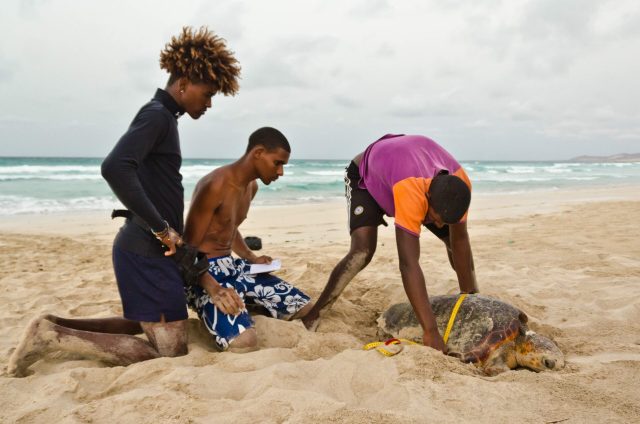
A ranger measuring a turtle’s shell and collecting data at the Canto camp. Image courtesy of The Turtle Foundation.

Today’s good news story comes from Mongabay.com and was sent to me by my correspondent Noelle Granger. Thank you, Noelle.

Former poachers guard Cabo Verde’s endangered sea turtles

by

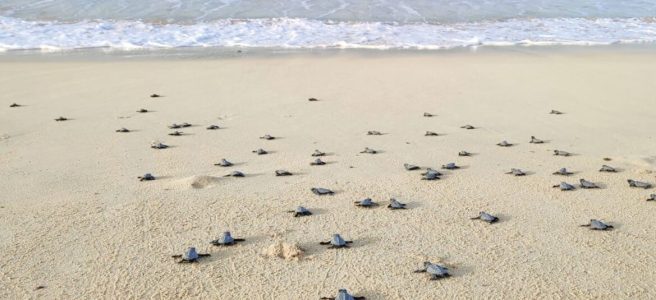
Former sea turtle hunters in Cabo Verde, off the coast of West Africa, have shifted to loggerhead turtle conservation work along the archipelago nation’s main nesting beaches. The change was propelled by 2018 legislation that criminalized killing threatened turtle species, Sonam Lama Hyolmo reported for Mongabay.

Rangers, around a dozen of whom used to poach or hunt turtles, now patrol key beaches where turtles lay their eggs, walking several kilometers each night during the nesting season, which runs from June to October. Turtle meat has historically been consumed in Cabo Verde and many other regions, creating a conflict between conservation needs and local customs. However, awareness campaigns and employment opportunities are helping to bridge that gap.

“I had turtle meat for personal consumption and never realized I could make a living out of conserving them,” Roni Nelson Batista Ramos, a ranger and camp coordinator at the Turtle Foundation, told Mongabay. “But now, I guard them against the poachers, and it’s motivating to see how these efforts have driven positive impacts for their conservation.”

Ramos and others monitor around 31 kilometers (19 miles) of coastline, patrolling the beaches on foot, and using drones and dogs for added assistance.

Roughly two-thirds of loggerhead turtle nesting activity in Cabo Verde happens on the eastern island of Boa Vista, which has seen a dramatic decline in illegal turtle hunting, according to the Turtle Foundation. In 2007, 1,253 female loggerheads were illegally caught on the island; by 2024, there were just 20. Over the same period, loggerhead turtle nests on Boa Vista increased more than sevenfold.

Cabo Verde’s loggerhead turtle population is the largest in the eastern Atlantic Ocean and the third largest in the world, after Oman and southeast Florida.

Another four of the world’s seven sea turtle species roam the waters of the Cabo Verde archipelago: the green turtle (Chelonia mydas), the leatherback turtle (Dermochelys coriacea), the Olive Ridley turtle (Lepidochelys olivacea), and the critically endangered hawksbill turtle (Eretmochelys imbricata).

Bycatch in fishing is another significant threat to sea turtles in the region. In 2024, the Sustainable Fisheries Partnership Agreement (SFPA) renewed a five-year allowance for 56 fishing vessels from Spain, Portugal, and France to fish in Cabo Verdean waters.

Read the full story here. Warning: some photos are disturbing

The good news in this story is that those who hunt turtles are now protecting them, benefiting both. Today’s John Ku talks about reversing trends. I hope you have a beautiful weekend.

Turning a New Leaf © 2026 by John W. Howell

Once there were hunters,

Who saw their game disappear . . .

They turned to help save.
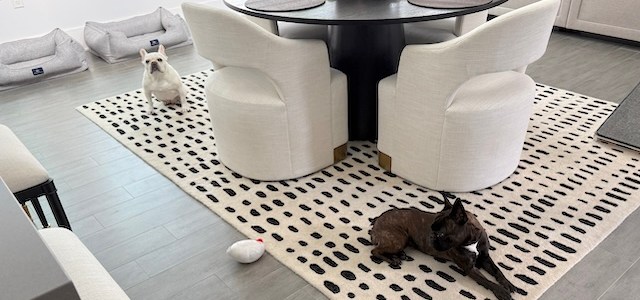
 

Thursday – A Little Personal – Hello Kitty Pays a Visit.

Hey, Tempeste. You have a guest.”

“Who is it?”

“Come and see for yourself.”

“Well, look at that. It’s Hello Kitty.”

“Yes. Dad just dropped her here.”

“Hmmm. Not sure playing with a kitty is a good thing.”

“Oh, come on. It’s just a stuffed toy.”

“What makes you think it’s not haunted or something?”

“My experience tells me it’s just something you can try and tear apart.”

“That is something I do well.”

“Well, why don’t you get to it?”

“I have a funny feeling about this one.”

“So how long are you going to ignore Hello Kitty?”

“Till I’m sure there is no funny business connected with it.”

“Whoa. It just moved.”

“You are just trying to scare me.”

“I’m not kidding. Look, it’s over by me now.”

“I’m hearing Twilight Zone music now. How did that happen?”

“Okay, Dad moved it.”

“Why did you do that, Dad?”

“I thought you would go after it.”

“Not only did you break the fourth wall, but you also overestimated my desire to play with something named Hello Kitty.”

Tuesday – Anything Possible – Finger Point Prompt – “Direct”

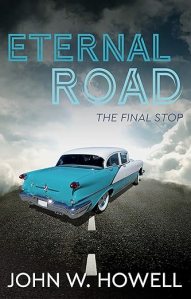
Today, I opened Eternal Road – The final stop randomly to page 143 and, with eyes closed, pointed to the page. The word closest to my finger is “direct.” This is our prompt today.

Direct by John W. Howell, © 2026

“You could be less direct, you know.”

“I don’t know. What do you mean?”

“Well, when I ask your opinion, you don’t have to come right to the point.”

“You want me to lie?”

“Not lie you oaf. Just be more subtle.”

“That’s a funny thing about you asking my opinion. I thought you wanted me to be honest.”

“Well, I do. I just think you could soften the response.”

“Give me an example.”

“The other day I asked if you thought I was gaining weight.”

“Yeah.”

“Instead of saying, ‘yes,’ you could have said, ‘I think you look wonderful.'”

“But you do look wonderful. That was not the question. It would be like answering a question about the weather with an order for dinner.”

“Not exactly. The question was designed to get a little assurance that you still love me.”

“But I still love you, fat or not.”

“Oh, there it is again.”

“Why don’t you ask me a question that can be answered without hurting your feelings?”

“Okay, I’ll give it a try. Do you find me attractive?”

“Yes, very.”

“Okay, that worked. What is it about me that you find attractive?”

“Your ability to catch fish.”

“Huh?”

“I love the way you can catch a fish without even trying.”

“I think this is heading in the wrong direction.”

“You and I both know that catching fish is very important.”

“So is love.”

“Who said anything about love?”

“So you do think I’m fat.”

“Absolutely. It’s the only way you’ll survive in this cold.”

“You know I could have had my pick of any sea lion on the ice.”

“I know,  and you picked me, you cute as a button seal you.”

“Sweet talk will get you everywhere.”

“Let’s go fishing.”


The Top Ten Things Not to Do at the Founding of Harvard College in 1636.


harvard

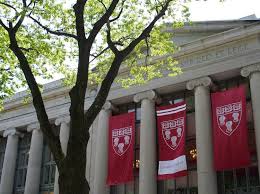
This post continues the Top Ten Things Not to Do with history as a backdrop. Harvard College, the oldest institution of higher learning in the United States, was founded in Cambridge, Massachusetts, in 1636. This post was published on October 28, 2018.

The Top Ten Things Not to Do at the Founding of Harvard College in 1636.

10 If you are at the founding of Harvard, do not suggest a celebration with a kegger party. If you do, at best, the kegger store will be closed. At worst, the administration will create a rule against keggers. (Congratulations, Fyodor. You are the first student at the college to be put on probation.)

9 If you are at the founding of Harvard, do not pledge a fraternity where Tiny, the WWF champ, is a member. If you do, at best, Tiny will flunk out before you get there. At worst, Tiny, who was just criticized by the dean for unnecessary hazing, had ordered you to bend over. (Let’s hope the dean’s lecture has not made Tiny even angrier, Frederick. Is that paddle as big as it looks?)

8 If you are at the founding of Harvard, do not organize a demonstration protesting the dorm food. If you do, at best, no one will join you. At worst, the college put you in charge of food procurement. (Looks like your fellow students are getting tired of squirrel stew, Falcon. I think I would try to raise a few vegetables if I were you.)

7 If you are at the founding of Harvard, do not cut class on the first warm day. If you do, at best, you can get notes from the nerd. At worst, your professor will pull a pop quiz that is 20% of the term grade. (No amount of begging is going to help, Fallon. I would go to the infirmary and see if you can con someone into an excuse.)

6 If you are at the founding of Harvard, do not try to organize a football team. If you do, at best, no one will know what you are talking about. At worst, you’ll find some players who are ready to play but can’t see a ball. (Looks like you will have to make one, Fraser. Try to get it a little rounder, okay. That thing looks like a fat sausage.)

5 If you are at the founding of Harvard, do not go outside wearing that Yale sweatshirt. If you do, at best, no one will notice since Yale was founded in 1701. At worst, someone will take offense, thinking Yale is an acronym for Young American Liquor Enterprise. (You have to understand the Puritan Ethic is still pretty strong, Fiorello. The time in the stocks will go fast. Think positive.)

4 If you are at the founding of Harvard, do not fail to return your library book on time. If you do, at best, the fine is only 1p a week. At worst, a press-gang will come looking for you. (It would have been easier to return the book, Ferril. Now you won’t get back to the college until your sea duty is over. Five years will go pretty quickly.)

3 If you are at the founding of Harvard, do not try to organize the first co-ed dance. If you do, at best, your fellow students will just laugh. At worst, the administration will pass a rule prohibiting co-ed dancing. (Good luck finding a co-ed, Fabrice. The first sex-blind admissions were not until 1977. Oh, and you need to serve time in the dunking chair for the rule violation. I hope those hold-your-breath contests come in handy.)

2  If you are at the founding of Harvard, do not park your horse in the faculty parking lot. If you do, at best, no one will need the space. At worst, Professor Curmudgeon will alert campus security to shoot you on sight. (Never thought taking a tenured professor’s parking place was that big of a deal, huh, Faddei. Those musket balls look like they would hurt.)

1 If you are at the founding of Harvard, do not buy your books ahead of time at the used bookstore. If you do, at best, you might save money. At worst, the professor will change the course text with no notice. (Well, it looks like your used books will make excellent fire starters, Fadil. Better luck next term)

Views of the Neighborhood – Lakeway Municipal Utility District – Bees

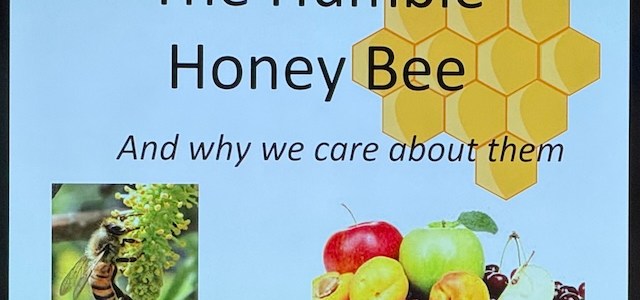
Today, we are going to the Lakeway Municipal Utility District (LMUD) for a class on all things bees. We are catered by Canje Caribbean Restaurant in Austin, featuring their appetizer menu. Our entertainment is Jimmy Rogers.

Menu

Plantain Chips – Mango Calypso, Epis Aioli 

Coco Buns – Toasted Coconut, Thyme Butter 

Smoked Avocado Choka – Mango, Lime Vinaigrette, Pickled Onions, Tostones 

Pink Pineapple – Passion Fruit, Basil, Aji Amarillo 

Ceviche – Sour Orange, Peanuts, Sweet Peppers, Taro Chips 

Hushpuppies – Salt Fish Salad, Citrus Scotch Bonnet Aioli 

Jerk Beef Patties – Pineapple Pique

Wagyu Beef Suya – Suya Skewer, Peanut, Onion 

Pepper Shrimp – Scotch Bonnet, Epis Vinaigrette 

Picture of an old time school bus

Let’s get rolling

The Lakeway Municipal Water District.
Mushroom block giveaway. They can be added to the garden to conserve water and improve soil health.
The seed library. Take some, plant them, and come back with seeds from the plant.
We are in the right place for the presentation.
A backyard refuge for butterflies and bees
More about the refuge
Coffee and water.
Beekeepers’ tools: prybar, gloves, smoker, and hive.

Stephanie Threinen, CPC  – Public Information Liaison, introduces  Michael Halprin, beekeeper.
The presentation begins.
A rapt audience.
The last time we were here, some plants were laid out ready for planting.

As you can see, the plants are doing very well.
Time now to enjoy the food and music. I hope you have a terrific week.


Stream of Consciousness Saturday – Prompt – “Miss”

A picture of a string with drops of water- the logo for SoCS

The coffee machine has a strange message on the touchscreen this morning. It reads: Do not miss the latte macchiato. Since part of me is at least one cat life, the cappuccino macchiato button is touched on the screen. Then nothing happens, but a sign pops up that reads 14 seconds of milk. It is followed by total silence. Then a burst of steam and foam begins. Another moment of silence, then, strong espresso flows into the foam. The first sip brings a rush of flavor and the quiet that comes when the machine shop sound of a low-caffeine warning finally stops.

The second sip (okay, say it with me) brings the cacaphony of the Westminster chimes of the doorbell and the eardrum rupture octaves of Twiggy and Tempeste trying their best to bark the visitor to St. Louis. A new bacon-flavored pair of nylon bones tossed into the soundproof room, followed by a door slam, sends the hounds of Baskerville into a cone of silence.

Checking the monitor, it appears that Deputy Dog is on the porch with a clipboard and an envelope. Knowing that conversation is useless, the security shutdown process begins.

The B-2 bomber squadron and the F-35 escort must be called off. One call does it. The tank corps and gunboats are told to stand by. The Apache helicopters are rerouted. The electric shock fence is turned off. The drawbridge over the quicksand is lowered. The robot attack dogs returned to their charging station. The laser-guided machine guns on the roof are set to caution. The nest filled with rattlesnakes was put away. The bucket filled with 1000 marbles is locked down. The tear gas canisters shut off. The electrified welcome mat set to off. The fall-away sidewalk into the pit filled with spikes is locked. The hornet’s nest closed. The water cannons are set to safety. Bear traps are set to off. Peregrine Falcons perched on the roof above front door fed. The vat of boiling oil set to warm. The front door is opened.

The envelope and clipboard are passed to me. After signing, the clipboard is returned with a five-dollar bill under the clip. “Sir, there is no need to tip,” says Deputy Dog. Silently giving a small curse to those who suggested a tip, a word of advice is cast to the dog. “Keep your friends close and your enemies closer.”

Stepping back into the house, the envelope is opened, and inside is a message from Linda Hill. It reads “Your Friday prompt for Stream of Consciousness Saturday is “miss.” Use it any way you’d like. Have fun!”

If you would like to see what others have done with the prompt, visit Linda’s post. Here is the link. https://lindaghill.com/2026/06/19/the-friday-reminder-and-prompt-for-socs-june-20-2026/

Miss by John W. Howell © 2026

“Well, you missed the opportunity to save a tip.”

“Let’s not even talk about it.”

“I like that you did give him some words to live by.”

“I’m sure The Pilgrim liked that as well.”

“You sound ready for a visit to the pub.”

“More than ready. You order an Uber?”

“Right over there.”

Photo by Dan Antion

“Oh, just perfect. A GTO under construction.”

“All that’s missing is the front bumper and headlights.”

“So riddle me this, Robin. How are we going to get home after dark?”

“That brings up the one stop we have to make before we hit the pub.”

“Please don’t tell me it’s a body shop. That will take hours.”

“No, nothing that complex. We need to stop at Walmart.”

“Walmart? What for?”

“Some duct tape and two flashlights.”

“Please tell me you are kidding.”

“Come on. It’s not a long trip home. A couple of flashlights will be plenty of light.”

“Who pays the ticket when we get pulled over?”

“Hmm. Hadn’t thought of that. Okay, I have a backup. Over there.”

Photo by Dan Antion

“You are riding on the roof.”

“There is room for three, and it has headlights.”

“Okay, but I call for the seat up front.”

“You got it.”


Friday JohnKu- AKA – TGIF – Fri-Yay/Good News

Today’s good news story comes from Econews and was sent to me by Noelle Granger.

Thank you, Noelle.

A solar farm in southern England put 40 native sheep under 20,000 panels across about 30 acres to graze in winter, and the twist is that the flock didn’t just “mow the grass”, it helped protect wildflowers and pollinators while using the panels as a storm shelter, turning a power site into a two-job landscape called agrivoltaics

ECONews

At first, it sounds like a rural oddity. A solar plant places 40 native sheep near its panels, lets them graze through winter, and suddenly the field is doing more than producing electricity. At Westmill, the flock became part of a larger experiment in how clean energy, farming, and wildlife can coexist in the same landscape.

The lesson is simple but surprisingly important. Clean energy does not have to mean treating land as a blank sheet of metal and gravel. In practical terms, it can also mean wildflowers, soil life, pollinators, and yes, sheep using solar panels as shelter when the weather turns rough.

A solar farm built for nature

Westmill sits near Watchfield on the Oxfordshire and Wiltshire border in southern England. Its solar cooperative was formed to show that ordinary people can help build renewable energy, and its 30-acre site carries more than 20,000 panels that generate enough electricity for about 1,600 homes a year.

This is not just a power site with grass around it. The Westmill Sustainable Energy Trust, known as WeSET, was set up by the Westmill wind and solar cooperatives to promote sustainable energy through education, visits, and community projects.

Why sheep changed the field

The sheep were not brought in as decoration. They act like living lawn crews, eating a mix of plants and helping stop one aggressive species from overrunning more delicate wildflowers. That matters because a diverse field is better for insects, birds, soil bacteria, and fungi.

Westmill says the animals graze in winter, when they are less likely to disturb nesting birds and when the flowering plants that feed pollinators are not in bloom. It is a small timing choice, but that is where a lot of good land management lives.

There was another bonus hiding in plain sight. The sheep used the panels as protection from wind and rain, and the broad mix of plants helped them gain weight more effectively. For the flock, the solar farm was not an obstacle. It was shelter, food, and a quieter field.

What agrivoltaics means

The idea has a name, agrivoltaics. It means using the same piece of land for agriculture and solar power instead of forcing farmers and energy planners to pick only one. In everyday language, it is a field that works two jobs.

Can a solar farm also become a small nature reserve? To a large extent, Westmill suggests it can, but only when design and management come first. Planting wildflowers is a start, but the site still needs grazing, mowing, monitoring, and restraint to prevent one species from taking over.

The land question

Solar farms often trigger a familiar concern. Are panels taking land away from food? Westmill’s educational materials say about 44.5 million acres in the United Kingdom are used for agriculture, while about 44,500 acres are currently used for solar, meaning the solar footprint is still small compared with farming overall.

Solar Energy UK also reports that solar farms occupy less than one tenth of one percent of UK land today. Its 2024 fact sheet says a build out aligned with net zero targets would still put solar farms at about six tenths of one percent of UK land by 2050. That does not erase local conflicts, but it does put the scale in view.

Science backs a careful approach

Researchers are not saying every solar project is automatically good for nature. A 2025 Lancaster University review of 167 articles found both positive and negative effects, depending on climate, ecosystem, and the stage of the solar park’s life. In other words, location and management are not details. They are the whole game.

Professor Alona Armstrong of Lancaster University has helped lead work on agrivoltaics and solar park management. With Professor Piran White of the University of York, she helped develop the Solar Park Impacts on Ecosystem Services tool, which uses evidence to guide decisions on wildflower meadows, hedgerows, wetlands, soil health, and other habitat choices.

Better design from the ground up

Blending animals and panels also changes the engineering conversation. Once sheep are part of the system, a solar site has to think harder about cable protection, frame height, maintenance access, and hardware tough enough to handle real animals in real weather. That may sound simple, but simple details are often what decide whether a project works.

The result is a model that can be easier to maintain and more accepted by nearby communities. People worried about the electric bill may see the electricity. Farmers may see grazing space. Local residents may see fewer noisy mowers, less exhaust, and more life between the rows.

What Westmill shows

Westmill is not a magic fix for every solar debate. Some land should remain focused on food, some habitats need extra protection, and experts warn that poor design can still harm soil or wildlife. But the project shows that solar farms do not have to be single-purpose places.

At the end of the day, what it is trying to do is rewrite the field’s job description. A site can produce power, feed sheep, support pollinators, protect soil, and teach visitors what community energy looks like up close. That is a quieter kind of energy transition, but maybe a more durable one.

The good news in this story is that animals and technology go well together. Today’s JohnKu talks about co-existence. I hope you have a wonderful weekend.

Together by John W. Howell © 2026

Solar panel farms,

With sheep as cohabitants . . .

A win-win for both.

Thursday – A Little Personal – Twiggy and Tempeste Try Philosophy

“Are we going out to play today, Twiggy?”

“I’m not sure. It is mighty hot out there.”

“I was out there earlier, and it seemed okay.”

“Yeah, that was before the gates of hell opened.”

“What do you mean by that?”

“We are coming into the summer, which is laughingly called ‘Hell’s back porch.'”

“Oh, I get it. A metaphor for high temperatures.”

“Since when have you become so literal?”

“I don’t know. I guess it comes with age.”

“That’s pretty funny. Leaves one minute and philosophical musings the next.”

“Go ahead, make fun. I just think I’m getting older, is all.”

“No offense. It just seems strange hearing you say that.”

“I’ll never be as old as you, but I am maturing. Squinch over, will ya?”

“Okay, I’ll admit you are getting older. How does it feel?”

“Geez, you ought to know. You have me by half a century.”

“I know how it feels with me. I was wondering about you.”

“It is hard to say. I guess it feels good to understand things more.”

“Like what?”

“Well, like knowing it is too darn hot to go out and play.”

“That is good understanding. How about a game of tug -o- war?”

“That would be fun. Let’s use Chicken Licken.”

“Sounds good.”

Tuesday – Anything Possible – Finger Point Prompt – Compliment


Today I randomly opened Eternal Road – The final stop to page 131. With eyes closed, I pointed to the page. The word closest to my finger is “compliment.” That is our prompt today.

Compliment by John W. Howell © 2026

“You look gorgeous.”

“Why, thank you. That is a nice compliment.”

“I mean it. What are you all gussied up for?”

“I have some plans for tonight.”

“Oh, do tell. Well, I’m heading out to our favorite place.”

“Our favorite watering hole, you mean.”

“Yes, you can call it that.”

“Then what?”

“Then what. I’m going to dance with every lady I meet.”

“Pretty sure of yourself, aren’t we?”

“Look at me. Don’t you think I should be sure?”

“Okay. You’re right. So after the dancing, what?”

“You have to ask?”

“I suppose not. What if there is one of these bullies who gets jealous?”

“I’m sure I can handle myself.”

“Sure, you don’t need a friend to go along?”

“No offense, but a hyena does not exactly instill the idea of romance.”

“No offense taken. You cheetas are pretty much loaners anyway.”

“Okay then. Wish me luck.”

“I don’t think luck has anything to do with it.”

“Right you are.”

Top Ten Things Not to do if You were with Edison in 1879

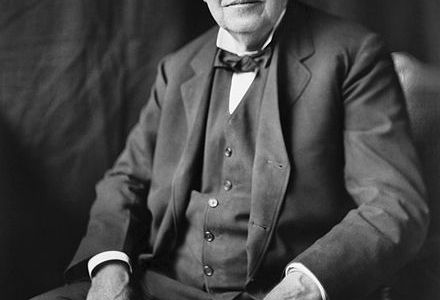
In the public domain.


This is a continuation of the Top Ten on a historical backdrop. On October 21st, after 14 months of testing, Thomas Edison first demonstrated his electric lamp, hoping to one day compete with the gaslight. We also know that Edison invented the phonograph. This was originally posted in October, 2018.

Top Ten Things Not to do if You were with Edison in 1879

10 If you were with Edison in 1879, do not say, “Watson, come here, I need you.” If you do, at best, no one will answer. At worst, you will be escorted from the room and your 100 shares of Edison stock revoked. (You somehow got Alexander Graham Bell mixed up with Edison, Frici.)

9 If you were with Edison in 1879, do not elbow Tiny the WWF champ out of the way for a better view. If you do, at best, Tiny will ignore you. At worst, Tiny, who has an aversion to being touched, will use his hips to body check you out the door. (You didn’t think a big guy could move that fast, huh, Friduwulf? Too bad the door was closed when you went through it.)

8 If you were with Edison in 1879, do not touch anything before the demonstration. If you do, at best, you’ll avoid the live wire. At worst, you will inadvertently disconnect the main lead. (The test was a failure, Frisco. Thanks to you, we are all living with gas lamps today.)

7 If you were with Edison in 1879, do not tell him how to improve his speech. If you do, at best, he will do the speech the way he wrote it. At worst, he will take your suggestions. (Thanks to you, Fynbar, the electric light bulb was named by Edison as “the better mousetrap of gas lamps.”)

6 If you were with Edison in 1879, do not mention to bystanders that the British had toyed with incandescent bulbs since the 1830’s. If you do, at best, Edison won’t hear you. At worst, you’ll be talking with a reporter from the Wall Street Journal. (Well, now you’ve done it, Fernando. The headline reads “Edison steals British Idea.” Good luck with your future stock options.)

5 If you are with Edison in 1879, do not make jokes about the Edison Screw. If you do, at best, you’d better hope he doesn’t hear you. At worst, the joke carries a big laugh, and now you are unemployed. (You had no way of knowing, Francisco, that the Edison Screw is the standard setup for light bulbs and sockets. The joke was pretty funny, though.)

4 If you are with Edison in 1879, do not trip and let the only bulb fall to the floor. (If you do, at best, the carpet will prevent a disaster. At worst, the lab floor is made of concrete. (Well, there goes the demonstration, Franklin. Future generations of those who do not have General Electric to work for salute you.)

3 If you are with Edison in 1879, do not suggest naming the company. If you do, at best, Edison will choose his own name. At worst, he will call the company after a significant advantage of the bulb. (Somehow, the Less Gas Light Company doesn’t sound too good when you say it out loud, Frankie. Let’s hope he comes to his senses.)

2 If you are with Edison in 1879, do not try to talk him out of his idea about motion pictures. If you do, at best, he will avoid you on the subject. At worst, you will be successful, and he will abandon the idea. (So where are you going with that tub of buttered popcorn, Freddy?)

1 If you are with Edison in 1879, do not suggest that he read from the newspaper on the first recorded conversation. If you do, at best, he will choose his own literature; at worst. He will listen to you and select the classifieds. (So now the first recorded voice puts everyone to sleep, Fletcher. Mary Had a Little Lamb is so much better.)