
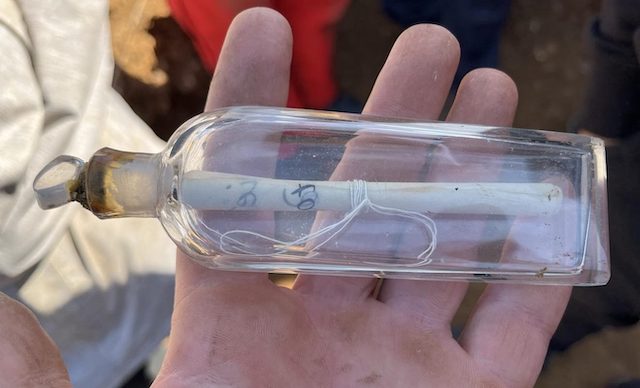
A team of student archaeologists in France was surprised while working on a site dating to Gaulic times.
The excavations, carried out under the direction of Guillaume Blondel, director of the municipal archaeological service of the city of Eu, delivered, among other things, a moving and very special testimony from the past.
Located in a previously investigated section of the site, a message was discovered in a small glass bottle from the 19th century accompanied by two coins: a “time capsule” buried almost 200 years ago, a statement from the service read.
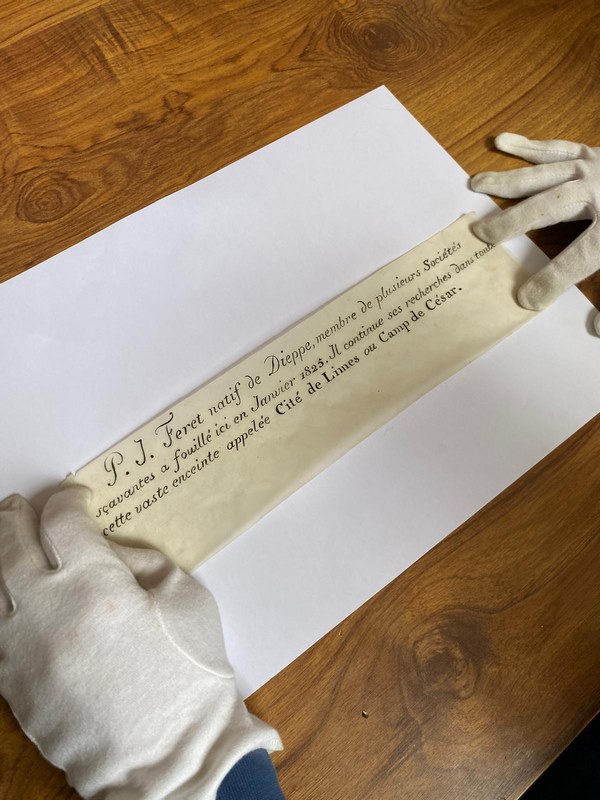
“P. J. Féret, a native of Dieppe and member of various intellectual societies, excavated here in January 1825. He continues his investigations in this vast area known as the Cité de Limes or Caesar’s Camp.”
The message in a bottle had been carefully placed in a ceramic pot dating to a much earlier century so that future archaeologists would be sure to find it.
“It was an absolutely magic moment,” Mr. Blondel told the BBC. “We knew there had been excavations here in the past, but to find this message from 200 years ago… it was a total surprise.”
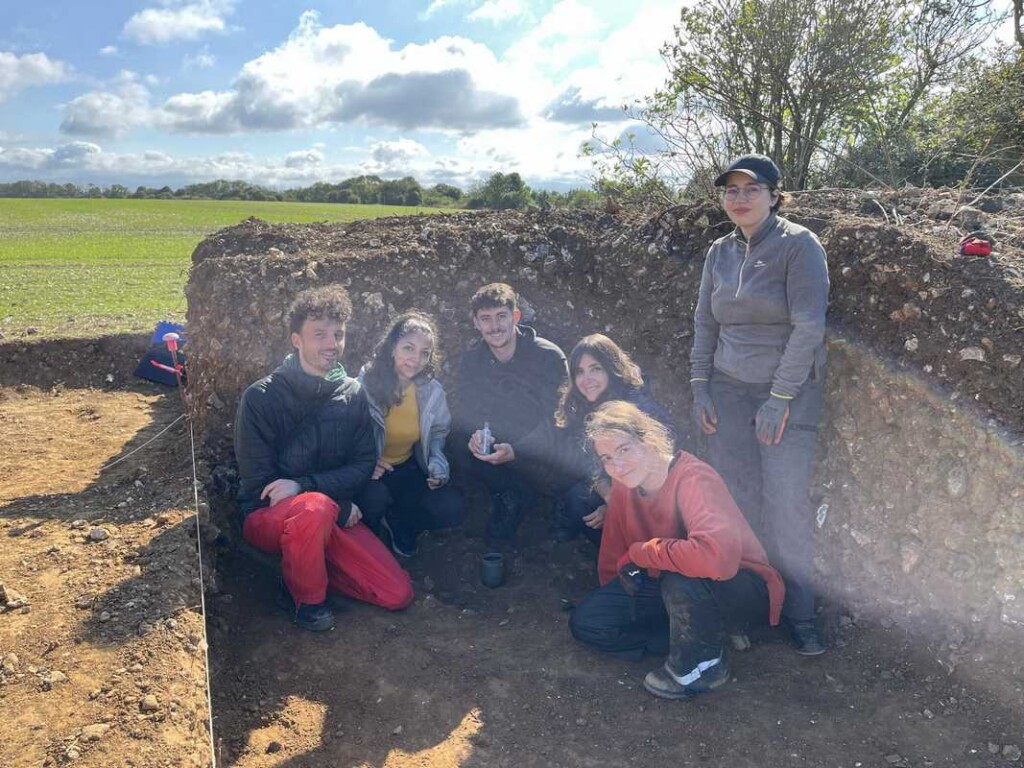
“Sometimes you see these time capsules left behind by carpenters when they build houses. But it’s infrequent in archaeology. Most archaeologists prefer to think that there won’t be anyone coming after them because they’ve done all the work!”
Local archives indeed record P. J. Féret in the area as a historical excavator when the letter was dated.
The work was funded and carried out in partnership with the Regional Archaeology Service to preserve archaeological sites endangered by the coastline’s decline. Already a part of the ‘oppidum’ or fortified Gaulic camp, has fallen away with the crumbling of the coastal hillside on which it was perched.
The Gauls were a series of interconnected feudal (at best) and tribal (at worst) societies that shared societal, cultural, and warrior practices and who inhabited most of central and western Europe during the time of the Roman Republic.
Gaius Julius Caesar waged a campaign to pacify Gaul, hence the name “Caesar’s Camp,” which brought Spain, France, and Belgium under Roman control.
The good news in this story is that the past has been preserved to be studied today. Today’s JohnKu talks about history. I hope you have a wonderful weekend.
History by John W. Howell © 2024
The past can teach us,
Many lessons about now . . .
If we want to learn.