Friday JohnKu – AKA – TGIF – Fri-Yay/Good News

Today’s good news comes from the Good News Network.

Elton John During His Farewell Yellow Brick Road World Tour, for which he won an Emmy – CC 2.0. slgckgc. Flickr

Elton John Just Achieved EGOT Status with Emmy Win–Only 19 People Have Done It in History

It’s not referring to a tropical disease to say that someone has an EGOT. It means they’ve got a mantlepiece at home where stand an Emmy, a Grammy, an Oscar, and a Tony—the four major pop culture awards in America.

Only 18 entertainers have achieved this quadruple, and now Elton John stands among them as the 19th, having recently won an Emmy for his concert film, Elton John Live: Farewell From Dodger Stadium.

John was not able to attend the ceremony because of needed recovery from knee surgery, “which isn’t surprising if you think of the number of pianos he’s jumped off from in platform heels,” said John’s husband, David Furnish.

John has collected two Oscars: one for The Lion King’s Can You Feel The Love Tonight? and another for Rocketman’s (I’m Gonna) Love Me Again. 

For the ‘T’ in EGOT, he won a Tony for scoring the musical version of the opera Aida. 

For the ‘G’—the Grammy, it’s a case of take your pick, with John having collected quite a few over his decades as a musician.

“I am incredibly humbled to be joining the unbelievably talented group of EGOT winners tonight,” said John in a statement. “The journey to this moment has been filled with passion, dedication, and the unwavering support of my fans all around the world. Tonight is a testament to the power of the arts and the joy that it brings to all our lives. Thank you to everyone who has supported me throughout my career; I am incredibly grateful.”

According to Smithsonian Magazine, the term EGOT was first used on Miami Vice. Its imaginary alumni include Richard Rogers, Hellen Hayes, Rita Moreno, Whoopi Goldberg, Viola Davis, John Legend, Alan Menken, Mell Brooks, Audrey Hepburn, John Gielgud, Marvin Hamlisch, Johnathan Tunic, Mike Nichols, Scott Rudin, Robert Lobez, Andrew Lloyd Weber, Tim Rice, and Jennifer Hudson.

It seems appropriate that the acronym would be finished on Elton’s final show ever on tour in North America, the curtain call of all curtain calls, and a tremendous achievement to mark the end of a long chapter in a tremendous career.

WATCH Tiny Fey and Amy Pohler present the award along with peers…

The good news in this story is that a man who has invested his life and energy into entertainment has been recognized for his achievement and hard work. Today’s JohnKu talks about recognition. I hope you have a wonderful week.

Others by John W. Howell © 2023

When something is great,

And is done by someone else . . .

Do you offer praise?
 

Friday JohnKu – AKA – TGIF Fri-Yay/Good News

Today’s good news story comes from the Good News Network.

Long-Lost ‘Legend’–Leopard Barbel Fish Found Again in Turkey’s Dammed-up Rivers


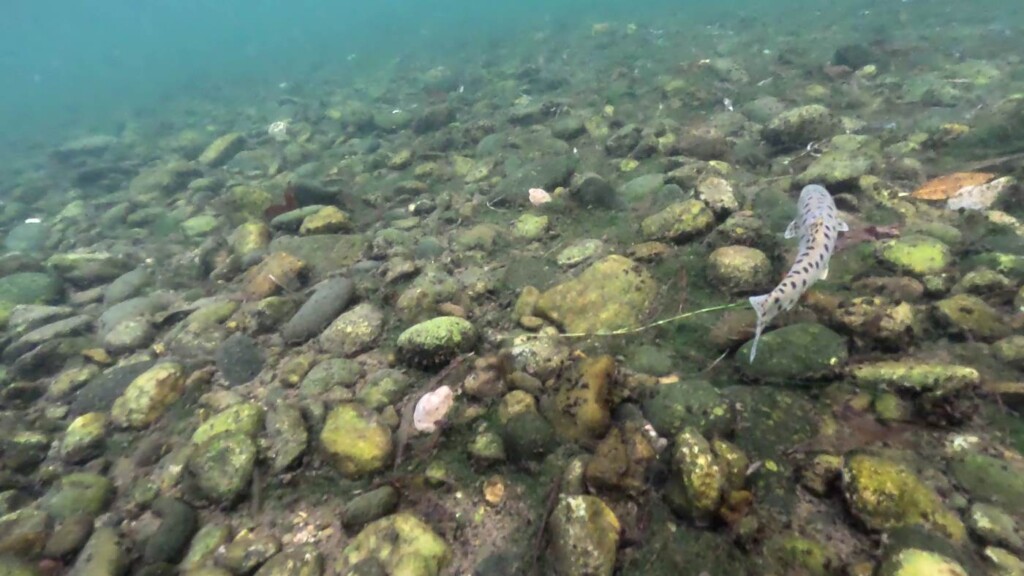
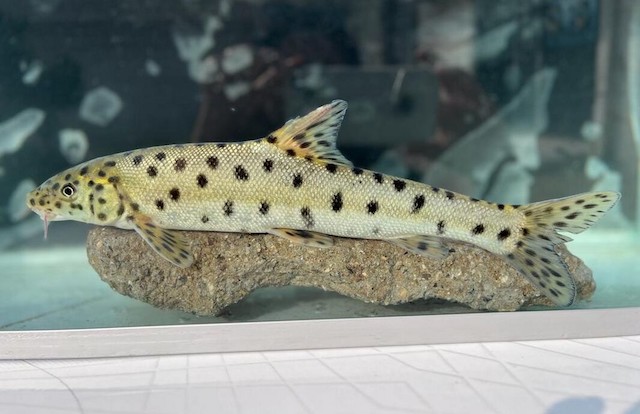
Leopard Barbel (Photo by Metin Yoksu)


A team of ichthyologists (zoologists who study fishes) in Türkiye (Turkey) has rediscovered a “legend” in the form of a carp-like, spotted fish called the leopard barbel (Luciobarbus subquincunciatus) in the Turkish section of the Tigris River.

The leopard barbel was once abundant, ranging from Eastern Türkiye, Eastern Syria, Iran, and Iraq in the Tigris-Euphrates river system. Over the last three decades, however, fishing, pollution, habitat destruction, and dam construction have pushed the species to the edge of extinction and was last scientifically documented in 2011.

However, anecdotal evidence from local fishers suggested that the fish may have still been out there, so Associate Professor Cüneyt Kaya and Assistant Professor Münevver Oral at Recep Tayyip Erdogan University enlisted their help to find one.

“There is nothing quite like the feeling of finding that a species that has been pushed to the brink of extinction is still hanging on, despite the odds,” said Kaya upon their success. “It is even more thrilling than discovering a new species because it means that we can give a rare species a second chance.

The team started by looking at the scientific literature about where the species had been previously found. However, those data were collected before nine dams were built in the Turkish portion of the Tigris River.

The dams alter water flow regimes, and cold water accumulating at the reservoirs’ bottom is sometimes released downstream. The release of cold water drives many freshwater fish toward warmer waters, so the team had to adjust its strategy to look further downstream from the dams.

Just days after the second of two expeditions, Kaya and Oral got a video call from local fisherman Mehmet Ülkü. He had caught a 20-inch (50 centimeter), 4.4-pound (2-kilogram) fish with conspicuous black spots and the telltale fleshy filament that dangles from the mouths of this type of freshwater fish.

Ülkü kept the fish alive overnight in a tank with a constant oxygen supply. At the same time, Kaya took a direct flight to the region and then drove nearly six hours to Cizre in the far southeastern reaches of Turkish Kurdistan, where the species was found, while Oral drove more than 11 hours through the night to see the fish and confirm its identity.

By the time they arrived, Ülkü had caught a second leopard barbel safely in his nets, and they were able to help him release the first one as well.

Leopard Barbel after it was released (Photo by Metin Yoksu)

“We dropped everything and would have gone to the ends of the Earth to see this fish, this legend, alive in the wild,” Oral said. “I have never seen a fish as beautiful as this. It was the realization not only of our dream to find this lost species but of the hope that not all is lost—we still have a chance to protect the leopard barbel and all of the other incredible freshwater species it shares its home with.”

After Kaya and Oral took photos and measured the size and shape of the two fish, they were joined by the local Cizre fisheries aquaculture department to release the fish safely, which they described as a joyous event.

“We all have a role to play in protecting our incredible natural heritage, and I am proud to have used my skills to help rediscover the leopard barbel,” Ülkü, the fisherman, said. “Safeguarding this species into the future will require educating other fishers and bringing scientific knowledge and local expertise together.”

Kaya and Oral plan to conduct a series of seminars for fishers and teachers to help build pride in their riverways and wildlife, using the rediscovery as a case study to protect the Tigris River and its rich biodiversity. They are also hoping to better understand how many leopard barbel might still exist and where they are still found across their historic range.

The expedition to confirm the leopard barbel still exists was co-funded by Re:wild, the world leaders rediscovering and protecting lost species. The fish is the second on Re:wild and SHOAL’s Most Wanted Lost Fishes list to be rediscovered. The first, the Batman River loach, was found by the same intrepid team in Southeastern Türkiye in late 2021.

The good news in this situation is that in spite of human negligence, a species fights hard and survives. Today’s JohnKu talks about the ability of animals to survive. I hope you have a beautiful weekend.

Nature by John W. Howell © 2023

In spite of humans,

Species fight hard to survive . . .

Nature can be tough.

Friday JohnKu – AKA – TGIF – Fri-Yay/Good News

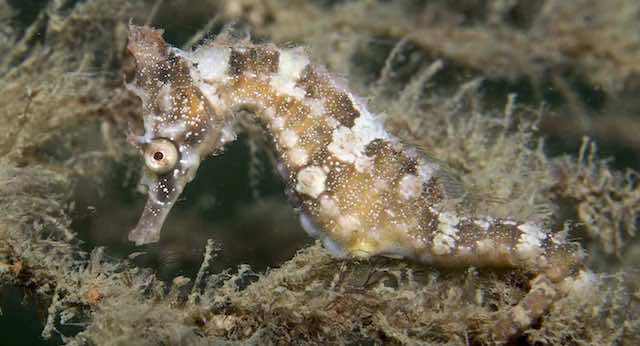
White’s seahorse released in Australia – Supplied to ABC News by Dr. David Harasti.

Today’s Good News comes from the Good News Network. Here is the story in its entirety.

100 Tiny Endangered Seahorses Released into Sydney Harbor with High Hopes

By

Australia continues to rehabilitate its populations of White’s seahorse, an “Australian icon” and the only such creature on the nation’s endangered list.

In May, GNN reported that hundreds of White’s seahorses were released into the waters north of Newcastle into specially-made “hotels” as part of the largest release of captive-bred seahorses in history.

Now, as part of another reintroduction, a tide pool north of Sydney Harbor in a place called Clontarf will become the latest release site for these tiny sea creatures.

The seahorses were bred at Sea Life Aquarium in Sydney, and the Aquarium’s curator, Laura Simmons, says the release is just one of several already done and several more planned for 2024.

Also known as the New Holland seahorse, these small animals display a number of very interesting characteristics, including ovoviviparous reproduction, whereby the female creates the eggs and uses an ovipositor to place them in the male’s brood pouch, where they are fertilized and carried until birth.

They also display strong fidelity and seasonal monogamous mating. Their population numbers have been in decline for years.

“We really want to reverse that trend and get them re-established,” Simmons told ABC News AU. “They’re our seahorses, this is an Australian icon.”

Simmons said this release at Clontarf is the sixth release this year, following up on previous successes at Chowder Bay in Sydney Harbour, Botany Bay, and Little Manly Beach, totaling over 400 individual seahorses.

Swimmers at Clontarf may be able to see the seahorses clinging to the habitat net in the tidal pool but are encouraged not to disturb the animals.

The good news is these fragile animals are being given a chance for a comeback. Today’s JohnKu talks about comebacks. I hope you have a wonderful weekend.

Chance by John W. Howell © 2023

A fragile small horse,

Is being given a chance . . .

To make a comeback.

Friday JohnKu – AKA -TGIF – Fri-Yay/Good News

Today’s story is from the Associated Press.

A sea otter pup found alone in Alaska has a new home at Chicago’s Shedd Aquarium.

CHICAGO (AP) — An 8-week-old arrival from Alaska chirps loudly before devouring ice chips in the nursery at Chicago’s Shedd Aquarium.

He is Pup EL2306 — proper name to be determined — a northern sea otter who was found alone and malnourished in the remote town of Seldovia in October and taken to the Alaska SeaLife Center in Seward.

Shedd, one of only a few facilities in the United States with the resources to care for rescued otters, was contacted by the SeaLife Center, and the aquarium’s otter team made the cross-country journey with the fluffy brown marine mammal who arrived in Chicago at the end of November.

“Caring for a little otter pup is just like caring for an infant,” including round-the-clock feeding, said Lana Gonzalez, a manager of penguins and otters at Shedd. “He also needs to get groomed. Sea otters have a very dense coat — there’s anywhere from 700,000 to a million hairs per square inch, and that’s what they use to keep themselves warm. They don’t have a thick layer of blubber or fat like other marine mammals do, so taking care of that coat is very important.

An otter mother would typically teach her offspring to groom. The aquarium team acts in her place to encourage the pup’s healthy development.

On Wednesday, otter supervisor Tracy Deakins entered the pup’s enclosure with clean white towels and encouraged him to leave the water. Deakins pointed to different spots on his fur, and the pup responded by licking or rubbing it with his paws.
An eight-week-old sea otter rescued from Seldovia, Alaska, chews on ice chips in his enclosure at Shedd Aquarium Wednesday, Dec. 6, 2023, in Chicago. (AP Photo/Erin Hooley)

An eight-week-old sea otter rescued from Seldovia, Alaska, chews on ice chips in his enclosure at Shedd Aquarium Wednesday, Dec. 6,

The pup will remain in Shedd’s Regenstein Sea Otter Nursery for a few months, building bonds with the staff, and he will eventually be introduced to the otter habitat and the five other otters at the aquarium.2023, in Chicago. (AP Photo/Erin Hooley)


Part of the growth process is moving pups from formula and small bits of clam to other solid foods. Gonzalez mentions the clam is “restaurant quality” and sustainably sourced.

Rescued pups are usually designated by the federal government as non-releasable, and the Shedd experts said pups need their mothers for the first year of life.

Tracy Deakins grooms an eight-week-old sea otter rescued from Seldovia, Alaska, in his enclosure at Shedd Aquarium Wednesday, Dec. 6, 2023, in Chicago. The otter was found alone and malnourished and was taken to the Alaska SeaLife Center in Seward, Alaska, which contacted Shedd, and the Chicago aquarium was able to take the otter in. He will remain quarantined for a few months while he learns to groom and eat solid foods before being introduced to Shedd's five other sea otters. (AP Photo/Erin Hooley)

Tracy Deakins grooms an eight-week-old sea otter rescued from Seldovia, Alaska, in his enclosure at Shedd Aquarium Wednesday, Dec. 6, 2023, in Chicago. (AP Photo/Erin Hooley)
Tracy Deakins grooms an eight-week-old sea otter rescued from Seldovia, Alaska, in his enclosure at Shedd Aquarium Wednesday, Dec. 6, 2023, in Chicago. The otter was found alone and malnourished and was taken to the Alaska SeaLife Center in Seward, Alaska, which contacted Shedd, and the Chicago aquarium was able to take the otter in. He will remain quarantined for a few months while he learns to groom and eat solid foods before being introduced to Shedd's five other sea otters. (AP Photo/Erin Hooley)

Tracy Deakins grooms an eight-week-old sea otter rescued from Seldovia, Alaska, in his enclosure at Shedd Aquarium Wednesday, Dec. 6, 2023, in Chicago. (AP Photo/Erin Hooley)

“Once we bring him into our care, he won’t be released back out into the natural environment, they’re just too used to people. But the good news is that he’ll be able to be an ambassador for his species here at the aquarium, so we’re really happy about that,” said Gonzalez.

The good news here is that a life was saved, and there are people who care about wildlife welfare. Today’s JohnKu talks about wildlife rescue. I hope you have a great weekend.

Life by John W. Howell © 2023

What is the measure?

Placed on a life worth saving . . .

Only human count?

Friday JohnKu- AKA – TGIF Fri-Yay/Good News

University of Milano-Biocca – credit University press

Today’s Good News comes from the Good News Network. Here it is in its entirety.

Exciting Clinical Trials of New Stem Cell Injection Treatment Shows Promise for Halting Multiple Sclerosis

A collaborative study involving experts in Europe and the US found the treatment of stem cells appears to protect the brains of MS patients from further damage.

In the first-ever clinical trials in humans, the researchers found patients injected with the stem cells exhibited no increase in disability or worsening of symptoms.

The promising study, published in the journal Cell Stem Cell, is hoped to lead to further clinical trials that could provide treatment for progressive MS.

More than two million people live with MS across the globe, and while some treatments currently available can reduce the severity and frequency of relapses, two-thirds of patients still transition into a debilitating secondary progressive phase of the disease within 25 to 30 years of diagnosis.

An autoimmune disorder like Lupus, ALS, and Crohn’s, MS is characterized by the body’s immune system attacking and damaging myelin—the protective sheath of tissue around nerve fibers, disrupting messages sent around the brain and spinal cord.

An immune cell called a microglial can attack the central nervous system in progressive forms of MS, causing chronic inflammation and damage to nerve cells.

Recent scientific advances involving the transplantation of stem cells have raised expectations that therapies could be developed to help ameliorate this damage.

Previous experiments in mice from the Cambridge University unit of the new study team have shown that skin cells reprogrammed to be brain stem cells and transplanted into the nervous system can help to reduce inflammation and may even be able to help repair damage caused by MS.

The research team behind the latest study, incorporating experts from the UK, US, Switzerland, and Italy, completed a world-first early-stage clinical trial in which neural stem cells were injected into the brains of 15 patients with secondary MS recruited from two Italian hospitals.

Along with the Cambridge unit, teams performed the trials at the University of Milano-Bicocca, the Casa Sollievo della Sofferenza and Santa Maria Terni hospitals in Italy, the Ente Ospedaliero Cantonale hospital in Lugano, Switzerland, and the University of Colorado in the United States.

The transplant patients were followed for 12 months. No deaths or serious adverse events related to the treatment were observed throughout the year. Side effects were mild, transient, and reversible.

All patients had a high degree of disability at the start of the clinical trial—for example, they were wheelchair-bound—but during the 12-month observation period, they showed no increase in disability or worsening of symptoms. None of the patients showed symptoms that would indicate a relapse or signs of clinical progression, suggesting substantial stability of the pathology.

A subgroup of patients was also assessed for changes in the volume of brain tissue associated with disease progression, which found that the larger the dose of injected stem cells, the smaller the reduction in this brain volume over time.

The researchers speculate that this may be down to the stem cell transplant dampening inflammation.

Professor Stefano Pluchino, a co-leader of the study from the University of Cambridge, admitted that though the research had limitations, the findings were extremely promising.

“We desperately need to develop new treatments for secondary progressive MS, and I am cautiously very excited about our findings, which are a step towards developing a cell therapy for treating MS,” he said.

“We recognize that our study has limitations: it was only a small study, and there may have been confounding effects from the immunosuppressant drugs, for example, but the fact that our treatment was safe and that its effects lasted over the 12 months of the trial means that we can proceed to the next stage of clinical trials.”

Professor Angelo Vescovi, another co-leader of the study from the University of Milano-Bicocca, added that it has taken nearly three decades to translate the discovery of brain stem cells into this experiment, which he said will “pave the way” to broader studies “soon to come.”

The Good News is that the scientific community is still working on improving life. Today’s JohnKu talks about perspective in a bad news world. I hope you have a wonderful weekend.

Good News by John W. Howell © 2023

The media thinks,

All we want is the horrific . . .

How wrong can they be?


Friday JohnKu – AKA – TGIF – Fri-Yay/Good News


Photo by By Sebastião Salgado

Today’s good news story comes from the Good News Network. Here it is in its entirety.

Couple Plants 2 Million Trees in 20 Years to Restore A Destroyed Forest, and Even the Animals Have Returned

By Andy Corby – Nov 30, 2023

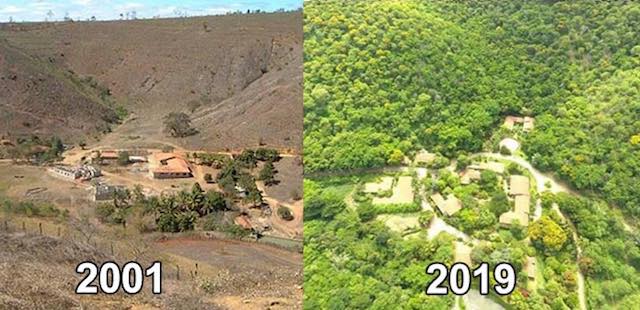
In 2001, the legendary photojournalist Sebastião Salgado had a dream of restoring the forest near his home in the state of Minas Gerais. Now, 20 years later, his family property is a biodiverse paradise.

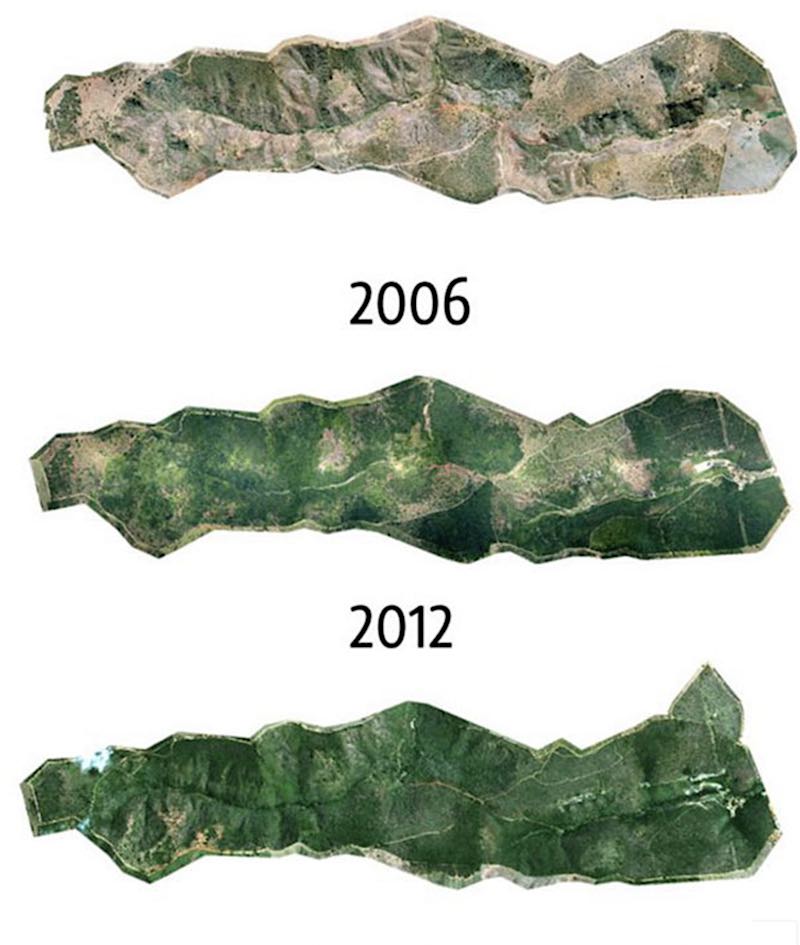
His work over long years saw him, his wife Lélia, and volunteers plant 20 million trees from 290 different species across over 1,500 acres of desiccated hillsides, recreating a natural forest ecosystem into which rare animals have now come to live.

Salgado’s story is a famous one. The photojournalist documented some of the most dramatic events of human misery of the 20th century. He authored half a dozen books, exhibited his photos around the world, and was the subject of a documentary, Salt of the Earth.

When he came home in 1998 after reporting on the exodus of the Rwandans into the Congo, the land around his family home had been completely destroyed.

“The land was as sick as I was—everything was destroyed,” Salgado told the Guardian back in 2015.

“Only about 0.5% of the land was covered in trees. Then, my wife had a fabulous idea to replant this forest. And when we began to do that, then all the insects and birds and fish returned and, thanks to this increase of the trees, I, too, was reborn – this was the most important moment.”

Tree cover surveys – Instituto Terra

That same year, he and Lélia founded Instituto Terra, which focuses on environmental restoration and sustainable rural development in the Rio Doce Valley. Located in Southeast Brazil, it makes up a part of the other great landscape of the country—the Atlantic Forest biome, which is far more temperate than the Amazon or the Pantanal and far more threatened.

Today, the property is officially titled Private Reserve of Natural Heritage Bulcão Farm, and hundreds of animal species have returned to the Rio Doce, including ocelots, purple-breasted parrot, and the Atlantic titi.

173 bird species alone have been identified; you can listen to some of their squawking here. Interested conservationists can donate to Salgado’s project on his website or even schedule a visit to the reserve.

The good news here is one man and his wife took it upon themselves to right a bib wrong. Today’s JohnKu talks about individual effort. I hope you have a wonderful weekend.

One at a time by John W. Howell

We all think it takes,

Big moves to make big changes . . .

Then there’s this story.

Friday JohnKu – AKA – TGIF – Fri-Yay/Good News

Today’s story comes from the Good News Network. Here it is complete.

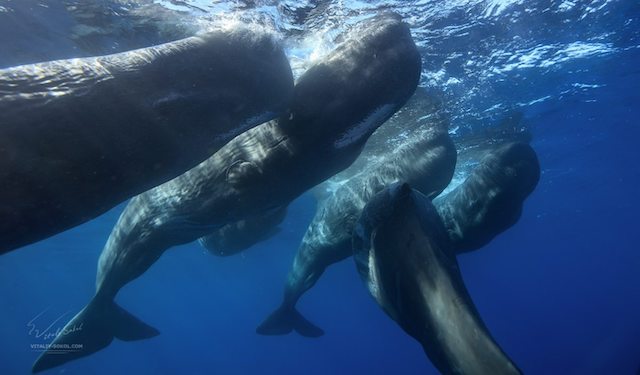
Will Falcon, aka Vitaly Sokol, CC license

Dominica to Create World’s First Sperm Whale Reserve–for the 200 That Call the Island Home

Sperm whales are the ocean’s greatest nomads, but one island in the Caribbean is creating a permanent home for them.

A roughly 300 square mile patch of ocean in the territorial waters of Dominica is the only place known on Earth where sperm whales can be seen regularly throughout the year when they arrive to breed, and it’s here that Prime Minister Roosevelt Skerrit of the island nation has established the world’s first sperm whale reserve.

“The 200 or so sperm whales that call our sea home are prized citizens of Dominica,” Mr. Skerrit said.

“Their ancestors likely inhabited Dominica before humans arrived. We want to ensure these majestic and highly intelligent animals are safe from harm and continue keeping our waters and our climate healthy.”

The marine reserve covers 800 square kilometers for those using metric, an area where commercial shipping and fishing will be forbidden from entering. Large ships can harm sperm whales, but smaller vessels, designated in the law as artisanal fishing, will be permitted inside the reserve, provided their methods do not harm the whales.

Sperm whales have the biggest teeth in the animal kingdom. They also have the biggest brains and can pass down a unique cetacean culture that includes dialects of their clicking language.

Tourists will be able to view and swim with the creatures in sustainable numbers, BBC reports.

The good news is a country takes its animal citizens seriously and has taken measures to protect them. Today’s JohnKu wonders about the rest of the world. I hope you have a fabulous weekend.

Citizen Animals by John W. Howell © 2023

Dominica cares,

To protect its citizens . . .

Will you join in, too?

Friday JohnKu – AKA – TGIF – Fri-Yay/Good News


Today’s good news story comes from the Good News Network

School Hosts Students on Opposite Ends of Violent Conflict–Teaching Reconciliation Over Revenge

In Italy, a one-of-a-kind school sees Palestinians graduating alongside Israelis, Americans with Tribal origins alongside those with European origins, and Bosnian Muslims next to Orthodox Serbs—all in the name of creating a generation of interfaith peacebuilders.

The Swallow Citadel of Peace, located in a medieval campus in the hills of Tuscany near the city of Arezzo, offers a variety of higher educational programs and degrees, but it comes with a catch.

Prospective students must live with the “enemy”—either those of a domestic ethnic group or a neighboring nation—all in the name of deconstructing the reasons behind their hatred and conflict, breaking the trance of viewing people as the “other,” and returning to their nations as peace leaders.

In this time of ethnic conflicts all over the world, where a generation has been brought up tending plants sewn by seeds of conflict four or five generations in the past, it could be the most important school on Earth.

“We didn’t want to build a Utopian place where students could pretend war doesn’t exist,” explains Franco Vaccari, co-founder and president of Rondine. “We wanted, rather, to create a neutral ground, away from the chaos of their homelands and bigger Western cities, where our students could focus on a peaceful dialogue.”

The school, called Rondine, which means the swallow in Italian, offers various degrees like a master’s program in conflict management and humanitarian action. Students arrive and begin an intensive course in the Italian language and then proceed to study interfaith dialogue, methodological, and leadership skills to deconstruct the idea of “the enemy” and reconciliation.

At the end of their journey, they are required, as per the scholarship, to go back to their country of origin and lead a peacebuilding and reconciliation program for 1 year.

Ruzica Markovic is one such student who spoke to the Christian Science Monitor about her progress. A Bosnian Croat born in the aftermath of the Balkans War, which saw the ethnically motivated killing of 100,000 people across the region, she has since graduated and returned home to hold interfaith cafe events, conferences, and summer camps focused on reconciliation.

“I learned to see the other person as myself: a being with emotions, challenges, pain, frustrations, maybe some traumas. That’s the lesson I brought back home,” Ms. Markovic told CSM in a video call from Sarajevo.

It’s not as easy a mission as it might seem when walking through the veritable medieval castle that makes up the Rondine campus, filled with gnarled oaks and beautiful Tuscan food, and educators at the Citadel of Peace said that sometimes the news gets turned on and arguments flair up that haven’t been expressed in months.

But many opportunities like shared study, communal dorms, and sporting events all help to reinforce the idea, nay the truth, that the students there are just people, not enemies.

This year’s new class will include Armenians and Azerbaijanis—hot on the heels of the latter’s seizing, and some say ethnic cleansing, of the former’s presence in the disputed territory of Artsakh-Nagorno-Karabakh. It will include Russians and Ukrainians, hot on the heels of the latter’s recent defeat by the former in the Donbas and Kherson.

It will include Canadians and Americans of tribal origin, European origin, and Palestinians and Israelis.

The good news here is a proactive program working on understanding and peace at the grassroots level. Today’s JohnKu talks about getting along. I hope you have a fabulous weekend.

Peace by John W. Howell © 2023

Peace is not easy,

It takes a lot of hard work . . .

And understanding.


Friday JohnKu – AKA TGIF – Fri-Yay/Goodnews

The Pleiades – Davide Simonetti, CC 3.0.


Today’s good news comes from the Good News Network. Here it is in its entirety.

November Stargazing: Double Whammy of Pleiades and the Leonid Meteor Shower in the Sky Together

This month’s night sky will feature two extraordinary celestial phenomena appearing in the sky together under a very small moon—leaving nearly nothing to dampen their splendor.

The Pleiades is one of the most regal star clusters visible from Earth with the naked eye and a source of endless fascination among our ancient ancestors.

The Pleiades has many names: the Seven Sisters, Messier 45, or Mul Mul in ancient Mesopotamia, where it was found inlaid of gold on the Nebra Sun Disk from 1,600 BCE.

It is arguably the most famous deep-space object, located about 440 light-years away in the constellation Taurus and consisting of thousands of stars, though 7 stand out in particular.

Around midnight on November 18th, the Pleiades will be in a great spot for viewing—overhead towards the equator. Depending on the light pollution in your area, you won’t need a pair of binoculars, but with them, the Seven Sisters are truly stunning to behold.

It’s also on that night that Earth will pass the peak of the Leonid Meteor Shower, named for the constellation Leo. Leo will be lounging in the northeastern sky for most people, according to Valerie at Space Tourism Guide, and if you can spot the Big Dipper/Plough, you’re in the right part of the sky to spot some shooting stars.

There should be around 15 per hour—a good clip for what should be a pretty cold night. Ideal for this situation, the moon will be only 6 days old.

In other stargazing news.

On the night of November 12th, the Taurid Meteor Stream will peak at around 10 meteors per hour under the complete darkness of a New Moon—optimal time for some star photography.

On November 27th, a full “Frost” or “Beaver” moon will reach opposition at 4:16 a.m. US Eastern Time. The Anishinaabe People of the Northern US/Canada called this “Little Spirit Moon” and was recognized as a time of healing.

The good news here is in times of stress, natural occurrences in nature continue to amaze and delight us. This week’s JohnKu talks about nature’s ability to survive. I hope you have a terrific weekend.

Nature by John W. Howell © 2023

We are all lucky,

That nature continues on . . .

Ignoring us all.

Friday JohnKu – AKA- TGIF – Fri-Yay/Good News

Photo by Simone Uriartt

Today’s good news story comes from the Good News Network. Here it is in its entirety. Also, for those concerned about Twiggy. The operation was a success, and she is home and resting comfortably. She had a torn meniscus as well as a ligament, so the surgery was a must-do. Twiggy will see you all next Thursday. Thanks for all your messages and well wishes.

Top 30 Most Delightful Things That Happen Unexpectedly–Like Finding Cash in Jeans or Compliments from Strangers

A new poll compiled the top 30 most unexpectedly delightful things to happen, including pulling cash from the pocket of an old pair of jeans, getting a surprise refund, and receiving a compliment from a stranger.

The survey of 2,000 adults found 36 percent love it when someone lets them jump the line in a supermarket and when they find a treasured item that had been lost.

Driving through a run of green lights, catching a whiff of a familiar smell from your childhood, and hearing your favorite song pop up on the radio, also feature in the top 30 list.

(Imagine feeling double the joy if you run into all green lights while your favorite track begins to play!)

Commissioned by Alpen Delight (UK snack brand manufacturer), a spokesperson for the snack brand said: “The nicest things are those which are totally unexpected, and they don’t have to be big things—sometimes little moments lead to big smiles.

Respondents guessed that unexpectedly delightful things happen to them an average of twice per week, and it automatically puts them in a good mood.

But it’s not just being on the receiving end of these unplanned surprises that brings the most joy. 77 percent of those polled find making others happy improves their mood, too—which is why 36 percent try to do this as often as they can.

Such acts include smiling as they walk past another person (52%), just being there to listen to a friend (50%), and telling someone they’re proud of them (38%).

Nearly four in ten have cheered up others by making the effort to cook someone a meal or by letting another driver into their lane while on the road.

And a generous 19% find joy in paying for the meal while out for dinner.

84 percent of those surveyed by market research firm OnePoll, said these moments in life restore a little hope in humanity. And half say they’re more inclined to pay such moments forward if they’ve been on the receiving end themselves.

“It’s good to see how people enjoy delivering, and not just receiving, lovely surprises,” said the Alpen Delight spokesman.

TOP 30 UNEXPECTED MOMENTS OF DELIGHT:

1. Finding money in a coat or jeans pocket
2. Getting a surprise refund
3. A compliment from a stranger
4. Someone letting you go ahead of them in line at a store
5. When the radio plays your favorite song
6. Receiving a bonus at work
7. Constant green lights on the road
8. Hearing your baby’s first word
9. Your partner randomly showing affection
10. When someone actually understands what you’re talking about
11. A familiar smell from your childhood
12. A loved one randomly telling you they’re proud of you
13. Finding a treasured lost item
14. Waking up before your alarm and getting to sleep for longer
15. Getting upgraded – on an airplane or at a hotel
16. Thinking it’s Thursday, but it’s actually Friday
17. When a child starts a conversation with you
18. Receiving a postcard
19. Hitting the exact number when getting gasoline
20. Getting home from work and finding someone else has cooked dinner
21. A work meeting getting canceled last minute because the boss isn’t in
22. Seeing a funny car license plate
23. Getting asked for ID when you’re way over 21
24. When you’re brought breakfast in bed
25. When you and your friend say the same thing at the same moment
26. When your teenager wants to spend quality time with you
27. Your neighbor bringing over a baked good
28. Bumping into an old schoolteacher – and they recognize you
29. Catching the eye of your favorite artist during their performance
30. Witnessing a proposal in public

The good news here is that if we recognize these things that delight others, we can easily do just that. Today’s JohnKu talks about doing unto others. I hope you have a fabulous weekend.

Pay it Forward by John W. Howell © 2023

A list of thirty,

Things that delight other folks . . .

Pick one, go for it.