Friday JohnKu – AKA -TGIF Fri-Yay/Good News

Today’s good news comes from the Good News Network

Breakthrough in Recycling EV Batteries Can Recover 100% of Aluminum and 98% of Lithium Thanks to Swedish Scientists
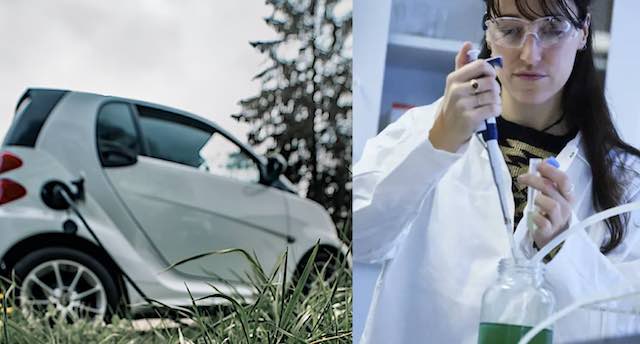
Photo of Léa Rouquette by Henrik Sandsjö

Swedish researchers say they have developed a new method of recycling batteries from electric vehicles that allows recovery of 100 percent aluminum and 98 percent lithium.

Researchers at Chalmers University of Technology have presented an efficient way to recycle metals from spent batteries and, at the same time, minimize the loss of valuable raw materials such as nickel, cobalt, and manganese.

Furthermore, no expensive or harmful chemicals are required in the process because the researchers use oxalic acid—an organic acid that can be found in the plant kingdom.

In the Chalmers battery recycling lab, Rouquette and research leader Martina Petranikova showed how the new method works—taking the pulverized components in the form of a finely ground black powder and dissolving it in a transparent liquid – oxalic acid.

Rouquette produces both the powder and the liquid in something reminiscent of a kitchen mixer. Although it looks as easy as brewing coffee, the exact procedure is a unique scientific breakthrough. By fine-tuning temperature, concentration, and time, the researchers came up with a new recipe for using oxalic acid, an environmentally friendly ingredient that can be found in plants such as rhubarb and spinach.

“We need alternatives to inorganic chemicals. One of the biggest bottlenecks in today’s processes is removing residual materials like aluminum,” says Martina Petranikova, Associate Professor at the Department of Chemistry and Chemical Engineering at Chalmers. “This is an innovative method that can offer the recycling industry new alternatives and help solve problems that hinder development.”
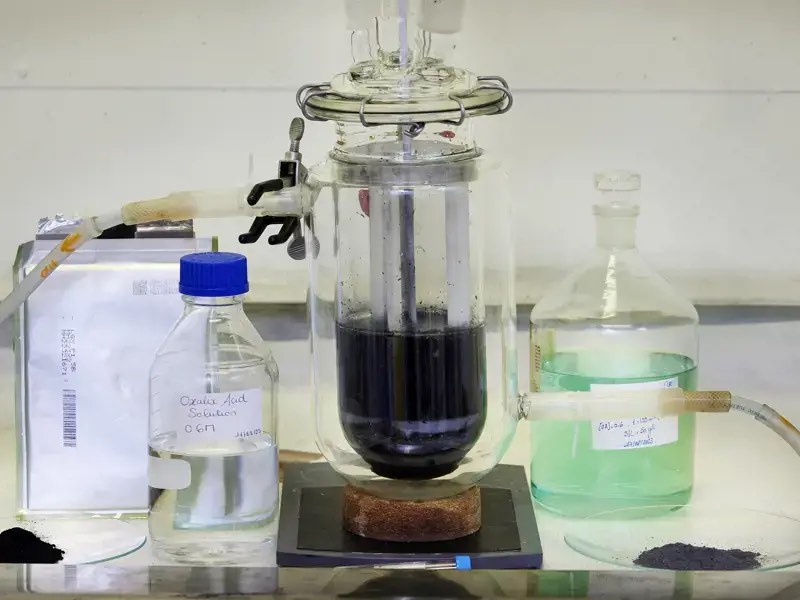
The crushed car battery in powder on the left is dissolved in transparent liquid and filtered for aluminum and lithium (green liquid), with other metals, like cobalt, nickel, and manganese, remain in the dark solids (right) – Photo by Anna-Lena Lundqvist.

The aqueous-based recycling method is called hydrometallurgy. In traditional hydrometallurgy, all the metals in an EV battery cell are dissolved in an inorganic acid. Then, you remove the “impurities” such as aluminum and copper. Lastly, you can separately recover valuable metals such as cobalt, nickel, manganese, and lithium. Even though the amount of residual aluminum and copper is small, it requires several purification steps, and each step in this process can cause lithium loss.

With the new method, the researchers reverse the order and recover the lithium and aluminum first. Thus, they can reduce the waste of valuable metals needed to make new batteries.

The latter part of the process, in which the black mixture is filtered, is also reminiscent of brewing coffee. While aluminum and lithium end up in the liquid, the other metals are left in the “solids.” The next step in the process is to separate aluminum and lithium.

“Since the metals have very different properties, we don’t think it’ll be hard to separate them. Our method is a promising new route for battery recycling – a route that definitely warrants further exploration,” says Rouquette, who published her results in the journal Separation and Purification Technology.

Petranikova’s research group is involved in various collaborations with companies to develop electric car battery recycling and is a partner in major research and development projects, such as Volvo Cars’ and Northvolt’s Nybat project.

The research was funded by the Swedish Energy Agency, BASE Batteries Sweden, Vinnova.

The good news here is the extensive mining of precious metals needed for EV batteries can be supplemented with recycled materials, offsetting the problem of supply and mining pollution. Today’s JohnKu talks about one issue with EV proliferation.

Electric Vehicles by John W. Howell © 2023

To power EVs,

Electricity needs rise . . .

Where’s it coming from?
Friday JohnKu – AKA – TGIF – FRI-Yay/Good News

Today’s good news comes from the Good News Network. Here it is in its entirety.

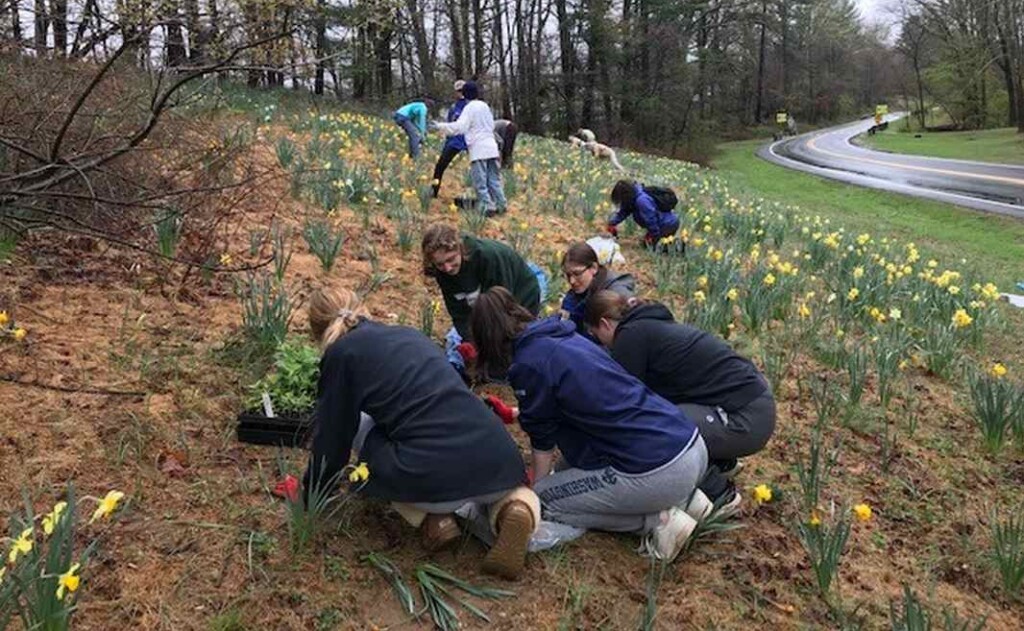
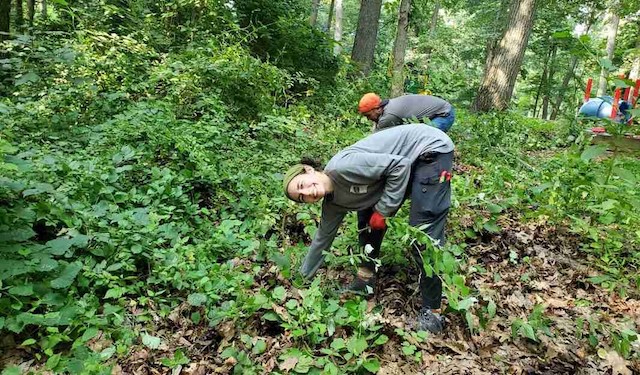
Weed Warriors in Action – credit, Montgomery County Parks.

Wash. D.C’s ‘Weed Warrior’ Volunteers Tackle ‘Mile-a-Minute’ Invasives to Save the Capital’s Trees

Around the capital beltway or Washington’s famous Rock Creek Park, you may see a group of people ripping up vines along the treeline beside the roads.

If you have then you’ve glimpsed superheroes who traded in their capes for gardening gloves and their time for the satisfaction of terminating an invasive species and saving a native tree.

Washington D.C’s “Weed Warriors” are a group of volunteers going back to 1999 that work for free to keep hundreds of species of invasive shrubs, vines, and climbers from taking over native ecosystems.

Among the 600 or so non-native invasive plant species found in and around our nation’s capital, some, like Polygonum perfoliatum, also known as the “mile-a-minute” vine, can be devastating. Suffocating trees by overgrowing the leaves in their canopy branches, a mile-a-minute can kill thousands of trees every year.

Since 1999, Weed Warrior volunteers have logged over 135,000 hours of time weed whacking in Montgomery County alone. Anyone can become a Weed Warrior; the group works in units for two-hour spaces removing weeds or planting native species in their place.

These invasive species management events are led by specially-trained volunteer Weed Warrior Supervisors and/or staff from the Montgomery Parks Dept. Warriors can get certified to de-weed in their spare time or lead events on their own. They can even have their own unique patch of ground in the D.C.-Metro area to control.

Why would anyone want to trade their free time for laboring hours away for free doing something our tax dollars are supposed to do for us? The answer is simple: it’s addicting.

“If I have any good mental health, it’s due to Weed Warrioring,” said 74-year-old area resident Barbara Francisco. “You have a sense of accomplishment.”

Francisco spoke to Justin Moyer of the Washington Post, who found the volunteer groups were filled with people who were happy to get out into nature and make a meaningful impact on biodiversity.

Weed Warriors planting native species – retrieved from Montgomery County Parks

The Weed Warriors website states that non-native, invasive plant species (NNIs) can alter the complex webs of plant-animal associations that have evolved over thousands of years to such a degree that plants and animals once familiar to us are eliminated.

In meadows, for example, NNI monocultures can threaten butterfly populations because they can no longer find the native host plants they depend on for survival. In forests, NNI vines can strangle and smother trees. NNI shrubs can displace and shade out native plants that provide birds and other wildlife with food and shelter.

Recent research has even shown that NNIs can alter soil chemistry and disrupt the growth of the mycorrhizal fungi on which healthy forests depend.

Anyone who feels this is something they want to contribute their time to can go to the Montgomery County Parks website here and look at the upcoming Weed Warrior events—the next one is October 21st.

The good news is there are folks who care enough to spend their own time in saving indigenous plant life. Today’s JohnKu talks about investment. I hope you have a super weekend.

Volunteer by John W. Howell © 2023

Scratch a volunteer,

And underneath, you will find . . .

Passion, strength, and love.

Friday JohnKu – AKA- TGIF Fri-Yay/Good News.

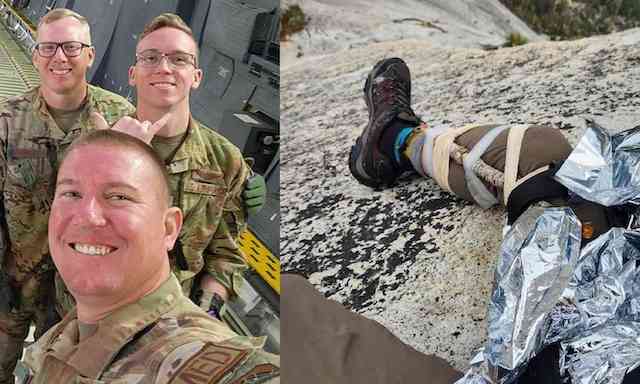
U.S. Air Force Capt. Joshua Haveman (left) and the splint he made for the injured climber (right) – courtesy of Travis AFB.

Today’s good news story comes from the Good News Network.

Trapped on Tiny Ledge, Fallen Hiker with Mangled Legs Rescued by Off-Duty Air Force Hero

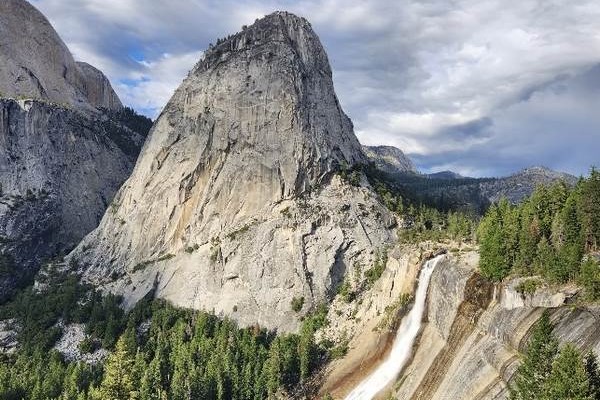
An off-duty Air Force Captain proved himself worthy of rank and regalia after conducting a daring rescue of a fallen hiker on the shoulder of Yosemite’s Half Dome.

Capt. Joshua Haveman, 60th Air Evacuation Squadron, was hiking the famous peak in September when he saw a climber slip in wet conditions and fall perhaps as many as 80 feet down onto a precarious ledge.

Haveman and the other hiker were at a section of the hike where, to pass up solid granite, a series of cables embedded into the rock are necessary for safety and leverage. If they don’t have a harness, rope, and carabiners to secure themselves to the cables, hikers are left simply holding onto or using them as handholds.

Without hesitation, Haveman took action. Faced with harsh winds, slippery rock, and hail, he made a decision to venture outside the permanent cable barriers to reach the fallen climber, Travis Air Force Base wrote in a statement.

His climbing experience and extensive medical training proved invaluable in this life-or-death situation.

“You could see that his legs were not naturally oriented at all, so I started collecting sticks from Sub Dome and started climbing,” Haveman recalled. “Other climbers were concerned for my safety, but the guy was just up there screaming in pain, so I left the cable area and climbed on the ledge.”

Half Dome, Yosemite -credit Travis AFB

Using makeshift splints fashioned from sticks, Haveman provided crucial first aid to the injured climber by securing above and below the tibia/fibula fracture and wrapping his injured ankle with an ace bandage he had in a medical kit he had brought.

To shield the climber from the harsh elements and apparent shock, Haveman covered the climber with his jacket while organizing a call to search and rescue.

“After about 45 minutes, the Park Ranger emergency medical technician came up with a full medical bag, so we were able to use a structural aluminum malleable splint to better stabilize him,” Haveman explained.

“The weather was improving, so more climbers were able to come up and offer their assistance. They took up a collection of supplies that we were able to use to make an improvised pulley system to lower him the 30 feet down to sub dome.”

Ultimately, the climber was medically evacuated via helicopter, receiving the critical medical attention they urgently required. Without Haveman’s swift and selfless actions, the outcome could have been far more tragic.

“I wasn’t sure a helicopter would be able to land with the winds being as strong as they were, so we were preparing to carry him 10 or 12 hours down with a six-man litter,” Haveman said with a pause.

“Apparently, it was this pilot’s first day on the job, and he was amazing! It took him about 15 minutes, but he was able to sit the chopper down, and we were able to get the patient loaded and breathe a sigh of relief.”

It’s safe to say on behalf of the injured climber and everyone else in the country things can only go so wrong when we have people like Capt. Haveman working and walking among us; his bravery and ingenuity are a credit to the Force and the country at large.

The good news here is that Captain. Haveman was in the right place at the right time to save this man’s life. Today’s JohnKu talks about coincidence. I hope you have a wonderful weekend.

Fate by John W. Howell © 2023

When events collide,

Maybe it’s coincidence . . .

Or the hand of fate.

Friday JohnKu – AKA – TGIF – Fri-Yay/GoodNews

Today’s good news story comes from the Good News Network. Here it is in its entirety.

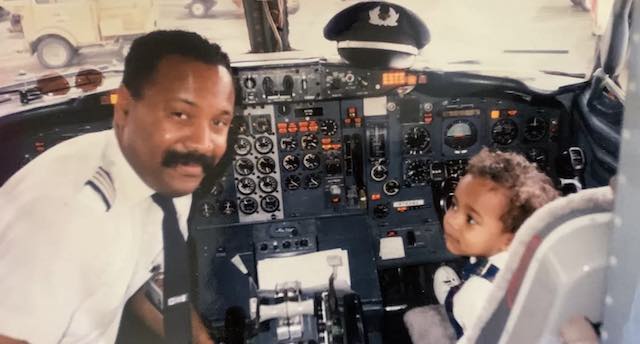
Ruben Flowers Jr. and son in 1994 – Southwest Airlines.

Dad Ends Career by Recreating Adorable Photo With Son Who is Now a Pilot at Same Airline–LOOK

From a Chicago airport comes the beautiful story of a father and son who were able to recreate a special moment to celebrate an even more special one.

Newly-fledged pilot for Southwest Airlines Ruben Flowers III got to ride shotgun on his father’s final flight before retiring, which they memorialized by taking a photo in the same position as one nearly 30 years earlier.

Ruben Flowers Jr. was getting ready for take-off back in 1994 when his son, Flowers III, got to visit the captain. Sitting in the co-pilot’s seat, they snapped a nice photo.

Flowers Jr. flew for Southwest for 30 years, all the while inspiring his three children to take to the skies as well, with Flowers III telling People Magazine it’s the “best office view in the world.

Flowers III was coming to the end of his flight school just as his father was nearing the end of his career, and it was that time when he stumbled across that old family photo and got him thinking of doing something special for his dad.

“It was a dream of mine to make this happen,” Flowers III says. “It was my number one goal to fly with my dad.”

He wasn’t sure whether or not he would complete his flight school before his father’s March 3rd retirement. But fate was on the young man’s side, and on March 3rd as part of a flight from Omaha to Chicago, Flowers II and III sat side by side, pilot and co-pilot, father and son, and snapped the last picture of his dad’s long career.

credit Southwest Airlines

“I really enjoyed flying with my son,” Flowers Jr. told People. “It was truly a blessing for me. It was just awesome.”

After they landed in Chicago, Flowers III kept on going while his dad went to a retirement reception at the airport to celebrate a beautiful career and a beautiful legacy that continues flying after him.

The good news here is a father inspired his son to follow in his footsteps. Today’s JohnKu talks about leading by example. I hope you have a super weekend.

Mentorship by John W. Howell © 2023

It takes some hard work,

To provide an example . . .

That youth will follow.


Friday JohnKu – AKA – TGIF – Fri-Yay/ Good News


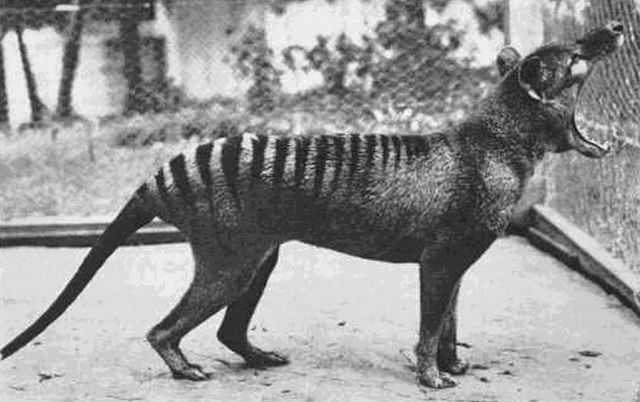
A thylacine in a zoo

Today’s Good News story comes from the Good News Network. Here is in its entirety.

Tasmanian Tiger RNA Recovered from Preserved Specimen in Groundbreaking World First

A team of Scandinavian researchers has recovered messenger and micro RNA from a Tasmanian tiger specimen kept in a museum collection.

It’s the first-ever collection of RNA from an extinct creature in history, an achievement long sought after in the study of extinct species and for other applications.

The Tasmanian tiger, or thylacine, was truly unique for an apex predator. This large predatory marsupial was king among Tasmanian forests, which remain largely intact since its extinction 130 years ago.

For this reason, the potential resurrection of the thylacine has received a lot of attention, as it would immediately solve many problems facing the balance of the Tasmanian ecosystem without the complexities of trying to replace the apex predator role with a non-native animal.

The thylacine evolved on Tasmania, and putting it back would be by far the easiest solution, provided the incredibly difficult task of somehow recreating the thylacine through paleogenomics could be accomplished. Colossal Biosciences in Texas is currently working to produce viable thylacine-like embryos using already sequenced DNA to raise in surrogates over the next few years.

Now, though, a Swedish-Norwegian team has isolated the transcriptome of the skin and skeletal muscle tissues from a 130-year-old desiccated Tasmanian tiger specimen preserved at room temperature in the Swedish Museum of Natural History in Stockholm.

The functional difference between DNA and RNA is that DNA stores genetic information that only RNA can read. RNA reads and carries out the instructions for protein coding contained within DNA.

The researchers were able to isolate useable RNA from a thylacine that carried instructions for skin and skeletal muscle coding, which might be key to any resurrection.

“This is the first time that we have had a glimpse into the existence of thylacine-specific regulatory genes, such as microRNAs, that got extinct more than one century ago,” says Marc R. Friedländer, Associate Professor at the Wenner-Gren Institute at Stockholm University.

The authors point out that museum collections around the world contain vast collections of endangered and extinct species, and their technique for recovering the thylacine RNA holds promise for the study and or protection of all these creatures.

They write that the RNA from the thylacine looks a lot like that of existing marsupials.

“Resurrecting the Tasmanian tiger or the woolly mammoth is not a trivial task and will require a deep knowledge of both the genome and transcriptome regulation of such renowned species, something that only now is starting to be revealed,” says Emilio Mármol, the lead author of a study recently published in the Genome Research journal.

The idea of resurrecting a species has nothing to do with cloning and has so far centered around the idea of altering the genetic expression of the animal’s closest living relative in utero. In the case of the wooly mammoth, it would be the elephant, and in the case of the thylacine, perhaps the fat-tailed dunnart or Tasmanian devil.

The good news in this article is that possibly extinct animals can be resurrected using what is learned in this case. Today’s JohnKu talks about reversing extinction. I hope you have a super weekend.

Resurrection by John W. Howell © 2023

What used to be lost,

Through science has a slim chance . . .

Of resurrection.

Friday JohnKu – AKA – TGIF – Fri-Yay/Good news

Hearst Owned photo
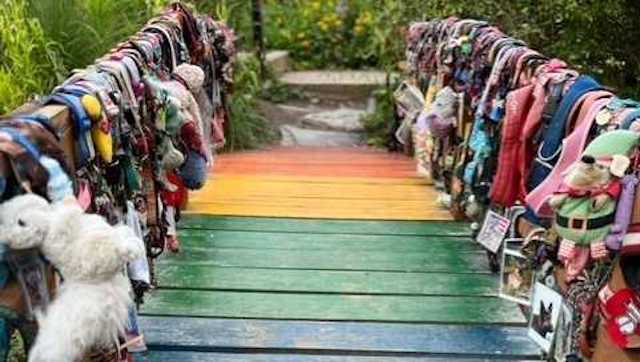
Rainbow Bridge in Lake Lure, NC.

Today’s Good News story is slightly different from television station WXII Channel 12 Winston-Salem, NC. Here’s the story.

Rainbow Bridge, hidden in North Carolina mountains, helps owners remember pets in a special way.

Rainbow Bridge helps previous pet owners remember their furry friends

It’s a very special place hidden in a North Carolina mountain that promises grieving pet owners they’ll never be apart from their beloved furry family members.

Pet owners know the special bond that is one-of-a-kind, that creates a special love like no other. The Rainbow Bridge in Lake Lure is an enchanted place that provides love, comfort and a place to grieve during difficult times.

The Rainbow Bridge is hidden in the River’s Edge Dog Garden of the Flowering Bridge in Lake Lure.

About Rainbow Bridge

At the entrance of the colorful, rainbow-painted bridge sits a container that reads, “chains to hang tags and collars” for pet owners to attach memories of their special friends.

The bridge is adorned with collars, tags, and stuffed animals that will never be removed from the bridge. The goal is to honor pets while helping relieve grief while walking the bridge.

Rainbow Bridge Designer

The Rainbow Bridge was created by artist Amy Wald, who lost her dog. She designed the space for owners to happily remember their pets.

“If you look down, you can see paw prints at the start of the bridge. The more you walk, they begin to fade,” Wald said. Click the video to see an interview with Amy Wald.

She said she got the inspiration from envisioning the process of the animals crossing the bridge and then going on into what awaits them on the other side.

Take time on the bridge to think, mourn, or simply just stroll with the good memories you once had with your pets in mind. Once you cross the bridge, a sign reading a version of the Rainbow Bridge poem awaits you, reminding you of the purpose of the bridge and remembering your pet. The original Rainbow Bridge story was written by Edna Clyne of Inverness, Scotland, in 1959, after her Labrador Retriever, Major, passed away, according to the Lake Lure Flowering Bridge site.

Rainbow Bridge Legend

Legend states that when a “pet passes away, they cross the Rainbow Bridge, where they are young, strong, and healthy again. Your pets are free to roam and play without a care. For the most part, pets are content with their new homes over the Bridge, except for one thing: missing the people they once left behind. When you and your furry friend meet again, you cling together and never let each other go. They may be gone physically, but never from your heart. It is then that you finally meet again and cross the Rainbow Bridge together.”

While visiting the Flowering Bridge at Lake Lure, make sure to check out the 2,000 species of plants and gardens.

You can visit the Rainbow Bridge at any time, located at 3070 Memorial Highway, Lake Lure, North Carolina. For more information, visit Flowering Bridge at Lake Lure.

The good news in this story is that someone knew how it felt to lose a pet and designed the bridge to help others through that feeling.

Today’s JohnKu talks about helping others. I hope you have a wonderful week.

Feelings by John W. Howell © 2023

We all have feelings,

Some feel for others as well . . .

Grace upon them all.

Friday JohnKu – AKA – TGIF – Fri-Yay/Good News

This week’s good news story comes from (where else) the Good News Network. Here is the story in its entirety.

credit Inside Edition – screen capture

Hero Neighbor Charges Into Lake to Save 4-Year-Old Boy With Autism

A Michigan woman is being hailed a hero after she rescued a 4-year-old autistic boy who jumped into a lake.

Drowning is the leading cause of death among autistic children, but the water would have to make do with frogs and fish after Jessica Bauer and the boy’s Grandma saw him fall in, and the former tossed her smartphone over her shoulder before jumping in.

Ring camera captured the youngster tumbling into a pond and Bauer’s rescue. The young woman has a three-year-old of her own and said the sight of the little boy drowning was frightening, but nevertheless, she told Inside Edition that she didn’t think much at all as she was jumping in.

The mother of the 4-year-old later thanked her hero neighbor. Bauer says the boy she saved is doing fine and is excited to celebrate his 5th birthday.

WATCH the rescue below…

The good news is that a person reacted to the emergency without thinking. Today’s Johnku talks about heroes. I hope you have a wonderful weekend.

Heroes by John W. Howell © 2023

Heroes don’t think first,

They respond to what’s needed . . .

Then, do the thinking.

Friday JohnKu – AKA – TGIF – Fri-Yay/Good News

UN Resident and Humanitarian Coordinator for Yemen David Gressly with the FSO Safer

Today’s good news story comes from the Good News Network. Here is the story as published.

Remarkable Man Averts Oil Tanker Disaster by Crowdfunding to Stop Crumbling Ship From Releasing Tons into Red Sea

In July, news media reported that a derelict oil tanker off the coast of Yemen had its more than 1 million barrels of crude removed in a successful cleanup operation.

The operation may have prevented a major environmental catastrophe in the Red Sea because the tanker, FSO Safer, was 47 years old and had serious mechanical and structural risks.

Now, an addendum to the story reveals the work of a true hero whose crowdfunding campaign succeeded in collecting the money necessary for the sea-saving work.

That addendum began when truce negotiations between Saudi Arabia and the controlling faction of Yemen, the Houthis, opened a wartime window of opportunity to do something about this environmental Sword of Damocles that had been hanging over the communities in the Red Sea since the FSO Safer was abandoned in 2015 after Saudi’s invasion.

The agreement to allow environmental crews is required so that a new vessel can be purchased to hold the oil, which technically belongs to the Yemen state, though who that represents isn’t settled yet. After agreement was reached in May of 2022, the race was on for the United Nations to conduct a hugely ambitious fundraiser of $144 million for a new tanker and a salvage company to drain all the oil, clean all the insides of the tanks, and bring the massive bulker to shore.

David Gressly, the UN’s resident humanitarian coordinator for Yemen, spearheaded the fundraiser and salvage operation but said that progress was slow going.

“If we had a major oil spill there, we would have probably raised a billion dollars in a month because there are mechanisms for governments to do just that,” Gressley told the Guardian.

Salvage teams at work on the Safer. credit -Lize Kraan-Smit from Boskalis

After government and private sector donations weren’t adding up, Gressley opened the fundraising to the world—anyone with a dollar to spare was invited to contribute to this admittedly massive goal.

By September 2022, the campaign had gathered $75 million of the required $144 million, an astonishing return driven by individuals, from Yemeni businessmen to schoolchildren in the US. When the campaign reached $121m in July this year, the emergency humanitarian fund of the UN provided a low-interest loan to cover the rest.

From there, work was turned over to Boskalis, a salvage company that finished the cleanup operation by August 11th after the MT Yemen, a brand new oil tanker, weighed anchor alongside Safer to siphon off the last of her oil before the old girl was towed to Yemen’s shore for scuppering.

Alongside his lifesaving work in Yemen, Gressley is also considering establishing contingency plans for future situations of the sort since he was still explaining that the money he helped raise would be going to a good cause even after the Boskalis said Safer had between 12 and 18 months of time left before crumbling into the sea.

You can watch an animation of the oil transfer.

The good news in this story is a person cared about averting a disaster and did something about it. Today’s JohnKu talks about the benefits of being decisive. I hope you have a great weekend.

Action by John W. Howell © 2023

There is time to wait,

But knowing action is first . . .

Averts disaster.

Friday JohnKu – AKA – TGIF – Fri-Yay Good News

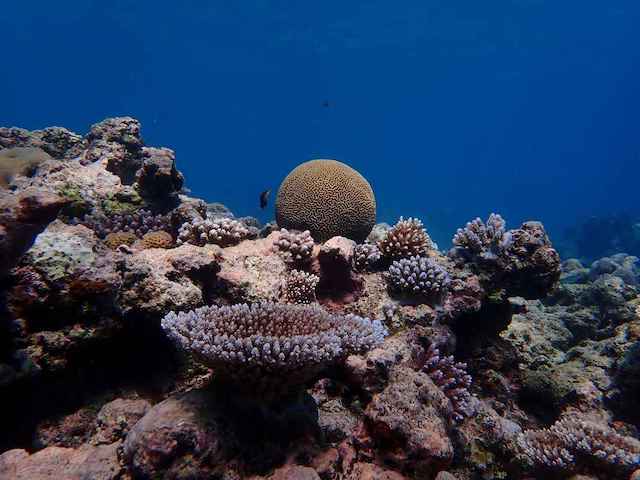
A coral reef – SWNS


Today’s good news comes from the Good News Network. Here is the story in its entirety.

4 Decades of Data Suggests Pacific Coral Reefs Can Acclimatize to Warming Oceans and Resist Future Bleaching

Data collected over the last 40 years at a remote coral reef within the territorial waters of Palau has shown that corals are more adaptable to warming oceans than previously thought.

In fact, they’ve already adapted—potentially at a rate of 0.18°F per decade, and the researchers say that established models for coral bleaching events should be updated to presume an enhanced capacity for these stunning underwater ecosystems to sustain themselves over the decades.

The Newcastle University-led study focused on the Pacific Island nation of Palau and drew on decades of field observations, as well as many possible future coral bleaching trajectories for Palauan reefs, each with a different simulated rate of thermal tolerance enhancement.

They found that if coral thermal tolerance continues to rise throughout the 21st century at the most likely historic rate, “significant” reductions in bleaching impacts are possible.

“We quantified a natural increase in coral thermal tolerance over decadal time scales, which can be directly compared to the rate of ocean warming,” said study lead author Liam Lachs.

The researchers say that high-frequency bleaching can be fully mitigated at some reefs under low-to-middle emissions scenarios where, for example, the Paris Agreement commitments are fulfilled.

“We know that coral reefs can increase their overall thermal tolerance over time by acclimatization, genetic adaptation, or shifts in community structure; however, we know very little about the rates at which this is occurring,” said study co-author Dr. James Guest.

“This study uses data from a remote Pacific coral reef system and estimates the rate of increase in tolerance since the late 1980s. The results provide some hope that reefs can keep up with increasing temperatures, but only if strong action is taken on climate change.”

To survive amid climate change, the researchers say coral communities need to endure progressively more intense and frequent marine heatwaves.

The Newcastle team’s findings reveal that the thermal tolerance of corals in Palau has likely increased at a rate of 0.1°C per decade since the late 1980s.

The researchers say that the increase suggests that natural mechanisms, such as genetic adaptation, acclimatization of corals, or their symbiotic microalgae, could have contributed to the enhancement of coral thermal tolerance.

Several early models on climate change, global warming, and ecological degradation have been shown to be incorrect over the years, including the effects of ruminant agriculture on greenhouse gas emissions and plastic pollution entering the ocean—which GNN recently reported could have been overestimated for years by a factor of 30.

On corals, some scientists aren’t waiting to see if they can adapt at their own pace. Researchers in Florida are breeding corals that are specifically identified as carrying genetic adaptations that make them less vulnerable to heat and acidic water.

The good news here is as the world struggles with the effects of global warming, the coral reefs are adapting to the changes. Today’s JohnKu talks about the global warming situation. I hope you have a wonderful weekend.

Global Warming by John W. Howell © 2023

Global warming worries,

Are First World concerns today . . .

Need Third World buy-in.

Friday JohnKu – AKA – TGIF – Fri-Yay/Good News

Today’s good news story comes from Twiggy’s birthplace, Dog Ranch Rescue via Newsweek.

Woman Adopts the One Shelter Dog Nobody Wanted: ‘No More Waiting’


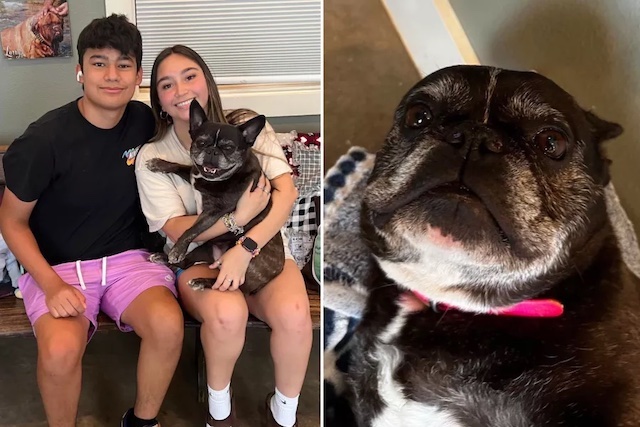
From left: Doris with her new family and a close-up picture of the French bulldog. She was left without a home at 9 years old but now has a forever residence.Photo-DOG RANCH RESCUE

A dog that was surrendered to a shelter because of a family allergy has found her perfect forever home.

“Her family, who had her since she was a puppy, had a baby, and the baby developed terrible allergies to her,” Laura Galloway from Dog Ranch Rescue told Newsweek. “They had to choose between the baby and Doris. It hard for Doris to lose her home like that at 9 years old.”

Dog Ranch Rescue in Anna, Texas, specializes in caring for French bulldogs, and when the heartbroken family reached out and explained their situation, the shelter took on Doris. Founded in 2014, Dog Ranch Rescue provides help for dogs from local shelters, strays and puppy mills.

Restoring dogs to good health and rehoming them, Dog Ranch Rescue works hard to ensure every animal finds their perfect forever home. Since the shelter opened, more than 2,000 dogs have come through its doors and found new, permanent families.

Finding the perfect home for Doris wasn’t easy, though. She didn’t get along well with other canines and needed someone who would understand the requirements with adopting an older dog, too.

“Our sanctuary is a wonderful place, and we take exceptional care of the dogs, but it’s not a home,” said Galloway. “We had her for months and months looking for a needle in a haystack.”

But the right owner appeared from an unlikely source when Clarissa Cardenas, in her early 20s, got in touch with Dog Ranch Rescue.

“When I got the application from Clarissa, I was a little concerned because she was younger,” said Galloway. “But, as I got to know her and listen to her heart—it made me want to cry.

“She didn’t have unrealistic expectations about adopting a senior dog and just understood what adopting a dog like Doris would take,” Galloway added.

Living in San Antonio, Clarissa let the rescue know that she was heading to Colorado on vacation and wanted to stop by. When Galloway met Clarissa, she knew the young woman would be the perfect pet owner.

“To have someone so young be so worldly, have wisdom of many years—it’s amazing,” said Galloway. “Then, when she came, Doris couldn’t have been happier to meet her.”

Before long, Clarissa whisked Doris off on vacation with her, and after their trip, Doris will head back home with her new family.

“No more lobby for Doris, no more waiting,” Galloway said in a post on Facebook, announcing the French bulldog’s new home.

The good news is that a special person, mature beyond her years, went out of her way to open her heart to a needy dog. Today’s JohnKu talks about wisdom and caring. I hope you have a terrific weekend.

Wisdom by John W. Howell © 2023

Measuring wisdom,

Is not a matter of years . . .

But how one behaves.