Friday JohnKu -AKA – TGIF – Fri-Yay/Good News


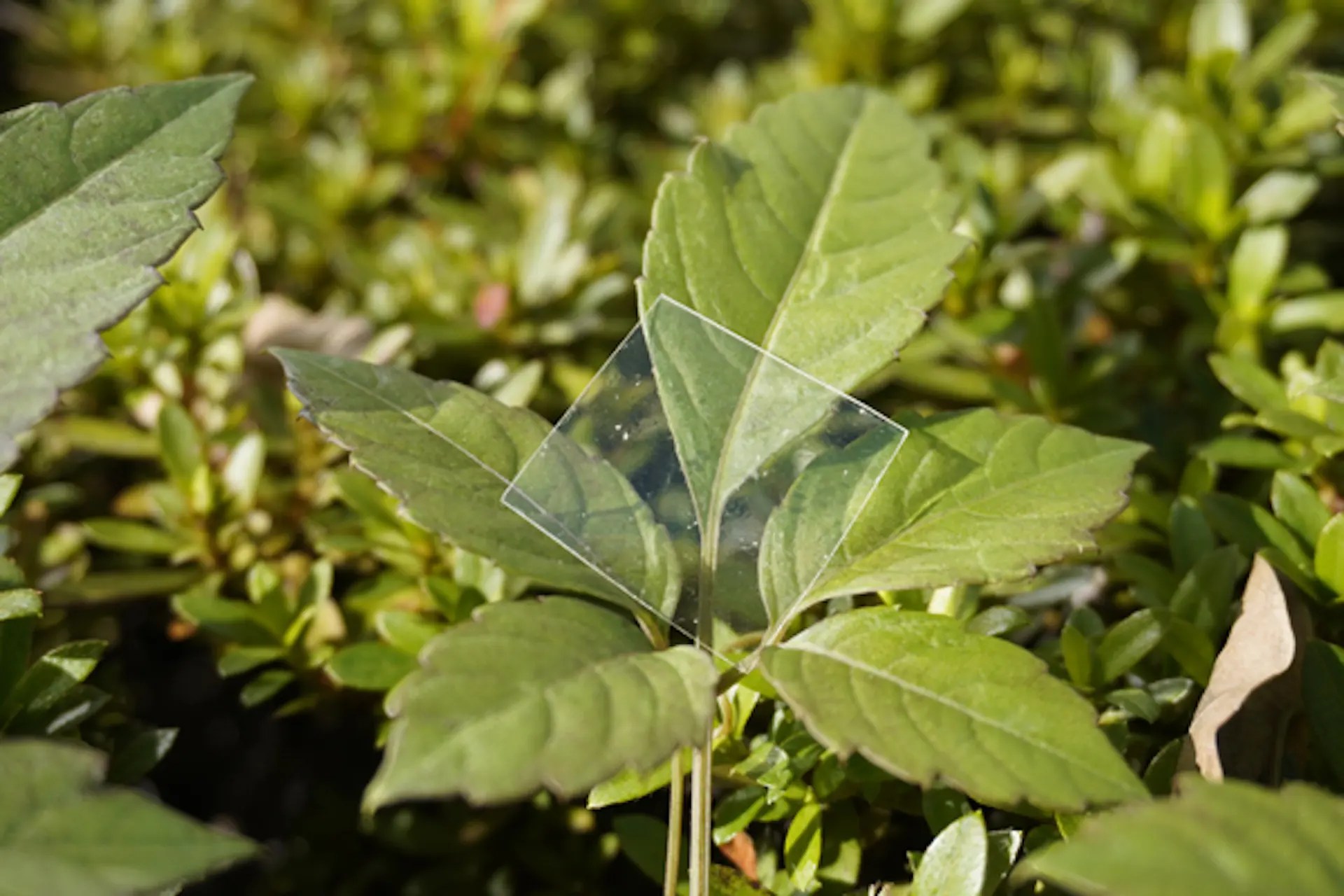
A sample sheet of the new biodegradable plastic – RIKEN


Today’s good news comes from New Atlas Science, Tech & Innovation News. The story was brought to my attention by Noelle Granger.

New plastic dissolves in the ocean overnight, leaving no microplastics

Plastics are durable and strong, which is great while they’re being used but frustrating when they end up in the environment. Scientists at RIKEN in Japan have developed a new type of plastic that’s just as stable in everyday use but dissolves quickly in saltwater, leaving behind safe compounds.

The benefit of plastics is that they’re made with strong covalent bonds that hold their molecules together, meaning they take a lot of energy to break. This is why they’re so sturdy, long-lasting and perfect for everything from packaging to toys.

But those same strong bonds become a problem after the useful life of a plastic product is over. That cup you used once and threw away will sit in landfill for decades, even centuries, before it fully breaks down. And when it does, it forms microplastic pieces that are turning up in all corners of the natural world, including our own bodies, where they wreak havoc on our health in ways we’re only just beginning to understand.

RIKEN researchers have now developed a new type of plastic that can work just as well as the regular stuff when it’s needed, and break down readily into safe compounds when it’s not. It’s made of what are known as supramolecular polymers, which have reversible bonds that function like sticky notes that can be attached, removed and reattached, according to the team.

The team wanted to make a specific type of supramolecular polymer that would be strong enough for the usual uses of plastic, but could also be made to break down quickly when required, under mild conditions and leaving only non-toxic compounds.

After screening a range of molecules, the researchers identified a particular combination that seemed to have the right properties – sodium hexametaphosphate, which is a common food additive, and monomers based on guanidinium ions, which are used in fertilizers. When these two compounds are mixed together in water, they form a viscous material that can be dried to form plastics.

A reaction between the two ingredients forms “salt bridges” between the molecules that make the material strong and flexible, like conventional plastic. However, when they’re soaked in saltwater, the electrolytes unlock those bonds, and the material dissolves.

An artist's impression of the new plastic, showing the strong bonds above the water and how they break down when submerged in saltwater
An artist’s impression of the new plastic, showing the strong bonds above the water and how they break down when submerged in saltwater – RIKEN

In practice, the team found that the material was just as strong as normal plastic during use, and was non-flammable, colorless and transparent. Immersed in saltwater though, the plastic completely dissolved in about eight and a half hours.

There’s one major hurdle with any degradable plastic material of course: what if it comes into contact with the catalyst for its destruction before you want it to? A plastic cup is no good if certain liquids can dissolve it, after all.

In this case, the team found that applying hydrophobic coatings prevented any early breaking down of the material. When you eventually want to dispose of it, a simple scratch on the surface was enough to let the saltwater back in, allowing the material to dissolve just as quickly as the non-coated sheets.

While some biodegradable plastics can still leave behind harmful microplastics, this material breaks down into nitrogen and phosphorus, which are useful nutrients for plants and microbes. That said, too much of these can be disruptive to the environment as well, so the team suggests the best process might be to do the bulk of the recycling in specialized plants, where the resulting elements can be retrieved for future use.

But if some of it does end up in the ocean, it will be far less harmful, and possibly even beneficial, compared to current plastic waste.

A paper describing the research was published in the journal Science.

The good news in this story is further action is being taken to reduce plastic pollution in our oceans. Today’s JohnKu talks about our oceans. I hope you have a wonderful weekend.

More by John W. Howell © 2025

More needs to be done,

To help clean up our oceans . . .

They are our lifeline.
Friday JohnKu – AKA – TGIF – Fri-Yay/Good News

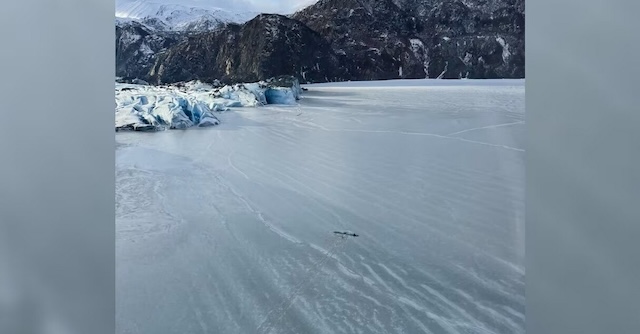
The plane wreckage near the eastern side of Tustemena Lake – credit Dale Eicher


Today’s good news comes from the Good News Network

Rescuers Relieved to Find Pilot, 2 Children Survived Crash Landing on Frozen Alaskan Lake

Fearing the worst after a prop plane was reported overdue for landing in Alaska last Sunday, search and rescue volunteers were relieved when news rang out that all three passengers survived.

The pilot and two children, who were in elementary and middle school, survived a crash landing on the frozen surface of Tustumena Lake and walked until they were seen.

The story first broke Sunday night/Monday morning that a Piper PA-12 Super Cruiser, which departed Sunday from Soldotna Airport near Kenai on a sightseeing trip, didn’t land when it should have.

John Morris, the father of the missing pilot, told CNN affiliate Alaska’s News Source that his son’s cell phone sent its final ping at about 5:00 p.m. Sunday evening over Tustumena.

Alaska’s News Source reports that a National Guard and state trooper search and rescue operation was augmented by volunteers from the community. One family friend posted a notice for help on Facebook that was re-shared 420 times.

Eventually, a Good Samaritan who saw the plane wreckage and three people walking on the frozen lake helped rescuers find them.

The three survivors were taken to a Kenai Peninsula area hospital and treated for “non-life-threatening injuries.”

Dale Eicher was one of the locals who heard the call for help. With a background in assisting search and rescues, he went up in his own plane to look for survivors but had barely arrived in the last known position before he heard over the radio that three people had been reported found.

“I called the troopers immediately because I was still in cell service, and I knew it was a really good chance that the guy who had found him was not in cell service,” Eicher said. ” I was really shocked. I didn’t expect that we would find them. I didn’t expect we would find them alive for sure…it doesn’t always turn out this well.”

The good news here is the community went all out to find the survivors of a plane crash even though it seemed unlikely anyone could survive. Today’s JohnKu talks about hope. I wish you all a super weekend.

Optimism by John W. Howell ©2025

Against all the odds,

Hope always carries its weight . . .

To make miracles.

Friday JohnKu – AKA – TGIF – Fri-Yay/Good News

courtesy of Sakhawat Ali

Today’s good news is from the Good News Network.

Rare Sighting of Four Snow Leopards Together Sparks Frenzy of Excitement – (WATCH)

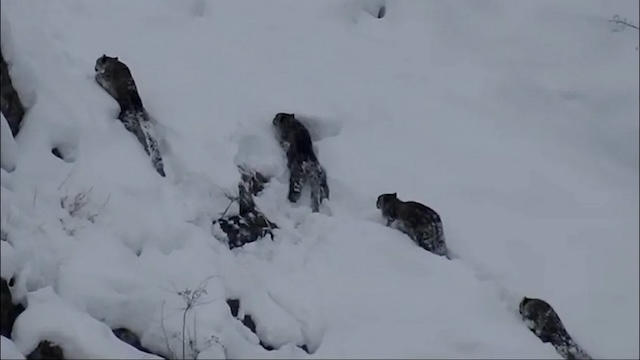
In the remote mountains of northern Pakistan, four majestic snow leopards have been recorded recently moving through the snow-covered hills in a piece of footage that has ignited a flurry of excitement among conservationists.

These animals are seldom seen alone, much less in a group, and it’s being considered a sign of success for Pakistan’s conservation efforts in the animal’s habitat.

“For the past 15 days, I had been noticing leopard pawmarks. While I was on the roof of my house, I used binoculars to observe the mountains and spotted a female snow leopard along with her four cubs,” the photographer Sakhawat Ali told GNN.

“As a wildlife lover, I was extremely happy to see the snow leopards. I quickly moved closer and filmed them from a distance of about 150 meters.”

Ali lives in the remote village of Hushe and is also a gamekeeper at the Central Karakorum National Park in Pakistan’s Gilgit-Baltistan region, where the sighting was made. Snow leopards thrive here; their coats allow them to blend into the snowy mountains and remain undetected by their prey species.

That a female could have three large and healthy cubs is a sign that as much as the snow leopard population is doing well, prey populations of Siberian ibex, argali, roe deer, and Thorvold’s deer must also be thriving.

Still, the snow leopard is considered vulnerable by the IUCN Red List because of its susceptibility to habitat loss and fragmentation across the mountain ranges in which it lives.

Pakistan, and indeed all 12 of the snow leopard range countries, have made great strides in halting and reversing snow leopard declines over the last twenty years. CNN reported that local villagers celebrated Ali’s footage, even though snow leopards sometimes kill livestock.

Dr. Zakir Hussain, the Chief Conservator of Parks and Wildlife for Gilgit-Baltistan, told CNN that 80% of the region’s communities are engaged in the tracking, monitoring, and reporting snow leopard populations on a citizen science basis.

The snow leopard can be found in Russia, China, India, Nepal, Bhutan, Pakistan, Kyrgyzstan, Tajikistan, Kazakhstan, Mongolia, Uzbekistan, and Afghanistan, which together make up the Global Snow Leopard Forum, an international platform for coordinating and sharing conservation strategies to protect this borderless wanderer between state wildlife and environment ministries and NGOs like the Snow Leopard Trust.

WATCH them move across a snowy landscape… 

The good news here is that conservation efforts are showing results. Today’s JohnKu talks about conservation. I hope you have a super weekend.

Preservation by John W. Howell © 2025

Saving animals,

Is a step to save ourselves . . .

We all should do it.


Friday JohnKu – AKA – TGIF – Fri-Yay/Good News

Verizon and ForgiveCO


Today’s story comes from the Good News Network

Verizon Erased $10 Million of Consumer Debt for 6,500 North Carolina Residents in Path of Hurricane Helene

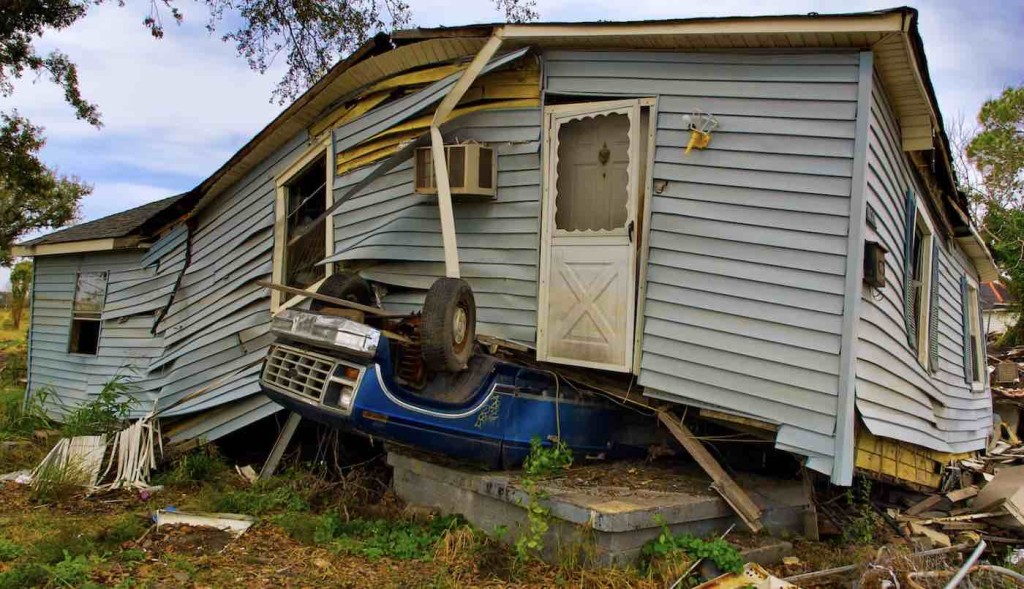
Verizon teamed up with ForgiveCo to eliminate $10 million in consumer debt for 6,500 Western North Carolinians who are still recovering from Hurricane Helene’s sweeping devastation.

The North Carolina families learned that Verizon—the world’s second-largest telecommunications company—cleared their medical, financial, and other debts with the help of ForgiveCo, whose “random acts of kindness” model purchases consumer debt with no applications required. In fact, the beneficiaries did not need to take further action.

Recipients were then notified through surprise letters, emails, and text messages.

But if a phone call learning that your debt has been cleared isn’t exciting enough, Basketball Hall of Fame coach and Asheville native Roy Williams has signed on to share the news with the impacted families.

“These are challenging times, but I’ve seen the strength and resilience of this community. Verizon’s support is a powerful reminder that no one is alone, and together, we’ll rise stronger,” said Mr. Williams.

“It’s a privilege to share this message of hope with the incredible people of North Carolina.”

The hurricane destroyed Shelley Queen’s home in Jackson County. Still, she was one of those touched by Verizon, having medical debt forgiven after she was diagnosed with diabetes, which turned her family’s life upside down.

John Middelkoop

“There were numerous hospital visits, including times I was in a coma and needed a pump to survive. These medical challenges have been difficult, both emotionally and financially. This forgiveness is truly a life-changing gift.”

Craig Antico, Founder and CEO of ForgiveCo, confirmed the debt relief, saying, “Through this effort, Verizon will bring transformative change to the lives of North Carolinians in crisis, leaving a lasting mark on future generations.”

Tim Luker, who also lives in Jackson County, has congestive heart disease and was hospitalized the day before the hurricane hit. Since then, he’s been working tirelessly to clean up lots of water damage, floor issues, and yard damage. “When I got out of the hospital, I couldn’t go home because of storm damage.”

“It means everything to me,” said Tim. “I don’t have much… $11,000 is life-changing for someone like me.”

“This makes a huge difference.”

The good news in this story is that a giant company is willing to help its customers in their time of need. Today’s JohnKu talks about helping others. I hope you have a beautiful weekend.

Giving by John W. Howell © 2025

A large company,

Finds out helping customers . . .

Is good for business.

Friday JohnKu – AKA – TGIF – Fri-Yay/Good News

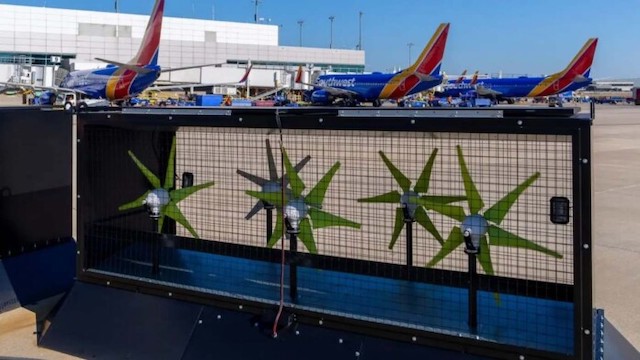
An example of the pods at Dallas Love Field Airport – credit: JetWind Corporation

Today’s good news story comes from the Good News Network.

Jet Engine Exhaust is Turned into Electricity to Power Dallas International Airport

An intuitive piece of hardware collects days’ worth of renewable energy from airplane engine exhaust before takeoff from a Dallas airport.

“Boarding is completed” is a common refrain heard over the intercom system in the moments before taxiing to the runway.

At that moment, the pilot will begin a series of engine tests and pre-flight checks, during which the turbine engines will idle with their ferocious noise and exhaust fumes.

A company called JetWind has realized that all that idling force is like the strong winds needed to power a wind turbine and has built a series of pods that can capture it during the 5-10 minutes the aircraft is sitting at the gate waiting for clearance to taxi.

“The main goal of our project is to harness the consistent wind created by jets and convert it into an eco-friendly energy source,” JetWind’s founder and president, Dr. T. O. Souryal, told Interesting Engineering.

“What was once considered wasted energy can now benefit energy grids, ultimately promoting smarter and more sustainable infrastructure across the globe.”

Three years of testing between 2021 and 2024 have informed the official deployment of JetWind’s flagship product at Dallas Love Field airport. 13 sets of pods will sit beneath the gate hooked up to external batteries that connect to the grid the airport uses. Solar panels add to the energy generation, and the whole set can create about 30 kilowatt-hours of renewable energy, enough to power a family home for a few days.

While it isn’t nearly what the average airport will consume during a day of operations, when combined with 12 other systems like it, it can make a big difference in reducing the building’s carbon footprint.

“Dallas Love Field has always been a hub of progress, and the introduction of JetWind’s Energy Capturing Pods reinforces its position as a testing ground for innovative technologies,” said former Dallas Mayor Tom Leppert.

“By converting man-made wind into energy, we highlight Dallas as a leader in sustainable solutions and prove that cities can take significant steps toward tackling global energy challenges.”

The debut of the JetWind pods at Love Field has attracted attention from around the globe, including companies and governments from Switzerland, Brazil, Saudi Arabia, Ecuador, the UK, France, and Australia.

The good news in today’s story is that not all energy projects are enormous. Even the little ones count. Today’s JohnKu is about little steps. I hope you have a beautiful weekend.

Small by John W. Howell © 2024

Even small projects,

Can add up to big savings . . .

It is worth small steps.

Friday JohnKu – AKA – TGIF – FriYay/Good News

Fairbanks Airport Police and Fire Department


Today’s good news comes from The News Tribune in Tacoma, Washington.

A bald eagle was found ‘frozen’ and unable to fly. See the rescue with the ‘best ending ever.’

Story by Sara Schilling

First responders in Alaska had an unusual overnight guest: a juvenile bald eagle needing help.

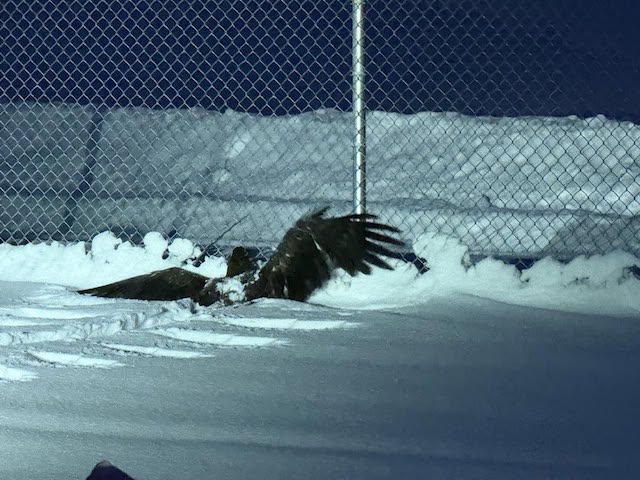
A good Samaritan came across the “quite frozen” eagle that couldn’t fly on the evening of Jan. 11 and waved over a Fairbanks International Airport police officer, the Fairbanks Airport Police and Fire Department wrote in a Facebook post.

According to the post, after checking with the Alaska Raptor Center, first responders put the eagle in a patrol car to keep it out of the cold.

A quote from the Facebook post “Dispatch, we’ve got one detained…
While we normally wouldn’t release the name of those we take into protected custody, we figured this time it would be ok!
One of our officers was flagged down this evening by a Good Samaritan who found a juvenile bald eagle who was quite frozen and unable to fly. After consulting with representatives of the Alaska Raptor Center, the decision was made to secure the little guy or gal in the backseat of the patrol car till it could thaw out and get dry. It’s now resting peacefully in a dark, quiet corner of the station until tomorrow when representatives from Alaska Fish & Game and the US Fish & Wildlife Service help us release it back to the wild as long as it’s not showing signs of illness or injury. (Hint…keep an eye our page tomorrow) 😉“

The eagle spent the night munching on fatty steak and salmon and “resting peacefully in a dark, quiet corner of the station,” officials said.

Officials said the eagle was assessed with help from the U.S. Fish and Wildlife Service, the U.S. Department of Agriculture Wildlife Services, and the Alaska Department of Fish and Game, and it was determined to be in great shape.

The Fairbanks Airport Police and Fire Department said in a follow-up Facebook post on Jan. 12 that the bird was released back into the wild, declaring it “the best ending ever.”

Here is that post, which you need to log into Facebook to view.  https://www.facebook.com/fairbanksairportpoliceandfire/videos/2081709672272277 

The post included a video.

“Oh yeah, he soars,” someone said as the eagle fled.

Another person said, “He’s super strong. That’s wonderful.”

In the follow-up Facebook post, officials thanked “everyone who showed concern, especially the Good Samaritan who called in the frozen bird and helped (rescue) it. We wish every day could be as exciting as this one was!”

The good news in this story is that someone cared enough to report a bird in distress, and as a result, it was saved. Today’s JohnKu talks about involvement. I hope you have a great weekend.

Action by John W. Howell © 2024

Heroes can’t explain,

Why they jumped into action. . .

Involvement is key.

Friday JohnKu – AKA -TGIF – Fri-Yay/Good News


Today’s good news story comes from The Good News Network and is about a best-selling author.

James Patterson Gives $300,000 in Holiday Bonuses to 600 Bookstore Employees

Believing that books save lives, international best-selling author James Patterson is taking the reins for dozens of American booksellers this year and giving their employees a $500 holiday bonus.

To protect the beloved industry and its bottom line, Patterson’s donations totaled $300,000 this holiday season and were divided between 600 bookshop workers.

According to the American Booksellers Association (ABA), workers either submitted an application for the bonus or were nominated by their colleagues, friends, or perhaps even an author.

“Booksellers save lives. Period,” Patterson said in a statement to ABC News. “I’m happy to be able to acknowledge them and all their hard work this holiday season.”

People Magazine reports that Alabama’s Thank You Books, Iowa’s The Nook, and San Francisco’s City Lights Books are just some locations that have witnessed Patterson’s gifts.

“We appreciate Mr. Patterson’s financial generosity as well as his generosity of spirit. We all continue to be awed by, and grateful for, Mr. Patterson’s continuing support of independent booksellers,” Allison Hill, CEO of the ABA, also said in a statement.

“It means everything to have him recognize and reward booksellers’ valuable role in the industry.”

This is just one of many large donations offered by Patterson to bookstores, totaling over $1.5 million of personal wealth over the last 20 years. This included a $500,000 donation during the opening salvos of the COVID-19 pandemic when enforced lockdowns and business closures threatened small businesses in many states.

“The White House is concerned about saving the airline industry and big businesses — I get that. But I’m concerned about the survival of independent bookstores, which are at the heart of main streets across the country,” Patterson said in a statement at the time.

“I believe that books are essential. They make us kinder, more empathetic human beings. And they can take us away momentarily from feeling overwhelmed, anxious, and scared.”

The good news in this story is that an author who has significantly benefitted from bookstore employees is willing to give back in recognition of those benefits. Today’s JohnKu talks about payback. I hope you have a wonderful weekend.
Gratitude by John W. Howell © 2024
We all owe someone,
For helping us on life’s path . . .
How do we pay back?

Friday JohnKu – AKA -TGIF – Fri-Yay/Good News

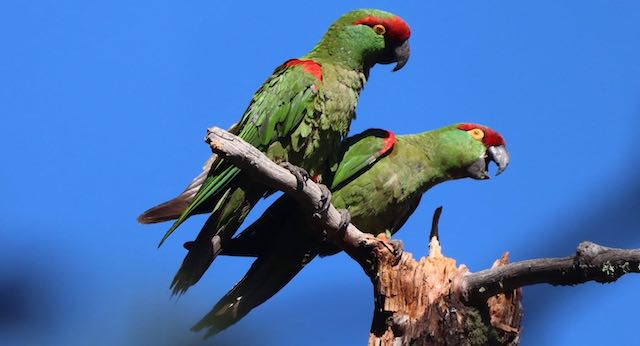
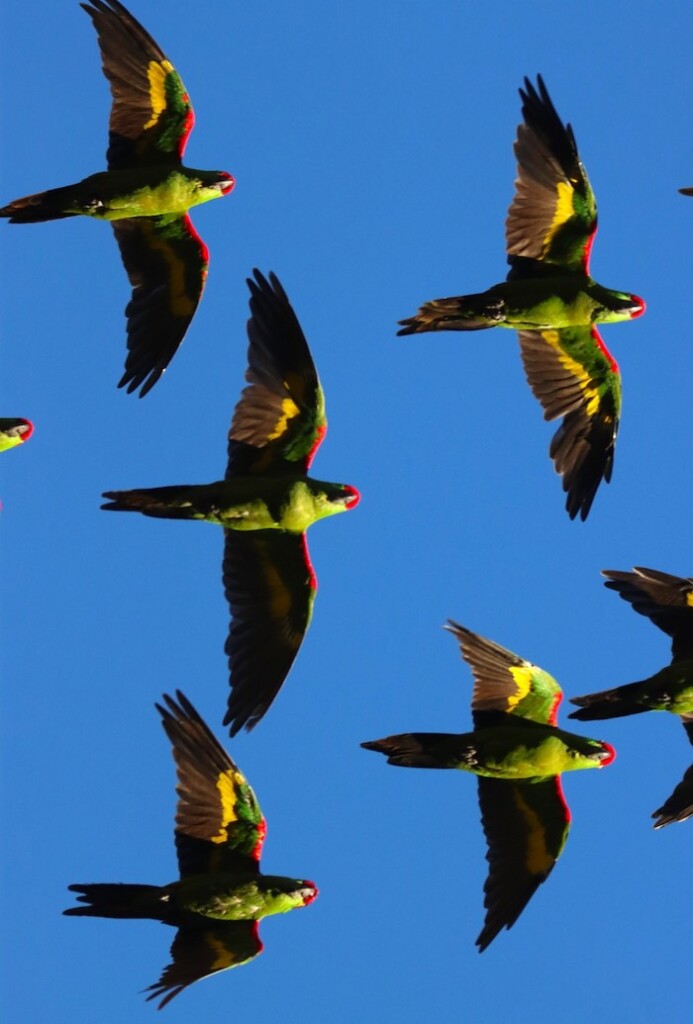
Thick-billed parrots – Credit: OVIS / Ernesto Enkerlin Hoeflich

Today’s Good News comes from the Good News Network.


Endangered Thick-billed Parrot That Once Roamed the US Is on the Way to Recovery

A public-private partnership in Mexico just announced that the population of thick-billed parrots is approximately 2,500 individuals—at least 10% higher than that recorded 12 years ago.

The number was determined in a recent population survey in a protected area in the state of Chihuahua, where this charismatic species once roamed north into the United States.

The thick-billed parrot is an emblematic species of the temperate forests of the Sierra Madre Occidental, once found in Arizona and New Mexico.

Since 1995, this species, listed in danger of extinction by the Mexican government, has been the subject of numerous studies and actions for protection and management, while the mountain forests on which it depends have been the focus of extensive reforestation.

These efforts, led by the National Commission of Protected Natural Areas (CONANP) and the civil organization Organización Vida Silvestre (OVIS), along with the participation of local communities and other organizations in the US and Mexico, are yielding encouraging results as demonstrated by the increase in population, a statement from OVIS details.

“This emerging success story reflects the importance of collaboration between society and government and a vision of healthy ecosystems and sustainable communities, which is in line with the policies and practices that CONANP will strengthen in the following years,” said the head of CONANP, Pedro Álvarez-Icaza.

Credit: Ernesto Enkerlin / OVIS

The census data suggests that the population of thick-billed parrots will continue to increase as the region’s communities consolidate sustainable forestry management practices.

Sergio Jiménez, OVIS’s executive director, thanked the various institutions’ support.

“This multi-institutional effort led by Ernesto Enkerlin Hoeflich, scientific director of OVIS, is bearing fruit after three decades, which gives us hope for other species at risk and points to the need for cooperation, persistence, and long-term planning to produce results and effective conservation.”

A significant effort was undertaken in the 1980s to restore populations of this parrot among the sky islands of Arizona. These dramatic, short, squat mountain chains amid the scorching lowlands were perceived as perfect havens for the reintroduction. Still, the problem was that predatory species like the American goshawk had already returned in large numbers to these hills, and their take of the parrots proved unsustainable.

In October 2020, it was announced that a higher elevation among the sky islands, including the Chiricahua mountains, would be sought to form the basis for a new reintroduction attempt.

If populations recover substantially enough in Mexico, the bird may recolonize its former haunts in the Southwestern US without the need for scientists’ intervention.

The good news in this story is that species on the verge of extinction can recover with concerted effort. Today’s JohnKu talks about efforts. I hope you have a wonderful weekend.

Recovery by John W. Howell © 2024

Even the hopeless,

Can benefit from our help. . .

The key is hard work.


Friday JohnKu – AKA – TGIF – Fri-Yay/Good News

First authors Diksha Sharma, left, and Vignesh Menon lead experiments on seawater collected from the Gulf of Maine – Credit: Annie Kandel, released

Today’s Good News story comes from the Good News Network

Trillions of Microscopic Sea Plankton Recruited to Solve the Carbon Problem

American scientists have proposed a new method for recruiting trillions of microscopic sea creatures and their insatiable appetites to fight climate change.

The technique harnesses the animals’ daily habits to accelerate the ocean’s natural cycle for removing carbon from the atmosphere, known as the biological pump, according to the paper in Nature Scientific Reports.

The study, published by researchers at Dartmouth College, reported that spraying clay dust on the ocean’s surface converts carbon into food the animals eat, digest, and send deep into the sea as carbon-filled feces.

They explain that the process would begin with spraying the clay dust at the end of algae blooms. These blooms can grow to cover hundreds of square miles and remove about 150 billion tons of carbon dioxide from the atmosphere each year, converting it into organic carbon particulates. But once the bloom dies, marine bacteria devour the particulates, releasing most of the captured carbon into the atmosphere.

The researchers found that the clay dust attaches to carbon particulates before re-entering the atmosphere. It redirects them into the marine food chain as tiny sticky pellets the ravenous zooplankton consume and later excrete at lower depths.

“Normally, only a small fraction of the carbon captured at the surface makes it into the deep ocean for long-term storage,” says Mukul Sharma, the study’s corresponding author and a professor of earth sciences. Sharma presented the findings on December 10th at the American Geophysical Union annual conference in Washington, D.C.

“The novelty of our method is using clay to make the biological pump more efficient—the zooplankton generate clay-laden poops that sink faster,” says Sharma, who received a Guggenheim Award in 2020 to pursue the project.

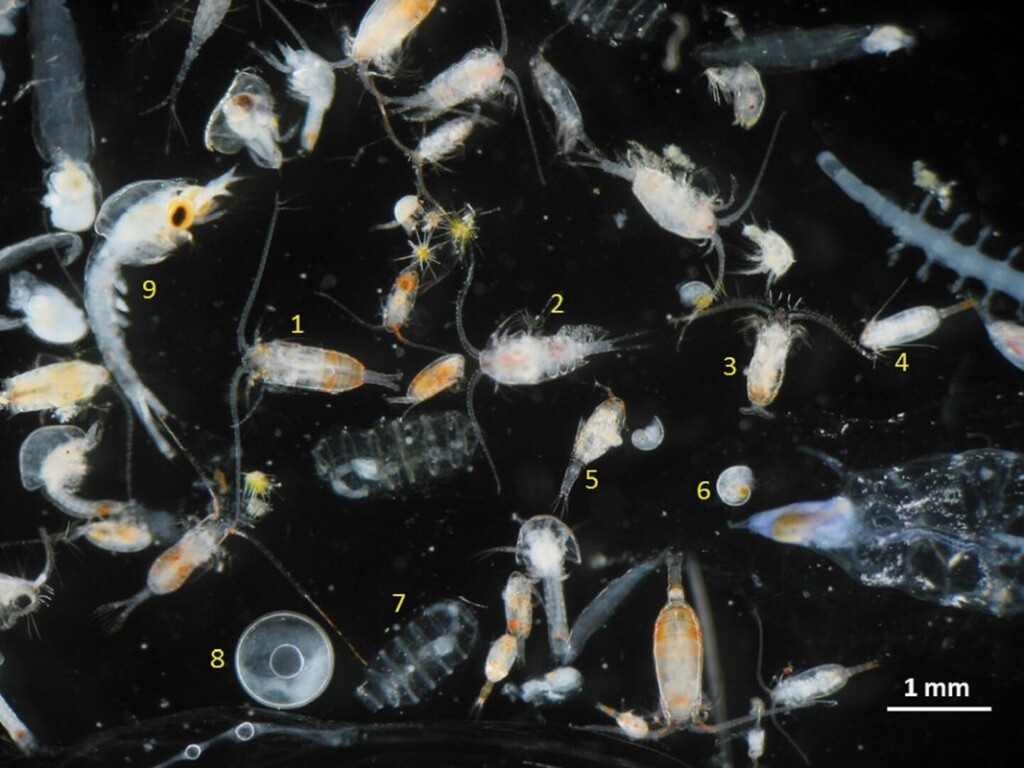
A mixed zooplankton sample including common species – Credit Adriana Zingone, Domenico D’Alelio, Maria Grazia Mazzocchi, Marina Montresor, Diana Sarno, LTER-MC team CC 4.0. BY-SA (John’s note – I don’t have the number key for the photo)

“This particulate material is what these little guys are designed to eat. Our experiments showed they cannot tell if it’s clay and phytoplankton or only phytoplankton—they just eat it,” he says. “And when they poop it out, they are hundreds of meters below the surface, and all that carbon is, too.”

The team conducted laboratory experiments on water collected from the Gulf of Maine during a 2023 algae bloom. They found that when clay attaches to the organic carbon released when a bloom dies, marine bacteria produce a kind of glue that causes the clay and organic carbon to form little balls called flocs.

The researchers report that the flocs become part of the daily smorgasbord of particulates that zooplankton gorge on. Once digested, the flocs embedded in the animals’ feces sink, potentially burying the carbon at depths where it can be stored for millennia. The uneaten clay-carbon balls also sink, increasing in size as more organic carbon, as well as dead and dying phytoplankton, stick to them on the way down.

In the team’s experiments, clay dust captured as much as 50% of the carbon released by dead phytoplankton before it could become airborne. They also found that adding clay increased the concentration of sticky organic particles—which would collect more carbon as they sink—by 10 times. At the same time, the populations of bacteria that instigate the release of carbon back into the atmosphere fell sharply in seawater treated with clay, the researchers report.

Sharma says that in the ocean, the flocs become an essential part of the biological pump called marine snow. Marine snow is the constant shower of corpses, minerals, and other organic matter that falls from the surface, bringing food and nutrients to the deeper ocean.

“We’re creating marine snow that can bury carbon at a much greater speed by specifically attaching to a mixture of clay minerals,” Sharma says.

Zooplankton accelerate that process with their voracious appetites and incredible daily sojourn, known as the diel vertical migration. Under cover of darkness, the animals—each measuring about three hundredths of an inch—rise hundreds, and even thousands, of feet from the deep in one immense motion to feed in the nutrient-rich water near the surface.

When the day breaks, the animals return to deeper water, depositing the flocs as feces. This expedited process, active transport, is another key aspect of the ocean’s biological pump that shaves days off when it takes carbon to reach lower depths by sinking.

Sharma plans to field-test the method by spraying clay on phytoplankton blooms off the coast of Southern California using a crop-dusting airplane. He hopes that sensors placed at various depths offshore will capture how different species of zooplankton consume the clay-carbon flocs so that the research team can better gauge the optimal timing and locations to deploy this method—and exactly how much carbon it’s confining to the deep.

“Finding the right oceanographic setting to do this work is significant. You cannot go around willy-nilly dumping clay everywhere,” Sharma told Dartmouth Press. “We need to understand the efficiency first at different depths to understand the best places to initiate this process before we put it to work. We are not there yet—we are at the beginning.”

The Good News in today’s story is that scientists continue to work to make our oceans healthier. Today’s JohnKu talks about the oceans. I hope you have a super weekend.

Oceans by John W. Howell © 2024

They cover the Earth,

And have been abused for years . . .

Reversal takes work.

Friday JohnKu – AKA – TGIF – Fri-Day/Good News

Credit: Department of Conservation

Today’s good news story is from the Good News Network.

More Than 30 Stranded Whales Rescued in New Zealand by People Lifting Them on Sheets

After a pod of more than 30 pilot whales were stranded on a New Zealand beach, over a thousand volunteers and professionals organized to save them by carrying them back out to sea on sheets.

The sheets were suspended from the prow of a boat operated by New Zealand’s Department of Conservation (DoC).

The stranding happened on Ruakākā Beach near the city of Whangārei in New Zealand’s north island, a particularly prolific stranding location for pilot whales. DoC agents routinely survey the beach and ask the public to report any whales coming too near.

Rescue efforts saw almost all of the pilot whales survive, while three adults and one calf perished. A Māori ceremony was held to honor their spirits, as the Māori believe the animal to be a sacred cultural treasure.

“It’s amazing to witness the genuine care and compassion people have shown toward these magnificent animals,” Joel Lauterbach, a Department of Conservation spokesperson, said in a statement. “This response demonstrates the deep connection we all share with our marine environment.”

WATCH the story below from Straight Arrow News…

WATCH on CBS News HERE to see how they used the sheets…

The good news in this story is seeing folks pull together to save other Earth residents. The JohnKu talks about thinking of others as more than just animals. I hope you have a super weekend.

Neighbors by John W. Howell ©2024

We are one species,

Among millions of others . . .

We should honor them