Friday JohnKu – AKA – TGIF – Fri-Yay/Goodnews

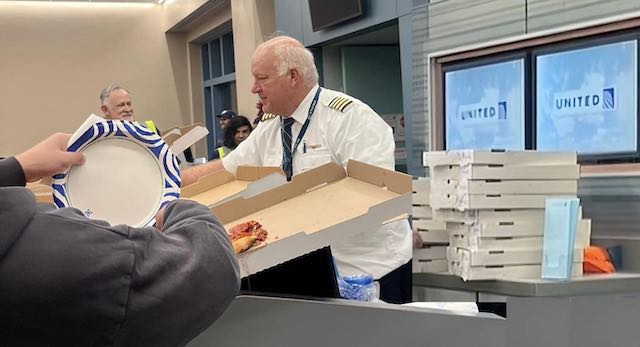
United Pilot Scott Wardle buys pizza for passengers – By Tanya Stamos via FB.

Today’s good news comes from the Good News Network. You may have seen this story, but I think Captain Wardle’s action is worth another look. Today is also the anniversary of the assassination of John F. Kennedy in Dallas Sixty years ago. I think he would like this story as well.

United Pilot Orders 30 Pizzas to Feed Passengers After Emergency Landing for Medical Care

By

A United Airlines pilot has become a social media sensation after personally overseeing the order and distribution of 30 pizzas to 155 passengers on his flight.

Now monikered the “Pizza Pilot,” Scott Wardle says that after 30 years of piloting for the Air Force and as a civilian, he knows what it feels like to be stuck at the airport and that he just “had to do something to show we care.”
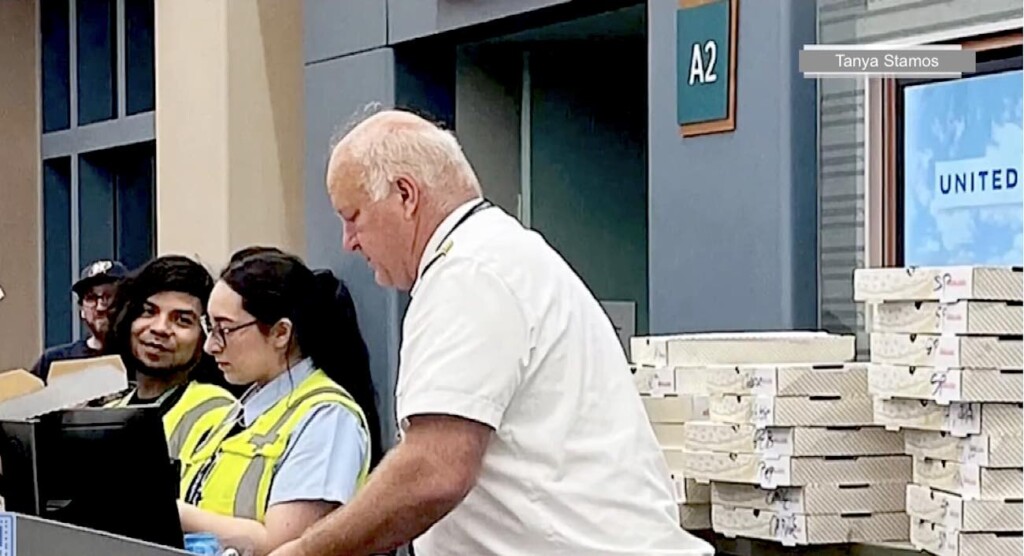
United Pilot Scott Wardle serving dinner he bought for passengers – Tanya Stamos via FB.

Well, that care took off, with posts and photos of Wardle handing out pizzas using the check-in counter at the gate as a kitchen counter going viral.

The story began when the Boise-based Wardle was all set for a flight to Phoenix via Houston. About 45 minutes into the trip, the flight crew called to inform him that a patient had fallen unconscious.

Though two nurses and a medic were on board, Wardle felt he couldn’t take any chances, so he came in for an emergency landing at Albuquerque.

Hoping to get the passengers back underway as soon as possible, he suddenly received word that his cabin crew had maxed out their hours, meaning he had to wait for a new set of attendants.

“I made sure to confirm they were on the way with the company, and then I thought, I got to do something with all these people,” Wardle told KTVB 7. “So, I started exploring some options at that point for what I want to do. I came up with the idea of doing pizza for everyone. It’s an easy thing. Most people like pizza.”

Wardle says he loves his job, and the only burden he felt during the whole ordeal was compassion and sympathy for the passengers. He picked up the phone and started ordering dozens of pizzas.

As he began passing them around with plates and napkins, the passengers took notice.

The viral photos and videos reached virtually every corner of Wardle’s social life, with old Air Force buddies and even his graduation class of 1984 and phoning him to say they saw him serving pizza in his pilot uniform.
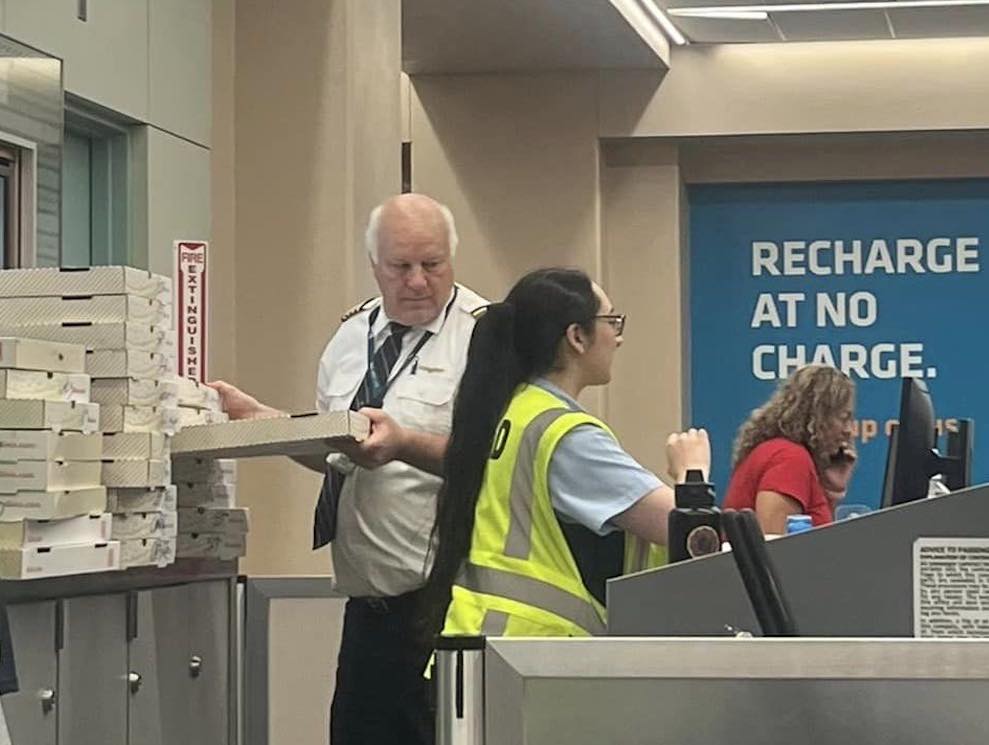
Pilot Scott Wardle ‘recharges with pizza for free’ – Tanya Stamos via FB

“I didn’t think it was that big of a deal. I just did my thing,” Wardle said. “Many pilots in our company do this sort of thing; I just happened to get my picture taken.”

United Airlines insisted on reimbursing him for the pizzas. They applauded a hero of the friendly skies who waited until every passenger had a slice before sitting down for a pie.

The good news in this story is one person cared about the care and comfort of others. Today’s JohnKu talks about caring. I hope you have a peaceful weekend.

Others by John W. Howell © 2024

When someone has care,

For others more than themself. . .

Angel makin’s there.

Friday JohnKu – AKA – TGF – Fri-Yay/Good News

Today’s good news comes from the Associated Press

‘I got my life back.’ Veterans with PTSD making progress thanks to service dog program

JIM SALTER AP News

KANSAS CITY, Kan. (AP) — After working at a crowded and dangerous internment camp in Iraq, Air Force Staff Sgt. Heather O’Brien was brought home with her anxiety and post-traumatic stress disorder.

Airforce s/sgt Heather O’Brian and Albus – Photo by Nick Ingram

A bouncy labradoodle and a Kansas City-area program helped her get back on her feet.

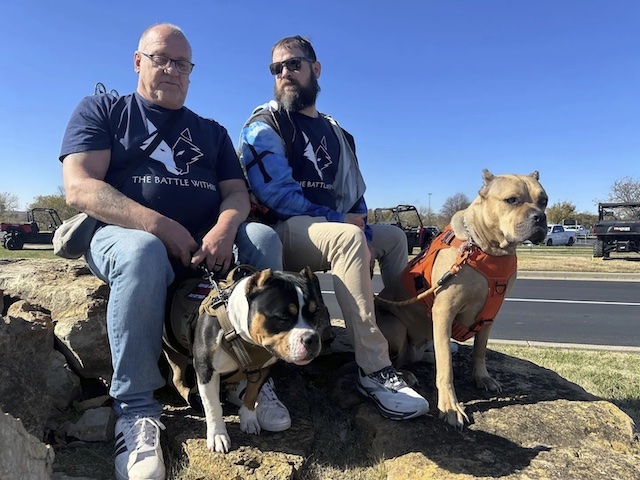
Dogs 4 Valor, operated through the Olathe, Kansas-based organization The Battle Within, helps retired veterans and first responders work with their service dogs to manage depression, anxiety, and other challenges.

“A lot of times, the veteran with severe PTSD is homebound,” said Sandra Sindeldecker, program manager for Dogs 4 Valor. “They’re isolated. They’re very nervous. They won’t make eye contact. Some won’t leave the house at all.

The veterans and dogs graduate in six to nine months, but group gatherings continue.

There is growing evidence of the value of service dogs for veterans with PTSD. A small study published in JAMA Network Open in June looked at a program operated by K9s For Warriors. Service dogs in the program are taught to pick up a veteran’s physical signs of distress and can interrupt panic attacks and nightmares with a loving nudge.

Researchers compared 81 veterans who received service dogs with 75 veterans on the waiting list for a trained dog. After three months, PTSD symptoms improved in both groups, but the veterans with dogs saw a bigger improvement on average.

O’Brien, 40, recalled that the camp where she worked in Iraq sometimes had over 20,000 detainees. Violence and rioting were common, and it left her with severe anxiety.

“When I got out of the military, I just assumed that you’re supposed to be on edge all the time as a veteran,” O’Brien said.

O’Brien’s mother spotted the frisky lab-poodle mix on Facebook and convinced her daughter to adopt the dog she named Albus. Months later, O’Brien learned about Dogs 4 Valor, and the pair joined the program in October 2023.

O’Brien says she can now go out in public again — she even went on vacation to Branson, Missouri, “things that I never would have thought I would do really, probably ever again.”

Mark Atkinson, 38, served in Afghanistan as a corporal in the Marine Corps. He returned home with PTSD and major depressive disorder, causing sleeplessness and anxiety. He adopted Lexi, now 5, in 2020.

Lexi, a muscular cane corso breed, needed Atkinson as much as he needed her. Her previous owner had kept Lexi in chains before surrendering her. Since joining Dogs 4 Valor, the two can get out together and enjoy life.

“I don’t really like leaving the house because I’m safe there, you know?” Atkinson said. “And having Lexi has just made me get out to be more social.”

Having a group of fellow veterans facing the same challenges has also helped, Atkinson said.

“We come from the same backgrounds, different branches,” Atkinson said. “Same issues. You know, PTSD or traumatic brain injuries. And they’re all very welcoming, as well. There’s no judgment.”

O’Brien compared living with Albus to a relationship with a sometimes pushy best friend who often wants to go out.

“The best friend constantly wants to make you do things that make you nervous,” O’Brien laughed, acknowledging that it is ultimately up to her.

“I have to decide to walk out and just deal with life,” O’Brien said. “And so that has been hard. And it still is hard from time to time, but it’s it’s getting manageable.”

Some veterans said their family relationships have improved since they started the program.

“I’m able to talk, not fly off the handle and just get along with people and not be as stressed, not have as much anxiety,” Atkinson said. “Or even if I do, she (Lexi) is right there with me.”

Timothy Siebenmorgen, 61, said his relationships also are better with help from his 1-year-old American bulldog, Rosie, and Dogs 4 Valor, which he joined in July. He served in both the Marines and the Army, deploying 18 times.

Tim Siebenmorgan (left) and Rosie. Mark Atkinson and Lexi – Photo by Mark Ingram

“You’re in the military, kind of taught not to show weakness,” Siebenmorgen said. “So you figure you can tackle everything yourself, and you honestly believe that. And then you realize you can’t do it on your own.”

Veterans said the dogs and the program have given them new hope and a renewed ability to move forward.

“I got my life back,” O’Brien said.

The good news in this article is that these heroes are getting the help they need. Today’s JohnKu talks about the need for help. I hope you have a super weekend.

Reach out by John W. Howell © 2024

When all seems too dark,

Do not try to go alone . . .

Reach out to find help.


Friday JohnKu – AKA – TGIF – Fri-Yay/Good News

credit – Woburn Safari Park


Today’s good news comes from the Good News Network.

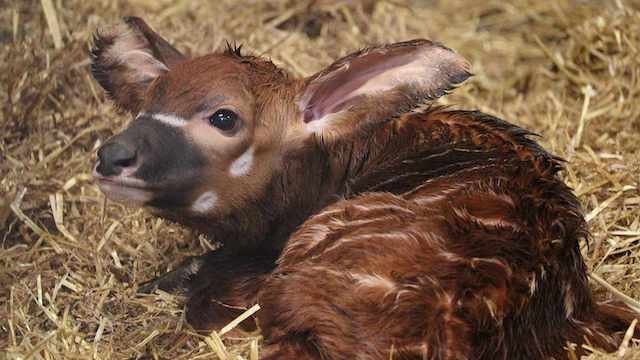
Britain Celebrates Birth of Baby Bongo Antelope–with Fewer Than 100 Left on Earth


In an English safari park, keepers celebrate the arrival of a calf from the world’s most endangered antelope species, the eastern mountain bongo.

Born October 16th, first-time mom Othaya welcomed a male calf in the late afternoon. This was the first bongo calf born at Woburn Safari Park in over 10 years.

The calf’s father, Sonny – credit, Woburn Safari Park

It’s both a significant success for the park and global conservation efforts to save this species native to Kenya.

“Othaya the bongo has successfully given birth to her first calf on Wednesday afternoon. After a long labor, the large healthy male calf was born and was soon seen standing on wobbly legs in the deep bed of straw prepared for his arrival,” stated Tom Robson, Head of Reserves at the park. “Both mom and calf are doing really well.”

Sonny, the calf’s father, joined the four-strong bongo herd at the park last November and successfully mixed with the females. He wasted no time in doing his job and displayed breeding behaviors.

“The bongo is part of a crucial breeding program and we are hoping in the future our new calf will travel to another wildlife collection and start a breeding group of his own,” Robson added.

Once the mom and baby are ready, they will rejoin the rest of the bongo herd in the African Forest exhibit, where visitors will soon have the chance to see the calf in person.

The eastern mountain bongo species has been hunted almost to extinction in the wild, and with less than 100 individuals remaining, this birth is hugely important for the species’ future.

The lowland bongo, its near-cousin, is readily dispersed across the Congo region and southern West Africa and is not endangered. The mountain bongo, with its much deeper red coat, is found only on Mount Kenya.

It has been estimated that the eastern mountain bongo may go extinct within 2 decades without appropriate protections. However, several Critically Endangered species, like the West African lion, have recovered on the continent in recent years.

WATCH the story below from Africa News… 

The good news in this story is the possible comeback of a species. Today’s JohnKu celebrates this accomplishment. I hope you have a wonderful weekend.

Comeback by John W. Howell © 2024

A turnaround is,

Always the miraculous. . .

Especially now.


Friday JohnKu – AKA – TGIF – FriYay/Goodnews

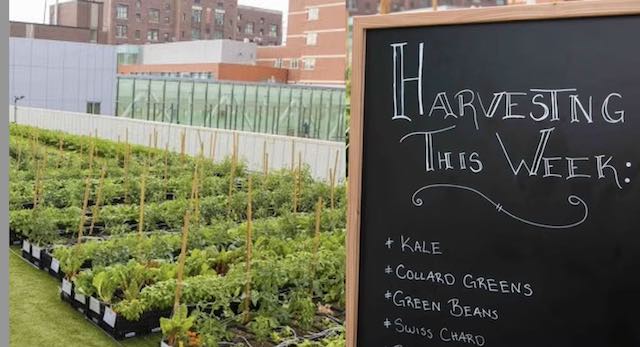
First Hospital Rooftop garden-released by Boston Medical Center

Today’s good news Comes from The Good News Network.

Boston Hospital Is Treating Food as Medicine with its Own Rooftop Garden

It’s a worldwide paradox: why is it so common for hospital food to be essentially bad for you?

Tackling the problem head-on, Boston Medical Center—already one of the greenest hospitals in the nation—has opened two extensive rooftop gardens. These gardens give patients and physicians access to fresh food while adding green space to the hospital campus.

BMC had one rooftop garden, through which it supplied fresh foods to its cafeteria and inpatient catering. Now, a second one, utilizing the ample rooftop space of the hospital campus, can also provide fresh foods to underserved communities, cementing BMC as a place of healing, whether through a shot in the arm or a vibrant kale salad.

Through a partnership with Boston Area Gleaners, fruits and vegetables cultivated in the 4,915-square-foot grow space will be distributed to local non-profits and community centers twice weekly during the growing season. This will address food insecurity and increase access to essential fresh foods across Boston.

Called the ‘Newmarket Farm,’ it triples BMC’s total grow space and quadruples the amount of produce BMC expects to grow annually. The new garden will specialize in growing vegetables, including collard greens, kale, and arugula, as well as culturally relevant crops, including Aji Dulce peppers, bok choy, and callaloo.

It will also advance BMC Health System’s commitment to sustainability. The green space reduces heat-absorbing pavement in the community and slows stormwater runoff impact, as plants collect and retain rainwater directly. The garden operates while reducing water waste through high-tech irrigation that waters the crops directly at the root.

“Our rooftop farms increase green space in our community, reduce the hospital’s carbon footprint, and strengthen at-risk local food systems. We are proud to expand fresh food availability in the local community while adding more pathways to support critical clinical programs, like the Preventive Food Pantry, in our hospital,” said David Maffeo, Senior Director of Support Services at BMC.

“The Newmarket Farm models how hospitals can further invest in the health of our communities while building environmentally resilient spaces.”

BMC has a program called Food Is Medicine, which works with a local grocer to craft labeling formats that speak directly to citizens’ disease risks and/or desire for knowledge about better nutrition.

For example, food items that may help control blood sugar are expressed on the packaging as being better for diabetics, or foods that may help lower blood pressure are labeled as potentially heart-healthy.

The city’s cultural diversity has seen the labeling materials printed in a variety of languages, from Vietnamese to Haitian-Creole.

The good news in this article is space is being put to use for the good of the community and hospital patients. Today’s JohnKu talks about clear thinking. I hope you have a lovely weekend.

Genius by John W. Howell © 2024

Who’s idea was that?

To use roofspace to feed folks . . .

Utter pure brillance.


Friday JohnKu – AKA – TGIF – Fri-Yay/Good News

Credit – John Pavart, supplied to ABC News.

Today’s good news comes from the Good News Network.

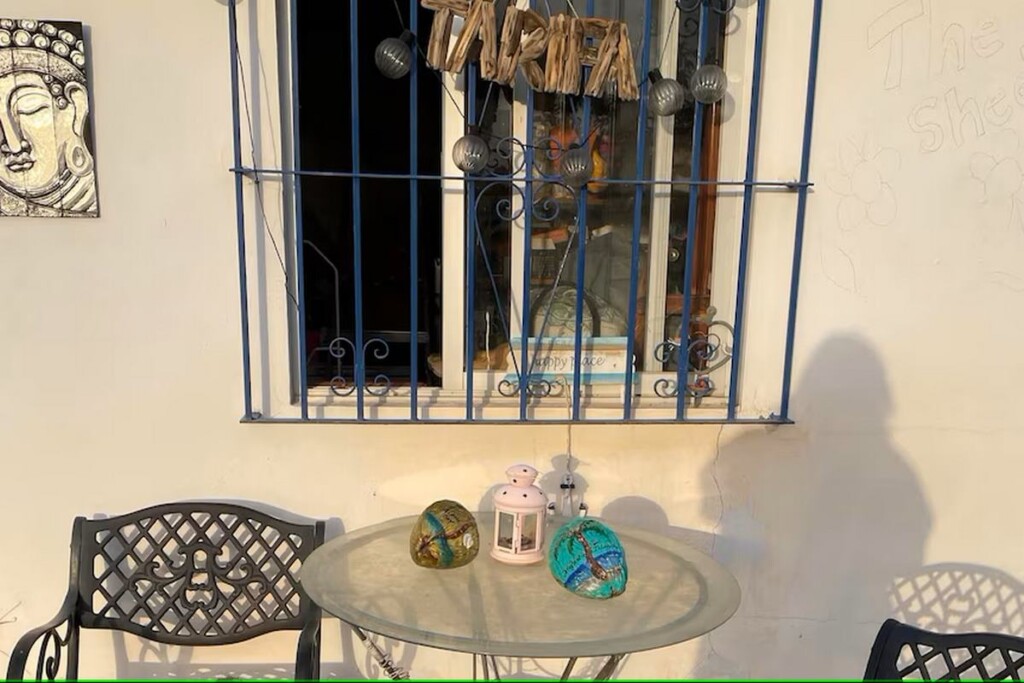
Local Artist’s Painted Coconuts Have Become a Sensation–and Are Now Found All Over the World


Artists come from all corners, in all shapes and sizes, and from every race and religion; John Pavart and his painted coconuts are a perfect example.

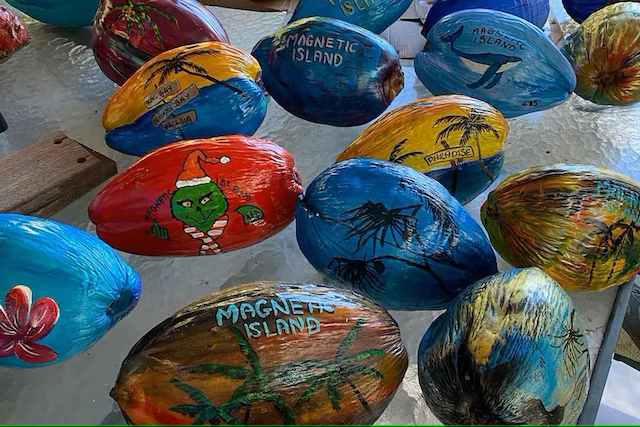
The former opal miner turned painter from Australia’s state of New South Wales has been painting coconut husks for years, leaving them around the beaches of Magnetic Island for tourists and travelers to find.

It’s become one of the chief charms of the island, even though Pavart started it on a lark.

“I just happened to have a bit of art gear on me and thought I’d pick one up and paint it,” he said, detailing the phenomenon’s remarkably simple origin. “I put it down, and someone picked it up, and they seemed to like it, so I just kept doing it.”

They often depict sea life and beachscapes, and by now, the thin “grey nomad,” a term used to describe Australians in their 50s who move around for months out of the year, believes he’s painted over 750 of them.

“Lots of people have found one, and it puts a smile on someone’s face,” Mr. Pavart told ABC News Au. “I’ve got them in Brazil, Spain, England—they’re all over the world.

Pavart’s coconuts are now so in demand he occasionally has to leave Magnetic Island for Queensland, the nearest continental shoreline, to look for more.

Some of the coconuts have made it to Spain – credit John Pavart, supplied to ABC News.

Once painted, he will leave a picture as a clue on a Facebook page he started to trigger a free treasure hunt, which routinely attracts many of the kids in the island’s town.

He joked with ABC that between himself and the rats, the beaches are completely clear of coconuts.

The good news in this story is one man is spreading cheer and goodwill for no other reason than to do it.

Today’s JohnKy talks about fun. I hope you have a great weekend.

Fun by John W. Howell © 2024

The world in chaos,

Needs a fun reason to smile . . .

Coconuts do it.

Friday JohnKu – AKA – TGIF – Fri-Yay/Good News

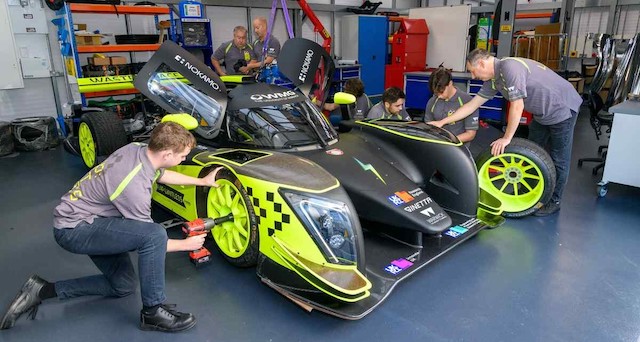
Waste2Race Le Mans Prototype race car – credit, SWNS


Today’s story comes from the Good News Network.

Hydrogen-Powered Car Fueled by Sewage Attempting to Break Land Speed Records

By Andy Corbley–

A hydrogen-powered car fueled by sewage and manufactured with various recycled materials may soon attempt to break several land speed records.

The car was built by Warwick Manufacturing Group (WMG) students at the University of Warwick. It will run off a byproduct of wastewater from the utilities company Severn Trent Water.

The Waste2Race Le Mans Prototype race car (LMP3) has been built from a selection of spare and unused parts to further its sustainable street cred in a world little-regarded for its sustainability—motorsport.

The car itself will be used to try to break one of several land speed records depending on how it performs, including the fastest standing and flying starts for both a mile and a kilometer. Its creators hope to have the car fully up and running in the next 6 to 12 months.

The parts themselves come from Ginetta, a British specialist builder of racing and sports cars based in Leeds. Among its green bits and bobs are recycled carbon fiber materials and a wing mirror made from beetroot waste.

The steering wheel is also 100% natural, while the firm ENRG Motorsport contributed a battery recovered from a crashed road car.

“These sorts of collaborations are a great example of how businesses, universities, and the endless curiosity of our students can break barriers and push the boundaries of what’s possible,” said Head of the Sustainable Materials and Manufacturing Research Group at WMG, Professor Kerry Kirwan.

“We’re incredibly proud of the ingenuity of our students and wish them all the best of luck in their land speed record attempt.”

WMG staff and students aim to complete the car in 2025 and use it to showcase a wide range of sustainable concepts being developed across the university and industry.

“We have a firm commitment to support technologies that have positive impacts on our environment, from reducing the process emissions at our sites to developing the circular economy in our region and helping partners like the University of Warwick to realize potentially game-changing new technologies like this,” Richard Walwyn, Head of Asset Intelligence & Innovation at Severn Trent Water, said in a statement.

The project, ‘Waste2Race’, comes as manufacturers such as Alpine and Toyota are exploring hydrogen as a fuel for future racing cars. BMW recently announced plans for its first hydrogen car to go on sale in 2028.

Typically, hydrogen fuels are investigated for their potential to power heavy machinery such as planes, trains, and construction equipment.

The 24 Hours of Le Mans, one of the most famous motorsport events in the world, will open the race to hydrogen fuel cell vehicles in 2026 as a way of greening the event.

The Good News in this story is that motorsport racing is getting serious about carbon emissions. Today’s JohnKu talks about carbon emissions efforts. I hope you have a wonderful weekend.

Emissions by John W. Howell © 2024

We want to reduce,

Emissions in the U.S.  . . .

Who else is on board?

Friday JohnKu – AKA – TGIF – Fri-Yay/Good News

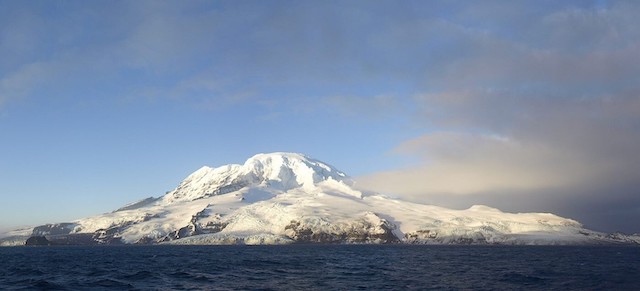
Heard Island, CC 4.0. BY-SA, Tristannew


Today’s good news comes from the Good News Network.

Huge environmental win’: Australia to Protect 52% of its Oceans, More Than Any Other Country

Over 10,000 square miles of protected area will be added to the Heard and McDonald Islands in Australia’s far southern territorial waters.

Coupled with other expansions of existing marine sanctuaries. By the end of the current administration’s term, Australia is on course to have 52% of its ocean territory protected, more than any other nation.

“This is not just a huge environmental win for Australia, it’s a huge environmental win for the world,” said Australian Environment Minister Tanya Plibersek. “This is a unique and extraordinary part of our planet. We are doing everything we can to protect it.”

Located over 2,000 miles south of the Australian continent, the Heard and McDonald Islands are about 144 square miles of volcanic terrain and represent one of the most remote places on Earth.

They are important breeding grounds for 19 bird species, including 4 species of penguins, and dozens of other bird species take refuge there. The area is a UNESCO Natural Heritage Site, a RAMSAR Wetland, and an Australian national marine sanctuary.

The quadrupling of the sanctuary borders amounts to 11.5 thousand square miles (30,000 sq km) of additional protection but represents one-tenth of the total proposed expansions of marine protected areas.

Under the current guidance, prepared by nationally sanctioned scientific surveys, the total marine protected areas will make up an area the size of Italy.

The current administration of Prime Minister Anthony Albanese is seeking to establish a new environmental protection agency, as well as set a high bar for the country’s commitments to an international philosophy of conservation governance known shorthand as “30×30” or “30 by 30,” which states that to prevent the worst effects of general environmental degradation worldwide, 30% of land and waters should be under protections. Often, the second thirty refers to a hypothetical 2030 deadline.

The good news in this article is that Australia’s leadership is taking serious steps to protect precious resources. Today’s JohnKu talks about serious environmental measures. I hope you have a terrific weekend.

The Environment by John W. Howell © 2024

Serious efforts,

Must be made to bring the world . . .

Into compliance.

Friday JohnKu – AKA – TGIF – Fri-Yay/Goodnews

Photo by Tim Mossholder on Unsplash


Today’s story comes from the Good News Network.

People Happy with Their Lives Are Less Likely to Suffer Heart Attack or Stroke

The analysis of health records of more than 120,000 adults in the UK with an average age of 57 found that people who are happy with their lives are significantly less likely to suffer a heart attack or stroke.

They were also less likely to develop coronary artery disease, suffer a heart attack or heart failure, or have a stroke than those with lower levels of well-being, according to the study published in the Journal of the American Heart Association.

Researchers suggest that a holistic approach to life that includes regular physical activities, social activities, and/or stress management techniques is an effective way to enhance personal well-being.

The study found that, compared to adults with a low sense of well-being, the overall risk of developing cardiovascular disease was 10% to 21%—being lower for people with the highest well-being scores.

Compared to adults with a low sense of well-being, people with the highest well-being scores had a 44% lower risk of coronary artery disease, a 45% lower risk of stroke, a 51% lower risk of heart failure, and a 56% lower risk of heart attack.

“Our findings support a holistic approach to health care, where enhancing a person’s mental and emotional well-being is considered an integral part of preventing heart disease and stroke,” said study senior author Professor Wen Sun of the University of Science and Technology of China.

“Health care professionals might consider including strategies to improve life satisfaction and happiness as part of routine care, such as recommending regular physical activities, social activities or stress management techniques as effective ways to enhance personal well-being.”

It is well-known that life satisfaction, or well-being, can increase mental health.

But, until now, the influence of well-being on cardiovascular health was less clear.

After reviewing questionnaires from more than 120,000 participants in the UK Biobank database, the Chinese research team assessed well-being related to satisfaction with family, friendships, health, finances, and general happiness.

They analyzed the potential connection of well-being with the development of four major cardiovascular diseases: coronary heart disease, heart attack, heart failure, and stroke.

The study also examined the impact of well-being on lifestyle factors and inflammatory markers.

“These results underscore the profound impact that emotional and psychological health can have on physical well-being, shedding light on intricate biological mechanisms that were not fully appreciated before,” Professor Sun said.

“They add to the growing body of data that psychological health can impact cardiovascular risk,” said Professor Glenn Levine of Baylor College of Medicine, who was not involved in the study, said of the findings. “Much of the focus on psychological health has understandably been on negative factors such as depression and stress.”

“This study emphasizes the importance of positive psychological health, including the more global factor of a person’s sense of well-being.”

The good news in this article is that we can control our physical health through our mental health. Today’s JohnKu talks about mind over matter. I hope you have a wonderful weekend.

The Mind by John W. Howell © 2024

Research shows the mind,

It is an effective health tool . . .

Needing care, as well.

Friday JohnKu – AKA – TGIF – Fri-Yay/Good News

credit – Guillaume Blondel, Archaeological Service of the City of Eu

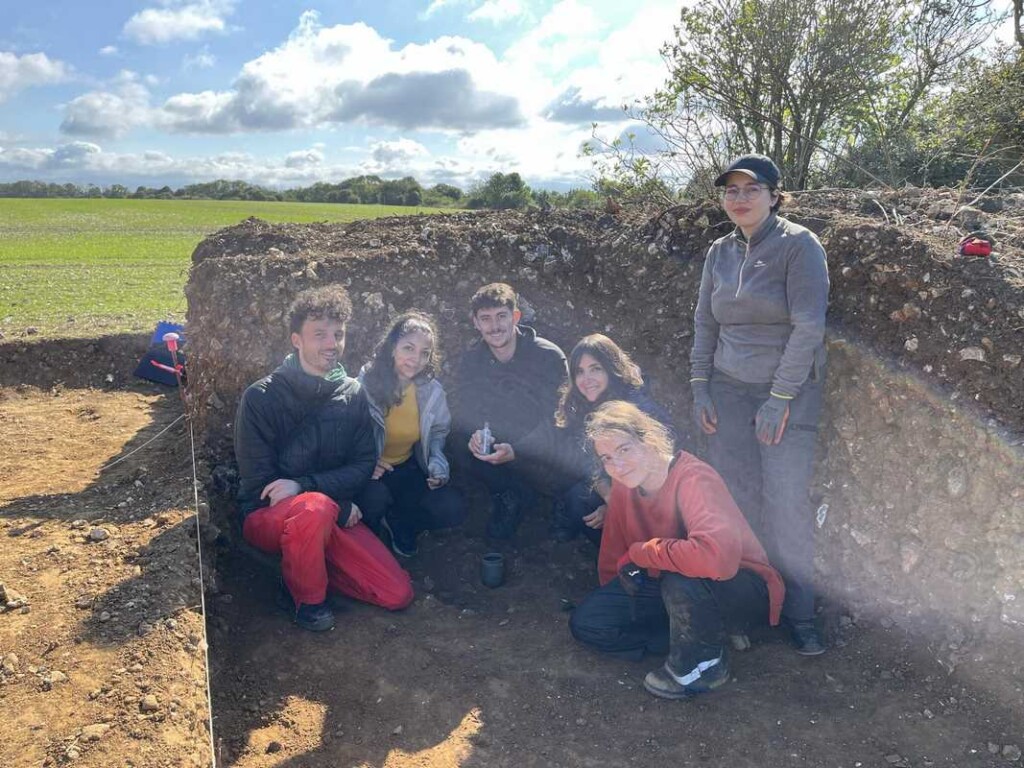
A team of student archaeologists in France was surprised while working on a site dating to Gaulic times.

The excavations, carried out under the direction of Guillaume Blondel, director of the municipal archaeological service of the city of Eu, delivered, among other things, a moving and very special testimony from the past.

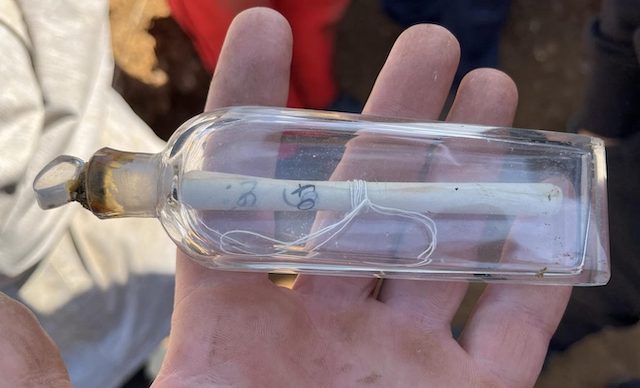
Located in a previously investigated section of the site, a message was discovered in a small glass bottle from the 19th century accompanied by two coins: a “time capsule” buried almost 200 years ago, a statement from the service read.

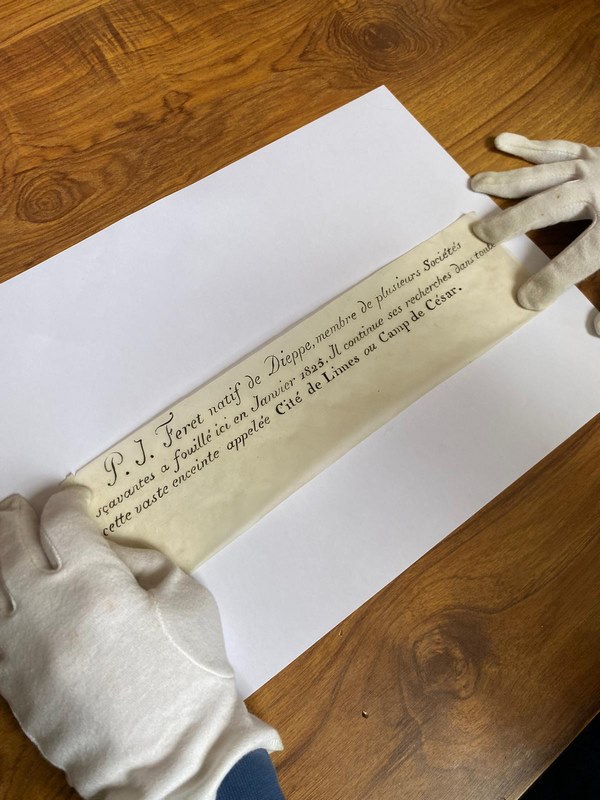
“P. J. Féret, a native of Dieppe and member of various intellectual societies, excavated here in January 1825. He continues his investigations in this vast area known as the Cité de Limes or Caesar’s Camp.”

The message in a bottle had been carefully placed in a ceramic pot dating to a much earlier century so that future archaeologists would be sure to find it.

“It was an absolutely magic moment,” Mr. Blondel told the BBC. “We knew there had been excavations here in the past, but to find this message from 200 years ago… it was a total surprise.”

credit – Guillaume Blondel, Archaeological Service of the City of Eu

“Sometimes you see these time capsules left behind by carpenters when they build houses. But it’s infrequent in archaeology. Most archaeologists prefer to think that there won’t be anyone coming after them because they’ve done all the work!”

Local archives indeed record P. J. Féret in the area as a historical excavator when the letter was dated.

credit – Guillaume Blondel, Archaeological Service of the City of Eu

The work was funded and carried out in partnership with the Regional Archaeology Service to preserve archaeological sites endangered by the coastline’s decline. Already a part of the ‘oppidum’ or fortified Gaulic camp, has fallen away with the crumbling of the coastal hillside on which it was perched.

The Gauls were a series of interconnected feudal (at best) and tribal (at worst) societies that shared societal, cultural, and warrior practices and who inhabited most of central and western Europe during the time of the Roman Republic.

Gaius Julius Caesar waged a campaign to pacify Gaul, hence the name “Caesar’s Camp,” which brought Spain, France, and Belgium under Roman control.

The good news in this story is that the past has been preserved to be studied today. Today’s JohnKu talks about history. I hope you have a wonderful weekend.

History by John W. Howell © 2024

The past can teach us,

Many lessons about now . . .

If we want to learn.

Friday JohnKu – AKA – TGIF – Fri-Yay/Good News

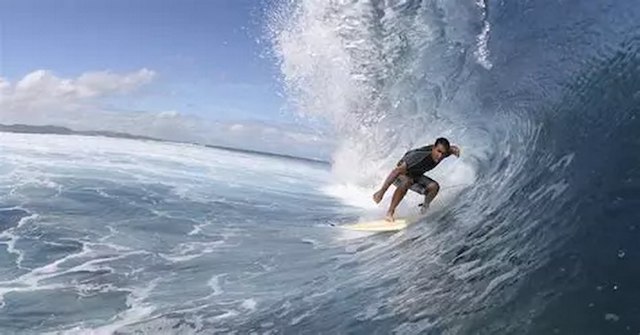
Study author and big wave surfer Scott Atkinson doing what he loves – Conservation International, released.

Today’s good news comes from the Good News Network.

Surfers On Board Climate Fight After Big Wave Areas Found to be Significant Carbon Stores

Nearly 90 million metric tons of planet-warming carbon have been found surrounding surf breaks worldwide, making these coastal locations essential climate allies and ideal locations for conservation efforts.

The news came from a groundbreaking study by conservationists examining forests, mangroves, and marshes around surf breaks—submerged features like rocks or reefs that create great surfing areas.

This is all the better for surfers themselves. Protecting these coastal ecosystems from development means more space and more waves for them.

Researchers analyzed more than 4,800 popular surf spots across 113 countries for the study. They found that immediately surrounding areas (within 0.6 miles or 1 kilometer of the waves) store over 88 million tons of irrecoverable carbon. That’s roughly equivalent to the annual emissions from 77 million gas-powered cars.

When the surrounding area is expanded to 3 kilometers or 1.8 miles, the amount of carbon stored in the ecosystem doubles to 191.7 million tons. According to the most up-to-date models, irrecoverable carbon refers to the carbon-rich lands humanity must protect to prevent the worst impacts of climate change.

“This research demonstrates the enormous role that protection of surf breaks and surrounding coastal areas can have in our global fight to reverse biodiversity loss and combat climate change,” said Scott Atkinson, a surfer, senior director of surf conservation at Conservation International, and an author of the study.

“Our study shows where we must now focus on legally protecting these areas. Surfers worldwide are fantastic allies for efforts like this—they love the ocean, know it is threatened, and are extremely motivated to protect it. They’ve been ‘on board,’ so to speak, helping to lead the establishment of all the Surf Protected Areas we’ve partnered to create.”

To date, Conservation International, which partners with surfers from the Save the Waves Coalition, has contributed to the establishment of 30 Surf-Protected Areas in Indonesia, Costa Rica, and Peru. These Areas are centered on surf breaks and seek to protect their larger surrounding ecosystems, including coastal forests, mangroves, beaches, seagrass, coral reefs, and the waves themselves.

Over half of these (23 Surf Protected Areas) have been established in Indonesia, which was used in the paper as a case study in creating an effective network of community-based protections. Collectively, the 23 locations form Indonesia’s initial Surf Protected Areas Network, covering more than 148,000 acres. This network can be expanded to hundreds of world-class surf sites across the incredibly biodiverse and carbon-rich country.

Atkinson also highlighted the positive impacts of the community-based Surf Protected Areas on Morotai Island in Indonesia, which is the focus of the paper’s case study.

“They protect precious marine and coastal ecosystems and strengthen community bonds and cultural heritage. Local people on Morotai have surfed on handmade wooden boards since at least World War II and have a strong surf culture,” he said.

“Additionally, local surf and conservation-related livelihoods are flourishing, with eco-friendly tourism and sustainable fishing practices becoming the norm. The community’s involvement in conservation efforts has fostered a sense of pride and ownership, showcasing the power of grassroots initiatives in achieving lasting environmental and social benefits.”

The good news in this story is that vital areas of conservation are being protected. Today’s JohnKu talks about the need for protection. I hope you have a wonderful weekend.

Protection by John W. Howell © 2024

Stewards of the Earth,

Need to advocate harder . . .

For sensitive spots.