We are heading to Lakeway City Hall again to view a colorful display of Char Michelson’s artwork. We are catered by Hestia of Austin. Our entertainment is Chicago.
So let’s go
Here’s information on the artist.
A shot of the gallery.
None of the paintings is titled, so we will enjoy the work and maybe make up our own titles.
Lovely monuments in sandstone.
Flowers, pitcher, table, and wallpaper.
A rural scene.
Rolling countryside.
A hill that just begs for climbing.
A lovely vase filled with joy.
It is now time to relax and enjoy the music and food. I hope you have an easy week.
The words on the coffee maker’s touchscreen are a jumble of disassociated letters. It appears as if the machine is having some kind of breakdown. My only thought is to reboot it and see if there is any improvement. The plug is pulled, and an almost imperceptible sigh is released deep inside the black box. Inserting the plug in the outlet brings the machine back to life. The words “Thank you” pop onto the screen briefly before the menu appears normally.
Being reminded of Gilda Radner’s SNL bit about Rosanne Rosanna Danna’s mantra of, “If it’s not one thing, it’s another. It’s always something,” the eight-ounce coffee selection is made. The first sip is heaven and a reminder to call the machine feelings doctor and get an appointment for an examination. The second sip is covered by the Westminster Chime cacophony of the doorbell. A quick toss of a chew toy into the soundproof room and a slam of the door returns the room to silence from the bone-cracking barking of Tempeste and Twiggy.
A look at the porch camera screen confirms that a person looking very much like Mike Tyson is glaring at the camera. “What do you want?” is the message. “Delivery for J. Howell came the answer.” “Just leave it.” A low growl through the speaker convinced me I had better open the door. The security system shutdown process has begun. The SWAT team needs to be put on standby. A quick text to the leader confirms that status. Also, the flight of A-10 Warthogs must be diverted. Another call to the commander puts that worry to rest. The SEAL team needs to be called off, and a call to the leader makes that possible. The control panel makes the shutdown of the security system process simpler. The boiling oil vats are put on standby, the turret mortars disengaged, the Trebuchet on safety, the concertina wire rolled, the Claymore mines reset, the tower Gatling guns on safety, the moat net dropped, the alligators fed, the IEDs and shoulder-held rockets put away. The locks on the door are thrown. And the door opened.
“You, Howell?” “Yes.” “Sign here or I will be forced to squeeze your head like a ripe cantaloupe.”
The letter is from Linda Hill, and after I sign and make a crack about great customer service, the guy turns to leave. “What, no tip?” he says. “Cross only on green,” is my retort. I slam the door and throw the locks. I open the letter, and it reads.
Your Friday prompt for Stream of Consciousness Saturday is “jumble.” Use it any way you’d like. Enjoy!
“Nope. History was a jumble of nothing going on. The only thing reported 100 years ago was a baseball game between the Ku Klux Klan of Kansas and a black semi-pro team.”
“Might have been interesting. Who won?”
“The black team.”
“Put a hole in superiority claims, I guess.”
“For sure.”
“Speaking of superior.”
“Let me guess. Time for VooDoo Rangers. Call Uber.”
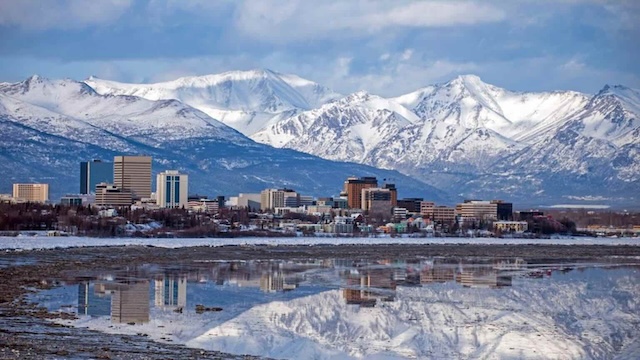
A Frozen River in Alaska Could Hold the Key to America’s Next Energy Breakthrough
Move Over Solar and Wind—There’s a New Renewable Power Source Flowing Under the Ice
For years, the United States has been chasing the dream of energy independence. From offshore drilling to wind farms and desert solar arrays, every strategy has aimed to reduce reliance on fossil fuels and foreign oil. But what if the future of clean, constant energy isn’t in the sky—or under the earth—but under frozen rivers in Alaska?
Yes, you read that right. Beneath the ice-covered surface of rivers like the Yukon, water flows year-round. And with it, an invisible, powerful current of renewable hydrokinetic energy—an untapped resource that could reshape how remote communities, and possibly the nation, power their lives.
What Is Hydrokinetic Energy—and Why Should You Care?
Unlike dams that flood valleys or wind farms that depend on gusty weather, hydrokinetic energy captures the natural flow of water without disrupting the environment. Special turbines are placed underwater, spinning silently as rivers flow past them—even when those rivers are sealed under ice for months at a time.
The star of this story? A new technology called the Reactive Reversible Blade Turbine (RRBT), which can generate electricity in slow-moving, ice-covered rivers. Developed with support from the University of Alaska Fairbanks (UAF) and backed by a $1.5 million U.S. Department of Energy grant, these turbines are being tested in Alaska’s Tanana River right now.
Why Frozen Rivers Are the Perfect Power Plants
Rivers like the Yukon continue to flow beneath thick layers of ice, even during brutal Alaskan winters. That means they offer something solar and wind can’t: constant, year-round power. In regions where the sun disappears for weeks and the wind dies down, this uninterrupted energy flow is a game-changer.
And it’s not just theoretical. According to UAF research, U.S. rivers could generate more than 1,100 terawatt-hours (TWh) of renewable electricity each year—roughly a third of America’s total electricity consumption. That’s:
Nearly double the output of all U.S. solar panels combined
A potential lifeline for off-grid and Indigenous communities still dependent on costly, imported diesel fuel
No Pollution. No Pipelines. No Grid Required.
Hydrokinetic power is especially suited for remote locations. Many Alaskan villages can’t access traditional energy infrastructure. Instead, they rely on diesel generators that are expensive to fuel and maintain. These new turbines offer a cleaner, quieter alternative that can be installed and managed locally, creating new jobs and slashing energy costs.
And unlike other solutions, this one doesn’t need a grid connection. That’s a big deal for communities that are miles from the nearest power line.
Who’s Behind the Innovation?
This isn’t a tech unicorn or billion-dollar startup. The work is being led by public institutions and research labs, including:
University of Alaska Fairbanks (UAF)
Alaska Center for Energy and Power (ACEP)
Creek Tides Energy and Power, a turbine design firm
Southwest Research Institute
Pacific Marine Energy Center, part of the Department of Energy
Other parts of the world are already harnessing hydrokinetic power. Scotland’s MeyGen tidal array is supplying homes with clean electricity. In Canada and parts of New York, underwater turbines are quietly producing energy without a sound.
But Alaska, with its sprawling river systems and challenging winters, may be the ultimate proving ground.
The Quiet Energy Revolution Has Already Begun
The energy future we’ve been waiting for may not come from deep mines or solar megaprojects. It might be flowing just beneath our feet—silent, steady, and under a sheet of ice.
And unlike solar panels or wind turbines, this power doesn’t shut down when the sky clouds over or the wind dies. It just keeps moving. Because rivers don’t stop.
Why This Matters—Right Now
As America confronts rising energy costs, climate change, and unreliable power grids, we need solutions that are not only clean but also constant. Hydrokinetic river energy checks both boxes. It’s renewable, reliable, and ready to scale.
So maybe it’s time we stop chasing what’s buried deep underground and start listening to the quiet current beneath the ice.
Alaska’s rivers might just carry the future of American energy.
The good news in this article is that folks are working on another alternative to fossil fuels that don’t have the downside carbon costs of other alternative methods. Today’s JohnKu talks about alternatives. I hope you have a beautiful weekend.
This post ran in 2014 and my last visit to the DMV validated that the information is still useful. My thanks to Marie Ann Bailey who co-authored this post back then.
Top Ten Things Not to Do When Spending Time in the DMV
10 When spending time in the DMV, do not show any sign of impatience. If you do, at best, the clerks will slow service just to see you sweat. At worst, you will need a defibrillator to restart your heart after you go apoplectic from missing your turn because you forgot to take a number.
9 When spending time in the DMV, make sure all your paperwork is complete before your number is called. If you don’t, at best, the clerks will have a good laugh sending you back to the end of the queue. At worst, you will be tempted to say something like “Really?” in a heavily sarcastic voice which will result in you being banned from the DMV for the day.
8 When spending time in the DMV, make certain you do not leave the room until your number is called. If you do, at best, your number will be called the second you leave and you’ll rush back in time. At worst, your number will be called and then the next person served. You will need to wait until your number comes up again in a week.
7 When spending time in the DMV, be careful on what and how much you drink. If you don’t, at best, you will experience number eight while visiting the restroom. At worst, you will try to gut it out and the clerks will be able to tell you are in a dire situation and prolong your agony along the lines of number ten.
6 When spending time in the DMV, do not arrive during the hours of eleven and two. If you do, at best, you will be subject to the lunch hour slowdown and have a longer wait. At worst, you will be caught in a never-ending situation with only one clerk at a time working while the rest go out for drinks and to celebrate the hundredth slow down heart attack of the month.
5 When spending time in the DMV, make sure you bring something to read other than your phone, kindle or tablet. If you don’t, at best, you will be forced to ask your neighbor for something to read since the DMV is a digital dead zone. At worst, you will be forced to watch the slowly moving clerks for hours on end who appear to be sharing the same “look at this” joke and working two and three together on one problem.
4 When spending time in the DMV, do not make eye contact with any humans in the room. If you do, at best, you will be asked to help with someone’s paperwork. At worst, you’ll have to hear some sad story of why this person needs to get back to work to support the sick family and a request to trade places which you will find hard to turn down.
3 When spending time in the DMV, do not talk to any human beings in the room. If you do, at best, you will need to endure the endless complaining on the slowness of the system. At worst, you may find yourself in the company of someone who is getting ready to crack under the DMV waiting pressure.
2 When spending time in the DMV, do not dress in your finest. If you do, at best, you will be subject to endless requests for “just a dollar so I can get my license.” At worst, you might be asked to hand over all your money by a serious looking gent who swears he has a gun in his pocket.
1 When spending time in the DMV, do not attempt to numb your pain with any kind of substance, controlled or otherwise. If you do, at best, you might fall asleep and miss the call of your number. At worst, you might end up on the six and eleven o’clock news leading a riot in the DMV which seemed like a good idea at the time you were leading it.
With brain pounding and mouth drooling my coffee drink is finally ready. A sip of the life affirming elixir is interrupted by the invasive sound of Westminster chimes signalling some idiot can’t read the sign above the doorbell that reqads in large letters DO NOT RING THE DOORBELL. Twiggy and Tempeste have gone into stage two barking and a Benny bone has to be tossed into the soundproof room. Having tossed the bone and slammed to door behind the decibel bending fur sisters peace once again returns to the manor. Checking the security camera feed there is no one to be seen on the porch. “What do you want?” is my command from the intercom. “Message from Linda Hill,” is the reply. “Just leave it.”
After some sniveling and expressed fear of losing a deliver job the security system shut down process is begun. The SWAT team needs to be put on standby. A quick text to the leader confirms that status. Also, the flight of A-10 Warthogs must be diverted. Another call to the commander puts that worry to rest. The SEAL team needs to be called off and a call to the leader makes that possible. The control panel makes the shutdown of the security system process simpler. The boiling oil vats are put on standby, the turret mortars disengaged, the Trebuchet on safety, the concertina wire rolled, the Claymore mines reset, the tower Gatling guns on safety, the moat net dropped, the alligators fed, the IEDs and shoulder-held rockets put away. The locks on the door are thrown.
Standing there is a character that looks very much like Daffy Duck. He has a note in one hand and the other looks like he is expecting a tip. Taking the note and offering as a tip to “Watch out for black holes,” the door is slammed. The security system shows the duck sticking his tongue out as he backs down the drive. I reengage the system and open the note. It reads: Your Friday prompt for Stream of Consciousness Saturday is “drink.” Use it as a noun or a verb, use it any way you’d like. Have fun
Breakthrough at Texas University as Researchers See Plant Extracts Remove Microplastics From Water
Researchers from Tarleton State University in Texas have discovered that plant-based extracts, particularly from okra, fenugreek, tamarind, and cactus, can significantly remove microplastics from wastewater.
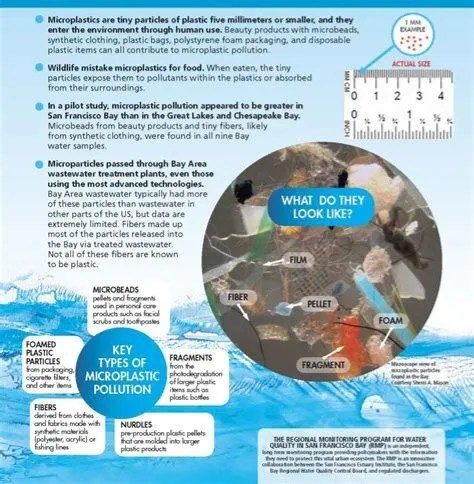
In San Francisco Bay
Some plastics are made to be small. These are known as primary microplastics, like the microbeads intentionally added to face washes and other personal care products. But most microplastics come from the slow disintegration of larger plastic products, including plastic wrap, takeaway containers, polyester clothes, tires, paint, and artificial turf. These are known as secondary microplastics.
Exposure to microplastics can also occur through inhaled air. Data from animal studies have shown that once absorbed, plastic micro- and nanoparticles can distribute to the liver, spleen, heart, lungs, thymus, reproductive organs, kidneys, and even the brain (crosses the blood–brain barrier).
Key highlights:
Okra and fenugreek mucilage (plant-based goo) work by acting as a natural coagulant.
When combined in the correct ratios, they can remove up to 90% of microplastics from water.
Unlike synthetic coagulants (like polyacrylamide), these natural alternatives are non-toxic and environmentally friendly.
The study is part of an effort to find sustainable solutions to the growing problem of microplastic contamination in water bodies.
The extracts are especially effective when removing microplastics from the ocean and freshwater sources.
The lead researcher, Dr. Rajani Srinivasan, emphasized that this approach could make wastewater treatment safer and more eco-friendly, especially in areas lacking access to expensive treatment technology.
Meanwhile, common chemicals found in plastic products—especially phthalates and BPA—have been linked to a significantly increased risk of heart disease.
These chemicals are widely used in items like water bottles, food packaging, and toys. According to research, such exposure may contribute to over 350,000 deaths globally each year due to cardiovascular complications.
Phthalates are known to disrupt hormones, raise blood pressure, and increase the risk of conditions like diabetes and heart failure.
Scientists are urging more regulation and awareness as plastic pollution continues to impact public health.
The good news in this story is that there is continued concentration on solving the single-use plastic problem. Today’s JohnKu talks about hope. I wish you a very peaceful weekend.
Today I opened Circumstances of Childhood randomly to page 229. With eyes closed I pointed to the page. My finger fell closest to the word “shower.” That is our prompt.