
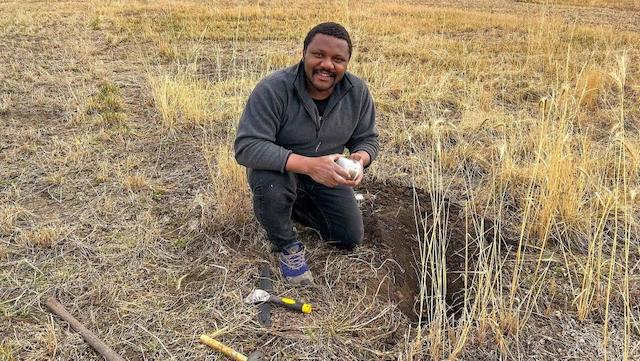
Research team makes surprising discovery after planting multiple crops in the same field: ‘It’s a promising combination’
Today’s good news comes from The Cool Down newsletter. Thank you, Noelle Granger, for spotting it and making me aware.
Research team makes surprising discovery after planting multiple crops in the same field: ‘It’s a promising combination.’
A new study from the University of Alberta points to an exciting way farmers can grow better crops while spending less on fertilizer.
The secret? Planting certain grains and legumes side by side in the same fields.
Researchers from the university planted two perennial grains—rye and wheatgrass—alongside three legumes—alfalfa, white clover, and sainfoin. According to the results published in the Journal of Animal Science, this combination produced high-quality crops that could more effectively feed livestock.
“The legumes naturally supply nitrogen to the soil, improve the organic matter, and improve the forage quality for livestock. At the same time, perennial cereal plants have deep root systems, which helps sequester more carbon and makes them more drought-resistant than annual crops, which is important in Alberta’s dry climate,” Cosmas Ugwu, who led the study, said in a post by the university.
“It’s a promising combination that can potentially help crop performance, reduce dependence on synthetic fertilizers, lower costs for farmers, and promote environmental sustainability,” Ugwu added.
This planting method offers several benefits for farmers. The combined crops are more drought-resistant and provide better nutrition for cattle, making them easier to digest.
The research team tested two planting patterns across Alberta. Both methods worked well, but planting in alternate rows yielded slightly better results, producing about 5% more crops in the first year of harvest in 2023.
This farming approach could help build a more sustainable food system. When farmers spend less on fertilizer, food prices can stay lower. Plus, reducing synthetic fertilizer use helps clean our air and water, creating healthier communities.
The research team continues to study how this planting method affects soil health and carbon storage. It’s working closely with farmers to help them adopt these practices, which could start showing up in fields across North America in the coming growing seasons.
The good news in this story is that more effort is being put into finding more natural ways of growing healthy crops. Today’s JohnKu talks about farming. I hope you have a beautiful weekend.
Crops by John W. Howell © 2024
We need to feed all,
But there seems to be some room. . .
For more natural ways.
Thanks for the story, Noelle.























 Fiction Favorites
Very cool. Makes sense too since different plants grow together in nature.
LikeLiked by 1 person
I agree. Crop rotation has been a thing since the dust bowl days so I think this is one more step.
LikeLiked by 1 person
This was such a nice story, John. A healthy and better way to do things. I hope you have a great weekend 😊
LikeLiked by 1 person
Thank you, Laura. I hope you have a peaceful weekend. 😊
LikeLike
This is so cool. I wonder if anyone else is looking into similar combos.
LikeLiked by 1 person
I think they should for sure.
LikeLike
Outstanding!
LikeLiked by 1 person
My thought too, GP. Thanks
LikeLiked by 1 person
Wonderful that this research is being done. It reminds me of listening to the audio version of “Braiding Sweetgrass” by Robin Wall Kimmerer, in which she talked about planting the “three sisters” of corn, beans, and squash.
LikeLiked by 1 person
I have to look that up for sure. Thanks, Dave.
LikeLiked by 1 person
As always, you’re cool, John! 😊 I mentioned you, River Dixon, and some other indie authors from WordPress on Substack today 🙂 I hope you gain more readers soon! It’s always fun to engage with new readers. 🎢✨🫖🐕 ps. When ppl asks there about good books I always mention those I read (+ indie) 🤓
LikeLiked by 1 person
Wow thank you, Ray. You are the best. 🤗
LikeLike
That’s a good result of research. I’ve heard of crop rotation, but not different crops in the same field. Medium red clover produces a lot of nitrogen for the soil.
LikeLiked by 1 person
I’m like you. Rotation is common. Crops in the same field not so much. Thanks, Tim
LikeLiked by 1 person
Farmers are going to save this world!
LikeLiked by 1 person
One crop at a time. Thanks, Noelle
LikeLiked by 1 person
Who’d have thought? I guess it makes sense, seeing as how different plants grow alongside one another in the wild, but what a cool idea, planting them that way! Farmers have to be innovators, don’t they?
LikeLiked by 1 person
It helps if someone would research possibilities too.
LikeLiked by 1 person
I love it when natural ways are used over chemical solutions. Thanks for sharing, John and thanks to Noelle for spotting this!
LikeLiked by 1 person
I agree, Jan. Thanks for the nice words.
LikeLiked by 1 person
Very exciting news!!
LikeLiked by 1 person
It is, Liz. Thanks.
LikeLiked by 1 person
You’re welcome, John.
LikeLiked by 1 person
😊
LikeLiked by 1 person
This is brilliant news, John. Now, how to apply this to other farming so we can reduce not only fertilizer but pesticides, too!
Happy Friday!
LikeLiked by 1 person
Happy Friday to you. I agree we need to take it several steps further.
LikeLiked by 1 person
Absolutely!
LikeLiked by 1 person
😁
LikeLiked by 1 person
LOVE innovative thinking like this which is increasingly becoming more important with each year.
LikeLiked by 1 person
I think we have to get better at the stuff we need for life.
LikeLiked by 1 person
Good to read that this has worked. What a difference it can make.
LikeLiked by 1 person
I agree Esther. We need to find more too.
LikeLiked by 1 person
This sounds like a win for everyone, John. Have a great weekend!
LikeLiked by 1 person
Thank you Teri. Have a great one yourself.
LikeLiked by 1 person
Wonderful news all around. The Native Americans called the combination of beans, corn, and squash “the three sisters” and were growing food in the arid canyons of NM for centuries. I love it when the old wisdom of growing diverse crops together comes around and provides solutions for current problems. Great post, John.
LikeLiked by 2 people
Thank you, Diana. The three sisters belong in modern times.
LikeLiked by 1 person
I think so too. We’ve discovered that mono-crop agriculture depletes the soil of water and nutrients until it can’t grow anything at all. Big agro won’t like diversifying but in the long run it may help them too.
LikeLiked by 1 person
Gotta think of the long run
LikeLiked by 1 person
Good idea! Can work on big and small scale 🙂
LikeLiked by 1 person
I think so too. Thanks, Denise.
LikeLike
Such a wonderful story, John! So much good news to celebrate when we look for it! ❣️
LikeLiked by 1 person
So true, Cindy. That’s why I hunt them down each Friday.
LikeLike
I had read a similar story of a farmer doing the same thing. Makes sense. There is hope for the future, TGIF to you, John. It has been cold here for us but no freezing temps so far.
LikeLiked by 1 person
Thank you, Jo. Cold here too.
LikeLike
It’s fascinating when research turns into action, as it has here. And when it’s something that will benefit the whole chain, even better.
Great story Boss
LikeLiked by 1 person
Thanks, pilgrim
LikeLiked by 1 person
Well done!
LikeLiked by 1 person
Thanks, Annette
LikeLiked by 1 person
Wonder how it is harvested.
LikeLiked by 1 person
I wondered the same thing.
LikeLike
It is a great discovery and good news. I should say it is not the first time I learn about crop mixing making for more sustainable growing. The Native Americans often mixed three crops, they called it the three sisters, which are able to provide most of the nutrition we need, corn (carbohydrate), beans(protein), squash/pumpkin(vitamins). In addition, these three crops also sustain each other and keep the soil in good shape instead of draining it. For example, beans create nitrates/ammonia (fertilizers) and squash protects (insecticide).
LikeLiked by 1 person
Yup
LikeLiked by 1 person
Yes a great combo.
LikeLiked by 1 person
I like to see that agriculture continues to look at new and improved ways to improve their harvest. My daughter-in-law’s father is a corn breeder, always looking for new strands.
LikeLiked by 1 person
New discoveries are great. Thanks, Pete.
LikeLiked by 1 person
Good story, John. I’ve heard of growing different crops together as a way of controlling pests. I’m glad to hear there’s other good reasons too.
LikeLiked by 1 person
It would be nice if the method got more use. 😊
LikeLiked by 1 person
Great post, John. I’ve followed this practice a bit (probably because of my farming family), and it makes so much sense. Thank you for sharing! Loved your JohnKu as well! 😊
LikeLiked by 1 person
When I had a garden back before humans walked upright, I would plant beans and corn together and use marigolds as insect repellent. Had terrific crops. Thanks, Gwen
LikeLiked by 1 person
When it comes to feeding people in healthier ways, for us and the environment, it doesn’t get much better than that! Thank for the good news share!
LikeLiked by 1 person
Thank you for reading.
LikeLiked by 1 person
Great news. Reminds me of the traditional plantings of indigenous people – The Three Sisters: corn, beans and squash, that support one another.
LikeLiked by 1 person
Very true, Rebecca. I think the traditional ways may be making a comeback. 😊
LikeLike
This reminds me of the Native Americans teaching the Pilgrims how to grow ‘the three sisters’.
LikeLiked by 1 person
Yes. The three sisters are a good example of how to do it
LikeLiked by 1 person
Yes!
LikeLiked by 1 person
A nice haiku, John, and an interesting post.
LikeLiked by 1 person
Thanks Robbie. 😊
LikeLike
My pleasure
LikeLiked by 1 person
😊
LikeLike
No kidding? That’s terrific. Humans have a tendency to find solutions to problems. That’s why I don’t worry too much.
LikeLiked by 1 person
Yes you are not to worry. Just hold humanity’s beer.
LikeLiked by 1 person
LOL!
LikeLiked by 1 person
😁
LikeLike
Hmmm… people used this method in the past. It’s time to revive it. Great news indeed, dear John!👍🥳🍤🍤🍤😁
LikeLiked by 1 person
Yes we are lucky to have above freezing temperatures.
LikeLiked by 1 person
👍👍👍🥳
LikeLiked by 1 person
😁
LikeLiked by 1 person