Today’s Good News story comes from Facebook. Thanks to Tom Okragly for bringing it to my attention.
A 16-YEAR-OLD MEXICAN STUDENT HAS DEVELOPED A FIRE EXTINGUISHER THAT USES SOUND INSTEAD OF WATER OR CHEMICALS
.
Ángela Karime Venegas Hernández, a 16-year-old student at CETIS 78 in Altamira, Tamaulipas, Mexico, developed an experimental device called “Vortex Tech.” According to the report, the prototype uses a 12-volt battery, a frequency generator, and a speaker that produces 30 pulses per second. The resulting vibrations reportedly disrupt the conditions around a flame by pushing oxygen away.
In tests described by the report, the device extinguished flames in approximately 5–8 seconds. Ángela reportedly tested it more than 100 times, and the article says it worked on wood, flammable liquids, cooking grease, and electronic equipment. The reported advantage is that the method produces no water or chemical residue.
What started as a school experiment has now become Vortex Tech, with Ángela reportedly selected to represent Mexico at an international fair. The concept uses acoustic energy to interfere with combustion rather than relying on conventional extinguishing agents.
Important: These performance claims come from the source report and should not be interpreted as evidence that the prototype can replace certified commercial fire extinguishers or handle large fires. Independent testing and technical validation would be needed before anyone could consider such a system for real-world fire safety.
Could sound waves become another tool for fighting fires in the future?
A bit of historical context: the underlying technology isn’t entirely new. DARPA ( Defense Advanced Research Projects Agency) demonstrated acoustic fire suppression back in 2012 under its **Instant Fire Suppression** program, and the U.S. Army Research Laboratory later supported additional research into using acoustics to extinguish flames. George Mason University students also demonstrated a handheld version in 2015.
The good news here is seeing a 16-year-old take an established scientific principle and engineer her own functional approach. That deserves recognition. Today’s JohnKu talks about original discovery. I hope you have a lovely weekend.
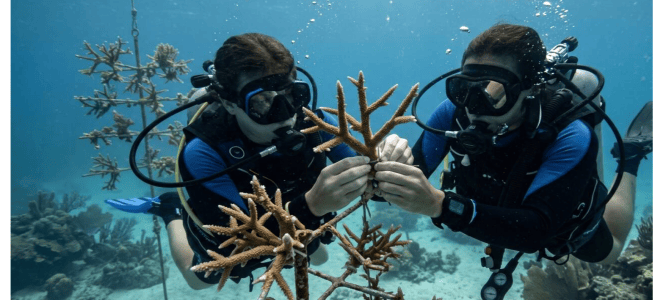
An AI-generated image of coral restoration workers growing staghorn coral fragments on underwater “coral trees” in a nursery in the Florida Keys. Credits – Google Gemini
Around 2000, a Florida tropical-fish collector hung rescued coral fragments from underwater “trees”; the small nursery grew into a reef-restoration network
Both the deterioration of the Florida Keys reef and the response to it took time. Staghorn and elkhorn corals grew so numerous throughout the Florida Reef Tract for decades that divers reported swimming through underwater thickets. These corals were dying back because of disease, bleaching, and storm damage, and in some places their populations had dropped by almost 90%. It took more than good intentions to mend that kind of loss.
The breakthrough grew from a father-daughter 4-H project that built on Nedimyer’s years of experience working with marine life and aquaculture. A family project among the reef fish. Ken Nedimyer is a tropical fish collector and aquaculture operator based in the Florida Keys. He’s been diving those reefs since he was a kid and has witnessed them change for the worse over the years. Around 2000, when his daughter had a 4-H Youth Development project, Nedimyer used his marine-life experience to help her experiment with coral propagation. Together, they began growing staghorn coral fragments that had broken from nearby reefs. They began propagating staghorn coral fragments, keeping pieces that had broken from nearby reefs alive rather than leaving them to die on the seafloor.
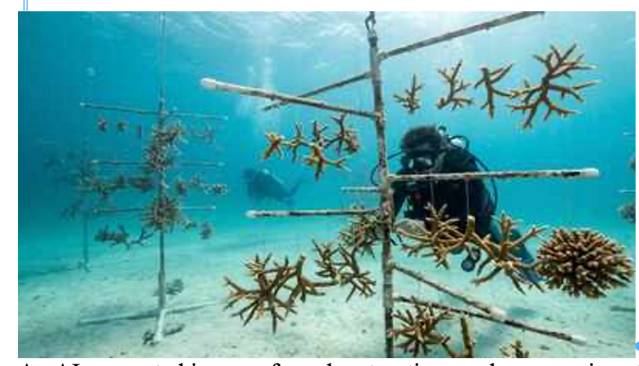
The small experiment went well enough that Nedimyer donated the propagated staghorn to the Florida Keys National Marine Sanctuary for restoration use, and a grant from The Nature Conservancy soon followed, allowing him to expand what had started out as a backyard hobby into something closer to a proper coral nursery. That early achievement posed a specific question. If a few saved bits could grow this nicely by chance, how many more could grow on purpose, and how quickly? Building coral tree nurseries that outgrow the ocean floor. In 2007, Nedimyer founded the Coral Restoration Foundation in Key Largo, where his team developed offshore nurseries that suspended coral fragments from structures known as coral trees rather than growing them directly on the seafloor.
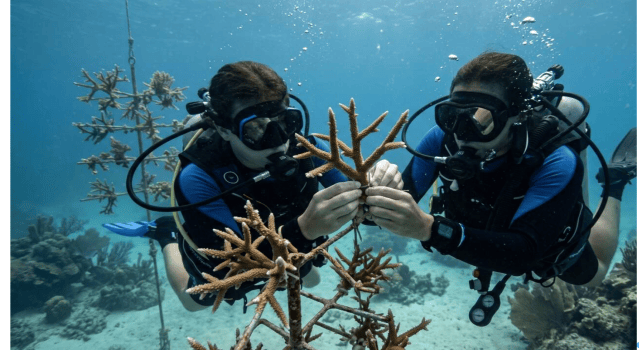
Branching corals developed in this fashion and grew far faster than those left on the reef. Corals reportedly grew from a finger-sized fragment to a basketball-sized colony in six to nine months. At that point, divers would cut parts free and reattach them to neighboring deteriorated reef sites. That speed changed the economics of reef coral regrowth. Rather than waiting years for a few colonies to recover on their own, restoration teams could grow corals in offshore nurseries and then outplant them onto degraded reefs once they were large enough.
A study tracking Coral Restoration Foundation outplanting projects between 2007 and 2015 recorded survivorship and growth across 2,419 coral colonies placed on reefs throughout the sanctuary. It found that survivorship among the longest-monitored cohorts ranged from as low as 4 percent to as high as 89 percent, depending on the site and conditions. That range mattered because it gave restoration groups in the Caribbean and Pacific real-world evidence to build on instead of guesswork about which reef sites and outplanting techniques worked best.
An AI-generated image shows a diver securing a staghorn coral fragment to an underwater nursery structure, where it can grow before being transplanted to a damaged reef. Credits – Google Gemini
From one nursery to a global reef restoration movement. The strategy became better known as the work expanded. In 2012, CNN named Nedimyer a CNN Hero for his coral-restoration efforts. By 2022, the Coral Restoration Foundation had planted more than 200,000 corals, according to NPR, and restored colonies at sites such as Carysfort Reef had begun reproducing naturally. That reproduction offered evidence that nursery-grown corals could become part of functioning reef communities rather than remaining isolated restoration plots. The Coral Restoration Foundation also publishes further detail on that ongoing restoration work.
This approach matters beyond replacing individual coral colonies. Staghorn and elkhorn corals create branching habitat that provides shelter and nursery space for fish and other reef animals, so restoring living coral can also help rebuild parts of the wider reef community. Nursery systems also give restoration teams a controlled place to grow genetically diverse colonies before placing them back onto damaged reefs, where survival can vary sharply with local conditions. That makes coral restoration as much a process of testing as planting: teams can compare sites, monitor which colonies persist, and adapt their methods over time. In the Florida Keys, the coral trees therefore became more than a way to grow fragments faster. They became a practical bridge between small-scale coral propagation and large-scale reef restoration.
Later, Nedimyer helped manage Reef Renewal International, an institution that has since spread the coral tree model far beyond Florida, supporting nurseries in Bonaire, Curaçao, Saint Vincent, the Cayman Islands, Hawaii, French Polynesia, and Australia. What started as a few pieces of coral hanging from his dock in the Florida Keys is now a routine technique at reef-restoration sites in three oceans, the result of a project launched because a teenager needed something to turn in for school.
The good news is that one person created a process that will save thousands of corals. Today’s JohnKu talks about individual effort. I hope you have a wonderful weekend.
Sometimes understanding the inner workings of the coffee machine is difficult, given its expressionless exterior. The machine certainly has inner quirks that show up as a lack of performance. For example, this morning everything looked normal as the machine was powered up. Then this message appeared briefly on the touchscreen.
The normal screen appears, but the mystery of the machine’s message is still with me. Two touches of the coffee icon produced a normal hot, steaming 8oz cup of soothing syrup, whose aroma began calming the Notre Dame Marching Band sound in my head from not enough caffeine. The first sip went further, and all that is left is a slight sound of that tiny triangle, which is seldom heard. The second sip is accompanied, as we all know, by the cacophony of the combination of the Doorbell Westminster chimes and the rock-crumbling bark of Twiggy and Tempeste warning the idiot who can’t read the “Do not ring the doorbell sign that death is imminent. A quick toss of a couple of Bennie Bomes into the soundproof room, followed by a door slam. The quiet reverberates like Disturb’s Sound of Silence
A look at the security monitor confirms that the doorbell ringers are Laurel and Hardy. With a sigh, the security shutdown process is begun.
The B-2 bomber squadron and the F-35 escort must be called off. One call does it. The tank corps and gunboats are told to stand by. The Apache helicopters are rerouted. The electric shock fence is turned off. The drawbridge over the quicksand is lowered. The robot attack dogs returned to their charging station. The laser-guided machine guns on the roof are set to caution. The nest filled with rattlesnakes put away. The bucket filled with 1000 marbles is locked down. The tear gas canisters shut off. The electrified welcome mat set to off. The fall-away sidewalk into the pit filled with spikes is locked. The hornet’s nest closed. The water cannons are set to safety. Bear traps are set to off. Peregrine Falcons perched on the roof above front door fed. The vat of boiling oil set to warm. Monty Python’s Harmless Little Rabbit’s cage is closed. The front door is opened.
Hardy steps forward to hand me the clipboard and envelope. Laurel taps him on the shoulder. He responds by asking Laurel to give him a minute. Laurel continues to tap. “What is it?” Hardy demands. “You are standing on my foot.” The clipboard goes back with a fiver attached, and once inside, the envelope is opened to reveal a message from Linda Hill
Your Friday prompt for Stream of Consciousness Saturday is “inner/outer.” Use one, use both, use ’em any way you’d like. Bonus points if you use both. Enjoy!
To see what others have done with the prompt, visit Linda’s post. Here is the link:
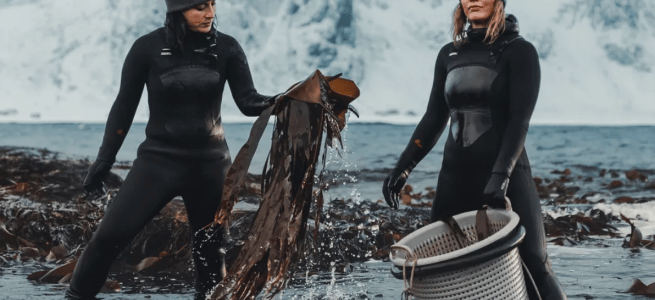
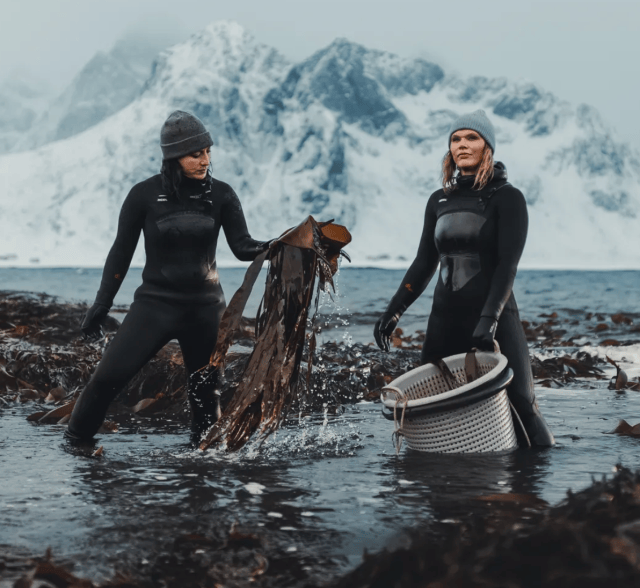
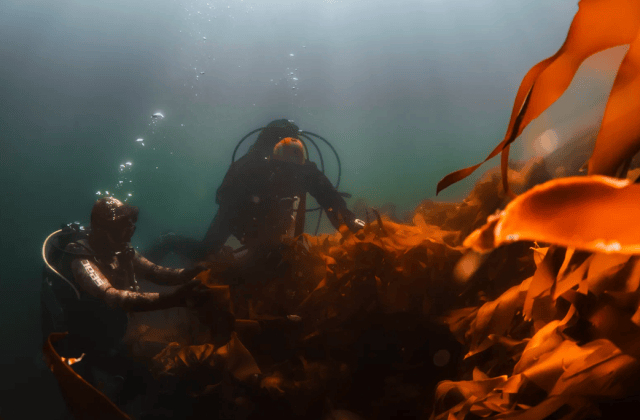
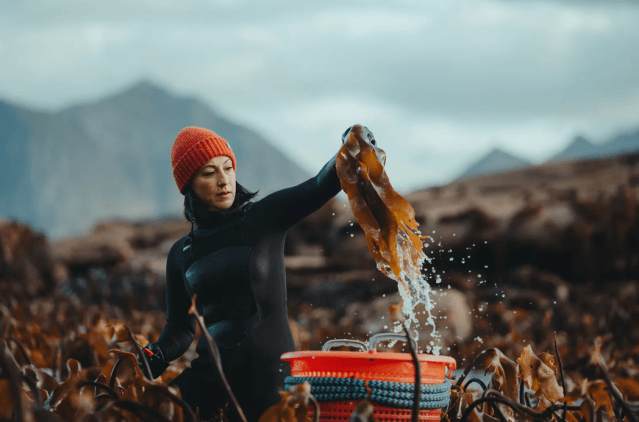
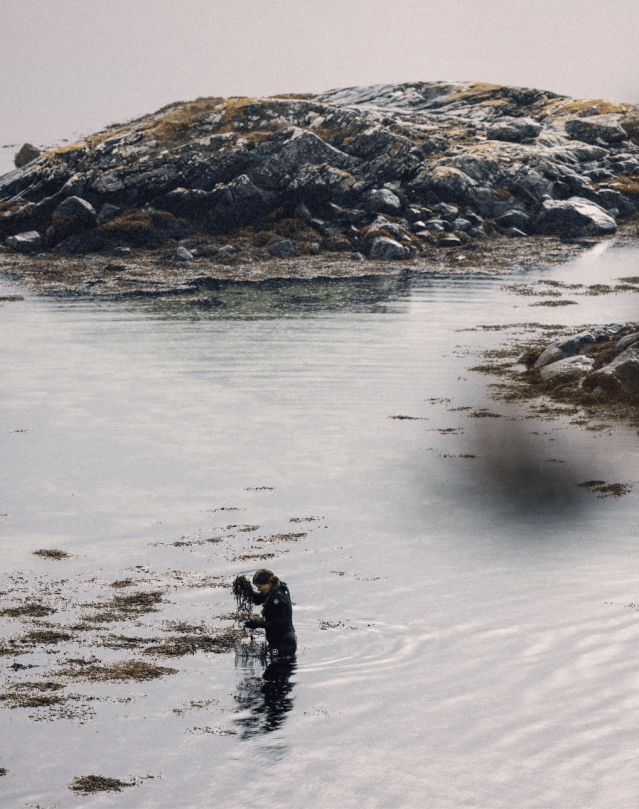
It’s still dark as I pick my way down a rocky path toward the sea. The air is as cold as you’d expect from a Norwegian winter, but the wind is still—a small mercy as I peel off my robe and slide into my wetsuit. I’m preparing to dive, not for fish, but for seaweed, a natural resource that is plentiful in this part of the world.
For centuries, the story of these wind-whipped northern shores has been told through the lens of the male-dominated fishing industry. But today, a seaweed-based movement led primarily by women is rapidly reshaping what it means to eat, farm and live sustainably.
Photo: Courtesy of Lilløy Lindenberg
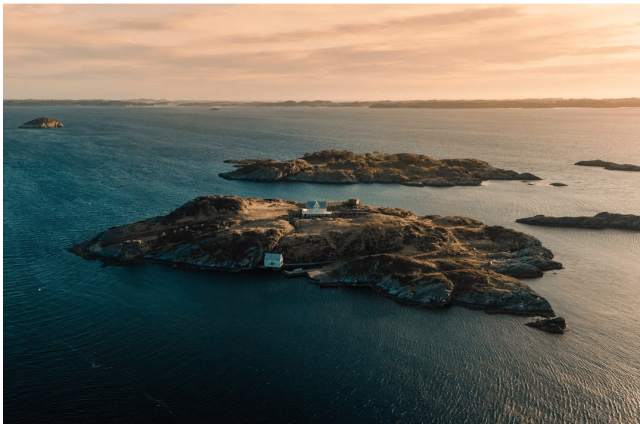
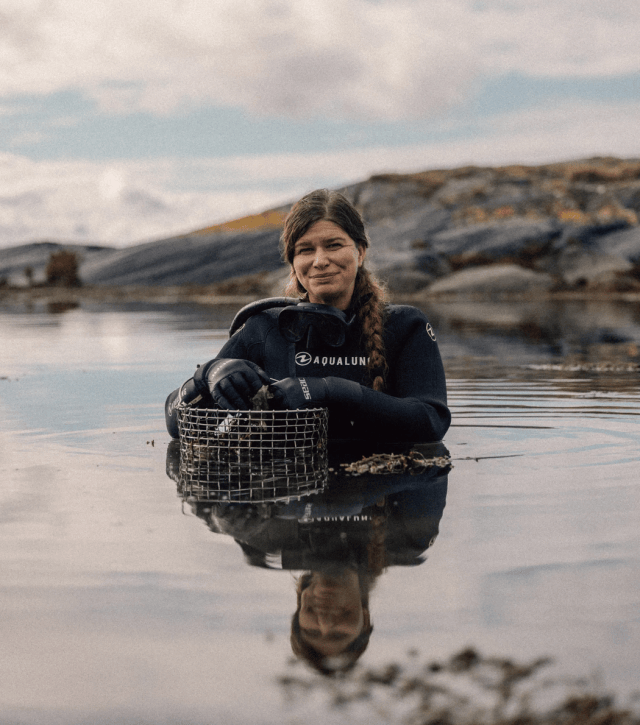
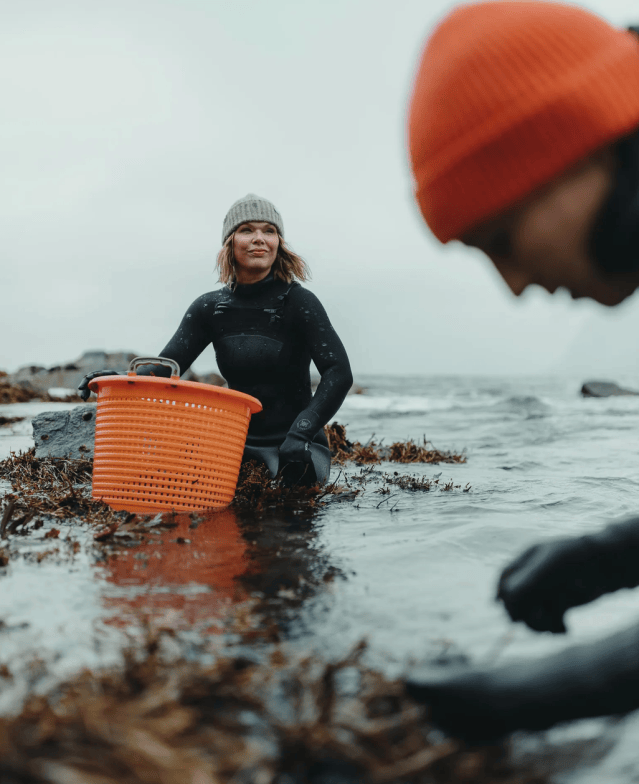
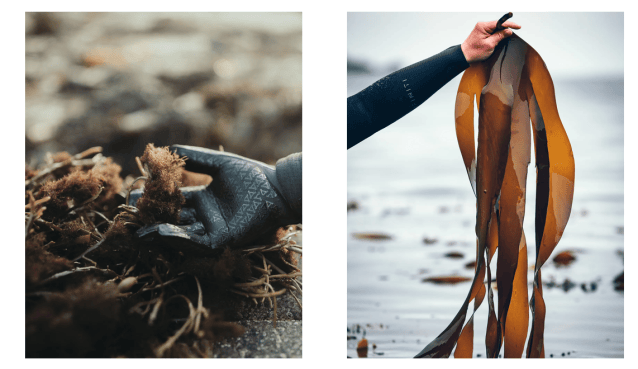
“It’s like a tropical rainforest of seaweed that grows around just this tiny island,” explains Antje de Vries, emerging from the water with a handful of ribbon-like sugar kelp. Antje—a chef and ecotrophologist—runs the plant-based kitchen at Lilløy Lindenberg, a private island retreat off the coast of Bergen where I’ve been spending the weekend. I zip up my wetsuit and join her, gliding past colorful starfish and sea urchins in search of those tendrilling fronds. Two nights earlier, I’d joined Antje for ‘Kelp Club’, a roaming, nine-course supper where each dish has been made or infused with hand-harvested seaweed from this very fjord. “Fermenting, dehydrating, caramelizing, searing,” she raves, “what you can do with it is endless.”
Antje de Vries in the sea near Lilløy Lindenberg. Photo: Courtesy of Lilløy Lindenberg
Her enthusiasm is far from an isolated culinary quirk. As the UN warns, we must cultivate the oceans to prevent food insecurity by 2050; these northern coasts are fast becoming a testing ground for a new ecological framework. Seaweed has unique potential to scale sustainable, nutrient-dense food supplies, requiring no arable land, fresh water, or synthetic fertilizers. It produces up to sixty percent of the world’s oxygen, absorbs dissolved nitrogen and captures carbon at rates that rival rainforests.
Little wonder, then, that the global seaweed market has more than tripled over the last two decades. And that’s to say nothing of the plant’s mind-boggling health benefits. Packed with iodine, essential minerals, and gut-stabilizing compounds, research shows that ocean-grown plants act as natural antibacterial agents and help regulate blood sugar—a primary reason why seaweed-rich diets in coastal Asian nations are consistently linked to longevity and lower rates of chronic disease.
Photo: Bruno Veiga / Courtesy of Lilløy Lindenberg
But long before global institutions began hailing seaweed as a future food, Angelita Eriksen knew it only as a nuisance; a weed that tangled her father’s boat propellers in the Arctic waters of the Lofoten Islands. It wasn’t until she returned home after many years abroad that her perspective started to shift. “I was blown away by its nutritional benefits, the taste, and its environmental impact. I called everyone that had ever mentioned it.” In doing so, she reached out to Tamara Singer, who was familiar with seaweed by way of her Japanese heritage. Together, they founded Lofoten Seaweed, a business that creates seaweed-based products from salts and sprinkles to seaweed-enhanced beauty products.
Tamara Singer of Lofoten Seaweed. Photo: Morten Munthee / Courtesy of Lofoten Seaweed
Initially, local fishermen laughed at the sight of two women gathering weeds in their baskets. “It’s a tough, male-dominated environment,” says Angelita. “Many people didn’t understand what we were doing.” But as the company grew—eventually earning a spot on the menu at Copenhagen’s famed Noma and representing Norway at the prestigious Bocuse d’Or in Lyon—that skepticism turned to respect. Though seemingly novel, their work belongs to a much older, global tradition of women working with seaweed. For 3,000 years, Japan’s legendary Ama ‘sea women’ have freedived to harvest kelp. Centuries later, in Victorian England, women—banned from scientific institutions—took up beachcombing, where their work formed the backbone of modern seaweed classification. Today, across coastal Zanzibar and Tanzania, the seaweed sector is roughly 80% female-led and has transformed local communities by placing financial independence and civic leadership directly in women’s hands.
Angelita Eriksen of Lofoten Seaweed. Photo: Morten Munthee / Courtesy of Lofoten Seaweed
“Here in Lofoten it goes way back to the Viking ages,” Angelita explains, “when women would stay back to run the farms while the men were gone. Seaweed harvesting was something they could do while staying at home with their children. It’s a tradition we have forgotten in modern society, but sometimes the older generations approach us and say, ‘You know, I also picked seaweed as a child.’” This return to ancient ways of working signals a wider cultural shift, as policymakers begin transitioning from dominance over nature to stewardship. “From a female perspective, it makes sense to work with the ocean in a more sustainable, harmonic way,” explains Tamara. “It’s kinder, not so brutal. Success for us means helping to make things better—people’s health, the environment.” Unlike fishing, which begins and ends with the catch, seaweed cultivation demands continuous care. You cannot over-harvest a reef without destroying your own livelihood; to gather from the ocean, you have to nurture it.
Photos: Morten Munthee / Courtesy of Lofoten Seaweed
“That feels like a uniquely female strength,” Antje reflects. And this more nourishing way of relating to the natural world extends to how these women physically encounter the ocean, too. While male commercial divers often layer up in thick, insulated drysuits, Norway’s female harvesters almost always wear wetsuits. It’s an intentional choice to forgo total protection in favor of tactile intimacy. “We’re feeling the water,” Antje says, her gloves deliberately worn thin at the fingertips. “I think that’s really important, that synchronization with nature. Feeling the elements is something we’re all missing.”
Last year, the EU endorsed algae as a key resource for the Continent’s green and blue transition. So far, Norway is leading the charge, piloting large offshore farms along its coastlines while investing in R&D initiatives like Arctic Seaweed and Seaweed Solutions. Advocates like Antje and founders like Angelita and Tamara are ensuring that gender parity is woven into the movement’s DNA from day one. But even as these projects begin to scale, their purpose remains the same: a conscious move away from extractive practices and toward a more restorative approach to our oceans. “It’s the birthplace of all on Earth, right?” Antje offers with a smile. For these women, seaweed isn’t just a superfood, but a way to reshape our relationship with the wild. And in tending to the ocean, we may just find our way back.
The good news in this story is the efforts to take a restorative approach to ocean commerce.
Today’s JohnKu talks about sustainable farming. I hope you have a super week.
Today’s good news story comes from the BBC and was sent to me by our world-at-large reporter, Noelle Granger.
Thanks, Noelle
Rare duck breeding success gives hope for species
Emily Johns, Channel Islands
Durrell Wildlife Conservation Trust
The Madagascar pochard is one of the world’s most threatened waterbirds
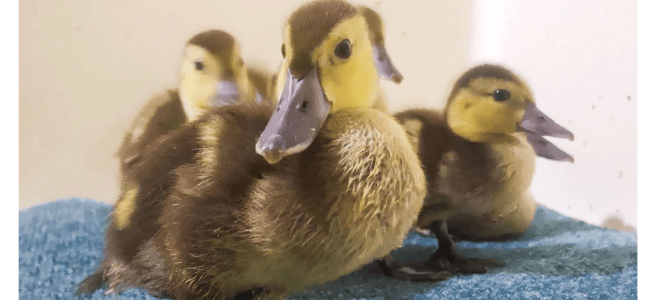
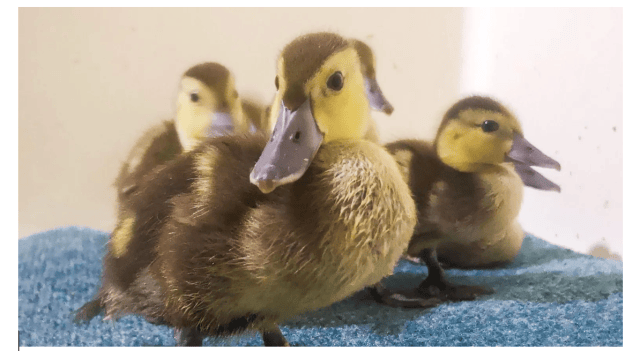
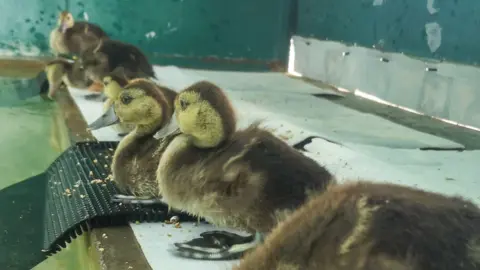
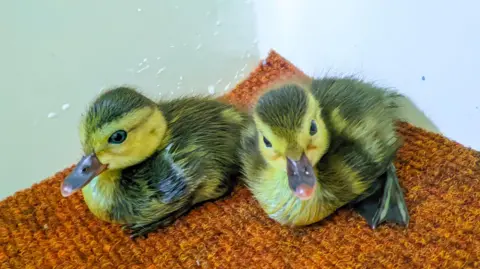
Six of the world’s rarest ducks have reached adulthood after conservationists successfully raised them from eggs collected in the wild.
The Madagascar pochards were hatched after their eggs were carried 44km (27 miles) on foot before being taken to a specialist breeding center in Madagascar. The species was once thought to be extinct before being rediscovered in 2006.
The Jersey-based Durrell Wildlife Conservation Trust carried out the work, which it said gave scientists another way to protect the species when nests were threatened.
Roland Digby, a conservation biologist at Durrell, said: “This is an important milestone for the Madagascar pochard.”
Durrell Wildlife Conservation Trust
The ducks are also called the fotsimaso locally
The trust said the breakthrough could be particularly important because the Madagascar pochard survived at just one known wild nesting site worldwide.
Digby said: “We’ve shown that, when conditions demand it, we can safely collect eggs from the wild, transport them on foot and successfully incubate and rear healthy birds.”
The six birds hatched from 15 fertile eggs collected at Lake Matsaborimena in north-west Madagascar, with Durrell staff working alongside The Peregrine Fund to collect them.
The eggs were carried in a cooler before being transported to Durrell’s specialist breeding center in Antsohihy in northern Madagascar.
Durrell Wildlife Conservation Trust
Brewer said recovering a species required “persistence, partnerships and a willingness to keep going when the work becomes difficult”
Since the species’ rediscovery, Durrell said it had led an international recovery program combining habitat restoration, captive breeding and reintroductions.
About 180 birds now exist across captive and wild populations, including 51 at the Durrell breeding center, 82 at Bemanevika and 74 at Lake Sofia.
Durrell chief executive Rebecca Brewer said: “For many people, this is a story about six ducks.
“For us, it’s about what long-term conservation can achieve.”
The good news in this story is that success is not measured in large gains, but in small steps. Today’s JohnKu talks about persistence in conservation. I hope you have a beautiful weekend.
Before we cover the good news today, let’s not forget the innocent people who lost their lives at the hands of fanatic Islamists on September 11, 2001- twenty-five years ago. I planned not to run a good news feature on this tragic anniversary, but I feel we should keep focusing on the good news when there is so much bad news in this world.
Today’s good news story comes from Diario AS and was sent to me by Noelle Granger, reporter at large. Thanks, Noelle
Mexico protected more than 1 million monarch butterflies in 1980. Decades later, they’ve created a one-of-a-kind ecosystem
The monarch butterfly’s migration is one of nature’s greatest journeys. Every fall, millions of monarchs travel more than 2,500 miles from southern Canada and the northern United States to spend the winter in the cool oyamel fir forests of central Mexico.
But behind this extraordinary spectacle lies a story of government protection, scientific discovery, and ecological recovery that permanently changed conservation efforts across North America.
After the first federal conservation decrees were issued in 1980 to protect the butterflies’ overwintering grounds, authorities safeguarded forests that host well over one million monarchs. Those protections laid the foundation for a protected ecosystem that now covers more than 139,000 acres.
The 1980 decree that changed everything
For decades, the exact location of the monarch butterflies’ winter colonies in Mexico’s mountains remained known only to local communities. That changed in the mid-1970s, when international researchers working alongside Mexican scientists mapped key overwintering sites in the Sierra Chincua and Cerro Pelón mountains.
In 1980, Mexico’s federal government issued its first presidential conservation decrees to formally protect the forests where enormous monarch colonies gathered each winter. Individual sites often contained well over one million butterflies.
The move helped curb uncontrolled logging in some of the most important habitats and marked the beginning of what would eventually become the Monarch Butterfly Biosphere Reserve. Today, the protected area stretches across municipalities including Zitácuaro, Ocampo and Angangueo in the state of Michoacán, as well as Temascaltepec and San José del Rincón in the State of Mexico.
A UNESCO-recognized sanctuary
Covering 139,000 acres (56,259 hectares), the Monarch Butterfly Biosphere Reserve sits about 60 miles northwest of Mexico City in a mountainous region filled with dense forests. Its varying elevations create a range of microclimates that support numerous native plants and animals found nowhere else.
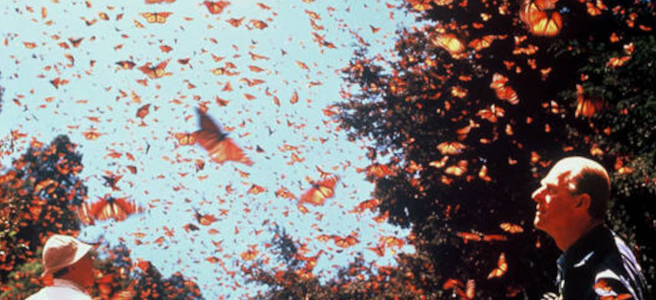
Every fall, millions — and in some years perhaps as many as a billion — monarch butterflies from across North America gather in small patches of forest within the reserve. Their bright orange wings blanket the trees so completely that entire hillsides appear to change color.
The sheer weight of so many butterflies can even bend tree branches.
When spring arrives, the monarchs begin their remarkable return journey north. Over the next eight months, the migration unfolds across four successive generations as the butterflies spread through the United States and into eastern Canada.
Despite decades of scientific research, one mystery remains unsolved: exactly how each new generation finds its way back to the same forests in central Mexico where its ancestors spent the winter.
The good news is that the Mexican government’s protection has ensured the Monarch’s survival. Today’s JohnKu talks about government action. I hope you have a super weekend.
Today’s story comes from the Times of India and was sent to me by Reporter-at-large Noelle Granger. Thanks Noelle
Meet Roy Kim, the 13-year-old Oregon student who designed a chamber that turns moisture in the air into water for drought-hit farms.
“Do what you can do tomorrow, today,” says Roy Kim, a 13-year-old Oregon student who has solved the water crisis for numerous farmers in the region. The teenager developed a device that turns moisture in the air into water, helping farmers access a sustainable and reliable water source in drought-prone areas, according to a report by Young Scientist Lab. As global warming continues, farming becomes increasingly difficult for farmers who rely on water to irrigate their crops. Most of the time, they rely on sources such as groundwater, surface water, and rainfall for this, but over the years, these sources can become depleted. This is why Kim created a device that uses the Peltier Module to turn moisture present in the air into water.
Understanding the module
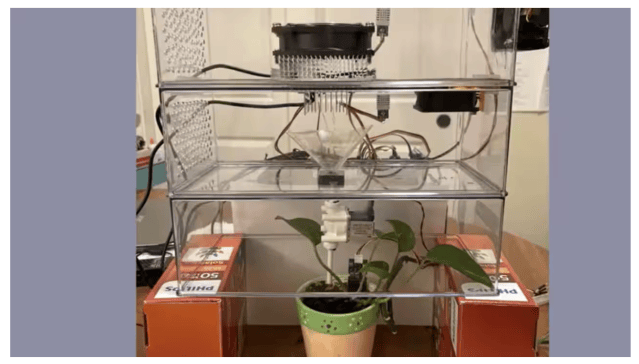
Kim created a device that uses the Peltier Module to turn moisture present in the air into water.
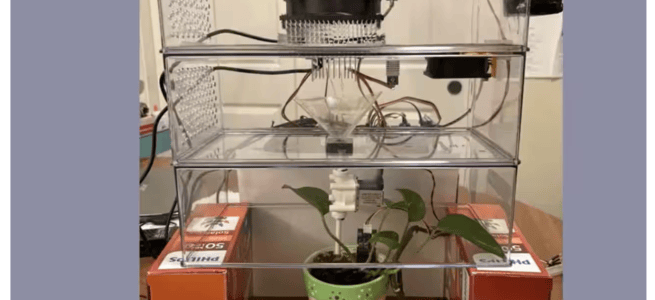
According to Kim, a Peltier module creates a temperature difference when electricity is applied, making one side hot and the other side cold. “This allows warm air to cool rapidly when it reaches the cold surface, causing water vapor in the air to condense into liquid drops,” he explained. After multiple tests and improvements, Kim finalized the device’s design. The air enters the chamber through the hot side, where a heating element connected to a filter module warms it. The warm air then moves through the fan to the cold side. Water droplets formed here sink due to the temperature difference between the surface and the air.
The collected water then flows into a funnel and is distributed to the plants through a valve. To ensure the plants get the right amount of water, not too much, a soil moisture sensor is placed in the soil to determine when the plants need water. “In addition, temperature and humidity sensors monitor the environment, and if conditions become too extreme, they automatically adjust the airflow to maintain efficient water production,” said Kim. After testing, the device produced 10ml of water in two hours. Its highest efficiency was 135.8 g per kilowatt-hour. “Through this project, I didn’t just create water. I combined natural processes with engineering to develop a sustainable solution for farming,” he added.
Entering competition
Roy Kim, a student of Whitford Middle School in Beaverton, Oregon, entered the 3M Young Scientist Challenge, an annual top middle school science competition in the US run by 3M and Discovery Education, which challenges students in grades 5 to 8 to use problem-solving and innovation to fix everyday issues. When asked about why he wanted to enter the challenge, Kim said, “I entered the 3M Young Scientist Challenge because I wanted to showcase my invention to people around the world. If more people are aware of this problem and the potential solution, the problem might be able to de-escalate.”According to the US Department of Agriculture, between 2010 and 2020, agriculture was a major user of ground and surface water in the US, with irrigation accounting for 47% of the nation’s total freshwater withdrawals. Approximately 212,714 farms in the country depend on natural water sources for irrigation. But with Kim’s invention, the number can be decreased gradually. 15 years from now, he hopes to develop even more such solutions, as he wants to become a successful engineer who solves pressing problems across the globe, specializing in environmental engineering. He is currently among the top 10 national finalists in the challenge. The final event and winner announcement will take place on October 12-13, 2026.
The good news in this story is that an intelligent person converted known technology into a practical solution for water conservation. Today’s JohnKu talks about finding solutions. I hope you have a beautiful Weekend.
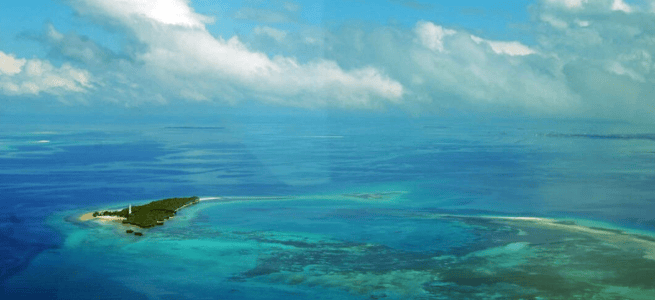
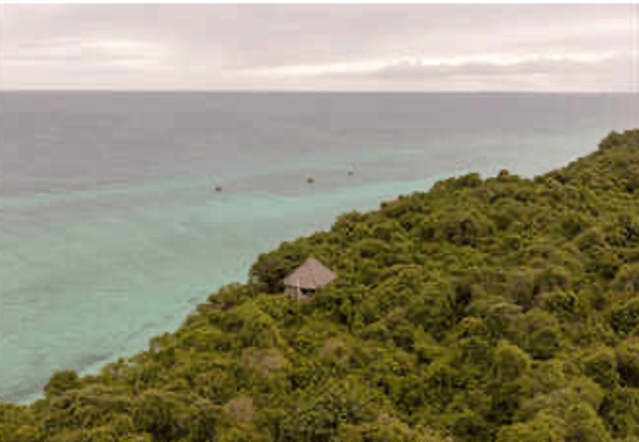
An uninhabited tropical island and its surrounding coral reef reflect the conservation project that has protected the area for decades. Image Credits: Wikimedia Commons.
Today’s good news story comes from the Times of India. Thank you to Noelle Granger for sending it to me.
In 1991, German development worker Sibylle Riedmiller invested her savings in an uninhabited island; three years later, its reef became a protected sanctuary.
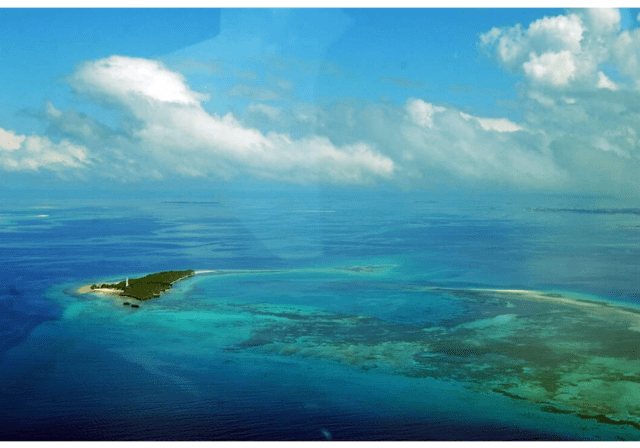
In April 1991, Sibylle Riedmiller was sailing around Zanzibar when she came across an uninhabited island surrounded by a shallow coral reef. What she saw was unusual for the region: a largely intact marine ecosystem at a time when destructive fishing, including dynamite fishing, was damaging reefs along the Tanzanian coast. Rather than seeing Chumbe Island as an untouched paradise, the German development worker saw an opportunity to protect it. She put her own money into the idea of creating a conservation project that could eventually support itself through carefully managed tourism. According to Marine Policy, Chumbe Island Coral Park Ltd. (CHICOP) negotiated with the Zanzibar government between 1991 and 1994 to have the island’s western coral reef and forest cover gazetted as a protected area. On December 24, 1994, the reef sanctuary was formally designated as a no-take area, prohibiting fishing and other extractive activities, with management entrusted to CHICOP.From an uninhabited island to a protected reef. Riedmiller had arrived in Tanzania in the early 1980s as an aid worker involved in education projects. By the time she reached Zanzibar, she had developed a strong interest in the region’s marine environment.
She was particularly concerned by the destruction caused by fishing practices and by the limited public understanding of coral reefs. According to the IUCN, Sibylle Riedmiller found Chumbe Island on April 21. The uninhabited island contained a fringing coral reef, seagrass beds, a mangrove cave and coral-rag forest, along with a historic lighthouse and abandoned buildings. Restrictions on access and fishing, linked partly to the island’s former military use, had helped keep its terrestrial and marine ecosystems relatively undisturbed, making Chumbe a suitable site for protection. Riedmiller’s idea was not simply to put a fence around the island. She proposed a model in which tourism would generate income for conservation and environmental education. This meant creating an organization capable of managing the protected area while also developing a small, low-impact tourism operation. A no-take reef backed by tourism. The protected area gave the reef stronger protection than neighboring waters. The sanctuary covers roughly 30 hectares of reef and associated marine habitats, while the island itself contains a protected forest reserve. Marine Policy also notes that Chumbe is Tanzania’s first managed marine park and one of the earliest examples of a privately established and managed marine protected area. The study noted that the sanctuary was legally designated as a no-take area, meaning fishing and other extractive uses were prohibited. But protection required people to enforce the rules. One of the project’s important decisions was to recruit and train local fishers as park rangers. They knew the surrounding waters, understood local fishing practices, and could communicate with other fishing communities. The approach also gave former fishers alternative employment and placed local people at the center of reef protection. The project eventually added an education center and a small ecolodge. The buildings were designed around environmental principles, including solar power, rainwater harvesting, composting toilets, and wastewater filtration systems. Ecotourism began in 1998, with visitor revenue supporting conservation management and educational programs rather than private profit.
Chumbe Island is surrounded by the turquoise waters and coral reefs of the western Indian Ocean. Image Credits: Wikimedia Commons.
Protecting the reef by teaching people about it. Conservation at Chumbe was never limited to protecting the reef. Environmental education became an important part of the project, with local schoolchildren visiting the island to learn about coral reefs, seagrass, forests and marine life. Teachers were also involved so that lessons about the marine environment could extend beyond the island. According to a study published in the Journal of Ecotourism, Chumbe Island Coral Park combines ecotourism with marine conservation and environmental education, while using a low-impact approach to minimize pressure on the island’s natural environment. The model was designed to generate income from tourism while supporting the management of the protected area. The reef remains at the center of the project, but Chumbe’s protected environment extends beyond coral. The island also contains seagrass beds, intertidal habitats, and a coral-rag forest, forming a broader ecosystem managed alongside the marine sanctuary. Riedmiller’s investment grew into a conservation model built around three activities: protecting the island and surrounding waters, educating local communities and visitors, and using carefully managed tourism to help fund the work.
The good news in this story is that one person turned a deserted island into an eco-tourist destination that benefits the island and surrounding area. Today’s JohnKu talks about one person making a difference. I hope you have a beautiful week.
Every January, thousands of Christmas trees end up in the trash after the holiday season. In New Orleans, officials have found a remarkable way to give them a second life.
Instead of sending the trees to landfills, the discarded firs are collected, tied together into large bundles and dropped by helicopters over coastal marshes. The goal is to help slow the decades-long loss of land threatening Louisiana’s coastline.
A state losing ground to the water
Louisiana has lost more than 2,000 square miles of coastline since the 1930s due to natural erosion and powerful storms. Rising sea levels and sinking land have made the problem even worse.
The Mississippi River also no longer carries as much sediment into the wetlands as it once did, reducing the natural process that helped rebuild the coast. As a result, marshes are disappearing rapidly, weakening their ability to absorb storm surges and protect nearby communities from flooding.
The Christmas tree recycling program is designed to help restore some of those damaged wetlands by creating natural barriers that trap sediment and encourage new land growth.
A creative solution backed by research
Scientists have found that these tree barriers can make a measurable difference. Studies show that the structures can reduce water flow by half and increase the thickness of the soil each year.
Experts caution that the initiative alone cannot solve Louisiana’s massive erosion problem, but official figures show the program has already helped restore an area of wetlands equivalent to around 200 soccer fields.
By turning old Christmas trees into tools for coastal restoration, New Orleans has transformed holiday waste into a small but meaningful weapon in the fight against climate change and rising seas.
The good news in this story is that cast-off holiday trees that could become waste are turned into useful environmental tools. Today’s JohnKu talks about waste. I hope you have a wonderful weekend.
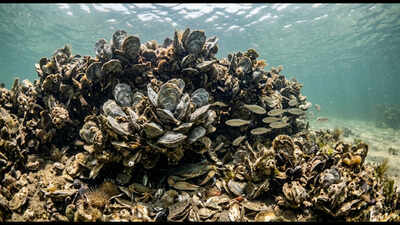
Oyster reefs also protect coastlines by helping reduce the force of waves during storms.
What looked like waste has turned into an important tool for restoring marine life along Florida’s coast. Between 2007 and 2024, Florida placed more than 500,000 tonnes of recycled oyster and clam shells into the Gulf of Mexico as part of a long-term effort to restore damaged marine habitats. According to a report by Upworthy, the shells did not come from the sea directly, but were collected from seafood restaurants, where they were discarded after meals, and from seafood processing plants. Instead of sending them to a landfill, they were returned to the water in areas where oyster reefs had declined over the years. At first, many people questioned the idea, even calling it dumping waste into the sea. Even researchers saw little visible change in the early stages of the project and were unsure whether the effort would succeed.
Although there was no immediate change on the surface, important processes had already started. As the shells were placed in the water, bacteria settled on them and formed a thin layer called biofilm. This is one of the first building blocks of a marine ecosystem, creating conditions that allow other organisms to attach, settle, and grow. The shells slowly broke down, releasing calcium into the water. This created small areas with a different water chemistry called microzones.
These tiny changes create suitable conditions for several underwater organisms that depend on such environments to survive. The shells also solved another major problem. Healthy oyster reefs need hard surfaces where young oysters can attach and grow. As many reefs had disappeared, much of the seabed had become soft and sandy, making it difficult for new oysters to establish themselves. The recycled shells acted as that missing foundation, and young oysters settled on them, gradually forming new reefs over time.
Shells were collected from seafood restaurants, where they had been discarded after meals,
Impact on water quality
Oyster population growth also brought additional benefits. While feeding, they filter large volumes of water, removing particles and helping reduce harmful algal blooms. Cleaner water also supports the growth of other plants and animals that depend on coastal ecosystems. Over time, these changes spread through the food chain, and fish and larger marine animals find more suitable habitats. According to the project, populations of fish, turtles, and dolphins recovered to levels not seen for more than 25 years. The gradual rebuilding of the seabed eventually became visible as marine life returned to areas that had earlier struggled to support it.
Importance of reefs
Healthy marine ecosystems support commercial fishing, which generates income for coastal communities. When fish populations decline, fishermen’s earnings are impacted, and seafood prices increase. Cleaner coastal waters support tourism, a major source of income for communities in Florida. Oyster reefs also help protect coastlines by reducing wave energy during storms. They act as natural barriers that can limit erosion and protect nearby shores. Oyster populations have declined over the years because of overharvesting. Human-caused environmental disasters, including the Deepwater Horizon oil spill, have also damaged marine habitats, making it harder for oyster reefs to recover. The results from Florida have drawn attention from coastal engineers and marine biologists, and similar shell recycling programs have already been introduced in several US states, including Alabama, Texas, Louisiana, California, Mississippi, and the Carolinas.
The good news here is recycled shells are giving birth to new life and improved environment. Today’s JohnKu talks about recycling. I hope you have a wonderful weekend