
Today’s good news story comes from the Ass0ciated Press
With tears and tail wags, San Quentin inmates reunite with puppies they raised into service dogs
By OLGA R. RODRIGUEZ – Updated 3:17 PM CDT, April 1, 2025
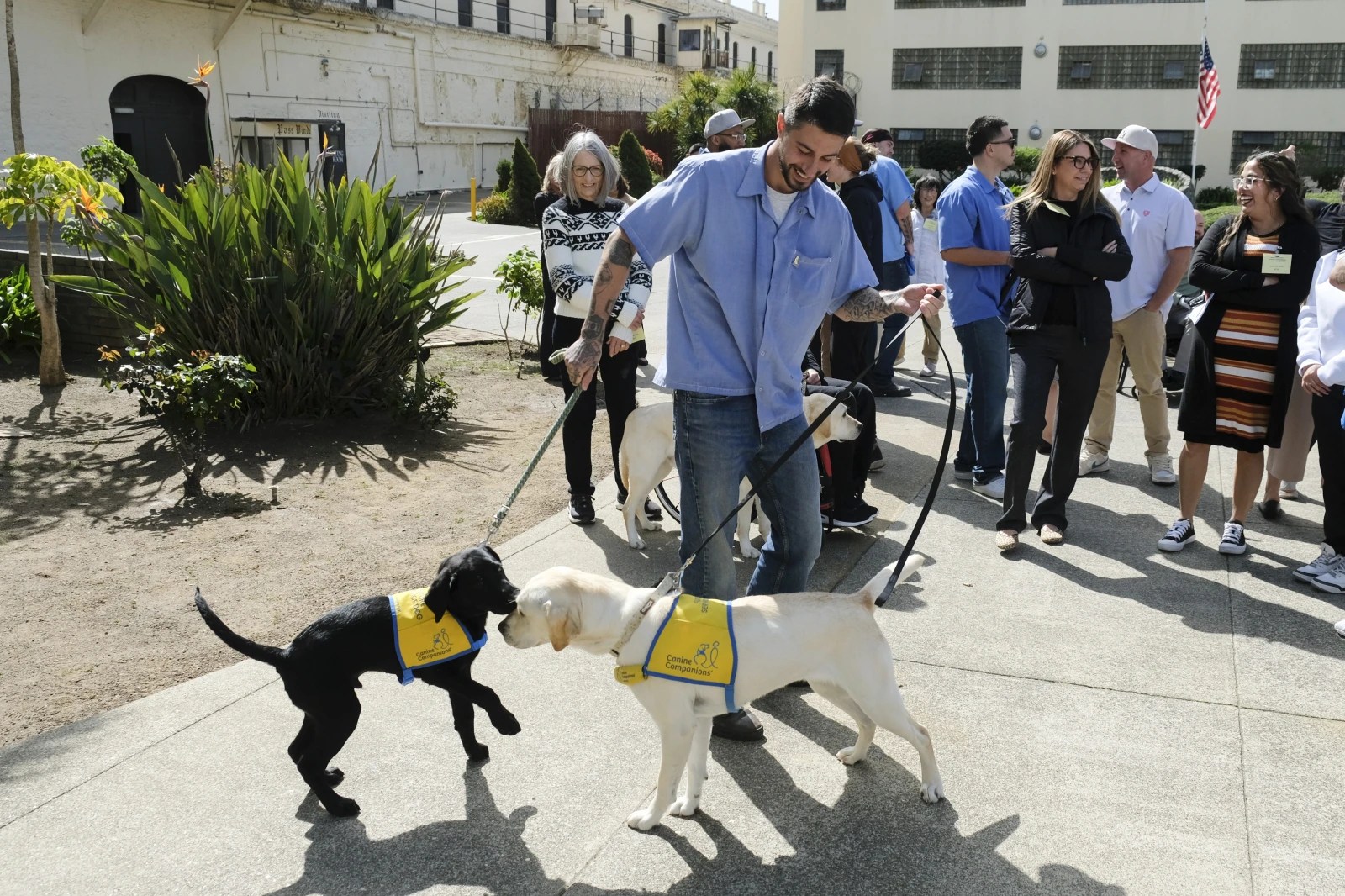
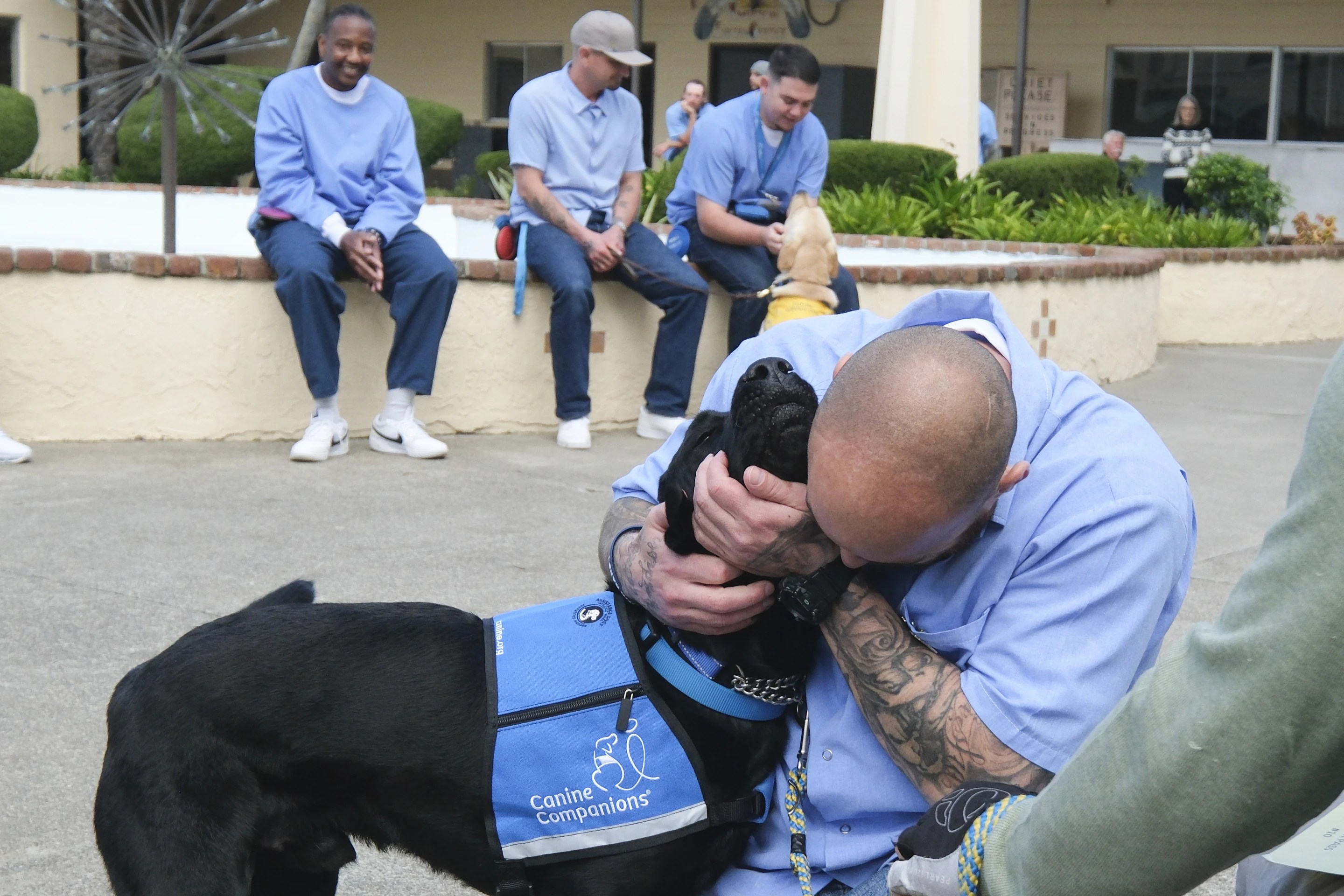
SAN QUENTIN, Calif. (AP) — Hugs, tears, barking, and tail wagging abounded at San Quentin’s prison when two black Labradors reunited with the incarcerated men who helped raise them to be service dogs.
The emotional reunion brought Chase Benoit, Jared Hansen, and the 2-year-old dogs they helped train Wendel and Artemis. It was the men’s first time seeing their former canine companions again and their first time meeting the dogs’ disabled handlers in person.
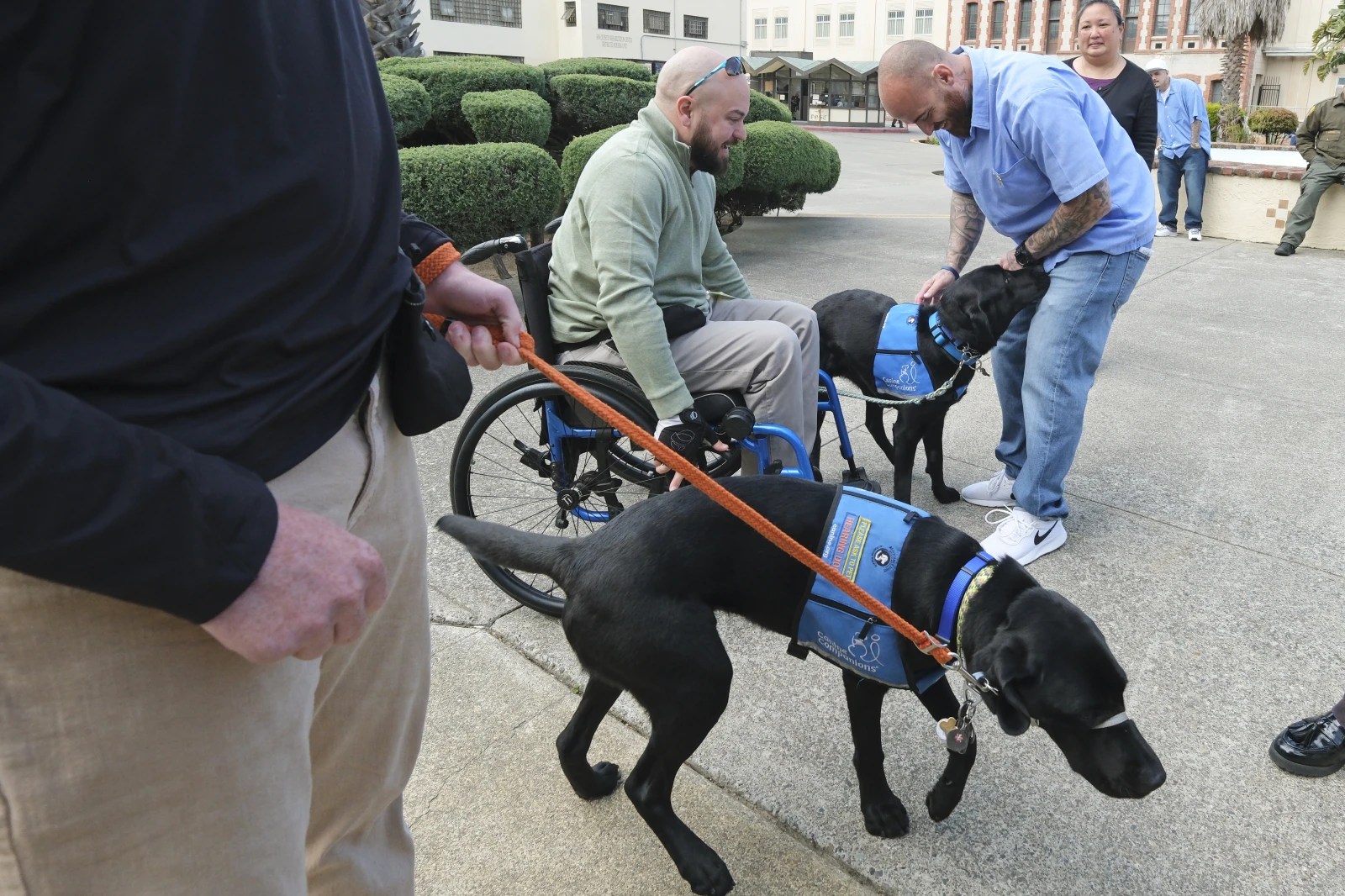
The encounter Friday in San Quentin’s main courtyard brought Benoit and Hansen full circle after helping launch the prison’s puppy training program in April 2023.
“Being in this program, it’s given me something that I think I’ve searched for my whole life,” said Benoit, who is serving 15 years to life for second-degree murder. “And that was meaningful purpose, doing something that’s good, better, bigger than myself and feeling like I’m part of something great.”
“He remembers me, for sure, I could tell when he came in. I’m so happy that you love him and that you have a bond,” Benoit told Quigley through an American Sign Language interpreter.
“He’s with me 24/7. He’s very gentle and good with people,” answered Quigley, a recent college graduate who took Wendel home in November after the black Labrador and golden retriever mix completed another six months of professional training outside prison.
Teaching pups the fundamentals in prison
Benoit and Jensen were part of an initial group of four incarcerated trainers who shared their 4-foot-by-10-foot cells with the 4-month-old puppies. The men divided the responsibility of caring for and teaching the dogs foundational commands for a year.
Canine Companions, a nonprofit based in Santa Rosa, runs the program and provides free service dogs to people with disabilities. It has built the San Quentin program to 16 trainers and two dog sitters who, as of this week, are training eight puppies.
Artemis, a black Labrador, was matched with Benjamin Carter, a veterinarian from Portland, Oregon, who uses a wheelchair and traveled to California for the reunion.
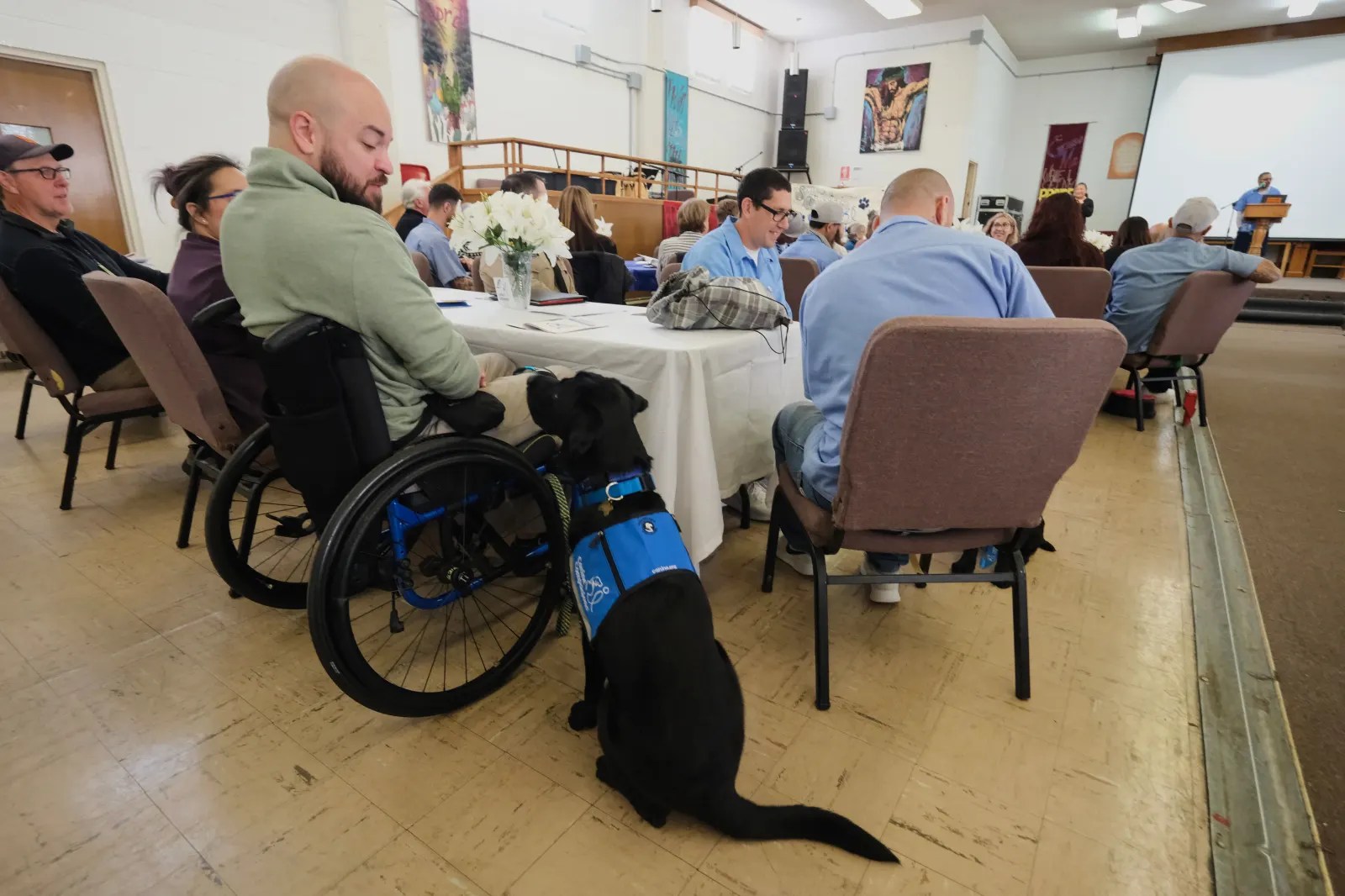
Like proud parents, Carter and Hansen shared notes on Artemis’ calm and loving personality and penchant for cuddles.
“Seeing him in action and actually serving somebody in the community, it’s just … I’m at a loss for words right now. It’s amazing!” said Hansen, who has been in prison for 15 years for bank robbery.
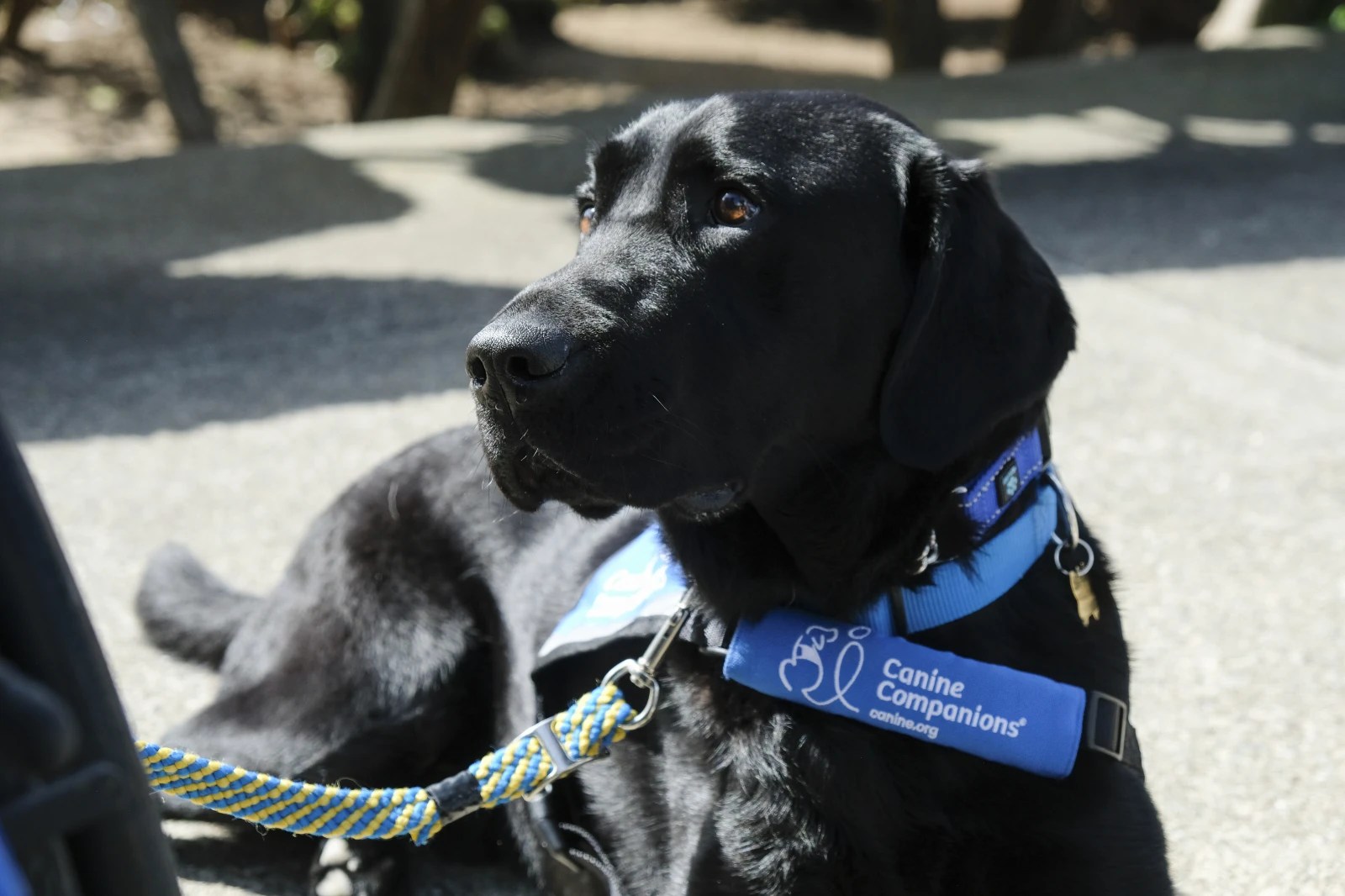
Artemis, or Artie, pushes door plates, pulls doors open, fetches things around the house, and does many other tasks that would be hard for Carter alone.
First work, then cuddles
“He is responsive when he’s working. He is cuddly when he is off the clock. He’s an amazing companion. And all that structure, love, and trust was built from these guys here, so I’m just super grateful to them,” Carter said.
The puppies are placed with incarcerated trainers when they are between 2 and 4 months old and stay with them until they are about 16 to 17 months old. Every three months, the puppies are taken out for socialization experiences like interacting with children, riding in cars, or going to the grocery store.
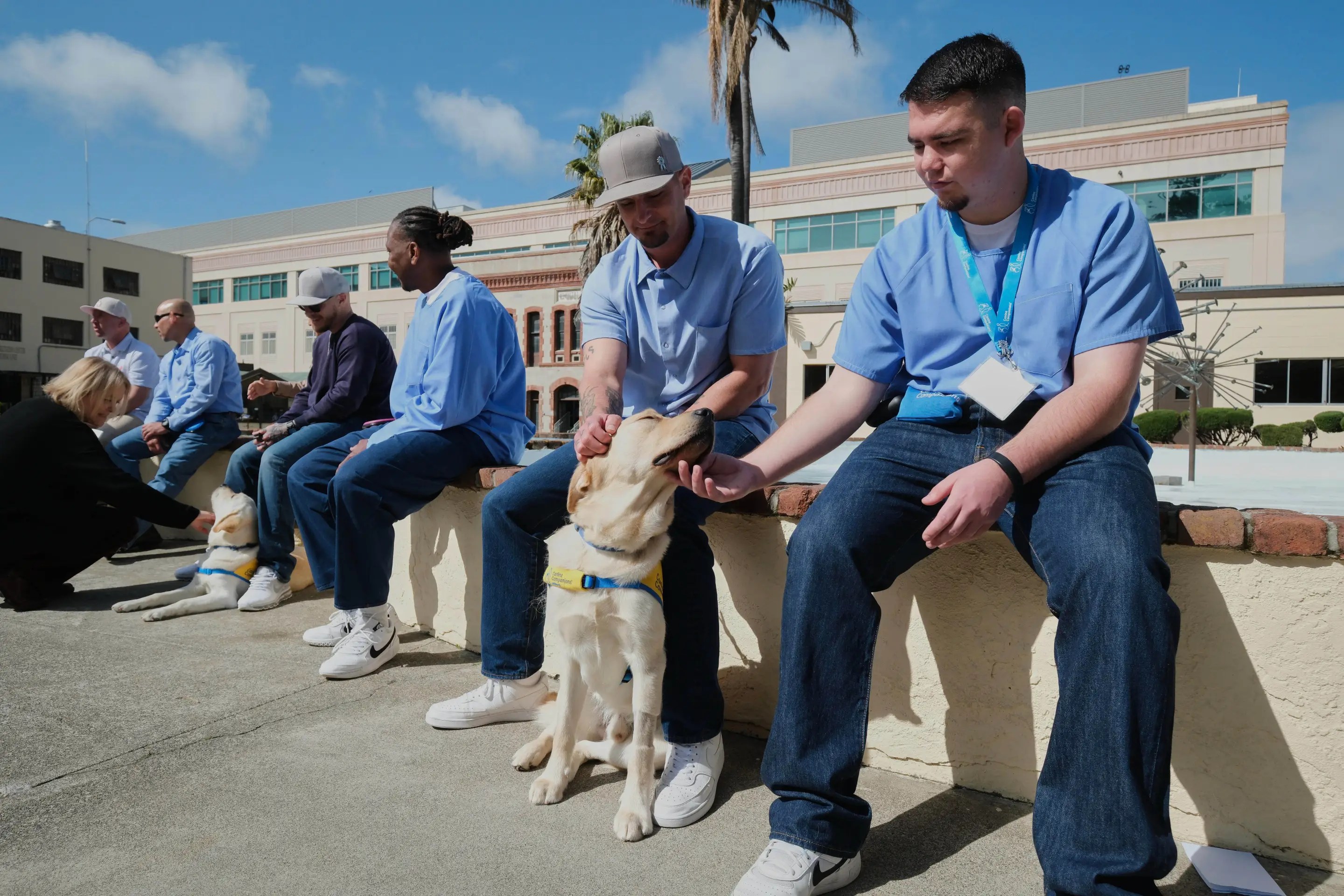
The incarcerated men teach the dogs about 20 skills, including fetching, sitting, and walking on a leash. After the dogs leave the prison, they train for several more months with professional trainers.
People incarcerated at San Quentin and who participate in the program have been convicted of crimes that include bank robberies, gun offenses, and murder. Only those in an “earned living unit,” where residents participate in an array of self-help programs, are allowed to apply for puppy training. Inmates with records that include any animal or child cruelty crimes are not allowed to participate, said James Dern, national director of puppy programs for Canine Companions.
The value of time
Dern said dogs trained in their prison programs have a 10% greater success rate at becoming service dogs than other candidates because of the amount of time and care that incarcerated puppy raisers put into their dogs.
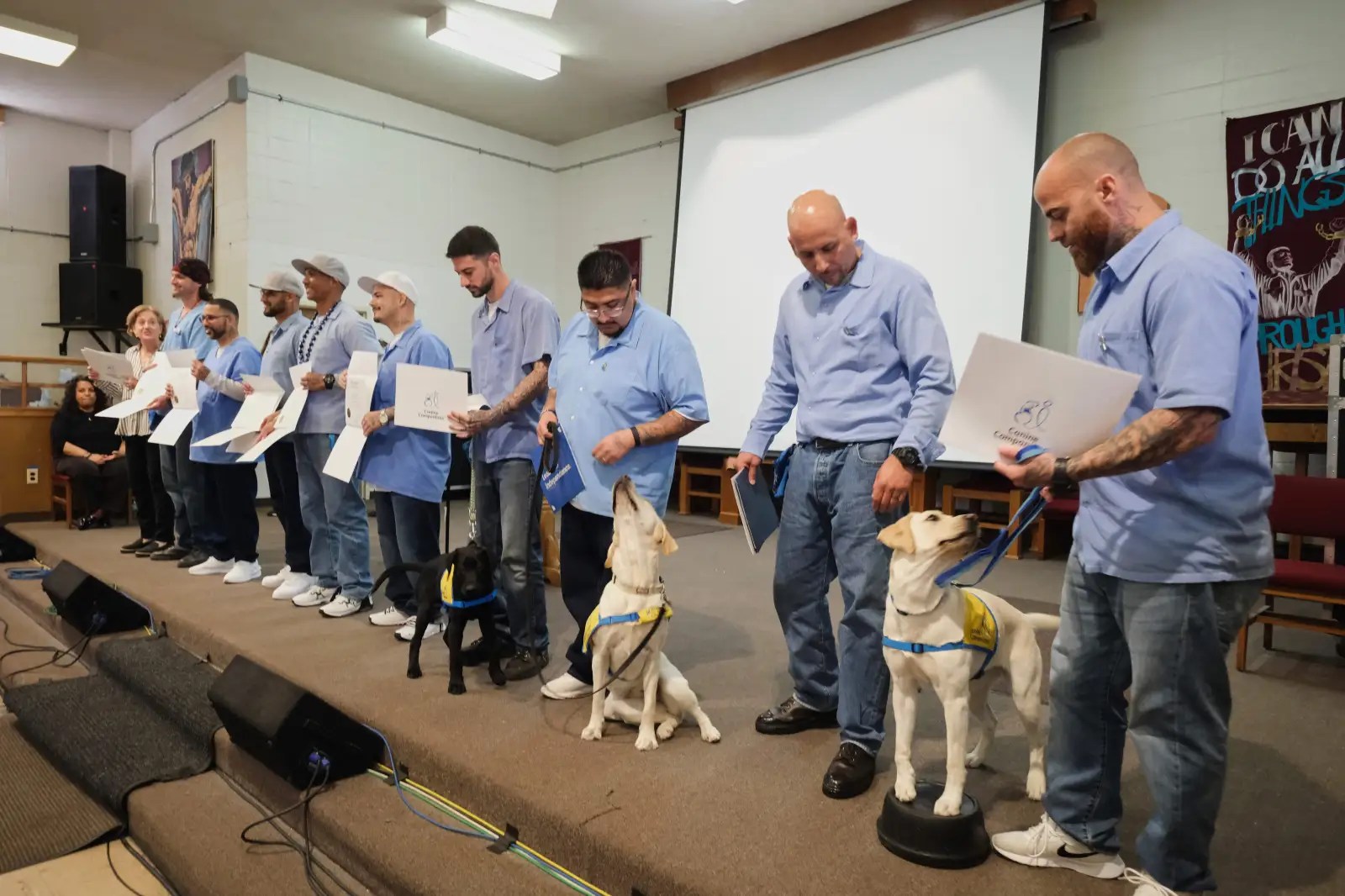
“Being given something to care about other than themselves and the opportunity to give back and to sort of start to make amends for the things they have done in their lives can be life-changing,” Dern said.
San Quentin was once home to the largest death row population in the United States. The puppy training program started the year it transformed into a lockup where less-dangerous prisoners receive education, training, and rehabilitation. Since then, another 11 correctional facilities have joined the nonprofit for a total of 24 prison institutions, Dern said.
Speaking to a crowd at the prison chapel gathered to celebrate the program, Benoit credited Canine Companions with bringing out the humanity, love, and caring in the incarcerated community. “Instead of keeping it to themselves within their small community of professional trainers or even volunteer puppy raisers, they shared this with us in prison. I think that’s huge,” he said.
The good news in this story is that people who have made grave mistakes can find a new path by helping others. Today’s JohnKu talks about second chances. I hope you have a delightful weekend.
Another Start by John W. Howell © 2025
Should a mistake mean,
That one is damned forever?
Or can good works win.


I love this programme.
LikeLiked by 2 people
I think it is terrific as well. Thanks, Adele.
LikeLiked by 1 person
Dogs serve a wonderful purpose to mankind. I wish everyone recognized their value.
LikeLiked by 2 people
That would be great, Holly. 😊
LikeLiked by 1 person
It would!
LikeLiked by 1 person
😊
LikeLiked by 1 person
That is an amazing program. I love hearing about these rehabilitation and prisoner training/work stuff. Creates hope for humanity.
LikeLiked by 2 people
I agree, Charles. A program that gives prisoners a reason to stay straight has to be a winner.
LikeLike
The ideas that are out there, so damn inspiring Boss. And this program sounds like it’s growing, which is making a great idea even greater. Redemption should be possible and it’s good to know there are people who take that idea and turn it into beautiful things such as this.
LikeLiked by 2 people
I like that it brings back a sense of self-worth to those who lost theirs along the way. Thanks, Pilgrim. 😊
LikeLiked by 1 person
Me too, it’s yet the latest in a string of great Friday morning stories you dished up,
LikeLiked by 1 person
You da best. 😀
LikeLiked by 1 person
Feeling is mutual, padnah.
LikeLiked by 1 person
😊
LikeLiked by 1 person
What a wonderful program. Incredible! Thank you for sharing this story with us, John. It gives hope where very little is available. 🌞
LikeLiked by 2 people
I used to live where I passed San Quentin prison often. There is not a more desolate place on Earth. It is wonderful to see these prisoners get a chance to build their self-worth in what would otherwise be a hopeless place to find redemption. Thanks, Gwen. I hope you have a super weekend.😊
LikeLiked by 1 person
This is an amazing story!
LikeLiked by 2 people
I agree. So much good here.
LikeLiked by 1 person
I’ve seen this program on TV and think it’s great!
This is a wonderful article, John.
LikeLiked by 1 person
I thought so, too, GP. Thank you. 😊
LikeLiked by 1 person
What a great program.
LikeLiked by 2 people
I know, right?
LikeLiked by 1 person
Everyone is a winner in this program. Wonderful news, John.
LikeLiked by 1 person
I agree, Lois. All winners.
LikeLiked by 1 person
What an amazing program – I love this idea.
LikeLiked by 2 people
I do, too, Teri. Thanks
LikeLiked by 1 person
Service dogs are definitely an advantage for people who need them. That prisoners are helping those people by training the puppies is amazing to me.
LikeLiked by 2 people
Yes, it is amazing, Tim. The fact that it gives the prisoner’s a sense of self-worth is a bonus.
LikeLiked by 1 person
Yes, indeed. That the prisoners do such a good job is also amazing to me.
LikeLiked by 1 person
They must really believe in it.
LikeLiked by 1 person
A sweet story, and we can all hope that this program can be one step on the path to rehabilitation for these men. San Quentin is a formidable prison and not for the weak of heart.
LikeLiked by 2 people
I lived in Marin County and would occasionally drive by it. Very desolate.
LikeLike
Imposing and desolate. We’ve also driven by several times – made me shiver!
LikeLiked by 1 person
Me too.
LikeLiked by 1 person
Thanks for doing this story! My pittie is an alumni from the Gwinnett County Jaildog program in Georgia! The program was closed last year but i hope they reopen it. Its important for prisoners and the dogs.
LikeLiked by 2 people
What a great story. Yes, I hope they open it too. So much good comes from the program. Thanks for sharing.
LikeLiked by 1 person
I love all your feel-good stories, John, but this one hit me right in the heart center. Thank you for sharing and for the uplifting JohnKu!
LikeLiked by 3 people
To give these prisoners a sense of self worth is priceless. I know you can relate.
LikeLiked by 1 person
This is a great idea and glad it’s been done.
LikeLiked by 2 people
Me too, Denise. A terrific program.
LikeLike
That is such a positive idea. Thank you for sharing it, John.
LikeLiked by 1 person
Always a pleasure, Esther.
LikeLiked by 1 person
Sooo moving
“Being in this program, it’s given me something that I think I’ve searched for my whole life,”
LikeLiked by 2 people
It is moving. Thank you, Cindy.
LikeLiked by 1 person
💕💕
LikeLiked by 1 person
😊
LikeLike
choked up here… ❤
LikeLiked by 1 person
It is a great story about giving folks who think they have no self-worth the tools to build it back. Thanks, Annette.
LikeLike
I’d heard about this program before. It gave me such a lift to see a few of the participants interacting. (I hope there is a special place in heaven for service dogs.)
LikeLiked by 1 person
There is. 😀
LikeLiked by 1 person
🙂
LikeLiked by 1 person
“Being in this program, it’s given me something that I think I’ve searched for my whole life,” said Benoit, who is serving 15 years to life for second-degree murder. “And that was meaningful purpose, doing something that’s good, better, bigger than myself and feeling like I’m part of something great.”
This statement is the meat of the program for me. When people feel good about themselves, they do positive things.
LikeLiked by 1 person
I agree. You know from your teaching years that self worth is a big element is success.
LikeLiked by 1 person
A special story of redemption and second chances. Thank you for sharing, John. Wonderful to read that this incredible program has expanded.
LikeLiked by 1 person
I agree, Michele. Giving these prisoners a path to self-worth is the best rehabilitation program ever. 😊
LikeLiked by 1 person
So inspiring. The first sentence stirred emotion. 🙏🏻
LikeLiked by 1 person
I put myself in the shoes of the prisoner and realized how comforting it would be to do something worthwhile.
LikeLiked by 1 person
Oh yes, I did the same. 🙏🏻
LikeLiked by 1 person
😊
LikeLiked by 1 person
It seems like a great program. Rehabilitation should be tried if it is possible and if not the dogs certainly deserve to be reunited with their trainers.
LikeLiked by 1 person
I think this program makes a lot of sense. Gives the prisoners a path to improved self-worth. Thanks, Thomas.
LikeLiked by 1 person
Marvelous. That the prisoners can have a chance to do something good. Your JohnKu gets to the nugget of the story. Thanks for posting about this important program, John 🌞
LikeLiked by 1 person
Thani you for your kind words, Dave.
LikeLiked by 1 person
Brilliant to see how this program has changed the lives of so many and put those who had lost their way on the right path.. thanks John. hugs
LikeLiked by 1 person
You said that so well, Sally. It is s true.
LikeLiked by 1 person
I simply couldn’t love this story more, John. Thank you ever so much for sharing the good news. Bless those guys for making a difference.
LikeLiked by 1 person
I agree, Monika. I hope they scale up quickly.
LikeLiked by 1 person
What a great story! Dogs are among the greatest givers and healers, something already you know..
LikeLike
Your JohnKu asks a tough question. One may not be damned forever, but that person may be punished forever, or for a long time.
LikeLiked by 1 person
😀
LikeLiked by 1 person
A wonderful happening. Animals teach us so much if we let them.
As your JohnKu says, One mistake should not condemn.
However, some mistakes like murder, rape and other horrendous crimes of violence are in a league beyond mistakes.
OX OX OX
LikeLiked by 1 person
True enough OX OX OX
LikeLiked by 1 person
🐂 🐖 🐂
LikeLiked by 1 person
😊X
LikeLiked by 1 person
A wonderful program for inmates. And a great dog story. 🙂
LikeLiked by 1 person
It is both, Debby. Thanks.
LikeLiked by 1 person
🙂
LikeLiked by 1 person
😊
LikeLiked by 1 person
Great & very useful idea! Prisoners must have a chance to do something good for the world.👍👍👍🍤🍤🍤🍻Thank you for this news, dear John.
LikeLiked by 1 person
I agree that they need self-respect to be rehabilitated.
LikeLiked by 1 person