
Experimental farm uses innovative method to save over a billion gallons of water: ‘If we can do it here, we can do it anywhere’
Today’s good news story comes from the TCD newsletter and was sent to me by Noelle Granger
Experimental farm uses innovative method to save over a billion gallons of water: ‘If we can do it here, we can do it anywhere’
A cutting-edge farming technique being implemented on an experimental ranch in Arizona’s Sonoran Desert has already saved a billion gallons of water over five years, according to Civil Eats, a news site covering America’s food system.
The water conservation is impressive considering the region was experiencing well over 100 degree heat in spring along with a drought. The National Park Service reported that the average temperature during the three summer months has increased 4 degrees Fahrenheit since 1950 because of the overheating planet.
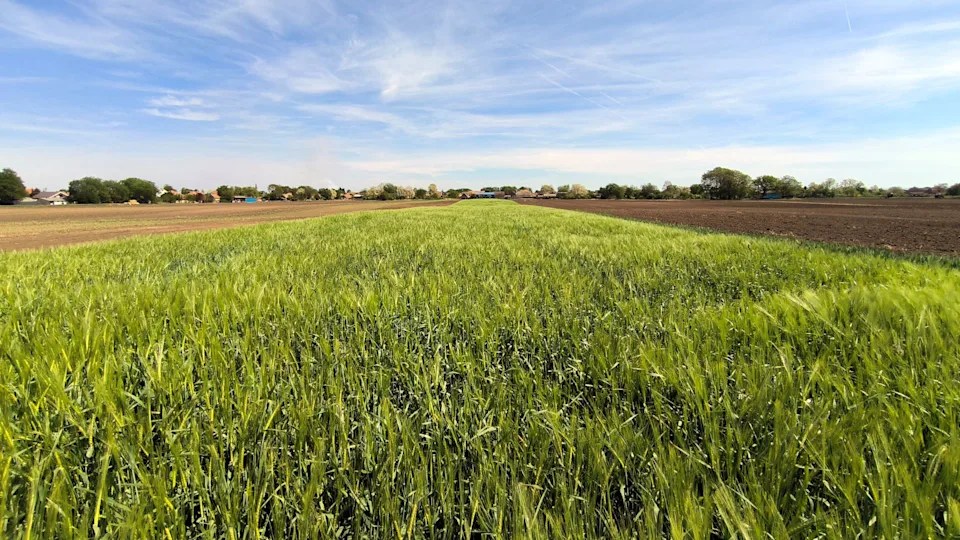
On the 665-acre Oatman Flats Ranch, the team is using special techniques to sustain wheat, barley, and other crops despite the brutal conditions.
“I joke that this farm is a little better than Death Valley, but I’m not really joking,” farm director Yadi Wang said.
The ranch is implementing regenerative organic farming in answer to drying rivers and arid, nutrient-poor dirt. The goal is to improve soil health and biodiversity as well as to limit water use and capture planet-warming carbon with vegetation. Started in 2021, the project has earned accolades and is considered a learning site by the Regenerative Organic Alliance, per Civil Eats.
Regenerative farming uses a mix of strategies, including Indigenous methods dating back thousands of years, to better manage farmland. They include crop rotation, vegetative cover, rotational grazing, and eliminating toxic pesticides and fertilizers, according to the alliance.
Natural fertilizers, for example, have already proved successful at providing bountiful harvests as part of other projects, including tomato research in Italy.
In the Arizona desert, farmers are also dealing with unprecedented droughts. NASA and other experts have linked planetary warming, caused largely by burning fossil fuels, to increased risks for water shortages and extreme weather events.
That’s on top of the poor soil quality, resulting from decades of neglect and conventional farming practices. As a result, the Oatman team is rebuilding irrigation systems, clearing invasive trees, and using other regenerative practices.
Water-conserving crops were added to combat drought and overdraw from nearby farms that grow acres of alfalfa and corn for feed and fuels. The land also got a healthy dose of manure, all according to Civil Eats.
Sheep are natural mowers that also leave fertilizing droppings. Other species that have long been absent are returning, including dragonflies. Wang said the insects are proof of the advancements in water conservation.
“If we’re going to hold on to farmland, we need a significant change in how we farm and what we farm,” ranch owner Dax Hansen added.
The effort is paying off. In addition to the water gains, the team has doubled healthy organic matter in the dirt.
It’s a mindset that can be applied in any environment at nearly any scale. At home, you can cultivate a sustainable backyard by letting nature take over. Natural lawns with native blooming plants can also boost local pollinator health. Government experts say that 35% of the world’s food supply is reliant on struggling pollinators.
In Arizona, the ranchers also have them in mind. They spent $100,000 on native hedgerows that also help to retain soil and provide habitat for bees, birds, and other species, according to Civil Eats.
The team intends to continue restoring farmland in the extreme conditions. The project has been bolstered by government funds, but the goal is for a sustainable, “financially viable” system, per Civil Eats.
“You’ve seen what the land looks like in five years; imagine it in 10,” Hansen said. “If we can do it here, we can do it anywhere.”
The good news in this story is that regenerative farming methods work. Today’s JohnKu talks about taking care of nature. I hope you have a lovely week.
Nature by John W. Howell © 2025
Nature has a way,
To reward good stewardship . . .
She gives back in spades.























 Fiction Favorites
Let’s hope Trump & co keep funding these endeavours and others like them, John 🤔
LikeLiked by 2 people
I believe meaningful projects will continue to receive funding. The pork barrel political stuff is what is being eliminated, no matter what you hear from progressives.
LikeLiked by 2 people
I especially smiles when I read about the sheep. I am always telling my family that we either need sheep or goats, because of what they can do for the yard. We can even rent them out to the neighbors…
LikeLiked by 1 person
I had sheep and goats many years ago, and they were terrific. Everyone should have at least one.
LikeLiked by 1 person
They’re right, if it works in AZ, it’ll work anywhere.
LikeLiked by 2 people
I agree with that. I hope the word spreads.
LikeLiked by 1 person
Dear John
That’s quite a success this combination of modern farming partly with traditional methods.
We wish you an easy weekend
The Fab Four of Cley
🙂 🙂 🙂 🙂
LikeLiked by 1 person
Thank you. I hope this kind of land management will catch on. Wishing the F4oC fun and peace this weekend.
LikeLiked by 1 person
That sounds like a lot of work, but worth it.
LikeLiked by 1 person
It does sound like work, but the results seem to pay off.
LikeLike
Fantastic share, John. Great news on so many fronts.
LikeLiked by 1 person
I agree, Pat.
LikeLike
I like this one. Definitely fits your Good News theme.
LikeLiked by 1 person
Yes, it does. Thanks, Craig.
LikeLiked by 1 person
Wonderful news, John. Very hopeful! I’ll share with my farmer brother who lives in Southern California. And your JohnKu is spot-on. Have a wonderful weekend. 🌞
LikeLiked by 1 person
Wishing you a super weekend as well. Gwen. Thank you.
LikeLiked by 1 person
Sure hope others are able to adopt this technique. Sounds like a win all around.
LikeLike
Humans are incredibly inventive when having to adapt to climate change. This is such a great story. And you’re so right, John, Mother Nature will give back in spades!
LikeLike
This is truly fantastic.
Have you noticed how returning to organic farming is beneficial to the earth? All this over-farming over the years has caused such problems. Returning to gentle and thoughtful goes a long way.
Wonderful good news Friday, John
LikeLiked by 1 person
Gentle and thoughtful can benefit more than just farming. Thanks, Dale.
LikeLiked by 1 person
That is for sure!
LikeLiked by 1 person
😊
LikeLiked by 1 person
A wonderful post of restoration and hopeful, John! 💓
LikeLiked by 1 person
I agree, Cindy.
LikeLike
That’s good. Arizona is sometimes very low on water, and cut off water to places other than the big cities.
LikeLiked by 1 person
Yes, it’s true. That makes this experiment very important.
LikeLiked by 1 person
Hi John, this is very interesting. South Africa also has areas that are like Arizona in climate and environment.
LikeLiked by 1 person
Would work there too. Thanks, Robbie.
LikeLiked by 1 person
These initiatives give you hope for water and for the future. Thank you for the good news story, John.
LikeLiked by 1 person
Glad to share Esther. 😊
LikeLiked by 1 person
Regenerative farming helps farmers and nature. Encouraging news for sure! TGIF to you,
LikeLiked by 1 person
TGIF to you as well, Jo
LikeLike
It’s funny how the old ways of doing things are coming back in practical ways that benefit the greater good. Great story Boss.
LikeLiked by 1 person
That is exactly what is happening here. Thanks, Marc.
LikeLiked by 1 person
Respect to the people who understand.
LikeLiked by 1 person
Sorry I didn’t tweet this Boss, but Twitter was giving me issues.
LikeLiked by 1 person
Never worry
LikeLiked by 1 person
🙂
LikeLiked by 1 person
When I read the title, I thought we sure could use that here. Exciting to see here is here. 😄 I began noticing a decrease in dragonflies a few years ago. Of course, that is just one noticeable change. Thank you for the encouraging news. Happy weekend to you, John!
LikeLiked by 1 person
It is encouraging. I was surprised that there was there too. Let’s hope more take up the process. Thank you for the weekend wish. I hope yours is filled with joy and peace. 😊
LikeLiked by 1 person
🙏🏻🙏🏻🙏🏻
LikeLiked by 1 person
😀
LikeLiked by 1 person
The old ways are often best, tried and true, like manure. This is wonderful.
LikeLike
Arizona is in a severe drought right now, and agricultural use of water is a big topic. We aren’t getting any rain.
LikeLiked by 1 person
Yeah, it is really dry there. I hope more farmers will adopt this process. Thanks for sharing, Dawn.
LikeLike
Great story and great Johnku!
LikeLiked by 1 person
Thank you, Marie. Glad you liked it.
LikeLiked by 1 person
The JohnKu rings true.
“If it ain’t broke, don’t fix it”.
Seems like man fixed a lot of things that weren’t broken. Looks like we are finding a way to a not broken state.
🐂 🐖 🐑
LikeLiked by 1 person
Yes, we need to fix a lot. 😊X
LikeLiked by 1 person
OX OX
LikeLiked by 1 person
😀X
LikeLiked by 1 person
Yes!! This is so important as water resources are literally life. Man needs to stop fighting against Nature and farm more appropriate crops to conserve. Thanks for sharing a glimmer of ecological hope, John.
LikeLiked by 1 person
I agree with you, Monika. We’ve got to get practical and start making moves to conserve.
LikeLiked by 1 person
We sure do…the Colorado River that supplies NM, Arizona, Nevada & California has allocation problems as it is. And considering that California supplies so much of the produce in this country, big changes are a necessity!
LikeLiked by 1 person
So true.
LikeLiked by 1 person
Thanks for sharing this wonderful story, John. It’s always nice to see good happens for a change! 🤗💗
LikeLiked by 2 people
I agree, Harmony. Thanks for the visit and comment.
LikeLike