
I am very happy to welcome Elizabeth Gauffreau here on Good News Friday. She has a new book and it is good news for sure. So without any delay. Here is Liz to talk about her book.
Introduction
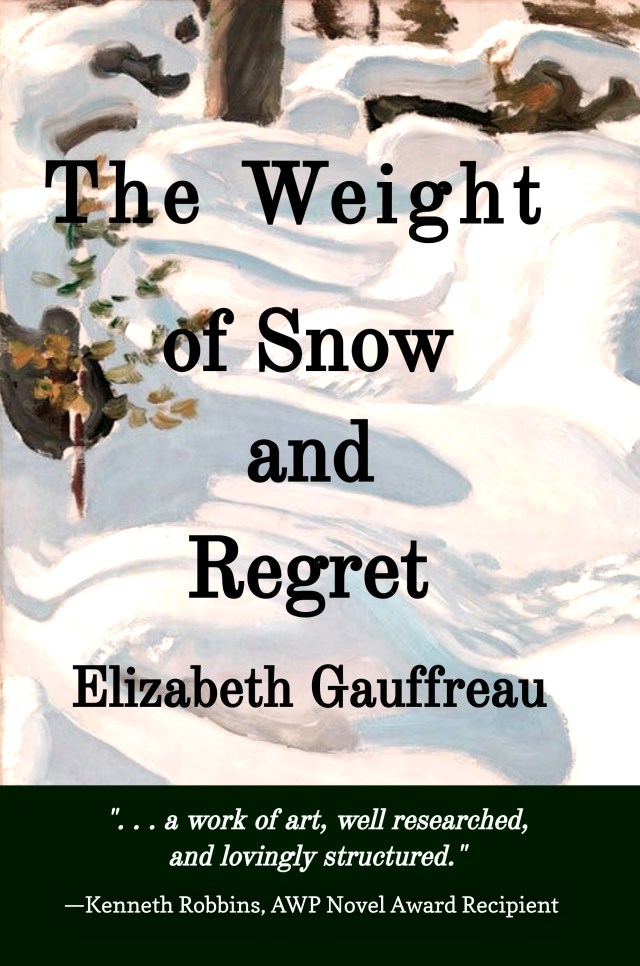
Thank you for hosting me on my blog tour for The Weight of Snow and Regret, John! For today’s tour stop, I’m giving a brief overview of the historical context of the poor farm system in Vermont. But first, here’s what The Weight of Snow and Regret is all about.
Description
For over 100 years, no one wanted to be sent to the Sheldon Poor Farm. By 1968, no one wanted to leave. Amid the social turmoil of 1968, the last poor farm in Vermont is slated for closure. By the end of the year, the twelve destitute residents remaining will be dispatched to whatever institutions will take them, their personal stories lost forever.
Hazel Morgan and her husband Paul have been matron and manager at the Sheldon Poor Farm for the past 20 years. Unlike her husband, Hazel refuses to believe the impending closure will happen. She believes that if she just cares deeply enough and works hard enough, the Sheldon Poor Farm will continue to be a safe haven for those in need, herself and Paul included.
On a frigid January afternoon, the overseer of the poor and the town constable from a nearby town deliver a stranger to the poor farm for an emergency stay. She refuses to tell them her name, where she came from, or what her story is. It soon becomes apparent to Hazel that whatever the woman’s story is, she is deeply ashamed of it.
Hazel fights to keep the stranger with them until she is strong enough to face, then resume, her life—while Hazel must face the tragedies of her own past that still haunt her.
Told with compassion and humor, The Weight of Snow & Regret tells the poignant story of what it means to care for others in a rapidly changing world.
Historical Context for the Weight of Snow and Regret
The approach I took to writing the novel (and the reason I’m eager for people to read it) is to honor the history of the Sheldon Poor Farm and the people who lived, worked, and died there by creating characters that readers would come to understand and care about. The job of fiction, in other words!

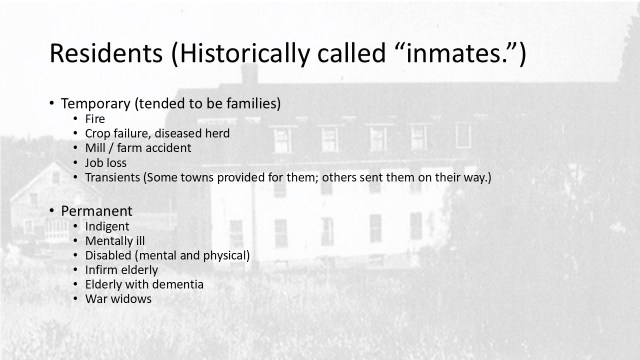
The Poor Farm System: 19th Century
I researched the history of the poor farm system in Vermont, which was inherited from 17th-century Elizabethan poor laws.
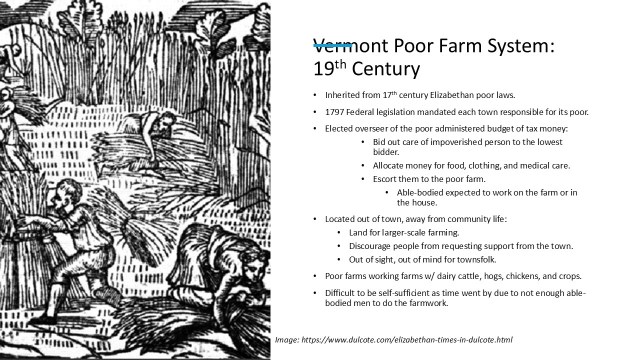
The Poor Farm System: 20th Century
In the 20th-century, the historical context was a transition from specific localities’ being responsible for the poor to the federal government’s assuming responsibility for the social safety net, with the states responsible for administering the federal benefits programs. (Two of the characters in the book are adamantly opposed to the state’s taking over.) The road sign in the image is for the road to Sheldon Poor Farm. It’s easy to find similar poor farm road signs in Vermont and New Hampshire, particularly on the back roads
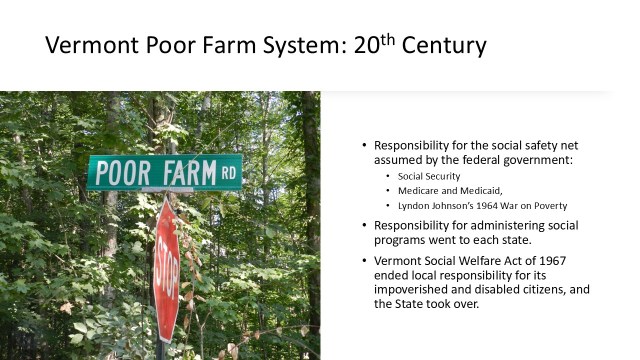
The Poor Farm Residents
The next image outlines the two categories of poor farm residents, temporary and permanent, and the primary reasons people would have been sent there.
Conditions at the Sheldon Poor House
I was surprised at how much information about the living conditions I was able to find simply by reading local newspapers. I was also surprised at the range of conditions. As the timeline below indicates, living conditions for the residents were either exemplary or appalling. (The 1931 abuse allegations included a straightjacket for unruly residents and one room used as a jail. I couldn’t find anything further about whether the allegations were actually addressed.)

Books2Read Purchase Link: https://books2read.com/WeightofSnow

Author Biography
Elizabeth Gauffreau writes fiction and poetry with a strong connection to family and place. Her work has been widely published in literary magazines, as well as several themed anthologies. Her short story “Henrietta’s Saving Grace” was awarded the 2022 Ben Nyberg prize for fiction by Choeofpleirn Press.
She has previously published a novel, Telling Sonny: The Story of a Girl Who Once Loved the Vaudeville Show, and two collections of photopoetry, Grief Songs: Poems of Love & Remembrance and Simple Pleasures: Haiku from the Place Just Right.
Liz’s professional background is in nontraditional higher education, including academic advising, classroom and online teaching, curriculum development, and program administration. She received the Granite State College Distinguished Faculty Award for Excellence in Teaching in 2018. Liz lives in Nottingham, New Hampshire with her husband. Find her online at https://lizgauffreau.
Click/tap to follow blog tour: https://lizgauffreau.com/the-weight-of-snow-and-regret-blog-tour-2/
Also more good news Eternal Road – The last stop is free on Amazon US today through Sunday. Here is the link https://www.amazon.com/dp/B08GL135KQ
The good news here is that Liz has a new book. Today’s JohnKu talks about books. I hope you have a super weekend.
Books by John W. Howell © 2025
New ones are published,
We greet them like new neighbors . . .
Go and check them out.





















 Fiction Favorites
Great to see Liz here with her wonderful book. Thank you for hosting her, John, and all the best to Liz.
LikeLiked by 4 people
Thank you for the support, Esther. 😊
LikeLiked by 3 people
Thank you, Esther!
LikeLiked by 3 people
I’m halfway through Liz’s compelling new book, so this post certainly helps with background information.
LikeLiked by 3 people
I think the background is terrific, too. Joy. Thanks for the support.
LikeLiked by 3 people
I’m so glad, Joy!
LikeLiked by 3 people
Impressed by your research.
LikeLiked by 3 people
Me too. Thanks, Craig.
LikeLiked by 2 people
Thank you, Craig. Those newspaper articles were a godsend. I don’t think I could have written the book without them.
LikeLiked by 2 people
Fascinating information. I am very interested in this as a great-great grandfather of mine died at a Poor Farm in Portland, Oregon in 1928. I have often wondered why he ended up there. Well done, Liz and best of luck with this book.
LikeLiked by 3 people
Finding out why your great-great-grandfather ended up there would make a great story, Darlene. Thanks for the visit and good wishes. 😊
LikeLiked by 3 people
Thank you, Darlene. After the dust has settled from the book launch, I’m going to begin a project to share the stories of actual poor farm residents. Your great-great grandfather is on my list!
LikeLiked by 2 people
I just wish I knew more about why he ended up there. It is a great mystery.
LikeLiked by 2 people
That will be great.
LikeLiked by 2 people
Thanks!
LikeLiked by 1 person
😊
LikeLiked by 2 people
Thank you very much for doing this for Liz, John.
LikeLiked by 3 people
Thanks for the visit and comment, GP.
LikeLiked by 2 people
Thank you for stopping by, GP.
LikeLiked by 2 people
Always a pleasure!
LikeLiked by 2 people
Wishing Liz the best with her new book! I love the title and the cover very much, I already added it to my reading list. Thank you for hosting her, John, her research for the book is quite impressive, so thorough!
LikeLiked by 3 people
I agree, Nicole. Liz is a great researcher. Thanks for the supportive comments. 😊
LikeLiked by 1 person
Thank you very much, Nicole! Happy reading!! The research gave me plenty of surprises. (Thank goodness for newspapers.com!)
LikeLiked by 2 people
Fantastic, Liz! Your story brings out the good, the bad, and the ugly, but in human terms so we can grasp the facts and emotions. Your research nailed it, and from my view, that’s a sharp stick in the eye of artificial intelligence! Kudos for your many works!
LikeLiked by 2 people
Great comment, Grant. Thank you.😊
LikeLiked by 2 people
Thank you very much, Grant!! If I can poke a sharp stick in the eye of artificial intelligence, all the better.
LikeLiked by 2 people
Best of luck with the newest book, Liz! Thanks for sharing this with us, John!!
LikeLiked by 2 people
Thanks for the support, Deborah. 😊
LikeLiked by 2 people
Thank you, Deborah!
LikeLiked by 2 people
You’re welcome, Liz!
LikeLiked by 2 people
[…] Friday JohnKu _ AKA -TGIF – Good News/Fri-Yay -The Weight of Snow and Regret Blog Tour with E… […]
LikeLiked by 2 people
Thank you, Charles.
LikeLiked by 1 person
Thank you, Charles
LikeLike
What a fascinating story, Liz, I look forward to reading it. Thanks, John, for introducing us to the book!
LikeLiked by 2 people
Thank you very much, Noelle! I hope you enjoy the read!!
LikeLiked by 2 people
Thanks for your support, Noelle.
LikeLiked by 2 people
Thank you for hosting me on Good News Friday, John!! Great JohnKu about new books.
LikeLiked by 1 person
My pleasure, Liz.
LikeLiked by 1 person
Many thanks for featuring Liz’s interesting new book, John. Shared both posts on Twitter.
Best wishes, Pete.
LikeLiked by 2 people
Thank you, Pete. I appreciate the share. And I’m sure Liz does too.
LikeLiked by 2 people
Thank you, Pete! I appreciate the shares.
LikeLiked by 2 people
Thanks for the education, Liz. Looks very interesting.
LikeLiked by 2 people
I agree, Rebecca. 😀
LikeLiked by 2 people
Thank you, Rebecca!
LikeLiked by 2 people
Great to see this brief history as background to Liz’s new book. I think PA and New England had similar systems for poorhouses. And yes, they were called inmates in PA, too, at least in the 18th and early 19th century records I’ve seen. The last one in Chester County, PA also closed in the 1960s. Liz’s book is on its way here!
LikeLiked by 2 people
Thank you for sharing the information, Merril. Liz will love that the book is on the way.
LikeLiked by 2 people
You’re welcome, John!
LikeLiked by 1 person
😊
LikeLiked by 1 person
Thanks, Merril! The online cruising around I did for my research suggested that the poor farm/almshouse models were about the same for most states.
LikeLiked by 2 people
You’re welcome, Liz!
LikeLiked by 2 people
It’s so nice to see Liz’s fascinating book posted here, John.
LikeLiked by 2 people
Thank you, Tim!
LikeLiked by 2 people
You’re welcome, Liz. 😊
LikeLiked by 2 people
Thank you, Tim. 😊
LikeLiked by 1 person
😊
LikeLike
What a wonderful shout out to Liz on this wonderful post chalk full of history, John! Congratulations to her!
🙌🏽💕
LikeLiked by 2 people
Thank you, Cindy!
LikeLiked by 1 person
Thank you for the lovely comment, Cindy.
LikeLike
I’m not a researcher, Liz, but you make it sound so interesting! It’s not surprising that the condition of the poor farm housing varied from place to place. You show that fact well in the story and how it depended on the quality of the managers. A wonderful read. Congrats again. And thanks, John, for hosting!
LikeLiked by 2 people
Thank you for your comment, Diana.
LikeLiked by 1 person
Thank you, Diana. It was sobering to realize that it doesn’t matter how good a social safety net system is set up, if the people administering it are not ethical or compassionate, it’s not going to provide the quality of life intended by the system.
LikeLiked by 1 person
John, your Johnku really sums up the feeling of these book launches: like welcoming new residents to the neighborhood. Liz, it is fascinating how conditions at the poor farm varied over time. I appreciate the historical background you’re providing us.
LikeLiked by 1 person
Thank you, Marie. I think Liz’s book sounds good.
LikeLiked by 2 people
Thank you, Marie. I was very surprised to learn from local newspaper articles just how varied those conditions were.
LikeLiked by 2 people
I’m impressed with your research, Liz! The history the the Poor Farm system and the conditions of the residents are fascinating. Best wishes for your new book. Thank you for hosting, John!
LikeLiked by 2 people
Thank you for the lovely comment, Miriam.
LikeLiked by 2 people
Thank you very much, Miriam! I’m glad you found the post interesting.
LikeLiked by 2 people
I love researching novels! It sounds like you had a lot of interesting stuff to dig into. What a great start to you book launch, Liz.
LikeLiked by 1 person
Thank you, Deborah for the support. 😊
LikeLiked by 1 person
Thank you very much, Deborah!
LikeLiked by 1 person
This sounds like an interesting read, Liz. I remember people used to talk about “the poor house,” when I was young. Thanks for this wonderful introduction to your book. Many thanks to John for hosting. 💟
LikeLiked by 2 people
Thank you for the lovely comment, Colleen. 😊
LikeLiked by 1 person
You’re so welcome, John.
LikeLiked by 1 person
😊
LikeLiked by 1 person
Thank you, Colleen! I remember mentions of the poorhouse in reference to profligate spending habits.
LikeLiked by 2 people
Oh yes. The elders threatened that if you weren’t careful you’d end up in the poor house!
LikeLiked by 1 person
Thank you, John, for featuring Liz today. I’ve just begun to turn the pages of The Weight of Snow and Regret, and I’m captivated. A big congratulations to Liz…I’m looking forward to this read! 😊
LikeLiked by 2 people
Thank you for those supportive words, Gwen. 😀
LikeLiked by 1 person
Thank you very much, Gwen! I hope you enjoy the book.
LikeLiked by 1 person
This is history I knew nothing about. I had heard of Poorhouses, but always thought they ended before the 20th Century. The impulse to care for those who need help is not a bad one, but it is too often abused. I wonder if we will ever figure it out. (K)
LikeLiked by 2 people
Hard to say on figuring it out, Kerfe. The research that was done by Liz was phenomenal. Thanks for the visit.
LikeLiked by 2 people
It was. She is very perceptive about the information she gathers too.
LikeLiked by 2 people
Yes, indeed.
LikeLiked by 2 people
Thank you, Kerfe. I was so surprised to learn that Vermont had active poor farms right up through 1968. Not to be cynical, but I don’t think we will ever figure out the best social safety net for those who need it.
LikeLiked by 2 people
I think you are probably right Liz. But I hope we don’t give up.
LikeLiked by 2 people
Absolutely not! In fact a good friend of mine in Franklin County is a case worker for people who would have ended up on the poor farm years ago. He’s doing everything he can to give them the services they need to stay in their homes.
LikeLiked by 2 people
Many unsung heroes out there.
LikeLiked by 2 people
There are.
LikeLiked by 2 people
So interesting, Liz! I started The Weight of Snow and Regret today. I’m loving it!
LikeLiked by 2 people
A wonderful recommendation, Priscilla. Thank you.😊
LikeLiked by 2 people
I’m so glad, Patricia, thank you!!
LikeLiked by 2 people
Interesting information about the Poor Farm System. It wasn’t perfect but at least there was something for the elderly, widows and infirm. There used to be a similar system in Sweden (where I grew up).
LikeLiked by 2 people
Thanks, Thomas. 😊
LikeLiked by 1 person
Thank you, Thomas. What system replaced the poor farm system in Sweden?
LikeLiked by 2 people
It came in steps with a national public pension system in 1913, social security and medical support for the disabled was introduced in the 1930’s the first steps toward universal healthcare in 1946, complete universal healthcare in 1955, poor houses (or poor farms) were eventually not needed.
LikeLiked by 2 people
Thank you for the information, Thomas.
LikeLiked by 2 people
The words “resident” and “inmate” evoke two totally dfferent meanings. Resident doesn’t have the same negative connotation that inmate does.
LikeLiked by 2 people
That is for sure. Thanks, Pete. 😊
LikeLiked by 2 people
I was shocked to learn that residents of the poor farm were called “inmates.”
LikeLiked by 2 people
Thanks for hosting a stop on this book tour. Definitely looks like a great book from a very talented writer.
LikeLiked by 2 people
Thank you, Monika. 😊
LikeLiked by 2 people
Thank you very much, Monika!
LikeLiked by 2 people
My great-uncle, Carl, fought in WWI and was gassed with toxic chemicals. He developed respiratory problems and eventually ended up on a poor farm. I’ve always been fascinated by this story and just ordered Liz’s book to learn more about poor farms.
LikeLiked by 1 person
Thank you very much, Dawn! I hope you enjoy the book. Coincidentally, one of the residents of the poor farm is a disabled WWI veteran.
LikeLiked by 1 person
It’s great to see, Liz here, John. Thank you for featuring her new book.
LikeLiked by 1 person
Always a pleasure having Liz visit.
LikeLiked by 2 people
Thank you for stopping by, Eugi!
LikeLiked by 2 people
My pleasure, Liz!
LikeLiked by 2 people
Thanks for hosting, John! It’s wonderful to see Liz and her new book featured here. Congrats to Liz!
LikeLiked by 2 people
I agree, Lauren. Thanks for the visit.
LikeLiked by 2 people
My pleasure, John! 😊
LikeLiked by 2 people
Thank you, Lauren!
LikeLiked by 2 people
You’re so welcome, Liz!
LikeLiked by 2 people
How wonderful to see Liz here. I just started the book this morning and already I am drawn to get back to it. 🙂 Congratulations to Liz and thank you, John, for hosting!
LikeLiked by 2 people
Thank you, Jan!
LikeLiked by 2 people
Thank you for hosting Liz and her new book, John. I enjoyed this post, and the story sounds like a great read.
LikeLiked by 2 people
Thank you, Jennie! I’m glad you enjoyed the post.
LikeLiked by 2 people
My pleasure, Liz!
LikeLiked by 2 people
It does sound good for sure, Jennie.
LikeLiked by 1 person
Yes!
LikeLiked by 1 person
Like Diana, I’m also not much for research, so hat’s off to you, Liz – and congrats on the new release!
LikeLiked by 2 people
Thank you, Teri! The whole research process is a heck of a lot easier than it was in the old days, although I did have to go in person to two university libraries.
LikeLiked by 2 people
Intriguing history. (This is a different sort of Good News Friday, but I love it.)
Nicely done to Liz!
LikeLiked by 2 people
Thank you, Ilsa.
LikeLiked by 1 person
🙂
LikeLiked by 1 person
Thank you very much,Ilsa!
LikeLiked by 1 person
You’re welcome, Liz! Keep on keeping on! 🙂
LikeLiked by 1 person
Will do!
LikeLiked by 1 person
This is great, John. I’m hosting on the 9th!
OMG, I have the book and have been reading it. Boy, Liz sure is a fabulous writer!
Congratulations to Liz!
❄️X 📔X 📔X ❄️X
LikeLiked by 2 people
Great endorsement, Resa. 🐂 🐂 🐂
LikeLiked by 1 person
It’s a must read! 🐂 🐂 🐂
LikeLiked by 1 person
Great. 👍🏻X
LikeLiked by 1 person
I’m so glad you’re enjoying the book, Resa!
LikeLiked by 2 people
It is terrific, Liz!
I will for sure be saying something about it on the blog tour stop at my place!
I’m about 1/4 the way in, but I’m a slow reader, so I might not have it finished by the tour post.
Sill, I need to say something.
LikeLiked by 2 people
Thanks, Resa! I’m looking forward to my visit to your place.
LikeLiked by 2 people
Me too!
LikeLiked by 2 people
Me too.
LikeLiked by 1 person
The information about the straight jacket and jail isn’t that surprising to me. Life has always been really hard for people down on their luck. Thanks for hosting, John.
LikeLiked by 2 people
My pleasure, Robbie. Thanks for the comment.
LikeLike
My pleasure
LikeLiked by 1 person
😊
LikeLike
Thank you, Robbie. I sincerely hope that the straight jack and jail room were never used.
LikeLiked by 1 person
*jacket
LikeLiked by 1 person
Liz, You have really honored the residents with this book. Kudos!!!
LikeLiked by 1 person
Thank you, Luanne.
LikeLiked by 1 person