
Friday JohnKu – AKA – TGIF – Fri-Yay/Good News

credit – Stadler, released

Today’s good news story comes from the Good News Network

This Sleek New LA Commuter Train Is Pollution-Free

In Los Angeles County, a new, low-emissions commuter train is powering itself with hydrogen fuel cells to combat local and global smog.

Liquid or gaseous hydrogen is considered the best green alternative to the heavy fuels that power society’s largest machines, and this ZEMU train is just a few months away from starting routine service from San Bernadino and Redlands to LA proper.

ZEMU stands for zero-emissions multiple units and possesses several advantages over other decarbonized rail transport. Electric trains recharge via overhead powerlines, which require millions in funding to install and maintain and aren’t practical for long distances.

“The reality is it can be used anywhere existing rail happens now,” says Tim Watkins, chief of legislative and public affairs at the San Bernardino County Transit Authority, the agency behind the project. “It doesn’t require a new capital investment into infrastructure.”

Manufactured by the Swiss company Stadler, ZEMU trains take on hydrogen fuel split into hydrogen molecules, generating energy that recharges an electric battery that powers the train’s motors. The battery is also recharged by breaking, and the only emission of any sort is water vapor.

“I think it’s going to enable a lot of places to decarbonize without having to make costly investments in infrastructure,” Watkins told Fast Company Magazine.

The trains are currently undergoing the final testing phase on local tracks, and service is slated to begin in early 2025. At the moment, they use hydrogen created via fossil fuels, so while the localized emissions are still zero, the trains still have a carbon footprint.

Green hydrogen, made using renewable energy sources, is expected to be available in the not-too-distant future. However, as Adele Peters at Fast Company details, even if the trains lead to CO2 entering the atmosphere, San Bernadino needs zero-emissions transport quickly.

A leading air quality index survey recently gave the San Bernadino area an ‘F’ grade for air quality. The city suffers from more days of smog than almost any other city in America.

The good news in this report is that hydrogen fuel cell practicality is now a reality. Today’s JohnKu talks about exploring alternatives. I hope you have a terrific weekend.

Exploration by John W. Howell © 2024

Alternatives thrive,

When out of the box thinkers . . .

Dare to innovate.
Friday JohnKu – AKA – TGIF – Fri-Yay/Good News


Choctaw Nation Photo

Today’s good news story comes from the Good News Network.


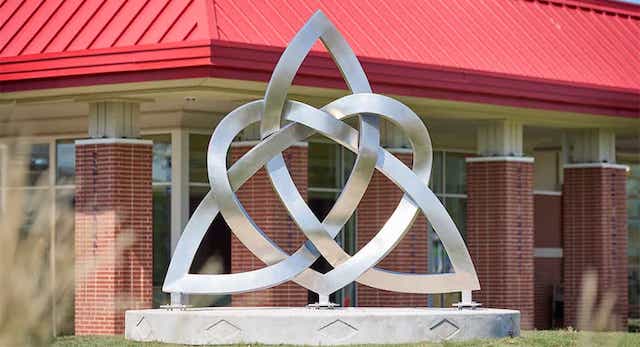
In the Choctaw Nation’s territory in Oklahoma, tribal leaders have erected a knotted statue to honor a 170-year-old cross-continental connection.

The “Eternal Heart” sculpture, combining a heart with a Celtic trinity shape, was designed to honor the eternal bond forged between the Choctaw Nation and the most unlikely of people: the Irish.

In 1847, when Ireland was experiencing years of starvation due to potato blight, the North American Choctaw tribe joined a compassionate campaign in the U.S. to help these strangers a whole ocean away from them.

Despite their own suffering, having been forced to relocate hundreds of miles from their native land, the tribe pooled their pennies and raised $170 (almost $5,000 in today’s currency) through a relief fund to send to Midleton in County Cork.

An early artist impression of the sculpture in Cork—released to the press.

Nine years ago, a soaring silver monument to honor these donations was unveiled in Cork, and Choctaw leaders were invited to the grand unveiling.

“The bond between our nations has strengthened over the years,” Chief Batton said. “We are blessed to have the opportunity to share our cultures, and meet the generous people who have continued to honor a gift from the heart.”

In 2020, during the COVID-19 pandemic, the Navajo and Hopi nations were experiencing high rates of infection, and the Irish saw their moment to demonstrate that they remembered the kindness shown to them by America’s native peoples. Irish donors raised $2.7 million for water and supplies through a GoFundMe, with many leaving messages of remembrance and hope.

“Ours is a debt that can never be repaid, but please consider this a small token of love and solidarity from your Irish brothers and sisters. Praying for the strength, well-being, and prosperity of your community always,” said Caroline Kelly, adding a Gaelic message of unity. “Ar scáth a chéile a mhaireann na daoine.”

“When the Choctaw people had nothing, they gave Ireland all they could at a time when we needed it most. I know it’s not much, but I hope this helps our friends in their time of need,” added Ciaran Mc Brearty.

One of the truly wild parts of this historical story is that the people of 19th century Ireland who ultimately benefitted from the Choctaw donations didn’t learn about the aid money’s origin until decades after the famine had ended.

One can only imagine their surprise when the Midleton residents found out that it came not from Catholics or countrymen but from a group of ‘Indians,’ the conceptualizations of whom the Irish would have only possessed via written accounts of colonial explorers, and the high drama contained in early Wild West, Cowboys and Indians-like material distributed by publishers in America.

In 1995, then-Irish President Mary Robinson visited the Choctaw Nation to express gratitude and rekindle the friendship between the two nations. During the visit, President Robinson was appointed “Honorary Chief of the Choctaw Nation.” This historic visit began a renewed commitment to honor the bond forged by the Choctaws’ selfless act.

“It is a great honor to have a hand in exemplifying the Choctaw-Irish connection through my art,” said Choctaw sculptor Samuel Stitt. “The Choctaw culture of giving and caring for others is passed down to each generation. The ‘Eternal Heart’ is an artistic interpretation of how the Irish people and Choctaw Nation will forever be connected by that human characteristic of compassion—one people for another.”

The unveiling of the “Eternal Heart” sculpture reminds us of the power of compassion and solidarity and stands as a testament to the enduring friendship between the Choctaw Nation and the people of Ireland.

The good news in this report is helping others form a bond that could last a lifetime. Today’s JohnKu talks about helping others. I hope you have a wonderful week.

A Hand by John W. Howell © 2024

A simple gesture,

Of kindness to one in need . . .

Brings both together.

Friday JohnKu – AKA – TGIF – Fri-Yay/Good News


A reef in Biscayne Bay National Park – credit National Park Service

The Good News Network gives us our good news story today.

US National Parks Are Receiving Record-High Gift of $100 Million to Protect and Restore Fragile Ecosystems

The official non-profit organization representing America’s National Parks has received notice that it is set to receive the most significant philanthropic gift of its history.

$100 million has been set aside from the Lilly Endowment for the National Parks Foundation (NPF) to protect the fragile ecosystems in our parks.

Some national parks like Glacier or Canyonlands are enshrined to protect whole tracts of pristine landscape, while others are established to protect very small tracts of very vulnerable ecosystems, like Biscayne Bay and Channel Islands.

To that end, Lilly Endowment Inc. has stated that the $100 million is for protecting ecosystems at immediate risk of degradation.

AP reported that the money will be used to address the needs in sites beyond the 63 national parks, said Will Shafroth, president and CEO of the NPF, of which over 400 are managed by the National Park Service.

Restoring coral reefs in Biscayne Bay National Park and other reef-bearing parks, restoring wild trout species in western parks, and protecting the most delicate ecosystems have all been among the NPF’s recent work, and Shafroth expects the first round of grants stemming from the Lilly gift to be within these areas.

Over much of the 21st century, a backlog of deferred maintenance in the national parks grew until it amounted to around $7 billion in needed work. The Great American Outdoors Act, passed by the 116th Congress and signed into law by President Trump, attempted to address this by permanently reauthorizing the Land and Water Conservation Fund. This mechanism diverts 50% of all the money from energy sales (coal, oil, natural gas) on federally-owned land to conservation grants.

Congress estimated this would generate $9.5 billion for the national parks over five years. However, a recent re-examination of the NPS’s maintenance needs places the needed funding at around $24 billion.

In light of this, the NPF has launched a fund drive looking for private donors to make up part of the difference. Lilly is the first to have contributed.

Philanthropic gifts like the one from Lilly are crucial as they allow the NPS to act immediately to address time-sensitive and critical projects while they, like all the other federal agencies, jockey over budget negotiations and allocation, the NPF said.

“For over 50 years, private philanthropy has played a vital role in bridging the gap between park needs and available funding. This grant will allow us to supercharge our efforts to ensure our national parks are for everyone, for generations to come,” President Shafroth said in a statement.

The good news in this article is that private funding will perhaps offset the financing deficit needed for park repair. Today’s JohnKu talks about private donations to help the parks.

Donate by John W. Howell © 2024

Thankful for big checks,

But even the smallest gift. . .

Will help with repairs.

Friday JohKu – AKA – TGIF – Fri-Yay/Good News

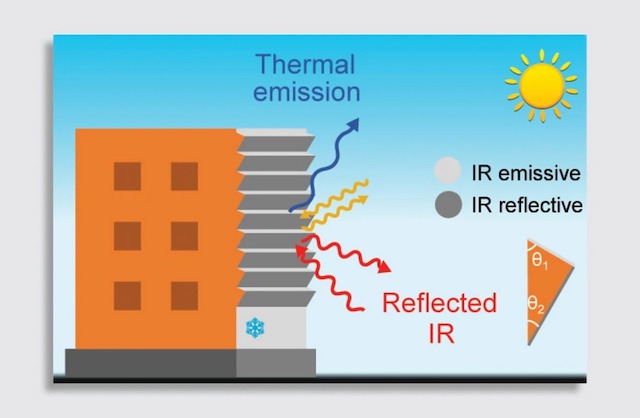
credit – Cheng et al Purdue University

Today’s good news story comes from the Good News Network

Build a Zigzag Pattern onto Walls to Keep Buildings Cool During Heat Waves

Structural engineers have discovered that the angles keep the building cooler if you build an apartment building with angled, shark-fin-shaped protrusions on the side where the Sun’s heat is the strongest.

It’s one of various simple new building and design elements proposed for a world where July and August routinely feature stories of droughts, heat waves, and temperature records.

From the dawn of time, humans have been forced to live in hot environments. From the dawn of construction, humans have figured out how to build buildings that take advantage of thermodynamics to cool them naturally. Many of these delightful architectural features are visible in buildings from antiquity, such as the Roman amphitheaters, the Taj Mahal, and the wind towers of Yazd.

Much of that planning was ignored with the advent of the modern age, and homes, whether those of the lower-middle class or the upper-middle class, took on the same character of modular boxes exposed to the mercy of any element that batters them.

In a study at Purdue and Colombia universities, researchers sought to find a simple way to retrofit boxy buildings with features that could help keep them cooler amid rising global temperatures.

One issue their research encountered is that heat hits most urban buildings from two angles—from the Sun and the ground, where cement and asphalt absorb heat and radiate it upwards all day.

“These two directions require different properties for cool walls,” says Qilong Cheng, a postdoctoral researcher at Purdue University who worked on the study as a graduate student at Columbia University. “So we have this two-surface zigzag design, with one surface facing the sky and the other facing the ground.”

The angles, which resemble the sawtooth roofs of factory rooms, can reduce average indoor temperatures by 5.5° Fahrenheit.

One material reduces or deflects radiation coming up from the ground, while heat from the Sun is reflected with ultra-white paint.

Cheng and his colleagues are now looking to patent the design and turn it into a product, perhaps made of corrugated iron, which they used in their study and found could reduce HVAC energy usage by 14%.

The good news in this story is, once again, someone questioned how things were done and came up with a better way. Today’s JohnKu talks about questions. I hope you have a lovely weekend.

Status Quo by John W. Howell

Defending the way,

Most things have always been done . . .

Ensures obsolete.

Friday JohnKu – AKA – TGIF -Fri-Yay/Good News

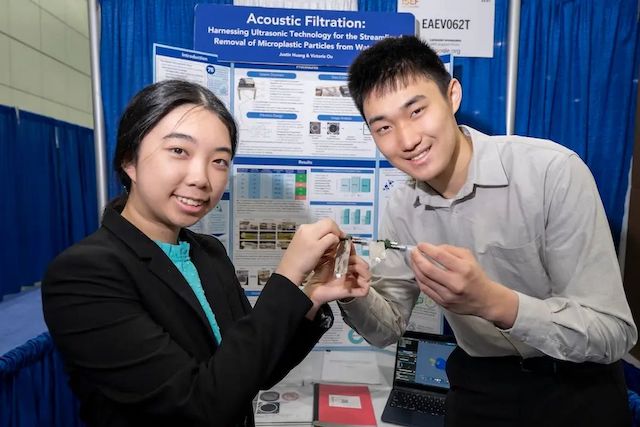
Justin Huang and Victoria Ou – credit Chris Ayers / Society for Science / ISEF

Today’s good news comes from the Good News Network. This story was brought to my attention by Noelle Granger. Thanks, Noelle.

Teens Invent Device that Removes Microplastics with Ultrasound Waves, Winning $50k

A pair of high schoolers invented a unique water filtration device that uses a wall of sound to hold back microplastic particles from running water.

In lab tests, the acoustic force from the high-frequency sound waves removed between 84% and 94% of the suspended microplastic particles in a single pass, and they are using the reward money from a prestigious prize to attempt to scale up their invention.

Without beating a dead horse, microplastic particles are everywhere on Earth—raining down from the jetstream, blowing up to the summit of Everest, and located at the deepest points of the ocean. Once ingested by humans, they have been found to infiltrate every organ that has been examined for them so far.

Addressing this pan contaminant is a monumental challenge, but high schoolers Justin Huang and Victoria Ou of Woodlands, Texas, may have a clever solution.

Using ultrasonic sound waves that move freely through the water, the teens have managed to capture as much as 94% of microplastic contaminants by pushing them away from the water’s outflow point.

Their device is no bigger than a pen and improves on other designs that have tried to use ultrasonic waves to address microplastics in wastewater and drinking water.

“This is the first year we’ve done this,” Huang told Business Insider backstage after receiving their award. “If we could refine this—maybe use more professional equipment, maybe go to a lab instead of testing from our home—we could really improve our device and get it ready for large-scale manufacturing.”

Ou and Huang presented their work at last week’s Regeneron International Science and Engineering Fair (ISEF) in Los Angeles, during which they won the Gordon E. Moore Award for Positive Outcomes for Future Generations worth $50,000.

They also picked up first place in their Google-sponsored category, Earth and Environmental Sciences.

“This is a pretty new approach. We only found one study that was trying to use ultrasound to predict the flow of particles in water, but it didn’t completely filter them out yet,” said Ou, who has known Huang since elementary school.

In developing their device, the pair visited wastewater and sewage treatment plants near their home and asked how they regulated microplastics. The answer they received was somewhat of a surprise: the plant had no such regulations in place. For starters, there isn’t a cost-effective means of doing so, and also the United States EPA doesn’t have regulations for microplastic contaminants in the water.

Ou and Huang believe their technology could be used in wastewater treatment plants like the one they visited, industrial textile plants, and rural water sources. On a smaller scale, it could filter microplastics in laundry machines and even fish tanks.

Justin and Victoria explain their device in the following video.

The good news about this story is the fact that young people are asking questions about the status quo and then doing something about situations they find needing improvement. Today’s John Ku talks about questioning the way things are done. I hope you have a beautiful weekend.

Status Quo by John W. Howell © 2024

If the question asked,

Does not have a good answer . . .

Find a solution.

Friday JohnKu – AKA – TGIF – Fri-Yay/Good News

The Perseid Meteor Shower By Bill Dickinson, CC license


Today’s good news is from the Good News Network.

The Most Active Meteor Shower of the Year Arrives in Just 5 Days’ Time

The most prolific meteor shower of the year will be at its peak on the morning of August 12th, when 150 shooting stars can be seen per hour in the Northern Hemisphere.

The meteors are called the Perseids because they appear from the general direction of the constellation Perseus, but in modern times, they have shifted to radiate on the border between Cassiopeia and Camelopardalis.

According to Valerie at Space Tourism Guide, the Perseids Meteor Shower occurs when the Earth passes through a stream of debris left by Comet 109P/Swift-Tuttle.

Special conditions permit us to see the debris every August, even though the comet has a 133-year orbit around the Earth.

In a slight case of misfortune, there will be a quarter Moon in the sky that night, meaning that in already light-polluted areas with few stars, the Moon will make it slightly more difficult to see the meteorites.

However if one can position themselves in a rural-enough area with dark skies and plenty of visible stars, our solitary satellite won’t dampen the meteor shower too much at all. In fact, it might even make for a spectacular image.

A few other additional events are in the night sky this month, such as the close approach of the Moon and Mars on August 27th. They will appear just 5° apart, and both be present in the skies surrounding the constellation Taurus.

This is a great opportunity for those interested in learning more about their cosmic environment or as a crash course for little ones on how to find the Red Planet in the sky.

On the YouTube channel Learn the Sky, there’s a great guide for how to find Taurus in the night sky. Convenient to this article, it’s just under Perseus, where the meteor shower will arrive from this month. Also included in the Taurus sector is a famous deep-space object known from ancient times called the Pleides, also known as the Seven Sisters.

The good news is that we have the opportunity to observe a natural occurrence. Today’s JohnKu talks about nature. I hope you have a terrific weekend.

Opportunity by John W. Howell © 2024

Nature is a show,

If we know what to look for . . .

Always takes the breath.


Friday JohnKu – AKA – TGIF – Fri-Yay/Good News

http://www.returnmycup.com


Today, good news comes from the Good News Network.

City Experiments with Reusable Cups at Starbucks, Taco Bell, and 30 Other Restaurants–with Return Bins all over town

By Andy Corbley –

A consortium of small firms is creating a renewable revolution within the boundaries of a small city in Northern California. The city will be the testbed for a use-and-return concept for fast food drinks.

Around 50 billion disposable drink cups are used every year in the US, but in the city of Petaluma, we will see if Americans have the discipline to reduce this footprint.

The city has around 60,000 people and will participate in the Reuseable Cup Project. The aim is to furnish 30 local restaurants, from Starbucks to Taco Bell, with identical, durable plastic drink cups. Customers and diners can use these cups and then either leave them on the table or deposit them in a network of dropoff bins around the city.

NextGen Consortium, led by the Center for the Circular Economy at Closed Loop Partners investment firm, asked the city government for help identifying partner restaurants. A firm called Muuse will provide professional cleaning and distribution services to redeliver the cleaned cups back to the locations.

“What they’ve told us they like about Petaluma is that there’s already a spirit of sustainability in Petaluma and [an] interest in trying to reduce the amount of waste that we’re creating collectively as a city,” Patrick Carter, assistant of the city manager who oversees the program, said in a phone call with FOX Business.

“They liked the combination of kind of a denser downtown, more businesses together that are serving these drinks, these beverages, but with a smaller population.”

Located between Santa Rosa and San Francisco, Petaluma’s residents will not be charged a penny more for their drinks and are only asked to drop them off in one of the networks of bins when they are finished. A map showing the locations of the bins can be found on the project website.

Along with reducing cup waste, it should also reduce the number of throwaway hot drink sleeves since the cups themselves are more durable and less conductive to heat.

A three-month trial starting on August 5 and running into November will provide NextGen with the data it needs to understand whether such a program can be used in larger cities.

The good news in this article is that the government, community, and individuals are all working together to eliminate waste. Today’s JohnKu talks about cooperation. I hope you have a wonderful weekend.

Together by John W. Howell © 2024

Projects done alone,

Require increased energy . . .

Better to have help.

Friday JohnKu – AKA – TGIF – Fri-Yay/Good News


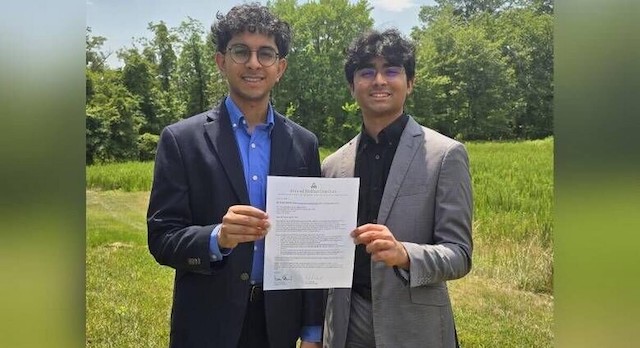
photo released by Shaurya Jain (right)

Today’s good news comes from the Good News Network.

These 2 Northern Virginia High School Students Just Got a $15,000 Grant to Use AI to Prevent Deer from Running into Cars

Every Virginian over 30 you could hope to meet will know someone who has collided with a deer in their car: the state is in the top ten nationwide for deer-related crashes.

These two high school seniors have just received a large grant to pursue their research into a device that detects cars and deer via artificially intelligent cameras and helps both avoid collisions.

Shaurya Jain and Anmol Karan from Thomas Jefferson High School in Fairfax County received $15,000 after presenting their prototype.

The money came from the Animal Welfare Institute as a part of the Christine Stevens Wildlife Award, leaving the two young men feeling “honored.”

“Not everyone would trust a bunch of high schoolers with this kind of money,” Jain told WTOP.

Positioned on the side of the road, if the device detects cars and deer in the vicinity, it emits high-frequency pulses and animal sounds to deter the deer from attempting to cross at that moment. If positioned in places with high deer traffic, the boys hope it will stop them from impacting traffic, especially at night when visibility is low and deer are most active.

In 2022, 6,100 traffic collisions, or 15% of the total number in the state, involved deer, an incident ratio that left 500 people injured.

Mr. Jain says he was inspired by his religion, Jainism—which holds all animals to be sacred and carriers of souls, while Karan was moved to action by the news that his uncle had collided with a deer in his car at night in Loudon County and was severely injured.

“Seeing him caused me to just feel that there probably is some type of method that we can use to keep on these roads to prevent such accidents from happening,” said Karan.

The Virginia Transportation Research Council applauded the students’ idea and wrote letters of encouragement to them. They are still collecting data on deer injuries and hope to start roadside testing soon.

The good news in this article is that two young men felt strong enough about a problem to do something about it. Today’s JohnKu continues the theme of embracing people who are called to action. I hope you have a terrific weekend.

Action by John W. Howell © 2024

A problem exists,

Some would simply ignore it . . .

Others take action.

Friday JohnKu – AKA – TGIF – Fri-Yay/Good News

The bell frogs in their sauna – credit, Anthony Waddle

Today’s good news comes from the Good News Network

In humans, sauna use is so beneficial that some medical researchers are attempting to add it to the standard of care for those at high risk of heart disease.

Well, researchers in Australia have found that this same leisure activity can save certain species of frogs from the ongoing fungal pandemic called chytrid.

GNN has already reported on chytrid and ways to combat it. Documented as having infected 500 species of frog or more, it’s a massive threat to the amphibiome.

Anthony Waddle at Macquarie University in Australia built a series of “frog saunas” to see if they could help golden bell frogs and green bell frogs native to Australia recover from chytrid. The fungal pathogen thrives in cooler tropical temperatures and is unviable above 84°F (29°C).

Consisting of unshaded black brick structures with narrow holes inside an artificial greenhouse habitat with water and plants, the frogs quickly made themselves at home inside the saunas.

Four healthy frogs were used as controls for a study group of eight frogs, half of which were infected with chytrid. Some habitats were shaded, and others were left uncovered to test a range of temperatures. Infected frogs who frequented the unshaded structure, where temperatures could climb as high as 97 to 100°F, had milder infections, but access to any sauna helped the frogs fight off the disease.

Once they recovered via the saunas, the bell frogs were 23 times less likely to die from a repeat infection with chytrid.

Bell frogs “used to live in people’s toilets and letterboxes and everywhere before chytrid,” Waddle told Science News. “Setting up these habitats where they still persist might give them enough of a boost that you could see a population increase.”

Building these simple structures in a garden could help frogs survive chytrid outbreaks and help the local population develop resistance.

Not all frog species enjoy roasting, however, so saunas are limited to warm-weather species. Another solution needs to be found for those who enjoy cooler temperatures.

The good news in today’s story is that folks are working on eliminating a threat affecting a whole animal species.  Today’s JohnKu talks about those folks. I hope you have a terrific weekend.

Heroes by John W. Howell.© 2024

It’s hard to define,

What actions are heroic . . .

The frogs could tell you.


Friday JohnKu – AKA – TGIF – Fri-Yay/Good News

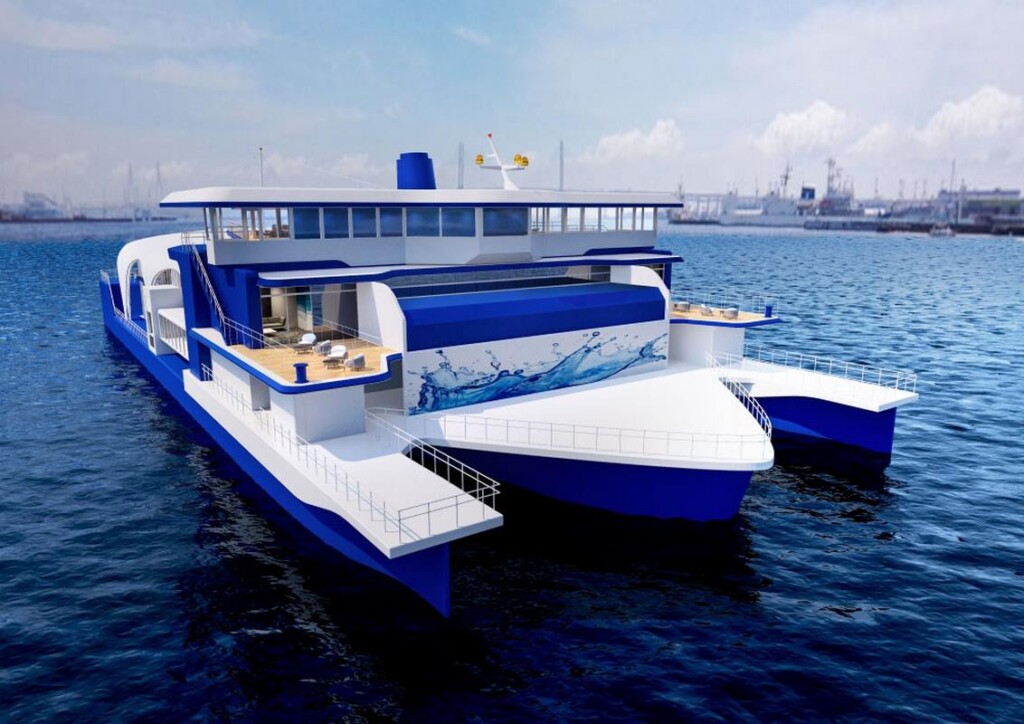
The Nippon Foundation – released

Today’s good news story comes from the Good News Network.

Pioneering Zero-Emissions Hydrogen Fuel-Cell-Powered Ship Successfully Tested in Japan

A consortium of Japanese firms has successfully demonstrated the first-ever zero-emissions ship above 20 gross tons.

Sailing 30 kilometers between the Port of Kokura and the Shirashima Offshore Wind Farm, the HANARIA was powered entirely by hydrogen fuel cells.

An island nation, 10.25 million tons of carbon emissions from Japan’s transportation sector came from coastal shipping and transport. In 2015, former Prime Minister Yoshihide Suga outlined carbon neutrality by 2050 as a major component of Japan’s development strategy, in line with the Paris Climate Agreement, and significant steps must be taken to achieve that.

The Nippon Foundation, a research and development fund dedicated to passing the riches of the sea intact to future generations, worked in tandem with manufacturers and shipping operators to develop a suite of hydrogen-powered, zero-emission vessels for use in shipping and coastal transport.

Hydrogen is manufactured by using an electrical current to split water molecules into hydrogen and oxygen. The pure hydrogen can then be used as a substitute for heavy engine fuels like diesel and kerosene in a fuel-cell vehicle. If the hydrogen is manufactured with green energy, it’s known as ‘green hydrogen.’

A passenger ship, HANARIA spans 108 feet (33 meters), weighs 248 gross tons, and is equipped with a hydrogen fuel system. She is expected to transport personnel to the offshore wind farm and conduct site tours.

During the demonstration, she registered zero CO2 emissions using hydrogen fuel from her departure to her arrival and return.

A zero-emissions research or yachting ship to be tested in 2026 – The Nippon Foundation, released.

“The realization of a hydrogen society requires not only technological development but also city and social design, and we look forward to moving ahead with all parties involved,” said the project’s chief leader, Yoshihiko Hamamura, who also holds a post at the Toyota Motor Corporation’s Hydrogen Factory which supplied the hydrogen tanks for HANARIA.

The Nippon Foundation has been carrying out the Zero Emission Ships Project since January 2022. The project plans to test two other vessels by the end of fiscal year 2026, including a yacht and a hydrogen-powered tanker.

The executive director of the Nippon Foundation, Mitsuyuki Unno, said that they hope to help Japan lead the world to zero-emissions shipping.

The good news in this story is that real advancements are being made with hydrogen-fueled vehicles. Today’s JohnKu talks about technology advances. I hope you have a great weekend.

Technology by John W. Howell © 2024

Every day, there’s more,

Great minds working to advance . . .

Stewardship of Earth.