
Friday – JohnKu – AKA- TGIF – Fri-Yay/Good News


Michael Chacon, Madison Morrison, Andrew Palacio, and Leen Alfaoury – credit WILL KIRK JOHNS HOPKINS UNIVERSITY

Today’s good news comes from the Good News Network.

Students Invent Leaf Blower Silencer Attachment–Corporation Expects to Be Selling Them Soon

Engineering students at Johns Hopkins have created a silencer module for the campus leaf blowers, reducing the devices’ overall noise pollution by 37%. At the same time, they succeeded in almost completely eliminating the high-pitched whining that annoyed them the most.

The design is patent-pending, and Stanley Black & Decker, who sponsored the students, expects to sell them in two years.

It’s not uncommon for leaf blowers to be banned by homeowners associations or following apartment tenant protests—their endless, up-and-down caterwauling of various frequencies is the delight of no one, and worse, landscapers often use them in the early morning to avoid the heat of the day.

“The sound that comes out of this leaf blower is very complicated, and it contains a lot of different frequencies,” said team member Andrew Palacio. “A lot of different notes on a piano would be a good analogy.”

The Johns Hopkins campus currently uses battery-powered leaf blowers, which are already quieter than gasoline-powered ones. Since last September, Palacio and his team members Michael Chacon, Leen Alfaoury, and Madison Morrison have examined the devices in depth—how many sounds are there and what is causing them.

Overall, they have workshopped more than 40 versions of leaf blower silencers. Many of them worked but diminished the power of the air coming out. They eventually came up with an easy-to-secure suppressor that functions much like the ones fitted to firearms.

“Our product takes in a full blow of air and separates it,” Alfaoury told Johns Hopkins. “Some of that air comes out as it is, and part comes out shifted. The combination of these two air sections makes the blower less noisy.”

“It ultimately dampens the sound as it leaves, but it keeps all that force, which is the beauty of it,” adds Chacon.

It’s one thing to come up with trumps in a class project, but this invention isn’t designed to win them any science fairs, but rather for going on Home Depot or Lowe’s shelves.

“It’s not just some cool theoretical thing that will sit on a shelf and never be heard from again—this is ready to be mass manufactured,” said Nate Greene, senior product manager at Stanley Black & Decker, who graduated from Johns Hopkins in 2017 with an engineering degree. “This is a scarce and dramatic level of success.”

WATCH the story below from JH University Press…

The good news in this story is that a problem that is not Earth-shattering has been solved through hard work. Although leaf blower noise is a first world annoyance it is good to see it has been overcome. Today’s JohnKu talks about solving problems.

Solutions by John W. Howell © 2014

Its not world hunger,

But a problem worth solving . . .

Shows genius at work.

Friday JohnKu – AKA – TGIF – Fri-Yay/Good News

A rendering of the solar project – credit City of Valencia
Today’s good news comes from the Good News Network

Three Valencia Cemeteries to Play Host to Largest Urban Solar Farm in Spain

Another European city has taken up the idea of utilizing the space over its cemeteries for generating solar power, a project it calls Requiem in Power, or RIP.

In the heart of Valencia, three cemeteries, Grau, Campanar, and Benimàmet, will be outfitted with 7,000 panels to create the largest urban solar farm in Spain.

GNN reported in March that a town on the River Loire in France had initiated a community-led project to raise solar panel canopies to stop excess rainwater from flooding the sea-level town cemetery.

The town, Saint-Joachim, had to raise the money for the project through voluntary taxation and seek permission from residents, which wasn’t a problem for former Valencia city climate councilor Alejandro Ramon, who explained that the city owns the cemetery land and can do as it likes.

But to ensure they weren’t walking over anyone’s graves, they sought permission from the Catholic Diocese, which supported the idea.

“We suffer droughts and extreme heat. It’s necessary to speed up the transition, but sometimes in cities, it’s difficult to find large free spaces to install renewable energy,” Ramon told Adele Peters at Fast Company. “After consulting with technicians, they told me that the roofs of the niches were perfectly suitable for installing solar panels.”

The niches that Ramon refers to are those above the mausoleums.

As Ramon said, in an effort to speed up the transition, Europeans are coming up with increasingly inventive ways to install solar panels, including inside the terracotta roof tiles typical of a historic Italian or Greek roof or on over 100,000 balconies and terraces in Germany.

One benefit of a solar farm right in the heart of the city, as those above the cemeteries will provide, is that wattage isn’t lost through the transfer of power from the countryside into the city on long power lines.

Far less additional transfer infrastructure needs to be built, and residents can be inspired knowing that their ancestors are still contributing years after their deaths.

The good news in this story is communities are continuing to find new ways to generate power. Today’s JohnKu talks about innovation. I hope you have a wonderful weekend.

New by John W. Howell © 2024

The old ways make room,

For the new methods needed . . .

To sustain our life.


Friday JohnKu- AKA TGIF – Fri-Yay/Good News

credit – Rewilding Europe, Nelleke de Weerd, released.

Today’s good news is from the Good News Network.

Portugal Welcomes First Wild Bison in 10,000 Years–a Keystone Herd for Rewilding a Quarter-Million Acres

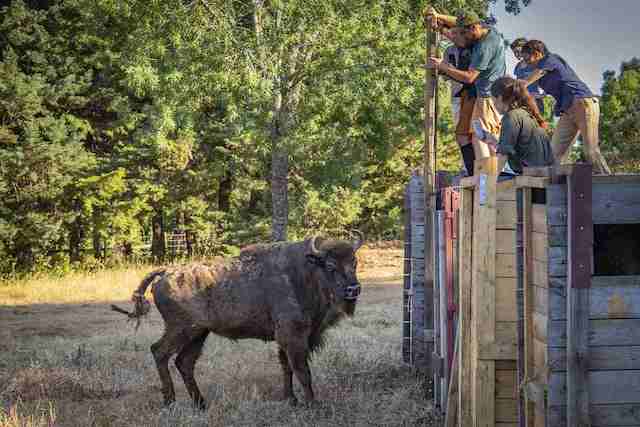
The Rewilding Europe organization is thrilled to announce the arrival of a small herd of bison in a large valley in Portugal.

Believed to be the key to preventing catastrophic wildfires, invasive species spread, and promoting endemic biodiversity, it’s the first time bison have been present in Portugal since the last Glacial Maximum.

From Poland to Romania to the UK, European wood bison are now firmly recognized as one of the best tools for returning what little wilderness Europe has left to as wild a state as possible.

Once upon a time, all of Europe was covered in forests or scrubland, through which the European bison and the steppe bison roamed. Today, nations across the Old World are trying to reintroduce these large grazers into wild areas to help improve native ecosystems.

In Portugal, a country smaller than Pennsylvania, the gradual abandonment of the Greater Côa Valley has presented an unprecedented opportunity for rewilding.

The government has already set aside a quarter million acres of land for conservation, boasting an exciting mix of natural and semi-natural habitats of scrub, Mediterranean dry forests, and steep gorges.

The Iberian wolf is present on the land in the form of a small pack, and the area acts as a refuge for roe and red deer, wild boar, eagles, and an ancient cattle breed that’s left to roam wild as its ancestor, the mighty auroch, once did across Europe.

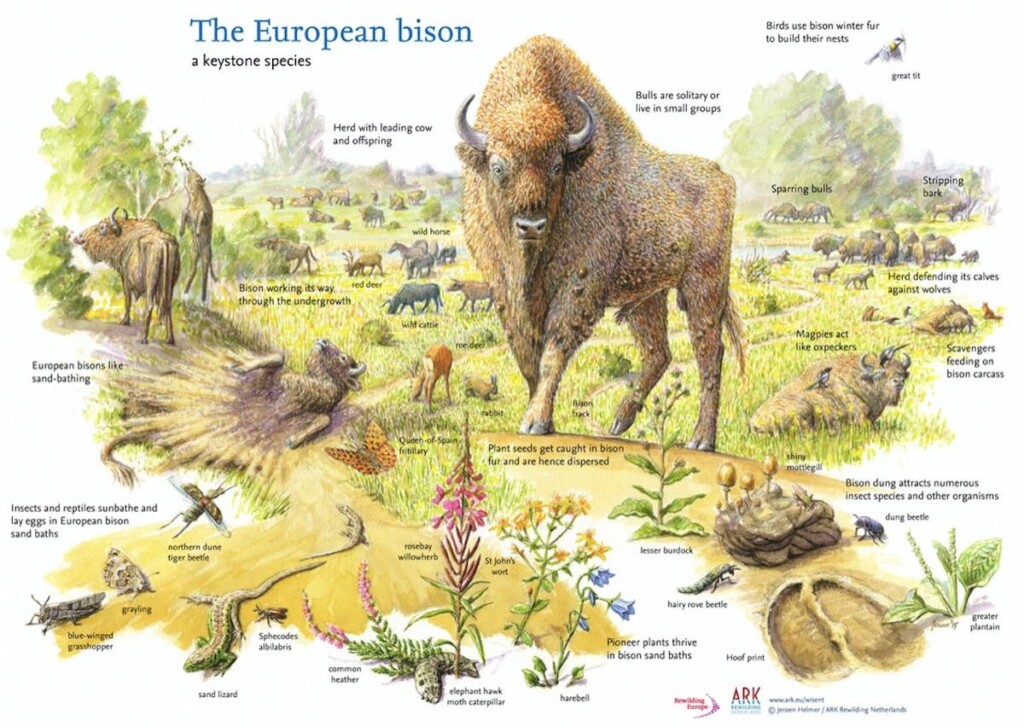
European Bison keystone species – ARK Rewilding Netherlands

The arriving European bison will be managed in cooperation with the Rewilding Portugal team, who received the individuals from the forests of northern Poland, where over 4,000 bison roam wild.

“We are viewing this translocation as a pilot,” explains Rewilding Portugal team leader Pedro Prata. “The bison will be closely monitored to see how they acclimatize to the local landscape and climate. This is the first time the Rewilding Portugal team has managed bison, so it’s also a learning process for us. Members of the team will receive training in bison management.”

It won’t just be new for the team but also for Portugal. The remains of the European bison have never been discovered in the country or on the whole of the Iberian Peninsula.

Scientific evidence has to look back 10,000 years to find a bison in Portugal—the steppe bison—a predecessor of the modern European bison. However, studies of translocated bison in Spain have shown they are at home in the hot, dry climate.

Through their grazing, foraging, trampling, and fertilizing, bison help to maintain biodiversity-rich mosaic landscapes of forest, scrub, and grassland, as well as numerous micro-habitats, which host a wide range of plant and animal species.

Studies in Europe and North America have highlighted this with regard to the related American bison. These same interactions can boost the capture of atmospheric carbon in both vegetation and the soil.

This report is good news since the rewilding of any area is a step closer to the naturalization of the planet. Today’s JohnKu talks about replenishment. I hope you have a super weekend.

Replace by John W. Howell © 2024

Emptying resource,

Is a dangerous action . . .

Replace what you take.


Friday JohnKu – AKA – TGIF – Fri-Yay/Good News

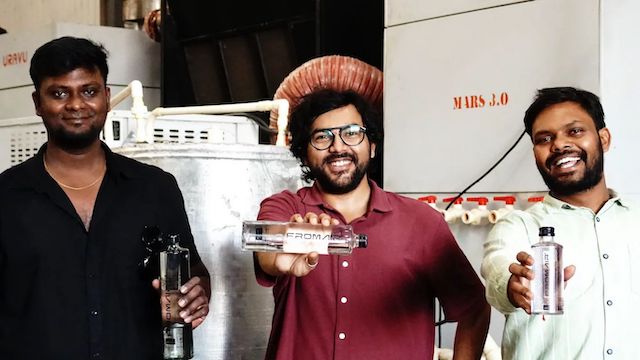
Credit – Uravu Labs, released.

Indian Engineers Tackle Water Shortages with Star Wars Tech in Kerala

By Andy Corbley –

When a severe water shortage hit the Indian city of Kozhikode in the state of Kerala, a group of engineers turned to science fiction to keep the taps running.

Like everyone else in the city, engineering student Swapnil Shrivastav received a ration of two buckets of water a day collected from India’s arsenal of small water towers.

It was a ‘watershed’ moment for Shrivastav, who, according to the BBC, had won a student competition four years earlier on the subject of tackling water scarcity, and armed with a hypothetical template from the original Star Wars films, Shrivastav and two partners set to work harvesting water from the humid air.

“One element of inspiration was from Star Wars, where there’s an air-to-water device. I thought, why don’t we give it a try? It was more of a curiosity project,” he told the BBC.

According to ‘Wookiepedia’ a ‘moisture vaporator’ is a device used on moisture farms to capture water from a dry planet’s atmosphere, like Tatooine, where protagonist Luke Skywalker grew up.

This fictional device functions according to Star Wars lore by coaxing moisture from the air through refrigerated condensers, which generate low-energy ionization fields. Captured water is then pumped or gravity-directed into a storage cistern that adjusts its pH levels. Vaporators can collect 1.5 liters of water per day.

Moisture vaporators on the largely abandoned Star Wars film set of Mos Espa, in Tunisia – credit © Andrew Corbley

If science fiction authors could devise the particulars of such a device, Shrivastav must have felt he had a good chance of succeeding. In 2019, he and colleagues Govinda Balaji and Venkatesh Raja founded Uravu Labs, a Bangalore-based startup.

Their initial offering is a machine that converts air to water using a liquid desiccant. The desiccant absorbs moisture from the air, and sunlight or renewable energy heats it to around 100°F. The captured moisture is released into a chamber, where it’s condensed into drinking water.

The whole process takes 12 hours but can produce a staggering 2,000 liters, or about 500 gallons of drinking-quality water per day. Uravu has since had to adjust course due to the cost of manufacturing and running the machines—it’s just too high for civic use with current materials technology.

“We had to shift to commercial consumption applications as they were ready to pay us, and it’s a sustainability driver for them,” Shrivastav explained. This pivot has so far been enough to keep the start-up afloat, and they produce water for 40 different hospitality clients.

Looking ahead, Shrivastav, Raja, and Balaji are planning to investigate whether the desiccant can be made more efficient. Can it work at a lower temperature to reduce running costs, or is there another material that might prove more cost-effective?

They’re also looking at running their device attached to data centers in a pilot project that would see them utilize the waste heat coming off the centers to heat the desiccant.

The good news in this article is that smart people are exploring ideas that seem more fiction than reality to solve real problems. Today’s JohnKu talks about the potential of the human brain. I hope you have a wonderful weekend.

Ingenuity by John W. Howell © 2024

An idea born,

From a sci-fi writer’s brain. . .

Is now feasible.

Friday JohnKu – AKA – TGIF – Fri-Yay/Good News


Baguette stamp – credit La Poste

If you want light-hearted news, there is no better place than France to find it. Today’s good news comes from the Good News Network.

France Celebrates Baguette on Scratch-and-Sniff Stamp, Honoring the World Heritage-Declared Food

The French postal service has released a scratch-and-sniff stamp that will fill your letter room or office with the aroma of freshly baked bread as it honors the classic baguette.

The best thing since sliced bread, the baguette, was recently honored by UNESCO with the status of ‘Intangible Cultural Heritage. ‘ In other words, it is a standout element in humanity’s story that can’t be pinned down to the words on a page, the outcome of a battle, or the bricks making up a monument.

La Poste unveiled The Stamp last Thursday on the occasion of Sant-Honore’s feast day—the patron saint of bakers.

“The baguette, the bread of our daily lives, the symbol of our gastronomy, the jewel of our culture,” La Poste says on its website.

It will cost €1.96 ($2.12 US)  and run for a limited time. Just under 600,000 copies are set for printing. The image depicts a baguette wrapped in blue and white ribbons.

The stamp’s ink is coated in microcapsules that burst when the customer scratches it, releasing the scent. La Poste purchases the special ink pre-made, and the smell is derived from a collection of bakeries.

“And the difficulty for us is to apply this ink without breaking the capsules, so that the smell can then be released by the customer rubbing on the stamp,” Damien Lavaud, printer at Philaposte, was quoted as saying by France Bleu, according to France24.

UNESCO attempts to summarize the value and uniqueness of baguettes over other breads with the following description.

Baguettes require specific knowledge and techniques. They are baked in small batches throughout the day, and the outcomes vary according to temperature and humidity.

They also generate modes of consumption and social practices that differentiate them from other types of bread, such as daily visits to bakeries to purchase the loaves and specific display racks to match their long shape.

In this turbulent world, the good news in this article is that normal can be refreshing. Today’s JohnKu talks about normal I hope you have a lovely weekend.

Normal by John W. Howell © 2024

The world has gone nuts,

Issue a new stamp about bread . . .

And make us all smile.

Friday JohnKu – AKA – TGIF – Fry-Yay/Good News

Credit YS – Unsplash

Today’s good news story comes from the Good News Network.

The Number of Fish on US Overfishing List Reaches an All-Time Low Led by Mackerel and Snapper

According to a recent federal report, the US seafood industry has never been more sustainable, with the fewest overharvested fish stocks ever recorded.

The report, ‘Status of the Stocks,’ was published by the National Oceanic and Atmospheric Administration. It also shows the strength of an industry worth $8 billion a year.

According to the report, 94% of fish stocks in US oceanic and Gulf waters are not being overfished, an all-time high after the number climbed slightly from last year.

NOAA keeps a list of all the fisheries in the country that are subject to overfishing, and the agency said it has recently removed several species: the Gulf of Maine and Cape Hatteras stocks of Atlantic mackerel and the Gulf of Mexico stocks of Cubera snapper.

2022 saw the removal of the Atlantic Coast bluefish and a Washington Coast stock of coho salmon.

“By ending overfishing and rebuilding stocks, we are strengthening the value of U.S. fisheries to the economy, our communities, and marine ecosystems,” said Rick Spinrad, NOAA’s administrator.

GNN recently reported that after decades of overfishing in the northwest Atlantic Ocean, hake fisheries off the coast of Spain are as large as ever thanks to timely and targeted conservation measures.

Additionally, Maine’s Penobscot River recently saw record numbers of Atlantic salmon returning to spawn, but the real trendsetters that far north have been blueback river herring and alewives, which entered the Penobscot in numbers that more than double the previous record.

The good news in this story is that by working together the fishing industry is helping to sustain itself for many years to come. Today’s JohnKu talks about human endeavor. I hope you have a wonderful weekend.

Hard Work by John W. Howell © 2024

Building back resource,

Is very hard work indeed . . .

Conservation – easy.

Friday JohnKu – AKA – TGIF – Fri-Yay/Good News

Today’s Good News story continues the good work being done on behalf of Big cats. I am grateful to GP of Pacific Paratrooper for sharing this story, which ran on Fox News.

Watch the video HERE

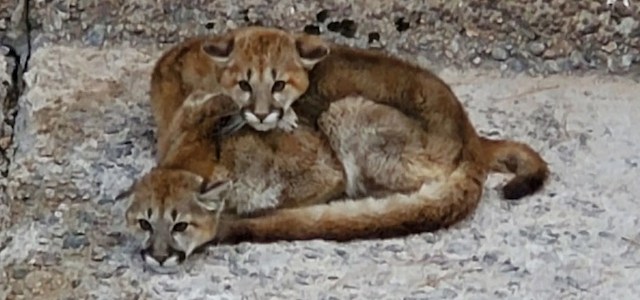
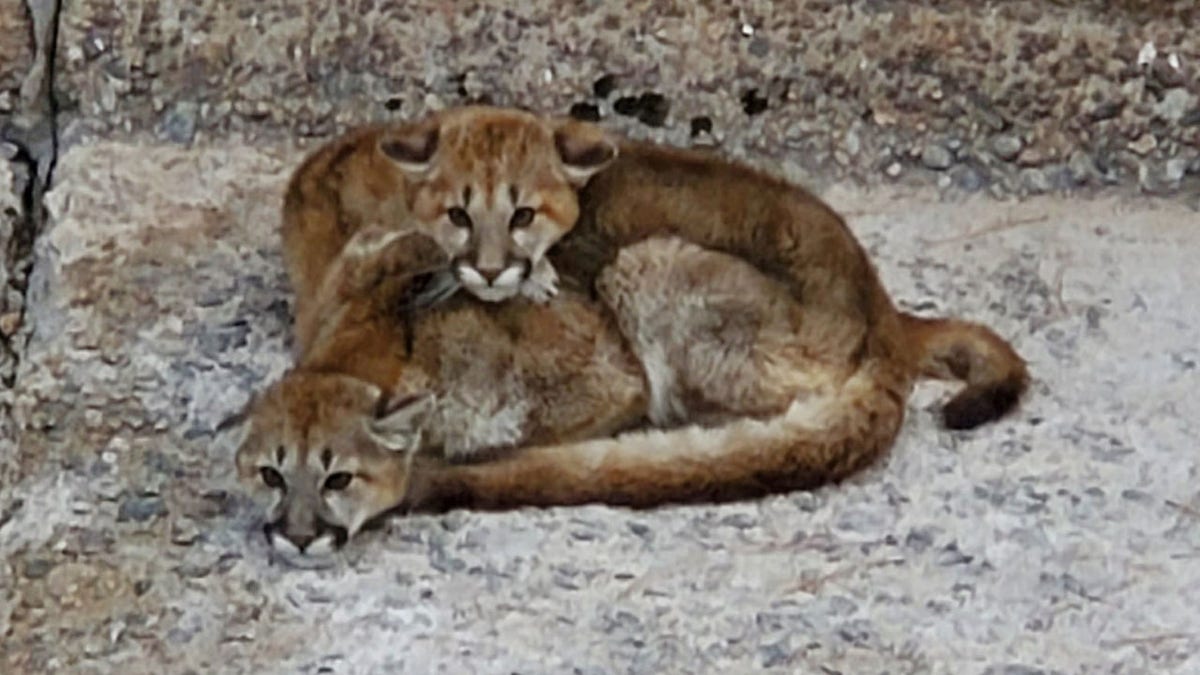
CPW’s Southwest Region said the rescue unfolded on Friday as officials were preparing to release water down the Vallecito Reservoir spillway outside of Durango.

“A release of water likely would have drowned the two lions,” it said, noting that the Pine River Irrigation District allowed its officers onto hydroelectric plant property to attempt the rescue.

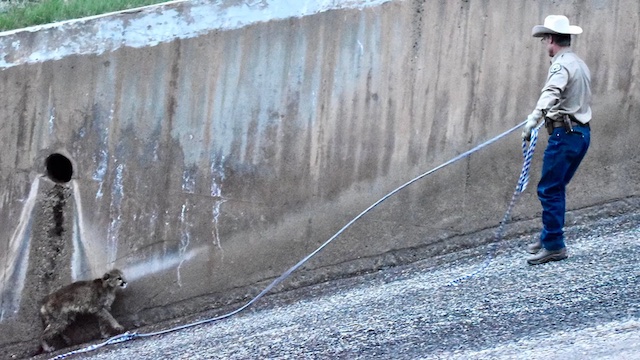
Video released by CPW then showed one of its officers dangling a rope from atop a wall and lifting one of the animals up from the spillway far below.

A Colorado Parks and Wildlife officer is seen dangling a rope with a mountain lion clinging onto it on Friday, April 19, near the Vallecito Reservoir outside of Durango. (Colorado Parks and Wildlife)

“The first mountain lion held onto the rope all the way to the top of the spillway barrier and quickly ran off into the woods. The second lion, however, wouldn’t hold onto the rope and ran down the spillway all the way to where the Los Pinos River continues below the dam,” it said. “Unwilling to swim to reach the bank, the young lion continued to pace around at the water’s edge and moved into a corner of the spillway.”

Colorado mountain lions trapped in spillway

Both young mountain lions were rescued from the spillway, Colorado Parks and Wildlife says. (Colorado Parks and Wildlife)

CPW says one of its officers then went down into the spillway himself and managed to get the mountain lion interested in the rope.

“With the lion interested in the rope, CPW staff were also able to use a catch pole, and all together, we lifted the lion over the concrete wall and quickly released it. However, the lion decided to hide under a truck for a few minutes,” it said.

One of the Colorado Parks and Wildlife officers had to enter the spillway himself to complete the rescue. (Colorado Parks and Wildlife)

“After everyone backed off and it took time to regroup, the young lion ran off in the same direction as its sibling,” CPW added.

Today’s story again underscores the good news that people are willing to help animals in trouble. Today’s JohnKu offers thanks to these officers. I hope you have a super weekend.

Thanks by John W. Howell © 2024

Quick and decisive

Was the norm for this great day . . .

We all offer thanks.


Friday JohnKu – AKA – TGIF – Fri-Yay/Good News

Jem and Zoe, rescued from Tiger King Park – credit: Lions, Tigers, and Bears Animal Sanctuary

Today’s story comes from the Good News Network.

Two Big Cats from Infamous Tiger King Captivity Thriving in San Diego After Sanctuary Helps Save 69 Tigers

A San Diego wildlife sanctuary is proud to report that two of the 69 tigers rescued from the infamous collection of the ‘Tiger King’ Joe Exotic are thriving at their Alpine, CA location.

Participating in the rescue of the cats, Lions, Tigers, and Bears Animal Sanctuary took three years to help the pair of Bengal tigers, Jem and Zoe, put on normal weight and get back to their wild ways, but that perseverance has paid off.

Netflix introduced the world to the US tiger trade with a landmark docu-series, Tiger King, in 2021. The series centered around Joe Exotic’s private menagerie collection and his difficulties with a woman named Carole Baskin, the owner of Big Cat Rescue.

Exotic is now in prison, serving 21 years for conspiracy to commit murder after attempting to hire two hitmen to take Baskin out. Tiger King Park in Oklahoma was closed for ongoing violations of the Endangered Species Act.

An organized effort to relocate his 69 captive tigers to sanctuaries around the country saw Lions, Tigers, and Bears (LTB) take in two adults, Jem and Zoe.

“Their condition was dire, marked by severe malnutrition, emaciation, dull skin, and other issues,” LTB told Fox News 5 San Diego. “The trauma from long-term abuse led to the development of uncharacteristic behavior, such as not eating for days at a time.”

However, LTB’s efforts succeeded, and after three years, the pair are “living their best lives in their forever home.”

People can visit Zoe and Jem at the LTD Sanctuary by reservation only. Still, the sanctuary relies on visitors and contributions to perform life-saving rescues like those from Tiger King Park.

As their name implies, there are more than just tigers there. Visitors can see lions, bobcats, and leopards, along with other large animals beyond the Panthera (big cat) genus.

The good news in this article is over 69 tigers were saved from suffering in a deplorable situation and two of them are thriving. Also, here is a link to an article that will update you on how well the other tigers are doing (Hint: Real well) https://www.yahoo.com/lifestyle/60-minutes-shares-happened-rescued-144437817.html#:~:text=60%20Minutes%20did%20a%20short,really%20changed%20for%20these%20tigers.

Today’s JohnKu talks about shame. I hope you have a wonderful weekend.

Captive by John W. Howell © 2024

It made great TV,

Tigers and crazy keeper . . .

The shame of Netflix.

Friday JohnKu – AKA -TGIF – Fri-YayGood News

The Houston skyline darkened – Tendenci CC 3.0.

Today’s  good news story comes from the Good News Network

Millions of Birds Now Migrating Safely Through Darkened Texas Cities After Successful Lights Out Campaign

By Andy Corby – April 18

Texas is in the middle of the most critical migratory pathway for birds moving up and down the Americas—nearly 2 billion birds, or 1 out of 3 in the US, will pass over Texas during their spring and autumn migrations.

To safeguard the over 400 species of birds that migrate through Texas, the Houston chapter of the Audubon Society and their partners in the state have been running the Lights Out! Texas campaign for two years, and they’re seeing remarkable results.

With the prestige that owning and operating a skyscraper confers it may be surprising to note that dozens of building managers have been convinced since 2022 to turn off non-essential outdoor lights.

“We issued the proclamation, and they… found out, ‘Oh, wow, I can do these simple things, and it actually helps the birds when they’re migrating,’” Houston city hall spokesperson Sarah Osborne told KHOU 11.

“We’re seeing communities all across the state join in on this effort,” adds Anna Vallery, a Conservation Specialist with the Houston Audubon.

Researchers working in Chicago and studying the effects of Lights Out campaigns and other phenomena impacting migratory birds found that reducing the reflections from exterior lighting on tall buildings worked to prevent 60% of all bird collision deaths.

Since most birds migrate at night by the light of the stars and moon, the shining lights of a city in the distance can attract them. But once lost in the photo-soup of a shining skyline like Houston or Fort Worth, they can become extremely disoriented, smash headlong into buildings whose glass is reflecting light from the city, and die.

Fort Worth is participating in Lights Out! Texas and the skyline looks decidedly different in this short CBS bulletin.

The Texas Audubon has all the information a resident might need to do their part or organize municipal efforts to help our winged brothers and sisters safely pass by.

Spring migrations last only about 70 days, from the start of March to the middle of June, with a slightly longer period during autumn migration of middle-August to the end of November.

The good news in this article is that cities and individuals are cooperating to ensure a safe migration for our bird species. Today’s JohnKu discusses the importance of bird life. I hope you have a wonderful weekend.

Birds by John W. Howell ©2024

Birds are critical.

They are an important link  . . .

In the chain of life


Friday JohnKu – AKA – TGIF – Fri-Yay/Good News

Credit – Kaohsiung Fire Department

Today’s good news story comes from the Good News Network.

Dog That Flunked Out of Police Academy Becomes a Hero in Taiwan’s Earthquake Response

To be a drug-sniffing dog, you have to be impassionate, which is exactly what this golden retriever was not.

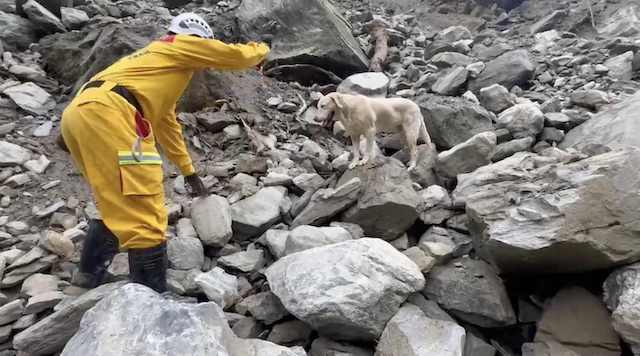
Though Roger flunked out of the Kaohsiung City police academy in Taiwan, his career in public service was not over. He has now captured the hearts of his people with his rescue efforts during Taiwan’s recent earthquake.

Striking the northern part of the island with a magnitude of 7.4, it caused a landslide in a popular national park that destroyed several buildings and claimed a dozen victims.

Roger flunked out of the police academy for being too jubilant – credit Kaohsiung Fire Department

8-year-old Roger was quickly deployed to the area, where his exuberance and independent streak put him in good stead for locating the body of a 21-year-old victim who hadn’t been found.

Whether Chen Chih-san, captain of the rescue dog unit of the Kaohsiung Fire Department, has other dogs that assisted in the rescue efforts, only Roger captured the island nation’s hearts because of his earlier career setback and subsequent redemption arc.

“I’m not saying he was not good or that he didn’t get along with others. But the requirement for narcotic detection dogs is that they can’t be too restless and independent,” Chen said. “But (these attributes) are what we want in rescue dogs.”

These attributes were perfectly on show when he lunged for the reporter’s microphone as his handler was being interviewed by Taiwan’s official Central News Agency.

Having participated in 7 rescue organizations throughout his career, which included his being certified by the International Rescue Dog Organization in 2022, an accolade last achieved by a Taiwanese rescue dog in 2019, Roger’s retirement is fast approaching.

CNN reports that he will have a wonderful home suitable for an active, precocious dog like him. However, before he puts his paws up for his golden years, one family will have the closure of laying a loved one to rest because of his excellent nose and personality.

The good news in this story is that just because a body is not best equipped for one job doesn’t mean all jobs are out of reach. Today’s JohnKu talks about careers. I hope you have a great weekend.

Careers by John W. Howell ©2024

One job may not work,

But giving up on the rest . . .

May be a mistake.