
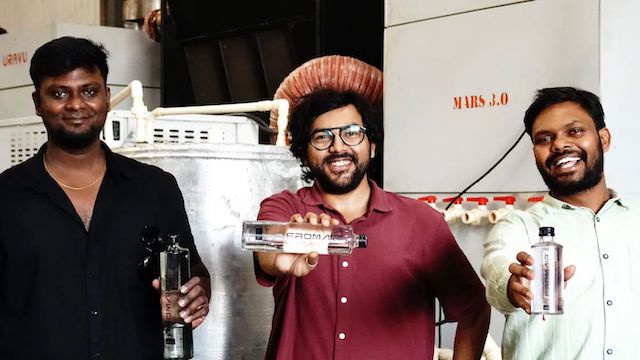
Indian Engineers Tackle Water Shortages with Star Wars Tech in Kerala
By Andy Corbley –
When a severe water shortage hit the Indian city of Kozhikode in the state of Kerala, a group of engineers turned to science fiction to keep the taps running.
Like everyone else in the city, engineering student Swapnil Shrivastav received a ration of two buckets of water a day collected from India’s arsenal of small water towers.
It was a ‘watershed’ moment for Shrivastav, who, according to the BBC, had won a student competition four years earlier on the subject of tackling water scarcity, and armed with a hypothetical template from the original Star Wars films, Shrivastav and two partners set to work harvesting water from the humid air.
“One element of inspiration was from Star Wars, where there’s an air-to-water device. I thought, why don’t we give it a try? It was more of a curiosity project,” he told the BBC.
According to ‘Wookiepedia’ a ‘moisture vaporator’ is a device used on moisture farms to capture water from a dry planet’s atmosphere, like Tatooine, where protagonist Luke Skywalker grew up.
This fictional device functions according to Star Wars lore by coaxing moisture from the air through refrigerated condensers, which generate low-energy ionization fields. Captured water is then pumped or gravity-directed into a storage cistern that adjusts its pH levels. Vaporators can collect 1.5 liters of water per day.
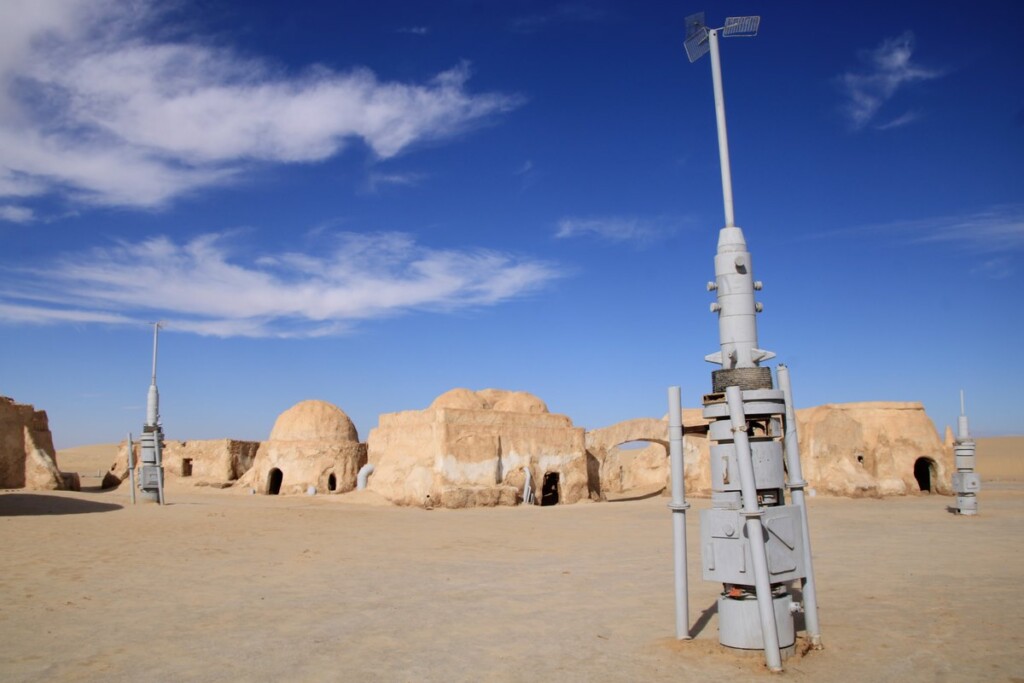
If science fiction authors could devise the particulars of such a device, Shrivastav must have felt he had a good chance of succeeding. In 2019, he and colleagues Govinda Balaji and Venkatesh Raja founded Uravu Labs, a Bangalore-based startup.
Their initial offering is a machine that converts air to water using a liquid desiccant. The desiccant absorbs moisture from the air, and sunlight or renewable energy heats it to around 100°F. The captured moisture is released into a chamber, where it’s condensed into drinking water.
The whole process takes 12 hours but can produce a staggering 2,000 liters, or about 500 gallons of drinking-quality water per day. Uravu has since had to adjust course due to the cost of manufacturing and running the machines—it’s just too high for civic use with current materials technology.
“We had to shift to commercial consumption applications as they were ready to pay us, and it’s a sustainability driver for them,” Shrivastav explained. This pivot has so far been enough to keep the start-up afloat, and they produce water for 40 different hospitality clients.
Looking ahead, Shrivastav, Raja, and Balaji are planning to investigate whether the desiccant can be made more efficient. Can it work at a lower temperature to reduce running costs, or is there another material that might prove more cost-effective?
They’re also looking at running their device attached to data centers in a pilot project that would see them utilize the waste heat coming off the centers to heat the desiccant.
The good news in this article is that smart people are exploring ideas that seem more fiction than reality to solve real problems. Today’s JohnKu talks about the potential of the human brain. I hope you have a wonderful weekend.
Ingenuity by John W. Howell © 2024
An idea born,
From a sci-fi writer’s brain. . .
Is now feasible.

What an idea. Edison would be envious. 😉 Thanks for sharing great news, John! Please have a wonderful weekend ahead. xx Michael
LikeLiked by 2 people
Thank you, Michael. I wish for you a wonderful weekend as well. 😊
LikeLike
They could try lithium chloride crystals (expensive) or silica gel (much cheaper) – both are used in dehumidifiers.
LikeLiked by 2 people
Do you think we should tell them that? 😁
LikeLiked by 1 person
I’d be surprised if they didn’t already know, John (I once worked a dehumidifier company during my long and varied career 😃)
LikeLiked by 1 person
Great information. Cocktail party information for sure.
LikeLiked by 2 people
This is the reason that I’m optimistic about the future, the human brain gives us the potential to solve so many challenges. Wonderful story to start the day, John. Now, where did I leave my sneakers???
LikeLiked by 1 person
I think your sneakers are on the back porch filled with rainwater. 🤣 Thanks, Steve.
LikeLiked by 1 person
Well, our porch is enclosed but I did find a stink bug…
LikeLike
I love to hear about people who try things like this. All inventive actions start of clunky but tech improves, methodology improves, and eventually it becomes realistic.
LikeLiked by 2 people
I thought the Star Wars idea generation was pretty cool. I hope you have a terrific weekend, Craig.
LikeLiked by 1 person
Just Star Trek had personal computers and cordless personal communication – the brilliant scientific inspirations continue! These men must be congratulated!!
LikeLiked by 2 people
I agree, GP. So much good can come from their invention. Thanks.
LikeLike
Wow … Seems like the intersection of current technology meeting the perceived future – and on that film set! Meanwhile, I applaud anyone working on water issues. Good find, John … and a fitting John Ku.
LikeLiked by 1 person
Thanks, Frank. I join you in the applause.
LikeLike
So cool!
LikeLiked by 2 people
I agree, Charles.
LikeLike
I love how often these inventors are inspired by science fiction – proof that if someone can think of it, even in a non-real environment, someone else can make it happen. Wonderful, John.
LikeLiked by 1 person
I agree, Dale. Thank you. 😊
LikeLiked by 1 person
😊
LikeLiked by 1 person
😊
LikeLiked by 1 person
Thanks for sharing this, John. Using the idea from Star Trek to help their people seems intelligent to me. Have a good weekend.
LikeLiked by 1 person
I agree, Tim. Such a good idea needs to be followed-up on. 😁
LikeLiked by 1 person
Fabulous! Shrivastav, Raja, and Balaji deserve a lot of praise – smart, smart guys. Good luck to them – I’d say their future is bright!
LikeLiked by 1 person
I think so too, Noelle. Thanks for the comment.
LikeLiked by 1 person
Wow, wonderful news, John. Thank you for spotlighting this hopeful endeavor. Loved your Johnku. 🌞
LikeLiked by 1 person
Thank you, Gwen. It is always good to see brains at work. 😁
LikeLiked by 1 person
Awesome story, John — thank you for sharing it here. We don’t know what we’re capable of until we give it a try, right?
LikeLiked by 1 person
I think that is true, Debbie. Thank you.
LikeLiked by 1 person
A fantastic idea and happy it Blooms in the mind of a writer first.
LikeLiked by 1 person
I agree 😁
LikeLiked by 1 person
Brilliant and thank goodness for smart people, yes!
LikeLiked by 1 person
Yes.
LikeLiked by 2 people
That is a great initiative. Getting water from condensation from hot humid air is a very old idea but it is great they have a new take on it.
Incidentally, I was just arguing in a Facebook beer group about condensation on beer bottles when I opened your post. Some people in colder climates don’t understand that the hotter and more humid air in Texas causes condense on beer bottles at higher temperatures of the beer bottle. Therefore, you cannot judge the temperature of the beer based on a photo without knowing the temperature/humidity. On a hot humid day in Texas the dewpoint will be higher than in Belgium. Belgians care a lot about at what temperature you drink your beer. A Westvleteren 12 should be 12 degrees Celsius (53.6 degrees) and Belgians conclude when they see condense on the bottle that it is a lot colder.
LikeLiked by 1 person
And the Belgians then provide their teaching moment to the one they feel is serving their beer too cold, based on their own experience and not actual conditions. Germans and Belgians think Americans drink their beer too cold. For the most part we probably do.
LikeLiked by 1 person
Yes you are right, we often drink our beer too cold. However, at 30 centigrade (86 Fahrenheit) you only need 38% relative humidity to get condense on a 12 centigrade bottle, and we often have it hotter and more humid than that, but they don’t understand that.
LikeLiked by 1 person
I know I used to work for a German company.
LikeLiked by 1 person
Two buckets a day for water! That would make you want to try something from sci-fi. Your “Ingenuity” is perfect, John. Good news for sure! TGIF to you!
LikeLiked by 2 people
Thank you, Jo. I hope you have a great weekend.
LikeLike
Who says movies don’t matter? Good for these guys for drawing inspiration from an idea and then makingit happen.
LikeLiked by 1 person
I thought that was the best part of the story
LikeLiked by 1 person
Truly.
LikeLiked by 1 person
😁
LikeLiked by 1 person
John, this is so cool! Thanks for sharing it. Well done on the Johnku too. Hugs.
LikeLiked by 1 person
Thank you, Teagan. Hugs
LikeLike
WOW! This project is fascinating–and exciting!!
LikeLiked by 1 person
It is Liz. 😁
LikeLiked by 1 person
Some of the best ideas would have never happened without imagination.
LikeLiked by 1 person
I think so too, Pete. Thanks
LikeLiked by 1 person
It’s always fun to learn that science fiction was just ahead of the inventive curve.
LikeLiked by 1 person
It is, Dan. Thanks
LikeLiked by 1 person
Wow!
LikeLiked by 1 person
I know right.
LikeLiked by 1 person
🙂
LikeLiked by 1 person
😁
LikeLiked by 1 person
Whoa…I’m gonna go all Barney Fife and say, “well, I’ll be!” That’s just brilliant.
LikeLiked by 1 person
Thank you, Monika. 😁
LikeLiked by 1 person
Love the sounds of this, John.
I must wonder though, if we are harvesting moisture from the air, will that resource eventually run out, too? Humans appear to be good at using stuff up without thought of replacement.
Anyway, loving the idea for a thirsty world.
Your JohnKu is cool. I like that sci-fi writers are inventors of sorts.
Hmm, wonder if they’ll want a cut of the $ action?
🪙⚔️ 🪙⚔️ 🪙⚔️
LikeLiked by 1 person
As long as we have plants and trees we will have air. You ask a good question about the Sci-Fi writers. I’m sure there is a law firm somewhere who would take on their case.😁X 😁X
LikeLiked by 1 person
That’s true! OX 🌺X 🌺 OX
LikeLiked by 1 person
OX 🌺X 🌺 OX
LikeLiked by 1 person
Great share John. Very inventive! 🙂
LikeLiked by 1 person
I thought so too, Debby. Thanks.
LikeLiked by 1 person
🙂
LikeLiked by 1 person
Great idea, dear John! Good movies could teach us good things! Bravo!👍🍤🍤🍤🍻
LikeLiked by 1 person
I like that idea too.
LikeLiked by 1 person