
Friday JohnKu – AKA – TGIF – Fri-Yay/Good News.

Today’s Good News comes from the Good News Network. Here is the story in its entirety.

Millions of Tons of Earth Dug for New London Subway Line Became a New Bird Sanctuary
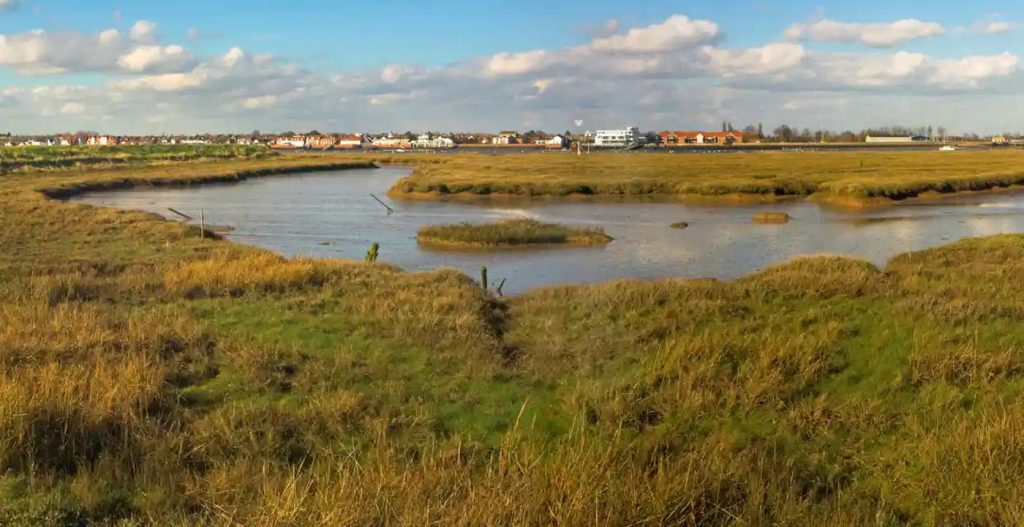
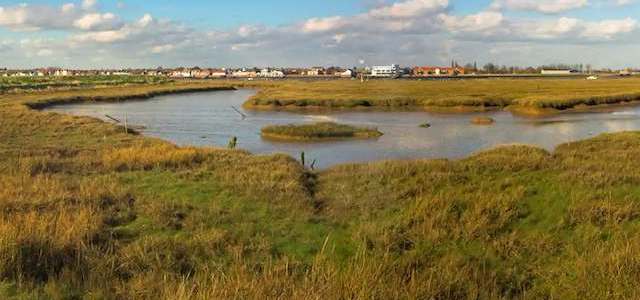
Ben Hall/RSPB Images

Multi-billion dollar civic engineering projects tend not to be good news for wildlife, but upon the completion of a new English underground railway line, the upturned earth was used to rebuild a coastal habitat for birds in Essex.

The new bird sanctuary instantly became one of the richest in Britain’s coastline for avocets, spoonbills, black-tailed godwits, and other wading birds.

The Elizabeth Crossrail is a high-speed line that runs from Reading to the west of London, through the capital, to Shenfield near the east coast. During the $24 million (£19 million) project, seven million metric tons of soil was dug up to make thirteen underground railway tunnels, half of which were transported by boat to the eastern shore of the country.

The earth was taken to a place called Wallasea Island, once just a tiny peninsula of the wild Essex coastline, consisting of salt marshes, coastal lagoons, muddy flatlands, and other features, but several times during the Medieval period and after it was drained to make sheep pasture or farmland.

Farming often is not as profitable now as it was then, and as the defensive seawall was in need of repairs, the farmer that used to own the land sold it to the Royal Society for the Protection of Birds.

“Massive amounts of soil were dug up from below the streets of London during tunneling needed to create the Elizabeth line,” said Rachel Fancy, site manager of RSPB Wallasea Island. “That material was given to the RSPB, allowing us to create our Jubilee Marsh, the cornerstone of our new reserve.”

Jubilee is the appropriate name in this case. Bird-friendly journalists from the Guardian, reporting on the state of Wallasea Island, now note the diversity of species and the rich numbers.

Hen and marsh harriers have appeared in winter while wigeon, teal, plover, yellow wagtail, lapwings, blackbirds, oystercatchers, and skylarks were all recorded in what reporters called a “nature lover’s paradise.”

It took 1,500 trips by canal to bring the dirt to Wallasea. Once there it was transported via conveyor belt to a dump, where tipper trucks slowly deposited it along the shoreline to create a steady sloping terrain up from the sea, protecting it from rising levels.

After the manicuring and landscaping was finished, the seawall was strategically breached in three separate places at low tide, which, once it rose again, gently partitioned the landscape into the various landscape features seen today, as opposed to turning it into a big muddy lake if the wall had been breached all at once at high tide.

In its first year, Wallasea Nature Reserve hosted 150 breeding pairs of avocets, which is endangered-in-Britain, instantly making it one of the bird’s strongholds.

“We are really proud that Jubilee Marsh is helping to combat the threats from climate change and coastal flooding,” Mark Wild, Crossrail’s chief executive, told the Guardian.

The good news here is that with proper planning human expansion need not come at the expense of the earth. Today’s JohnKu talks about stewardship. I hope you all have a super weekend.

Our Earth by John W. Howell © 2022

This is all we have,

Humans need to work smarter . . .

To preserve our life.
Friday JohnKu – AKA – TGIF – Fri-Yay/Good News

Our Good News today comes from the Good News Network. Here is the story

Tourists Come to See Tulips in Holland Once Again, Grabbing Incredible Photos of Spring – LOOK

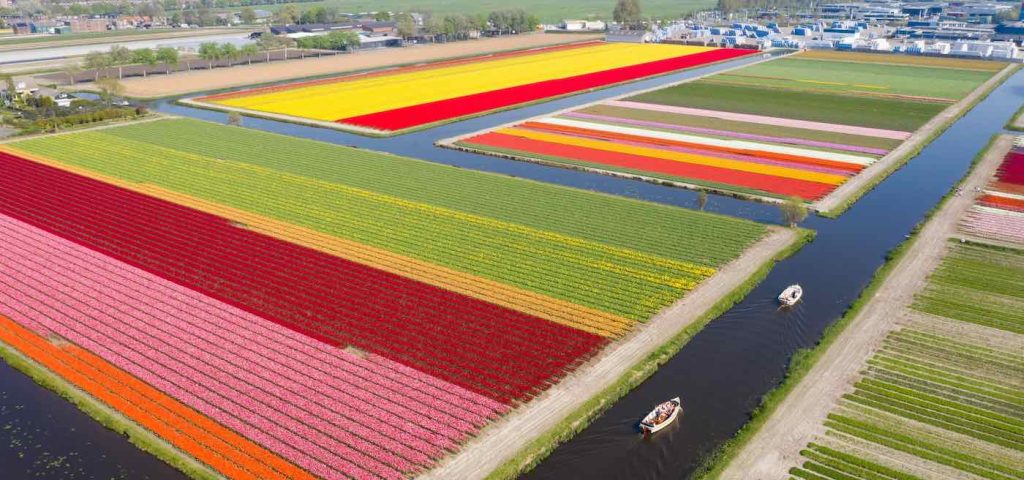
Tulip fields in Lisse, Netherlands by Matt Cooper – SWNS

Photographs in the last few weeks show the stunning kaleidoscope of colors bursting into bloom in Holland’s tulip fields.

Beginning in late March, millions of blooms have been delighting visitors in the Netherland with their patchwork of color.

British photographer Matt Cooper was one of those visitors. The 48-year-old from London traveled over the Easter weekend and shared his images and drone footage.

The images show Holland’s famous flower field landscapes, which have become a rich blanket of tulips with row upon of row of vivid block colors.

Tulip fields by Matt Cooper – SWNS

“I went there especially to shoot the tulips,” he said. “This is the best time to shoot them, as they flower in April and May every year.”

Cooper’s 4-day trip took him all over the country capturing the iconic fields by drone—especially the famous Keukenhof Tulip Gardens, one of the world’s largest flower gardens.

Noordoostpolder, Netherlands, by Matt Cooper – SWNS

The Garden holds an annual festival—but 2022 is the first time the festival has been open to the public since the pandemic. It runs through 15 May.

Cooper said the Dutch people take their tulips very seriously, and across the small country, “there are hundreds of millions of tulips’.

By Matt Cooper – SWNS

“The weather was beautiful too.”

SEE the scenes of the resurgent Keukenhof Tulip Gardens…

The good news is that beauty is around us even in the toughest times. Today’s JohnKu talks about not missing the beauty around you. I hope you have a super weekend.

Look by John W. Howell © 2022

It is all around,

All you have to do is look . . .

Nature has a show.

Friday – AKA – TGIF – Fri-Yay/Good News

Bigger than Texas: Huge New Marine Park Will Protect ‘Australia’s Galapagos’

Today’s Goodnews comes from the Good News Network.

Photo courtesy of Australian Parks / YouTube

Massive new marine parks will now protect and preserve the Australian oceans surrounding Christmas Island and Cocos (Keeling) Islands—home to life found nowhere else on earth.

These two parks in the Indian Ocean will protect over 287,000 square miles of spectacular seascapes (744k square km), an area greater in size than Texas, and twice as large as the Great Barrier Reef.

Australian Minister for the Environment Sussan Ley called it a “globally significant contribution to marine conservation and a further demonstration of Australia’s leadership in ocean protection.”

“The region, which is often described as Australia’s Galapagos Islands, supports unique underwater reefs and rare aquatic species which act as a natural laboratory, helping us to understand more about the evolution of the oceans.”

60 Commonwealth marine parks around Australia are now protecting 45 percent of the island country’s territorial waters.

Officials wanted to ensure that island fishermen could maintain their sustainable local food source and way of life.

“The offshore parts of these parks will be placed under the highest level of protection, while the inshore areas important to island communities will continue to enable sustainable fishing to occur,” said Nola Marino, the Assistant Minister for Regional Development and Territories.

Gaze at the local wildlife in this beautiful video from Australian Parks

The government allocated $5.4 million to manage the marine parks—which are 99% offshore, and one percent inshore to support local fisheries.

The good news here is real action is being taken by the Australian government to protect its natural resources. Today’s JohnKu supports that activity. I hope you all have a super weekend.

Spend by John W. Howell © 2022

They always say that,

A penny saved is like earned . . .


Friday JohnKu – AKA – TGIF – Fri-Yay/Good News

Photo by Evgeni Tcherkasski on Unsplash


On this Good Friday, I want to wish everyone the peace and joy that comes from the knowledge of renewal that this day and Easter and Passover represent. Today’s JohnKu carries that message.

Good Friday by John W. Howell © 2022

No matter your belief,

This day gives you a sign that . . .

A fresh start is here.

I hope you all have a peaceful weekend.

Friday JohnKu – AKA – TGIF – Fri-Yay/Good News

Today’s Good News story comes from the United States Marines. Here is the story as told by NBC News in San Diego.

Good Boy: San Diego Marine’s Mascot Received a Major Promotion

Manny, the bulldog mascot, is moving up the ranks in the Marines

U.S. Marine Corps Brig. Gen. Jason L. Morris, Commanding General of Marine Corps Recruit Depot (MCRD) San Diego and the Western Recruiting Region, congratulates Cpl. Manny during a promotion ceremony at MCRD San Diego, April 1, 2022. Manny was promoted to the rank of Corporal during the morning colors ceremony.

Photo by Cpl. Grace Kindred


A momentous military promotion from Lance Corporal to the rank of Corporal happened Friday at the Marine Corps Recruit Depot. The lucky receiver of this promotion? An English Bulldog named Manny, the depot mascot.

Manny has been representing the depot since 2019. He was named Manny in honor of Sergeant. Jonny R. Manuelito. Sr. Manuelito’s legacy is carried on by Manny, representing Manuelito’s work as one of the “Original 29” Navajo Code Talkers, according to the San Diego Marine Corp.

Photos: San Diego Marine’s Mascot Received a Major Promotion


Photos by Cpl. Grace Kindred

The pure-bred English Bulldog was promoted during the Morning Colors Ceremony, honoring the American flag. The promotion had a great turnout of friends and family of the India Company, along with the 3rd Recruit Training Battalion, who graduated from recruitment training after the promotion ceremony.

Bulldogs have been connected to the Marines since the 1920s, when the Marines were looking for recruitment tactics and realized they needed a good mascot for their sports games. The addition of bulldog mascots at all of Marine’s sporting events brought “public attention and enhanced the morale and spirit of Marines,” according to the United States Marine Corps website. The spirit of the bulldog has continued on in the Marine Corps San Diego, with Manny being a good boy and becoming a Corporal.

Photos: Manny at work

Photos by Pfc. Max Noel

The Good news here is that recognition for a job well done is appreciated by everyone. Today’s John Ku talks about recognizing those who help make life easier. I hope you have a fabulous weekend.

Thanks by John W. Howell © 2022

A six lettered word,

Tells someone you are grateful . . .

And that they count – Thanks


Friday JohnKu – AKA – TGIF – Fri-Yay/Good News

Photo by Gayatri Malhotra on Unsplash


Here is a good news story about folks helping Ukraine hosts in need. I’m producing it here in its entirety.

People Are Booking So Many Airbnbs in Ukraine–They Raise $2M for Hosts in Need, and Never Even Check-in

From March 2nd to March 3rd, people from around the world booked 61,000 nights in Ukrainian cities via Airbnb, likely not one ever planning to check-in, or reschedule.

It’s part of a creative social media campaign to channel funds into besieged cities where something like aid drops or supply trucks can’t reach, and it has seen $1.9 million raised for Ukrainians in just those 48 hours.

In the Ukrainian capital of Kyiv, Volodymyr Bondarenko had 10 people book into his room in a single day. “This was surprising, it’s very supportive at the moment,” 36-year-old Bondarenko told CNN early Friday. “I told many of my relatives and friends that I plan to use this money to help our people who need it at this time.”

Airbnb has said it is offering temporary housing in neighboring countries to up to 100,000 Ukrainians who are fleeing. It’s also waiving guest and host fees in the country to support individuals donating.

“We are so humbled by the inspiring generosity of our community during this moment of crisis,” said Haven Thorn, a company spokesperson. He asked those willing to help by hosting Ukrainians or donating to their efforts to visit Airbnb’s website to find additional ways to support or information.

One way anyone can help is by opening their home to Ukrainian refugees as an Airbnb host, for which the company will cover you with Aircover, a one million dollar hosting insurance policy. Airbnb also partners with non-profits and charities to help contribute to the guests’ basic needs.

The hospitality service isn’t the only community-based service that is helping out. Etsy has decided to cancel the current balances owed to Etsy by all sellers in Ukraine, which includes listing fees, transaction fees, advertising fees, and more—a roughly $4 million relief package.

The good news here is people and businesses are working together to help those being brutalized by Putin and his army. Today’s JohnKu talks about the best sides of humankind. I hope you have a wonderful weekend.

Kindness by John W. Howell © 2022

It doesn’t take much,

To open your heart to others . . .

Think if you were they.

Friday JohnKu – AKA – TGIF – Fri-Yay/Good News

CREDIT: PHOTO COURTESY OF STREATOR ANIMAL CONTROL

A golden retriever who found herself trapped beneath the frozen ground has more than just firefighters to thank for her rescue. A passing Labrador retriever also played a vital role in reuniting Macy with her parents.

Macy went missing Friday morning at Marilla Park in Streator, Ill. As Streator Fire Department Capt. Fred McClellan—one of Macy’s eventual rescuers—understands she seemingly disappeared when her human turned away from her. The ground had collapsed beneath her, and unbeknownst searchers, including a drone, couldn’t find her.

Wrigley Photo: Streator animal control FB page

Before 7 a.m. the next day, Wrigley the chocolate Lab and his human were walking in the park when Wrigley ventured into the area where Macy was and stayed there, McClellan tells Daily Paws. He whined and barked, letting his owner know he found Macy, one of his park playmates.

Soon the Fire Department arrived for what would be a tricky rescue. Macy was only 4 or 5 feet beneath the ground, but she was bogged down in 4–5 inches of mud, McClellan says. The frozen ground was acting as a nearly unsupported roof to the hole. At first, the rescuers put a ladder down toward Macy to hopefully coax her up, but that didn’t work for the older dog with leg and hip issues.

McClellan had descended into the hole to secure Macy to a leash, so when the ladder didn’t work, they opted to lift her out using the leash. The attempt seemed to work initially, but the ground gave way under McClellan, who was standing right outside the opening as he tried to lift Macy out.

McClellan fell, but he was able to transfer full control of the leash to his engineer, Tim Redd, while he was semi-suspended over the opening. Redd and Wrigley’s owner were then able to pull Macy out as McClellan rolled away from the opening.

Macy, who’s about 11, seemed justifiably pleased to exit her cold, muddy prison after nearly 24 hours. She quickly greeted a woman who we’re guessing is her owner. She was very calm and helpful down in the hole, offering McClellan a paw when he was down there to affix her to the leash.

“She was doing really, really good,” he says.

A check from the veterinarian revealed Macy was unhurt—no doubt thanks to Wrigley, McClellan, and everyone else who helped out.

The Good News here is when friends stick together like Macy and Wrigley, good things happen. Today’s JohnKu talks about friendship. I hope you have a super weekend.

You and I by John W. Howell © 2022

When there is just me,

A piece of us is missing . . .

You and I, a team.

Friday JohnKu – AKA – Fri-Yay/Good News

Photo courtesy NOAA Fisheries

Today’s good news story comes from the Good News Network. Here it is in its entirety.

Marine biologists have found that $8 green LEDs affixed to fishermen’s gill nets were enough to dissuade vast amounts of sea animals like turtles, rays, and sharks from falling prey to these nets.

Originally tested by the National Oceanic and Atmospheric Administration on sea turtles off the coast of Hawai’i, they are proving even more effective on Humboldt squid and the elasmobranch family, which contains sharks and rays.

Gill nets are indiscriminate, and if a fisherman snags a thrashing shark, a four-foot-long Humboldt squid—known in Spanish as the “Red Devil”—or an unwelcome stingray, it can be incredibly dangerous entangling them without out-rightly killing them first.

Termed bycatch, the catching of unsought marine life accounts for 40% of all net-caught animals around the world and has been a major threat to sharks, rays, and turtles.

Jesse Senko, a biologist at the State University of Arizona’s School of Life Sciences, found that just a few green lights reduced the amount of elasmobranch and squid caught in fisherman’s nets by 95% and 81%, respectively.

The all-important loggerhead sea turtle was also bycaught 51% less frequently.

Furthermore, even non-game species of fish steered clear of the green light more than in the unlit control nets.

“We were stunned with our findings,” one researcher told Reuters.

In their study published in Cell.com, Senko and the rest of the research team compared 5,000 lit nets to 5,000 unlit nets off the coast of the Baja Peninsula in Mexico, where several species of sharks and rays are declining due to bycatch, including the devil and manta rays.

Somehow, even though regular non-game fish were reduced, there was no difference statistically in the amount of game species caught in the lit and unlit nets, meaning there was no change to fishermen’s income.

“Regardless, the increased operational efficiency and reduction in total bycatch could justify the costs to fishers that convert to illuminated nets. In cases of high biodiversity and conservation importance, governments and NGOs could subsidize their adoption,” Senko wrote.

“In other gillnet fisheries, net illumination has been estimated to cost as little as $16 to $34 to prevent a sea turtle bycatch event. We encourage conservation practitioners, fishery managers, and other stakeholders to work with industry to develop new technologies, domestically manufacture LED lights, and seek new methods to increase efficiency and availability.”

One of the unexpected and rather cool reactions of reducing this bycatch was the amount of time it took to haul in and untangle nets, saving an average of 63 minutes per trip.

The good news here is game saving fishing techniques also bring higher profits to fisherfolk.

Today’s JohnKu talks about a winning solution. I hope you all have a great weekend.

Winner by John W. Howell © 2022

The best solution,

To a problem is crafted. . .

Where everyone wins.


Friday JohnKu – AKA – TGIF – Fri-Yay/Good News

Good to see Friday here. This means we can take a short break from the week and do some fun things.

Today’s Good News story is about Bee Cave Bob  You all have heard of Punxsutawney Phil, the famous groundhog who predicts the arrival of spring . This year he predicted 6 more weeks of winter. I bet not too many of you have heard of Bee Cave Bob.

You see,, Bee Cave Bob was born in Bee Cave,, Texas, which is a short way up the road from our house, and he is an Armadillo. Bob has the  distinction of being the Texas answer to Punxsutawney Phil.  Now you may wonder why Texas feels the need to have its own version of a prognosticator of the duration of winter. The answer is best explained by Bob’s owner Ralph Fisher. “The Armadillo is the Texas state small mammal.”

Athough Bob lives in a farm community named Swiss Alp he travels back to Bee Cave every year to predict the end of winter. In an event, sponsored by the Benevelent Order of the Racoon (Not a typo), Bob is released on Feburary 2nd and watched. If Bob sees his shadow there will be 6 more weeks of winter.

In contradiction to Punxsutawney Phil, Bob is predicting an early spring. As I sit here with below freezing temperatures and a wind chill in the teens I can say Bob’s prediction is good news indeed.

Here is a Video telling the story.

Today’s JohnKu is about the weather. I hope you have a great weekend

Predictions by John W. Howell © 2022

There is Bob and Phil,

Trying to decide how long . . .

I’ll wait for mother.

Friday JohnKu – AKA – TGIF – Fri-Yay/Good News

Today’s good news story is taken from the Good News Network about the sighting of a bird not typically seen in the US. Here’s the story in its entirety. Thanks to the Good News Network.

The Steller’s sea eagle. It’s ripped, royal, and rare. To see the world’s heaviest eagle, with its eight-foot wingspan, an American would typically have to visit Korea, Japan, or eastern Russia. Never had one of the sea eagles ever been spotted in the lower 48 states—until now.

@ManByTheSea/Instagram

Five days before Christmas, one of the majestic birds flew into Boothbay Harbor, Maine, and it’s pulling birdwatchers from all over the east coast to see it.

Members of the Massachusetts Audubon Society first spotted the raptor known for its huge golden bill.

NPR reports that the unique tail feather arrangement suggests this is the same bird that was spotted in summer in Canada and Alaska. Straying outside of its native range, it’s known as a “vagrant.”

As of January 16th, the wayward bird was still in Maine, having first been documented as a vagrant in Alaska’s Denali National Park, 4,700 miles away, in August.

The chance to see this eagle would normally involve a plane ride anywhere from 6-12 hours and a passport, so the bird’s appearance in the US is pulling amateur ornithologists from their nests in places like New Jersey for a spontaneous road trip known as “chasing.”

When a rare species, especially a rare vagrant, is spotted, intrepid birders chase reported sightings around the region using apps like eBird, or through various Facebook groups.

John Putrillo recently photographed this celebrity bird of prey. His Instagram, Manbythesea, is now filled with beautiful images showcasing its dark brown feathers and a bill that’s built to tear fish like salmon into bitesize pieces.

The eagle has given Putrillo a new passion: “I want to learn about all bird species now,” he says. “I want to find every bird I can from the smallest to the largest.”

The good news here is at least some of the bird watchers in this country have a chance to see this magnificent bird. Today’s JohnKu talks about the miracles of nature. I hope you have a great weekend.

Nature by John W. Howell

A vagrant or not,

The Steller’s Sea Eagle is . . .

Nature’s miracle.


I am at Story Empire today in case you want to come over. I’m talking about things you can do if the desire to write is missing. HERE is the link.