
Today’s good news story comes from the Good News Network. Here it is in its entirety.
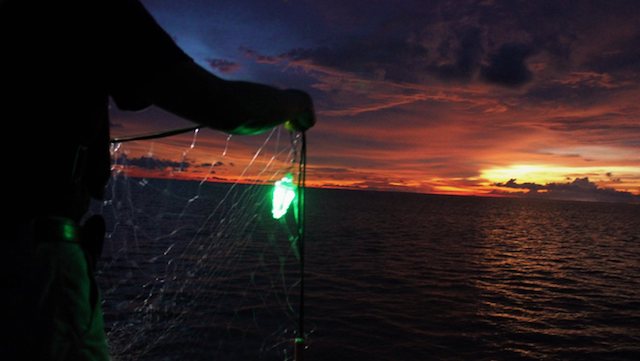
Marine biologists have found that $8 green LEDs affixed to fishermen’s gill nets were enough to dissuade vast amounts of sea animals like turtles, rays, and sharks from falling prey to these nets.
Originally tested by the National Oceanic and Atmospheric Administration on sea turtles off the coast of Hawai’i, they are proving even more effective on Humboldt squid and the elasmobranch family, which contains sharks and rays.
Gill nets are indiscriminate, and if a fisherman snags a thrashing shark, a four-foot-long Humboldt squid—known in Spanish as the “Red Devil”—or an unwelcome stingray, it can be incredibly dangerous entangling them without out-rightly killing them first.
Termed bycatch, the catching of unsought marine life accounts for 40% of all net-caught animals around the world and has been a major threat to sharks, rays, and turtles.
Jesse Senko, a biologist at the State University of Arizona’s School of Life Sciences, found that just a few green lights reduced the amount of elasmobranch and squid caught in fisherman’s nets by 95% and 81%, respectively.
The all-important loggerhead sea turtle was also bycaught 51% less frequently.
Furthermore, even non-game species of fish steered clear of the green light more than in the unlit control nets.
“We were stunned with our findings,” one researcher told Reuters.
In their study published in Cell.com, Senko and the rest of the research team compared 5,000 lit nets to 5,000 unlit nets off the coast of the Baja Peninsula in Mexico, where several species of sharks and rays are declining due to bycatch, including the devil and manta rays.
Somehow, even though regular non-game fish were reduced, there was no difference statistically in the amount of game species caught in the lit and unlit nets, meaning there was no change to fishermen’s income.
“Regardless, the increased operational efficiency and reduction in total bycatch could justify the costs to fishers that convert to illuminated nets. In cases of high biodiversity and conservation importance, governments and NGOs could subsidize their adoption,” Senko wrote.
“In other gillnet fisheries, net illumination has been estimated to cost as little as $16 to $34 to prevent a sea turtle bycatch event. We encourage conservation practitioners, fishery managers, and other stakeholders to work with industry to develop new technologies, domestically manufacture LED lights, and seek new methods to increase efficiency and availability.”
One of the unexpected and rather cool reactions of reducing this bycatch was the amount of time it took to haul in and untangle nets, saving an average of 63 minutes per trip.
The good news here is game saving fishing techniques also bring higher profits to fisherfolk.
Today’s JohnKu talks about a winning solution. I hope you all have a great weekend.
Winner by John W. Howell © 2022
The best solution,
To a problem is crafted. . .
Where everyone wins.

Brilliant idea, but I wonder why it doesn’t deter the other fish?
LikeLiked by 4 people
I wondered the same thing.
LikeLiked by 3 people
We could go to the original post at the link in the story. Maybe there is an answer there.
LikeLiked by 1 person
I just looked at the study. Way too detailed to wade through to satisfy idle curiosity!
LikeLiked by 1 person
I thought so too. Thanks for tying.
LikeLiked by 1 person
You’re welcome.
LikeLike
Trying
LikeLiked by 1 person
Maybe it’s something to do with size? 🐟🐠
LikeLiked by 2 people
Could be. I know nothing about catching fish in nets. 🙂
LikeLiked by 1 person
Me neither…
LikeLiked by 2 people
Makes three of us.
LikeLike
💕
LikeLiked by 1 person
😊
LikeLike
Good question. I don’t have the answer. 😁
LikeLike
Reblogged this on anitadawesauthor.com.
LikeLiked by 2 people
Thank you, Jaye.
LikeLike
I love it when a plan comes together!
LikeLiked by 3 people
Me too. Thanks, Annette.
LikeLiked by 1 person
Reblogged this on NEW BLOG HERE >> https:/BOOKS.ESLARN-NET.DE.
LikeLiked by 3 people
Thank you, Michael.
LikeLike
A great invention, and as easy as useful. Thanks for the great news, John! You made my day! xx Michael
LikeLiked by 3 people
Let’s hope more fishing companies use these lights. Thanks, Michael.
LikeLiked by 1 person
Oh yes, as we can not eat all the fish, we at least should save them. xx Michael
LikeLiked by 1 person
Yes indeed.
LikeLike
What an awesome story, John!
LikeLiked by 2 people
Thank you, Lori.
LikeLike
This is great! Thanks for sharing, John.
LikeLiked by 3 people
I agree. Thanks, Jill.
LikeLike
Fascinating and heartening. Thanks for sharing this good news. Have a wonderful weekend, John and everyone 💕🙂
LikeLiked by 2 people
Thank you, Harmony. Have a wonderful weekend as well. 😊
LikeLiked by 1 person
Win-win is always the best. Great Haiku and wonderful/refreshing story. I hope you have a marvelous weekend, John. 😊
LikeLiked by 2 people
Thank you, Gwen. I hope you have a super one too. 😁
LikeLike
Such a great bit of news.
LikeLiked by 2 people
Yes it is. Thanks, Craig.
LikeLiked by 1 person
I had thought gill nets were a banned item. Since they obviously aren’t, I’m very happy they discovered this technique.
LikeLiked by 1 person
Still legal off the coast of California, Maine and NJ. There are some restrictions though.
LikeLiked by 1 person
This is good news, John, and it even saves the fishermen some time and effort. It’s good to see that good things do happen. Thanks for sharing.
LikeLiked by 1 person
Thanks, Tim.
LikeLiked by 1 person
That’s really cool. I have to admit that it is odd. I’d think more animals avoid the nets. Maybe the ones you catch don’t notice the lights or mistake them for prey. Bigger animals may see them as obstacles. Also, what about dolphins?
LikeLiked by 1 person
I think the dolphins can see the lights and avoid the nets.
LikeLike
Thanks a lot, dear John, for spreading this important info. We didn’t know about the effect of green light in fishing.
Wishing you a wonderful weekend
The Fab Four of Cley
🙂 🙂 🙂 🙂
LikeLiked by 1 person
This was the first time I had heard about it too. Thanks, Klausbernd.
LikeLiked by 1 person
It is wonderful when solutions to problems are found. Now let’s see if the implementation of said solution actually happens. Win win win.
LikeLiked by 1 person
Yes, I hope it does get implemented. Thanks, Pamela.
LikeLiked by 1 person
This is especially interesting since white light has been used ‘forever’ to attract fish at night. I wonder what the difference between green and white light is, and also wonder where green light would be advantageous for other sorts of night fishermen.
LikeLiked by 1 person
All good questions, Linda. Our friends in Rockport (Key Allegro) have a light at the end of the pier and they like to sit at night and watch the fish.
LikeLiked by 1 person
What a wonderfully simple solution that I hope many start using to protect the turtles, squid, and sharks while netting fish 🙂
LikeLiked by 1 person
Me too, Denise.
LikeLike
🙂
LikeLiked by 1 person
That’s so cool! And fish are dumb.
LikeLiked by 1 person
Seemingly so.
LikeLike
I love it when simple solutions work!
LikeLiked by 1 person
Me too.Thanks, Dan 😊
LikeLiked by 1 person
I saw this on the news last night. It’s nice to know simple solutions still work in a world where everything seems overly complicated.
LikeLike
So true, CG. 😁
LikeLiked by 1 person
Brilliant simple solution. I’m just waiting for some nutcase to step up and complain about some aspect of it.
LikeLiked by 1 person
So true. 😁
LikeLiked by 1 person
Win-win situations are always a good thing. This is great news. Thanks for sharing.
LikeLiked by 1 person
It is for sure. 😊
LikeLiked by 1 person
This is great news, John. Our oceans need all the help they can get.
LikeLiked by 1 person
The oceans need help for sure, Maggie
LikeLike
How wonderful that these lighted nets don’t seem to deter the fish desired but do the “innocent victims”. Let us hope they all implement such tactics!
Happy Friday, John.
LikeLiked by 1 person
I hope they do to. Happy Friday, Dale.
LikeLiked by 1 person
Thank you, kind sir.
LikeLiked by 1 person
😁
LikeLiked by 1 person
What great news, John and a wonderful Johnku. It makes me think that humans have the brain matter to overcome every problem we put our minds to. We need more of that! Thanks for sharing.
LikeLiked by 1 person
Good point, Diana. 😊
LikeLiked by 1 person
This is such a Good News post! Thank you for sharing, John. This makes my turtle-loving heart happy. ❤
LikeLiked by 1 person
Thank you, Mar.😊
LikeLiked by 1 person
Now this is fantastic news John! I have wildlife and fisher friends that this will benefit! 👏🏻👏🏻
LikeLike
Yes it should save a lot of work.
LikeLike
A Win-Win situation is always heart-warming, John. Thank you for bringing us this one. Enjoy your weekend, my friend (do you have bets on the Super Bowl outcome??)
LikeLiked by 1 person
I do not have bets but it is always good to beat a California team
LikeLiked by 1 person
John, this is great news and your words are perfect. Thanks for sharing.
LikeLiked by 1 person
Thank you, Lauren
LikeLiked by 1 person
Amazing what a little green light can do! Thank you for sharing this one, John! And I agree wholeheartedly with the JohnKu!
LikeLiked by 1 person
Thank you, Jan
LikeLiked by 1 person
This is wonderful! And all due to an expensive green light. Thanks for sharing this, John!
LikeLiked by 1 person
😁
LikeLiked by 1 person
It’s rare when everybody wins, but it’s nice to read a story like this one, especially these days.
Nice one Boss.
LikeLiked by 1 person
It sure is nice. Thanks, Marc
LikeLiked by 1 person
Another wonderful bit of Fri-Yay news, John. Keep ’em coming! 🙂
LikeLiked by 1 person
Thank you , Mae. 😊
LikeLiked by 1 person
This is so cool, John. Sounds like a win-win for both men and animals.
LikeLiked by 1 person
Yes, I think so too, Joan. 😊
LikeLiked by 1 person
40% of unsought marine life—I had no idea the percentage was so high. How odd that the lights seem to affect some species. Interesting and happy story.
LikeLiked by 1 person
Yeah it was pretty high. No real way to free them either.
LikeLiked by 1 person
That IS great news!
LikeLiked by 1 person
It is indeed. Thanks, Becky.
LikeLike
Wow … very interesting and with a JohnKu to match. As a wise sage once said, “Who would have thunk it?”
LikeLiked by 1 person
I know right? I just hope the industry grabs onto a good idea.
LikeLiked by 1 person
What an interesting story, John. It’s great to read about these innovative solutions and the greater effect they have on our natural world. People like this always impress me.
LikeLike
You wonder how the subject of hanginfg a light on a net came up in the first place. Thanks, Barbara.
LikeLiked by 1 person
Yes, I was talking about this with my family today. We have a lot of creative people in the world. Thank goodness!
LikeLiked by 1 person
Yes, Thank goodness
LikeLiked by 1 person
Wow, something as simple as a green light helps! I hope all fishermen convert to adding green lights to their nets. It does seem like a win/win!
I wonder if it was discovered totally by accident by having a green light on the net in case a diver had to go down and untangle the net and they just left it on to save time, and voila! A cool discovery was made by a happy accident?
LikeLike
Hear, hear!
LikeLiked by 1 person
I’m glad they found a solution that supports the fishermen and protects marine life at the same time. It goes to show that solutions do not need to be complicated or expensive.
LikeLiked by 1 person
I agree. It just takes brain power
LikeLiked by 1 person
That’s amazing! And who on earth thought, “Maybe if we attached green lights, the fish we don’t want will steer clear, but the fish we do want will still come.” How is that even possible? Again, I say, amazing! Love these good news posts, John!
LikeLiked by 1 person
I wondered the same thing. I think it came out of a night of drinking.
LikeLiked by 1 person
This is encouraging news. As a veggie, I don’t eat fish. I like them, and want to be their friend.
I want to be a friend to all animals. It’s challenging in this world.
The only flesh in this girl is the 10 pounds I’ve gained in the 2 years of the poundemic.
Excellent JohnKu!
LikeLiked by 1 person
Thank you, Resa. 10 pounds? Most have done 20. Go ahead and take ten more.
LikeLike