The glass touchscreen on the coffee machine is glowing with a soft light. A quick thump of the top brings up the icons. The best guess is the machine was caught sleeping, and, of course, we will never know. A touch of the two coffee button starts the flow of the life-giving elixir that promises to quell the falling Mosler Safe hitting the concrete sound that the lack of caffeine is duplicating in my head.
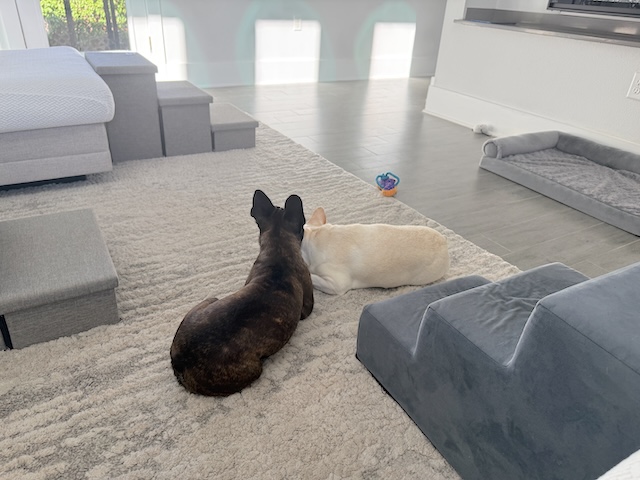
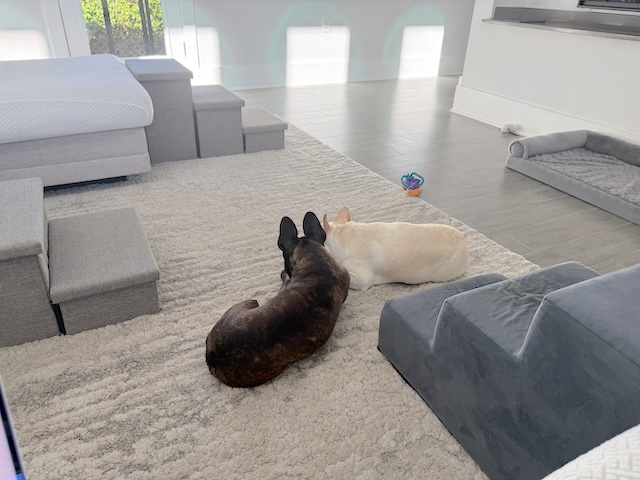
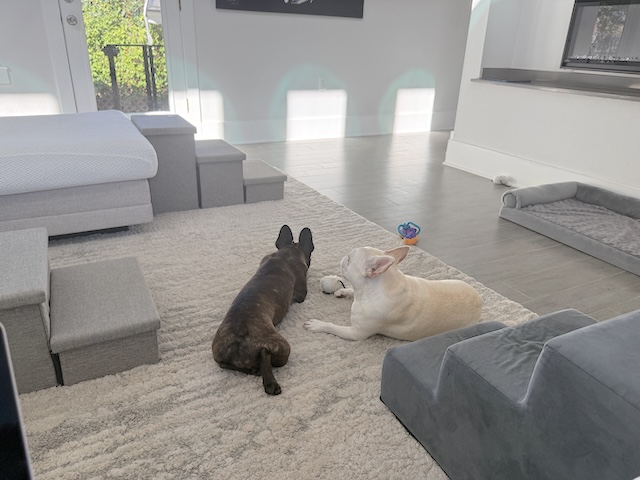
The first sip does the job. The second sip (Of course) is accompanied by the Westminster chime of the doorbell and the eardrum-bleeding cacophony of Igor’s hounds, Twigy and Tempeste. A toss of a veggie burger into the soundproof room and a slam of the door brings the peace train into the station. A check of the security monitor shows what appears to be Gladstone Gander holding a clipboard and envelope. Since asking anyone to simply leave the envelope has never worked, the security shutdown process is begun.
The B-2 bomber squadron and the F-35 escort must be called off. One call does it. The tank corps and gunboats are told to stand by. The Apache helicopters are rerouted. The electric shock fence is turned off. The drawbridge over the quicksand is lowered. The robot attack dogs returned to their charging station. The laser-guided machine guns on the roof are set to caution. The nest filled with rattlesnakes put away. The bucket filled with 1000 marbles is locked down. The tear gas canisters shut off. The electrified welcome mat set to off. The fall-away sidewalk into the pit filled with spikes is locked. The hornet’s nest closed. The water cannons are set to safety. Bear traps are set to off. Peregrine Falcons perched on the roof above front door fed. The vat of boiling oil set to warm. Monty Python’s Harmless Little Rabbit’s cage is closed. The front door is opened.
Gladstone Gander hands me the clipboard and envelope. The signed clipboard is handed back with a fiver. Once in the house, the envelope reveals a message from Linda Hill. It reads: Your Friday prompt for Stream of Consciousness Saturday is “Starts with gl. Find a word that starts with “gl” and use it any way you’d like. Have fun!
Every January, thousands of Christmas trees end up in the trash after the holiday season. In New Orleans, officials have found a remarkable way to give them a second life.
Instead of sending the trees to landfills, the discarded firs are collected, tied together into large bundles and dropped by helicopters over coastal marshes. The goal is to help slow the decades-long loss of land threatening Louisiana’s coastline.
A state losing ground to the water
Louisiana has lost more than 2,000 square miles of coastline since the 1930s due to natural erosion and powerful storms. Rising sea levels and sinking land have made the problem even worse.
The Mississippi River also no longer carries as much sediment into the wetlands as it once did, reducing the natural process that helped rebuild the coast. As a result, marshes are disappearing rapidly, weakening their ability to absorb storm surges and protect nearby communities from flooding.
The Christmas tree recycling program is designed to help restore some of those damaged wetlands by creating natural barriers that trap sediment and encourage new land growth.
A creative solution backed by research
Scientists have found that these tree barriers can make a measurable difference. Studies show that the structures can reduce water flow by half and increase the thickness of the soil each year.
Experts caution that the initiative alone cannot solve Louisiana’s massive erosion problem, but official figures show the program has already helped restore an area of wetlands equivalent to around 200 soccer fields.
By turning old Christmas trees into tools for coastal restoration, New Orleans has transformed holiday waste into a small but meaningful weapon in the fight against climate change and rising seas.
The good news in this story is that cast-off holiday trees that could become waste are turned into useful environmental tools. Today’s JohnKu talks about waste. I hope you have a wonderful weekend.
Today I randomly opened The Last Drive to page 159 and, with my eyes closed, pointed to the page. My finger was closest to the word “attached.” This is our prompt today.
August marks the anniversary of IBM’s introduction of the first personal computer in 1981. If you want to return to that time, take this list with you. It may save a mistake or even a tear in the time continuum. This post ran first on August 12, 2019
Top Ten Things Not to Do at the Introduction of the First IBM Personal Computer in 1981
10 At the intro of the IBM PC, do not laugh out loud at the 16 to 256 kB amount of memory being offered. If you do, at best someone will think you are laughing with delight. At worst, you’ll be put in a position of explaining what you believe to be so funny. (Just because your current laptop has a thousand times that memory, you need not be a snob, Isaias.)
9 At the intro of the IBM PC, do not tell Tiny the WWF champ that he needs to learn to keyboard. If you do, at best Tiny will think you mean someone else. At worst, Tiny will think you are mocking his two-fingered approach to typing. (The other worse part is Tiny just left his self-esteem support group where he was told he is a beautiful, perfect, big boy. I think you will have to deal with his feelings of rejection, Illias. It is going to hurt. I’m just sayin’)
8 At the intro of the IBM PC, do not ask if there are any discounts available on the $1,565.00 price tag. If you do, you’ll likely get a strange look. At worst, the engineers will go into a lot of detail about the components and how expensive everything is inside. (Now don’t you feel foolish, Ismael? Put that Best BUY coupon away. It is not helpful to tell them that you can get a PC priced at $141.00 in 1981 dollars. Might even get you run out of town.)
7 At the intro of the IBM PC, do not ask if you can play Pong on it. If you do, at best, more funny looks. At worst, one of the engineers will suddenly see you as a genius and won’t get away from you. (You may think this is a good thing, Izzy, but the guy hasn’t been out of his clothes for two weeks.)
6 At the intro of the IBM PC, do not use white-out on the screen to correct mistakes you make trying out a unit. If you do, at best the group will think you are cute. At worst, they’ll think you are a technology terrorist. (There are a couple of big guys moving your way, Iban. Might be a good idea to take your white-out and correction tape and head for the door.)
5 At the intro of the IBM PC, do not complain if you get a stripped-down version with no monitor for your $1565.00 ($4313 in 2018 dollars). If you do, you may be told to buy a more expensive model. At worst, the engineers will sit you down and explain that the PC was designed to be hooked to a TV monitor. ( So now you know, Ivo. You just plop that sucker down by your TV and plug it in the back. Well, assuming you have a connection on your TV. If not, come back and get the +$3,000 models. We’ll throw in a couple of floppy disk drives too. Don’t tell me you don’t know what floppy disks are?)
4 At the intro of the IBM PC, do not scoff at Charlie Chaplin’s character The Little Tramp as a spokesperson for the IBM PC. If you do, at best, the market will ignore you. At worst, the advertising folks will lock you in a room and make you watch an endless loop of Little Tramp commercials until you buy a PC. (Best just buy one in the first half-hour, Idal. Otherwise, your brain may melt.)
3 At the intro of the IBM PC, do not buy before you try. If you do, you can expect some inconvenience. At worst, you’ll be trying to save to drives that don’t exist and print to empty slots. (Maybe you should have tried it out first, Isham. Looks like you will need the more expensive one after all.)
2 At the intro of the IBM PC, do not ask if it is compatible with your iPhone. If you do, at best, no one in the room will know what an iPhone is. At worst, the security department will believe you asked the question because you are from a competitor. (Looks like it is going to be a fun ride out the front door, Izak. Try to land on something soft this time.)
1 At the intro of the IBM PC, do not ask if it comes in colors other than grey. If you do, at best the salespeople will think you are joking. At worst, the salespeople will think you are a corporate spy for Apple. (Looks like they are ready for this kind of thing, Issa. Here comes the sheriff with a couple of deputies. Might be a good time to hit the way back button on that cell phone.”
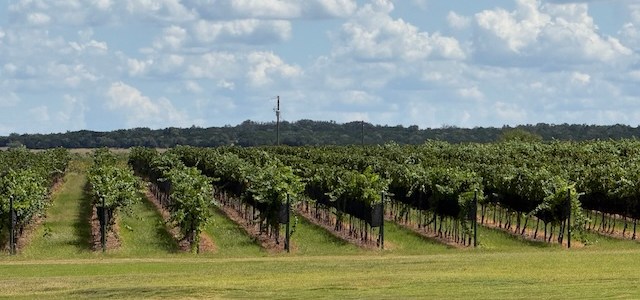
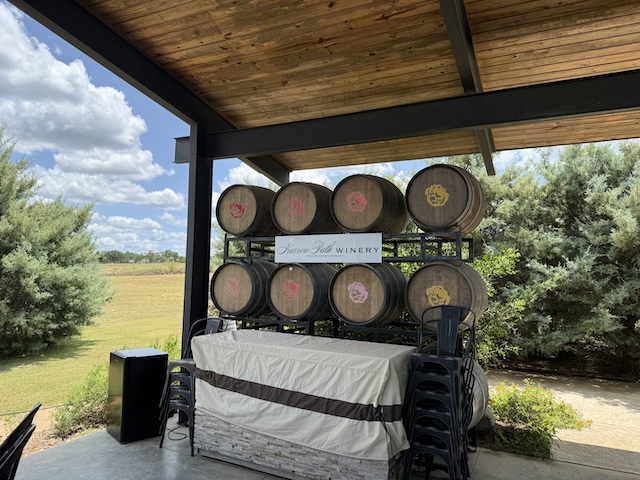
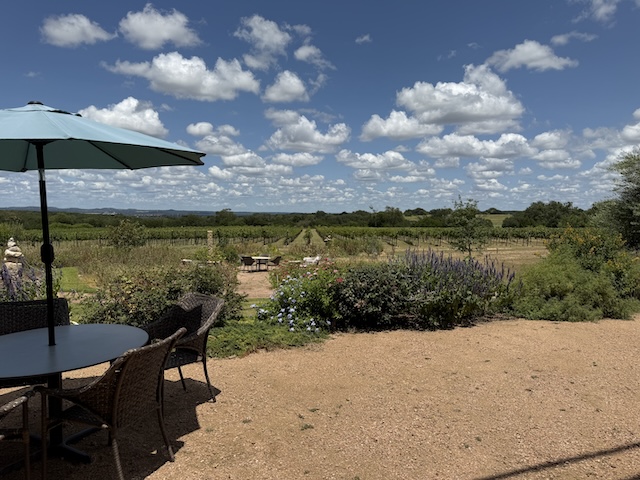
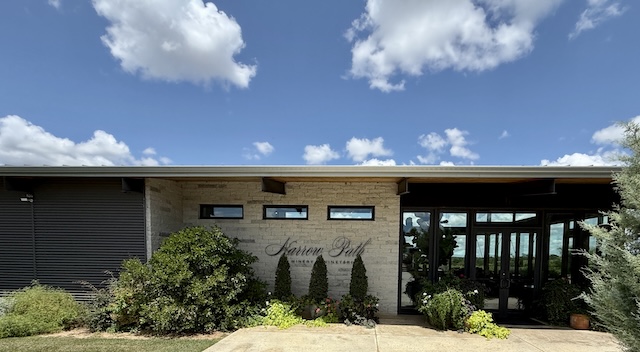
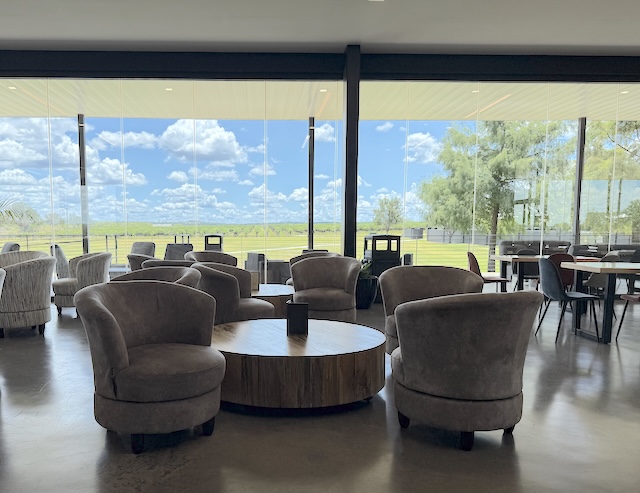
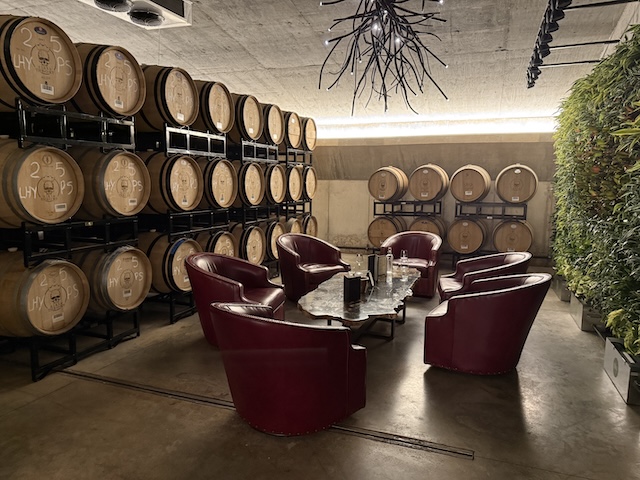
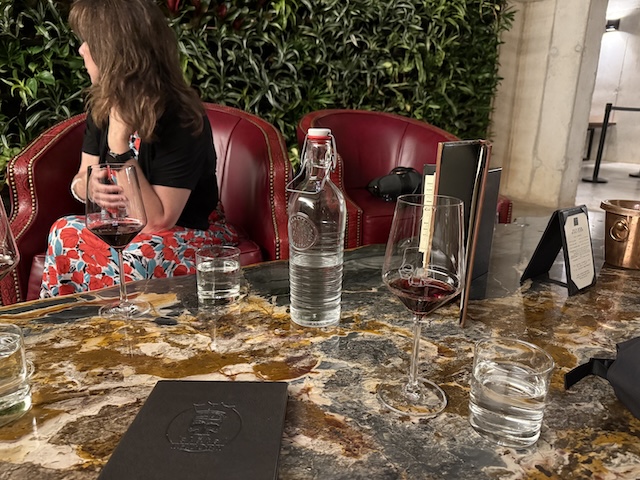
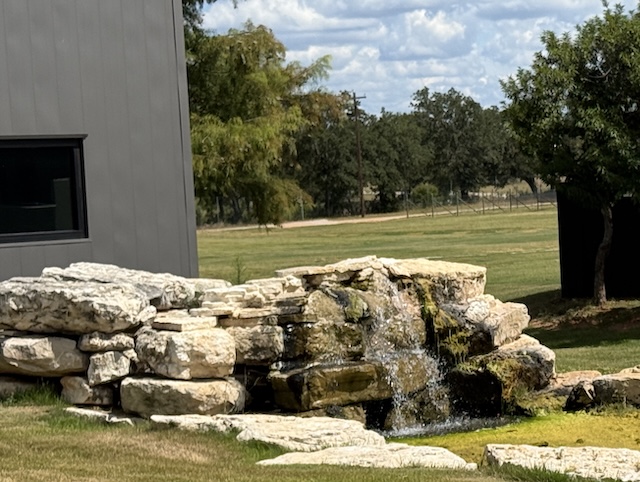
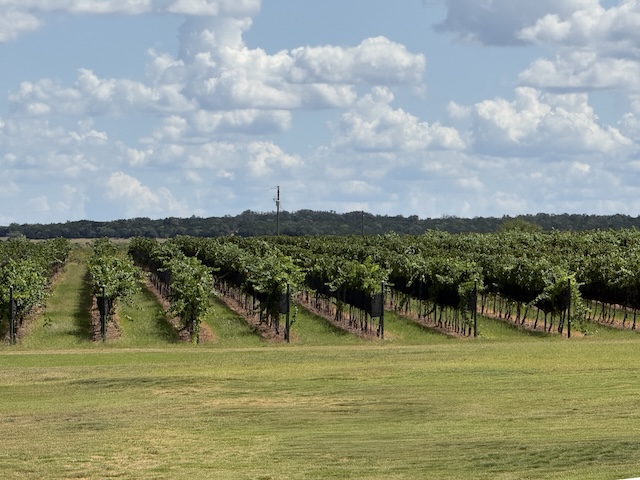
Today we are going on a wine tasting in Fredericksburg, Texas. My daughters and I are taking this trip to celebrate my 85th year (Last May). We are catered on the bus by Launderette in Austin, and our entertainment is Billy Joel.
The coffee machine touchscreen is balled up with different languages. Given the two-year-old beating on pots and pans feeling in my head, it took great restraint to not give in to the bald disappointment of caffeine denial. The machine bawled for someone to help. Pulling the plug and reinserting it turned everything back to normal. The two coffee icon was touched, and the heavenly elixir poured forth.
The first sip sent the kid to the backyard. The second (You know what’s coming) was accompanied by the dual torture of the Westminster Chimes of the doorbell and the glass-cracking din of the hounds of Baskerville trying to bark the intruder to St. Louis. A toss of a wagyu porterhouse steak into the soundproof room, followed by the slamming of the door, reunited the environment to the sound of silence.
A glance at the security monitor showed that the idiot on the porch who can’t read the “Do not ring the doorbell” sign was Br’er Rabbit. With a sigh, the security shutdown process is begun.
The B-2 bomber squadron and the F-35 escort must be called off. One call does it. The tank corps and gunboats are told to stand by. The Apache helicopters are rerouted. The electric shock fence is turned off. The drawbridge over the quicksand is lowered. The robot attack dogs returned to their charging station. The laser-guided machine guns on the roof are set to caution. The nest filled with rattlesnakes put away. The bucket filled with 1000 marbles is locked down. The tear gas canisters are shut off. The electrified welcome mat set to off. The fall-away sidewalk into the pit filled with spikes is locked. The hornet’s nest is closed. The water cannons are set to safety. Bear traps are set to off. Peregrine Falcons perched on the roof above the front door fed. The vat of boiling oil set to warm. The front door is opened.
The rabbit has a clipboard and a letter. He passes them to me, and after signing, it is returned with a fiver, and the advice to watch out for tar babies.
Inside the house, the envelope reveals a message from Dan Antion filling in for Linda Hill, it reads:
Your Friday prompt for Stream of Consciousness Saturday is “Bald, Balled, Bawled” Use one. Use two or use them all any way you’d like. If you manage to use all three, I’ll slide you some bonus points. Enjoy!
To see what others have done with the prompt, visit Linda’s post. Here is the link.
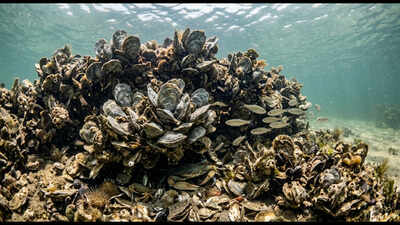
Oyster reefs also protect coastlines by helping reduce the force of waves during storms.
What looked like waste has turned into an important tool for restoring marine life along Florida’s coast. Between 2007 and 2024, Florida placed more than 500,000 tonnes of recycled oyster and clam shells into the Gulf of Mexico as part of a long-term effort to restore damaged marine habitats. According to a report by Upworthy, the shells did not come from the sea directly, but were collected from seafood restaurants, where they were discarded after meals, and from seafood processing plants. Instead of sending them to a landfill, they were returned to the water in areas where oyster reefs had declined over the years. At first, many people questioned the idea, even calling it dumping waste into the sea. Even researchers saw little visible change in the early stages of the project and were unsure whether the effort would succeed.
Although there was no immediate change on the surface, important processes had already started. As the shells were placed in the water, bacteria settled on them and formed a thin layer called biofilm. This is one of the first building blocks of a marine ecosystem, creating conditions that allow other organisms to attach, settle, and grow. The shells slowly broke down, releasing calcium into the water. This created small areas with a different water chemistry called microzones.
These tiny changes create suitable conditions for several underwater organisms that depend on such environments to survive. The shells also solved another major problem. Healthy oyster reefs need hard surfaces where young oysters can attach and grow. As many reefs had disappeared, much of the seabed had become soft and sandy, making it difficult for new oysters to establish themselves. The recycled shells acted as that missing foundation, and young oysters settled on them, gradually forming new reefs over time.
Shells were collected from seafood restaurants, where they had been discarded after meals,
Impact on water quality
Oyster population growth also brought additional benefits. While feeding, they filter large volumes of water, removing particles and helping reduce harmful algal blooms. Cleaner water also supports the growth of other plants and animals that depend on coastal ecosystems. Over time, these changes spread through the food chain, and fish and larger marine animals find more suitable habitats. According to the project, populations of fish, turtles, and dolphins recovered to levels not seen for more than 25 years. The gradual rebuilding of the seabed eventually became visible as marine life returned to areas that had earlier struggled to support it.
Importance of reefs
Healthy marine ecosystems support commercial fishing, which generates income for coastal communities. When fish populations decline, fishermen’s earnings are impacted, and seafood prices increase. Cleaner coastal waters support tourism, a major source of income for communities in Florida. Oyster reefs also help protect coastlines by reducing wave energy during storms. They act as natural barriers that can limit erosion and protect nearby shores. Oyster populations have declined over the years because of overharvesting. Human-caused environmental disasters, including the Deepwater Horizon oil spill, have also damaged marine habitats, making it harder for oyster reefs to recover. The results from Florida have drawn attention from coastal engineers and marine biologists, and similar shell recycling programs have already been introduced in several US states, including Alabama, Texas, Louisiana, California, Mississippi, and the Carolinas.
The good news here is recycled shells are giving birth to new life and improved environment. Today’s JohnKu talks about recycling. I hope you have a wonderful weekend