
Today’s Good New story comes from the Good News Network. Here it is in its entirety.
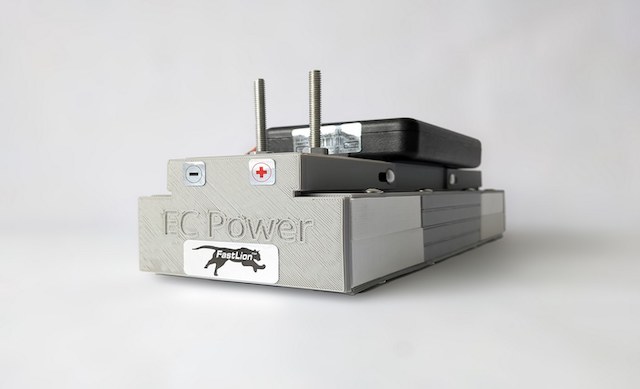
Battery Tech Breakthrough Paves the way for Mass Adoption of Affordable/Fast Charging Electric Cars
A breakthrough in electric vehicle fast-charging battery design from Penn State has enabled a 10-minute charge time for a typical EV battery.
The record-breaking combination of a shorter charge time and more energy required for longer travel range came from heating the battery to a Goldilocks Zone which has proven difficult for engineers thus far.
Their findings are hoped to accelerate the sale of EVs, and were announced on October 12th, in the journal Nature.
“The need for smaller, faster-charging batteries is greater than ever,” said Chao-Yang Wang, Professor of Mechanical Engineering at Penn State and lead author on the study.
“There are simply not enough batteries and critical raw materials, especially those produced domestically, to meet anticipated demand.”
In August, California’s Air Resources Board passed an extensive plan to restrict and ultimately ban the sale of gasoline-powered cars within the state. By 2035, the largest auto market in the United States will effectively retire the internal combustion engine.
If new car sales are going to shift to battery-powered electric vehicles (EVs), Wang explained, they’ll need to overcome two major drawbacks: they are too slow to recharge and too large to be efficient and affordable. Instead of taking a few minutes at the gas pump, depending on the battery, some EVs can take all day to recharge.
“Our fast-charging technology works for most energy-dense batteries and will open a new possibility to downsize electric vehicle batteries from 150 to 50 kWh without causing drivers to feel range anxiety,” said Wang, whose lab partnered with State College-based startup EC Power to develop the technology.
“The smaller, faster-charging batteries will dramatically cut down battery cost and usage of critical raw materials such as cobalt, graphite, and lithium, enabling mass adoption of affordable electric cars.”
The technology relies on internal thermal modulation, an active method of temperature control to demand the best performance possible from the battery, Wang explained.
Batteries operate most efficiently when they are hot, but not too hot. Keeping batteries consistently at just the right temperature has been a major challenge for battery engineers. Historically, they have relied on external, bulky heating and cooling systems to regulate battery temperature, which respond slowly and waste a lot of energy.
Wang and his team decided to instead regulate the temperature from inside the battery. The researchers developed a new battery structure that adds an ultrathin nickel foil as the fourth component besides anode, electrolyte, and cathode.
Acting as a stimulus, the nickel foil self-regulates the battery’s temperature and reactivity which allows for 10-minute fast charging on just about any EV battery, Wang explained.
“True fast-charging batteries would have immediate impact,” the researchers write. “Since there are not enough raw minerals for every internal combustion engine car to be replaced by a 150 kWh-equipped EV, fast charging is imperative for EVs to go mainstream.”
The study’s partner, EC Power, is working to manufacture and commercialize the fast-charging battery for an affordable and sustainable future of vehicle electrification.
The good news here is that just maybe electric vehicles will be viable for the mass population. Today’s JohnKu talks about technology. I hope you have a terrific weekend.
Mother of Invention by John W. Howell © 2022
When it seems doubtful,
The old saw kicks in hardest. . .
Necessity rocks.

Invention really is a mother.
LikeLiked by 2 people
😁
LikeLiked by 1 person
Reblogged this on NEW BLOG HERE >> https:/BOOKS.ESLARN-NET.DE.
LikeLiked by 2 people
Thank you for sharing, Michael. 😊
LikeLiked by 1 person
Great news, even though i would wish human brains (at least some of them) wouldd able to be charged faster with knowledge. 😉 Thanks, John! Have a nice day! xx Michael
LikeLiked by 2 people
I think we all wish the same, Michael. Have a good one too.
LikeLiked by 1 person
Thanks, John! xx Michael
LikeLiked by 1 person
😁
LikeLike
Until we get to the point where I don’t have to worry about going for an 8-hour drive, I ain’t touching the things… This is a wonderful step in the right direction.
Happy Friday, John.
LikeLiked by 4 people
The sad thing right now is the mandates (like in California) are impossible without some technological breakthrough. Maybe this is it. Thanks, Dale.
LikeLiked by 1 person
There are some here. Pretty much the same timeline. Let’s hope it is.
LikeLiked by 1 person
😁 Yes, let’s hope.
LikeLiked by 1 person
🤞
LikeLiked by 1 person
😊
LikeLiked by 1 person
I’m with Dale. This is a good thing, but nothing happens overnight. I certainly wouldn’t want to call 911 for a loved one and be told the ambulance is being charged. I worry enough about keeping my phone charged in case of emergencies. Enjoy your Friday, John!
LikeLiked by 3 people
Good point, Jill. Hope your Friday goes well. 😁
LikeLike
That’s awesome. Hope that works out and then we get the countrywide infrastructure to make long distance trips more viable.
LikeLiked by 2 people
Wouldn’t want to be caught in the desert with a dead battery. Thanks, Charles.
LikeLike
This is a huge breakthrough. Thanks for sharing, John. Over here, we’re finding different manufacturers are using different charging plugs, which seems crazy. Hopefully, the next development will see one universal connector. Love the JohnKu. Have a wonderful weekend 💕🙂
LikeLiked by 1 person
That is crazy, Harmony. You would think a universal connector would be mandatory. I hope your weekend is all peace and quiet. 😊
LikeLiked by 1 person
They keep making progress, and they’ll figure it out eventually. This is good news.
LikeLiked by 1 person
That’s why I believe necessity will drive the development. Thanks, Craig.
LikeLiked by 1 person
It’s always exciting when we take a big step in a positive direction. Thanks for sharing, John.
LikeLiked by 1 person
Yes, it is. Thank you, Staci. 😊
LikeLiked by 1 person
It’s all Bologna. Just give me 10 gallons and clean my windshield. I want no part of the electric-anything like this.
Call me old fashioned. But we have enough coal/fossil fuels to last 100 lifetimes.
My rant is over
LikeLiked by 1 person
Thank you, Tom. Good rant.
LikeLike
This is hopeful news, John. Thank you for sharing. And you’re right about necessity, it drives innovation. I love your Friday inspirational posts! 😊
LikeLiked by 1 person
Aw thank you, Gwen. I like to put them together. Makes a nice ending for the week. Thanks for your thoughtful comment. 🤗
LikeLike
It’s good to hear of a research breakthrough for greater adoption of cars that won’t damage the planet as much as gasoline-powered cars.
LikeLiked by 1 person
Yes I think it is about time too. Thanks, Liz.
LikeLiked by 1 person
You’re welcome, John.
LikeLiked by 1 person
😊
LikeLiked by 1 person
It’s hard for me to wrap my head around electronic cars. This sounds like a step in the right direction.
LikeLiked by 1 person
I think it is but we will see. Thanks, Joan
LikeLiked by 1 person
My car is about 5 cm long and can be moved by hand. No energy needed. 🙂
LikeLiked by 1 person
Ha ha ha.
LikeLike
2035 is a long time away for an industry that’s evolving as fast as this one is. This is a great step in the right direction.
LikeLiked by 1 person
I think so too, Dan
LikeLiked by 1 person
This is a great step forward for the EV industry. Have a great weekend.
LikeLiked by 1 person
Thank you, Michele. Have a great weekend as well.
LikeLiked by 1 person
This is a step forward. When this technology becomes widely available, the problem will become charging stations! And of course, we still need power from some source for the charging.
LikeLiked by 1 person
Clean electricity is a long way off too.
LikeLike
I agree. I think this administration is moving way too fast and putting us at a real disadvantage on several levels. We have to give the technology time to catch up!
LikeLiked by 1 person
We now are an oil importer when we used to be self sufficient.
LikeLike
Human ingenuity is amazing, and it seems to step up just in time. Great news, John. Things are going to change rapidly in the auto industry over the next ten years. 🙂 Thanks for sharing the good news.
LikeLiked by 1 person
Let’s hope it will help. Thanks, Diana.
LikeLiked by 1 person
It is a promising step. I don’t know what the immediate future holds for these vehicles actually becoming mainstream, but this certainly addresses a critical aspect that surely needed to be resolved in order for them to be more appealing. Good news, John.
LikeLiked by 1 person
How to generate clean power is another problem that needs to be resolved.
LikeLiked by 1 person
The progress is encouraging, but we’re a long way off before many of us will buy into the technology. I know I’d hate getting stranded in the middle of a corn or soybean field, waiting on help that’s being charged. And some states, particularly Montana and Texas, are so big that EVs aren’t practical without charging stations being spaced closer together.
LikeLiked by 1 person
So true, Debbie. We are a ways off.
LikeLiked by 1 person
When forced we seem to come up with answers.
LikeLiked by 2 people
So true, Denise.
LikeLike
I’m neutral about EVs, and this is a step forward. Necessity does seem to drive innovation.
LikeLiked by 1 person
It seems that way. Thanks, Tim
LikeLiked by 1 person
John, this is great news. Unlike the comment from Tom, it’s not a matter of fossil fuel availability it’s a matter of the global warming that fossil fuel is creating. Oh, wait a minute, it’s fossil fuel that generates the power to charge your EV. I guess I’m conflicted on this issue.
LikeLiked by 1 person
The power generation issue has not been solved for sure. Thanks, Dan
LikeLike
I think there is an answer.
Nuclear and oil.
Perhaps I’m wrong
It’s definitely not electric since it comes from OTHER sources
Oh well, it’s late I think I’ll have a drink and ponder ……
LikeLiked by 1 person
🙄
LikeLike
A shorter charging time sure sounds promising. Have a great weekend, John!
LikeLiked by 1 person
You as well, Teri
LikeLiked by 1 person
I’m glad to hear improvements are on the way. I only own a hybrid, but it seems the use of electric vehicles will continue to grow. Like all newer technology, I expect improvements will continue to happen.
LikeLiked by 1 person
I believe you are right. 😁
LikeLiked by 1 person
That is a breakthrough John and certainly if all the countries touting the deadline are to make it then batteries are going to need to be much better than today. Hopefully they will make similar breakthroughs on providing the energy to charge the batteries by then too… terrific share hugsx
LikeLiked by 1 person
I think a full solution is needed. Not just the end user model. Thanks, Sally.
LikeLiked by 1 person
It sounds like their overcoming the major obstacles for ushering in the electric car era. Truth is, electric cars were out over a hundred years ago, but gas won out. Can you imagine where we’d be right now, if the reverse had been true?
LikeLiked by 1 person
It is fun to imagine. The big problem would be how to generate enough power for all those cars. Maybe that would have been solved too.
LikeLiked by 1 person
I think we may have seen greener technologies come out sooner.
LikeLiked by 1 person
😊
LikeLiked by 1 person
Necessity is the mother of invention, and will is the father.
LikeLiked by 1 person
I like that, Pamela. Thanks. 😁
LikeLiked by 1 person
I like this response. Since I read it, I can’t come up with anything better. Thanks for the good news, as always, John. 🙂
LikeLiked by 2 people
Thank you, Betsy.
LikeLiked by 2 people
Good news in the right direction. Thanks for sharing, John. 🙂
LikeLiked by 1 person
Thank you, Lauren.
LikeLiked by 1 person
Still seems way off in science fiction for these types of vehicles but someday may be here faster than we think.
LikeLiked by 1 person
I think so, Traci. Thanks. 😊
LikeLike
Most interesting, John. I do think electric cars are our future. I don’t own one, but my daughter and son-in-law do, and they love bypassing the gas stations these days. Thanks for sharing.
LikeLike
Thank you
LikeLike
Progress!!! Yay!!!!
Like your JohnKu, lots.
“The old saw kicks in hardest. . .” Is that an old saying? Or did you make it up?
OXOXOX
LikeLiked by 1 person
The old saying is necessity is the mother of invention. It’s a real saying 🐨🤴🏻🐨🤴🏻🐨🤴🏻🐨🤴🏻
LikeLiked by 1 person
Yes… I sure have a knack missing the obvious. OXOXOX
LikeLiked by 1 person
Still terrific though. 🐂💋🐂💋🐂💋
LikeLike
Thank you so much for the feature, Sally.
LikeLike
This is very good news John. Still a ways to go to perfection, but a great beginning. 🙂
LikeLiked by 1 person
Yes it is. Thanks, Debby.
LikeLiked by 1 person