
Today’s good news comes from the Good News Network. Here it is in its entirety.
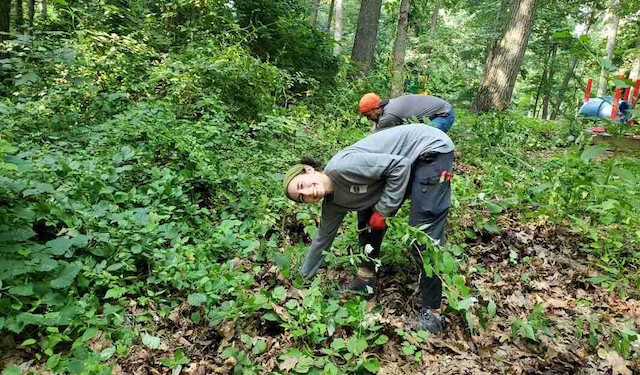
Weed Warriors in Action – credit, Montgomery County Parks.
Wash. D.C’s ‘Weed Warrior’ Volunteers Tackle ‘Mile-a-Minute’ Invasives to Save the Capital’s Trees
Around the capital beltway or Washington’s famous Rock Creek Park, you may see a group of people ripping up vines along the treeline beside the roads.
If you have then you’ve glimpsed superheroes who traded in their capes for gardening gloves and their time for the satisfaction of terminating an invasive species and saving a native tree.
Washington D.C’s “Weed Warriors” are a group of volunteers going back to 1999 that work for free to keep hundreds of species of invasive shrubs, vines, and climbers from taking over native ecosystems.
Among the 600 or so non-native invasive plant species found in and around our nation’s capital, some, like Polygonum perfoliatum, also known as the “mile-a-minute” vine, can be devastating. Suffocating trees by overgrowing the leaves in their canopy branches, a mile-a-minute can kill thousands of trees every year.
Since 1999, Weed Warrior volunteers have logged over 135,000 hours of time weed whacking in Montgomery County alone. Anyone can become a Weed Warrior; the group works in units for two-hour spaces removing weeds or planting native species in their place.
These invasive species management events are led by specially-trained volunteer Weed Warrior Supervisors and/or staff from the Montgomery Parks Dept. Warriors can get certified to de-weed in their spare time or lead events on their own. They can even have their own unique patch of ground in the D.C.-Metro area to control.
Why would anyone want to trade their free time for laboring hours away for free doing something our tax dollars are supposed to do for us? The answer is simple: it’s addicting.
“If I have any good mental health, it’s due to Weed Warrioring,” said 74-year-old area resident Barbara Francisco. “You have a sense of accomplishment.”
Francisco spoke to Justin Moyer of the Washington Post, who found the volunteer groups were filled with people who were happy to get out into nature and make a meaningful impact on biodiversity.
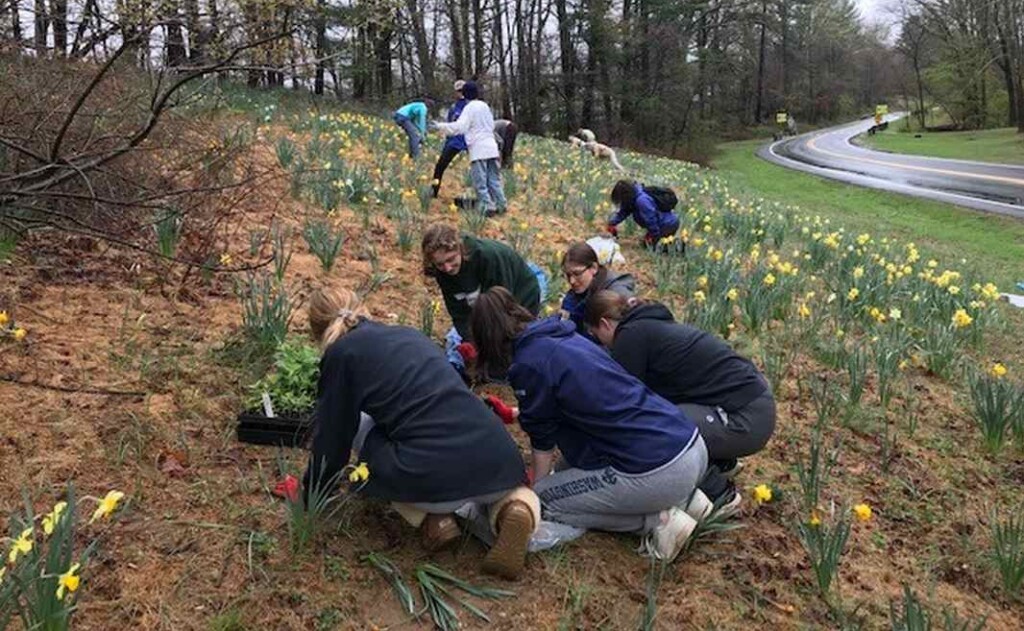
The Weed Warriors website states that non-native, invasive plant species (NNIs) can alter the complex webs of plant-animal associations that have evolved over thousands of years to such a degree that plants and animals once familiar to us are eliminated.
In meadows, for example, NNI monocultures can threaten butterfly populations because they can no longer find the native host plants they depend on for survival. In forests, NNI vines can strangle and smother trees. NNI shrubs can displace and shade out native plants that provide birds and other wildlife with food and shelter.
Recent research has even shown that NNIs can alter soil chemistry and disrupt the growth of the mycorrhizal fungi on which healthy forests depend.
Anyone who feels this is something they want to contribute their time to can go to the Montgomery County Parks website here and look at the upcoming Weed Warrior events—the next one is October 21st.
The good news is there are folks who care enough to spend their own time in saving indigenous plant life. Today’s JohnKu talks about investment. I hope you have a super weekend.
Volunteer by John W. Howell © 2023
Scratch a volunteer,
And underneath, you will find . . .
Passion, strength, and love.























 Fiction Favorites
Who finds selfless warriors in the weeds?
You do!
Great story Boss. Another one!
LikeLiked by 1 person
Thank you, Pilgrim. Love your comment.
LikeLiked by 1 person
Love the story, Sheriff
LikeLiked by 1 person
😁
LikeLiked by 1 person
😉
LikeLiked by 1 person
😊
LikeLiked by 1 person
A wonderful and uplifting and hopeful post, John! Thanks so much for sharing just when I was beginning to think good news was a thing of the past. Bless every one of these folks!
Because I haven’t been out often in the last three years, I don’t know the current state of the kudzu vines that took over much of the south some years back. I HOPE they’ve been visited by a few warriors of their own, and if I were in better shape (or even allowed out of the house right now), I’d become a Weed Warrior, myself.
As always, your JohnKu is right on the mark! 😀 ❤
LikeLiked by 1 person
Thank you, Marcia. I love to share stories that make us feel better in times of stress. We all have has three years of hell and who knows when it will be over.
LikeLiked by 1 person
We have, indeed, and I try to tell myself things WILL change for the better before too much longer, but myself is having trouble believing me. Doh! Still, I cling to hope! 😊
LikeLiked by 1 person
We all should cling to hope. In the face of world conditions that is all we have right now.
LikeLiked by 1 person
Another great report. Invasive species are terrible. We’re having an outbreak of quagga mussels on the Snake River right now.
LikeLiked by 1 person
We have razor mussels here in out lakes. They pretty much take over if left unchecked.
LikeLiked by 1 person
I can see how being a weed warrior would be a very satisfying and rewarding experience. I’d never heard of mile-a-minute vines. Yikes! They sound worse than the infamous kudzu.
LikeLiked by 3 people
I wonder if the kudzu is still a problem?
LikeLiked by 1 person
If I had to hazard a guess, I’d say that it probably is.
LikeLiked by 1 person
I think you are right.
LikeLiked by 1 person
YAY for the WW! YAY for the TREES! ❤
LikeLiked by 2 people
I agree, Annette. Thank you. 😁
LikeLiked by 1 person
A wonderful story. Anyone who supports the care of this planet has my support.
LikeLiked by 2 people
Mine too, GP. Thank you. 😊
LikeLiked by 1 person
Wonderful work they are doing. I always wonder just how these invasive species find their way here. Accident? Someone thought they were cool and brought them over, only to realise that it was a bad idea… like the various bugs brought in for one reason, only to create more trouble.
Wonderful story, John. Happy Friday!
LikeLiked by 2 people
I wish I knew how that happens too, Dale. I know under certain conditions invasive species have been introduced by well meaning “experts.” Thanks.
LikeLiked by 1 person
No doubt!
LikeLiked by 1 person
😁
LikeLiked by 1 person
Thanks for sharing this wonderful story, John. I loved your JohnKu.
LikeLiked by 2 people
Thank you, Jill. It is relaxing when I write one. 😁
LikeLike
Great news for sure! Fabulous JohnKu too! Thanks for sharing this, John. Have a wonderful weekend. Hugs 🤗💕🙂
LikeLiked by 1 person
Thank you so much. I hope you have a peaceful weekend as well, Harmony. 🤗
LikeLiked by 1 person
That’s so cool, John. In the south, kudzu was brought in and it took over, destroying many native plants. Russian Olive trees are another problem for the southwest. Both are proof that nature should be left alone and not tampered with. Good to see these volunteers doing their part to keep the ecosystem the way it should be.
LikeLiked by 1 person
I agree, Joan. You have to wonder what people are thinking when an invasive species is introduced. I hoe you have a super weekend.
LikeLiked by 1 person
Wonderful post, John. Your JohnKu perfectly captures the goodness of the volunteers – and the potential for each of us to add our services in one way or another. 😊
LikeLiked by 1 person
An excellent point, Gwen. We all have the opportunity to make a mark so to speak. Thanks for the terrific comment. 🤗
LikeLike
🤗
LikeLiked by 1 person
This is very good work these people are doing. I have a tough enough time pulling Bittersweet and Virginia Creeper out of our shrubs.
LikeLiked by 1 person
It is good you do though. The shrubs are grateful I’m sure. Thanks, Dan
LikeLiked by 1 person
Those vines are amazing. They twist together in pairs and sometimes three and four, so they can go higher and reach into trees.
LikeLike
I’m glad you are on it.
LikeLiked by 1 person
Good news, indeed! Thanks for sharing this. My family lives in this area, and we’ve volunteered to pick up trash in parks. And it’s wonderful to read about other volunteers who are pulling up the non-native invasive plants in the parks.
LikeLiked by 1 person
I was very glad to see this story, Dave. Thanks.
LikeLiked by 1 person
Just about all plants want to be invasive. It is all out warfare for light and water. Whoever is the tallest wins. It is not just ‘Non Native’ native invasives are just as bad – poison ivy, thistle, grape vines, and many more will do all they can to take over. And no kudzu has not quietly gone away. And with global warming it is slowly marching north. And once established ‘eradication’ becomes a pipe dream. Seeds and roots are just waiting to bounce back and take over an area. Good story John.
LikeLiked by 1 person
Thank you for all the info, John.
LikeLiked by 1 person
It’s good to hear about people volunteering for a worthy cause, and working to save forests is certainly worth the work it takes. Thanks for sharing, John.
LikeLiked by 1 person
It is good to hear about these folks for sure. Thank you Tim.
LikeLiked by 1 person
Think I’ve seen groups like that around here. Although the big threat lately are the spotted lantern flies. Everyone is being asked to smash them on sight.
LikeLiked by 1 person
We don’t have any of those (I think).
LikeLike
Another great story about what selfless people will do to improve our world. It’s very uplifting to read about this! Not that I am inclined to drive to Washington to weed! Got enough of them around here!
LikeLiked by 1 person
Thanks, John, for spreading this good news! I see it as a win-win, helping the environment while helping themselves, too. Surely nothing wrong with that!!
LikeLiked by 1 person
I agree, Debbie. Getting out to do good is good for all. Thanks.
LikeLiked by 1 person
The JohnKu is perfect.
LikeLiked by 1 person
Thank you, Steve. 😁
LikeLiked by 1 person
What a fantastic uplifting post. Not only are these warriors doing good for the environment, they are also getting a dose of nature therapy. Thanks, John!
LikeLike
The kudzu here in FL is out of control. Our power company went through town butchering, I mean trimming back, all the trees that were growing into the electrical wires. Heck, you can drive down any street and see kudzu not only wrapped around poles and trees but making its way across the street on the power lines. Gotta be a way to get rid of that. Good on the Weed Warriors!
LikeLike
We have a group who works on this here with the Scott brush. Lucky to have selfless volunteers.
LikeLiked by 1 person
Yes indeed. Thanks for sharing, Denise.
LikeLiked by 1 person
Love that!
LikeLiked by 1 person
Thanks, Pam.
LikeLiked by 1 person
Lovely. I guess everywhere has its terrorist NNIs
We’ve had well meaning botanists since the Victorians doing that to us. One we have – Japanese knotweed- is a bamboo that can cause damage to building foundations. It’s not a problem in Japan because it has a mite that eats it. We could introduce the mite but when it’s sorted out the knotweed… such a bugger. I did laugh in New Zealand when I was there as one of their worst are lupins. We spend a fortunate trying to keep them in the UK and their colours are stunning. Such a weird old world
LikeLiked by 1 person
It is a weird old world indeed.
LikeLiked by 1 person
Not just a great story, but a really beautiful Johnku!
LikeLiked by 1 person
Thank you, Marie. 🤗
LikeLiked by 1 person
That’s a wonderful thing to do. Thanks for sharing, John. Hugs.
LikeLiked by 1 person
🤗
LikeLike
I’d never heard of Weed Warriors before, John. Thank you for sharing about this wonderful concept and the organization behind it!
LikeLiked by 1 person
It is a great story. Thanks for reading and the comment. 😁
LikeLiked by 1 person
Yeah to the weed warriors… People after my own heart x
LikeLiked by 1 person
They are the best.
LikeLiked by 1 person
❤
LikeLiked by 1 person
Weed Warriors – great name and great cause. I admire those that volunteer to keep up public gardens /spaces. This group certainly has a purpose.
LikeLiked by 1 person
I would say they do, Jo. Thanks
LikeLike
Great news, dear John! We must responsible for the planet we live on. 🍻🍤🍤🍤💖
LikeLiked by 1 person
I think so too.
LikeLiked by 1 person
I love this story, John. I’ve SEEN houses swallowed by mile-a-minute. (We call it kudzu where I’m from, or “Ka-choo” “bless you” in our family.)
LikeLiked by 1 person
I like that name “Ka-Choo” “Bless you.” Thanks, Vera.
LikeLiked by 1 person
A nice idea for the preservation of species. I like the story.
LikeLiked by 1 person
Thank you. 😊
LikeLiked by 1 person
I hadn’t heard of this, but what a wonderful program! I can see how it would be rewarding. Thanks for sharing it, John!
LikeLiked by 1 person
I think thee should be more of these folks around.
LikeLiked by 1 person
This is a wonderful story, John. I can understand why the volunteers are passionate about what they do. Have you heard about the goats that eat away all the poison ivy at Arlington Cemetery?
LikeLiked by 1 person
I have heard of the goats. My grandfather is buried there so I tend to keep track of the Arlington news. Thanks, Jennie.
LikeLiked by 1 person
That’s wonderful! You must be very proud.
LikeLiked by 1 person
I am. Thank you, Jennie.
LikeLiked by 1 person
You are welcome, John. 🇺🇸
LikeLiked by 1 person
Wonderful!
Perfect JohnKu!
OX OX OX OX
LikeLiked by 1 person
Thank you so much Resa. OX OX OX OX 🌹
LikeLiked by 1 person
🌹OX OX OX OX 🌹
I’ll be back!
LikeLike
🌹OX OX OX OX 🌹🌺
LikeLiked by 1 person
🌺🌹OX OX OX OX 🌹🌺
LikeLike
🌺🌹OX OX OX OX 🌹🌺🌸
LikeLike
As someone who does not particularly enjoy yard work, especially weeding, I am way impressed. I do love trees and flowers, though, so good on them!
LikeLike
I’m impressed too.
LikeLike
Great movement to save the environment. Thanks for sharing the information, John! Have a beautiful week! xx Michael
LikeLiked by 1 person
Thak you, Michael. You as well.
LikeLike