
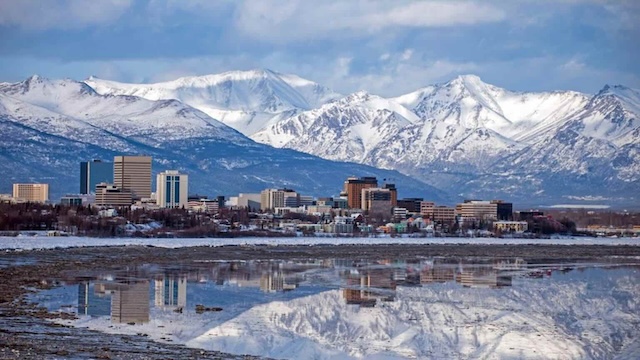
© energy dependence
Today’s story comes from INFO Culture and was sent to me by Noelle Granger.
Goodbye to energy dependence – Alaska discovers more than 1,200 TWh hidden under the ice, and the find could change the world
A Frozen River in Alaska Could Hold the Key to America’s Next Energy Breakthrough
Move Over Solar and Wind—There’s a New Renewable Power Source Flowing Under the Ice
For years, the United States has been chasing the dream of energy independence. From offshore drilling to wind farms and desert solar arrays, every strategy has aimed to reduce reliance on fossil fuels and foreign oil. But what if the future of clean, constant energy isn’t in the sky—or under the earth—but under frozen rivers in Alaska?
Yes, you read that right. Beneath the ice-covered surface of rivers like the Yukon, water flows year-round. And with it, an invisible, powerful current of renewable hydrokinetic energy—an untapped resource that could reshape how remote communities, and possibly the nation, power their lives.
What Is Hydrokinetic Energy—and Why Should You Care?
Unlike dams that flood valleys or wind farms that depend on gusty weather, hydrokinetic energy captures the natural flow of water without disrupting the environment. Special turbines are placed underwater, spinning silently as rivers flow past them—even when those rivers are sealed under ice for months at a time.
The star of this story? A new technology called the Reactive Reversible Blade Turbine (RRBT), which can generate electricity in slow-moving, ice-covered rivers. Developed with support from the University of Alaska Fairbanks (UAF) and backed by a $1.5 million U.S. Department of Energy grant, these turbines are being tested in Alaska’s Tanana River right now.
Why Frozen Rivers Are the Perfect Power Plants
Rivers like the Yukon continue to flow beneath thick layers of ice, even during brutal Alaskan winters. That means they offer something solar and wind can’t: constant, year-round power. In regions where the sun disappears for weeks and the wind dies down, this uninterrupted energy flow is a game-changer.
And it’s not just theoretical. According to UAF research, U.S. rivers could generate more than 1,100 terawatt-hours (TWh) of renewable electricity each year—roughly a third of America’s total electricity consumption. That’s:
- Enough to power 100 million homes annually
- Nearly double the output of all U.S. solar panels combined
- A potential lifeline for off-grid and Indigenous communities still dependent on costly, imported diesel fuel
No Pollution. No Pipelines. No Grid Required.
Hydrokinetic power is especially suited for remote locations. Many Alaskan villages can’t access traditional energy infrastructure. Instead, they rely on diesel generators that are expensive to fuel and maintain. These new turbines offer a cleaner, quieter alternative that can be installed and managed locally, creating new jobs and slashing energy costs.
And unlike other solutions, this one doesn’t need a grid connection. That’s a big deal for communities that are miles from the nearest power line.
Who’s Behind the Innovation?
This isn’t a tech unicorn or billion-dollar startup. The work is being led by public institutions and research labs, including:
- University of Alaska Fairbanks (UAF)
- Alaska Center for Energy and Power (ACEP)
- Creek Tides Energy and Power, a turbine design firm
- Southwest Research Institute
- Pacific Marine Energy Center, part of the Department of Energy
Other parts of the world are already harnessing hydrokinetic power. Scotland’s MeyGen tidal array is supplying homes with clean electricity. In Canada and parts of New York, underwater turbines are quietly producing energy without a sound.
But Alaska, with its sprawling river systems and challenging winters, may be the ultimate proving ground.
The Quiet Energy Revolution Has Already Begun
The energy future we’ve been waiting for may not come from deep mines or solar megaprojects. It might be flowing just beneath our feet—silent, steady, and under a sheet of ice.
And unlike solar panels or wind turbines, this power doesn’t shut down when the sky clouds over or the wind dies. It just keeps moving. Because rivers don’t stop.
Why This Matters—Right Now
As America confronts rising energy costs, climate change, and unreliable power grids, we need solutions that are not only clean but also constant. Hydrokinetic river energy checks both boxes. It’s renewable, reliable, and ready to scale.
So maybe it’s time we stop chasing what’s buried deep underground and start listening to the quiet current beneath the ice.
Alaska’s rivers might just carry the future of American energy.
The good news in this article is that folks are working on another alternative to fossil fuels that don’t have the downside carbon costs of other alternative methods. Today’s JohnKu talks about alternatives. I hope you have a beautiful weekend.
Choices by John W Howell © 2025
More smart minds at work,
Great thinking outside the box . . .
For our greater good.























 Fiction Favorites
Amazing, dear John, that took that long to find out that rivers can produce that much energy.
We wish you a happy weekend
The Fab Four of Cley
🙂 🙂 🙂 🙂
LikeLiked by 1 person
The third becomes harder to find when humans focus on one alternative or two. Wind and solar seemed to be all there was until the massive river flows were thought about. Thanks, Klaudbernd
LikeLiked by 1 person
Hard to believe that the turbine operates even with a slow moving river – but here again, they prove me wrong!
LikeLiked by 1 person
I was amazed by the story too. I hope they get some turbines in place soon.
LikeLiked by 1 person
This is great news 👏
LikeLiked by 1 person
I agree, Robbie. Thanks.
LikeLike
🩷
LikeLiked by 1 person
Especially good news for the more remote locations in AK. This is amazing.
LikeLiked by 1 person
I agree. Thanks, Teri.
LikeLiked by 1 person
Big smiles here. Thinking outside the box IS a blessing for the world!!
LikeLiked by 1 person
Yes, it is. Thanks, Annette.
LikeLiked by 1 person
Seems to be a real obvious answer, but I guess that’s in hindsight.
LikeLiked by 1 person
I agree. I’m glad someone is doing something along these lines.
LikeLike
Wow! If we humans try hard enough, we can find ways to use energy without depleting our planet.
LikeLiked by 1 person
You would think so, Pamela. Wishing you a terrific weekend.
LikeLiked by 1 person
It will be good to have a reliable source of energy without harm to the environment.
LikeLiked by 1 person
Or without using a lot of fossil fuels, like wind turbines do.
LikeLiked by 1 person
Making them will take some fossil fuels, but running them won’t. They may be more consistent than wind turbines. That will take some time to get data.
LikeLiked by 1 person
Yup. Thanks, Tim.
LikeLiked by 1 person
Great minds thinking outside the box–what a winning combination!
LikeLiked by 1 person
I agree, Lois. I would think with enough brains on the issue, it will get solved.
LikeLiked by 1 person
This is great for electricity. But we still need to drill baby drill !
I need gas for my clunker.
LikeLiked by 1 person
Of course you do. Yes, drilling is still in the mix. Mandates that have been issued under Biden need to be reviewed and revoked if necessary.
LikeLike
Incredible news! Thank you, John, for keeping us informed of the latest hope-filled developments. YAY for the students at UAF — and for all of us. Have a great weekend, my friend. With this news, we can all celebrate! 🌞
LikeLiked by 1 person
Thank you, Gwen. I agree on the celebration. I hope you have a lovely weekend as well.
LikeLiked by 1 person
Fingers crossed this comes to fruition!
LikeLiked by 1 person
I agree, Noelle.
LikeLike
This is awesome, and they do it without building another dam. I’m acutely aware of the plight of Idaho salmon and others that run up the rivers. Dams really put a squash to all of that.
LikeLiked by 1 person
Building dams was the dumbest way to go for sure. Especially on salmon runs.
LikeLiked by 1 person
This is a fabulous and more than worthy share, John. Sometimes what we need is right under our noses (or under the ice).
Wonderful!
LikeLiked by 1 person
I thought it was pretty special too.
LikeLiked by 1 person
This is good news. I hope it’s used quickly.
LikeLiked by 1 person
Me too, Denise.
LikeLike
Wow! What an amazing discovery. It certainly bolsters hope!
LikeLiked by 1 person
It does. Thanks, Jan.
LikeLiked by 1 person
Amazing. Though it sounds so simple that I wonder why nobody got to this realisation sooner.
LikeLiked by 1 person
Well in Scotland, they use the Ocean currents, so you are right. Why did it take so long?
LikeLike
That is good news indeed. Thank you and Noelle.
Besides, imagining somewhere cold and snowy like Alaska is a nice thing during 100+ degree heat too! Hugs.
LikeLiked by 1 person
Yes. Gives us all a break. Thanks, Teagan.
LikeLiked by 1 person
Very cool. Now if they could harness political hot air, we could finally find use for it. They could start at 1600 Pennsylvania Avenue and then move up the hill to the Capitol.
LikeLiked by 1 person
I think Chuck Shumer could supply a city on his own.
LikeLiked by 1 person
There are several evenly matched pairs in DC.
LikeLike
This is really encouraging John. Sadly, my friends organization, Arctic Ice found a few issues and had to fold but thankfully someone has taken it over and sees promise! 💕
LikeLike
We have to hope they continue. Thanks, Cindy
LikeLiked by 1 person
I so much agree, John! You’re
Most welcome! 🙏
LikeLiked by 1 person
Wow, a huge yay! That’s really fantastic news. Thanks, John.
LikeLiked by 1 person
Let’s hope they can scale up and start producing megawatts of power.
LikeLiked by 1 person
That would be really wonderful.
LikeLiked by 1 person
I agree.
LikeLiked by 1 person
The perfect JohnKu to accompany this exciting good news!!
LikeLike
What a remarkable development. In a time when answers such as this are more important to find than ever, these peeps are finding them. Great story Boss.
LikeLiked by 1 person
I agree, Pilgrim. I think major solutions are very close. Thanks. 😊
LikeLiked by 1 person
This is very good news.
LikeLiked by 1 person
😊
LikeLiked by 1 person
I’ve read about Hydrokinetic Energy but not in this context (Alaska frozen rivers). It is very interesting.
LikeLiked by 1 person
Yes, it is. Thank you, Thomas.
LikeLiked by 1 person
I hadn’t thought about using frozen rivers before for electricity. All of these environmental advancements are great.
LikeLiked by 1 person
I think so, too, Pete
LikeLiked by 1 person
This is very cool and with the potential to help Indigenous communities, that is exciting. I do wonder about the impact on local habitat. Would be interesting to read about that part of the planning.
LikeLiked by 1 person
That deserves more research, I think. Thanks, Michele.
LikeLiked by 1 person
This is just the coolest solution! Love that there’s so much involvement by local organizations that are making a difference solving such a major energy problem so easily. This. is. just. awesome and give me hope we might actually be able to make a difference in energy production and conceivably, climate change.
LikeLiked by 1 person
I am enthusiastically with you on this project, Monika. I hope it gets scaled and in production soon. 😀
LikeLiked by 1 person
I like the sounds of this.
Let’s just make sure to consider sharing with the underwater life, else we risk some other an made problem.
Right on outside the box JohnKu!
OX OX
LikeLiked by 1 person
Yes, we have to watch the wildlife while we improve the environment.
LikeLiked by 1 person
man made not an made
LikeLiked by 1 person
Got it. 😊X
LikeLiked by 1 person
OX
LikeLiked by 1 person
OX
LikeLiked by 1 person
Your JohnKu is perfect for this brilliant discovery. Wow!
LikeLiked by 1 person
It is brilliant, Jennie.
LikeLiked by 1 person
Yes!
LikeLiked by 1 person
Another amazing geological discovery. Amazing resource discovery! 🙂
LikeLiked by 1 person
I think it is amazing as well.
LikeLiked by 1 person
Wonderful John and that is very good news… thanks for sharing.. Hugs
LikeLike
Wow. That would be incredible. Here’s hoping they’re able to make it work as hoped for!
LikeLiked by 1 person
I agree, 😀
LikeLiked by 1 person
Brilliant discovery, dear John! Let’s hope they will develop this idea.
LikeLiked by 1 person
I hope they develop it sooner rather than later. Thanks, Maria. 🥂🍰
LikeLiked by 1 person
[…] Friday JohnKu – AKA – TGIF – Fri-Yay/Good News […]
LikeLike