
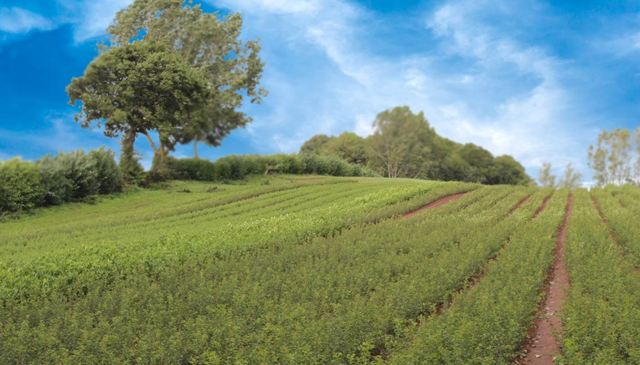
A Miyawaki forest field planting
Today’s good news story comes from the Community Impact Newsletter. Thanks to The Producer for sending it to me.
St. Edward’s University partners with H-E-B to plant first Central Texas Tiny Forest

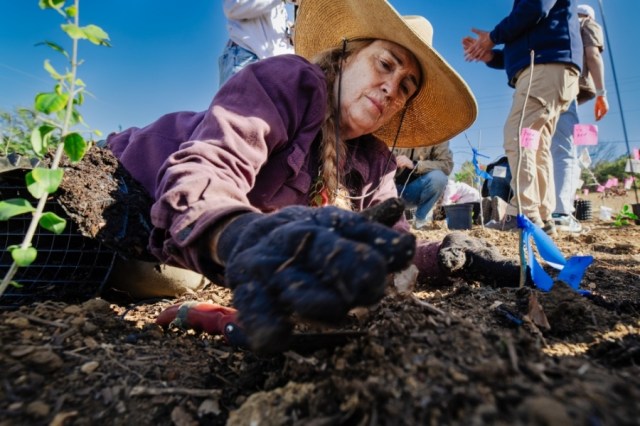
St. Edward’s University and H-E-B have partnered to grow Austin and Central Texas’s first Tiny Forest using the Miyawaki Method. (Courtesy St. Edward’s University)
How it works
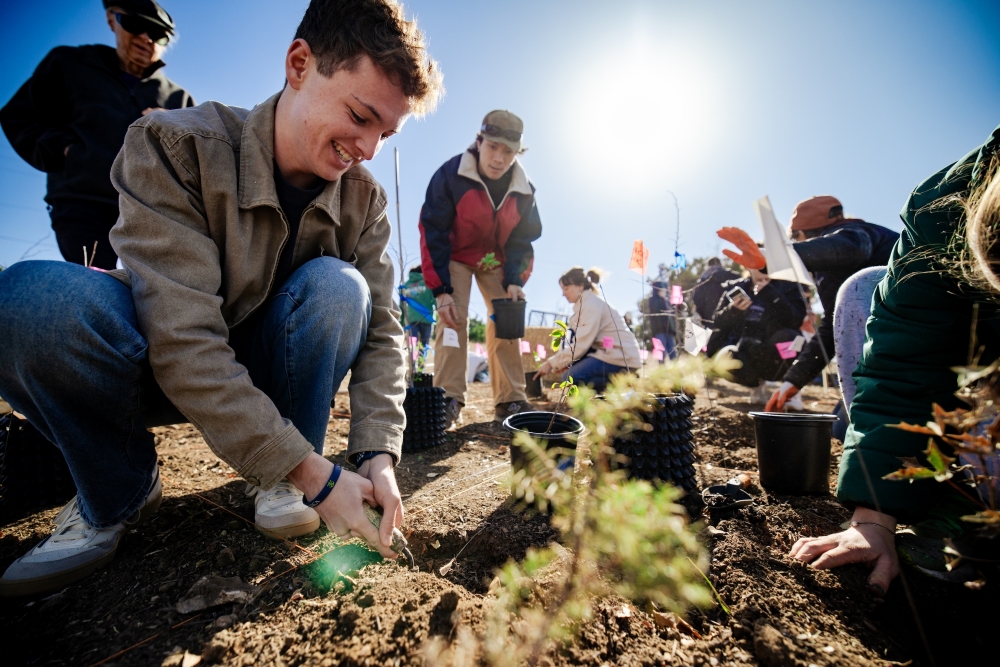
On Jan. 17, H-E-B team members, community volunteers, university students, faculty, and staff joined together to plant 54 square meters with 164 trees and shrubs.
The project uses the Miyawaki Method, an approach that enables trees to grow 10 times faster and seclude 10 times more carbon than traditional tree planting methods.
Arborist and sustainability coordinator Roy Johnson explained how the method differs from conventional tree planting.
“We can use this method to provide all of the benefits of conventional tree plantings, such as air and ground water filtration, erosion control, and cooling the air through evapotranspiration,” Johnson said. “However, using this specific and detailed method, trees can be expected to grow much faster than conventional plantings.”
Through this method, the trees planted at the event are expected to reach full maturity within the community’s lifetime, as stated in a news release.
Natural resources intern Veronica Chavez said the project will reduce the negative effects of urbanization on the local community.
“Even on just a local level, a tiny forest can improve air quality, help with stormwater management, and provide a cooling effect for the surrounding areas,” Chavez said. “It also becomes a habitat for local wildlife and pollinators, encouraging increased biodiversity in the area.”
The background
According to the news release, the Miyawaki Method crafted by botanist Akira Miyawaki was inspired by his time witnessing large-scale deforestation from World War II and overdevelopment in Japan.
The project is a proof-of-concept model that can be shared with overdeveloped communities in need of the benefits of trees, such as areas within the eastern crescent of Austin, which typically receive low tree equity scores.
The event marks the second year of the university’s collaboration with H-E-B through its Trees for Texans program, which aims to support healthier environments for schools, parks, and communities throughout Texas.
Get involved
Community members can directly help the Tiny Forest project by participating in a fringe mantel planting in the fall or reaching out to sustainability@stedwards.edu for information about how to plant a tiny forest in their community. Interested individuals can also stay updated with the forest by checking out its Instagram @Seu_food_forest.
Quote of note
“These tiny forests won’t check every box needed for climate change mitigation and environmental justice, but they have the ability to be a massive boost to both,” Johnson said. “It seemed like we should jump on the opportunity to start introducing this concept to Austin sooner rather than later. We are very excited about the potential and very pleased that the ball has started rolling.”























 Fiction Favorites
Sounds like something that should be done in many other places. Can think of a few clearings around here that would make a good mini-forest.
LikeLiked by 2 people
It does work anywhere, it seems.
LikeLike
Wonderful and inspiring share, John. Treemendously satisfying.
LikeLiked by 2 people
Thank you, Pat. I thought the same.
LikeLike
😻😍👍💯
LikeLiked by 1 person
😀
LikeLiked by 1 person
Very hopeful post, John. Thank you! It always amazes me how good can come from bad situations–your JohnKu captures that reality perfectly. 😊
LikeLiked by 2 people
Thank you, Gwen. It is rewarding to see a bad situation produce a good result, for sure. Wishing you a peaceful weekend. 😊
LikeLiked by 1 person
What a great list of possibility and hope, John! ♥️🙏
LikeLiked by 1 person
Thank you, Cindy. I agree. 😊
LikeLike
What a wonderful share, John. I don’t doubt this method could be used all over the world.
Happy Friday!
LikeLiked by 1 person
Happy Friday to you, Dale. I agree, it could be used everywhere.
LikeLiked by 1 person
Thank you.
Cheers ya tomorrow!
LikeLiked by 1 person
😀 Yes indeed.
LikeLiked by 1 person
🍻
LikeLiked by 1 person
😀
LikeLiked by 1 person
This is interesting both for the purpose and the methodology.
LikeLiked by 1 person
I agree. Hopefully, more will try it.
LikeLiked by 1 person
Oh my goodness John! It was so good to read a good news story today when everything else I read seems to be bad news. Thanks!
LikeLiked by 1 person
All depends on who you choose to read, Steve. 😀
LikeLike
A very interesting and worthwhile venture, John. Another great example of humans actually helping the Earth, which by extension helps us all. Thanks for sharing this.
LikeLiked by 1 person
Fabulous! We have an open area here that would work!
LikeLike
This is great, John. We should do this everywhere.
LikeLiked by 1 person
I agree, Kymber. 😀
LikeLiked by 1 person
There are so many areas where this could be done. Let’s hope so. Great news story to share, John.
LikeLiked by 1 person
Thank you, Esther. I so agree.
LikeLiked by 1 person
That is so awesome, John!!I love this. 🌳
LikeLiked by 1 person
Thank you, Jan. 😊
LikeLiked by 1 person
What a great initiative! It looks relatively easy to do with the help of volunteers.
LikeLiked by 1 person
It sounds easy for sure.
LikeLiked by 1 person
It’s great that they’re planting using the Miyawaki Method, John. So many trees have been cut down so some business can make money on the space the trees took. It’s good for the environment that folks are working to replace them.
LikeLiked by 1 person
I agree, Tim. Thanks for the comment. 😀
LikeLiked by 1 person
😊
LikeLiked by 1 person
I am ALL about this! What a terrific share, thank you.
LikeLiked by 1 person
I enjoyed the story, too.
LikeLiked by 1 person
I had never heard of this method of planting but I like the idea of a “pioneer forest.:
LikeLiked by 1 person
I like that idea too, Jo. Have a wonderful Weekend.
LikeLike
Wow! That is a significant change in growth rate. What a difference this will make. Thank you for sharing and a happy Friday to you. 🌳
LikeLiked by 1 person
Happy Friday to you, Michele. 😊
LikeLiked by 1 person
I’ve never heard of the Miyawaki Method. I’m curious whether this is a recent scientific advancement or whether the technique has been around for some time. If so, why isn’t it used more frequently?
LikeLiked by 1 person
It has been around since the 50s. I am mystified as to why it has not been used more myself. Thanks, Pete.
LikeLiked by 1 person
Oh my gosh…that’s the coolest environmental thing. I love how that method speeds things up. Bravo to the Producer for finding this story and to you for sharing it. Here’s to the success of the Tiny Forest!
LikeLiked by 1 person
Thank you, Monika. I thought it was a super method of reforestation. Glad you liked it. 😊
LikeLiked by 1 person
Let`s plant more trees, because we need more firewood soon. 🙂 Sorry, for this joke. It`s a very great idea fighting against the climate horror we must await in future. Another good idea could be stopping the individual traffic. 😉 Have a nice weekend, John! xx Michael
LikeLiked by 1 person
Of course, if we did use this system, we would have plenty of firewood for the future. Have a good weekend, Michael.
LikeLiked by 1 person
Thanks, John! Indeed a very good idea, and what`s in Germany? 😉 Nothing important yet. xx Michael
LikeLiked by 1 person
😀
LikeLike
That is a very interesting post. “Seclude 10 times more carbon than traditional tree planting methods” is certainly going to make a difference.
LikeLiked by 1 person
They will make a difference if enough of these forests are planted. Thanks, Thomas
LikeLiked by 1 person
Yes you are right
LikeLiked by 1 person
😊
LikeLiked by 1 person
At least somewhere in the world people think about good things. Thank you, dear John.🌹🍤🍤🍤🍻
LikeLiked by 1 person
Yes, they do. Thanks, Maria. 🍰🥂
LikeLiked by 1 person
Love this, John 🙂 Happy to see it being planted over cut down.
LikeLiked by 1 person
Me too. Looks like it would revolutionize the forestry industry.
LikeLiked by 1 person
Proof that big ideas sometimes come from the smallest of places. What a great idea!
LikeLiked by 1 person
It is, and I wonder why it isn’t done more frequently
LikeLiked by 1 person
Me too.
LikeLiked by 1 person
😊
LikeLiked by 1 person
Hooray!
LikeLiked by 1 person
Yes, indeed. 😀
LikeLiked by 1 person
This is very interesting and clever
LikeLiked by 1 person
Yes, it is.
LikeLike