
Photo Credit: iStock
Today’s Good news story comes from The Cool Down. This was sent to me by my correspondent, Noelle Granger
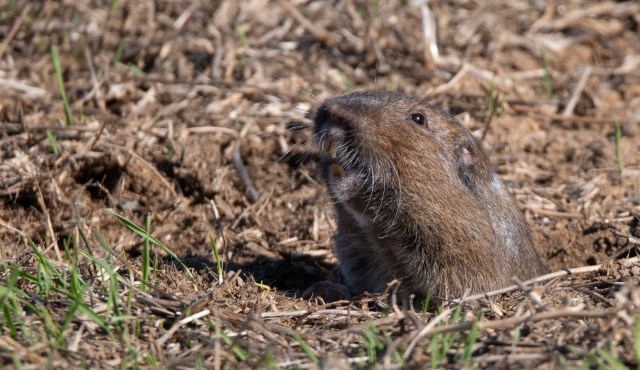
Gophers become unexpected heroes after scientists introduce them to site of Mount St. Helens eruption
In the late spring of 1983, scientists set out to help restore the surrounding environment decimated by the infamous Mount St. Helens eruption just three years prior, Popular Mechanics reported.
The catastrophic eruption, now known as the deadliest volcanic eruption in the history of the United States, claimed 57 lives and destroyed hundreds of square miles of land, with damages amounting to over $1 billion, according to KOMO News.
Following the devastation, scientists were tasked with determining how to restore ecological balance to the scorched landscape. They turned to some of nature’s unsung heroes: gophers.
Scientists from the University of California gathered a group of the small, burrowing rodents and dropped them off at the site of the eruption with plans to let them behave as normal.
“By digging up beneficial bacteria and fungi, gophers might be able to help regenerate lost plant and animal life on the mountain,” determined the University of California report.
The gophers did not let anyone down. Within just six years of their introduction to Mount St. Helens, 40,000 plants were reported growing, compared to the original measly dozen that initially persevered, breaking through pumice slabs formed by the lava.
The shocking part, however, has been discovered more recently as scientists begin to understand the extent to which these gophers transformed the landscape. From a desolate wasteland to thriving forests, the gophers fostered a microbial community that allows plants to thrive in the area to this day.
One of the scientists behind the project, UC Riverside microbiologist Michael Allen, underscored the importance of fungi alongside the gophers’ digging, which turns the soil.
“With the exception of a few weeds, there is no way most plant roots are efficient enough to get all the nutrients and water they need by themselves,” Allen said in the University of California media release. “The fungi transport these things to the plant and get carbon they need for their own growth in exchange.”
To underscore the point, land untouched by the gophers remained mostly unfruitful.
The benefits of these furry heroes extend beyond the immediate site of the eruption as well. By rejuvenating the ecosystem and reintroducing many plant and animal species, surrounding communities can benefit from repaired biodiversity, allowing for better resilience against external pressures like water and air pollution.
University of Connecticut mycologist Mia Maltz, co-author of a study focusing on the recovering forests of Mount St. Helens, emphasized the importance of these natural, interconnected systems.
“We cannot ignore the interdependence of all things in nature, especially the things we cannot see like microbes and fungi,” she said.
The good news in this story is nature takes care of itself. Today’s JohnKu talks about recovery. I hope you have a fabulous weekend.
Sustaining by John W. Howell © 2026
You ever notice?
When left alone, Mother Nature . . .
Is self sustaining.























What a brilliant story John and how wonderful that these little creatures are getting the credit they deserve.. thanks very much for sharing it with us. hugsx
LikeLiked by 3 people
Thank you, Sally. 😊
LikeLiked by 1 person
You’re right about nature being self-sustaining when allowed to do what she pleases. I remember a story about the reintroduction of beavers helping to restore an environment; it might even be that I read it here, since it’s the same sort of good news story.
LikeLiked by 3 people
Yes, I did a story on beavers. They turned an arid area into a lush habitat. Thanks, Linda.
LikeLiked by 1 person
That’s it!
LikeLiked by 1 person
😊
LikeLike
Who would have guessed that?
LikeLiked by 2 people
Not me for sure. Thanks, Pat
LikeLiked by 1 person
Go, go, Gopher! ❤
LikeLiked by 2 people
😀
LikeLiked by 1 person
There are a lot of people who do not value animals like gophers. I wish they would read this article.
LikeLiked by 2 people
I agree, Robbie. Thanks.
LikeLiked by 1 person
The think we’d care more about gophers if people weren’t so obsessed with perfectly pretty lawns and golf courses. They really get demonized because of that.
LikeLiked by 3 people
I agree. Thanks, Charles.
LikeLike
What fun news! Maybe we could send our mole out there as well!
LikeLiked by 3 people
That’s a good idea. (If you can catch it.)
LikeLiked by 1 person
This good news sure reveals your knowledge of nature, John. Thank you for posting it. Have a great weekend.
LikeLiked by 3 people
Thank you, Tim. Have a great weekend as well.
LikeLiked by 1 person
😊
LikeLiked by 1 person
Such a cool story.
LikeLiked by 3 people
Thanks, Craig. I thought so too.
LikeLiked by 1 person
What a great story, John! And I love your JohnKu! It’s true!
LikeLiked by 2 people
Thank you,Jan 😊
LikeLiked by 1 person
I loved the idea of someone writing something positive about gophers!
LikeLiked by 1 person
I do, too, Noelle.
LikeLike
😁
LikeLiked by 1 person
This just makes you feel good. Good for gophers!
LikeLiked by 2 people
It does. Thanks, Esther.
LikeLiked by 1 person
This is truly amazing! Always great to hear some good news:)
LikeLiked by 2 people
Thank you, Becky. 😊
LikeLiked by 1 person
Do they accept Groundhogs? I’ve got a few that are not so beneficial to my backyard. Lovely to see nature taking care of nature. Your JohnKu is on point, mon ami.
LikeLiked by 2 people
Thank you, Dale
LikeLiked by 1 person
Love your poem, John. And to answer your question, I’ve often thought that Mother Nature could manage quite well without our pampering. 😊
LikeLiked by 2 people
I agree. By the way, I hit publish on tomorrow’s post. So I rescheduled it. Thanks for your comment.
LikeLiked by 1 person
Hooray for the gophers! Hooray for letting Mother Nature do what she does best!
LikeLiked by 2 people
I so agree, Debby.
LikeLiked by 1 person
This is such cool news, John. Too often gophers are vilified so this is such a positive reflection on how nature tries to right itself naturally without human assistance.
LikeLiked by 2 people
I agree, Monika. Thanks. 😊
LikeLiked by 1 person
That is certainly very interesting Gopher information. Gophers may not be able to predict the weather with their shadows but they can certainly turn the soil and restore ecological balance. Good job Gophers!
LikeLiked by 1 person
Thank you, Thomas. 😊
LikeLiked by 1 person
This is fascinating, John. We lived in Oregon at the time of the eruption. I remember the people who stubbornly would not leave their homes in spite of repeated warnings.
When we first moved to Portland, Oregon, Mt. St. Helen was one of our two guiding landmarks. Mt. Hood told us we were going straight east. When Mt. St. Helen disappeared, commuting in Portland was strange for us.
Thanks again for sharing. Who knew gophers were so beneficial. 🙂
LikeLiked by 2 people
Thanks for sharing your experience, Marsha.
LikeLiked by 1 person
It was an amazing experience.
LikeLiked by 1 person
😊
LikeLike
[…] John W. Howell […]
LikeLike
Thank you for the link.
LikeLike
Mother Nature always finds a way and damn if I ever would have thought this up, but the scientists at Cal came through big time.
LikeLiked by 2 people
Who would have thought? Thanks, Marco.
LikeLiked by 1 person
Makes a whole ton of sense once you really do think about it though.
LikeLiked by 1 person
It does. Those little diggers turn up a lot of good stuff.
LikeLiked by 1 person
Evidently!
LikeLiked by 1 person
😊
LikeLiked by 1 person
Great story, John. I wonder how many other formulae (finally got to use my high school Latin) MN has to help us solve environmental issues.
LikeLiked by 1 person
No telling, 😀
LikeLiked by 1 person
By the way, John, wasn’t that a gopher that had a starring role in. Caddyshack, alongside Bill Murray?
LikeLiked by 2 people
Yes, it was. 😀
LikeLiked by 1 person
Good to see gophers doing something useful for a change. Our backyard has mountains of activity. When Mt. St. Helen’s erupted, vehicles all over our city were covered in ash, even though we live 500 miles away.
LikeLiked by 2 people
It was a huge event for sure. Thanks, Pete.
LikeLiked by 1 person
Your JohnKu is wonderful. Yes, the interdependence of all things in nature.
LikeLiked by 2 people
Thank you, Jenne. 😀
LikeLiked by 1 person
You’re welcome, John.
LikeLiked by 1 person
😊
LikeLiked by 1 person
Hmm. I have mixed feelings about this. Yes, I’m happy gophers helped that land become healthier. BUT, they are utterly destroying my yard. IT’S becoming a wasteland. I’d love to catch and ship our resident rodents to Mt. St. Helens myself.
LikeLiked by 2 people
Not much can be done except trapping.
LikeLike
Been trying…
LikeLiked by 1 person
Sadly there are no live trap options for gophers. They can be trapped with a mid evil looking device that terminates them. Or live with those burrows. Just be careful you don’t break an ankle walking across the yard.
LikeLiked by 1 person