
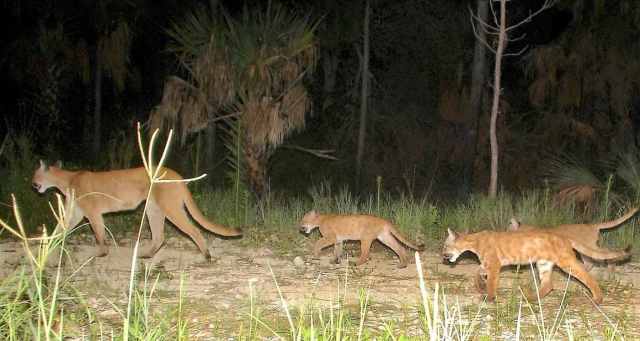
Florida panthers in the Picayune Strand – credit, David Shindle Conservancy of Southwest Florida
Today’s good news comes from the Good News Network.
Everglades Restoration Project Ongoing for 20-Plus Years Sees Huge Rewilding Success
A huge area of the Everglades that was drained in an attempt to convert it to suburbia has been restored to a somewhat native ecosystem after 2 decades of reverse-landscape engineering.
Picayune Strand is a large, almost perfect rectangle of South Florida wetland, located northwest of Everglades National Park and northeast of Thousand Islands Nat. Wildlife Refuge, and west of the Florida Panther Nat. Wildlife Refuge.
It was part of an enormous land package bought by the real estate company Gulf American in the 1950s in an attempt to create America’s largest suburban housing development, called Golden Gate Estates.
But their effort to tame the swamp failed, even though substantial landscape alterations were made to try to dry out the area. Picayune Strand is 2 feet lower in elevation than the Golden Gate Estate land to the north, and this little difference made it virtually impossible to prevent flooding. The company went bankrupt.
One of the first projects identified and pursued by conservationists under the Everglades Restoration Plan of 2000, Picayune Strand has changed significantly over the years. Since 1985, conservationists have been buying up all the private, often unbuilt-on land that Gulf American had managed to sell. It was tedious lawyer’s work, but by 2004, it was all consolidated into a conservation package.
Gulf American built 4 large canals to channel water off the land they wanted to develop, while the earth and stone they churned up were used to crisscross the area with causeways, atop which roads ran. These were the first targets for groups like the Everglades Foundation, the Conservancy of Southwest Florida, and the US Army Corps of Engineers.
The hydrology of the Everglades is defined by water flowing across the once-7 million square miles all in the same direction at roughly the same snail’s pace, a phenomenon described as “sheet flow” through a “river of grass.” Huge areas remained flooded all year, and plugging the canals was the first step towards restoring the natural hydrology.
To restore this, the roads were torn up, and the materials were chucked back into the canals from whence they came.
From macro to micro
“Picayune is as good a place in South Florida as there is, in terms of getting it back to what it was before,” Michael Duever, an ecologist who has been monitoring the Picayune project, told Yale News. “We’re feeling that we’re in the range of 90 plus-or-minus percent of restoration.”
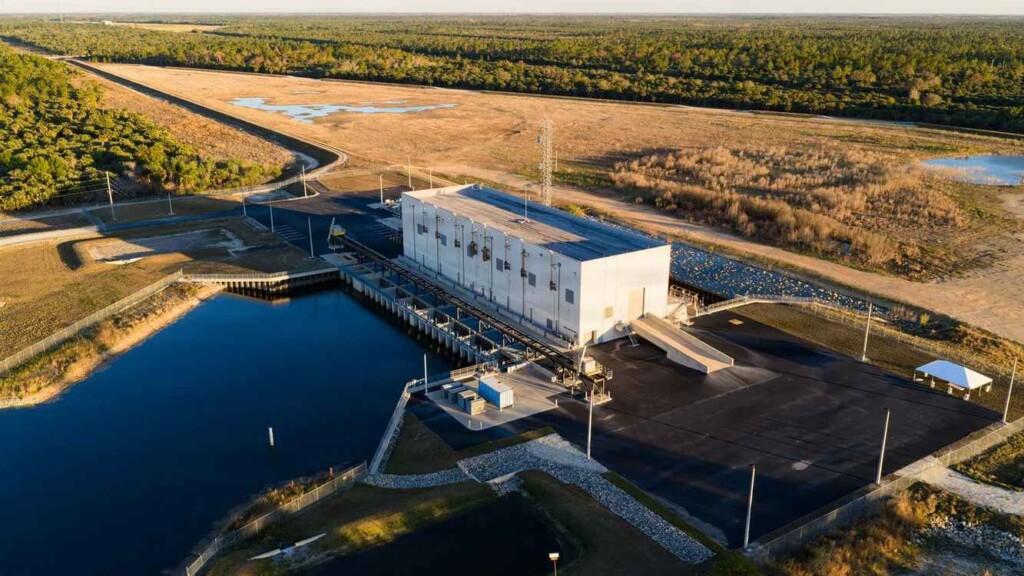
There had to be some compromises, as people still live in Picayune Strand. Part of that 10% is missing; Duever refers to it as 3 pumping stations that pull rainwater out of the closed canals on the northern boundary of the Picayune project and dump it into large basins that will leak it out in many directions. The water level at times is higher than natural, however, and at other times drier.
Vegetation is coming back in a big way—not always ideally, but upland plants cannot now spread further south because of the continual water bodies. More native species that have missed the continual wetness are also returning—like a native, wild sunflower.
The restored Picayune is expected to help several endangered species, including the red-cockaded woodpecker and the Florida panther, while studies have already shown that increased insect abundance is benefiting the bonneted bat, the largest of its kind in Florida, with a wingspan greater than a foot.
“I kind of view Picayune Strand as a microcosm of the entire [Everglades] plan,” Stephen Davis, chief science officer at the Everglades Foundation, told Richard Mertens at Yale.
The good news in this story is that once a mistake is realized, many hands helped make it right again. Today’s JohnKu talks about rectifying mistakes. I hope you have a terrific weekend.
Mistakes by John W. Howell © 2026
A mistake is made,
That threatens wildlife and Earth. . .
All hands are on deck.






















Great to hear John and thank you for sharing… such an amazing project hugsx
LikeLiked by 2 people
🤗 It is. I’m glad they didn’t just say “Oh well” and let it go.
LikeLiked by 1 person
That is great news. Often when things don’t work, it’s just left so it’s so good to hear that they’re working to reverse it. Thank you for sharing the story, John.
LikeLiked by 2 people
Twenty years of working is a good thing. Thanks, Esther. 😀
LikeLiked by 1 person
It’s good news that the mistake of Gulf American to make a huge suburban area is being reversed, John. It will be good for the wildlife.
LikeLiked by 3 people
I think so, too, Tim. Thanks.
LikeLiked by 1 person
You’re welcome, John. 😊
LikeLiked by 1 person
😊
LikeLiked by 1 person
Really wish I got to see a Florida Panther while I lived down there. Not up close. I remember hearing how rare they were.
LikeLiked by 1 person
Would be a sight for sure.😊
LikeLike
It’s awfully good to read news like this. We seem to be hell-bent to destroy the entire earth, so projects like this one help to revive hope in my stony little heart. Thanks for that, John.
LikeLiked by 1 person
I agree. We all have to keep the Earth in mind at all times
LikeLiked by 1 person
Go Big Cats!
LikeLiked by 1 person
Yes indeed.
LikeLiked by 1 person
Thank goodness for the many hands that made it right, again. Keep suburbia out of the Everglades, for gosh sakes.
LikeLiked by 1 person
I agree. Thanks, Lois.😊
LikeLiked by 1 person
This is so encouraging, John!
Thanks for sharing!💕
LikeLiked by 1 person
I agree, Cindy. Thanks. 😊
LikeLiked by 1 person
You’re so very welcome❣️
LikeLiked by 1 person
😊
LikeLiked by 1 person
Wonderful restoration. Thank you, John, for this hopeful post.
LikeLiked by 1 person
So glad to share it. Thank you, Gwen
LikeLike
This is a really cool project. Thanks for telling us about it.
LikeLiked by 1 person
Glad to have found it. Thanks, Craig
LikeLiked by 1 person
You don’t often hear about a reversal of plans on this scale. I think this is going to prove out to be the best decision all around. Thanks for sharing this. Have a great weekend!
LikeLiked by 2 people
Thank you, Deborah. Have a great weekend as well.
LikeLiked by 1 person
😊
LikeLiked by 1 person
This post made me SO happy! I love to see the reversal of projects that damage the environment!
LikeLiked by 2 people
I do too, Noelle. 😊
LikeLiked by 1 person
You made my day with this news, John. Thanks!!
LikeLiked by 1 person
Thank you, GP. I’m so glad
LikeLiked by 1 person
With everything going on in the world, it’s nice to know I’ll always learn something positive on Fridays. Thanks, John!
LikeLiked by 1 person
Aw, thank you, Teri. I hope that is the case for everyone who stops by
LikeLiked by 1 person
What a wonderful thing! I love that this failure was a cry to restore as much as they could. Excellent news.
LikeLiked by 1 person
I agree, Dale. It is excellent news. 😊
LikeLiked by 1 person
For sure. 🤗
LikeLiked by 1 person
😊
LikeLiked by 1 person
Encouraging! Inspiring!
LikeLiked by 1 person
I agree, Annette.
LikeLiked by 1 person
Good news indeed!! Trying to make over wetlands for construction never ends well.
LikeLiked by 1 person
No it doesn’t. Gotta wonder what they were thinking.
LikeLiked by 1 person
It’s all about the Benjamins, as the saying goes.
LikeLiked by 1 person
I believe you are right, Liz.
LikeLiked by 1 person
In this instance, I take no pleasure in being right.
LikeLiked by 1 person
I understand. 😊
LikeLiked by 1 person
This is good news , finally we are doing something good for the environment in Florida. We have infringed on the Everglades in an all out assault. Thank you for the article!
LikeLiked by 1 person
Twenty years in the making, but good to see the results.
LikeLike
For sure John! Good news.
LikeLiked by 1 person
😊
LikeLiked by 1 person
😊
LikeLiked by 1 person
😊
LikeLiked by 1 person
😊👋
LikeLiked by 1 person
😀
LikeLiked by 1 person
Restoring Picayune sounds like a wonderful and the history around it was very interesting. I am glad endangered species are being saved.
LikeLiked by 1 person
I’m glad too. It was a fool’s project to begin with. I can’t believe they got the permits required to proceed to build in the Everglades in the first place.
LikeLike
Nature’s colors at their finest. This is such a soothing perspective.
LikeLiked by 1 person
It is that. Thank you, Neeraj.
LikeLike
Truly great news, John. People don’t understand the importance of wetlands but this project is a testament to how to rectify the folly of trying to control nature. Thanks for sharing this good news story.
LikeLiked by 1 person
It was a real pleasure to find this story, Monika. Thanks. 😊
LikeLiked by 1 person
Bravo to the tenacious lawyer and to the “many hands” who made this project happen. “Drain the swamp” comes to mind in regard to attempting to alter mother nature with profit as the goal. Thank you for this share, John. Most inspiring to learn of these efforts.
LikeLiked by 1 person
I agree, Michele. I’m so glad the original project went south, so more reasonable minds could take over. Thanks.
LikeLiked by 1 person
A most hopeful situation, thanks for sharing it, John!
And thanks for the JohnKu! It’s right on.
OX OX
LikeLiked by 1 person
Thank you for the lovely comment, Resa. 😀X
LikeLiked by 1 person
May your life be blessed with many OXen!
LikeLiked by 1 person
And a large shovel 🐂 🤣x
LikeLiked by 1 person
HA!
I tried to buy one, but it seems someone in Washington has scooped them all up.
🤣X
LikeLiked by 1 person
🤣X
LikeLiked by 1 person
Folks around here complain about bobcats roaming the neighborhoods, but don’t stop to think that was THEIR home first. I love this bit of good news!
LikeLike
That’s wild. I can’t help but feel a little bad for the company that went bankrupt, but then, that was a bad idea to begin with. Sort of serves them right. And being a fan of big cats, yay, Florida panthers. 🙂 (Less excited about the mosquitos and bats. 😛 )
LikeLiked by 1 person
They have to live, too. Thanks, Ilsa
LikeLiked by 1 person
I guess…
😉
LikeLiked by 1 person
😀
LikeLiked by 1 person
I don’t know man, the arrogance of a corporation to believe they could dry out a swamp? And to go about it the way they did? Arrogance and worse. Thank goodness there was an about face on this count.
LikeLiked by 1 person
I agree. You would think someone would say WTF on this one
LikeLiked by 1 person
Honestly.
LikeLiked by 1 person
😀
LikeLiked by 1 person
Hi John, it is nice to know that ‘many hands helped to rectify this mistake’. It’s encouraging that more people understand the need to conserve nature and the environment.
LikeLiked by 1 person
I agree, Robbie. A major move to correct that problem, and well worth it.
LikeLike
Learning from mistakes and rectifying the situation is a good thing.
LikeLiked by 1 person
😀
LikeLiked by 1 person