
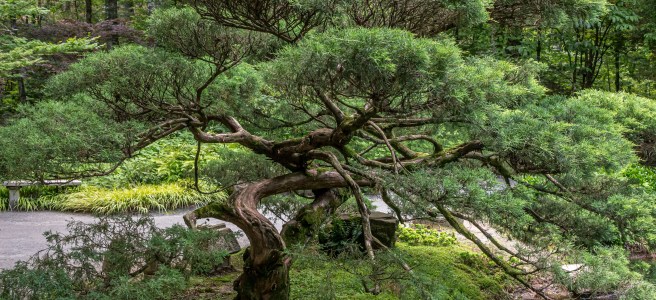
Today’s Good News story comes from the India Times and was sent to me by Noelle Granger . Thank you, Noelle
Japan does not cut down centuries-old trees for development. Instead, experts spend months preparing their roots and relocating them
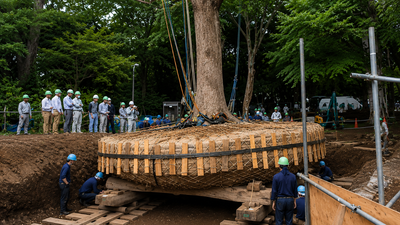
Why Japan relocates some centuries-old trees instead of cutting them down
Not every tree standing in the path of development is relocated. The practice is generally reserved for trees with exceptional historical, cultural, or ecological value. Many of these trees are found in temple grounds, shrines, traditional gardens, parks, or historic neighborhoods, where they have stood for generations and are considered part of local heritage, often holding deep spiritual, emotional, and community significance for nearby residents and visitors alike. In some cases, moving a mature tree also helps preserve biodiversity and the character of a landscape while allowing infrastructure projects to continue. Because the process is expensive and technically demanding, authorities carefully evaluate whether relocation is practical before deciding against removal.
The months-long preparation hidden beneath the ground
The most remarkable part of the relocation process happens long before cranes arrive. Months before transplantation, specialists begin carefully pruning the tree’s roots. Instead of uprooting the entire root system at once, they gradually trim selected roots around the tree. This encourages the growth of new, fine feeder roots closer to the trunk. These feeder roots are essential because they absorb most of the water and nutrients needed for survival. By allowing them to develop before relocation, experts significantly reduce transplant shock and improve the tree’s chances of adapting to its new environment. Depending on the size and species, this preparation may take anywhere from six months to over a year.
What is nemawashi, and why does it matter?
The root-preparation process is known in Japan as nemawashi, a term that literally means “going around the roots.”Originally a horticultural practice, nemawashi has become a widely used term in Japanese business and politics, referring to quietly laying the groundwork before introducing major changes. The metaphor comes directly from tree transplantation: careful preparation before taking decisive action leads to better outcomes. In gardening, the principle remains the same. Preparing the roots first greatly increases the likelihood that a mature tree will survive the move.
How Japan moves giant trees
Once the root system is ready, the relocation begins. Workers excavate around the tree to preserve as much of the prepared root ball as possible. The roots are wrapped in protective materials such as burlap, while the trunk and branches may also be secured to prevent damage during transport. Depending on the tree’s size, cranes, hydraulic lifting equipment, or specially designed transport vehicles are used to move it to its new location. There, it is replanted in a carefully prepared pit, supported by stabilizing structures, and monitored closely through regular watering and maintenance until it establishes new growth.
Does every relocated tree survive?
Even with months of preparation, relocating a mature tree is never guaranteed to succeed. Larger trees experience significant stress because part of their root system is inevitably lost during transplantation. Success depends on factors including the species, age, health of the tree, timing of the move, and the quality of aftercare. For this reason, Japanese arborists reserve the technique for trees whose cultural, historical, or environmental value justifies the considerable cost and effort involved.
A lesson in balancing development and conservation
Japan’s approach demonstrates that urban development and environmental conservation do not always have to be opposing goals. Although relocating centuries-old trees requires careful planning, specialized expertise, and significant investment, it allows some of the country’s most treasured natural landmarks to survive for future generations. Rather than viewing ancient trees as obstacles, the practice treats them as living heritage worthy of preservation, even as cities continue to grow. A horticultural practice so precise and patient that it became a metaphor for introducing change carefully in business and politics is carrying more meaning than most agricultural techniques do. Nemawashi works on trees because you cannot rush root development, and it works as a concept in organizations for exactly the same reason: the preparation is the work, not a delay before the work begins.
The good news in this story is that people care for ancient trees when they have to be moved. Today’s JohnKu talks about caring for nature. I hope you have a terrific weekend.
Nature by John W. Howell ©2026
Nature needs our help,
Her welfare should be thought one. . .
When building is done.

Such a lovely thing to do, John… most people still don’t appreciate how valuable trees are to the planet, no matter how old they are…
LikeLiked by 2 people
Very true. Especially in third-world countries.
LikeLiked by 1 person
I love trees, so it was lovely to see such care being taken…
LikeLiked by 1 person
I agree, Jaye. It is lovely. 😊
LikeLiked by 1 person
💕
LikeLiked by 1 person
I love this.Go Japan!. Can you imagine our Forest Sevice taking the time?
LikeLiked by 2 people
I can’t imagine it, Pat.
LikeLiked by 1 person
🌳🌳
LikeLike
This is definitely not an easy undertaking. Very costly and time-consuming. And wow, kudos to a country that “gets it,” John!
LikeLiked by 2 people
The Japanese are very good at honoring tradition and venerability. Thanks, Bruce. 😊
LikeLiked by 1 person
I.am constantly amazed at the thoughtfulness of the Japanese with regard to nature
LikeLiked by 1 person
They have so many people in such a small space that their future depends on it.
LikeLike
Completely agree! I enjoyed our trip there – loved the fact that you could be in a garden in the middle of Tokyo and feel completely isolated.
LikeLike
whoa, how crazy wonderful it this!
LikeLiked by 1 person
I agree, Annette.
LikeLiked by 1 person
John, they say the same thing l do when l go to the car wash, “nemawashi” What’s up with that❗🐳
LikeLiked by 1 person
They don’t collect the $12.00, though. 😄
LikeLike
You got that right❗I’m still waiting for “Free” car washes for EVERYONE🐳
LikeLike
John, a little confused 🤔… they say the same thing l do when l go to the car wash, “nemawashi”… what’s up with that❗🐳
LikeLiked by 1 person
Don’t forget to get that super rinse.😄
LikeLike
Do you know how much that 👶 costs…send funds🤣
LikeLike
That is one big tree. I’ve seen it done here. But not like that. Here huge machines kinda put blades into the earth around the tree. Then they go down and kind of scoop the tree out. Then they load it on a truck and relocate it. No idea of the success. But it must work or they wouldn’t do it.
LikeLiked by 1 person
I have seen those machines. They are awesome. I think they work pretty well.
LikeLike
What an amazing thing to do. Kudos to Japan for undertaking these uprooting vs cutting down endeavours. Wonderful.
Happy Friday, John!
LikeLiked by 1 person
Thank you, Dale. Happy Saturday.
LikeLiked by 1 person
My pleasure, John. Cheers ya later from my mother’s 85th birthday party!
LikeLiked by 1 person
Whoa, sounds great. Where has Marco been?
LikeLiked by 1 person
It will be lovely!
Marco said he was not blogging until August. Mayhaps tomorrow he’ll be inspired?
LikeLiked by 1 person
Let’s hope.
LikeLiked by 1 person
Fingers crossed
LikeLiked by 1 person
😊
LikeLiked by 1 person
Thank you for sharing this good news, John. It ably demonstrates where there’s a will there’s a way. We just have to have the will.
LikeLiked by 2 people
We just have to have the will is true. Thanks. Liz.
LikeLiked by 1 person
You’re welcome, John.
LikeLiked by 1 person
😊
LikeLiked by 1 person
Saving the trees is the right thing to do, John, in my opinion, and it’s good to learn that it’s preferred in Japan. Really nice that you posted about it. 😊
LikeLiked by 1 person
Thank you, Tim. I was amazed at the patience of those folks. 😊
LikeLiked by 1 person
That is so cool.
LikeLiked by 2 people
I agree. Thanks, Charles
LikeLike
Japan would cry if they heard what builders/developers say here as they clearcut a swath of land: For every **insert amount here** amount of trees we cut down, we will plant one. Total dumbasses here.
LikeLiked by 2 people
I think that is a perfect word for those who clear cut trees. Dumbasses for sure. Thanks, Lois
LikeLiked by 1 person
Wow this is so heart rendering and such an example of their culture of caring for each other. Thanks for hating John!
💕
LikeLiked by 1 person
I agree, Cindy. They do have feelings for nature which has been taught since forever.
LikeLiked by 1 person
🎄🌴🌳lovely!❣️
LikeLiked by 1 person
😊
LikeLiked by 1 person
The Japanese revere age and respect nature. We would be wise to follow their lead though I’m sure developers cringe at the thought with having any limitations on their lust for consuming ground and old buildings.
LikeLiked by 1 person
I don’t get developers and their wish to clear-cut everything before they start.
LikeLiked by 1 person
It’s all about money and greed. They want to clear everything asap so they can build, build, build.
LikeLiked by 1 person
You are so right. 🤨
LikeLiked by 1 person
Saw it in action and I was shocked that it worked. A hundred years ago someone planted a redwood by the St. Luke’s Hospital, in Boise for some reason. When the hospital expanded they actually relocated the tree and it is thriving.
LikeLike
Wow. That is wonderful. Thanks, Craig.
LikeLiked by 1 person
My admiration for the Japanese people just went up a notch or three. Few things distress me as much as seeing a beautiful old tree felled so the ground can be compacted, probably paved over, and built on. Nevermind that the trees are hundreds (or more) of years old! Oops, I’m getting on my soapbox, aren’t I? I’ll hush now and sit down. Thanks for sharing this with us, John.
LikeLiked by 1 person
I agree. I hate it when old growth goes down. You can bring your soapbox anytime. We have a hook here if you get out of hand.
LikeLiked by 1 person
I love that they do this with some of their oldest trees!
LikeLiked by 1 person
I do too. Thanks, Deborah.
LikeLiked by 1 person
Truly incredible, John. So much patience and care go into this process. Your JohnKu sums it up perfect.
LikeLiked by 1 person
Thank you, Steve. 😊
LikeLiked by 1 person
It is the first time I hear of nemawashi and I did not even realize how challenging it is to relocate a grown tree without killing it. It is certainly wonderful that they do this.
LikeLiked by 1 person
I’m surprised the concept of nemawashi wasn’t used in business more.
LikeLiked by 1 person
Yes I agree. We should adopt it
LikeLiked by 1 person
Yes, business should.
LikeLiked by 1 person
😊
LikeLiked by 1 person
😊
LikeLiked by 1 person
This is great news, John! Blessed should be the Japanese government! Here in Germany in the rural areas they cut down every tree they can reach. Without any need. Then the plant new trees, because there is an EU funding for this. Best wishes, and enjoy your weekend! xx Michael
LikeLiked by 1 person
The EU is out of control. I feel sorry for its members.
LikeLike
This was very interesting, John. Of course it’s good news!
LikeLiked by 1 person
Yes, it is. 😊
LikeLiked by 1 person
😀
LikeLiked by 1 person
I’m glad they’re doing their best, and I’m sure they’ve thought of this, but why not build their roads or buildings around the trees? That seems like the best solution. I’m sure they have their reasons, but sheesh. If I were super old, I’d want to be left alone. 😛
LikeLiked by 1 person
I’m super old and want to be left alone, so I get your point. Thanks, Ilsa.
LikeLiked by 1 person
Hahaha! 🙂
LikeLiked by 1 person
😊
LikeLiked by 1 person
I wish our developers embraced nature with more respect, and that respect goes beyond trees.
Thanks for the illuminating article and thoughtful JohnKu, John!
🌳X 🌳X
LikeLiked by 1 person
Glad you liked it Resa. 🌳X 😄X
LikeLiked by 1 person
Japan takes great care of their country, other countries could take a page from them. 😊
LikeLiked by 1 person
Yes, they could.
LikeLiked by 1 person
😊
LikeLiked by 1 person
😄
LikeLiked by 1 person
They are wise, and your note proves it. Great civilization with common sense. Thank you for this news, dear John.🍻🍤🍤🍤
LikeLiked by 1 person
😊
LikeLiked by 1 person