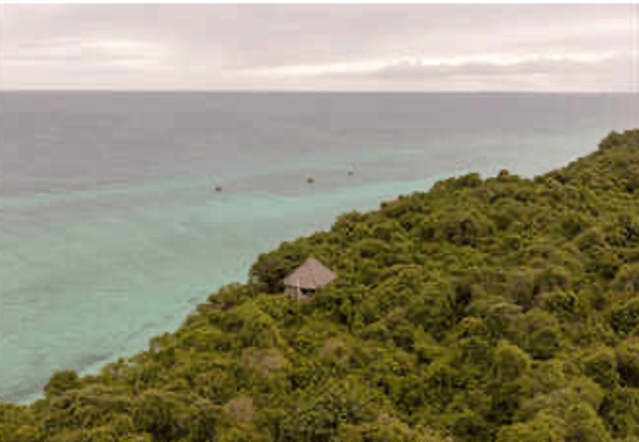
An uninhabited tropical island and its surrounding coral reef reflect the conservation project that has protected the area for decades. Image Credits: Wikimedia Commons.
Today’s good news story comes from the Times of India. Thank you to Noelle Granger for sending it to me.
In 1991, German development worker Sibylle Riedmiller invested her savings in an uninhabited island; three years later, its reef became a protected sanctuary.
In April 1991, Sibylle Riedmiller was sailing around Zanzibar when she came across an uninhabited island surrounded by a shallow coral reef. What she saw was unusual for the region: a largely intact marine ecosystem at a time when destructive fishing, including dynamite fishing, was damaging reefs along the Tanzanian coast. Rather than seeing Chumbe Island as an untouched paradise, the German development worker saw an opportunity to protect it. She put her own money into the idea of creating a conservation project that could eventually support itself through carefully managed tourism. According to Marine Policy, Chumbe Island Coral Park Ltd. (CHICOP) negotiated with the Zanzibar government between 1991 and 1994 to have the island’s western coral reef and forest cover gazetted as a protected area. On December 24, 1994, the reef sanctuary was formally designated as a no-take area, prohibiting fishing and other extractive activities, with management entrusted to CHICOP.From an uninhabited island to a protected reef. Riedmiller had arrived in Tanzania in the early 1980s as an aid worker involved in education projects. By the time she reached Zanzibar, she had developed a strong interest in the region’s marine environment.
She was particularly concerned by the destruction caused by fishing practices and by the limited public understanding of coral reefs. According to the IUCN, Sibylle Riedmiller found Chumbe Island on April 21. The uninhabited island contained a fringing coral reef, seagrass beds, a mangrove cave and coral-rag forest, along with a historic lighthouse and abandoned buildings. Restrictions on access and fishing, linked partly to the island’s former military use, had helped keep its terrestrial and marine ecosystems relatively undisturbed, making Chumbe a suitable site for protection. Riedmiller’s idea was not simply to put a fence around the island. She proposed a model in which tourism would generate income for conservation and environmental education. This meant creating an organization capable of managing the protected area while also developing a small, low-impact tourism operation. A no-take reef backed by tourism. The protected area gave the reef stronger protection than neighboring waters. The sanctuary covers roughly 30 hectares of reef and associated marine habitats, while the island itself contains a protected forest reserve. Marine Policy also notes that Chumbe is Tanzania’s first managed marine park and one of the earliest examples of a privately established and managed marine protected area. The study noted that the sanctuary was legally designated as a no-take area, meaning fishing and other extractive uses were prohibited. But protection required people to enforce the rules. One of the project’s important decisions was to recruit and train local fishers as park rangers. They knew the surrounding waters, understood local fishing practices, and could communicate with other fishing communities. The approach also gave former fishers alternative employment and placed local people at the center of reef protection. The project eventually added an education center and a small ecolodge. The buildings were designed around environmental principles, including solar power, rainwater harvesting, composting toilets, and wastewater filtration systems. Ecotourism began in 1998, with visitor revenue supporting conservation management and educational programs rather than private profit.
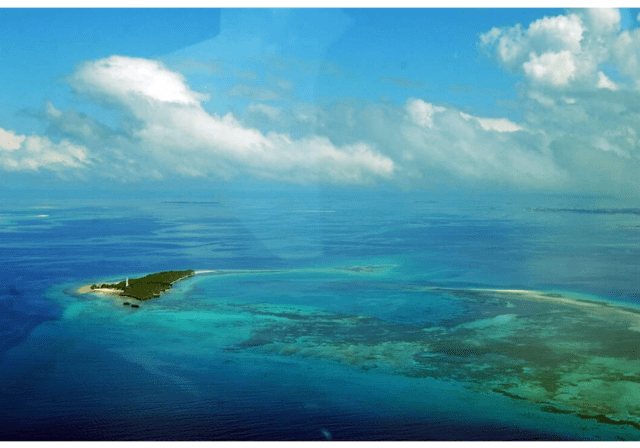
Chumbe Island is surrounded by the turquoise waters and coral reefs of the western Indian Ocean. Image Credits: Wikimedia Commons.
Protecting the reef by teaching people about it. Conservation at Chumbe was never limited to protecting the reef. Environmental education became an important part of the project, with local schoolchildren visiting the island to learn about coral reefs, seagrass, forests and marine life. Teachers were also involved so that lessons about the marine environment could extend beyond the island. According to a study published in the Journal of Ecotourism, Chumbe Island Coral Park combines ecotourism with marine conservation and environmental education, while using a low-impact approach to minimize pressure on the island’s natural environment. The model was designed to generate income from tourism while supporting the management of the protected area. The reef remains at the center of the project, but Chumbe’s protected environment extends beyond coral. The island also contains seagrass beds, intertidal habitats, and a coral-rag forest, forming a broader ecosystem managed alongside the marine sanctuary. Riedmiller’s investment grew into a conservation model built around three activities: protecting the island and surrounding waters, educating local communities and visitors, and using carefully managed tourism to help fund the work.
The good news in this story is that one person turned a deserted island into an eco-tourist destination that benefits the island and surrounding area. Today’s JohnKu talks about one person making a difference. I hope you have a beautiful week.
Commitment by John W. Howell © 2026
One saw the vision,
Enlisted more commitment . . .
Paradise is born.






















Another example of how one person can move mountains when they feel a passion for our world. What an amazing achievement and thank you John and Noelle for sharing hugsx
LikeLiked by 1 person
A pleasure, Sally. It is a terrific story of one person’s passion.
LikeLiked by 1 person
see, people aren’t so bad afterall!
LikeLiked by 1 person
I think most are good. It takes a bit to find their stories.
LikeLiked by 1 person
This lifts the spirits, John. Thank you for the share.
LikeLiked by 1 person
I agree. Thanks, Esther.
LikeLiked by 1 person
Cool. A lot of coral reef preservation stories in the news lately.
LikeLiked by 1 person
Pretty important stuff.
LikeLike
Beautiful and good for the the environment. Two (or more) gold stars for this lady.
LikeLiked by 1 person
I agree on the gold stars.
LikeLiked by 1 person
A great example of how one person can change a small part of the world for the better!
LikeLiked by 1 person
That is the best part. Thanks, Noelle.
LikeLiked by 1 person
It’s wonderful that Sibylle Riedmiller did such great things for Cumbe Island! I’m sure glad that you posted about it. Have a great weekend.
LikeLiked by 1 person
Thank you, Tim. It was a super event. Have a good weekend, too.
LikeLiked by 1 person
😊
LikeLiked by 1 person
😊
LikeLiked by 1 person
I am in awe of people like this who take an idea and make it flourish, while benefiting the world is a beautiful thing.
Wonderful JohnKu to go with.
Happy Friday, mon ami!
LikeLiked by 1 person
I like those kinds of folks, too, Dale. Thank you.
LikeLiked by 1 person
💞
LikeLike
😊
LikeLiked by 1 person
I love it when people invest their
Money in saving our beautiful
Planet instead of trying to destroy it. This is fantastic, John.
LikeLiked by 1 person
I do, too, Jan. Thanks for the nice comment.
LikeLiked by 1 person
Perfect JohnKu to go with the article!!
LikeLiked by 1 person
Thank you, Liz. I’m so glad you liked it.
LikeLiked by 1 person
You’re welcome, John.
LikeLiked by 1 person
😄
LikeLiked by 1 person
It’s so exciting to know there are still people who want to preserve nature than to exploit it. Sorry for the late comment-went to see my Dad and am trying to catch up. What a full day! Thanks as always for sharing a good news story, John.
LikeLiked by 1 person
It’s a good thing to visit your Dad. No apology needed.
LikeLiked by 1 person
You’re very kind. He’ll be 96 on Tuesday-hopefully my visit brought him some joy.
LikeLiked by 1 person
Wow. 96. I’m sure you brought him some joy. 😊
LikeLiked by 1 person
🤞🏻
LikeLiked by 1 person
😊
LikeLiked by 1 person
It’s always amazing to me how an individual sees something that nobody else sees until after the fact. What a story Boss!
LikeLiked by 1 person
I agree, Pilgrim. Some folk just have vision.
LikeLiked by 1 person
They really do.
LikeLiked by 1 person
😊
LikeLiked by 1 person
Dynamite fishing is such an awsome way to fish and so is pouring large amounts of poison into water to kill everything including the fish. Well, that was sarcasm, but these destructive practices really endanger wildlife. Coral reefs are extremely important eco systems that are endangered by harmful fishing practicies, global warming, ocean acidification, and more. It is great that Sibylle Riedmiller decided to protect these coral reefs. A good story.
LikeLiked by 1 person
Thank you, Thomas. I thought it was good, too. 😄
LikeLiked by 1 person
Great news,John and amazing what one person do! Bravo to her. This is wonderful news in restoring these systems.. Gorgeous waters.💕
LikeLiked by 1 person
I agree, Cindy. 😊
LikeLike
Great story! It seems that she was also lucky with eco-tourists! Thanks for sharing this inspiring news, dear John!🍤🍤🍤🍻🌞🌞🌞
LikeLiked by 1 person
😄
LikeLiked by 1 person
Really enjoyed this good news story, John! The marine environment is so imperiled and that impacts all other ecosystems.
LikeLiked by 1 person
Thank you, Eilene. I so agree with you on the importance of the marine environment. 😊
LikeLiked by 1 person
Your JohnKu is perfect! What a vision, and what a commitment.
LikeLiked by 1 person
I know, right? 😊
LikeLiked by 1 person
🙂
LikeLiked by 1 person
😊
LikeLiked by 1 person
Love this, John!
As the JohnKu says; One person with vision helped a paradise be born.
Thank you for this fab post!
🏝️X 🏝️X🏝️X
LikeLiked by 1 person
I’m glad you liked it, Resa. Vision is what it takes.
🌎X
LikeLiked by 1 person
YES! 🌎X
LikeLike