
Today’s good news story comes from the India Times and was submitted by our overseas reporter, Noelle Granger. Thanks Noelle
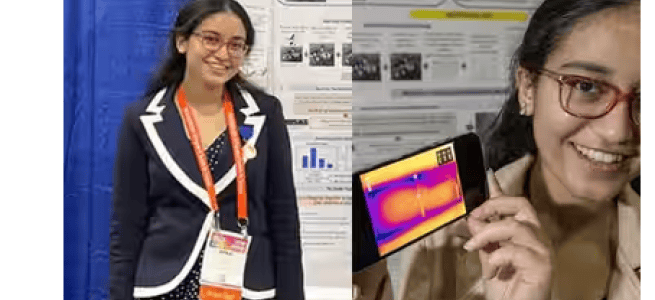
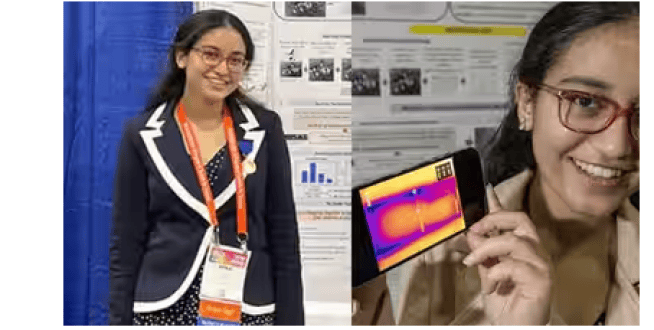
Meet Anika Puri, the 17-year-old Indian-American student who built a $300 AI system that spots elephant poachers with over 90% accuracy and won a $25,000 Davidson scholarship.
TOI Science Desk / TIMESOFINDIA.COM / October 13, 2026, 20:00 IST
When darkness settles over a wildlife reserve, spotting a poacher from hundreds of feet up can be difficult, even with thermal imaging technology. For park rangers protecting endangered animals, a missed movement could have serious consequences. Anika Puri, an Indian-American student from Chappaqua, New York, set out to tackle this challenge with an unlikely combination of artificial intelligence, drone technology, and a closer look at how humans and animals move. According to a Society for Science report, her project, ElSa (short for Elephant-Savior), developed a low-cost system to identify potential poachers in nighttime drone footage. The innovation earned Puri a $25,000 scholarship as a 2022 Davidson Fellow, recognizing her engineering work and its potential application to wildlife conservation. Scroll down to read more about her journey. Turning curiosity into innovation. According to a Davidson Institute online release, Puri’s interest in technology grew from an early fascination with building, experimenting, and exploring new ideas.
From presenting a Lego Mindstorms robot at Maker Faire to developing an interest in drones and earning a commercial drone pilot license, she approached engineering as a way to turn curiosity into practical solutions. Her focus eventually shifted to environmental science and protecting endangered species. During visits to India, she was struck by the continued presence of ivory jewelry and statues in Mumbai markets, despite international efforts to curb the illegal ivory trade. The experience prompted her to investigate the scale of wildlife poaching and the technology being used to prevent it.
She discovered that drones equipped with thermal infrared cameras were already helping rangers monitor protected areas after dark. However, analyzing the resulting footage remained a challenge, the release explains.
Why traditional detection falls short
Drones monitoring wildlife reserves typically fly at considerable heights to cover large areas while working within limited battery life. At around 400 feet, people and animals can appear as small shapes in thermal images, making them difficult to distinguish accurately, the online release states. Existing detection systems often rely on analyzing individual frames and identifying objects by their shape. According to Puri’s research, these approaches could achieve accuracy as low as 20% in challenging conditions. Human operators watching hours of footage also risk fatigue and missing activity.
Puri approached the problem from a different angle. Instead of examining only what appeared in an image, she studied how objects moved over time. Reading movement through AI. The ElSa system uses machine learning to analyze spatio-temporal patterns in nighttime thermal infrared videos. These patterns include differences in speed, turning radius, and movement behavior, as well as whether an animal moves as part of a herd, adds the Society for Science report. By examining these characteristics across successive video frames, the algorithm aims to distinguish humans from animals more reliably than methods based primarily on static images.
When tested on the BIRDSAI thermal infrared video dataset, collected from four national parks in Africa, the system achieved 90.9% accuracy in detecting humans. The result represented roughly a fourfold improvement over the existing methods cited in her research. Although identifying a human does not automatically establish that the person is a poacher, the technology could help rangers flag suspicious activity for further investigation. Making conservation technology affordable.
Cost was another central consideration in Puri’s design. High-resolution thermal cameras can cost about $4,800, putting advanced surveillance technology out of reach for some conservation programs. Her ElSa prototype, built using commercially available components, cost around $300. This significantly lower price point could make automated detection tools more accessible to parks in Africa and Asia, where budgets and resources are often limited.
The project offers a glimpse of how artificial intelligence can be applied beyond conventional commercial uses, addressing challenges that affect biodiversity and environmental sustainability.
A young researcher with a larger purpose
For Puri, the Davidson Fellowship recognized a project that connected engineering to a cause she cared deeply about. Her work demonstrates how looking at a familiar problem differently can open up new technological possibilities. Wildlife protection requires trained rangers, effective enforcement, community participation, and reliable monitoring. ElSa is not a substitute for those efforts. Still, it points towards a future in which affordable AI tools could help conservation teams identify threats faster and direct their limited resources more effectively. Images Courtesy: Society for Science
The good news here is a young person took the initiative to improve existing technology. Today’s JohnKu talks about Initiative. I hope you have a super weekend.
Go by John W. Howell © 2026
Just because it’s there,
Doesn’t mean it works that well . . .
Let’s try something new.

What a marvelous high tech, comparatively low cost solution to the problem. Good for her!
LikeLiked by 1 person
I agree. Thanks, Pat.
LikeLike
: )
LikeLiked by 1 person
What a wonderful way to use AI for the betterment of the planet!
LikeLiked by 1 person
A great statement, Annette. Thank you.
LikeLiked by 1 person
Very good story John. It drives me crazy when I read about poachers. They prey on a defenseless animal for profit. Totally 100% wrong. If-when they are caught cutting off tusks, we should cut off something of theirs
.
LikeLiked by 1 person
I agree, Tom. Sad thing, people still buy ivory jewelry and stuff.
LikeLike
It’s amazing she got this down to 300 dollars and the technology she used to create such a worthy life saving cause of the sweet elephants! Bravo to her and you for sharing!
Thank you! 🙏
LikeLiked by 1 person
Thank you, Cindy. Happy Fri-Yay. 😄
LikeLiked by 1 person
You’re welcome John and happy Fri-Yayyy to you 💕👏
LikeLiked by 1 person
😊
LikeLike
It’s great to read a piece about a good and useful way to use AI. It’s also good to see your theme change. It looked familiar, and I discovered that I’m using the Penscratch theme, while you’re using Penscratch 2 now. I’ve pondered changing themes so that I could use some block editing tools that aren’t available to me now, and I’ve thought about Penscratch 2, wondering if it would do. Now I can see it in action!
LikeLiked by 1 person
I still have some problems with it. When I set a featured image, it appears in the post, so the post has a duplicate. My old theme used the featured image only on social media. Still having trouble with the light font color. The bot suggested this theme, but it doesn’t let me change the font. Their solution: Go to another theme. Not sure I want to do that.
LikeLiked by 1 person
I’ve changed the text color in my font through the block editor. I can change text size, too. Let me see if I can figure out how to get to the place where those changes (and image size and choice) are available.
LikeLiked by 1 person
For me, in the block editor I highlight text, and then can change size or color from the right sidebar. I was told that for Penscratch 2 it would be possible to change the color for an entire post, rather than block by block as I have to do it.
LikeLiked by 1 person
Where do I go? Appearance?
LikeLiked by 1 person
I think they’ve changed the procedure since I learned it. Now, if I’m in the block editor and highlight a paragraph block, the color and text size choice windows appear in the right sidebar. It looks like a step has been eliminated.
LikeLiked by 1 person
The happiness engineer wrote some code for me that darkened my whole site.
LikeLiked by 1 person
When I go in to edit, I click settings in the right side of the upper sidebar first, to get the block editor.
LikeLiked by 1 person
I am totally classic.
LikeLiked by 1 person
In every sense of the word!
LikeLiked by 1 person
Ha ha ha. Thanks, Linda. (and vintage) 😄
LikeLiked by 1 person
Thank you, Linda.
LikeLiked by 1 person
Excellent commentary on youth and the promise they hold for our future. It’s interesting to note that the subject is from Chappaqua, NY, a well-to-do suburb of metropolitan NYC, the residence of the Clintons. Like many affluent suburbs, educational resources abound that support these young intelligent and highly motivated students.
LikeLiked by 1 person
Chappaqua is a beautiful area. Maybe Mamdani can annex it and make multiple dwelling units out of those McMansions.
LikeLiked by 2 people
It could happen…NOT.
LikeLiked by 1 person
😊
LikeLike
This is genius, and I love how she improved so much on the existing systems. That scholarship is well-deserved.
LikeLiked by 1 person
I think so too, Teri. Thank you.
LikeLiked by 1 person
We have a budding genius here. I hope she keeps going!
LikeLiked by 1 person
I do, too.
LikeLike
Love that this clever young woman is using affordable technology to help environmental science in protecting endangered species. Thanks for sharing, John. Another great success story. Kudos to Ms. Puri. I hope her successes continue as she makes a difference in this world.
LikeLiked by 1 person
I agree, Monika. She is destined for great things.
LikeLiked by 1 person
Hurrah for Anika Puri!
LikeLiked by 1 person
Hazaa.
LikeLiked by 1 person
Now THAT is putting AI to good use. Way to go, Puri. Thanks for sharing this, John. Wonderful JohnKu to accompany.
LikeLiked by 1 person
Thank you, Dale. 😊
LikeLiked by 1 person
Great use of A.I.
LikeLiked by 1 person
Yes, it is. Thanks, Charles.
LikeLike
It’s great that Anika Puri, a 17-year-old Indian-American student invented a drone that could distinctly identify elephant poachers, and that you posted about it, John. She deserved the award she got, and your post deserves the comment.
LikeLiked by 1 person
Thank you, Tim. She does deserve her awards.
LikeLiked by 1 person
😊
LikeLiked by 1 person
A real life problem solver. I remember how tough it was in the past with poachers. There was a time when poachers cum smugglers (specially chandan wood) had become a social menace and how tough it was to track them down. They would attack on authorities. Once a poacher was encountered by authorities, who became such a dangerous person, was a national news for weeks. This effort by this young girl is commendable and what a good news. The headline should be ‘From Veerappan to AI poacher tracking’.
LikeLike
Just in case one would want to have an idea of those times, watch movies “Pushpa-1”, “Pushpa-2”, “Veerappan”. They could give a bit of idea of poacher-menace era.
LikeLiked by 1 person
Thanks.
LikeLiked by 1 person
Excellent comment, Prateek. Thanks.
LikeLiked by 1 person
I am so impressed!! And heartened for the future of our planet. Goes to show that we oldsters do not have all the answers.
LikeLiked by 1 person
I agree, Liz. Looks like the young’uns have answers of their own.
LikeLiked by 1 person
🙂
LikeLiked by 1 person
Wow! Just goes to prove there are plenty of young people out there who will be doing everything they can to provide a better world going forward. Great stuff Boss.
LikeLiked by 1 person
I agree, Marco.
LikeLiked by 1 person
That’s a bright young lady with a great tool! I hope it saves many elephants.
LikeLiked by 1 person
I do too, Deborah. 😊
LikeLike
Brilliant!! And a positive use of AI! Thanks, John and Noelle.
LikeLiked by 1 person
Thank you, Jan
LikeLike
Anika Puri is certainly a creative and smart young woman. This is excellent use of AI technology and congratulations to her for the price she won. Incidentally, I recently met a you Indian boy who use a camera, a robotic arm, and AI to sort recycling items in the right bin. There are a lot of creative young people.
LikeLiked by 1 person
That sounds like a good idea, Thomas. Probably better than human sorting. Thanks for the information.
LikeLiked by 1 person
Yes a smart young man
LikeLiked by 1 person
For sure.
LikeLiked by 1 person
Young people like her make me feel better about the future. Thank you for the good news! So glad the article explained “spatio-temporal patterns.” 😅
LikeLiked by 1 person
I was glad too. Sounded like a bad trip on something illegal.
LikeLiked by 1 person
😱
LikeLiked by 1 person
😄
LikeLiked by 1 person
It’s great to see young people recognized for their ideas. Thanks for sharing this, John.
LikeLiked by 1 person
I agree, Barbara. 😊
LikeLiked by 1 person
Wow. That is very impressive. Good on her!
LikeLiked by 1 person
It is. Thanks
LikeLiked by 1 person
Yes, as the JohnKu says, try something new.
It seems to me the young people who have been born into tech are really picking up the torch. I’m so thrilled with a lot of what youth is up to.
Great good news. Thanks John!
🎃𝖃 🎃𝖃 🎃𝖃
(Sticking with the Halloween OXen theme AND your new theme is gorgeous. So clean!)
LikeLiked by 1 person
I’m glad for the youth, Resa. Our hope for the future. 🎃X 🎃X🎃x I’ll stick with pumpkins, too.
LikeLiked by 1 person
YEAH!
🎃X 🎃X🎃x
LikeLiked by 1 person
😀X 🎃X 😊x
LikeLiked by 1 person
😀X 🎃X 😊x
LikeLike
🐂
LikeLiked by 1 person
Hi John, this really is an excellent good news story. Poaching is a big problem in Africa and this will help. Of course a lot of corrupt government officials are involved but that’s a different issue.
LikeLiked by 1 person
Thanks, Robbie. I hope it helps in spite of the corrupt officals
LikeLike
🤞💜
LikeLiked by 1 person
😊
LikeLike
I am freaked out excited at what she has done, plus her well deserved Davidson scholarship!
LikeLiked by 1 person
I agree.
LikeLiked by 1 person
Nice to see technology being used for a good purpose! 😊
LikeLiked by 1 person
I agree, Debby. 😊
LikeLike
I liked how she started with a real problem she could see… this is the kind of project that makes engineering feel useful to a young person.
LikeLike
It certainly does. Thank yo, Rakesh.
LikeLike
Thanks, John… That real-world starting point stayed with me too.
LikeLiked by 1 person
😀
LikeLike