
Today’s good news story comes from RedState and was sent to me by Noelle Granger.
Thanks, Noelle.
Young Doctor Cures His Rare Disorder, Now His Nonprofit Helps Others Find Hope
Dr. David Fajgenbaum and his organization, Every Cure, researches, tests, and works to repurpose prescription drugs used for one form of disease and apply the treatment to other diseases that may not even use that particular protocol. What he is doing is not just fascinating, but extremely promising.
Eleven years ago, when Dr. David Fajgenbaum had just begun his career as an oncology resident, he developed a rare disorder called Castleman’s disease, which causes enlarged lymph nodes and a host of horrible symptoms. Fajgenbaum was not given a whole lot of hope. He was told he didn’t have long to live, and his family even administered last rites. But Fajgenbaum fought to find a cure, and it came in the form of a repurposed drug.
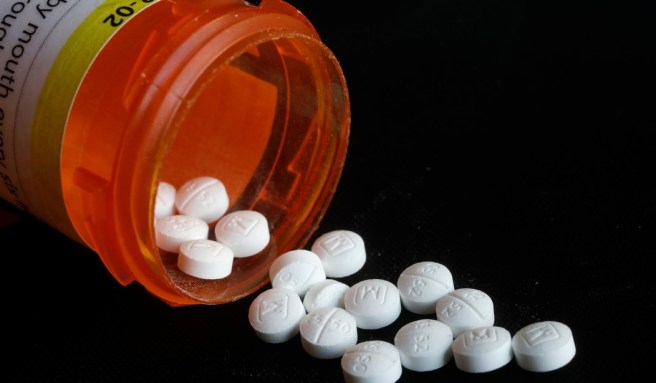
Fajgenbaum has been in remission for 11 years, and his organization Every Cure works to do the same lifesaving work for others. They search out FDA-approved drugs, 4,000 of them for 18,000 diseases, and repurpose them to give others a fighting chance either to gain more time, a better quality of life, or to extend one’s life altogether.
We know that aspirin is often used to help ward off or prevent the recurrence of a heart attack. But did you know that it has been shown to reduce the recurrence of colon cancer?
And lidocaine, which is what dentists use to numb your mouth for dental surgery, is now being used before breast cancer surgeries! Studies have shown a 29 percent reduction in the breast tumor with this treatment, and a reduced mortality rate.
Fajenbaum stated that it’s not as though this information is being hidden; it’s that there is no centralized database that allows doctors and patients to tap into the wealth of knowledge not just in the U.S., but worldwide. Sadly, there is no incentive for corporate medicine to pursue, utilize, or maximize these findings.
Thank God for Dr. Fajenbaum and his groundbreaking work. He is trying to replicate this work so that all doctors and patients can benefit from it.
One of Fajenbaum’s first patients was a man named Michael, who was diagnosed with metastatic angiosarcoma, and his doctors told him he was pretty much out of options. Every Cure found research on PubMed published in 2013, and a particular drug that had been used in rare cases and showed some promise. Fajenbaum said that not only did the drug show success in terms of extending life in about 20 percent of the cases, but it changed how the medical world now treats this form of cancer.
The most beautiful part? Michael is now nine years into remission. In 2024, he was able to walk his daughter down the aisle at her wedding.
Fajenbaum has said: “These drugs are out there, and sometimes there’s even breadcrumbs. Like, it didn’t require any brilliance from my lab. We literally just had to find a study that published three years earlier. And that again is what really drives us with this work now to say: Can we find all these breadcrumbs, can we put them together and can we make sure that people actually benefit from all the great science that’s being done all over the world, let’s translate that to our patients.”
The good news in this story is that one man is pushing to use a body of research to discover information that will lead to more cures with existing drugs. Today’s JohnKu talks about innovation in medicine. I hope you have a nice weekend.
Efficient by John W. Howell © 2026
The research is done,
A finding leads to more use . . .
It’s called efficient.
