Friday John Ku – AKA – TGIF – Fri Yay/Good News

Today’s Good News story comes from the India Times and was sent to me by Noelle Granger  . Thank you, Noelle

Japan does not cut down centuries-old trees for development. Instead, experts spend months preparing their roots and relocating them
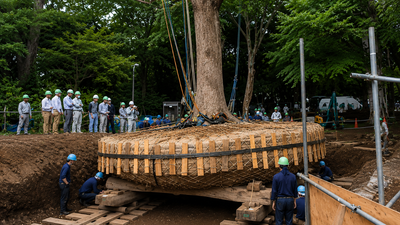
Japan does not cut down centuries-old trees for development. Instead, experts spend months preparing their roots and relocating them
When roads, railways, or new buildings are planned, centuries-old trees are often among the first casualties of development. In Japan, however, some of the country’s most valuable trees are given a second chance. Rather than cutting them down, arborists and horticultural experts sometimes relocate them using a painstaking process that can take months or even more than a year. Before a tree is moved, specialists carefully prepare its root system to improve its chances of surviving in a new location. The technique, known as nemawashi, combines centuries of horticultural knowledge with modern engineering and reflects Japan’s long-standing respect for nature and cultural heritage. Its continued use highlights a conservation philosophy that values preserving living history, proving that development and environmental stewardship can sometimes exist side by side. The remarkable practice has attracted global attention as a model for balancing infrastructure expansion with the protection of irreplaceable natural landmarks. As cities worldwide grapple with rapid urbanization, Japan’s approach demonstrates that thoughtful planning can preserve both cultural identity and ecologically significant trees for future generations

Why Japan relocates some centuries-old trees instead of cutting them down

Not every tree standing in the path of development is relocated. The practice is generally reserved for trees with exceptional historical, cultural, or ecological value. Many of these trees are found in temple grounds, shrines, traditional gardens, parks, or historic neighborhoods, where they have stood for generations and are considered part of local heritage, often holding deep spiritual, emotional, and community significance for nearby residents and visitors alike. In some cases, moving a mature tree also helps preserve biodiversity and the character of a landscape while allowing infrastructure projects to continue. Because the process is expensive and technically demanding, authorities carefully evaluate whether relocation is practical before deciding against removal.

The months-long preparation hidden beneath the ground

The most remarkable part of the relocation process happens long before cranes arrive. Months before transplantation, specialists begin carefully pruning the tree’s roots. Instead of uprooting the entire root system at once, they gradually trim selected roots around the tree. This encourages the growth of new, fine feeder roots closer to the trunk. These feeder roots are essential because they absorb most of the water and nutrients needed for survival. By allowing them to develop before relocation, experts significantly reduce transplant shock and improve the tree’s chances of adapting to its new environment. Depending on the size and species, this preparation may take anywhere from six months to over a year.

What is nemawashi, and why does it matter?

The root-preparation process is known in Japan as nemawashi, a term that literally means “going around the roots.”Originally a horticultural practice, nemawashi has become a widely used term in Japanese business and politics, referring to quietly laying the groundwork before introducing major changes. The metaphor comes directly from tree transplantation: careful preparation before taking decisive action leads to better outcomes. In gardening, the principle remains the same. Preparing the roots first greatly increases the likelihood that a mature tree will survive the move.

How Japan moves giant trees

Once the root system is ready, the relocation begins. Workers excavate around the tree to preserve as much of the prepared root ball as possible. The roots are wrapped in protective materials such as burlap, while the trunk and branches may also be secured to prevent damage during transport. Depending on the tree’s size, cranes, hydraulic lifting equipment, or specially designed transport vehicles are used to move it to its new location. There, it is replanted in a carefully prepared pit, supported by stabilizing structures, and monitored closely through regular watering and maintenance until it establishes new growth.

Does every relocated tree survive?

Even with months of preparation, relocating a mature tree is never guaranteed to succeed. Larger trees experience significant stress because part of their root system is inevitably lost during transplantation. Success depends on factors including the species, age, health of the tree, timing of the move, and the quality of aftercare. For this reason, Japanese arborists reserve the technique for trees whose cultural, historical, or environmental value justifies the considerable cost and effort involved.

A lesson in balancing development and conservation

Japan’s approach demonstrates that urban development and environmental conservation do not always have to be opposing goals. Although relocating centuries-old trees requires careful planning, specialized expertise, and significant investment, it allows some of the country’s most treasured natural landmarks to survive for future generations. Rather than viewing ancient trees as obstacles, the practice treats them as living heritage worthy of preservation, even as cities continue to grow. A horticultural practice so precise and patient that it became a metaphor for introducing change carefully in business and politics is carrying more meaning than most agricultural techniques do. Nemawashi works on trees because you cannot rush root development, and it works as a concept in organizations for exactly the same reason: the preparation is the work, not a delay before the work begins.

The good news in this story is that people care for ancient trees when they have to be moved. Today’s JohnKu talks about caring for nature. I hope you have a terrific weekend.

Nature by John W. Howell ©2026

Nature needs our help,

Her welfare should be thought one. . .

When building is done.
 

Friday JohnKu – AKA – TGIF – Good News/Fri-Yay

Today’s good news story comes from YouTube and was sent to me by Maria Olimpieva. Thanks Maria.

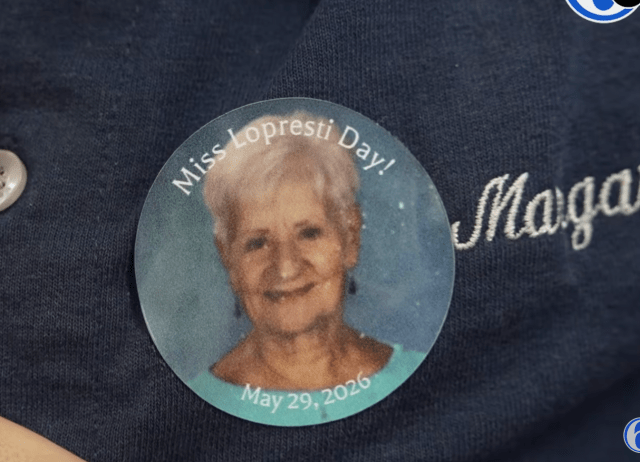
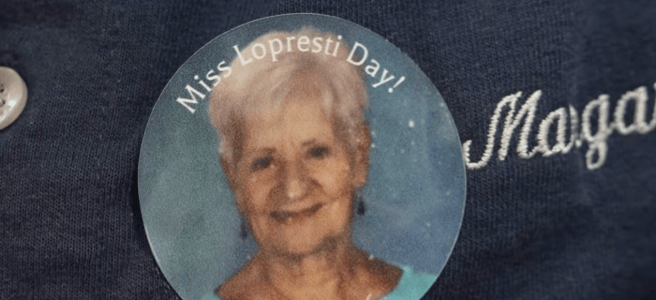
For fifty years, Dolores Lopresti  greeted generations of second graders at St. Margaret’s School with a smile, a lesson, and a heart full of love. Standing before students, parents, and former classmates on the day of her retirement, she admitted a surprising truth: during her first year of teaching, she cried every day and nearly quit. Fresh out of college, she felt overwhelmed. But with the encouragement of fellow teachers, she discovered her calling—and never looked back.

Mrs. Lopresti believed learning should be joyful. Whether she was dressing up as the unforgettable “Mrs. Pepperoni” to teach math or preparing children for their First Communion, she filled every lesson with laughter, patience, and kindness. To her, the students were never just pupils; they were family.

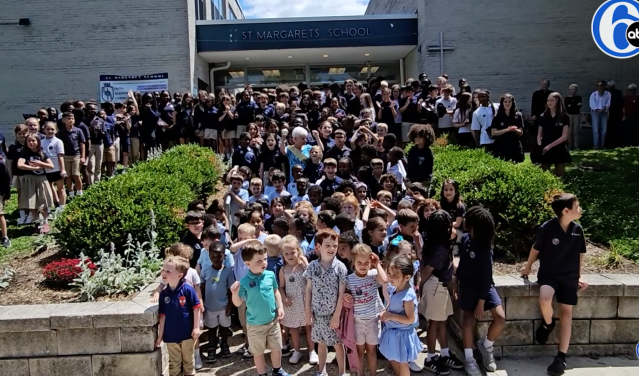
All the children wore Miss Lopresti buttons

Over the decades, she taught not only children, but eventually their children as well. Former students returned to thank her for changing their lives, inspiring careers, and giving them confidence when they needed it most. Her influence reached far beyond the classroom.

Flowers for the teacher

Although retirement marked the end of her full-time teaching career, Mrs. Lopresti knew her mission would continue. “Every day is a new day,” she reminded everyone. “Don’t give up. Be kind. Be loving. It’s not how you start—it’s how you finish. And once I’m your teacher, I’m always your teacher.”

Just a few who came to say farewell.

The good news in this story is when one loves what they do they can have a positive impact on all those they meet.

Today’s JohnKu talks about how other see us. I hope you have a lovely weekend

Impression by John W. Howell © 2026

People remember,

Kind and considerate help . . .

They repeat learning.


Here is a video of her retirement.

Friday JohnKu – AKA- TGIF – Fri-Yay/Good News


Today’s good news story comes from the Good News Network.

Maine Counts Over 20 Million River Herring During Annual Run, the Highest in Decades

A beloved local fish staple that was illegal to harvest as recently as 2012 has seen an incredible recovery in Maine’s rivers following the removal of several large dams.

Particularly on the Penobscot River, the removal of 2 dams has resulted in the “premier success story of our time,” for Maine’s alewife fish, which had been declining in population since the 18th century because of damming.

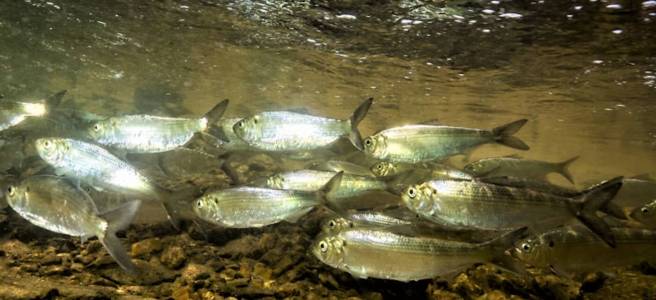
At its best, the alewife run is like a force of nature. From bank to bank, a babbling brook that’s quiet for most of the year will become a torrent of silver as the fish migrate upriver to spawn just as salmon do.

Colonial settlers, Native Americans, fishermen, and every predator in the woods needed only to reach their hands in and pull out breakfast lunch and dinner. But as the rivers were dammed, the migrations slowed, and even as early as 1840 there were catastrophic collapses in fish stocks.

Commercial offshore harvesting also decimated the fish, causing towns whose rivers weren’t dammed to lost their alewife runs as well. By 1994, annual inland catches had fallen from 3 million pounds average to just 150,000 pounds of fish.

As the country found new ways to power itself, an effort to undam the rivers began in 1999 and finished in 2016—four years after a moratorium was declared on the fishing of alewives offshore.

In 2025, these efforts culminated in 20 million alewives running up Maine’s rivers.

“We’ve gone from losing the fish completely in a lot of river systems due to damming and pollution, and now we have some of the largest populations in the globe,” Rustin Taylor, the executive director of the Alewife Harvesters of Maine, told Sydney Cromwell from Inside Climate News.

More officially known as a river herring, this non-game fish was dubbed an alewife due to its fat silver belly—a reference to female tavernkeepers of yore. Taylor described them in an ecological sense, acting as a great “nutrient conveyor belt,” bringing the nutrients of the cold ocean up into the land inside their guts.

Fed upon by most carnivores and omnivores in the forest and the rivers, the nutrients from the ocean are recycled through other animals and into the soil through those animals’ droppings.

In fact, Cromwell shares, the native Passamaquoddy tribe’s name for the species, siqonomeq, translates to “the fish that feeds all.”

Across Maine, alewife festivals routinely celebrate the return of the herring from the ocean, but for many decades, they were mostly somber affairs, as the torrents of silver from yesteryear became trickles due to overfishing in the Atlantic. Some locals would actively help their fish get past smaller dams by scooping them up in buckets and dumping them out on the other side.

Along with the removal of those dams, the construction of fish channels has helped them to get around the dams that remain.

“Some of those dam removals have led to incredible restorations of alewife migrations much faster than anticipated,” Taylor said, who called two dam removals on the Penobscot, where Atlantic salmon also run, “probably one of the premier success stories of our time.”

The good news about today’s story is that, with a little work, man-made impediments to species health can be removed, and the species will return. Today’s JohnKu talks about helping nature. I hope you have a lovely weekend.

Nature by John W. Howell © 2026

All that is required,

Is to give nature a break . . .

She will cure herself.

Friday JohnKu – AKA – TGIF – FriYay/Good News

The Nature Conservancy. BirdReturns: Creating Dynamic Habitat for Migratory Birds. The Nature Conservancy California

Today’s good news comes from @Massimo on X. Thanks to Noelle Granger for sending it to me.

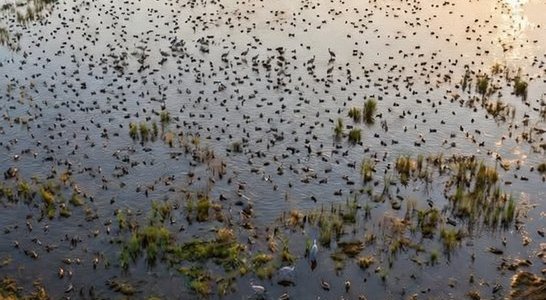
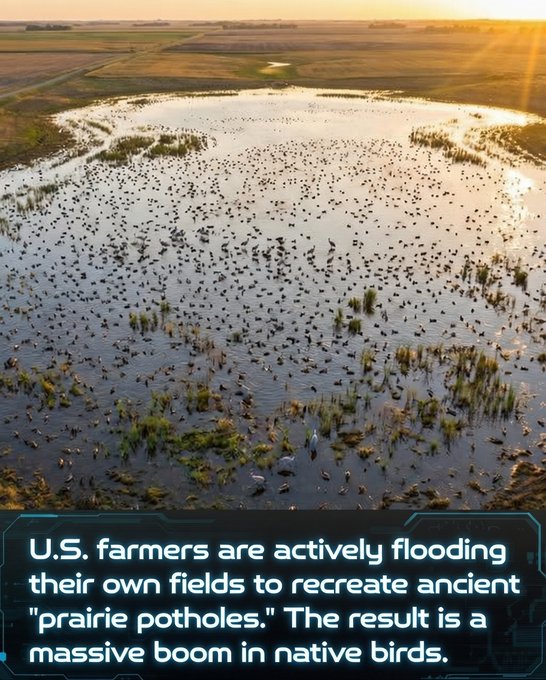
U.S. farmers are intentionally flooding their fields to revive ancient “prairie potholes,” creating temporary “pop-up” wetlands that deliver a huge boost to migratory birds while improving soil health.

In regions like California’s Central Valley and the Mississippi Delta, innovative programs—most notably BirdReturns (launched by The Nature Conservancy in 2014)—pay farmers to strategically flood low-lying or post-harvest fields at precise times during bird migrations. These short-term wetlands mimic the natural prairie potholes and seasonal marshes that once dotted the landscape but were largely drained for agriculture.

By timing floods to align with peak migration periods (e.g., spring and fall for shorebirds, waterfowl, and sandhill cranes), farmers provide essential stopover habitat: shallow water, mudflats, and abundant food for millions of birds traveling along flyways like the Pacific Flyway. The approach has transformed tens of thousands of acres of working farmland into critical refueling stations, with studies showing dramatic increases in bird use and numbers—sometimes 3.5 times higher in these managed pop-up wetlands compared to standard fields.

Farmers also gain practical benefits. Seasonal flooding enhances soil structure, boosts nutrient cycling (as bird activity and water help break down residues), recharges groundwater, reduces erosion, and supports long-term land productivity—often without hurting crop yields in subsequent seasons.

The good news in today’s story is an active program to help birds during their migrations while helping the soil as well.  Today’s JohnKu talks about assisting nature. I hope you have a lovely weekend.

A Hand by John W. Howell ©2026

Times present themselves,

To extend a helping hand. . .

Do not miss the chance.

Friday John Ku – AKA – TGIF – Fri-Yay/Good News

3-year-old Moran (left) and Mr. Cantillo (right) rescued from disaster – credit, office of the Acting President of Venezuela, via SWNS

Today’s Good News story comes from the Good NewsJul 2ork

3-Year-old Rescued After 6 Days Beneath Rubble in Venezuela as Rescuers Arrive in Droves to Help the Country

A week after two magnitude 7 earthquakes struck Venezuela’s capital of Caracas, search and rescue teams from around the world are still rescuing people from the jaws of death.

This includes Aaron Levi Cantillo, who was trapped under rubble for more than 4 days, and a 3-year-old named Klieber Moran, who was rescued by Jordanians visiting to aid in the rescue effort.

It took 43 hours to rescue Cantillo, who had already been trapped for more than 2 days under a collapsed building.

Footage released by the office of the Acting President of Venezuela also showed 3-year-old Moran face down and covered in dust when he was located by snake cameras operated by rescue teams above.

The boy was underneath the Caracas building for 6 days.

The video, filmed on June 30th, 6 days after the earthquakes occurred, shows members of the Jordan International Search and Rescue Team carrying the child to safety after pulling him from the debris.

The U.S. has provided over 2000 personnel and  $300 million in humanitarian assistance since the disaster. Shortly after the 7.2- and 7.5-magnitude earthquakes, the U.S. military helped fly in about 310 specialists from urban search and rescue teams who are now on the ground.

Among international calls of solidarity, South American leaders from both sides of the political spectrum—who often have nothing good to say about one another—stepped up to help as well.

Brazil’s President Lula Da Silva dispatched a team of 71 firefighters, 4 National Civil Defense technicians, 6 specialists from the National Telecommunications Agency, and 6 firefighter dogs, as well as at least 12 tons of search and rescue equipment, 100 water purifiers, 6.5 tons of medical equipment, and a Brazilian Navy portable hospital, operated by 93 Marines and medical specialists.

Chilean President José Antonio Kast sent a Chilean Air Force plane carrying 37 members of the Fire Department’s Urban Search and Rescue Group. The following day, a second plane was sent with 16 rescuers, three tons of humanitarian aid, and two tons of firefighters’ equipment.

The National Unit for Disaster Risk Management of neighboring Colombia deployed more than 60 rescuers, 4 rescue dog teams, and 12 metric tonsJun 26ipment.

Ecuador’s President Daniel Noboa said he had ordered the immediate delivery of humanitarian aid, the deployment of 46 urban search-and-rescue personnel, search dogs, and 6 metric tons of equipment.

More than 150 Salvadoran rescue workers and supplies arrived in Venezuela on 26 June as part of El Salvador’s President Nayib Bukele’s pledge to send 300 rescue workers and paramedics and 50 tons of medical supplies.

Mexican authorities provided 250 military rescue crew, rescue dogs, medical supplies, and rescue equipment on board 4 aircraft.

The National Emergency Commission of Costa Rica announced a deployment of 48 specialized rescuers along with approximately 12 tons of rescue equipment and humanitarian supplies.

Other nations, such as Italy, Czechia, France, Germany, Spain, Switzerland, India, Vietnam, Thailand, the UK, Qatar, Jordan, and even Syria, also deployed emergency rescue personnel.

The good news in this story is that countries around the world are pitching in to help. Today’s JohnKu talks about the world as one. I hope yo have a great weekedn and a happy 4th of July

Aid by John W. Howell © 2026

A disaster calls,

The world responds with action . . .

We are all family.

Friday JohnKu – AKA – TGIF – Fri-Yay/Good News

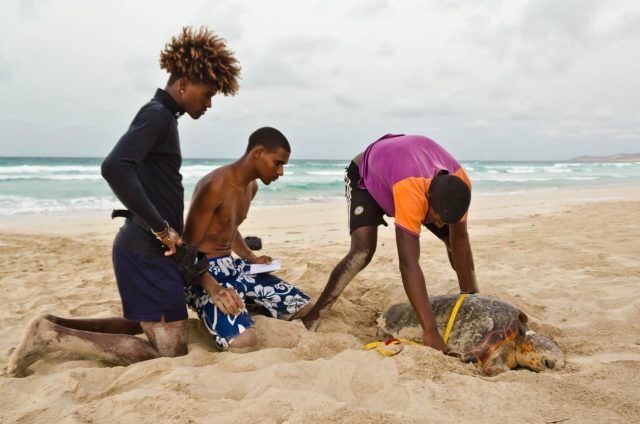
A ranger measuring a turtle’s shell and collecting data at the Canto camp. Image courtesy of The Turtle Foundation.

Today’s good news story comes from Mongabay.com and was sent to me by my correspondent Noelle Granger. Thank you, Noelle.

Former poachers guard Cabo Verde’s endangered sea turtles

by

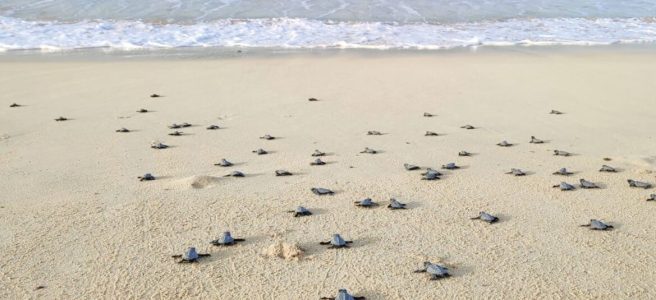
Former sea turtle hunters in Cabo Verde, off the coast of West Africa, have shifted to loggerhead turtle conservation work along the archipelago nation’s main nesting beaches. The change was propelled by 2018 legislation that criminalized killing threatened turtle species, Sonam Lama Hyolmo reported for Mongabay.

Rangers, around a dozen of whom used to poach or hunt turtles, now patrol key beaches where turtles lay their eggs, walking several kilometers each night during the nesting season, which runs from June to October. Turtle meat has historically been consumed in Cabo Verde and many other regions, creating a conflict between conservation needs and local customs. However, awareness campaigns and employment opportunities are helping to bridge that gap.

“I had turtle meat for personal consumption and never realized I could make a living out of conserving them,” Roni Nelson Batista Ramos, a ranger and camp coordinator at the Turtle Foundation, told Mongabay. “But now, I guard them against the poachers, and it’s motivating to see how these efforts have driven positive impacts for their conservation.”

Ramos and others monitor around 31 kilometers (19 miles) of coastline, patrolling the beaches on foot, and using drones and dogs for added assistance.

Roughly two-thirds of loggerhead turtle nesting activity in Cabo Verde happens on the eastern island of Boa Vista, which has seen a dramatic decline in illegal turtle hunting, according to the Turtle Foundation. In 2007, 1,253 female loggerheads were illegally caught on the island; by 2024, there were just 20. Over the same period, loggerhead turtle nests on Boa Vista increased more than sevenfold.

Cabo Verde’s loggerhead turtle population is the largest in the eastern Atlantic Ocean and the third largest in the world, after Oman and southeast Florida.

Another four of the world’s seven sea turtle species roam the waters of the Cabo Verde archipelago: the green turtle (Chelonia mydas), the leatherback turtle (Dermochelys coriacea), the Olive Ridley turtle (Lepidochelys olivacea), and the critically endangered hawksbill turtle (Eretmochelys imbricata).

Bycatch in fishing is another significant threat to sea turtles in the region. In 2024, the Sustainable Fisheries Partnership Agreement (SFPA) renewed a five-year allowance for 56 fishing vessels from Spain, Portugal, and France to fish in Cabo Verdean waters.

Read the full story here. Warning: some photos are disturbing

The good news in this story is that those who hunt turtles are now protecting them, benefiting both. Today’s John Ku talks about reversing trends. I hope you have a beautiful weekend.

Turning a New Leaf © 2026 by John W. Howell

Once there were hunters,

Who saw their game disappear . . .

They turned to help save.


Friday JohnKu- AKA – TGIF – Fri-Yay/Good News

Today’s good news story comes from Econews and was sent to me by Noelle Granger.

Thank you, Noelle.

A solar farm in southern England put 40 native sheep under 20,000 panels across about 30 acres to graze in winter, and the twist is that the flock didn’t just “mow the grass”, it helped protect wildflowers and pollinators while using the panels as a storm shelter, turning a power site into a two-job landscape called agrivoltaics

ECONews

At first, it sounds like a rural oddity. A solar plant places 40 native sheep near its panels, lets them graze through winter, and suddenly the field is doing more than producing electricity. At Westmill, the flock became part of a larger experiment in how clean energy, farming, and wildlife can coexist in the same landscape.

The lesson is simple but surprisingly important. Clean energy does not have to mean treating land as a blank sheet of metal and gravel. In practical terms, it can also mean wildflowers, soil life, pollinators, and yes, sheep using solar panels as shelter when the weather turns rough.

A solar farm built for nature

Westmill sits near Watchfield on the Oxfordshire and Wiltshire border in southern England. Its solar cooperative was formed to show that ordinary people can help build renewable energy, and its 30-acre site carries more than 20,000 panels that generate enough electricity for about 1,600 homes a year.

This is not just a power site with grass around it. The Westmill Sustainable Energy Trust, known as WeSET, was set up by the Westmill wind and solar cooperatives to promote sustainable energy through education, visits, and community projects.

Why sheep changed the field

The sheep were not brought in as decoration. They act like living lawn crews, eating a mix of plants and helping stop one aggressive species from overrunning more delicate wildflowers. That matters because a diverse field is better for insects, birds, soil bacteria, and fungi.

Westmill says the animals graze in winter, when they are less likely to disturb nesting birds and when the flowering plants that feed pollinators are not in bloom. It is a small timing choice, but that is where a lot of good land management lives.

There was another bonus hiding in plain sight. The sheep used the panels as protection from wind and rain, and the broad mix of plants helped them gain weight more effectively. For the flock, the solar farm was not an obstacle. It was shelter, food, and a quieter field.

What agrivoltaics means

The idea has a name, agrivoltaics. It means using the same piece of land for agriculture and solar power instead of forcing farmers and energy planners to pick only one. In everyday language, it is a field that works two jobs.

Can a solar farm also become a small nature reserve? To a large extent, Westmill suggests it can, but only when design and management come first. Planting wildflowers is a start, but the site still needs grazing, mowing, monitoring, and restraint to prevent one species from taking over.

The land question

Solar farms often trigger a familiar concern. Are panels taking land away from food? Westmill’s educational materials say about 44.5 million acres in the United Kingdom are used for agriculture, while about 44,500 acres are currently used for solar, meaning the solar footprint is still small compared with farming overall.

Solar Energy UK also reports that solar farms occupy less than one tenth of one percent of UK land today. Its 2024 fact sheet says a build out aligned with net zero targets would still put solar farms at about six tenths of one percent of UK land by 2050. That does not erase local conflicts, but it does put the scale in view.

Science backs a careful approach

Researchers are not saying every solar project is automatically good for nature. A 2025 Lancaster University review of 167 articles found both positive and negative effects, depending on climate, ecosystem, and the stage of the solar park’s life. In other words, location and management are not details. They are the whole game.

Professor Alona Armstrong of Lancaster University has helped lead work on agrivoltaics and solar park management. With Professor Piran White of the University of York, she helped develop the Solar Park Impacts on Ecosystem Services tool, which uses evidence to guide decisions on wildflower meadows, hedgerows, wetlands, soil health, and other habitat choices.

Better design from the ground up

Blending animals and panels also changes the engineering conversation. Once sheep are part of the system, a solar site has to think harder about cable protection, frame height, maintenance access, and hardware tough enough to handle real animals in real weather. That may sound simple, but simple details are often what decide whether a project works.

The result is a model that can be easier to maintain and more accepted by nearby communities. People worried about the electric bill may see the electricity. Farmers may see grazing space. Local residents may see fewer noisy mowers, less exhaust, and more life between the rows.

What Westmill shows

Westmill is not a magic fix for every solar debate. Some land should remain focused on food, some habitats need extra protection, and experts warn that poor design can still harm soil or wildlife. But the project shows that solar farms do not have to be single-purpose places.

At the end of the day, what it is trying to do is rewrite the field’s job description. A site can produce power, feed sheep, support pollinators, protect soil, and teach visitors what community energy looks like up close. That is a quieter kind of energy transition, but maybe a more durable one.

The good news in this story is that animals and technology go well together. Today’s JohnKu talks about co-existence. I hope you have a wonderful weekend.

Together by John W. Howell © 2026

Solar panel farms,

With sheep as cohabitants . . .

A win-win for both.

Friday JohnKu – AKA – TGIF – Fri-Yay/Good News

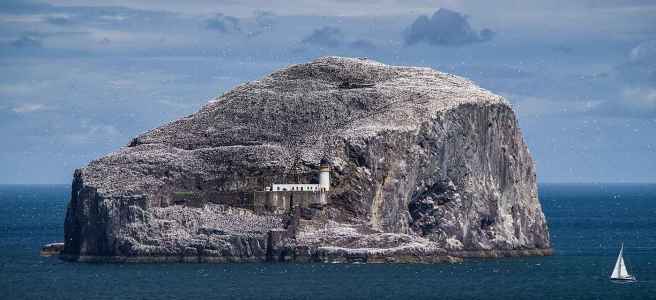
Bass Rock with its castle walls and lighthouse covered in Gannets – credit CC Ben Clarke 4.0. BY-SA

Today’s Good news story comes from the Good News Network.

Family That Owned This ‘Wildlife Wonder of the World’ for 300 years Sells Bass Rock to Protect 100,000 Gannet Seabirds

A globally-important colony for seabirds has been sold to the Royal Society for the Protection of Birds to ensure the 100,000 gannets and 10,000 puffins that live there will benefit from top-notch conservation management.

Owned by the Scottish noble Dalrymple family for 320 years, Bass Rock and the neighboring uninhabited island of Craigleith have long been famous worldwide for the epic colony of gannets which nest there.

Located in the Firth of Forth, the gannets live among the remains of a 14th century castle and a 17th century prison dubbed “Scotland’s Alcatraz.” The ‘Rock’ has been a figure of inspiration in song and literature for generations.

Sir David Attenborough described it as one of the “12 wildlife wonders of the world.”

Today though, the royals have decided to call time on their stewardship of the island after rising numbers of Scottish seabird fatalities brought Sir Hew Dalrymple around to the idea that conservationists will be better able to protect the magnificent colony with unfettered management of the island.

“I made the decision to do this because of the risk these birds are now facing,” Sir Dalrymple told reporters from the island. “I thought an organization like the RSPB would be better equipped to protect the islands and their wildlife than a private individual.”

“Hence, we have been in discussions and I am glad to say, although with some emotional regret, they are now custodians of these two islands.”

The Dalrymple family had long collaborated with the Scottish Seabird Center to carry out conservation measures on Bass Rock, which The Scotsman credited with supporting the growth of the island’s puffin colony to 5-figure numbers, and with eliminating an invasive tree species.

However with a massive offshore wind farm being recently approved nearby that is estimated to have an impact on the gannet colony, the decision was made to sell.

RSPB bought the islands for around £449,906 ($680,000) with the help of the National Heritage Memorial and Lottery funds.

“For the Memorial Fund, this is a once in a lifetime opportunity to secure the islands for the public and ensure that, with RSPB Scotland and the Scottish Seabird Centre at the helm, their role as seabird sanctuaries is protected for the future,” said Simon Thurley, chairman of both funds for the National Trust.

The good news in this story is that unselfish action took the place of tradition to the benefit of these birds. Today’s JohnKu talks about how nature’s benefit trumps saving family tradition. I hope you have a super weekend.

Royalty by John W. Howell © 2026

Royal tradition,

Gives way to good stewardship . . .

Of nature’s treasures.

Friday JohnKu – AKA – TGIF – Fri-Yay/Good News

Today’s good news story comes from ABC Far North and was sent to me by Noelle Granger. Thank you, Noelle

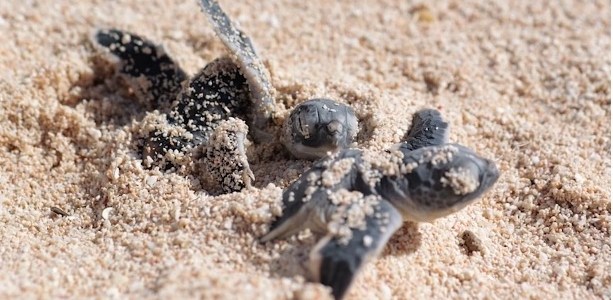
Thousands of baby green sea turtles head to sea after successful egg relocation

By Rosanne Maloney, ABC Far North,  Topic: Conservation

Several turtle hatchlings emerge from the sand.

The project to move eggs from one island has allowed for more males to develop. (Supplied: Queensland Parks and Wildlife)

In short:

It’s believed that 82 percent of the green sea turtle eggs relocated from the northern Great Barrier Reef and relocated between two islands have hatched.

The species has faced increasing threats nesting on Raine Island, its main rookery.

What’s next?

Researchers say future testing will be needed to determine if the successful hatchlings are also of the same fitness.

Friday JohnKu – AKA – TGIF – Fri-Yay/Good News

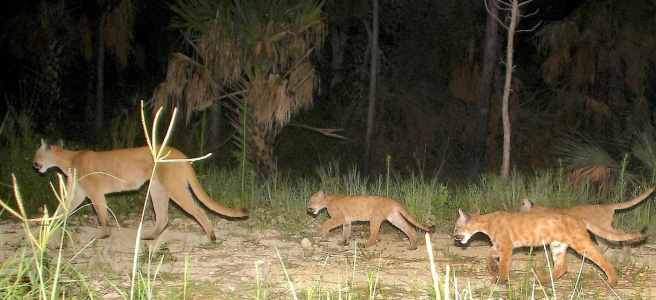
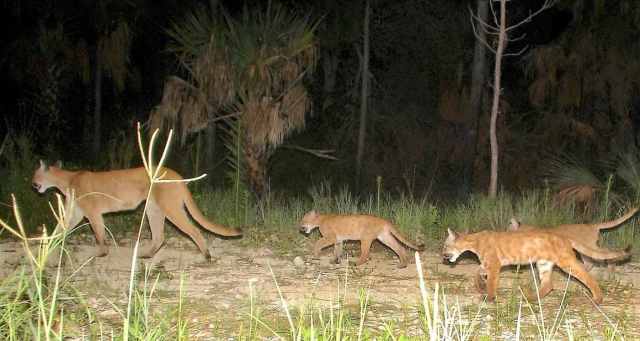
Florida panthers in the Picayune Strand – credit, David Shindle Conservancy of Southwest Florida

Today’s good news comes from the Good News Network.

Everglades Restoration Project Ongoing for 20-Plus Years Sees Huge Rewilding Success

A huge area of the Everglades that was drained in an attempt to convert it to suburbia has been restored to a somewhat native ecosystem after 2 decades of reverse-landscape engineering.

Picayune Strand is a large, almost perfect rectangle of South Florida wetland, located northwest of Everglades National Park and northeast of Thousand Islands Nat. Wildlife Refuge, and west of the Florida Panther Nat. Wildlife Refuge.

It was part of an enormous land package bought by the real estate company Gulf American in the 1950s in an attempt to create America’s largest suburban housing development, called Golden Gate Estates.

But their effort to tame the swamp failed, even though substantial landscape alterations were made to try to dry out the area. Picayune Strand is 2 feet lower in elevation than the Golden Gate Estate land to the north, and this little difference made it virtually impossible to prevent flooding. The company went bankrupt.

One of the first projects identified and pursued by conservationists under the Everglades Restoration Plan of 2000, Picayune Strand has changed significantly over the years. Since 1985, conservationists have been buying up all the private, often unbuilt-on land that Gulf American had managed to sell. It was tedious lawyer’s work, but by 2004, it was all consolidated into a conservation package.

Gulf American built 4 large canals to channel water off the land they wanted to develop, while the earth and stone they churned up were used to crisscross the area with causeways, atop which roads ran. These were the first targets for groups like the Everglades Foundation, the Conservancy of Southwest Florida, and the US Army Corps of Engineers.

The hydrology of the Everglades is defined by water flowing across the once-7 million square miles all in the same direction at roughly the same snail’s pace, a phenomenon described as “sheet flow” through a “river of grass.” Huge areas remained flooded all year, and plugging the canals was the first step towards restoring the natural hydrology.

To restore this, the roads were torn up, and the materials were chucked back into the canals from whence they came.

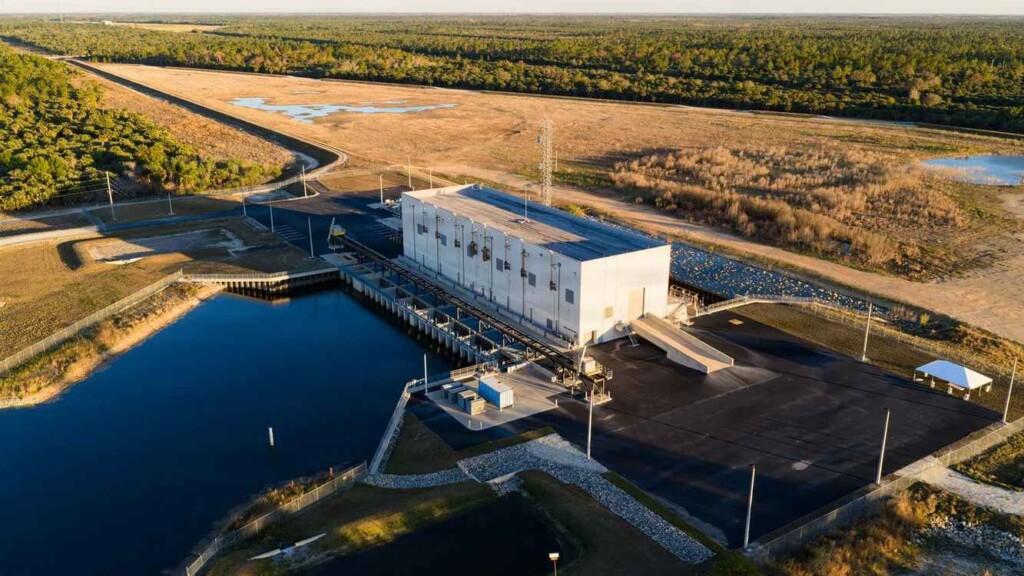
One of the 3 pump stations – credit, Brigida Sanchez US Army Corps of Engineers

From macro to micro

“Picayune is as good a place in South Florida as there is, in terms of getting it back to what it was before,” Michael Duever, an ecologist who has been monitoring the Picayune project, told Yale News. “We’re feeling that we’re in the range of 90 plus-or-minus percent of restoration.”

There had to be some compromises, as people still live in Picayune Strand. Part of that 10% is missing; Duever refers to it as 3 pumping stations that pull rainwater out of the closed canals on the northern boundary of the Picayune project and dump it into large basins that will leak it out in many directions. The water level at times is higher than natural, however, and at other times drier.

Vegetation is coming back in a big way—not always ideally, but upland plants cannot now spread further south because of the continual water bodies. More native species that have missed the continual wetness are also returning—like a native, wild sunflower.

The restored Picayune is expected to help several endangered species, including the red-cockaded woodpecker and the Florida panther, while studies have already shown that increased insect abundance is benefiting the bonneted bat, the largest of its kind in Florida, with a wingspan greater than a foot.

“I kind of view Picayune Strand as a microcosm of the entire [Everglades] plan,” Stephen Davis, chief science officer at the Everglades Foundation, told Richard Mertens at Yale.

The good news in this story is that once a mistake is realized, many hands helped make it right again. Today’s JohnKu talks about rectifying mistakes. I hope you have a terrific weekend.

Mistakes by John W. Howell © 2026

A mistake is made,

That threatens wildlife and Earth. . .

All hands are on deck.