From Linda Hill: Your Friday prompt for Stream of Consciousness Saturday is “spark.” Use it any way you’d like. Have fun!
Since it is the Fourth of July and time to celebrate the birth of the USA, I’m going to suspend my usual silliness to wish you a Happy 4th and hope that a spark of gratitude and pride touches each American today.
A week after two magnitude 7 earthquakes struck Venezuela’s capital of Caracas, search and rescue teams from around the world are still rescuing people from the jaws of death.
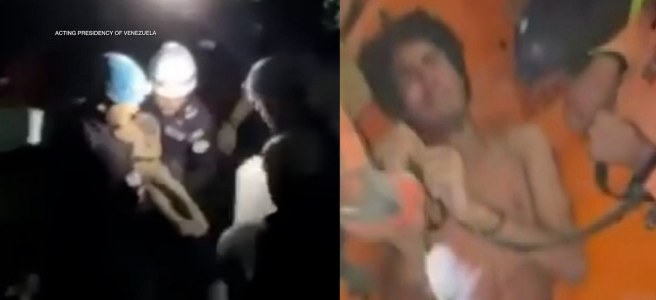
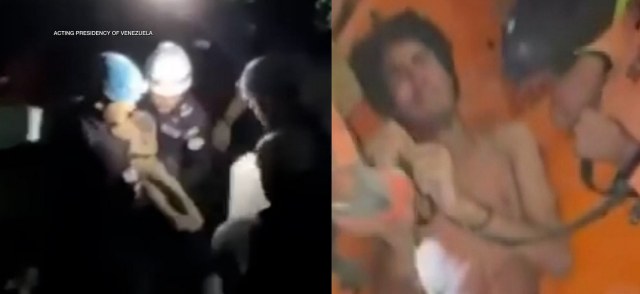
This includes Aaron Levi Cantillo, who was trapped under rubble for more than 4 days, and a 3-year-old named Klieber Moran, who was rescued by Jordanians visiting to aid in the rescue effort.
It took 43 hours to rescue Cantillo, who had already been trapped for more than 2 days under a collapsed building.
Footage released by the office of the Acting President of Venezuela also showed 3-year-old Moran face down and covered in dust when he was located by snake cameras operated by rescue teams above.
The boy was underneath the Caracas building for 6 days.
The video, filmed on June 30th, 6 days after the earthquakes occurred, shows members of the Jordan International Search and Rescue Team carrying the child to safety after pulling him from the debris.
The U.S. has provided over 2000 personnel and $300 million in humanitarian assistance since the disaster. Shortly after the 7.2- and 7.5-magnitude earthquakes, the U.S. military helped fly in about 310 specialists from urban search and rescue teams who are now on the ground.
Among international calls of solidarity, South American leaders from both sides of the political spectrum—who often have nothing good to say about one another—stepped up to help as well.
Brazil’s President Lula Da Silva dispatched a team of 71 firefighters, 4 National Civil Defense technicians, 6 specialists from the National Telecommunications Agency, and 6 firefighter dogs, as well as at least 12 tons of search and rescue equipment, 100 water purifiers, 6.5 tons of medical equipment, and a Brazilian Navy portable hospital, operated by 93 Marines and medical specialists.
Chilean President José Antonio Kast sent a Chilean Air Force plane carrying 37 members of the Fire Department’s Urban Search and Rescue Group. The following day, a second plane was sent with 16 rescuers, three tons of humanitarian aid, and two tons of firefighters’ equipment.
The National Unit for Disaster Risk Management of neighboring Colombia deployed more than 60 rescuers, 4 rescue dog teams, and 12 metric tonsJun 26ipment.
Ecuador’s President Daniel Noboa said he had ordered the immediate delivery of humanitarian aid, the deployment of 46 urban search-and-rescue personnel, search dogs, and 6 metric tons of equipment.
More than 150 Salvadoran rescue workers and supplies arrived in Venezuela on 26 June as part of El Salvador’s President Nayib Bukele’s pledge to send 300 rescue workers and paramedics and 50 tons of medical supplies.
Mexican authorities provided 250 military rescue crew, rescue dogs, medical supplies, and rescue equipment on board 4 aircraft.
The National Emergency Commission of Costa Rica announced a deployment of 48 specialized rescuers along with approximately 12 tons of rescue equipment and humanitarian supplies.
Other nations, such as Italy, Czechia, France, Germany, Spain, Switzerland, India, Vietnam, Thailand, the UK, Qatar, Jordan, and even Syria, also deployed emergency rescue personnel.
The good news in this story is that countries around the world are pitching in to help. Today’s JohnKu talks about the world as one. I hope yo have a great weekedn and a happy 4th of July
Today I randomly opened The Last Drive to page 145 and, with my eyes closed, pointed to the page. The word nearest my finger is “system.” That is our prompt today.
“You have to go through the system. No one just gets out.”
“But I don’t understand the system.”
“Ignorance is no excuse. If you do the crime, you need to do the time.”
“But that’s just it. I didn’t do anything.”
“If I’ve heard that once, I’ve heard it a thousand times.”
“So you’re not going to let me go?”
“Nope. Only the judge can do that.”
“I want my lawyer.”
“Of course you do. Until your lawyer gets here, you’ll stay put.”
“Can you and I make a deal?”
“Oh, so now you want to bribe your way out?”
“Call it a gift.”
“You have nothing I want. I would just sit down and behave myself before more charges are added.”
“What charges are on me now?”
“Let’s see. Destruction of property, assault with intent to harm, public indecency, trespassing, running loose without a license, and avoiding arrest.”
“It’s not my fault.”
“And why is that?”
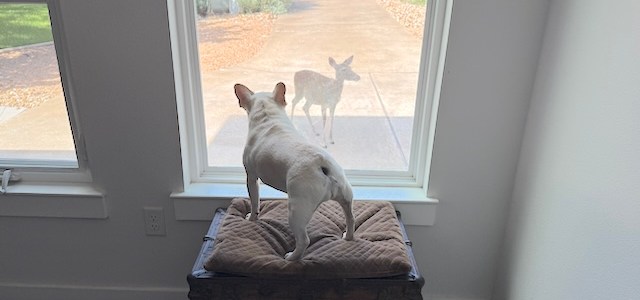
“My owner left the gate open.”
“So that gave you permission to tear up the newspaper, bite the animal control officer, poop in the neighbor’s yard, run uncontrolled through the neighborhood, and dodge the animal control officer.”
This post continues the Top Ten Not to Do list with a historical background. This post ran originally in November of 2018. Pretend you were there, and here is a list that will keep you out of trouble.
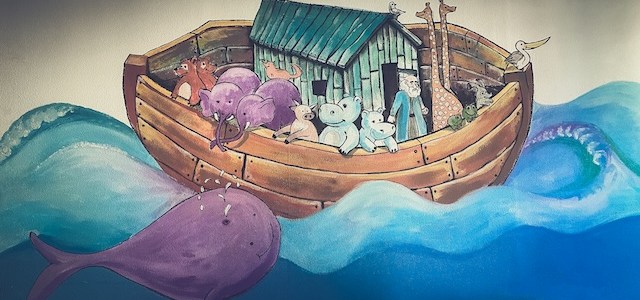
Top Ten Things Not to Do in the Great Flood of 2348 BC.
10 In the time of the great flood, do not mock Noah’s boat building so far from water. If you do, at best, he won’t hear you. At worst, after forty days and nights of rain, you are going to wish you had never. (Good luck on treading water for a few months, Gregory. Those boat jokes seem a little lame now, don’t they?)
9 In the time of the great flood, do not offer Tiny the WWF champ some help with that rhinoceros. If you do, at best, he’ll pass on the assist. At worst, Tiny, who has just finished his group session on self-esteem, will believe you think he is incapable of loading that snorting beast into the Ark. (Now you have to worry about a loose rhinoceros and soothing Tiny’s feelings, Giovanni. I think the rhino might be an easier task.)
7 In the time of the great flood, do not ask Noah about who is playing in the show lounge. If you do, at best, Noah will think you are joking. At worst, Noah will realize you think the whole boat thingy is a Carnival cruise. (I suppose you should feel grateful Noah allows you to ride in the dinghy, Graham. He could have just tossed you overboard.)
6 In the time of the great flood, do not start singing the Unicorn Song. If you do, at best, Noah will think it cute. At worst, since Noah was not able to get the unicorns on board, he’ll feel bad. (Don’t forget Noah is 600 years old, Gilbert. He probably never heard of the Irish Rovers, and now you are in the brig on bread and water.)
5 In the time of the great flood, do not smack a pesky mosquito. If you do, at best, it will recover. At worst, you just killed one of the two on board. (Although it seems like you have done a service to humanity, Gustavo, Noah is going to be plenty pissed since he was supposed to have two of everything. I would lie low if I were you.)
4 In the time of the great flood, do not try to bring more than one carry-on bag on the Ark. If you do, at best, the second bag will be floating. At worst, you’ll be caught, and Captain Noah will allow the bags to ride but toss you off. (I don’t think the punishment is too harsh, Gustavo. What if every being brought two suitcases?)
3 In the time of the great flood, do not try to water ski off the back of the Ark. If you do, at best, you won’t lose your grip on the rope. At worst, the Ark is not going fast enough, and you’ll sink like a stone. (It doesn’t do much good to signal for help, Gerard. That giraffe has no idea what you mean.)
2 In the time of the great flood, do not ask Noah for a turn at the tiller. If you do, at best, he will turn you down flat. At worst, he will give you a spin. ( The fact that you don’t know North from South is not going to play well here, Gabe. Lucky, the mountain tops are fourteen cubits under the water. What’s a cubit, you ask? Go look it up.)
1 In the time of the great flood, when Noah asks you to release a dove, do not release that duck. If you do, at best, the duck will come back. At worst, the duck will be able to float, so there is no need to return to the Ark. (Noah is now asking you how to determine if the waters have receded.) “Wait until you see land,” is not the answer he is looking for, Gideon. Those water wings should help keep you up until you sight land. By the way, the shark following you has not eaten for a couple of weeks.)
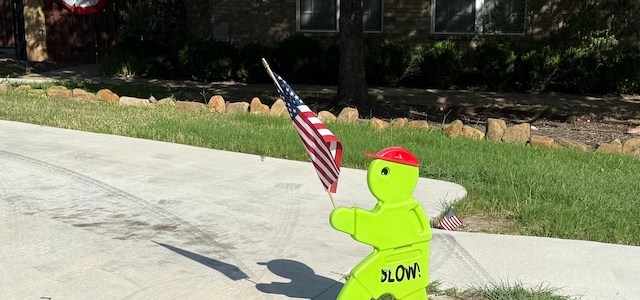
Today, we are cruising the neighborhood in search of 4th of July decorations. We are catered by Cipolina of West Austin. Our entertainment is Brooks and Dunn.
Imagine my pique when I approach the coffee machine and see these words on the touchscreen. Of course, the action taken was as any red-blooded person would take. The touchscreen was cleared, and the two coffee buttons engaged. The coffee machine growled to life and delivered the elixir that would put to rest the hammer-meets-anvil sound in my head, indicating a dangerously low level of caffeine. The first sip does just that. The second, as we have come to expect, is accompanied by what sounds like the crashing crescendo of a Yamaha grand piano hitting the Grand Canyon floor. It is the Westminster chime of the doorbell and the baying of Igor’s hounds by Twiggy and Tempeste at the peak of their Barking Back to St Louis duet.
The toss of a bone into the soundproof room and a slam of the door brought Oh Happy Day back to life. A peek at the security monitor confirms that someone on the porch is none other than Pepé Le Pew. Hoping to be able to talk him out of a personal interaction, for obvious reasons, I ask if the envelope he is holding can be left. He assures me that a signature is needed. With a sigh, the security shut down is begun.
The B-2 bomber squadron and the F-35 escort must be called off. One call does it. The tank corps and gunboats are told to stand by. The Apache helicopters are rerouted. The electric shock fence is turned off. The drawbridge over the quicksand is lowered. The robot attack dogs returned to their charging station. The laser-guided machine guns on the roof are set to caution. The nest filled with rattlesnakes put away. The bucket filled with 1000 marbles is locked down. The tear gas canisters shut off. The electrified welcome mat set to off. The fall-away sidewalk into the pit filled with spikes is locked. The hornet’s nest closed. The water cannons are set to safety. Bear traps are set to off. Peregrine Falcons perched on the roof above the front door were fed. The vat of boiling oil set to warm. The front door is opened.
With a clothespin on my nose, the clipboard is signed and returned. A ten-dollar bill is clipped to the board, and the life tip is passed to Pepé. “Don’t play rugby in a cowfield.” The door is shut, and the envelope is opened. Inside is a note from Lnda Hill. It reads: Your Friday prompt for Stream of Consciousness Saturday is “peak/peek/pique.” Use one, use all three (for bonus points), use them any way you’d like. Enjoy!
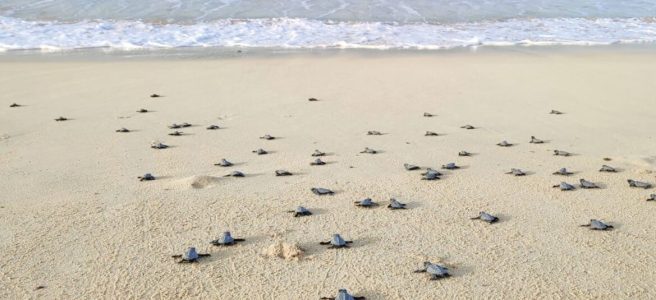
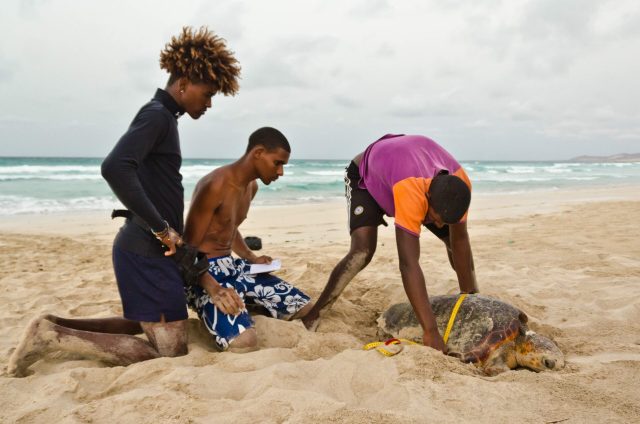
Former sea turtle hunters in Cabo Verde, off the coast of West Africa, have shifted to loggerhead turtle conservation work along the archipelago nation’s main nesting beaches. The change was propelled by 2018 legislation that criminalized killing threatened turtle species, Sonam Lama Hyolmo reported for Mongabay.
Rangers, around a dozen of whom used to poach or hunt turtles, now patrol key beaches where turtles lay their eggs, walking several kilometers each night during the nesting season, which runs from June to October. Turtle meat has historically been consumed in Cabo Verde and many other regions, creating a conflict between conservation needs and local customs. However, awareness campaigns and employment opportunities are helping to bridge that gap.
“I had turtle meat for personal consumption and never realized I could make a living out of conserving them,” Roni Nelson Batista Ramos, a ranger and camp coordinator at the Turtle Foundation, told Mongabay. “But now, I guard them against the poachers, and it’s motivating to see how these efforts have driven positive impacts for their conservation.”
Ramos and others monitor around 31 kilometers (19 miles) of coastline, patrolling the beaches on foot, and using drones and dogs for added assistance.
Roughly two-thirds of loggerhead turtle nesting activity in Cabo Verde happens on the eastern island of Boa Vista, which has seen a dramatic decline in illegal turtle hunting, according to the Turtle Foundation. In 2007, 1,253 female loggerheads were illegally caught on the island; by 2024, there were just 20. Over the same period, loggerhead turtle nests on Boa Vista increased more than sevenfold.
Cabo Verde’s loggerhead turtle population is the largest in the eastern Atlantic Ocean and the third largest in the world, after Oman and southeast Florida.
Another four of the world’s seven sea turtle species roam the waters of the Cabo Verde archipelago: the green turtle (Chelonia mydas), the leatherback turtle (Dermochelys coriacea), the Olive Ridley turtle (Lepidochelys olivacea), and the critically endangered hawksbill turtle (Eretmochelys imbricata).
Bycatch in fishing is another significant threat to sea turtles in the region. In 2024, the Sustainable Fisheries Partnership Agreement (SFPA) renewed a five-year allowance for 56 fishing vessels from Spain, Portugal, and France to fish in Cabo Verdean waters.
Read the full story here. Warning: some photos are disturbing
The good news in this story is that those who hunt turtles are now protecting them, benefiting both. Today’s John Ku talks about reversing trends. I hope you have a beautiful weekend.
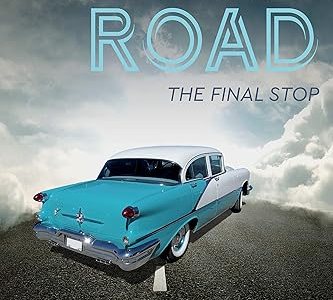
Today, I opened Eternal Road – The final stop randomly to page 143 and, with eyes closed, pointed to the page. The word closest to my finger is “direct.” This is our prompt today.