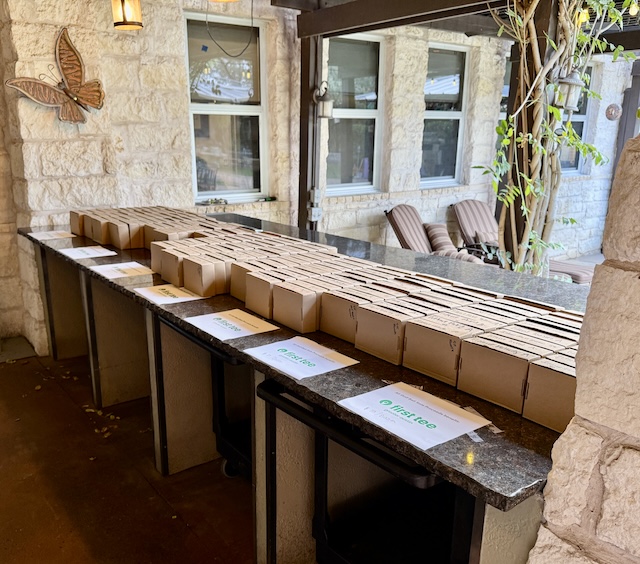
Today we are going to the Lakeway Activity Center to stroll around the All-City Garage Sale. Joe’s Bakery and Coffee Shop is catering for us. Our entertainment is Smokey Robinson and the Miracles.
Menu
Hop on. Let’s go
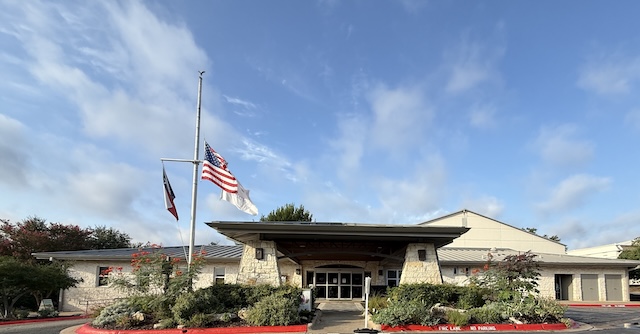
The activity center.
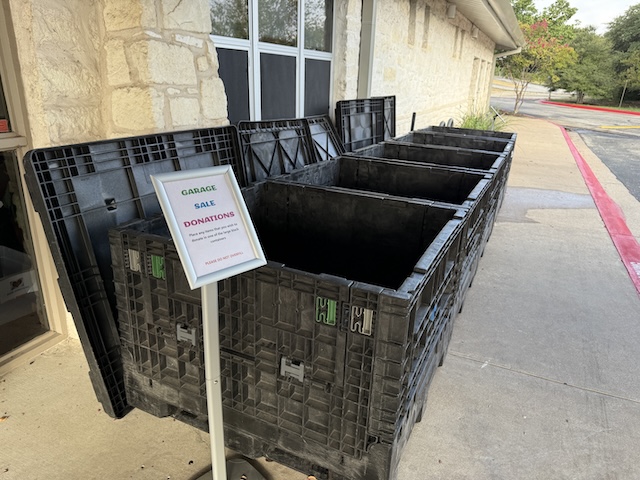
If you don’t want to take your unsold stuff home, you can donate it.
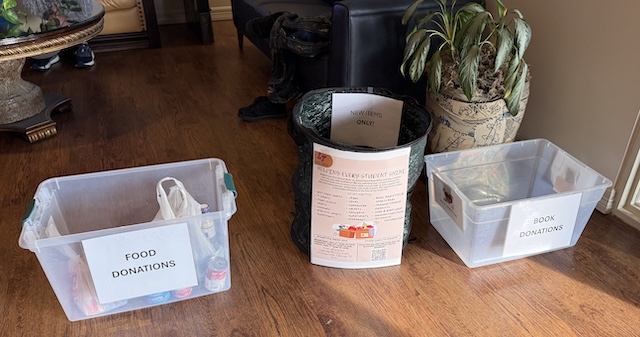
Speaking of donations, here are three ways to do it for an entry fee.
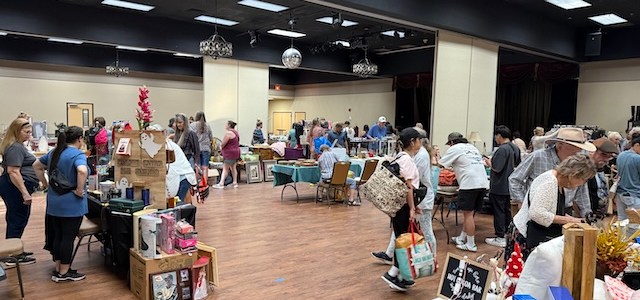
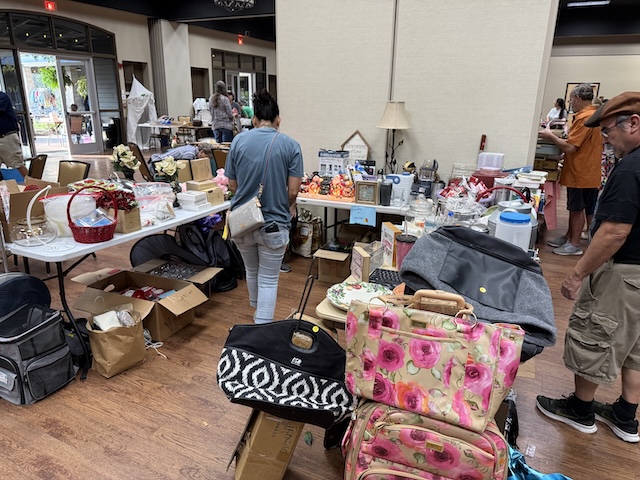
A quick look at the selling area.
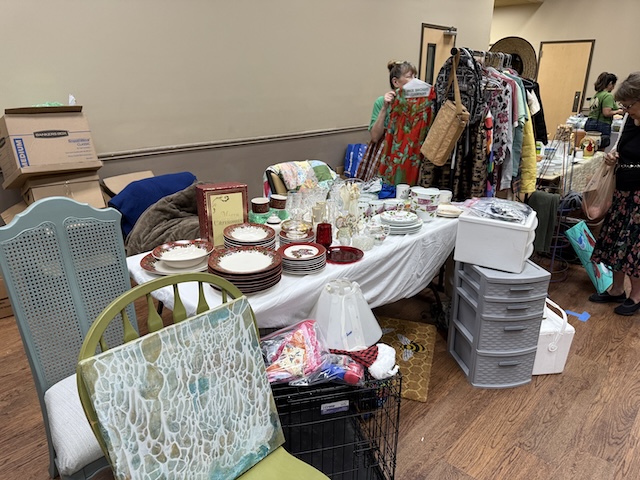
Lots of stuff and a chair.
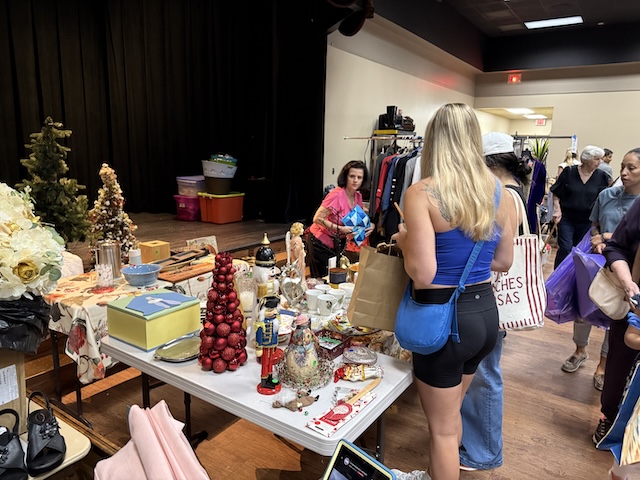
Here is something for everyone. A little Christmas, too.
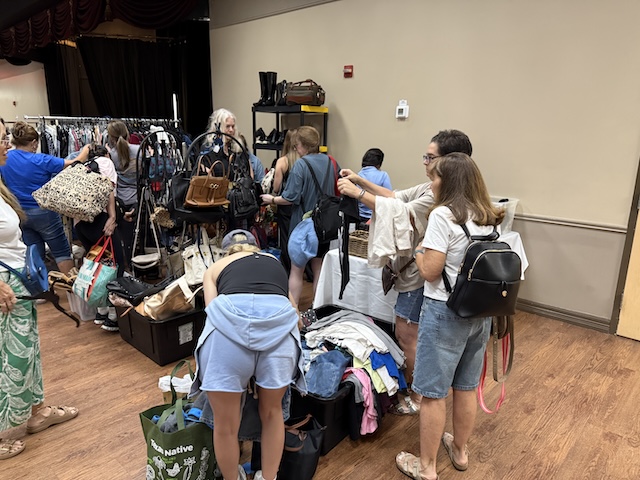
Looks like a handbag central with some clothes thrown in.
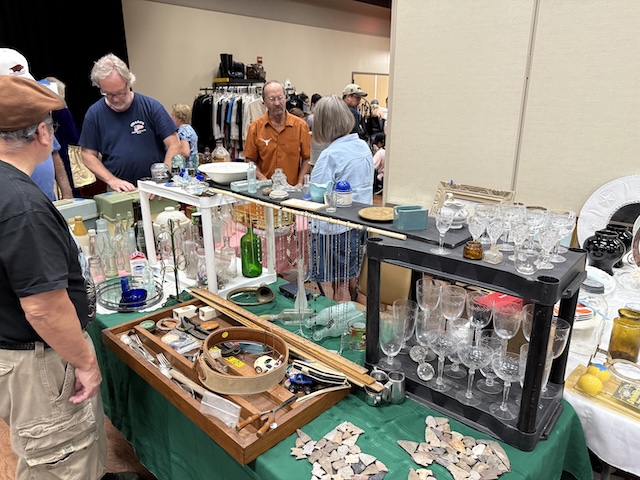
Drinkware, jewelry, and whatnot.
Mostly holiday stuff.
Handmade jewelry.
China and chairs.
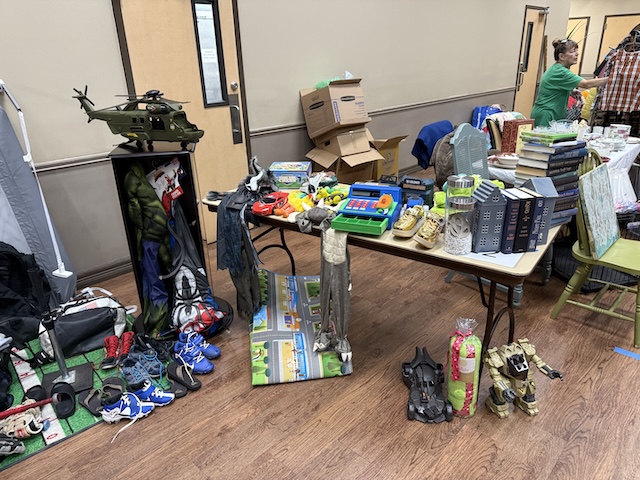
Toys.
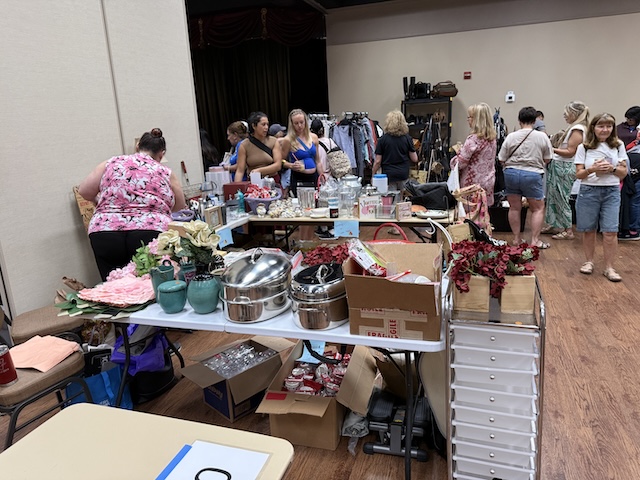
Cookware and trinkets.
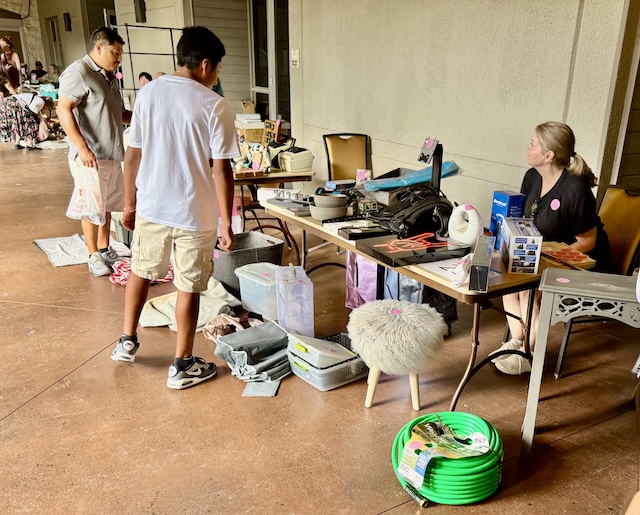
Novelties and a hose.
Golf balls. Lots of golf balls
Well, that is it. I hope you got a good idea of what the Garage sale was all about. Time for food and music. I hope you have a wonderful week.
The only reason survival is possible is coffee. That golden elixir is the only self-medication that stops the spike-driving, rail-laying, metal-on-metal sound in my head from caffeine withdrawal. The aroma alerts my senses to be prepared for soothing peace.
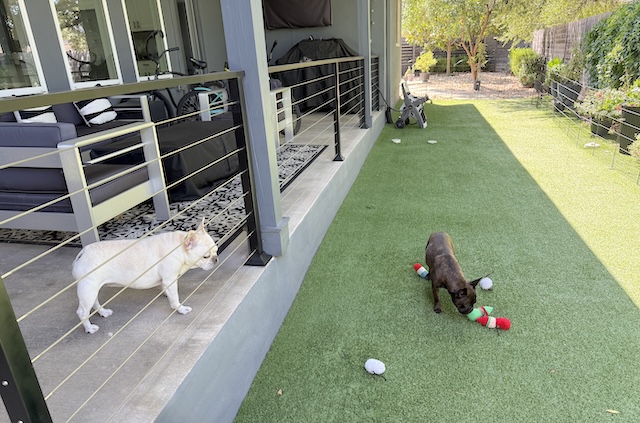
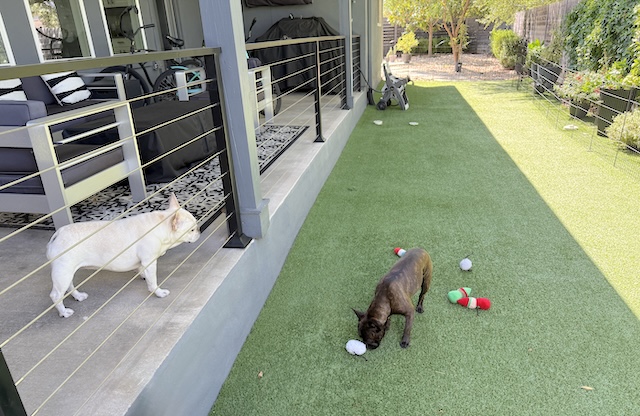
The first sip quells the noise. The second sip, as we are all too familiar, is accompanied by the falling grand piano in the Grand Canyon sound as it hits the floor, a combination of Westminster chimes of the doorbell and the bark to St. Louis, picture window smashing sound of Twiggy and Tempeste treating the idiot who can’t read the do not ring the doorbell sign as a threat to life and limb. A quick toss of peanut butter-stuffed Kong toys into the soundproof room, and a slam of the door hails the arrival of the peace train.
A check of the monitor shows Marc Antony, the Bulldog, with a clipboard and letter. Knowing conversation is futile, the security shutdown process is begun.
The B-2 bomber squadron and the F-35 escort must be called off. One call does it. The tank corps and gunboats are told to stand by. The Apache helicopters are rerouted. The electric shock fence is turned off. The drawbridge over the quicksand is lowered. The robot attack dogs returned to their charging station. The laser-guided machine guns on the roof are set to caution. The nest filled with rattlesnakes put away. The bucket filled with 1000 marbles is locked down. The tear gas canisters shut off. The electrified welcome mat set to off. The fall-away sidewalk into the pit filled with spikes is locked. The hornet’s nest closed. The water cannons are set to safety. Bear traps are set to off. Peregrine Falcons perched on the roof above front door fed. The vat of boiling oil set to warm. Monty Python’s Harmless Little Rabbit’s cage is closed. The front door is opened.
The Bulldog gives me the letter and clipboard, which is signed and returned. A fiver is clipped to the board, so the Bulldog smiles and makes his exit. Once inside, the letter seems to be from Linda Hill and says: Your Friday prompt for Stream of Consciousness Saturday is ‘reason.” Use it any way you’d like. Enjoy!
To see what others have done with the prompt, visit Linda’s post. Here is the link.
Before we cover the good news today, let’s not forget the innocent people who lost their lives at the hands of fanatic Islamists on September 11, 2001- twenty-five years ago. I planned not to run a good news feature on this tragic anniversary, but I feel we should keep focusing on the good news when there is so much bad news in this world.
Today’s good news story comes from Diario AS and was sent to me by Noelle Granger, reporter at large. Thanks, Noelle
Mexico protected more than 1 million monarch butterflies in 1980. Decades later, they’ve created a one-of-a-kind ecosystem
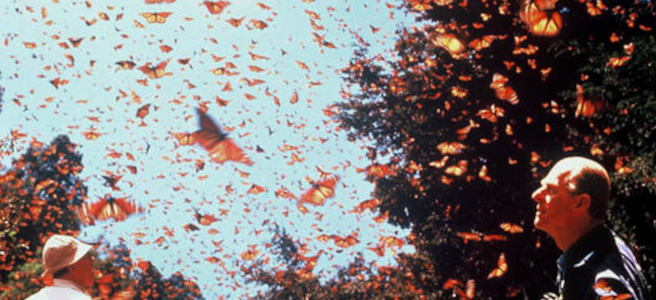
The monarch butterfly’s migration is one of nature’s greatest journeys. Every fall, millions of monarchs travel more than 2,500 miles from southern Canada and the northern United States to spend the winter in the cool oyamel fir forests of central Mexico.
But behind this extraordinary spectacle lies a story of government protection, scientific discovery, and ecological recovery that permanently changed conservation efforts across North America.
After the first federal conservation decrees were issued in 1980 to protect the butterflies’ overwintering grounds, authorities safeguarded forests that host well over one million monarchs. Those protections laid the foundation for a protected ecosystem that now covers more than 139,000 acres.
The 1980 decree that changed everything
For decades, the exact location of the monarch butterflies’ winter colonies in Mexico’s mountains remained known only to local communities. That changed in the mid-1970s, when international researchers working alongside Mexican scientists mapped key overwintering sites in the Sierra Chincua and Cerro Pelón mountains.
In 1980, Mexico’s federal government issued its first presidential conservation decrees to formally protect the forests where enormous monarch colonies gathered each winter. Individual sites often contained well over one million butterflies.
The move helped curb uncontrolled logging in some of the most important habitats and marked the beginning of what would eventually become the Monarch Butterfly Biosphere Reserve. Today, the protected area stretches across municipalities including Zitácuaro, Ocampo and Angangueo in the state of Michoacán, as well as Temascaltepec and San José del Rincón in the State of Mexico.
A UNESCO-recognized sanctuary
Covering 139,000 acres (56,259 hectares), the Monarch Butterfly Biosphere Reserve sits about 60 miles northwest of Mexico City in a mountainous region filled with dense forests. Its varying elevations create a range of microclimates that support numerous native plants and animals found nowhere else.
Every fall, millions — and in some years perhaps as many as a billion — monarch butterflies from across North America gather in small patches of forest within the reserve. Their bright orange wings blanket the trees so completely that entire hillsides appear to change color.
The sheer weight of so many butterflies can even bend tree branches.
When spring arrives, the monarchs begin their remarkable return journey north. Over the next eight months, the migration unfolds across four successive generations as the butterflies spread through the United States and into eastern Canada.
Despite decades of scientific research, one mystery remains unsolved: exactly how each new generation finds its way back to the same forests in central Mexico where its ancestors spent the winter.
The good news is that the Mexican government’s protection has ensured the Monarch’s survival. Today’s JohnKu talks about government action. I hope you have a super weekend.
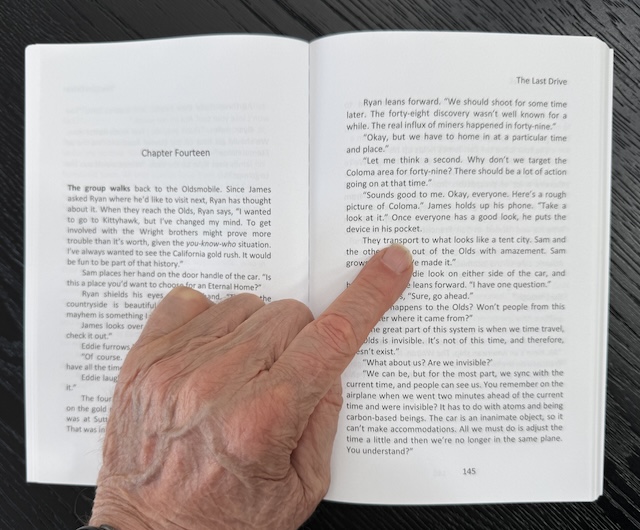
Today I randomly opened The Last Drive to page 145 and, with my eyes closed, pointed to it. The word closest to my finger is “transport.” This is our prompt today.
This post ran first on Labor Day 2015 and every Labor Day after that. I thought it was pretty good advice, so here it is again.
***
In honor of Labor Day, I’ve decided to boil the top ten list down to the most essential items. Let’s all remember those who make our lives easier and more pleasant. Of course, the remembrance includes us authors.
Top Ten Things Not to Do on Labor Day
10 through 1
On Labor Day, have fun, but do not drink and drive. If you do, at best, you are a fool. At worst, you could hurt or kill an innocent person, not to mention your guilty self.
Touching the two coffee icons on the coffee maker’s touchscreen sets in motion the solution to the sitting-on-the-back-of-a-rocket annoyance in my head from caffeine withdrawal. The soothing elixir flows from the dual spout into the mug. The aroma begins the healing process.
The first sip deadens the nerve endings to quell the rocket’s red glare. Of course, the second sip is accompanied by the cacophony of the doorbell’s Westminster chime and the crystal-crumbling barking of my beloved Hounds of Baskerville.
A toss of a new treat into the soundproof room and slamming the door brings a kind of hush that allows the brain to think. A quick look at the security monitor confirms the presence of Tweety Bird on the porch holding a clipboard and envelope. Knowing conversation is futile, the security shutdown process is begun.
The B-2 bomber squadron and the F-35 escort must be called off. One call does it. The tank corps and gunboats are told to stand by. The Apache helicopters are rerouted. The electric shock fence is turned off. The drawbridge over the quicksand is lowered. The robot attack dogs returned to their charging station. The laser-guided machine guns on the roof are set to caution. The nest filled with rattlesnakes put away. The bucket filled with 1000 marbles is locked down. The tear gas canisters shut off. The electrified welcome mat set to off. The fall-away sidewalk into the pit filled with spikes is locked. The hornet’s nest closed. The water cannons are set to safety. Bear traps are set to off. Peregrine Falcons perched on the roof above front door fed. The vat of boiling oil set to warm. Monty Python’s Harmless Little Rabbit’s cage is closed. The front door is opened.
Tweety Bird hands me the envelope and clipboard. Attaching a fiver, signing, and then handing it back brings a smile to Tweety’s beak. Thinking a bird needs more motivation, an anonymous tip on success is proffered as the door closes. “Stay afraid, but do it anyway. What’s important is the action.”
The letter is from Linda Hill. It reads:
Your Friday prompt for Stream of Consciousness Saturday is “motion.” Use it any way you’d like. Have fun!
Today’s story comes from the Times of India and was sent to me by Reporter-at-large Noelle Granger. Thanks Noelle
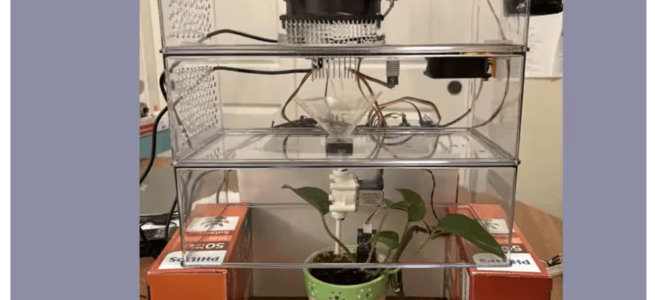
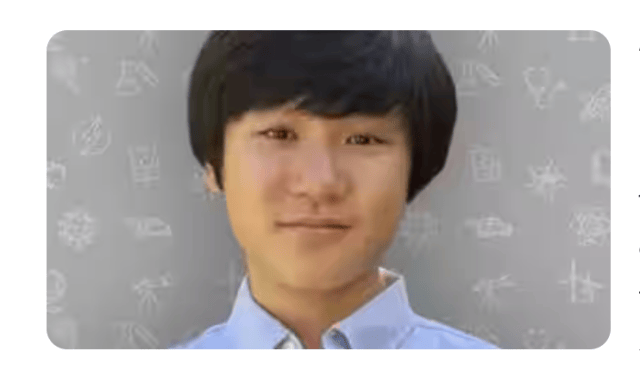
Meet Roy Kim, the 13-year-old Oregon student who designed a chamber that turns moisture in the air into water for drought-hit farms.
“Do what you can do tomorrow, today,” says Roy Kim, a 13-year-old Oregon student who has solved the water crisis for numerous farmers in the region. The teenager developed a device that turns moisture in the air into water, helping farmers access a sustainable and reliable water source in drought-prone areas, according to a report by Young Scientist Lab. As global warming continues, farming becomes increasingly difficult for farmers who rely on water to irrigate their crops. Most of the time, they rely on sources such as groundwater, surface water, and rainfall for this, but over the years, these sources can become depleted. This is why Kim created a device that uses the Peltier Module to turn moisture present in the air into water.
Understanding the module
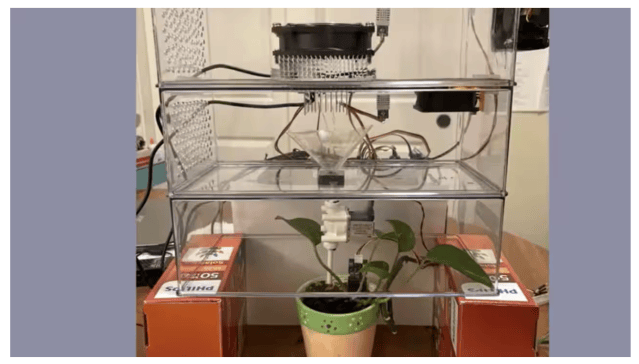
Kim created a device that uses the Peltier Module to turn moisture present in the air into water.
According to Kim, a Peltier module creates a temperature difference when electricity is applied, making one side hot and the other side cold. “This allows warm air to cool rapidly when it reaches the cold surface, causing water vapor in the air to condense into liquid drops,” he explained. After multiple tests and improvements, Kim finalized the device’s design. The air enters the chamber through the hot side, where a heating element connected to a filter module warms it. The warm air then moves through the fan to the cold side. Water droplets formed here sink due to the temperature difference between the surface and the air.
The collected water then flows into a funnel and is distributed to the plants through a valve. To ensure the plants get the right amount of water, not too much, a soil moisture sensor is placed in the soil to determine when the plants need water. “In addition, temperature and humidity sensors monitor the environment, and if conditions become too extreme, they automatically adjust the airflow to maintain efficient water production,” said Kim. After testing, the device produced 10ml of water in two hours. Its highest efficiency was 135.8 g per kilowatt-hour. “Through this project, I didn’t just create water. I combined natural processes with engineering to develop a sustainable solution for farming,” he added.
Entering competition
Roy Kim, a student of Whitford Middle School in Beaverton, Oregon, entered the 3M Young Scientist Challenge, an annual top middle school science competition in the US run by 3M and Discovery Education, which challenges students in grades 5 to 8 to use problem-solving and innovation to fix everyday issues. When asked about why he wanted to enter the challenge, Kim said, “I entered the 3M Young Scientist Challenge because I wanted to showcase my invention to people around the world. If more people are aware of this problem and the potential solution, the problem might be able to de-escalate.”According to the US Department of Agriculture, between 2010 and 2020, agriculture was a major user of ground and surface water in the US, with irrigation accounting for 47% of the nation’s total freshwater withdrawals. Approximately 212,714 farms in the country depend on natural water sources for irrigation. But with Kim’s invention, the number can be decreased gradually. 15 years from now, he hopes to develop even more such solutions, as he wants to become a successful engineer who solves pressing problems across the globe, specializing in environmental engineering. He is currently among the top 10 national finalists in the challenge. The final event and winner announcement will take place on October 12-13, 2026.
The good news in this story is that an intelligent person converted known technology into a practical solution for water conservation. Today’s JohnKu talks about finding solutions. I hope you have a beautiful Weekend.