
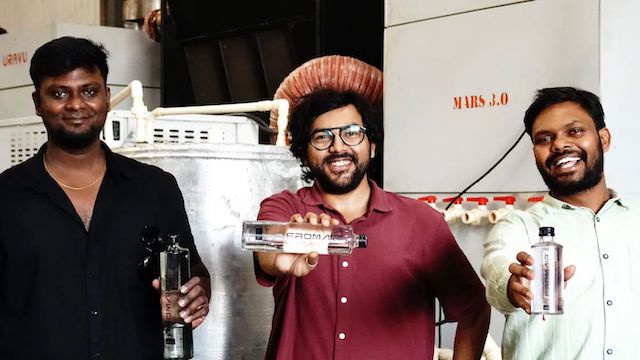
Indian Engineers Tackle Water Shortages with Star Wars Tech in Kerala
By Andy Corbley –
When a severe water shortage hit the Indian city of Kozhikode in the state of Kerala, a group of engineers turned to science fiction to keep the taps running.
Like everyone else in the city, engineering student Swapnil Shrivastav received a ration of two buckets of water a day collected from India’s arsenal of small water towers.
It was a ‘watershed’ moment for Shrivastav, who, according to the BBC, had won a student competition four years earlier on the subject of tackling water scarcity, and armed with a hypothetical template from the original Star Wars films, Shrivastav and two partners set to work harvesting water from the humid air.
“One element of inspiration was from Star Wars, where there’s an air-to-water device. I thought, why don’t we give it a try? It was more of a curiosity project,” he told the BBC.
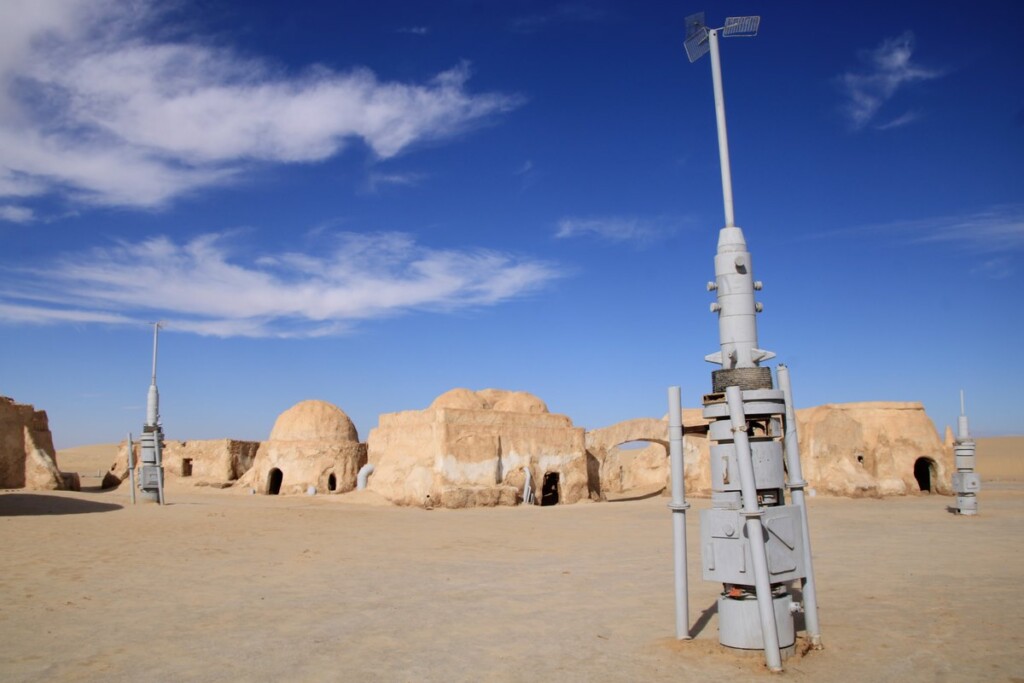
According to ‘Wookiepedia’ a ‘moisture vaporator’ is a device used on moisture farms to capture water from a dry planet’s atmosphere, like Tatooine, where protagonist Luke Skywalker grew up.
This fictional device functions according to Star Wars lore by coaxing moisture from the air through refrigerated condensers, which generate low-energy ionization fields. Captured water is then pumped or gravity-directed into a storage cistern that adjusts its pH levels. Vaporators can collect 1.5 liters of water per day.
If science fiction authors could devise the particulars of such a device, Shrivastav must have felt he had a good chance of succeeding. In 2019, he and colleagues Govinda Balaji and Venkatesh Raja founded Uravu Labs, a Bangalore-based startup.
Their initial offering is a machine that converts air to water using a liquid desiccant. The desiccant absorbs moisture from the air, and sunlight or renewable energy heats it to around 100°F. The captured moisture is released into a chamber, where it’s condensed into drinking water.
The whole process takes 12 hours but can produce a staggering 2,000 liters, or about 500 gallons of drinking-quality water per day. Uravu has since had to adjust course due to the cost of manufacturing and running the machines—it’s just too high for civic use with current materials technology.
“We had to shift to commercial consumption applications as they were ready to pay us, and it’s a sustainability driver for them,” Shrivastav explained. This pivot has so far been enough to keep the start-up afloat, and they produce water for 40 different hospitality clients.
Looking ahead, Shrivastav, Raja, and Balaji are planning to investigate whether the desiccant can be made more efficient. Can it work at a lower temperature to reduce running costs, or is there another material that might prove more cost-effective?
They’re also looking at running their device attached to data centers in a pilot project that would see them utilize the waste heat coming off the centers to heat the desiccant.
The good news in this article is that smart people are exploring ideas that seem more fiction than reality to solve real problems. Today’s JohnKu talks about the potential of the human brain. I hope you have a wonderful weekend.
Ingenuity by John W. Howell © 2024
An idea born,
From a sci-fi writer’s brain. . .
Is now feasible.
 “Hey, Twiggy. What you got there?”


 A move to the coffee machine is necessary to find out what is taking so long. An investigation turns up the cause. The communication screen clearly asks if a regular cup or something special is required. Neglecting to make a choice sends the machine into hibernation. The original settings called for a regular 10 oz delivery. The machine must have taken some advice from the WordPress Happiness Engineers and decided to do something different. So the question is answered, and in a happy moment, the cup is delivered.