
Today’s good news comes from the Good News Network
Breakthrough in Recycling EV Batteries Can Recover 100% of Aluminum and 98% of Lithium Thanks to Swedish Scientists
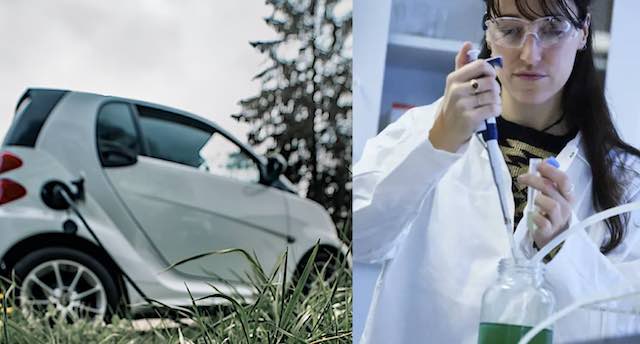
Swedish researchers say they have developed a new method of recycling batteries from electric vehicles that allows recovery of 100 percent aluminum and 98 percent lithium.
Researchers at Chalmers University of Technology have presented an efficient way to recycle metals from spent batteries and, at the same time, minimize the loss of valuable raw materials such as nickel, cobalt, and manganese.
Furthermore, no expensive or harmful chemicals are required in the process because the researchers use oxalic acid—an organic acid that can be found in the plant kingdom.
Rouquette produces both the powder and the liquid in something reminiscent of a kitchen mixer. Although it looks as easy as brewing coffee, the exact procedure is a unique scientific breakthrough. By fine-tuning temperature, concentration, and time, the researchers came up with a new recipe for using oxalic acid, an environmentally friendly ingredient that can be found in plants such as rhubarb and spinach.
“We need alternatives to inorganic chemicals. One of the biggest bottlenecks in today’s processes is removing residual materials like aluminum,” says Martina Petranikova, Associate Professor at the Department of Chemistry and Chemical Engineering at Chalmers. “This is an innovative method that can offer the recycling industry new alternatives and help solve problems that hinder development.”
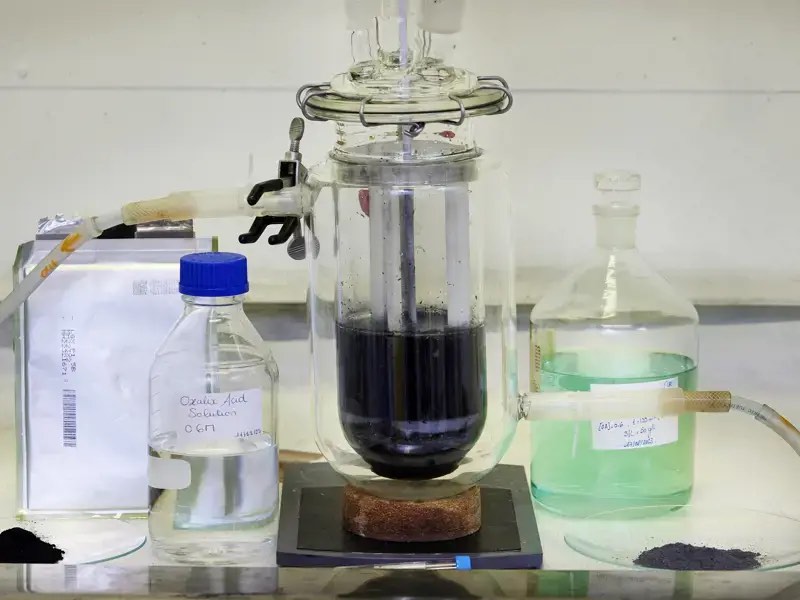
The aqueous-based recycling method is called hydrometallurgy. In traditional hydrometallurgy, all the metals in an EV battery cell are dissolved in an inorganic acid. Then, you remove the “impurities” such as aluminum and copper. Lastly, you can separately recover valuable metals such as cobalt, nickel, manganese, and lithium. Even though the amount of residual aluminum and copper is small, it requires several purification steps, and each step in this process can cause lithium loss.
With the new method, the researchers reverse the order and recover the lithium and aluminum first. Thus, they can reduce the waste of valuable metals needed to make new batteries.
The latter part of the process, in which the black mixture is filtered, is also reminiscent of brewing coffee. While aluminum and lithium end up in the liquid, the other metals are left in the “solids.” The next step in the process is to separate aluminum and lithium.
“Since the metals have very different properties, we don’t think it’ll be hard to separate them. Our method is a promising new route for battery recycling – a route that definitely warrants further exploration,” says Rouquette, who published her results in the journal Separation and Purification Technology.
Petranikova’s research group is involved in various collaborations with companies to develop electric car battery recycling and is a partner in major research and development projects, such as Volvo Cars’ and Northvolt’s Nybat project.
The research was funded by the Swedish Energy Agency, BASE Batteries Sweden, Vinnova.
The good news here is the extensive mining of precious metals needed for EV batteries can be supplemented with recycled materials, offsetting the problem of supply and mining pollution. Today’s JohnKu talks about one issue with EV proliferation.
Electric Vehicles by John W. Howell © 2023
To power EVs,
Electricity needs rise . . .
Where’s it coming from?

Good find, John. Timely for me because i just read an article about Toyota researching solid state batteries … they hope to have available in 2027.
LikeLiked by 1 person
Whatever type of battery is used needs to answer the mineral question. Thanks, Frank.
LikeLike
We need this, badly. Ever since I learned about the batteries these EV’s use and how our emergency personnel do not even possess the equipment to deal with them in the event of an accident, I became even more dubious about the matter.
Good story, Boss.
LikeLiked by 3 people
The rush to green that is the progressives obsession may kill us all. Glas sombody is working on ways to minimize the damage.
LikeLiked by 2 people
You’re right. You’d swear these vehicles were made in a unicorn factory the way they’re selling it.
LikeLiked by 1 person
I like the concept but the devil is in the details.People in California are being asked not to charge their cars during peak electrical usage times.
LikeLiked by 2 people
Yeah, there’s so much nonsense involved. Too much if you ask me.
LikeLiked by 1 person
Way too much.
LikeLiked by 1 person
my brain melted alongside the pulverized materials but i took away the good news together with my overworked synapses!!
LikeLiked by 2 people
I would love to see the pulverizer.
LikeLiked by 1 person
Remarkable!
LikeLiked by 2 people
It is Annette. Thank you.
LikeLiked by 1 person
How wonderful that they are coming up with a solution. EV does not entice me whatsoever because of this very thing. If they have found a solution, all the better.
Excellent topic, John.
LikeLiked by 3 people
Thank you, Dale. I’m with you.
LikeLiked by 1 person
😊
LikeLiked by 1 person
This is very good news, John. The best part is, “No expensive or harmful chemicals are required.” If it will help the cause, they can have my spinach.
LikeLiked by 3 people
It would solve the resource problem for sure. Thanks for offering your spinach. I’m sure the group will consider it. 😁
LikeLiked by 1 person
This is a great story. I like the idea of any renewable resource and the acid can be farmed. That is a nice option for farmers. Less junk in the landfill is another benefit.
LikeLiked by 1 person
I see nothing but upside to this process. Thanks, Craig.
LikeLiked by 1 person
A fantastic breakthrough for certain! Thanks for sharing this great news, John. Have a wonderful weekend. Hugs 🤗💕🙂
LikeLiked by 1 person
Thank you, Harmony. I hope your weekend is filled with peace. 🤗
LikeLiked by 1 person
This is certainly good news. Like Dale, I’m not interested in owning an EV. I cringe at the thought of worrying about something else losing its charge! Thanks for sharing, John.
LikeLiked by 2 people
I’m with you and Dale on electric cars, Jill.
LikeLiked by 2 people
😁
LikeLiked by 1 person
So true, Jill. Who needs that worry?
LikeLiked by 1 person
Right! What if you have to evacuate for a hurricane and there’s no power!😳😳
LikeLiked by 1 person
Good point
LikeLike
This is a good week for a Good News story, John. Thanks!
LikeLiked by 1 person
Thanks, GP.
LikeLiked by 1 person
Very cool. Keep wondering if I should go EV one day. Probably not for a few years though.
LikeLiked by 2 people
Hard to predict for sure.
LikeLike
Renewable, recyclable global products are a huge part of fighting climate change and keeping our only globe livable. If our products and infrastructure are not renewable, recyclable, and environmentally responsible we will suffer for it. This is the model for a sustainable future.
LikeLiked by 1 person
I agree. Loads more work needs to be done on sustainable power too.
LikeLiked by 1 person
Very interesting, John, and I love your JohnKu, too! 😀 ❤
LikeLiked by 1 person
Thank you, Marcia. I appreciate your comment. Glad you liked it.
LikeLiked by 1 person
Very good news indeed!
LikeLiked by 1 person
Yes it is Susie. Thank you.
LikeLiked by 1 person
This is fantastic, John. It will bring down the cost of the batteries. Now if there were only more fast charging stations!
LikeLiked by 1 person
Someone else is working on a battery that charges in five minutes.
LikeLiked by 1 person
This is very hopeful news, John. Thank goodness for these scientists – and for you alerting us to reasons for hope. 😊
LikeLiked by 1 person
Yes. There are a number of scientists working on the issures of recycle and longer lasting, quick charging batteries. Thanks Gwen. Have a super weekend.
LikeLike
Good news, John — thanks for sharing (and have a wonderful weekend!)
LikeLiked by 1 person
You as well Debbie. 😁
LikeLiked by 1 person
Maybe they can begin by recycling the Electric car huge grave yard in France then John… When we understand the amount of energy and resources it takes to mine these minerals for huge batteries… One has to question.. Lets hope Light at the end of the tunnel
Thank you for sharing x
LikeLiked by 1 person
This is a start. You should see the EV graveyard in China.
LikeLiked by 1 person
Yes That is even bigger I know… We are getting lots of Electrical Car fires with some of these batteries catching fire here in the UK… Including some public transport buses… Not good x
LikeLiked by 1 person
Yes and sometimes the first responders don’t know how to handle the fires.
LikeLiked by 1 person
Correct John, they do not behave as normal fires
LikeLiked by 1 person
W are conducting our own durge.
LikeLiked by 2 people
👍
LikeLiked by 1 person
This us good news, John:) I hope they find more ways to use the things we usually just throw away.
LikeLiked by 1 person
I agree. It would be terrific to stop having the need for landfills.
LikeLiked by 1 person
Very good news, John, and so timely. My husband often talks about getting an EV vehicle but I’m still partial to hybrids like our Prius. I don’t like to put all my eggs in one basket if I don’t have to 🙂
LikeLiked by 1 person
I think you are wise.
LikeLiked by 1 person
This will help, that’s for sure. The more precious metal that gets recycled, the better.
LikeLiked by 1 person
Yes. All that digging and pollution can’t be good for the environment.
LikeLiked by 1 person
Exactly. I’ve read on CNET that, because of the energy used to mine and prepare the metals, it takes 3 years of operation for the CO2 an EV is responsible for be less than a gas vehicle.
LikeLiked by 1 person
Wow that is amazing, Tim. Thanks for sharing.
LikeLiked by 1 person
I don’t have any empirical data on that, John, but CNET is not a political organization, so I kind of trust their data. 😉
LikeLiked by 1 person
Yeah i wouldn’t expect you to have the research handy. I think CNET can be trusted.
LikeLiked by 1 person
Fantastic news! Hubby hasn’t had a positive opinion about the EV batteries, but this may change his mind.
LikeLiked by 1 person
At least the promise is there for recycling.
LikeLiked by 1 person
That is good news, John. Now if someone would discover what to do with all those enormous wind turbine blades. :
LikeLiked by 1 person
Yeah. It would be nice to get rid of them.
LikeLiked by 1 person
News like this makes the future a little brighter.
LikeLiked by 1 person
It does. Thank you, Pam.
LikeLiked by 1 person
This is good news. I just wish they would do a better job with EVs!!! The needing constant charging that takes time, the fires that can’t be put out, etc. What is this: the dark ages?! 🙂
LikeLiked by 1 person
The technology is not ready for the kind of endorsements given by the Biden administration. The war on fossel fuels conducted by them will come back to bite us in the butt in my opinion
LikeLiked by 1 person
I agree with this. Eagerness before brains is never a good idea.
LikeLiked by 1 person
😁
LikeLiked by 1 person
That’s great news, John. Science can do a lot to create messes and it’s wonderful when they also figure out how to clean them up. 🙂
LikeLike
I agree, Diana. Great observation.
LikeLiked by 1 person
I’m always grateful to scientists who figure out solutions to our earth-related challenges. Thanks for sharing this article, John!
LikeLiked by 1 person
Since folks are moving way too fast on the war against fossil fuels I’m glad some adults are taking a serious look at the downsides of that move which is a tremendous waste of natural resources. Thanks, Barbara.
LikeLiked by 1 person
Yes
LikeLiked by 1 person
Glad to hear that there is some advancements in green energy. Thanks for sharing, John.
LikeLiked by 1 person
Me too. Dealing with those minerals is a real problem.
LikeLiked by 1 person
Terrific!
LikeLiked by 1 person
I agree. 😁
LikeLiked by 1 person
This is definitely good news, John! And I love your haiku too!
LikeLike
Thank you, Lauren.
LikeLiked by 1 person
😃
LikeLike
Impressive news, dear John! How funny, the Associate Professor should be Russian. 🙂 Anyway, at least something that does not damage our planet…unlike weapons they use every day. 🤨😊🍤🍤🍤🍻🎃
LikeLiked by 1 person
Shows there are great people everywhere.
LikeLiked by 1 person
😉😉😉
LikeLiked by 1 person
😊
LikeLiked by 1 person
Excellent article, John. It’s this kind of news that gives me faith in science that mankind can solve the problems facing society regarding clean energy and preserving/protecting natural resources. Now, if mankind can only learn to get along, that’s the real challenge. Nice post, John.
LikeLiked by 1 person
Yes, Getting along is a big problem, Steve.
LikeLiked by 1 person
Interesting info and good to know!
LikeLiked by 1 person
Good to know someone is working on the resource issue. They say the mining CO2 and power emissions take three years of EV operations to offset. That’s three years for every car.
LikeLiked by 1 person
Good for them! The world keeps innovating. It’s stupendous. Makes me think we’ll all be okay. 🙂
LikeLiked by 1 person
A good thought.
LikeLiked by 1 person
#Hopeful 😉
LikeLiked by 1 person
Yes indeed.
LikeLiked by 1 person
Exactly – Re: the JohnKu
Hopeful message, thanks John!
LikeLiked by 1 person
Thank you, Resa. 🤗
LikeLiked by 1 person