
Rare duck breeding success gives hope for species
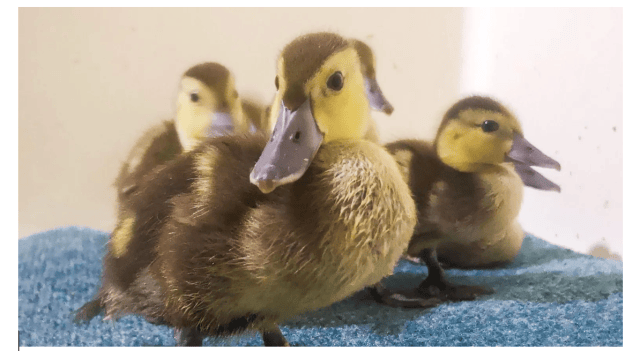
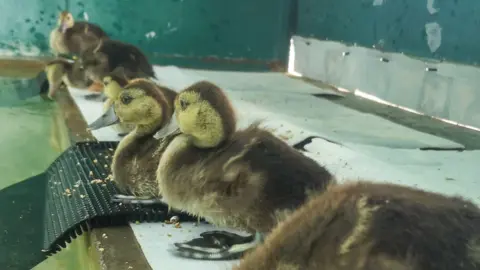
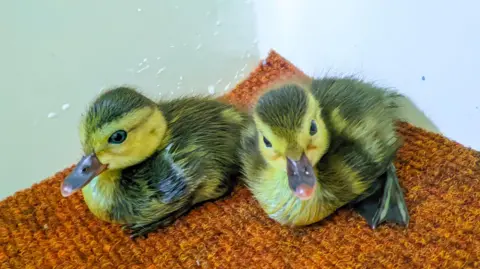
Six of the world’s rarest ducks have reached adulthood after conservationists successfully raised them from eggs collected in the wild.
The Madagascar pochards were hatched after their eggs were carried 44km (27 miles) on foot before being taken to a specialist breeding center in Madagascar. The species was once thought to be extinct before being rediscovered in 2006.
The Jersey-based Durrell Wildlife Conservation Trust carried out the work, which it said gave scientists another way to protect the species when nests were threatened.
Roland Digby, a conservation biologist at Durrell, said: “This is an important milestone for the Madagascar pochard.”
 Durrell Wildlife Conservation Trust
The trust said the breakthrough could be particularly important because the Madagascar pochard survived at just one known wild nesting site worldwide.
Digby said: “We’ve shown that, when conditions demand it, we can safely collect eggs from the wild, transport them on foot and successfully incubate and rear healthy birds.”
The eggs were carried in a cooler before being transported to Durrell’s specialist breeding center in Antsohihy in northern Madagascar.
 Durrell Wildlife Conservation Trust
Since the species’ rediscovery, Durrell said it had led an international recovery program combining habitat restoration, captive breeding and reintroductions.
About 180 birds now exist across captive and wild populations, including 51 at the Durrell breeding center, 82 at Bemanevika and 74 at Lake Sofia.
Durrell chief executive Rebecca Brewer said: “For many people, this is a story about six ducks.
“For us, it’s about what long-term conservation can achieve.”
The good news in this story is that success is not measured in large gains, but in small steps. Today’s JohnKu talks about persistence in conservation. I hope you have a beautiful weekend.
Virtue by John W. Howell © 2026
It is a long road,
To nature conservation . . .
Persistence is key.























Another brilliant good news story John and Noelle and we need as many as we can get. hugsx
LikeLiked by 2 people
I agree, Sally. The more the better. 😊
LikeLiked by 2 people
Very cool. Curious how they were rediscovered.
LikeLiked by 2 people
Yup. 😊
LikeLike
Love to see this.
LikeLiked by 1 person
I do too, Wayne. I’m always impressed when humans help nature make a comeback. Thanks for the visit
LikeLiked by 1 person
Absolutely! That was one good thing about Covid, when humans were locked up in isolation and nature started to thrive.
LikeLiked by 1 person
Yes, the Earth got a breather.
LikeLiked by 1 person
A fascinating story. In our crazy, unsettling world, we need all the good news we can get.
LikeLiked by 1 person
I agree, Neil. There is too much bad news these days. Gotta see the good. Thanks.
LikeLiked by 1 person
Always love nature “good news” stories. So refreshing to learn of any people out there who are still willing to take these kind of very small steps to achieve big, wonderful things for our world, John.
LikeLiked by 1 person
I’m with you, Bruce. It is always heartwarming to see folks helping nature recover.
LikeLiked by 1 person
Really uplifting news.
LikeLiked by 1 person
It is, Craig. Thank you.
LikeLiked by 1 person
This is another story that warms your heart and leaves you feeling full of hope. Thanks, John.
LikeLiked by 1 person
I’m so glad it does, Esther. Thank you.
LikeLiked by 1 person
Persistence always. Great story, John. And aren’t they the cutest little things?!
LikeLiked by 1 person
They are Lois. Thanks.
LikeLiked by 1 person
Wonderful news. But it makes me wonder what happened to the duck that laid the eggs.
LikeLiked by 1 person
Good question. They usually sit on the eggs.
LikeLiked by 1 person
This is heartwarming, John. It’s so good to learn that people are working to help the Madagascar pochards recover. Your Johnku says what’s good for conservation well.
LikeLiked by 1 person
Thank you, Tim. 😀
LikeLiked by 1 person
😊
LikeLiked by 1 person
Even small gains can have big rewards!
LikeLiked by 1 person
Yes they can.
LikeLiked by 1 person
Nature conservationists do amazing work!
LikeLiked by 1 person
Always impressed by what they do.
LikeLiked by 1 person
Carrying wild duck eggs 27 miles on foot to save a species is unbelievable dedication! Backpacking hope into reality. Your JohnKu captures it perfectly, John—persistence really is everything in conservation.
LikeLiked by 1 person
😀
LikeLiked by 1 person
What exciting news! I’m a huge fan of the Durrell Wildlife Conservation Trust, having had my interest peaked by the PBS series the Durrell’s in Corfu and reading one of Gerry’s books. Gerry revolutionized zoos and conservation throughout his life.
LikeLiked by 1 person
Thanks for sharing that information, Monika.
LikeLiked by 1 person
The Durrell trust is a fabulous organization. And your good news story underscores that.
LikeLiked by 1 person
😀
LikeLiked by 1 person
That is truly amazing, John.
Perfect JohnKu, of course!
LikeLiked by 1 person
Thank you, Dale. 😀
LikeLiked by 1 person
😊
LikeLiked by 1 person
😄
LikeLiked by 1 person
makes me think twice about eating the duck eggs in the fridge right now… I am so happy for these duckies! xx
LikeLiked by 1 person
Too late to hatch them. Might as well eat them.
LikeLiked by 1 person
That’s wonderful!
LikeLiked by 1 person
It is, Dawn.
LikeLike
Wow, that’s a long way to haul them.. Lovely breed and soooo beautiful. Do they stay that yellow? xx
LikeLiked by 1 person
I don’t know if they do stay yellow. Looks like research is needed.
LikeLike
These are cute little buggers, I’m glad they’ve got such great people in their corner. Because you’re right, it requires a relentless pursuit to attempt to save a species. Nature is both delicate and ravenous, and so the steps must be walked with that very same determination.
You did it again Boss
LikeLiked by 1 person
Thank you, Pilgrim. 😀
LikeLiked by 1 person
Thank YOU
LikeLiked by 1 person
😊
LikeLiked by 1 person
Good news about the ducks.
LikeLiked by 1 person
It is. Thanks, Pat.
LikeLiked by 1 person
Conservation efforts often start small and grow over time.
LikeLiked by 1 person
We like it when they grow. Thanks, Pete.
LikeLiked by 1 person
It is certainly wonderful when a endangered species can be saved. It is a great story.
LikeLike
[…] Friday JohnKu – AKA – TGIF – Fri-Yay/Good News […]
LikeLiked by 1 person
Thank you, Sally.
LikeLike
Thanks Sally
LikeLike
This is positive news, we like ducks 🦆
LikeLiked by 1 person
Great.
LikeLike
What an uplifting event! And those 44lkm on foot might not be that far, but to carry so many Iive eggs, it’s an accomplishment 🙂
LikeLike
A beautiful share of some always needed, good news! Thanks John and Noelle. 🥰
LikeLiked by 1 person
Thank you, Debby. 😄
LikeLiked by 1 person
Most welcome 😋
LikeLiked by 1 person
A long road, yes and bless those who take it. Thank you for sharing good bird news. 🕊️
LikeLiked by 1 person
😊
LikeLiked by 1 person
Wonderful!
Sad it had to get to the point of saving them, but I’m happy it is a happening reality.
Seems restoring nature is a longer process than destroying it… as noted in the JohnKu.
Thank you for this John! The ducklings are adorable.
🐣🦆 🐣🦆
LikeLiked by 1 person
They are adorable and look like they are thriving. 😀X
LikeLiked by 1 person
This is a great story, John. It’s always good to read these small triumphs by determined and committed people. It restores your faith in mankind.
LikeLiked by 1 person
It does restore faith, Robbie. Thank you
LikeLike
🙏🌈
LikeLiked by 1 person
😊
LikeLike
Such a wonderful story, and a perfect JohnKu.
LikeLiked by 1 person
😊
LikeLiked by 1 person