If the man on the street had to guess the best metric for healthy aging, they might say blood pressure, cholesterol levels, lean muscle mass, blood triglycerides, or even telomere length if they follow aging science closely.
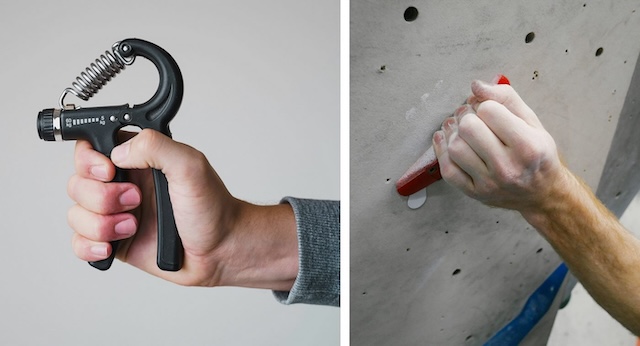
But it turns out that one of the best is grip strength. According to Joshua Davis at the University of Derby, UK, this relatively underdeveloped conditioning area is increasingly recognized as one of the most reliable markers of human health.
Grip strength is associated with positive health outcomes, whether measuring for diabetes risk or depression, and you don’t need any expensive equipment to measure it. Davis recommends you simply pop the top off a can of tennis balls.
“Being able to maintain a maximal squeeze on something like a tennis ball for 15-30 seconds would be a good standard to strive for,” Davis told the BBC.
It’s not necessarily the case that being the one in the house whose hands are the most capable of opening a stubborn pickle jar means you’ll live the longest. Instead, it’s the case that grip strength is an efficient proxy for total muscle conditioning, which is itself an excellent proxy for overall nutrition, physical activity, and disease profiles. In other words, it’s a proxy for a proxy.
For example, the BBC report cites one study that found grip strength to be an effective predictor of sarcopenia, the decline in muscle conditioning associated with aging, strongly correlated with mortality. Another study found that of those in middle age who had their grip strength measured in 1965, the ones who lived to be 100 were 2.5 times more likely to have had grip strength results in the highest third.
Yet another paper found that grip strength has a prognostic value for human longevity that exceeds blood pressure, one of the vital signs controlled for in every hospital patient.
It’s almost certainly not the case that developing grip strength alone will protect against disease and early mortality; as mentioned above, it’s a proxy for overall muscle conditioning.
There’s an old saying in medicine: “Break your hip, die of pneumonia.”
Muscle mass is one of the best defenses against the ravages of age. It cushions the joints and bones and provides protection from falls and the subsequent fractures that gave rise to this ghastly adage. It also soaks up excess glucose in the blood to reduce the risk of developing type 2 diabetes or insulin resistance.
The BBC also spoke with Mark Peterson, a physical medicine and rehabilitation professor at the University of Michigan. Peterson conducted a 2022 study that found that deep down in our DNA, patterns of methylated molecules in those with weak grip strength indicated they were aging at an accelerated rate.
If you don’t have a grip dynamometer to measure precisely how much force your handshake can exert, you can always perform the tennis ball test.
The good news in this article is not the grip as an indicator of overall health, but the idea of the benefits of continuing exercises to maintain muscle mass. Is it worth it? Yes. Today’s JohnKu talks about health. I hope you have a wonderful weekend.
Western India is home to one of the hottest deserts on Earth, and the residents of the western states of Rajasthan and Gujarat have traditionally used architecture to keep cool.
Utilizing principles of thermodynamics, one house in the city of Bharuch, where temperatures can hover at 110°F for days during the summer, stays cool all day and all summer without ever needing the air conditioning switched on.
In fact, the building’s interior is a breezy, green, “introverted space” that passively cools the air inside by a whopping 18°F, all using simple science.
“We used the direction of the winds, design, and cooling materials to lower the heat of the house,” Samira Rathod, the principal architect of the ‘Cool House’ and founder of Samira Rathod Design Atelier (SRDA), told The Better India, reporting on the story.
“The plot had three buildings around it and a road on one side. The only view that the house would have was the neighbor’s building. An introverted house was a good choice in that sense. It is basically one where the house opens up when you go inside it. It would look like a rather closed structure from the outside,” she explains.
Indeed, it might even be called depressing, as its front door is hidden between two giant, 18-inch-thick facades of gray and black. But inside, a design reminiscent of a railroad track sees the rooms divided on either side of a giant split in the house, built to align with the current of the wind off the ocean.
Bharuch is situated on the Indian Ocean, and despite the scorching temperatures, a breeze is present throughout much of the city at various times during the day. The narrow slit in the house leverages the Venturi effect, which states that the narrower the space an element must pass through, the faster and colder it becomes.
The principle can be seen in human breath, which emerges hot through an open mouth but cool through pursed lips. The same effect can be seen in rivers, where narrow channels cause the water to speed up and form rapids, while wide, flat lands cause the water to slow down.
The wind from the sea enters the split and hits an interior courtyard where a pool of water cools it down further. Entering the 10,500 square foot home interior, a second courtyard aids in circling it around each room, where the family lives with three generations.
“The house looks inwards and we have created courtyards with trees so it feels like you are looking outside rather than inside,” said Rathod.
Mirai House of Arches in Bhilwara – credit Sanjay Puri Architects
GNN has previously reported on Indian architecture in this part of the country. Natural designs like envelopes, air channels, and even “wind towers” could, and probably should, become standard designs in parts of the world where temperatures are predicted to rise, such as the southwest United States or Southern Europe.
In Rajasthan’s city of Bhilwara, a “House of Arches” ensures that no part of the building is exposed to the sun thanks to a building envelope that provides shade and air circulation.
The science lies in the separation of the envelope from the house itself. Even as the sun’s rays heat the envelope, wind and moisture evaporation can penetrate the space between the house and the envelope to reduce the radiant heat that enters the living areas.
The good news in this story is that it is possible to engineer structures with features that can reduce the need for electricity for cooling. Today’s JohnKu talks about new thinking. I hope you have a lovely weekend.
For 25 years, a local nonprofit has been refurbishing bikes for resale or donation to communities in need in Chicago and the world.
Over the years, its horizons have continued to expand beyond the Windy City and out to the farthest corners of the world.
Working Bikes, located at 2434 S. Western Ave in Chicago’s Little Village neighborhood, has seen an awful lot of bikes pass through its doors; pulling them from landfills, picking them up off the curbside, or accepting them from community members. Over 150,000 have been repaired since the registered 501(c)3 got its wheels turning in 1999.
12% of all the bikes they restored are sold in the Working Bikes storefront. 15% meanwhile are donated right back to the people of Chicago through local program partners that will ensure they arrive in the hands of people in need of transportation.
The whole operation is volunteer-supported: anyone can come in and fix a bike or learn how. A few dedicated employees ensure that salable models are in excellent condition, or boast unique designs and features.
“I think there’s always a need in Chicago,” said Trevor Clarke, current director of Working Bikes, in an interview with CBS Chicago.
“There are disinvested communities here who really lack access to transportation, and we saw that spike in with the new arrival population, so we had an acute need for people who were just coming to Chicago.”
Thousands more bikes—the majority, in fact—await delivery to Working Bikes’ overseas partners in Mexico, Venezuela, Albania, Uganda, Angola, Egypt, Cuba, and many, many more countries.
Working Bikes provides not only bicycles and spare parts but also training to the Bwindi Bicycle Program in rural Uganda, which trains women to repair and maintain bikes. This is just one of many local organizations supported by Working Bikes.
“The focus is really on employment for the ladies,” Clarke said. “They set up the shops, we help provide the training, we continue to provide the bikes—and the ladies who were trained eight years ago train this new group for a new shop.”
100,000 of the 150,000 bikes the Working Bikes team refurbished have gone to these overseas difference-makers. They arrive unrideable, but with the training and tools to repair them. Each bike is then sold for prices relevant to the local economy, and many of these partners provide microloans to prospective buyers.
WATCH the story from CBS below… or for viewers outside the US, WATCH HERE…
The good news in this story is what would normally be waste is turned into usable products that have purpose. Today’s JohnKu talks about elimination waste. I hope you have a super weekend.
GNN has reported on multiple occasions how artificial intelligence is being leveraged to detect signs of cancer.
Now, a team of high schoolers is using AI to help their community combat one of the deadliest forms: oral cancer.
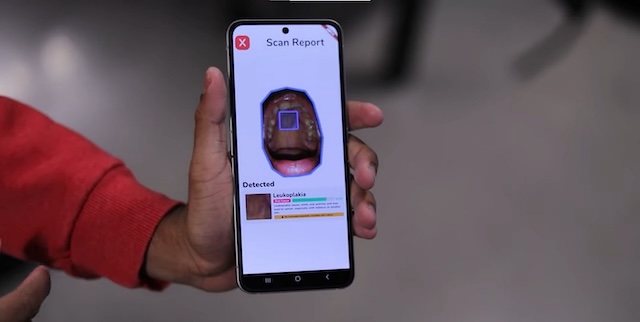
The Oral Scan app detects signs of oral cancer using a photo taken on a smartphone with an 82% success rate. If the AI finds evidence of a tumor, it can diagnose the stage with an even better 87% success rate.
Not bad for a bunch of teenagers, and even though 82% is below what most medical ethicists believe should be the threshold for outsourcing tumor identification to a machine, it’s far better than the rate of 0%, which is what many in the team’s home state of Arkansas will experience.
52,000 Americans are diagnosed with oral cancer every year, and more than 12,000 die as a result, according to their research. Early detection of oral cancers can boost survival rates by 40%, but such cancers are detected early in only 30% of cases.
In dental deserts, these numbers are even worse. In Arkansas, for example, 90% of the population didn’t visit a dentist last year, and according to one dental surgeon the team spoke with, whole counties in Arkansas don’t even have a dentist to visit.
“We learned that current diagnosis methods are expensive, intrusive, and often inaccurate, making early detection rare,” said Veera Unnam, one of the team members, from Bentonville West High School.
Their response is Oral Scan, a free app that costs just 50 cents for each diagnosis and delivers a response in just 15 seconds.
The team designed the app to be usable in all countries on both Apple and Android IOS and ensured it. was easy and intuitive to use, showing their commitment not only to Arkansas but the world at large.
Recently, Unnam and his two colleagues entered Oral Scan into the 15th annual Samsung Solve for Tomorrow competition, empowering public school students (grades 6-12) to drive positive change in their communities by applying STEM know-how to address real-world, pressing issues.
Each finalist school receives $50,000 in Samsung technology and supplies and will compete at the live Solve for Tomorrow Pitch Event in Washington, DC, on April 28th. Three National Winners will each earn $100,000 in prizes, and one will be named the Community Choice Winner.
Celebrating the 15th year of Solve For Tomorrow, Samsung has awarded more than $27 million in resources to nearly 4,000 public schools across the US to date, and the Oral Scan team will be hoping they’re among the recent winners. However, before the winner’s announcement, Oral Scan is already getting national news headlines, and the team has been invited to speak at medical conferences to present their invention.
You can watch the student’s presentation here.
The good news about this story is that a team of students took the initiative to find a way for the unserved to check for oral cancer. Today’s JohnKu talks about youth and the future. I hape you have a wonderful weekend.
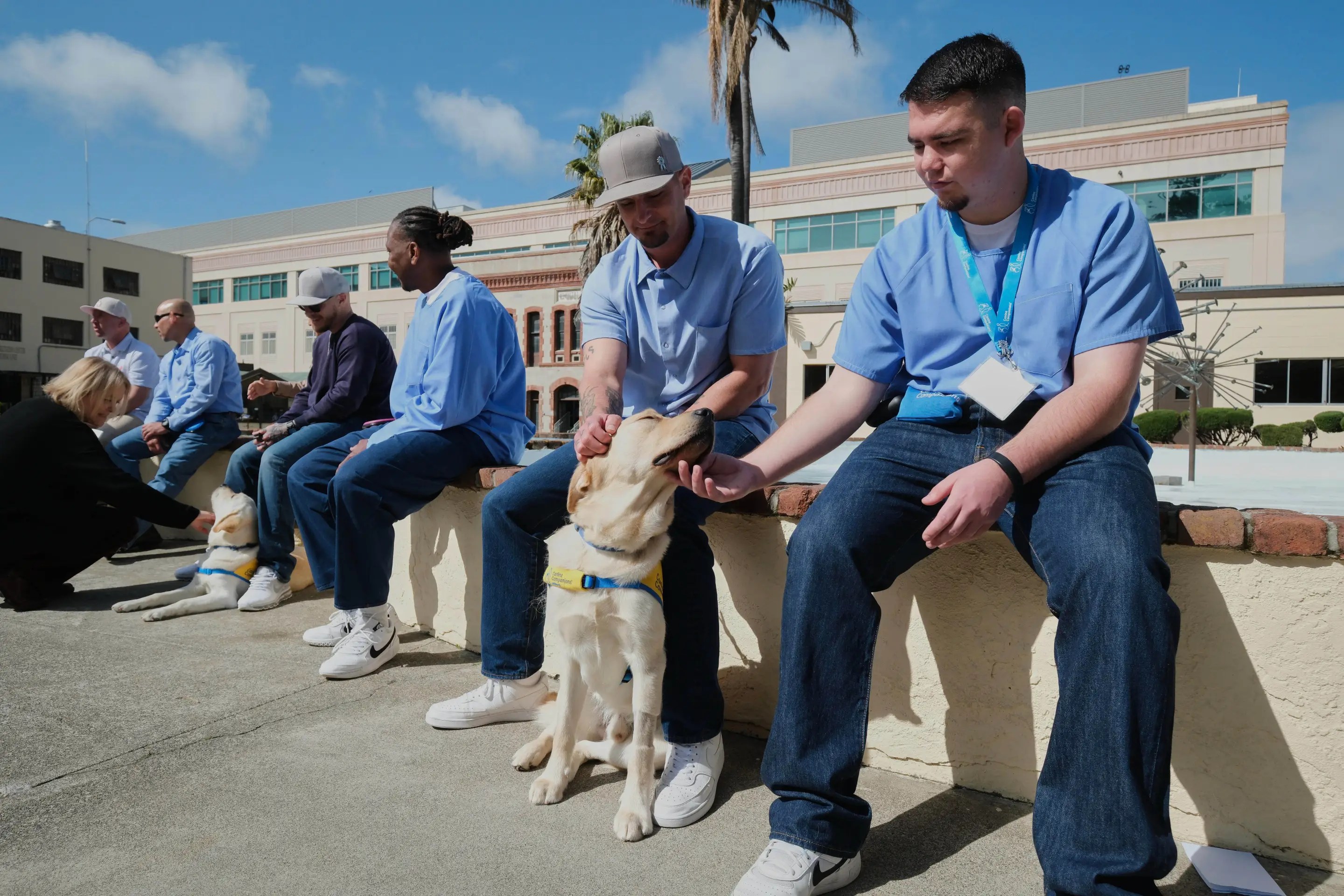
Chase Benoit, who is incarcerated at the San Quentin Rehabilitation Center, holds a pair of service dogs in training in San Quentin, Calif., Friday, March 28, 2025. (AP Photo/Eric Risberg)
Today’s good news story comes from the Ass0ciated Press
With tears and tail wags, San Quentin inmates reunite with puppies they raised into service dogs
By OLGA R. RODRIGUEZ – Updated 3:17 PM CDT, April 1, 2025
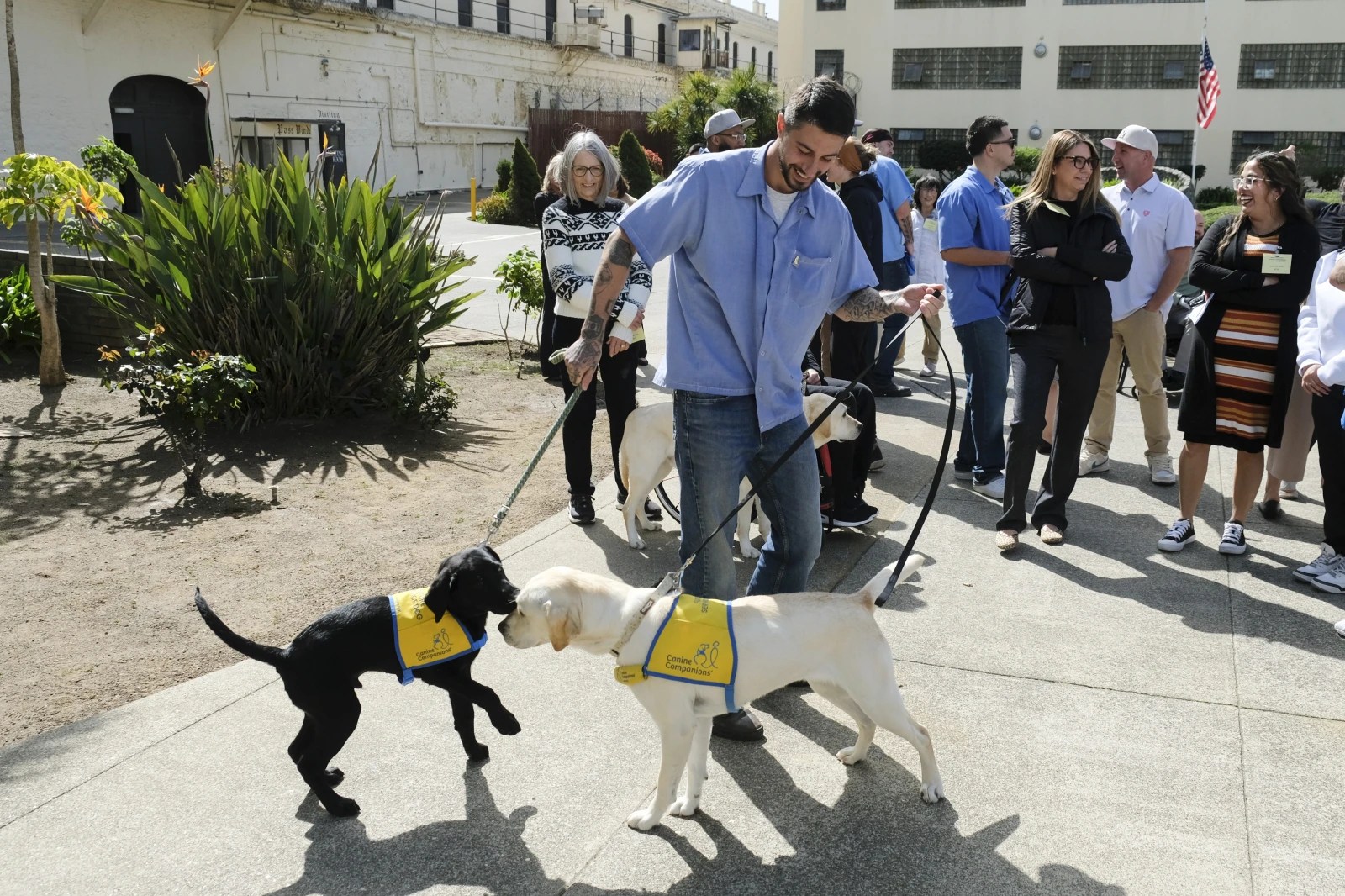
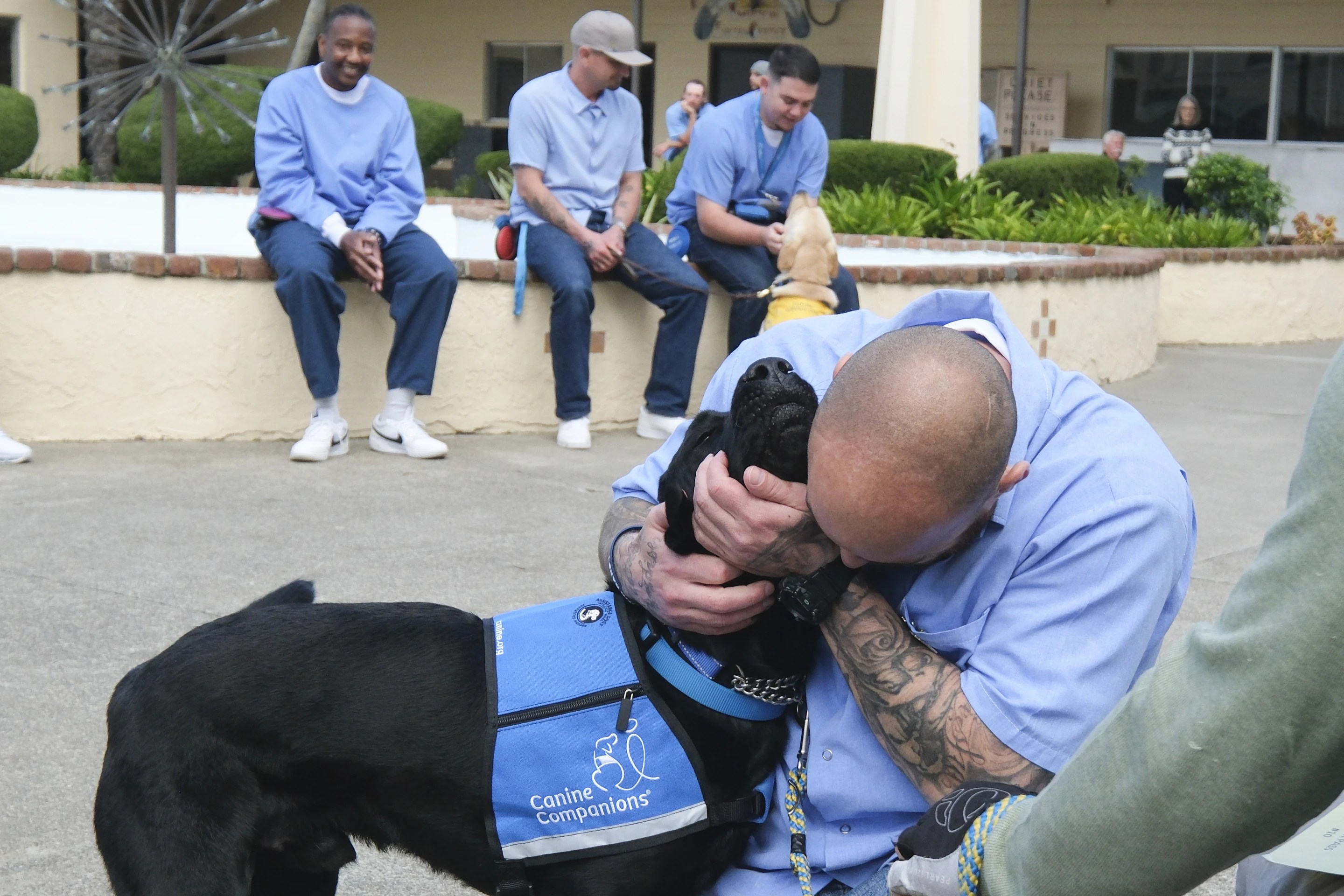
SAN QUENTIN, Calif. (AP) — Hugs, tears, barking, and tail wagging abounded at San Quentin’s prison when two black Labradors reunited with the incarcerated men who helped raise them to be service dogs.
The emotional reunion brought Chase Benoit, Jared Hansen, and the 2-year-old dogs they helped train Wendel and Artemis. It was the men’s first time seeing their former canine companions again and their first time meeting the dogs’ disabled handlers in person.
Jared Hansen, right, who is incarcerated at the San Quentin Rehabilitation Center, visits with Artemis as his handler, Benjamin Carter, looks on in San Quentin, Calif., Friday, March 28, 2025. (AP Photo/Eric Risberg)
The encounter Friday in San Quentin’s main courtyard brought Benoit and Hansen full circle after helping launch the prison’s puppy training program in April 2023.
“Being in this program, it’s given me something that I think I’ve searched for my whole life,” said Benoit, who is serving 15 years to life for second-degree murder. “And that was meaningful purpose, doing something that’s good, better, bigger than myself and feeling like I’m part of something great.”
“He remembers me, for sure, I could tell when he came in. I’m so happy that you love him and that you have a bond,” Benoit told Quigley through an American Sign Language interpreter.
“He’s with me 24/7. He’s very gentle and good with people,” answered Quigley, a recent college graduate who took Wendel home in November after the black Labrador and golden retriever mix completed another six months of professional training outside prison.
Teaching pups the fundamentals in prison
Benoit and Jensen were part of an initial group of four incarcerated trainers who shared their 4-foot-by-10-foot cells with the 4-month-old puppies. The men divided the responsibility of caring for and teaching the dogs foundational commands for a year.
Canine Companions, a nonprofit based in Santa Rosa, runs the program and provides free service dogs to people with disabilities. It has built the San Quentin program to 16 trainers and two dog sitters who, as of this week, are training eight puppies.
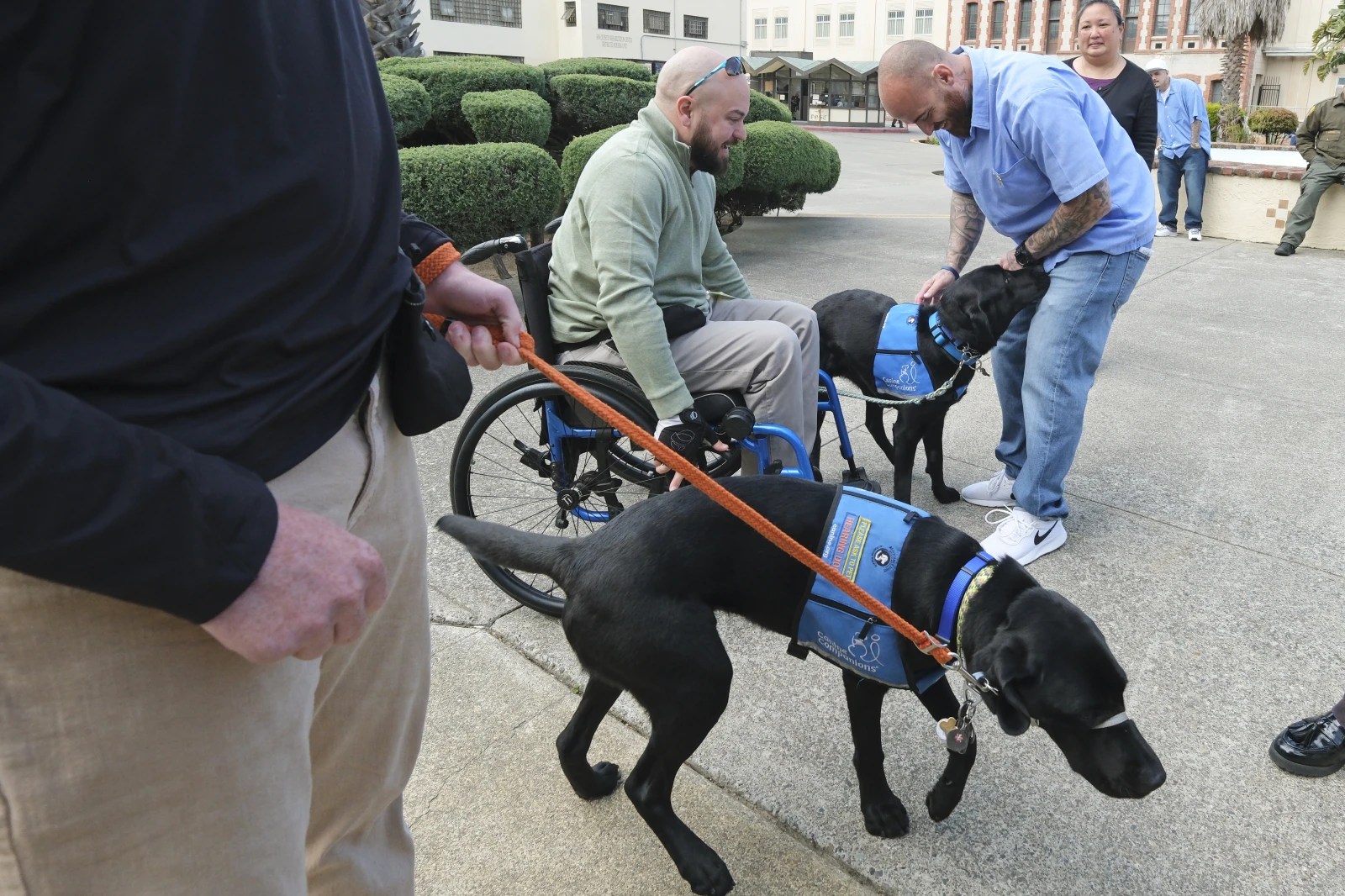
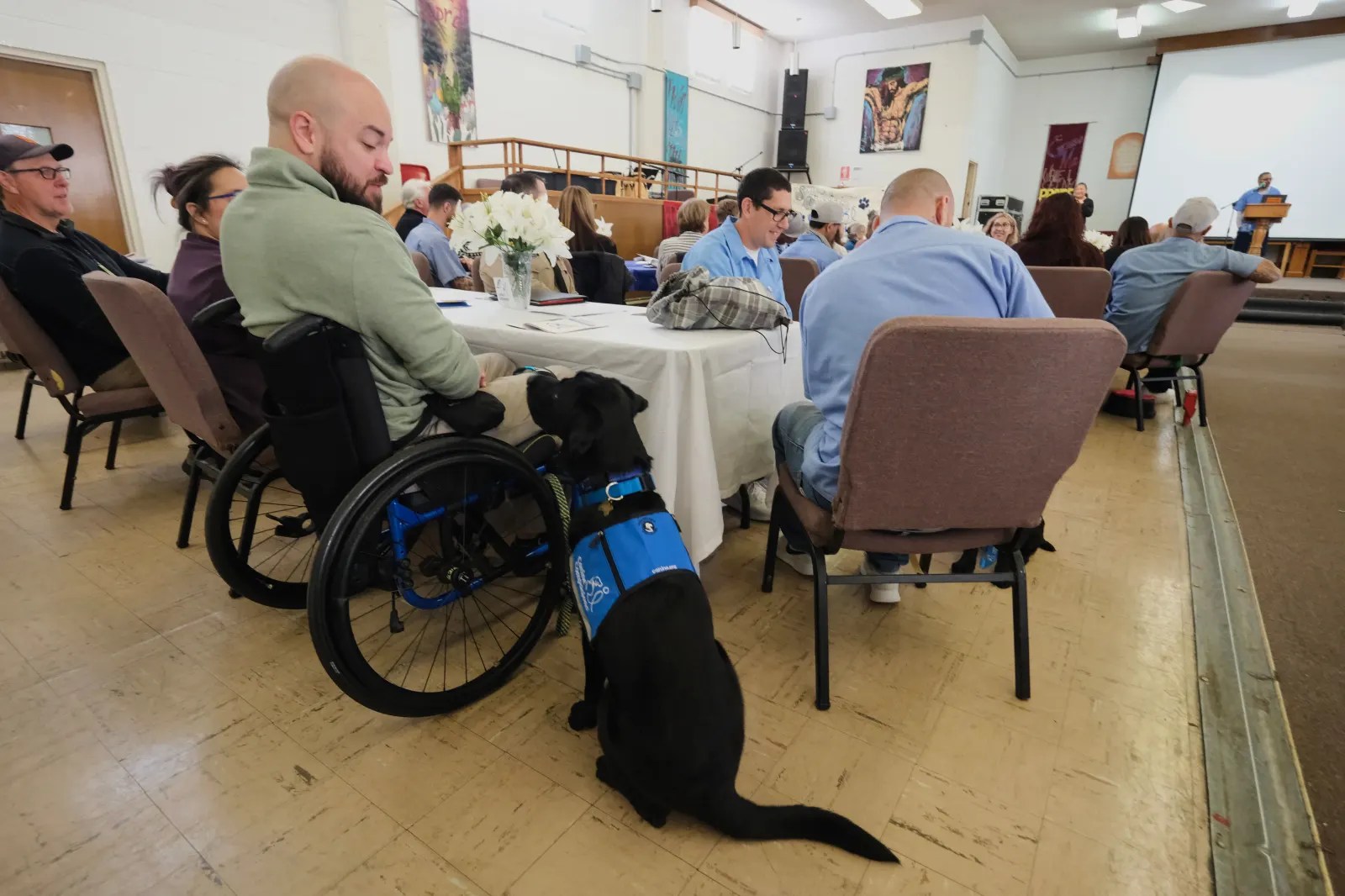
Artemis, a black Labrador, was matched with Benjamin Carter, a veterinarian from Portland, Oregon, who uses a wheelchair and traveled to California for the reunion.
Handler Benjamin Carter looks at his service dog Artemis during a gathering at the San Quentin Rehabilitation Center in San Quentin, Calif., Friday, March 28, 2025. (AP Photo/Eric Risberg)
Like proud parents, Carter and Hansen shared notes on Artemis’ calm and loving personality and penchant for cuddles.
“Seeing him in action and actually serving somebody in the community, it’s just … I’m at a loss for words right now. It’s amazing!” said Hansen, who has been in prison for 15 years for bank robbery.
Artemis, a service dog, is seen by the wheelchair of handler Benjamin Carter at the San Quentin Rehabilitation Center in San Quentin, Calif., Friday, March 28, 2025. (AP Photo/Eric Risberg
Artemis, or Artie, pushes door plates, pulls doors open, fetches things around the house, and does many other tasks that would be hard for Carter alone.
First work, then cuddles
“He is responsive when he’s working. He is cuddly when he is off the clock. He’s an amazing companion. And all that structure, love, and trust was built from these guys here, so I’m just super grateful to them,” Carter said.
The puppies are placed with incarcerated trainers when they are between 2 and 4 months old and stay with them until they are about 16 to 17 months old. Every three months, the puppies are taken out for socialization experiences like interacting with children, riding in cars, or going to the grocery store.
Incarcerated men at the San Quentin Rehabilitation Center pet a service dog in training at the prison in San Quentin, Calif., Friday, March 28, 2025. (AP Photo/Eric Risberg)Jared Hansen, who is incarcerated at the San Quentin Rehabilitation Center, is greeted by Artemis, a service dog he helped train, in San Quentin, Calif., Friday, March 28, 2025. (AP Photo/Eric Risberg)
The incarcerated men teach the dogs about 20 skills, including fetching, sitting, and walking on a leash. After the dogs leave the prison, they train for several more months with professional trainers.
People incarcerated at San Quentin and who participate in the program have been convicted of crimes that include bank robberies, gun offenses, and murder. Only those in an “earned living unit,” where residents participate in an array of self-help programs, are allowed to apply for puppy training. Inmates with records that include any animal or child cruelty crimes are not allowed to participate, said James Dern, national director of puppy programs for Canine Companions.
The value of time
Dern said dogs trained in their prison programs have a 10% greater success rate at becoming service dogs than other candidates because of the amount of time and care that incarcerated puppy raisers put into their dogs.
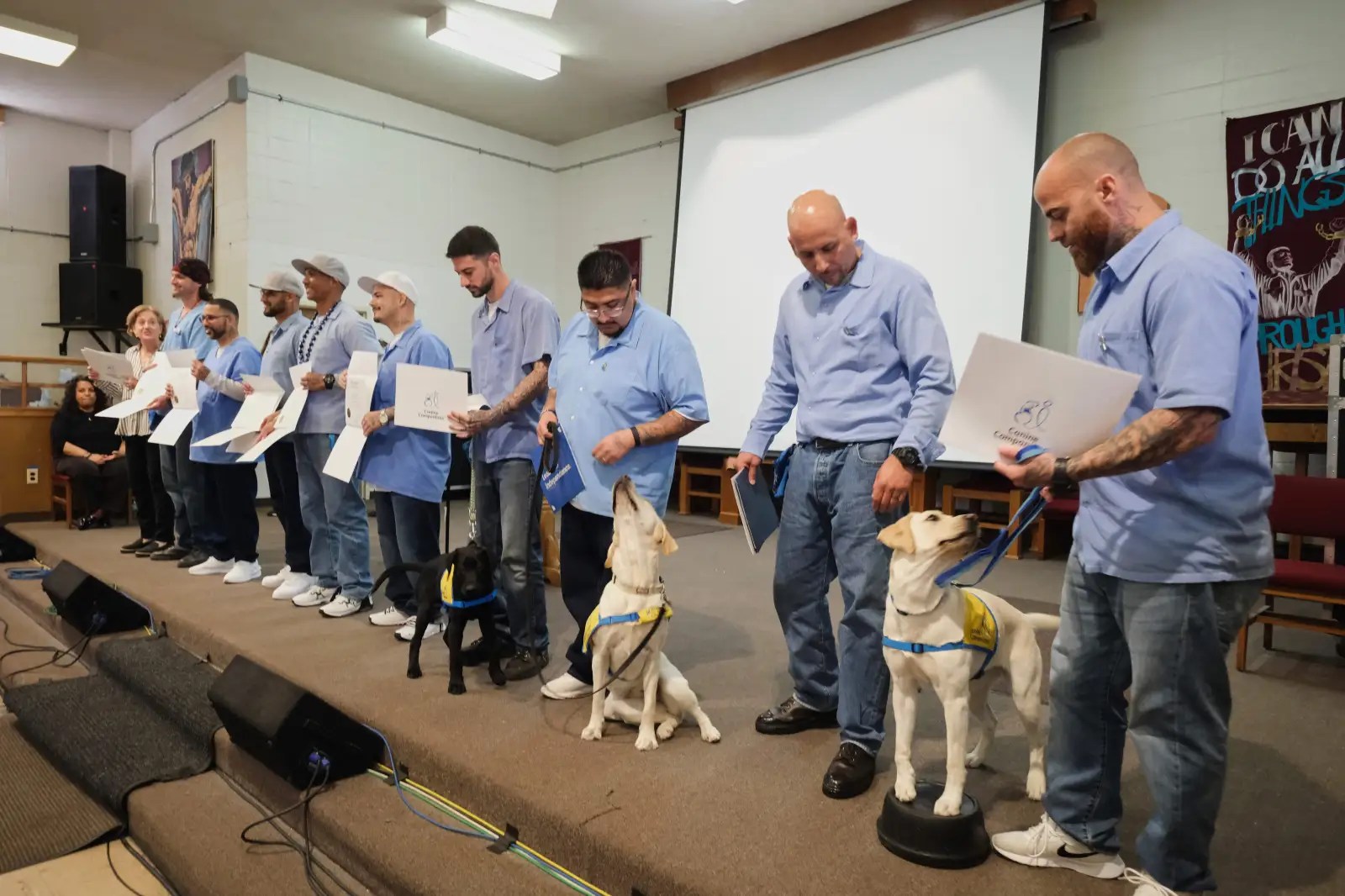
Jared Hansen, right, and other incarcerated men at the San Quentin Rehabilitation Center hold up their dog training certificates during a celebration in San Quentin, Calif., Friday, March 28, 2025. (AP Photo/Eric Risberg)
“Being given something to care about other than themselves and the opportunity to give back and to sort of start to make amends for the things they have done in their lives can be life-changing,” Dern said.
San Quentin was once home to the largest death row population in the United States. The puppy training program started the year it transformed into a lockup where less-dangerous prisoners receive education, training, and rehabilitation. Since then, another 11 correctional facilities have joined the nonprofit for a total of 24 prison institutions, Dern said.
Speaking to a crowd at the prison chapel gathered to celebrate the program, Benoit credited Canine Companions with bringing out the humanity, love, and caring in the incarcerated community. “Instead of keeping it to themselves within their small community of professional trainers or even volunteer puppy raisers, they shared this with us in prison. I think that’s huge,” he said.
The good news in this story is that people who have made grave mistakes can find a new path by helping others. Today’s JohnKu talks about second chances. I hope you have a delightful weekend.
Plastics are durable and strong, which is great while they’re being used but frustrating when they end up in the environment. Scientists at RIKEN in Japan have developed a new type of plastic that’s just as stable in everyday use but dissolves quickly in saltwater, leaving behind safe compounds.
The benefit of plastics is that they’re made with strong covalent bonds that hold their molecules together, meaning they take a lot of energy to break. This is why they’re so sturdy, long-lasting and perfect for everything from packaging to toys.
But those same strong bonds become a problem after the useful life of a plastic product is over. That cup you used once and threw away will sit in landfill for decades, even centuries, before it fully breaks down. And when it does, it forms microplastic pieces that are turning up in all corners of the natural world, including our own bodies, where they wreak havoc on our health in ways we’re only just beginning to understand.
RIKEN researchers have now developed a new type of plastic that can work just as well as the regular stuff when it’s needed, and break down readily into safe compounds when it’s not. It’s made of what are known as supramolecular polymers, which have reversible bonds that function like sticky notes that can be attached, removed and reattached, according to the team.
The team wanted to make a specific type of supramolecular polymer that would be strong enough for the usual uses of plastic, but could also be made to break down quickly when required, under mild conditions and leaving only non-toxic compounds.
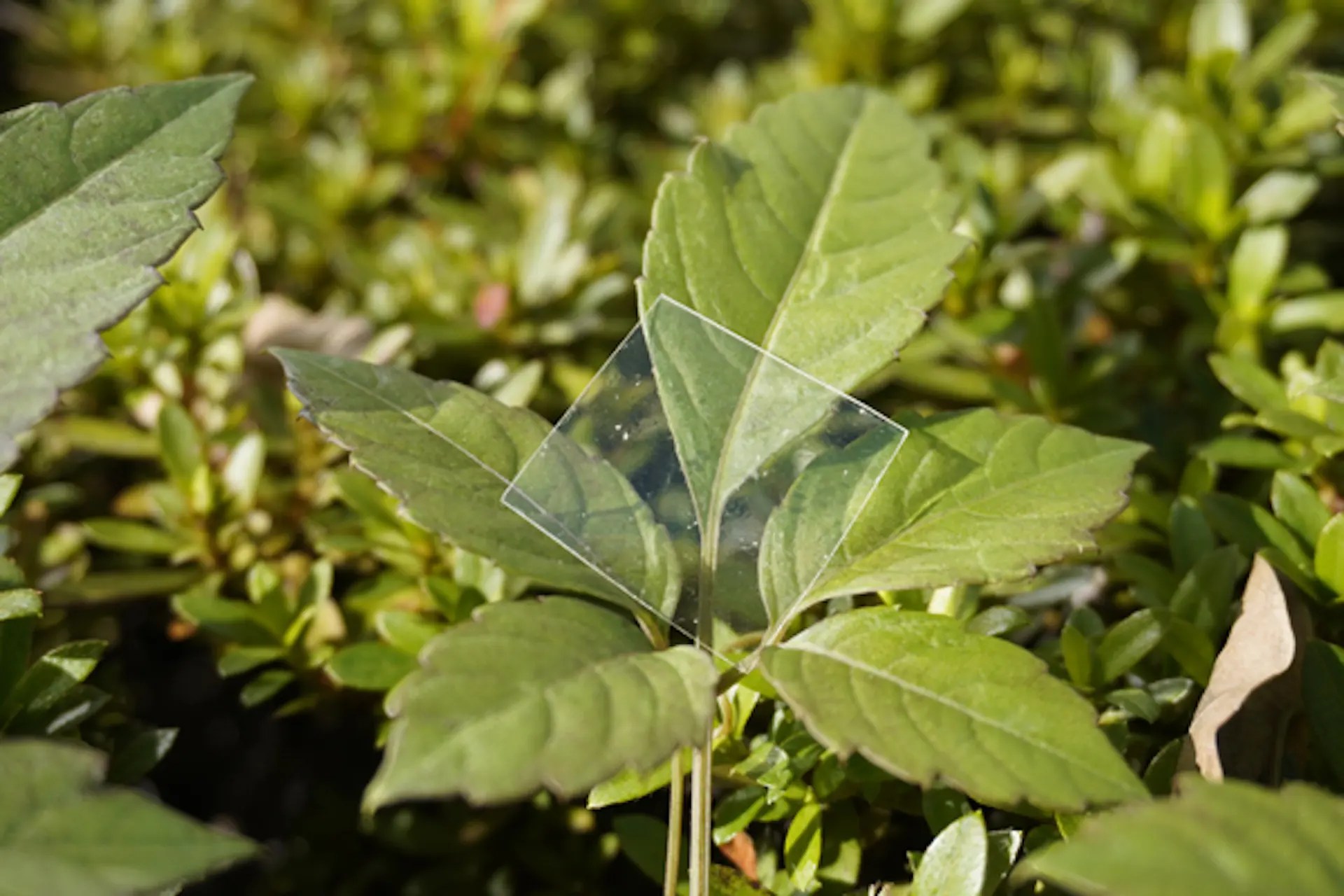
After screening a range of molecules, the researchers identified a particular combination that seemed to have the right properties – sodium hexametaphosphate, which is a common food additive, and monomers based on guanidinium ions, which are used in fertilizers. When these two compounds are mixed together in water, they form a viscous material that can be dried to form plastics.
A reaction between the two ingredients forms “salt bridges” between the molecules that make the material strong and flexible, like conventional plastic. However, when they’re soaked in saltwater, the electrolytes unlock those bonds, and the material dissolves.
An artist’s impression of the new plastic, showing the strong bonds above the water and how they break down when submerged in saltwater – RIKEN
In practice, the team found that the material was just as strong as normal plastic during use, and was non-flammable, colorless and transparent. Immersed in saltwater though, the plastic completely dissolved in about eight and a half hours.
There’s one major hurdle with any degradable plastic material of course: what if it comes into contact with the catalyst for its destruction before you want it to? A plastic cup is no good if certain liquids can dissolve it, after all.
In this case, the team found that applying hydrophobic coatings prevented any early breaking down of the material. When you eventually want to dispose of it, a simple scratch on the surface was enough to let the saltwater back in, allowing the material to dissolve just as quickly as the non-coated sheets.
While some biodegradable plastics can still leave behind harmful microplastics, this material breaks down into nitrogen and phosphorus, which are useful nutrients for plants and microbes. That said, too much of these can be disruptive to the environment as well, so the team suggests the best process might be to do the bulk of the recycling in specialized plants, where the resulting elements can be retrieved for future use.
But if some of it does end up in the ocean, it will be far less harmful, and possibly even beneficial, compared to current plastic waste.
A paper describing the research was published in the journal Science.
The good news in this story is further action is being taken to reduce plastic pollution in our oceans. Today’s JohnKu talks about our oceans. I hope you have a wonderful weekend.
Fearing the worst after a prop plane was reported overdue for landing in Alaska last Sunday, search and rescue volunteers were relieved when news rang out that all three passengers survived.
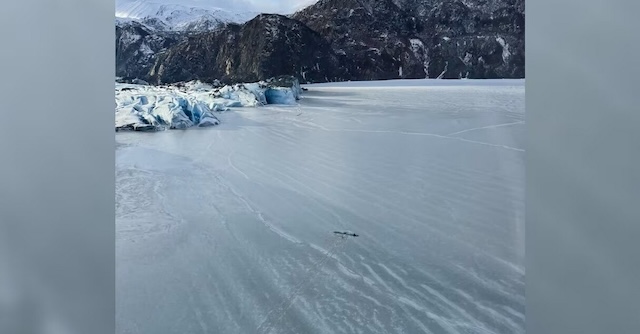
The pilot and two children, who were in elementary and middle school, survived a crash landing on the frozen surface of Tustumena Lake and walked until they were seen.
The story first broke Sunday night/Monday morning that a Piper PA-12 Super Cruiser, which departed Sunday from Soldotna Airport near Kenai on a sightseeing trip, didn’t land when it should have.
John Morris, the father of the missing pilot, told CNN affiliate Alaska’s News Source that his son’s cell phone sent its final ping at about 5:00 p.m. Sunday evening over Tustumena.
Alaska’s News Source reports that a National Guard and state trooper search and rescue operation was augmented by volunteers from the community. One family friend posted a notice for help on Facebook that was re-shared 420 times.
Eventually, a Good Samaritan who saw the plane wreckage and three people walking on the frozen lake helped rescuers find them.
The three survivors were taken to a Kenai Peninsula area hospital and treated for “non-life-threatening injuries.”
Dale Eicher was one of the locals who heard the call for help. With a background in assisting search and rescues, he went up in his own plane to look for survivors but had barely arrived in the last known position before he heard over the radio that three people had been reported found.
“I called the troopers immediately because I was still in cell service, and I knew it was a really good chance that the guy who had found him was not in cell service,” Eicher said. ” I was really shocked. I didn’t expect that we would find them. I didn’t expect we would find them alive for sure…it doesn’t always turn out this well.”
The good news here is the community went all out to find the survivors of a plane crash even though it seemed unlikely anyone could survive. Today’s JohnKu talks about hope. I wish you all a super weekend.
In the remote mountains of northern Pakistan, four majestic snow leopards have been recorded recently moving through the snow-covered hills in a piece of footage that has ignited a flurry of excitement among conservationists.
These animals are seldom seen alone, much less in a group, and it’s being considered a sign of success for Pakistan’s conservation efforts in the animal’s habitat.
“For the past 15 days, I had been noticing leopard pawmarks. While I was on the roof of my house, I used binoculars to observe the mountains and spotted a female snow leopard along with her four cubs,” the photographer Sakhawat Ali told GNN.
“As a wildlife lover, I was extremely happy to see the snow leopards. I quickly moved closer and filmed them from a distance of about 150 meters.”
Ali lives in the remote village of Hushe and is also a gamekeeper at the Central Karakorum National Park in Pakistan’s Gilgit-Baltistan region, where the sighting was made. Snow leopards thrive here; their coats allow them to blend into the snowy mountains and remain undetected by their prey species.
That a female could have three large and healthy cubs is a sign that as much as the snow leopard population is doing well, prey populations of Siberian ibex, argali, roe deer, and Thorvold’s deer must also be thriving.
Still, the snow leopard is considered vulnerable by the IUCN Red List because of its susceptibility to habitat loss and fragmentation across the mountain ranges in which it lives.
Pakistan, and indeed all 12 of the snow leopard range countries, have made great strides in halting and reversing snow leopard declines over the last twenty years. CNN reported that local villagers celebrated Ali’s footage, even though snow leopards sometimes kill livestock.
Dr. Zakir Hussain, the Chief Conservator of Parks and Wildlife for Gilgit-Baltistan, told CNN that 80% of the region’s communities are engaged in the tracking, monitoring, and reporting snow leopard populations on a citizen science basis.
The snow leopard can be found in Russia, China, India, Nepal, Bhutan, Pakistan, Kyrgyzstan, Tajikistan, Kazakhstan, Mongolia, Uzbekistan, and Afghanistan, which together make up the Global Snow Leopard Forum, an international platform for coordinating and sharing conservation strategies to protect this borderless wanderer between state wildlife and environment ministries and NGOs like the Snow Leopard Trust.
WATCH them move across a snowy landscape…
The good news here is that conservation efforts are showing results. Today’s JohnKu talks about conservation. I hope you have a super weekend.
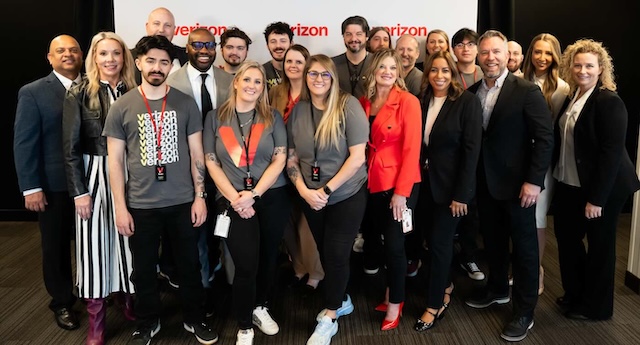
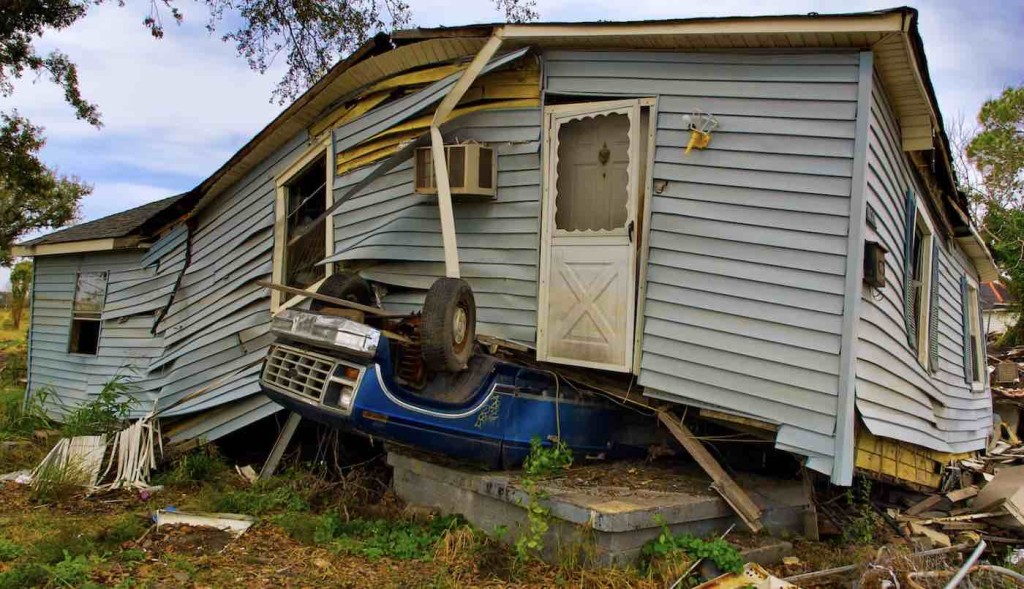
Verizon teamed up with ForgiveCo to eliminate $10 million in consumer debt for 6,500 Western North Carolinians who are still recovering from Hurricane Helene’s sweeping devastation.
The North Carolina families learned that Verizon—the world’s second-largest telecommunications company—cleared their medical, financial, and other debts with the help of ForgiveCo, whose “random acts of kindness” model purchases consumer debt with no applications required. In fact, the beneficiaries did not need to take further action.
Recipients were then notified through surprise letters, emails, and text messages.
But if a phone call learning that your debt has been cleared isn’t exciting enough, Basketball Hall of Fame coach and Asheville native Roy Williams has signed on to share the news with the impacted families.
“These are challenging times, but I’ve seen the strength and resilience of this community. Verizon’s support is a powerful reminder that no one is alone, and together, we’ll rise stronger,” said Mr. Williams.
“It’s a privilege to share this message of hope with the incredible people of North Carolina.”
The hurricane destroyed Shelley Queen’s home in Jackson County. Still, she was one of those touched by Verizon, having medical debt forgiven after she was diagnosed with diabetes, which turned her family’s life upside down.
John Middelkoop
“There were numerous hospital visits, including times I was in a coma and needed a pump to survive. These medical challenges have been difficult, both emotionally and financially. This forgiveness is truly a life-changing gift.”
Craig Antico, Founder and CEO of ForgiveCo, confirmed the debt relief, saying, “Through this effort, Verizon will bring transformative change to the lives of North Carolinians in crisis, leaving a lasting mark on future generations.”
Tim Luker, who also lives in Jackson County, has congestive heart disease and was hospitalized the day before the hurricane hit. Since then, he’s been working tirelessly to clean up lots of water damage, floor issues, and yard damage. “When I got out of the hospital, I couldn’t go home because of storm damage.”
“It means everything to me,” said Tim. “I don’t have much… $11,000 is life-changing for someone like me.”
“This makes a huge difference.”
The good news in this story is that a giant company is willing to help its customers in their time of need. Today’s JohnKu talks about helping others. I hope you have a beautiful weekend.
From Corpus Christi comes the story of a commercial mariner who developed a passion for saving lives—cold, imperiled, and scaly lives.
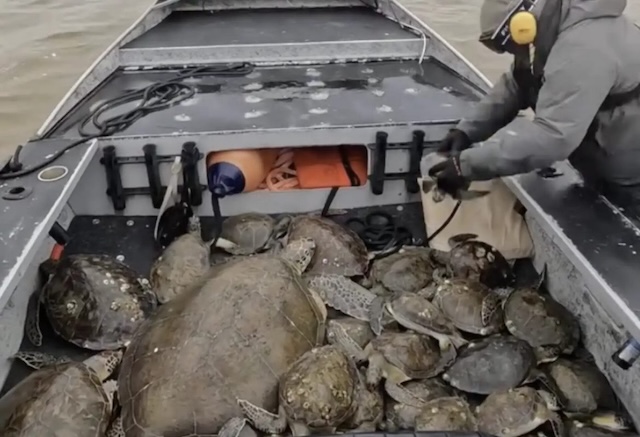
It started in 2018, when Captain Brandon Upton was out in the Gulf waters on a particularly chilly afternoon. He saw a dark shadow floating nearby.
As the owner and operator of Sea Tow, a boating assistance company, Upton thought he had seen everything the Gulf of Mexico could conjure. But soon, he saw more dark shapes, and then even more.
He realized to his shock that they were sea turtles.
“I didn’t touch it, because I know they are endangered and protected,” Upton told the Dodo. “On my way in, I saw more and more sea turtles and was very confused. In all my years on the water, I had never seen anything like it.”
Rather than take any actions himself, Upton did the right thing and contacted the relevant animal authorities—in this case, the ecologists at San Padre Island National Seashore, who explained the turtles had been cold-stunned.
Cold-stunning is a normal phenomenon in which the cold-blooded turtles fall into a comatose state if the seawater temperatures fall below 56°F. Their heart rate and metabolism plummets, and they float, incapable of moving. This puts them at risk for boat strikes, drowning, and even land predators if the tide and surf should take them onto the beach.
Every winter since then, Upton has remained vigilant for potential cold-stunning events. If the water temperatures start to fall too low, Upton will bring an airboat to tow alongside him, into which he will toss any sea turtles he finds.
“While sea turtle rescue typically requires special training, we started in an emergency situation,” Upton said. “We picked up two or three boatloads of floating turtles that very first day.”
San Padre Island workers receive these cold-stunned animals and place them in a rehabilitation center where their bodies are gradually warmed up to the temperatures needed to restart their systems. Then they’re released.
Upton described his 7 years of pro bono help as “only natural” since he carries around a lot of specialized equipment that makes rescuing turtles easy and is a proud part of the close-knit boating community.
He’s an animal lover to boot, and whether it’s “taking a spider outside” or helping cold-stunned turtles, he considers them all like a second family.