
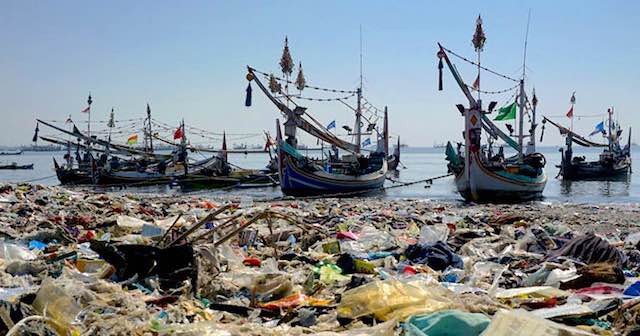
Today’s story comes from the Good News Network. Here it is in its entirety (with typos outside of quotes corrected)
Fishermen Getting Paid to Collect Plastic Trash at Sea, As Indonesia Slashes Pollution
In Indonesia, small-time fishermen are being paid as part-time ocean cleanup crews as the archipelago seeks to tidy their seas and raise awareness among stakeholders at the same time.
The Ministry of Fisheries announced on October 4th that they had stashed around $70,000, or 1 billion rupiahs, to pay fishermen for any plastic trash they recovered from the oceans.
Many countries around the world are setting environmental or climate goals for themselves. One of the largest contributors of ocean-going plastic waste, Indonesia is looking to shake off that reputation by spending $1 billion over the next 3 years to reduce plastic entering the oceans from their shores by 70%.
If an Indonesian fisherman working off the main islands can collect 4 kilograms of trash per day, the government will pay out around $10 for it, which is slightly more than they would get if they spent their day catching fish to sell at market prices.
“This activity is very simple,” Sakti Wahyu Trenggono, the fisheries minister, said at a press conference in Jakarta. “But at least this will raise awareness among the stakeholders at sea and the people around the world.”
“The most important thing is prevention,” Sakti said. “If we can properly conduct prevention, then there shouldn’t be any waste in the sea. Because once the trash gets to the sea, then it’s already damaged.”
Indonesia is located in one of the fastest-developing regions on the planet, economically speaking, and the use of plastic waste has outpaced the installation of recycling infrastructure, especially on the smaller islands.
According to the UK’s Pew Trust, 95% of all fishing activities are small-scale. Small fisheries can’t absorb costs from things like ocean pollution or additional taxes like large-scale fisheries can, making this bottom-up approach to ocean cleanup uniquely suited to Indonesia.
Furthermore, Indonesia is surrounded by some of the most biodiverse shallow seas on earth, a Mecca for divers and snorkelers who aren’t interested in wading through plastic while they do it.
The good news here is a major plastic pollution contributor is taking steps to reverse the behavior. Today’s JohnKu talks about stepping up to the plate. I hope you have a fabulous weekend.
Amends by John W. Howell © 2022
It takes a big heart,
To admit bad behavior . . .
And then correct it.